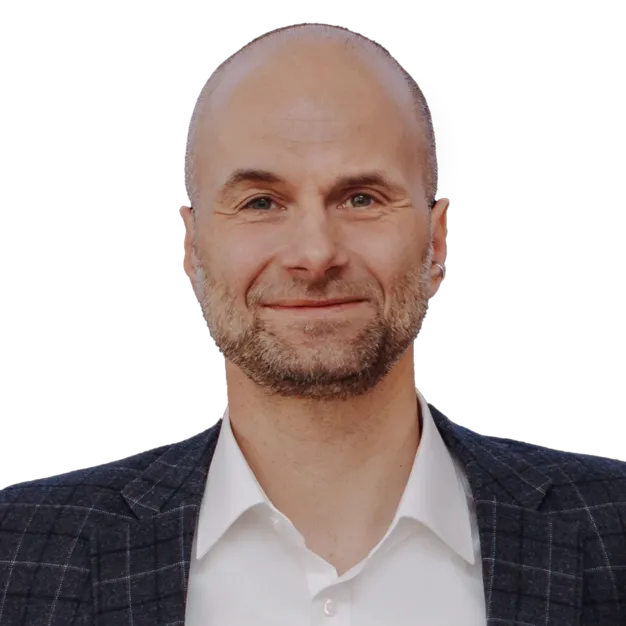
Christian Schlag is a Professor at the Finance Department of Goethe University Frankfurt’s Faculty of Economics and Business , where he also serves as Dean. He leads the Chair of Derivatives and Financial Engineering and coordinates young researchers at the Leibniz Institute for Financial Research SAFE. His research focuses on equilibrium asset pricing, derivative securities, and empirical capital market analysis. Research Trends : Schlag’s recent work explores volatility dynamics, climate risk in asset pricing, return predictability, and investor behavior. His 2023 publications examine time-varying consumption growth risk, equity factors, and individual stock volatility models. Earlier studies (2021–2015) address pricing kernels, welfare costs of temperature volatility, and model mis-specification in hedging. Student Placements : Former advisees hold positions at institutions like the European Central Bank, INSEAD, Australian National University, and Warwick Business School. His Chair of Derivatives and Financial Engineering collaborates with networks across Europe, North America, and Asia.
Atreyi Kankanhalli is a Professor at the National University of Singapore, specializing in Information Systems with a focus on knowledge management, healthcare IT, and digital innovation. Their research spans over three decades, with prolific contributions in top journals like MIS Quarterly, Journal of AIS, and Information & Management. They have co-authored over 150 papers addressing topics such as crowdsourcing, online communities, and the impact of AI on scholarly practices. Notable work includes studies on user adherence to health apps, innovation in public sector data utilization, and the ethical challenges of generative AI in peer review. Kankanhalli has also led research on global virtual teams and digital technologies' role in social justice, reflecting a commitment to both technical and societal dimensions of information systems. Education & Background: While specific degree details are not provided, their extensive publication history and academic roles imply advanced qualifications in Information Systems or related fields. They have collaborated with global researchers across institutions like NUS, University of Illinois, and Singapore Management University. Research Themes: Core areas include digital health interventions (e.g., fitness app adherence), organizational innovation via open data and crowdsourcing, and the socio-technical challenges of AI in academia. Their work often bridges theoretical frameworks with practical applications, such as healthcare decision support systems and policy-driven technology adoption. Impact & Influence: As an editorial board member and frequent conference contributor (e.g., ICIS, PACIS), Kankanhalli shapes the field's research agenda. Their recent focus on generative AI's implications highlights proactive engagement with emerging technologies' ethical and methodological challenges.
Sebastian Pfotenhauer is a Carl von Linde Professor for Innovation Research at Technical University of Munich (TUM) and Deputy Head of the STS Department. He specializes in the societal dimensions of innovation, including governance of emerging technologies, regional innovation cultures, and responsible innovation practices. His work bridges academic research and policy, with leadership roles in major initiatives like the €50M Munich Cluster for the Future of Mobility (MCube) and the EU-funded SCALINGS project on co-creation in innovation. He holds a PhD in Physics from the University of Jena and postdoctoral training at MIT and Harvard. Research interests include innovation policy, science governance, and the interplay between technology and societal change. Notable projects include comparative studies of innovation cultures, governance frameworks for AI and neurotechnology, and global partnerships in science and innovation. He advises governments and international bodies like the OECD and the German Engineers’ Association (VDI). Publications span journals like Research Policy , Social Studies of Science , and Nature Biotechnology , addressing topics from regulatory sandboxes to neurotechnology ethics. Awards include the Leading Technology Policy Fellowship (MIT) and NSF grants for studying complex international partnerships.
Prof. Dr. Johannes Sauer is a Professor at the Technical University of Munich (TUM), holding dual affiliations with the TUM School of Management and the TUM School of Life Sciences . His academic focus is on production and resource economics, with expertise in agricultural sustainability, policy evaluation, and circular economy strategies in Asia-Pacific and Latin America. Education: Bachelor’s/Master’s in Agricultural Economics from Universities of Tübingen, Hamburg, and Imperial College London. Doctorate (summa cum laude) in Agricultural Economics from the University of Bonn (2004). Research Interests: Prof. Sauer’s work spans productivity and resilience in agricultural systems, adoption of sustainable technologies, water resource valuation, and bioeconomic trends. He emphasizes smart technologies and circular economy applications in developing regions. His research employs econometric methods to analyze policy impacts and environmental-economic trade-offs. Key Trends in Publications: Recent articles highlight climate-smart agriculture, ICT adoption in rural China, and agroforestry’s role in reducing ecological-economic trade-offs. He explores behavioral drivers of policy participation and innovative tools like the IoFarm decision support system. Awards: 2021 Honorary Professorship at ANU OECD Fellow Awards (2010, 2016) Best Paper Awards (2008–2015) Consulting & Roles: OECD and Asian Development Bank consultant, ESRC Peer Review College member, and liaison lecturer for the German National Academic Foundation. He advises on agri-environmental policies and international development. Labs/Teams: Active in collaborative projects such as PONDERFUL Framework and IPM Popilia , focusing on nexus research and pest management strategies.
Michael Mühlebach is a Research Group Leader at the Max Planck Institute for Intelligent Systems in Tübingen, Germany, leading the independent Learning and Dynamical Systems group. His academic journey began at ETH Zurich where he earned his B.Sc. (2010) and M.Sc. (2013) in mechanical engineering, specializing in robotics, systems, and control. He completed his Ph.D. at ETH Zurich in 2018 under Prof. R. D'Andrea, followed by postdoctoral research at UC Berkeley with Prof. Michael I. Jordan. Dr. Mühlebach's research spans machine learning, dynamical systems, control theory, and optimization . His work bridges theoretical foundations with practical applications in robotics, developing methods that incorporate physical constraints and system dynamics into learning frameworks. His group focuses on online learning, physics-informed machine learning, and large-scale optimization for cyber-physical systems, with applications in electromagnetic navigation, robotic table tennis, and energy-efficient flight systems like the shape-changing robot Floaty . His publication record shows a strong focus on constrained optimization, with recent work exploring decision-dependent stochastic optimization, nonlinear feedback, and the theoretical foundations of reinforcement learning. His research integrates perspectives from control theory, dynamical systems, and optimization to develop algorithms with strong theoretical guarantees and practical performance. Outstanding D-MAVT Bachelor Award Willi-Studer prize for best Master's degree ETH Medal and HILTI prize for doctoral thesis Branco Weiss Fellow (2018) Emmy Noether Fellowship (2020) Amazon Fellowship (2024) Dr. Mühlebach actively mentors doctoral researchers and is seeking talented students for PhD and Master's projects. His research group has received funding from multiple prestigious fellowships and maintains collaborations across institutions including ETH Zurich, UC Berkeley, and various Max Planck research units. The group's work spans theoretical developments to practical implementations on robotic systems, demonstrating strong connections between mathematical theory and physical realization.
Sotirios Liaskos is an Associate Professor in the School of Information Technology at the Faculty of Science, York University. He is a leading researcher in requirements engineering and conceptual modeling, with a focus on goal models, empirical evaluation, and model-driven engineering. Research Interests: Requirements Engineering Goal and Conceptual Modeling Empirical Software Engineering Model-Driven Design and Automation Uncertainty and Decision-Theoretic Reasoning in Models Applications in Blockchain and Reinforcement Learning His recent work emphasizes the empirical validation of modeling constructs, the integration of decision theory into goal models, and the automated generation of secure workflows and AI training environments. He has led and co-authored numerous experimental studies on model comprehensibility and semantic quality. Publication Trends: His publications consistently appear in top venues like ER, RE, and iStar. The last five years show a strong trend toward empirical evaluation of modeling languages, decision-theoretic goal models, and applications of goal modeling in emerging domains such as blockchain and reinforcement learning simulation design. Scientific Contributions: Developed frameworks for empirical evaluation of modeling language ontologies (Peira framework). Advanced decision-theoretic approaches to goal modeling under uncertainty. Pioneered model-driven methods for generating blockchain simulators and reinforcement learning environments. Conducted foundational empirical studies on the comprehensibility of contribution links and visualization alternatives in goal models. Advising and Collaboration: He has advised several researchers including Ibrahim Jaouhar, Wisal Tambosi, Mehrnaz Zhian, and Saba Zarbaf. He maintains a highly collaborative research profile with frequent co-authorship with John Mylopoulos, Shakil M. Khan, and other international researchers. He has served as a co-editor for multiple iStar workshop proceedings, indicating leadership in the goal-oriented requirements engineering community. Labs and Teams: While no specific lab name is mentioned, his work is closely associated with research groups focused on requirements engineering and conceptual modeling, likely within York University’s software engineering research cluster. His collaborations span institutions in Canada, Europe, and beyond.
Prof. Dr. Ingo Scholtes is Chair of Machine Learning for Complex Networks at Julius-Maximilians-Universität Würzburg's Center for Artificial Intelligence and Data Science (CAIDAS). His research spans network science, graph machine learning, and computational social science, with applications in software engineering, ecology, biology, and physics. He received a Juniorfellowship from the German Informatics Society (2014) and an SNSF Professorship (CHF 1.5Mio, 2018). Current affiliations: JMU Würzburg (since 2021), University of Zurich (2018-2024), Bergische Universität Wuppertal (2019-2021) Research focus: Higher-order network modeling, temporal graph analysis, AI for collaborative systems, causality-aware machine learning His recent publications demonstrate strong trends in temporal network analysis , graph neural networks for time-series, and higher-order models across software engineering and social science domains. He co-chairs multiple international workshops on complex networks and serves as associate editor for EPJ Data Science and Advances in Complex Systems. Key scientific contributions: Foundational work on higher-order network models published in Nature Physics Methodological innovations in temporal network visualization (HOTVis) and path-based analysis (pathpy) As both educator and organizer, he leads the Computational Social Science Section at GI e.V., mentors across disciplines, and develops tools like git2net for collaboration analysis. His work bridges theoretical foundations with practical applications in network science.
Prof. Dr. Jonas Schreyögg is a Professor of Healthcare Management and Scientific Director of the Hamburg Center for Health Economics (HCHE) at the University of Hamburg since 2010. He holds the Chair of Healthcare Management and serves as Deputy Chairman of the German Council of Economic Experts for Health and Nursing Care. His roles also include memberships on scientific advisory boards and associated research at Stanford University. Education & Career: Doctorate and Habilitation (2008) from Technical University of Berlin Former Professor at Ludwig-Maximilians-University of Munich (LMU Munich) Junior Professor at Technical University of Berlin Harkness Fellow at Stanford University (2006–2007) Research Interests: Focus on healthcare systems, health economics, hospital payment reforms, pandemic policy responses, and healthcare workforce optimization. Key areas include DRG systems, healthcare competition, and socioeconomic disparities in health outcomes. He has conducted extensive research on the impact of policy interventions during the COVID-19 pandemic, including lockdown perceptions and vaccine acceptance. Grants & Awards: Recipient of the Harkness Fellowship, German National Academic Foundation doctoral scholarship, and multiple research grants. His work has been published in leading journals like Health Affairs , Journal of Public Health , and Social Science & Medicine . Professional Activities: Engaged in international collaborations and teaching in Norway, Singapore, Taiwan, and the U.S. He advises on healthcare policy and has contributed to high-profile reports on healthcare workforce sustainability and pandemic response strategies.
Stefan Schaltegger is Professor for Sustainability Management at the Centre for Sustainability Management (CSM) at Leuphana University Lüneburg. With over two decades of research experience, he is a globally recognized scholar in sustainability management, corporate sustainability, and environmental accounting. His work bridges academic research with practical business applications, influencing sustainability practices across multiple industries. Professor for Sustainability Management at Leuphana University Lüneburg Director of the Centre for Sustainability Management (CSM) Extensive publication record in top sustainability journals Regular contributor to policy discussions on sustainability Professor Schaltegger's research focuses on sustainability management systems, corporate sustainability strategy, environmental accounting, sustainable business models, and sustainability transitions. His work examines how organizations can effectively integrate sustainability into core operations, emphasizing stakeholder engagement, sustainability performance measurement, and the development of compelling business cases for sustainability. He has pioneered research on sustainability management accounting, rebound effects in sustainability initiatives, and the role of change agents in corporate sustainability transformations. His research spans both theoretical development and practical application, making significant contributions to how businesses understand and implement sustainability. His recent publications reveal an evolving research trajectory with increasing focus on systemic sustainability challenges. Schaltegger has shifted from foundational work on sustainability management accounting toward more complex issues like environmental rebound effects, sustainability transformations, and regenerative business practices. His 2023-2025 publications show growing attention to climate change responses, biodiversity conservation, and the role of service innovation in sustainability transformations. The interdisciplinary nature of his work is evident in publications spanning business strategy, environmental science, accounting, and policy journals. Ranked among the world's top 2% scientists in the Stanford study (2020) Best Young Researcher of the Year at Leuphana University Lüneburg (2010) IFAC PAIB Committee Research award for "article of merit" (2003) Professor Schaltegger actively mentors doctoral students and early-career researchers, though specific student names aren't listed in the provided materials. His research is supported by numerous projects including "TrICo Subproject: Community Sustainable Production," "Account4GreenEco," and "Hochschulen in Gesellschaft – Realexperimente transformativer Lern- und Forschungsprozesse für eine Kultur der Nachhaltigkeit an Hochschulen." His work demonstrates strong industry engagement through collaborations with businesses implementing sustainability practices. The Centre for Sustainability Management (CSM), which Schaltegger leads, serves as a hub for interdisciplinary sustainability research, education, and practice. The CSM coordinates multiple research projects including the Innovation Network aiming at Sustainable Smartphones (INaS) and works closely with industry partners to develop practical sustainability solutions. The center's activities span research, education, and transfer, reflecting Schaltegger's commitment to bridging the gap between academic theory and business practice in sustainability.
Dr. Stephanie Spahr is a Research Group Leader at the Leibniz Institute of Freshwater Ecology and Inland Fisheries (IGB) in Berlin, Germany, where she leads the Organic Contaminants research group within the Department of Ecohydrology and Biogeochemistry. Previously, she served as a Junior Research Group Leader at the University of Tübingen's Center for Applied Geoscience (2019-2021) and as a Postdoctoral Researcher at Stanford University's Department of Civil and Environmental Engineering (2016-2019). Dr. Spahr earned her PhD in Environmental Chemistry from the Swiss Federal Institute of Technology Lausanne (EPFL) and the Swiss Federal Institute of Aquatic Science and Technology (Eawag) in 2016. Her doctoral research focused on the formation of N-nitrosodimethylamine during water disinfection with chloramine. She completed her MSc in Geoecology at the University of Tübingen in 2012, with thesis work on carbon and nitrogen isotope analysis of benzotriazoles conducted at Eawag, and her BSc in Geoecology/Ecosystem Management at the same institution in 2010. Dr. Spahr's research focuses on trace organic contaminants in aquatic systems, with particular expertise in transformation processes of contaminants in natural and engineered systems, advanced oxidation processes for water treatment, urban blue-green infrastructure, and compound-specific isotope analysis. Her work bridges environmental chemistry, engineering, and ecology to address water quality challenges in urban and natural water systems. She employs advanced analytical techniques to track contaminant sources and transformation pathways, with a strong emphasis on practical applications for water treatment and environmental protection. Her recent publications demonstrate a strong focus on biochar-based water treatment technologies, particularly for stormwater management. She investigates how biochar amendments can remove trace organic contaminants from urban runoff, with recent work examining persulfate activation mechanisms, the role of chloride in reactive species formation, and the performance of engineered media filters under dynamic conditions. Her research also extends to understanding contaminant transport in rivers, the ecological impacts of pollutants, and developing analytical methods for environmental monitoring. The interdisciplinary nature of her work connects chemical processes with ecological outcomes. Outstanding Review Paper Award 2023 in Environmental Science: Water Research & Technology Selected for the Falling Walls Female Science Talents Intensive Track 2023 Selected mentee in the Leibniz Mentoring Programme 2022-2023 Best poster award (1st prize) at the Wasser 2022 of the Water Chemistry Society Selected fellow in the Postdoc Academy for Transformational Leadership 2020-2022 (Robert Bosch Stiftung) Selected fellow in the Athene Program for early female career researchers at the University of Tübingen, 2020-2021 As a Research Group Leader, Dr. Spahr supervises multiple research projects including 'POllution in UrbaN ponds, eco-evolutionary Dynamics, and Ecosystem Resilience (POUNDER)', 'Dynamic hyporheic zone', 'NYMPHE', and the 'Incident-related special investigation programme for the environmental disaster in the Oder River'. She serves on the Executive Board of the German Water Chemistry Society and heads its Expert Committee on 'Oxidative Processes'. Her collaborative work spans numerous institutions across Germany and internationally, addressing critical water quality challenges through interdisciplinary approaches. Dr. Spahr leads the Organic Contaminants research group at IGB Berlin, which focuses on understanding the fate and treatment of organic pollutants in water systems. Her team employs advanced analytical techniques including compound-specific isotope analysis to track contaminant sources and transformation pathways. The group collaborates extensively with other departments at IGB and with international partners on projects addressing urban water challenges and ecological impacts of pollution. Current research emphasizes innovative water treatment technologies, particularly biochar-based systems for stormwater management, and investigating the complex interactions between contaminants, aquatic ecosystems, and human activities.
Prof. Dr. Rudi Zagst is a Professor of Mathematical Finance at the Technical University of Munich (TUM), where he serves as Head of the Department of Mathematical Finance within the TUM School of Computation, Information and Technology. He has held this position since 2001 and is actively involved in teaching, research, and academic leadership. In 2003, he was appointed as a second member of the Faculty of Economics, and since 2004, he has served as Deputy Chairman of the joint elite degree program 'Finance & Information Management' of the University of Augsburg and TUM. Prof. Zagst earned his doctorate in business mathematics from the University of Ulm, where he later completed his habilitation in 2000. His academic journey began with a professional career at HypoVereinsbank AG, where he served as Head of Product Development in Institutional Investment Management before becoming Managing Director of RiskLab GmbH in 1997. His research focuses primarily on financial engineering, risk management, and asset management, with particular emphasis on portfolio optimization, mathematical finance, and quantitative risk management. His work bridges theoretical finance with practical applications, often incorporating advanced mathematical techniques to solve complex financial problems. Recent publications demonstrate his continued interest in GARCH models, portfolio optimization under various constraints, and the application of machine learning techniques to financial problems. Analysis of his recent publications (2024-2025) reveals a strong focus on portfolio optimization under complex market conditions, particularly using GARCH models to capture volatility dynamics. His work increasingly incorporates machine learning techniques (as seen in the credit spread analysis paper) while maintaining rigorous mathematical foundations. Many papers explore the intersection of theoretical finance with practical investment strategies, reflecting his commitment to bridging academic research with real-world financial applications. Professor of the Year 2007 (awarded by Unicum Profession magazine) Prof. Zagst has supervised numerous bachelor's, master's, and doctoral theses through TUM's Finance and Actuarial Science research group. His collaborative work with industry partners through the TUM CAIR Labs and RiskFactory demonstrates strong connections between academic research and practical financial applications. He has received research funding through various industry partnerships with major financial institutions including Allianz, Munich Re, and ERGO Group AG. Prof. Zagst leads the Research Group Finance and Actuarial Science at TUM, which includes Professors Matthias Scherer, Aleksey Min, and Christoph Knochenhauer. The group maintains strong industry connections through the TUM CAIR Labs initiative, collaborating with over 25 financial institutions including Allianz, Munich Re, Deloitte, PwC, and KPMG. Their RiskFactory laboratory serves as a bridge between academic research and practical financial risk management applications in the industry.
Lisa Soder serves as Senior Policy Researcher and Acting Head of Technical AI Governance at Interface, a leading European tech policy think tank, and is an incoming Visiting Research Fellow at Stanford University's Intelligent Systems Laboratory within the School of Engineering. She holds a Master's degree from the London School of Economics focusing on comparative transatlantic approaches to technology regulation and competition law, and brings prior experience from the Centre for the Governance of AI, Boston Consulting Group, and global health NGO work in Ethiopia. Her research centers on establishing AI accountability infrastructures with particular emphasis on developing third-party auditing ecosystems and bridging technical and regulatory aspects of AI governance. She has developed a taxonomy for Technical AI Governance organized along technical targets (Data, Compute, Algorithms and Models, Deployment) and governance capacities (Assessment, Access, Verification, Security, Operationalization, Ecosystem Monitoring). Her work examines open problems across these dimensions, highlighting the critical need for technical tools to support effective AI governance. Analysis of her publications reveals a strong focus on practical implementation challenges in AI regulation, particularly regarding the EU AI Act's provisions for general-purpose AI systems. Her research consistently addresses the gap between policy aspirations and technical capabilities, with particular attention to verification mechanisms, risk assessment frameworks, and the development of technical infrastructure necessary for oversight. She advocates for closer collaboration between technical experts and policymakers to ensure governance mechanisms are both feasible and effective. Lisa has been actively engaged in high-level policy discussions, participating in events such as the AI Action Summit in Paris, Sino-German Track 2 Dialogues on AI governance, and expert briefings on frontier AI systems. Her upcoming visiting research fellowship at Stanford University represents a formal academic affiliation that complements her policy-focused work at Interface.
Prof. Dr. Mareike Kühne is a full-time Professor of Business Administration at the Department of Business and Management, Brandenburg University of Technology. With a unique interdisciplinary background spanning economics, business administration, philosophy, and neuroscience, she bridges affective dimensions with economic rationality to develop holistic decision-making frameworks. Doctorate in Economics, Otto von Guericke University Magdeburg (1992-1997) Fulbright Scholar, San Diego State University (1997-1998) Studies in Philosophy, Humboldt University (2007-2011) Doctoral and Master’s in Neuroscience, Berlin School of Mind and Brain (2011-2013) Her research integrates insights from psychology and neuroscience into capital market-oriented corporate reporting, corporate governance, and normative rationality frameworks. She critiques current economic models for neglecting the embodied nature of cognition, advocating for a more nuanced understanding of rationality that incorporates lived experience. Her 15 most recent works span sustainability reporting (2025), neuroeconomics (2021), M&A disputes (2017), and IFRS standard evolution (2005-2012). These publications highlight her focus on reconciling traditional accounting principles with interdisciplinary approaches to decision-making. Fulbright Scholar (1997-1998) Prof. Kühne has taught at Humboldt University, HHL Leipzig, and the Berlin School of Mind and Brain. She actively participates in professional organizations including the German Society for Philosophy, European Accounting Association, and European Financial Reporting Advisory Group. Her work emphasizes the practical impact of neuroscientific findings on economic policy and standard-setting.
Dongwoo Kim is a researcher affiliated with Hanyang University, ERICA Campus (Department of Electronics and Communication Engineering) and has previously collaborated with institutions like POSTECH , Chungnam National University , and Microsoft . His work spans interdisciplinary domains in Computer Science and Engineering . Hanyang University, ERICA Campus - Department of Electronics and Communication Engineering POSTECH - Power Analog Electronics & Semiconductor Devices Lab Microsoft Chungnam National University Kim's research focuses on formal verification of automotive control software, deep learning applications in environmental monitoring, 3D modeling for indoor positioning, and machine learning for signal processing. His recent publications highlight advancements in graph neural networks (GNNs), including analyzing oversmoothing and gradient dynamics, as well as developing geometric vision-language models with domain-agnostic encoders. His 15 most recent articles (2023-2025) address topics like: Optimizing hybrid electric vehicle engine performance 3D modeling for indoor localization GNN training stability UAV-based environmental monitoring Algorithm difficulty prediction for programming problems Millimeter-wave antenna design Kim collaborates with researchers in software engineering , signal processing , and environmental science domains. His work intersects formal methods , applied machine learning , and embedded systems research.
Prof. Friederike Ebner holds the Chair of Infection Pathogenesis at the Technical University of Munich (TUM) since 2023, within the TUM School of Life Sciences. Her research focuses on the immunobiology of parasite infections, particularly studying gastrointestinal helminths like Ascaris suum and their interactions with host immune systems to design novel intervention strategies. She also develops biomedical models for studying infectious diseases. Educational Background: Friederike Ebner earned a biotechnology degree from TU Berlin and Dongseo University (South Korea). She completed her PhD in biology at Humboldt University Berlin (2014), followed by postdoctoral research in immunology at Freie Universität Berlin, where she became an assistant professor before moving to TUM. Research Interests: Her work spans helminth-host immune dynamics, vaccine development, microbiome interactions in parasitic infections, and translational models for human diseases. Key topics include Th2/Th1 immune balance, helminth-derived immunomodulators, and xenotransplantation safety. Notable Contributions: Her recent studies address diagnostic methods for ascariasis, microbiome roles in helminth survival, and immunotherapeutic applications of parasite products. Current efforts emphasize bridging fundamental immunology with clinical and veterinary applications. Professional Activities: Prof. Ebner teaches immunology and parasite biology at TUM while maintaining active collaborations in global health and infectious disease research. She advocates for interdisciplinary approaches to address knowledge gaps in parasitology and vaccinology.