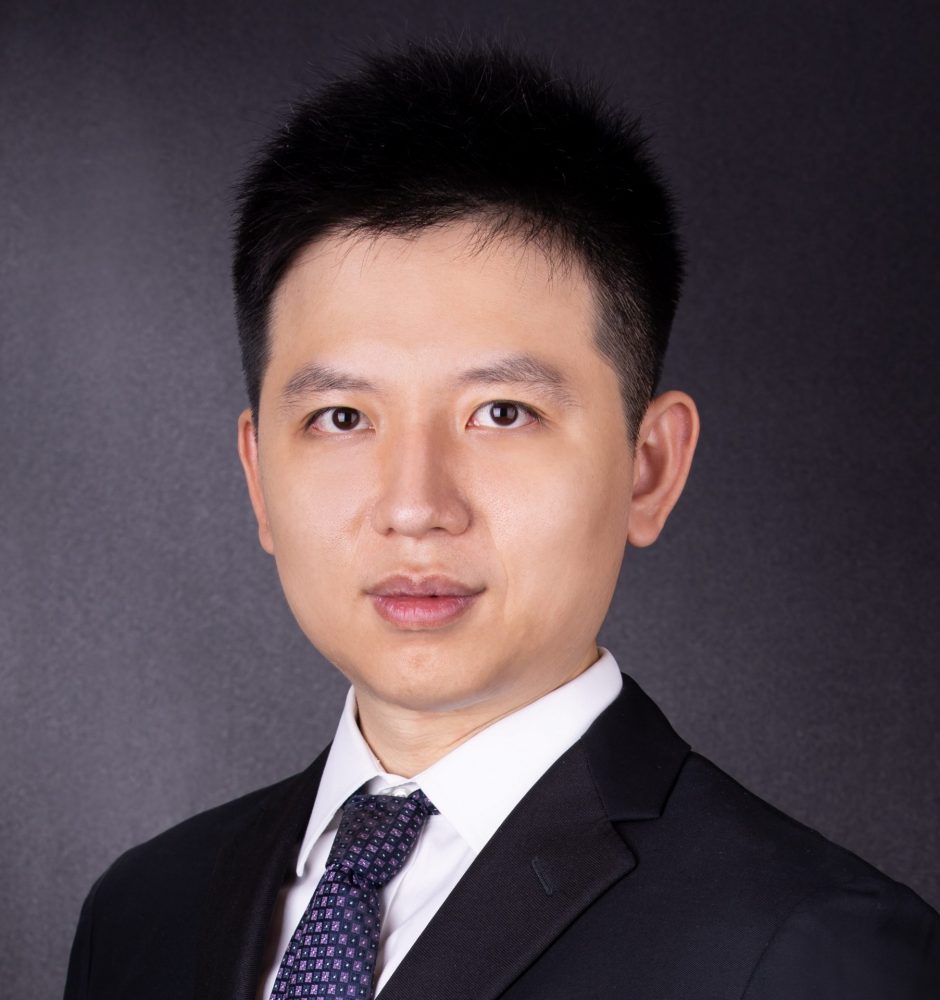
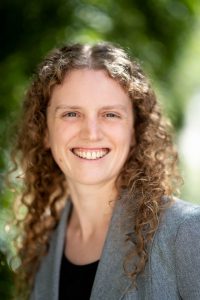
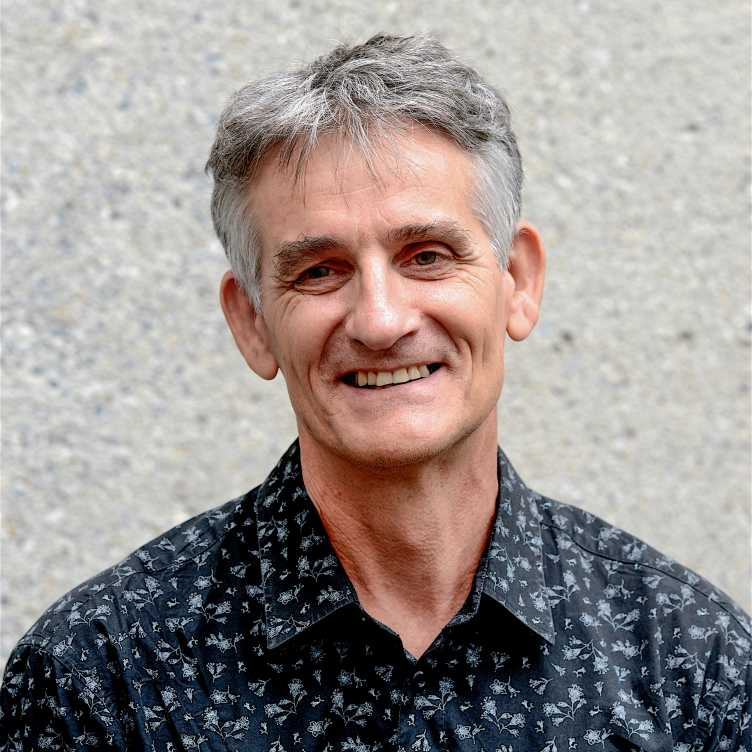
Daniel Kifer is a Professor in the Computer Science and Engineering department at Pennsylvania State University, with affiliations to the Huck Institutes of the Life Sciences. His work bridges computer science, privacy-preserving machine learning, and geoscience applications. With over 10,000 citations and a high h-index, he focuses on methods to unify theoretical and applied research. Research Interests: Differential Privacy, Privacy-Preserving Machine Learning, Physics-Informed Neural Networks, Landslide Prediction, and Formal Verification of Privacy Systems. Recent projects include grants from the National Science Foundation: SaTC: CORE: Small (2024): privacy-preserving user data embedding in machine learning pipelines. SaTC: CORE: Medium (2017-2023): formal methods for differential privacy and accuracy optimization. His research outputs span domains like geoscience, database systems, and policy analysis, emphasizing precision and scalability of privacy-preserving algorithms.
John Psarras is a Professor at the National Technical University of Athens (NTUA) in the School of Electrical and Computer Engineering, specifically within the Division of Industrial Electric Devices and Decision Systems. He serves as the Director of the Decision Support Systems Laboratory (DSSlab) and the University Research Institute of Communication and Computer Systems. He holds a Diploma in Mechanical Engineering (1982) and a Ph.D. in Electrical and Computer Engineering (1989), both from NTUA. His research specializes in decision support systems with applications in energy management, environmental analysis, and information systems. Key areas include: Multi-criteria analysis for energy policy and renewable integration AI-driven optimization of smart grids and building efficiency Sustainable finance mechanisms for green projects Blockchain applications in education and data security His recent publications (2023–2025) demonstrate a strong focus on AI-enhanced decision tools for energy transitions, smart infrastructure, healthcare diagnostics, and cross-border renewable cooperation, reflecting interdisciplinary innovation. He has supervised 22 PhD theses and coordinates EU-funded projects in energy policy, clean technology, and capacity building. No scientific awards are listed in available sources. He leads the Decision Support Systems Laboratory (DSSlab), advancing research in energy analytics, and directs the University Research Institute of Communication and Computer Systems, facilitating large-scale interdisciplinary collaborations.
Prof. Dr. Michael Schloter serves as Director of the Research Unit for Comparative Microbiome Analysis at Helmholtz Munich since 2011 and holds a Professorship in Microbiology at the Technical University of Munich since 2010. He concurrently acts as Principal Investigator at both the German Center for Lung Diseases (DZL) and the Central for Food and Nutrition (ZIEL) at TU Munich, driving interdisciplinary research at the intersection of environmental and human health through the "Planetary Health" framework. His educational foundation was built through diploma studies at Ludwig Maximilian University Munich and doctoral research at the University of Bayreuth, followed by formative work in Brazil and the United States where he pioneered bioinocula development for stress-resilient agriculture. At Helmholtz Munich (formerly GSF), he evolved from group leader in soil microbial ecology (2001) to Research Unit Director, expanding his focus from agricultural systems to human microbiome-health connections. Dr. Schloter's research program centers on microbiome-host crosstalk across ecological scales, investigating how environmental microbiota interact with human and plant microbiomes to influence health outcomes. His work integrates ecological theory with microbiome analysis to decode host-microbe co-evolution patterns, with applications spanning sustainable agriculture, allergy prevention, and infection control. Key thematic pillars include holobiont theory, probiotic development, and microbiome-mediated disease prevention through environmental quality improvement. Analysis of his 2025 publications reveals a strategic research portfolio bridging fundamental and applied microbiome science. Agricultural studies dominate (maize, potato, apple systems), examining microbial inoculants and soil management, while human health investigations explore preterm birth complications and Antarctic mammal microbiomes. Computational approaches for antimicrobial resistance assessment and ecosystem-scale projects like JenaTron demonstrate methodological breadth, all converging on translating microbiome functionality into real-world sustainability solutions. Major recognitions include: Election to the Bavarian Academy of Science (2021) Consistent placement among the top 1% of highly cited global researchers (2019-2021) Heinrich Baur Research Award (2011) for agricultural microbiology contributions As Research Unit Director, Schloter leads large-scale collaborative initiatives including the DZL and ZIEL consortia, securing major funding for microbiome standardization projects and international research networks. His leadership extends to developing analytical frameworks for cross-ecosystem microbiome comparisons and establishing protocols for translating microbial ecology principles into clinical and agricultural applications. The Comparative Microbiome Analysis unit operates as a nexus for multi-host microbiome research, employing comparative genomics, field-scale agricultural trials, and clinical cohort studies to investigate microbiome dynamics across environmental, plant, and human systems. Current infrastructure includes advanced sequencing facilities and experimental platforms for plant-microbe and host-microbe interaction studies under controlled and natural conditions.
Giuliano Di Baldassarre is a Professor of Hydrology and Environmental Analysis at the Department of Earth Sciences, Uppsala University , Sweden. He serves as Head of Division for LUVAL (Air, Water and Landscape Sciences) and directs the Centre of Natural Hazards and Disaster Science (CNDS) (2016–2025). His work bridges water, environment, and society through interdisciplinary methods , focusing on disaster risk reduction, climate adaptation, and sustainable development. Education : Details not explicitly provided in the text. His research examines feedbacks between human activities and hydrological processes , including floods, droughts, and reservoir management . Key themes include social-ecological systems , inequalities in water crises , and policy implications of hydrological extremes . He has pioneered sociohydrology and human-water system modeling . Recent articles highlight global drought-flood interactions , urban water inequality , climate service maladaptation , and sociohydrological modeling . His work spans Nature Sustainability , Science Advances , and Hydrological Sciences Journal . Scientific Awards : International Hydrology Prize (Volker Medal) Plinius Medal (EGU) Witherspoon Lecture Award (AGU) European Research Council Consolidator Grant He led Panta Rhei - Everything Flows (2013–2022), IAHS’s global initiative on water-society interactions. Current efforts include transdisciplinary praxis and climate risk reduction frameworks .
Fangzhou LU is an Assistant Professor of Finance at the HKU Business School, The University of Hong Kong, since 2020. His research focuses on fintech, cryptocurrency, behavioral finance, and China's economic development. He received his academic training at prestigious institutions: PhD and MS in Financial Economics from Massachusetts Institute of Technology (MIT), 2020 BS in Business from New York University, Stern School of Business, 2014 Dr. Lu's research interests encompass Fintech, Cryptocurrency, Behavioral Finance, Entrepreneurial Finance, Household Finance, Emerging Markets, consumption, fiscal stimulus, bond markets, and China's economic development. His work often leverages large datasets from China to examine how technological innovations and government policies impact financial markets and firm behavior, particularly during crises like the COVID-19 pandemic. His recent publications demonstrate a strong trend toward applied research in emerging markets, with significant contributions on SPAC IPOs, government subsidy effectiveness for failing firms, and stock market informativeness in China. These works appear in top finance journals including the Journal of Financial Economics and Journal of Financial and Quantitative Analysis, highlighting his expertise at the intersection of finance, technology, and policy analysis.
Dr. Rachel Scholes is an Assistant Professor in the Department of Civil Engineering at the University of British Columbia. Her research focuses on protecting human and environmental health through the study of contaminants in urban water systems, with an emphasis on optimizing contaminant removal in engineered and nature-based treatment systems. She holds a B.S. in Chemical Engineering from Northwestern University and M.S. and Ph.D. in Environmental Engineering from the University of California, Berkeley. Her research interests include environmental chemistry, trace contaminants, water reuse, nature-based treatment systems, and stormwater treatment. She teaches courses such as ENVE 301 (Environmental Engineering Intermediate Design Project) and CIVL 562 (Environmental Data Collection and Analysis). Her lab, Scholes Lab, actively investigates contaminant dynamics in constructed wetlands, bioretention systems, and subsurface treatment environments. Key research contributions include enhancing contaminant removal via Fe (III)-EDTA-amended wetlands, studying 6PPD-quinone dynamics in salmon streams, and optimizing pharmaceutical attenuation in benthic wetland biomats. Her work bridges fundamental environmental chemistry with applied engineering solutions for sustainable water management. Dr. Scholes' lab collaborates on projects funded by grants focused on urban water systems, green infrastructure, and contaminant fate. She advises students through the Scholes Lab (www.scholeslab.org), which emphasizes interdisciplinary approaches to environmental challenges.
Sebastian Szyller serves as an Assistant Professor in the Department of Computer Science at Aalto University, Finland, where he is a core member of Adjunct Professor N. Asokan's research group. His academic role centers on advancing security frameworks for machine learning systems through rigorous theoretical and empirical research. His research expertise spans machine learning security , adversarial machine learning , and model ownership verification , with particular emphasis on defense mechanisms against model extraction attacks, unintended interactions among security measures, and intellectual property protection for AI models. Key contributions address the tension between model confidentiality and practical deployment requirements in real-world systems. Analysis of his 2019-2024 publications reveals an evolving research trajectory from foundational model extraction defenses (e.g., PRADA, 2019) to sophisticated analyses of defense interactions (SoK, 2024) and ownership resolution frameworks (False Claims, 2024). His work consistently bridges theoretical security principles with practical ML deployment challenges, establishing critical benchmarks for model protection. Dr. Szyller actively contributes to premier security venues including IEEE Symposium on Security and Privacy, USENIX Security Symposium, and AAAI conferences. His collaborations within Asokan's research group demonstrate strong interdisciplinary engagement in securing machine learning ecosystems, with recent work expanding into multimedia security and eCommerce fraud detection applications.
Dr. Kevin P. Gallagher is a Professor of Global Development Policy at Boston University (BU) and Director of the Global Development Policy Center (GDP Center). He focuses on economic development, trade/investment policy, international environmental policy, and Latin America. His research emphasizes global financial governance, climate resilience, and equitable development. Education includes a BA from Northeastern University, and MA and PhD from Tufts University. He has held visiting/adjunct roles at institutions like Johns Hopkins SAIS, Fletcher School, and Tsinghua University. Research interests center on reforming Bretton Woods institutions, China’s global development finance, and climate policy integration into IMF frameworks. He co-authored influential books such as The Case for a New Bretton Woods and The China Triangle . Recent work addresses debt sustainability in developing countries, climate transition risks, and innovative financing mechanisms like Sustainable Future Bonds. He advises global bodies like the UN Committee for Development Policy and chairs task forces on green transitions and China competition. Key contributions include advocating for IMF surcharge reforms, evaluating climate risks in energy projects, and analyzing China’s overseas development finance impacts on biodiversity and socio-ecological systems.
Fritz Brugger is a Lecturer at the Department of Humanities, Social and Political Sciences at ETH Zürich and serves as the executive director of NADEL (Network for African-Ethiopian Development Linkages). He holds a PhD in Development Studies from the Graduate Institute of International and Development Studies in Geneva. His research focuses on the developmental impacts of natural resource extraction, extractive industries' corporate roles, and governance challenges in Sub-Saharan Africa. Key areas include health impacts of mining, illicit financial flows, and policy interventions in resource-dependent economies. Prior to joining ETH Zürich, Brugger worked at Helvetas for eight years, later becoming a consultant on governance issues in water management, agriculture, and corporate responsibility. He designed an index-based agricultural insurance system and a mobile-tech platform for smallholder farmers' market access. His work spans diverse regions, with a focus on Burkina Faso, Ghana, and Mozambique. His publications emphasize interdisciplinary approaches, such as Q-methodology for policy engagement, and address topics like mercury use in artisanal mining, corporate due diligence, and the energy transition's impact on social licenses. He contributes to global debates on illicit financial flows, tax evasion, and sustainable development goals implementation through multilateral institutions. Brugger's advisory and grant work includes projects on health impact assessments in mining communities, policy coherence in development aid, and the nexus of extractive industries and conflict. He collaborates with NGOs, governments, and private sector entities to bridge research and policy, particularly in fragile contexts.
Gregory C. Gray, MD, MPH, FIDSA is a Professor in Infectious Disease Epidemiology at the University of Texas Medical Branch (UTMB) in Galveston, Texas, with appointments across multiple departments including Internal Medicine (Infectious Diseases), Microbiology & Immunology, and Global Health & Emerging Diseases. Dr. Gray has conducted epidemiological studies of infectious diseases for over 25 years across five continents, with a particular focus on occupational disease transmission, especially respiratory viruses. His research has examined farmers, veterinarians, turkey workers, swine workers, poultry workers, horse workers, cattle workers, hunters, and military personnel. He pioneered the Millennium Cohort Study, a prospective cohort study of approximately 300,000 people projected to continue through 2068, and has led numerous large-scale vaccine trials. As a strong advocate for the One Health approach, Dr. Gray has established One Health centers in the USA, Romania, and China, and developed four graduate programs in One Health (PhD, MHS, and certificates). His recent research focuses on zoonotic spillover events, universal influenza vaccines, and coronavirus detection in agricultural settings, with numerous publications in 2024-2025 addressing H5N1 avian influenza, respiratory virus transmission, and environmental health impacts. Selected honors include: Department of Defense Legion of Merit Medal Secretary of Defense Medal for Outstanding Public Service Medal of Honor from Mongolia's Minister of Health The Peace Medal awarded by the President of Mongolia University of Texas Medical Branch Robert E. Shope, MD Professorship Dr. Gray has authored over 350 peer-reviewed manuscripts cited more than 21,000 times (H-index 76). His current research portfolio includes multiple active grants from the USDA, Fogarty International Center, and private industry focusing on zoonotic disease surveillance, influenza vaccines, and coronavirus detection in agricultural settings. He has mentored numerous students and established international collaborations across six continents.
Jeff Shamma is the Department Head and Professor of Industrial and Enterprise Systems Engineering (ISE) at the University of Illinois at Urbana-Champaign, holding the Jerry S. Dobrovolny Chair. He is also courtesy Professor in Aerospace Engineering and Mechanical Science and Engineering. Formerly, he held the Julian T. Hightower Chair at Georgia Institute of Technology and faculty positions at KAUST. Dr. Shamma earned his PhD in Systems Science and Engineering from MIT (1988) and a BS in Mechanical Engineering from Georgia Tech (1983). He is a Fellow of IEEE and IFAC, recipient of the IFAC High Impact Paper Award, AACC Donald P. Eckman Award, and NSF Young Investigator Award. His research spans Decision and Control , Game Theory , and Multi-Agent Systems , focusing on human-machine networks, distributed autonomy, and adaptive robotic systems. Recent work examines crowd dynamics, risk-sensitive control, and feedback linearization for constrained optimization. Jeff has served as Editor-in-Chief of IEEE Transactions on Control of Network Systems (2020–2024) and held editorial roles in journals like Annual Reviews in Control and IEEE Transactions on Robotics . His 15 most recent publications (2024–2025) analyze learning dynamics, multi-agent optimization, and UAV-crawler systems, reflecting trends in autonomous systems, game-theoretic modeling, and industrial inspection technologies. Scientific distinctions include: Fellow of IEEE and IFAC IFAC High Impact Paper Award (2020) AACC Donald P. Eckman Award (1996) NSF Young Investigator Award (1992) Mohammed Dahleh Distinguished Lecture Award (2013) Dr. Shamma advises current PhD students Hassan Abdelraouf, Aya Hamed, and Nawaf Otaibi, with former advisees including Sarah Toonsi (2025) and Fat-hy Rajab (2025). His lab integrates theoretical research with applied projects like FalconScan, a UAV-crawler system for industrial inspection, and develops magnetic legs for curved surface UAV landing.
Professor Susan Thorp is a Finance academic at the University of Sydney Business School . With a PhD in Economics from UNSW and prior roles at University of Technology Sydney and the Reserve Bank of Australia, she focuses on household finance , retirement planning , and financial market behavior . BEc (Hons) - University of Sydney Dip. Ed. - University of New England PhD - University of New South Wales Her research interests include: Life-cycle financial decision-making Behavioral influences on savings and investments Superannuation policy and market integration Commodity market dynamics Economic impacts of financial literacy Crises-driven market contagion Recent publications analyze retirement decumulation , financial trust , and commodity-equity market correlations . She leads cross-disciplinary teams applying dynamic programming , econometric modeling , and experimental design to financial challenges. Her grants include ARC Linkage Projects and ASIC commissions for improving financial communication and regulatory frameworks . Media outlets frequently cite her expertise on superannuation policy , market volatility , and retirement savings behavior .
Dr. Patrick J. McNamara is an Associate Professor in the Department of Civil, Construction and Environmental Engineering at Marquette University's College of Engineering. He directs the McNamara Research Group, which focuses on understanding how chemicals from consumer products impact public health and the environment once they pass through water treatment systems. His research bridges environmental engineering and microbiology to address critical water quality challenges facing modern infrastructure. Dr. McNamara's educational background includes: Ph.D., 2012, Civil Engineering, University of Minnesota, Twin Cities M.S., 2008, Environmental and Water Resources Engineering, University of Texas at Austin B.S., 2006, Civil Engineering (Minor - Spanish for the Business Professions), Marquette University His research program investigates how consumer product chemicals impact engineering treatment processes that rely on healthy bacteria to treat water. The McNamara Research Group develops non-traditional treatment processes to remove these chemicals from water and mitigate their environmental effects. His work spans antibiotic resistance in water systems, micropollutant removal technologies, pyrolysis of biosolids, PFAS contamination, and electrochemical treatment processes. Specific areas include the impact of corrosion inhibitors on antibiotic resistance, removal of chemicals via drinking water treatment, environmental antibiotic resistant bacteria, beneficial biosolids reuse, and pyrolysis applications. Dr. McNamara's publication record demonstrates a strong focus on emerging water quality challenges, particularly the intersection of chemical contaminants and antibiotic resistance. His recent work examines corrosion inhibitors' impact on antibiotic resistance in drinking water, PFAS mitigation through advanced treatment processes, and environmental drivers of antibiotic resistance in stormwater systems. His research combines fundamental microbiology with practical engineering solutions to address complex water quality issues. Dr. McNamara has received numerous honors and awards: 2022 OCOE Outstanding Researcher Award from Marquette University Marquette University's Campus 2020 KEEN Rising Star Faculty Scholar Award from Provost Office (2019) Central States Water Environment Association Bill Boyle Outstanding Educator Award (2018) Way Klingler Young Scholar Award (Marquette University, 2018) Excellence in Review Award – Environmental Science & Technology (2017) Dr. McNamara has secured significant research funding as Principal Investigator on multiple projects, including NSF grants focused on mitigating antibiotic resistance in drinking water and studying the environmental impacts of quaternary ammonium compounds. His current research portfolio includes projects on PFAS removal through novel electrocoagulation-peroxidation processes, designing green stormwater infrastructure to combat antibiotic resistance, and removing contaminants from greywater using electrocoagulation technology in collaboration with industry partners like Kohler Company. The McNamara Research Group at Marquette University maintains strong collaborations with researchers across multiple institutions and works closely with water utilities and industry partners to translate research findings into practical solutions for water treatment challenges. Their work addresses critical infrastructure needs while protecting environmental and public health through innovative engineering approaches.
Lin Chen is the Chair Professor of Finance and Stelux Endowed Professor in Finance at the University of Hong Kong (HKU), serving as Associate Dean (Research and Knowledge Exchange) in the Faculty of Business and Economics. He holds a PhD from the University of Florida and has held academic leadership roles at HKU and Chinese University of Hong Kong (CUHK). His research focuses on financial technology, banking systems, corporate finance, and economic development, with notable contributions to understanding financial resilience during crises and institutional reforms. Educations: PhD/MBA in Finance from University of Florida, B.E. in Engineering from South China University of Technology Leadership roles: Associate Dean (HKU), Board Member of HKU-Standard Chartered FinTech Academy, Currency Board Committee member Research interests span financial innovation , banking competition , corporate governance , and ESG integration . Key projects include RGC Theme-based grants on FinTech stability/inclusion and HK's financial center development. His work is published in top journals like Journal of Financial Economics and Review of Financial Studies . He has advised major institutions including Hong Kong Monetary Authority, World Bank, and China Construction Bank. Awards include the Jensen Prize (2011), Nobel nomination (2016), and honorary professorships from Edinburgh and Berkeley. Grants coordination includes HK$24.4 million FinTech project (2020-2025) and leadership roles in research centers like HKU’s Financial Innovation & Development Centre. Active in editorial roles for Management Science and policy advisory groups. Media engagements include BBC, Bloomberg, and Harvard Law School forums. Current initiatives focus on Web3.0 development in HK and financial inclusion strategies.
Susan Wachter is a Professor of Financial Management and Professor of Real Estate at the University of Pennsylvania's Stuart Weitzman School of Design and Wharton School. She has held academic positions since 1972, including roles as Chair of the Real Estate Department and Co-director of the Penn Institute for Urban Research. Her research focuses on urban economics, housing finance, climate risk, and public policy. She serves on editorial boards for journals like Journal of Housing Economics and has advised organizations such as the National Research Council and the American Real Estate and Urban Economics Association. Wachter earned her academic credentials at Bryn Mawr College and held a visiting professorship at Singapore Management University. Her awards include the Lindback Award for Distinguished Teaching (1975) and the American Real Estate and Urban Economics Lifetime Achievement Award (2005). Her work explores topics like mortgage market stability, climate impacts on housing, and equitable housing finance systems. Research Highlights: Climate risk in mortgage markets, pandemic-era housing dynamics, foreign buyer tax impacts, and systemic financial stability. Policy Contributions: Advised on housing finance reforms, GSE viability, and fair housing policy modernization. Grants & Labs: Directed the Wharton Geographical Information Systems Lab since 1995, focusing on urban spatial analytics. Her publications span over four decades, addressing topics such as mortgage stress, urban competitiveness, and the legacy of the 2008 housing bubble. Wachter's interdisciplinary approach bridges real estate finance, public policy, and urban planning to inform sustainable housing solutions.