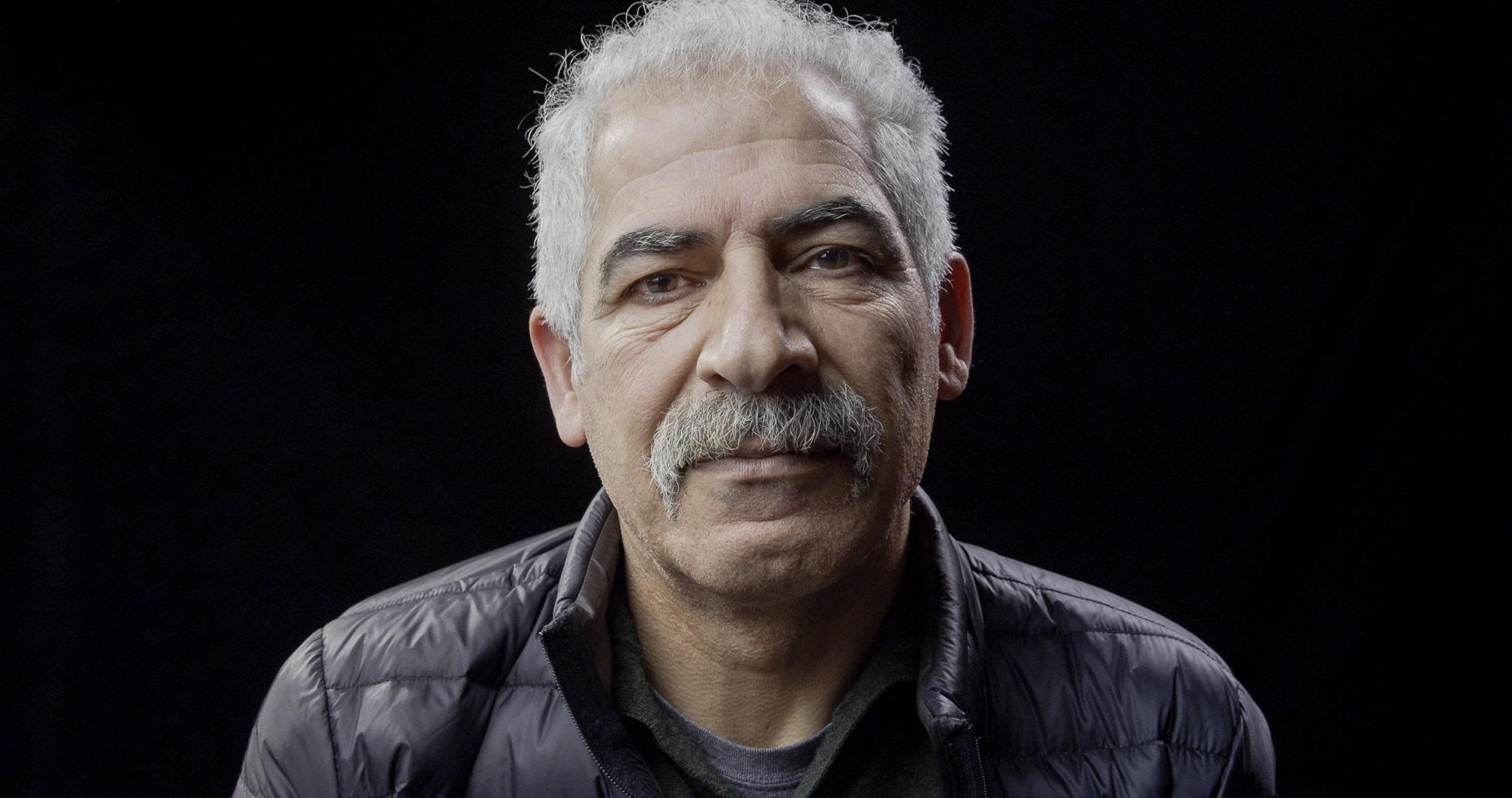
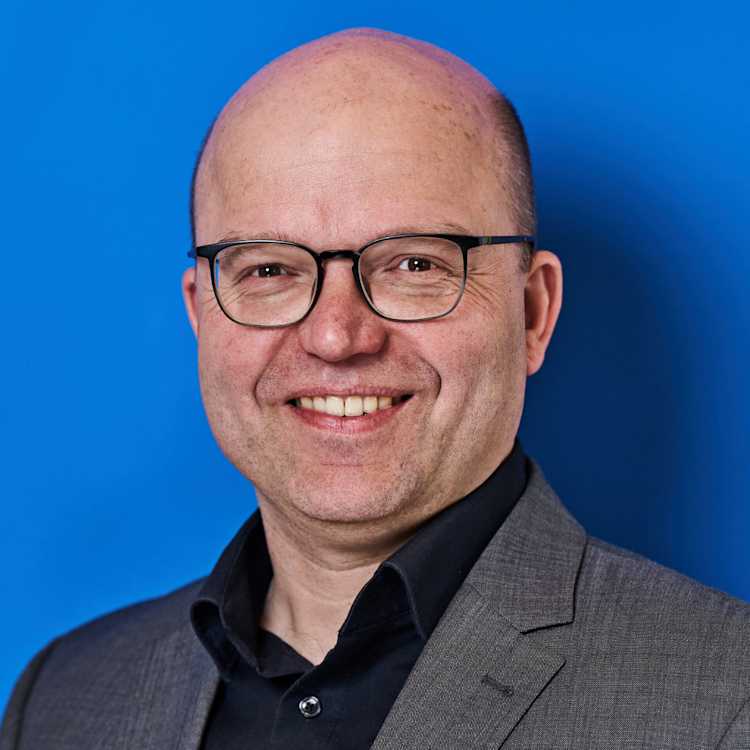
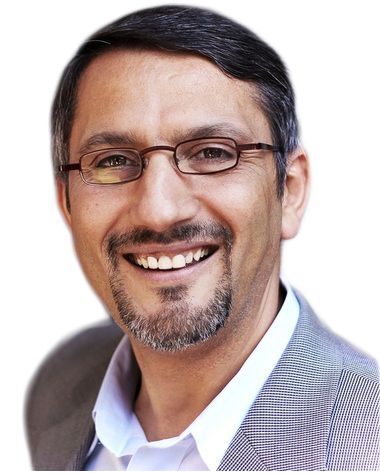
Albrecht Fuess is a Professor of Islamic Studies at Philipps University of Marburg since 2010, specializing in Middle Eastern History (13th–17th centuries), Mamluk socio-cultural dynamics, and contemporary European Islamic discourses. His research spans historical continuity in Ottoman-Mamluk-Safavid interactions, Islamic youth cultures, and Mediterranean geopolitics. Research Focus: Medieval Islamic history, Transottomanica mobility studies, Islam in Europe, and cultural integration of Muslim migrants. Awards: Le Studium Fellowship (2007–2009) at Université de Tours. His publications emphasize military-economy interplay, legitimacy through religious narratives, and resource management in empires, with a focus on Mamluk and Ottoman transformations. He has advised on doctoral projects covering topics like Islamic welfare, Arabic ʾAmālī literature, and Cypriot-Ottoman relations. Leadership: Co-coordinator of Transottomanica (DFG-SPP 1981), member of ANR and DAAD committees, and liaison professor for the German National Academic Foundation. Editorial Roles: Co-editor of 'Transottomanica' and 'Muslim Worlds' series, and advisory board member for journals in Cairo, Paris, and Leuven.
Katherine Lemons is an Associate Professor in the Department of Anthropology at McGill University's Faculty of Arts. Her research focuses on Islamic family law adjudication in India, examining its implications for understanding Muslim gender and kin relations, secularism, minority politics, and legal pluralism in postcolonial contexts. She has established herself as a leading scholar in the anthropology of law with her groundbreaking work on Muslim divorce practices and their relationship to Indian secularism. Dr. Lemons earned her Ph.D. from the University of California, Berkeley in 2010. Her academic journey has centered on the intersections of religion, law, and gender in South Asian contexts, with particular attention to how religious legal systems operate within secular states. Her research interests span multiple interconnected fields including the anthropology of law, Islamic legal studies, secularism theory, feminist anthropology, and South Asian studies. Lemons approaches these topics through careful ethnographic work in India, particularly examining how Muslim communities navigate family law disputes through non-state Islamic institutions. Her work challenges conventional understandings of the relationship between religious and secular law, arguing that Muslim divorce practices in India represent a critical site for understanding the complexities of secular governance in postcolonial contexts. She investigates how legal pluralism functions in practice, how religious legal authority is established adjacent to secular states, and how gender relations are shaped through these intersecting legal regimes. Dr. Lemons' scholarly output reveals a consistent focus on the tensions between religious legal traditions and modern secular governance, with particular attention to how marginalized communities navigate these complex legal landscapes. Her work demonstrates how legal practices often blur the boundaries between religious and secular domains, challenging simplistic understandings of secularism. She has made significant contributions to understanding how Islamic law functions in non-Muslim majority contexts, both in India and more recently in her research on sharia courts in Ontario. Michelle Z. Rosaldo Prize from the Association for Feminist Anthropology, American Anthropological Association (Honorable Mention) Critical Anthropology Book Prize from the Association for Political and Legal Anthropology (Honourable Mention) South Asian Muslim Studies Association Book Award (Honourable Mention) As an academic mentor, Dr. Lemons advises graduate students working at the intersections of anthropology, law, and religious studies. Her research has been supported by various academic grants that have enabled extensive fieldwork in India and Canada. She is currently developing two major research projects: "Traveling for Justice," which examines transnational dimensions of Islamic legal knowledge, and "Adjacent to the State," an ethnographic study of sharia courts in Ontario. Dr. Lemons is affiliated with several research centers at McGill University that focus on South Asian studies, legal anthropology, and religious studies. Her work connects with broader scholarly communities through collaborations with researchers studying legal pluralism, secularism, and Islamic jurisprudence across multiple national contexts.
Sarah Bracke is a Professor in Sociology of Gender and Sexuality at the Faculty of Social and Behavioural Sciences, University of Amsterdam . Her work critically examines intersections of gender, sexuality, race, and secularism, particularly in European contexts. She is deeply engaged in analyzing systemic crises—capitalist, nationalist, and ecological—and their impact on marginalized communities. Current Affiliation : University of Amsterdam, Faculty of Social and Behavioural Sciences. Research Focus : Gender theory, reproductive rights, anti-LGBTQ+ mobilizations, secularism, and the political dimensions of care economies. Bracke’s research emphasizes the deliberate erosion of gender, reproductive, and LGBTQ+ rights, often highlighting transnational collaborations among far-right and mainstream political forces. She connects these issues to broader crises, including climate change, capitalist precarity, and nationalist rhetoric. Her work advocates for feminist coalitions that transcend traditional boundaries, prioritizing care ethics and collective solidarity over exclusionary frameworks. Her recent publications explore topics like the racialized dimensions of reproductive politics, the secularist underpinnings of European ‘Muslim Question’ discourse, and the role of academia in resisting oppressive systems. Although no specific awards or advisees are mentioned in the text, Bracke’s scholarship consistently bridges feminist theory, critical race analysis, and critiques of neoliberalism, urging transformative responses to global crises.
Sarah Sharma is a Professor of Media Theory at the University of Toronto’s Faculty of Information and Director of the Institute of Communication, Culture, Information and Technology (ICCIT). Her work interrogates intersections of technology, temporality, and labor through a feminist lens. She has held leadership roles in the McLuhan Centre (2017–2022) and is recognized for advancing critical media theory. Research focuses include: • Temporality’s role in cultural politics • Feminist reimaginings of McLuhan’s media theory • Digital platforms’ socio-political impacts • Labour dynamics in gig economies (e.g., TaskRabbit). Her upcoming book Insufferable Tools: Big Tech and the Broken Machine critiques tech industry failures. Key achievements: • 2024 Desmond Morton Research Excellence Award • 2014 NCA Critical Cultural Book of the Year for In the Meantime: Temporality and Cultural Politics . Her edited volume Re-Understanding Media (2022) exemplifies feminist extensions of media theory. Recent engagements include keynote addresses at the Canadian Communication Association (June 2025) and University of Michigan’s Digital Ideas Workshop (June 2025). She critiques ‘accelerationist’ narratives about technology and advocates for rethinking media through marginalized perspectives.
Dr. Ali Kassem is a Lecturer in Sociology and Anthropology at the National University of Singapore (NUS), Faculty of Arts and Social Sciences. His academic work spans multiple disciplines, focusing on decolonial approaches to understanding power dynamics, knowledge production, and social formations across the Arab-majority world and beyond. Dr. Kassem received his PhD from the School of Law, Politics, and Sociology at the University of Sussex. He completed postdoctoral research at the Institute for Advanced Studies at the University of Edinburgh and was an early career fellow with the Arab Council for Social Sciences funded by the Carnegie Corporation of New York. His academic journey includes teaching and research positions at Ludwig-Maximillian University in Munich, EHESS in Paris, American University of Beirut, and Lebanese American University. Dr. Kassem's research examines contemporary coloniality across questions of power and knowledge. His work spans anti-Muslim racism within Arab-majority contexts, transformations in Islamic educational institutions, dehumanization of Syrian refugees, and urban transformations in Lebanon. His transdisciplinary approach engages ethnic and racial studies, sociology of religion, social psychology, migration studies, and urban studies, working alongside anticolonial thinkers including Frantz Fanon, Ali Shariati, and James Baldwin. His recent publications reveal a strong focus on decolonial theory applied to education, urban studies, and Islamic contexts. Dr. Kassem's work consistently challenges Eurocentric frameworks while exploring alternatives emerging from the Global South. His research demonstrates particular attention to Lebanon and the eastern Mediterranean region as sites for theorizing global coloniality. Dr. Kassem has authored the book "Islamophobia and Global Coloniality: the Lived Erasure of Visibly Muslim Women in Lebanon" (Bloomsbury Academic, February 2023) and is currently editing "Decoloniality and Arabo-Islamicate Worlds" (Bristol University Press, 2025). His scholarly contributions appear in journals including Ethnic and Racial Studies, Globalizations, Contemporary Religion, and Review of Middle East Studies.
Sami Al Daghistani is an Associate Professor in Contemporary Islamic Studies at Lund University's Centre for Theology and Religious Studies, a Researcher at the Centre for Advanced Middle Eastern Studies (CMES), and holds associate appointments at Columbia University (Middle East Institute) and the Brooklyn Institute for Social Research. His work bridges Islamic economics, environmental ethics, legal philosophy, and intellectual history, emphasizing interdisciplinary methodologies and cross-cultural analysis. Ph.D. (2017) in Islamic Studies from Leiden University, co-supervised by Columbia University and WWU Münster Postdoctoral Fellow at Norwegian School of Theology (2020-2024) Visiting Researcher at Istanbul University and Swedish Research Institute in Istanbul His research focuses on decolonizing economic thought through Islamic traditions, integrating environmental ethics, moral philosophy, and legal theory. Recent publications analyze intersections between Islamic economic cosmology, pre-modern intellectual traditions, and contemporary societal challenges. Key projects include: SWEMENA (Swedish Middle East and North Africa Network), Critical Islamic Studies consortium (founded 2021), and GreenMENA. He has received the 31st World Book of the Year Award in Islamic Studies (2024) and Islamic Economics Research Award (2024). Academic roles span teaching at Lund University (Islamology courses), guest lectures at Istanbul Forum, and leadership in international research collaborations. His translations of Ibn Baṭṭūṭa and Ibn Ṭufayl into Slovenian demonstrate linguistic expertise and cultural bridge-building.
Prof. Dr. Andreas Zick is a leading scholar at Bielefeld University, serving as Scientific Director of the Institute for Interdisciplinary Conflict and Violence Research (IKG) and Professor for Socialization and Conflict Research at the Faculty of Education. He also co-leads the ConflictA initiative since 2023 and contributes to migration education through the Faculty of Education. 2008: Professor for Socialization and Conflict Research, Bielefeld University 2013: Director of IKG 2023: Scientific Head of ConflictA His research focuses on intergroup conflicts , group-based antipathy , right-wing extremism , radicalization , and socialization processes . He investigates spatial dimensions of radicalization, societal integration challenges, and prejudice dynamics through comparative studies. Recent publications analyze radicalization spaces (2024-2025) using spatial sociology, democratic conflict perceptions (2025), and cross-cultural prosocial behavior during pandemics. Key methods include ethnography, longitudinal surveys, and multi-perspective comparative analysis. Scientific contributions recognized by: Communicator Award (2016) Nevitt Sanford Lifetime Award (2022) Active in public policy as member of the Federal Agency for Civic Education's advisory board and Federal Commissioner's Antiracism Expert Council. Leads major projects on radicalization prevention and spatial conflict dynamics with national/international partners.
Mienah Z. Sharif serves as an Assistant Professor at the University of California - Berkeley in the School of Public Health - Division of Community Health Sciences, with an affiliate appointment in Epidemiology at the University of Washington. Her academic journey includes a PhD from the University of California Los Angeles (2016), an MPH from the same institution, and a BA in Economics and Government from Smith College. PhD, University of California Los Angeles, 2016 MPH, University of California Los Angeles BA, Economics and Government, Smith College Dr. Sharif employs a social justice, global, and intersectional approach to examining health inequities among racial and ethnic minority groups across the lifecourse. Her research centers on structural factors, differential exposure to adverse social conditions, and psychosocial factors influencing health and wellbeing. She extends her work on racism and discrimination to examine religious identity as structural inequality through the racialization of religion. As a mixed-methods researcher, she prioritizes community-engaged research aimed at guiding health and social policies addressing systemic inequities. Her publication record demonstrates consistent focus on structural determinants of health, with recent work examining Palestinian health equity, immigrant and refugee health during the pandemic, and critical race approaches to health research. Her articles span public health, epidemiology, and social justice domains, with increasing emphasis on practical applications for policy development and health equity interventions. Dr. Sharif's scholarly contributions reflect a commitment to addressing health disparities through rigorous research grounded in critical race theory and social justice frameworks. Her work bridges academic research with community needs, emphasizing the importance of structural interventions to address systemic health inequities.
Prof. Dr. Naika Foroutan is a leading scholar at Humboldt University of Berlin, where she holds the Professorship of Integration Research and Social Policy. She serves as Director of the German Centre for Integration and Migration Research (DeZIM) and Head of Department at the Berlin Institute for Empirical Integration and Migration Research (BIM). Her work bridges empirical migration studies, social policy, and radicalization analysis. Research Interests: Transformation of immigration societies into post-migrant societies, Islam and minority policies, radicalization, racism, Islamism, intergroup relations, and democratic pluralism. Her publications and projects explore intergenerational integration, anti-Muslim sentiment, hybrid identities, and radicalization prevention through bridging narratives. She has received prestigious awards, including the Berlin Integration Prize (2011), Fritz Behrens Science Prize (2012), Höffmann Science Prize (2016), and an honorary doctorate from Lund University (2025). Contact her directly via anfragen@dezim-institut.de for academic or institutional inquiries.
Dr. Kerstin Steiner is an Associate Professor at the Law School, La Trobe University. She holds adjunct roles at the University of Melbourne's Asian Law Centre and Centre for Indonesian Law, Islam and Society. Her leadership roles include Director of Research (2021), Acting Head of Law School (2019), and mentorship in promotions programs. Education: PhD, Melbourne University LLM, Melbourne University LLB, University of Bielefeld, Germany Graduate Certificate in Higher Education, Monash University Research Interests: Dr. Steiner specializes in comparative legal studies focusing on Southeast Asia, particularly intersections of law with politics, economics, and society, with a strong emphasis on Islam's role in judicial systems. She has conducted groundbreaking work on legal pluralism, religious governance, and anti-corruption frameworks in Malaysia and the Philippines. Key Research Trends: Her recent work (2023-2025) highlights evolving legal challenges in Southeast Asia, including digital hate speech mitigation, Islamic financial systems, and constitutional reforms in pluralistic societies. Earlier research (2017-2020) centered on corruption dynamics (e.g., 1MDB scandal), Shariah court systems, and gender equity in legal frameworks. Awards: VC Cultural Quality Award (2024), Distinguished Scholar Award (PHISO, 2018), Multiple Research Excellence Awards (2017) Grants: $100k+ for international study tours; ARC Discovery Project (2016-2020) on Islam, Law, and the Philippine State Labs/Teams: La Trobe Asia Steering Committee, International Legal Studies Research Group (ILSRG), Working Group on Islamophobia
Christopher Han-Fai Seto is an Assistant Professor of Sociology at Purdue University, having joined the Department of Sociology in 2023. His research sits at the intersection of criminology, public health, and the sociology of religion, with a strong computational and spatial-methods orientation. Education: Ph.D. in Criminology, Pennsylvania State University Research Interests: Dr. Seto’s substantive work revolves around hate crime, violence, health, and religion/morality , approached through ecological lenses. He leverages spatial data , large-scale network analysis , and big social & digital data to understand how community contexts shape deviance and well-being. Publication Profile: Between 2020 and 2025 he has published extensively in leading journals—including Justice Quarterly , Health & Place , Social Science & Medicine , British Journal of Criminology , Sociology of Religion , and Journal of Adolescent Health . The body of work reveals a consistent focus on anti-Asian hate incidents , Christian nationalism and gun policy , religious ecology of crime , and COVID-19 spillover effects . Contact & Web Presence: Office: BRNG 1156, Purdue University Email: setoc@purdue.edu Personal website: chseto.com
Gholam Khiabany is a Reader in Media and Communications at Goldsmiths, University of London, within the Department of Media, Communications and Cultural Studies (MCCS). His academic career spans over two decades with significant contributions to the understanding of media, politics, and cultural practices, particularly in relation to the Middle East. He serves as an editor of the Middle East Journal of Culture and Communication and is a member of the council of management of the Institute of Race Relations. Khiabany's research interests center on the complex relationship between citizenship, political activism, and media and cultural practices. His work critically examines media representation of race, migration, and refugees, with particular attention to anti-Muslim racism and the culturalization of terror. He has extensively studied political communication in Iran and the broader Middle East, analyzing how digital media transforms political engagement in authoritarian contexts. His scholarship also addresses the rise of the security state, multiculturalism debates, and the political economy of media in neoliberal times. His scholarly output demonstrates consistent engagement with contemporary political issues through a critical media studies lens. Recent publications reveal a growing focus on migration securitization, citizenship rights, and the marketization of higher education. His work consistently bridges theoretical rigor with urgent political questions, particularly regarding racialized politics and state power. Khiabany frequently collaborates with scholars like Milly Williamson, Natalie Fenton, and Des Freedman, reflecting his commitment to collective scholarly work. Khiabany has authored influential books including Iranian Media: The Paradox of Modernity (2009), Blogistan: The Internet and Politics in Iran (2010, co-authored with Annabelle Sreberny), and Media, Democracy and Social Change: Re-imagining Political Communications (2020). He has also co-edited significant volumes such as After Charlie Hebdo: Terror, Racism and Free Speech (2017) and The Handbook of Media and Culture in the Middle East (2023). His academic work consistently addresses issues of power, representation, and resistance, with particular attention to how marginalized communities navigate media landscapes. Khiabany's research has evolved to increasingly focus on the intersection of migration politics, security discourses, and racialized state power, while maintaining his foundational interest in Middle Eastern media politics and alternative communication practices.
Zakia Salime is an Associate Professor in the Department of Sociology at Rutgers, The State University of New Jersey. She holds a Ph.D. from the University of Illinois at Urbana-Champaign (2005). Her research focuses on intersections of gender, globalization, and postcolonial theory, with a regional specialization in Morocco and North Africa. Research Interests: Examining global-local dynamics of human rights frameworks and Islamic legal systems Gendered spatial politics during Arab Spring uprisings Neoliberal land governance and peasant resistance in Morocco Sociolegal analysis of citizenship and resource privatization Current Projects: Her upcoming book manuscript, Seeing like a Woman: Land and Extractive Governance in Morocco , centers rural women's perspectives in land privatization struggles. This ethnographic work explores legal barriers to land access, economic transformations, and grassroots resistance movements. Media Engagement: New York Times coverage (2017): 'In a Fight for Land: A Women’s Movement Shakes Morocco' Analysis of Moroccan cultural politics featured in Monkey Cage blog (2016) Affiliations: Member of SAS Gender Studies Program Research collaborations with Middle East studies initiatives Office: Davison Hall 137, New Brunswick campus
Thomas Richter is a leading academic and Professor at the German Institute for Global and Area Studies (GIGA) , where he serves as Lead Research Fellow and Head of the Research Programme "Accountability and Participation" . His work focuses on the institutional and material determinants of authoritarian rule , executive personalization , and global political economy , particularly in the Middle East and North Africa region. Education: PhD in Political Science (summa cum laude) at the University of Bremen (2008); studies at Eberhard-Karls University Tuebingen and University of Michigan, Ann Arbor. His research explores the interplay of rentier statehood and economic reforms , civil society under authoritarian regimes , and shrinking civic spaces . Recent projects include the Merian Center for Advanced Studies in the Maghreb (MECAM) and the Monitoring System and Transfer Platform Radicalisation (MOTRA) , funded by BMBF and DFG. Richter has published extensively on topics such as anti-Semitism , executive power dynamics , and public opinion on military service in Germany. He has received notable awards, including the Lijphart/Przeworski/Verba Data Set Award (2017) and the Gero Erdmann-Preis für vergleichende Area-Forschung (2022) . His collaborative work spans institutions like the WZB Berlin and Université de Tunis . Richter is also a co-editor of the Perspectives on the Maghreb series with Amsterdam University Press.
Hatem Bazian is a co-founder and Professor of Islamic Law and Theology at Zaytuna College, the first accredited Muslim liberal arts college in the U.S., and a lecturer at the University of California, Berkeley, in Near Eastern and Asian American Studies. His academic career includes roles as an adjunct professor at Boalt Hall School of Law (2002–2007) and visiting professor at Saint Mary’s College of California (2001–2007). He founded the Islamophobia Research and Documentation Project (2009) and the Islamophobia Studies Journal (2012), both addressing systemic Othering of Muslims and Islam. His work critiques settler colonialism, particularly in Palestine, and advocates for decolonial frameworks. He also serves as national chair of American Muslims for Palestine and board member of organizations like the Islamic Scholarship Fund. Research focuses on Islamic law, Middle Eastern studies, and countering Islamophobia. He has authored books like Palestine … it is something colonial (2023), analyzing Palestinian history through settler colonialism. His articles address economic critiques (e.g., federal bailouts, militarism) and university reform, emphasizing racial equity and decolonizing education. He is a columnist for Turkish media and a vocal advocate for Palestinian rights, linking grassroots activism with academic scholarship.