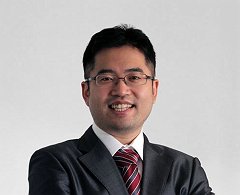
Manuel Rigger is an Assistant Professor at the National University of Singapore in the School of Computing and leads the Trustworthy Engineering of Software Technologies (TEST) Lab . His research focuses on improving data-centric systems , particularly their reliability, having found over 1,000 unique bugs in database systems. Education : PhD in Computer Science (2019) and MSc in Software Engineering (2015) from Johannes Kepler University Linz; MPhil in Chinese Philosophy (2015) from Xiamen University Research Highlights : Developed SQLancer – an automated testing framework that found 500+ bugs in DBMSs; created Query Plan Guidance (QPG) for efficient logic bug detection; received best paper awards at ICSE '23 and EuroSys '24 Scientific Awards : Recipient of 6 distinguished artifact/reviewer awards Major industry support from Google, AWS, and Microsoft Developed tools adopted by Oracle GraalVM and SQLite Teaching : Lecturer for CS3213 Foundations of Software Engineering and CS6223 Advanced Topics in Software Testing . Supervises multiple PhD/MSc theses on database testing and compiler reliability.
Jasmin Blanchette is a Professor of Theoretical Computer Science and Theorem Proving at the Institute for Informatics, Ludwig-Maximilians-Universität München (LMU), where he also serves as Dean of Studies for Computer Science since January 2024. He is additionally affiliated as a guest researcher with the VeriDis group at Loria in Nancy, France. His research lies at the intersection of automated and interactive theorem proving, with a focus on higher-order logic and proof automation. Key projects include the development of tools like Sledgehammer, Nitpick, and Zipperposition, and foundational work on (co)datatypes and higher-order superposition. His recent publications reflect a strong trend in formalizing and verifying automated reasoning techniques, especially in higher-order logic, with applications in proof automation, SMT solving, and logical verification. Articles frequently appear in top venues such as CADE, ITP, and the Journal of Automated Reasoning. CADE 2023 Best Paper Award for 'Verified given clause procedures' FroCoS 2023 Best Paper Award (with Visa Nummelin and Sander Dahmen) IPA Dissertation Award (awarded to his student Petar Vukmirović) Dutch 'cum laude' distinction (awarded to his student Anne Baanen) Dutch Prize for ICT Research 2022 Blanchette has advised numerous PhD and postdoctoral researchers, many of whom are now active contributors to the formal methods community. He has received significant research grants through projects like Matryoshka and Nekoka. He is also the editor-in-chief of the Journal of Automated Reasoning and plays a central role in organizing key conferences such as ITP, CADE, and CPP. He leads an active research group at LMU, consisting of postdocs and PhD students working on topics such as higher-order superposition, formalization of voting systems, categorical logic, and proof search heuristics. The team collaborates closely with international groups, including those at Inria and TU Wien.
L. Thomas van Binsbergen is a Professor in the Department of Computer Science & Computer Engineering at the University of Wisconsin-La Crosse, affiliated with the College of Science & Health. His work focuses on language design, formal methods, and policy-based systems. His research explores Executable formal specifications of programming languages Modular meta-language frameworks (e.g., iCoLa+, eFLINT) Data-dependent grammars for network protocols Purpose-based access control derived from GDPR Functional parsing algorithms (GLL, Happy-GLL) Policy enforcement in distributed systems Recent publications (2020-2025) demonstrate trends in language parametric design, security policy formalization, and exploratory programming environments. Notable collaborations include Damian Frölich, Tim Müller, and Tom M. van Engers. Van Binsbergen earned his PhD from Royal Holloway, University of London (2019) and contributes to conferences like GPCE, SLE, and workshops on programming language theory and data security.
Tonio Sebastian Richter is a Professor of Egyptology with a focus on Coptology at the Free University of Berlin's Department of History and Cultural Studies, Institute of Egyptology. He holds the position of Academy Professor at the Berlin-Brandenburg Academy of Sciences and Humanities and has served as the head of several major research projects including the DFG long-term project "Database and Dictionary of Greek Loanwords in Coptic" (DDGLC) and the Academy project "Structures and Transformations of the Vocabulary of the Egyptian Language. Text and Knowledge Culture in Ancient Egypt." His educational background includes a Magister Artium in Egyptology and Religious History from the University of Leipzig (1996), followed by a doctorate in 1999 and habilitation in 2005, both based on works concerning Coptic legal documents and their linguistic features. Richter has held academic positions at the Universities of Leipzig, Heidelberg, and Berlin, including serving as a Heisenberg Fellow of the German Research Foundation from 2011-2014. Richter's research interests span the history and cultural history of Egypt during the Roman, Byzantine, and early Islamic periods, with particular focus on Coptic language and texts. His work examines documentary texts including papyri, ostraca, and inscriptions that illuminate economic, legal, and social history. He has made significant contributions to the study of Coptic legal documents, magical and alchemical texts, and language contact phenomena between Egyptian/Coptic and Greek/Arabic. His research has revealed important insights into Coptic alchemical papyri, which represent some of the earliest witnesses to "the divine art" and enrich our knowledge of the development of late antique science and its transmission from Greek to Arabic. Richter has also pioneered work on language change and contact in the Egyptian-Coptic language, particularly regarding Greek and Arabic loanwords. Academy Professor, Berlin-Brandenburg Academy of Sciences and Humanities (2015-present) Professor of Egyptology with focus on Coptology, Free University Berlin (2014-present) Heisenberg Fellow, German Research Foundation (2011-2014) Extraordinary Professor, University of Leipzig (2011) Richter has received numerous scientific awards including the Heisenberg Fellowship from the German Research Foundation (2011) and the Friedrich-Weller Prize from the Saxon Academy of Sciences (2000). He serves on the scientific advisory boards of several prestigious institutions including the International Thesaurus Commission of the Thesaurus Linguae Latinae and the Scientific Advisory Board of the German Archaeological Institute. As an educator, Richter has been a main instructor for multiple International Summer Schools in Coptic Papyrology and has organized numerous academic conferences and workshops on Coptology, papyrology, and Egyptology. His work bridges linguistic, historical, and archaeological approaches to understanding ancient Egyptian civilization through its textual remains.
Tanja Ackermann is a Professor of German Linguistics with a focus on Variation and Change at Bielefeld University , holding the position since 2023. She serves as project leader in two subprojects of the Collaborative Research Center 1646: Linguistic Creativity in Communication (projects A06 and B03), and as a member of BiSEd (Bielefeld School of Education). Her academic affiliations include the Faculty of Linguistics and Literary Studies and its Habilitation Committee . Doctorate in Linguistics (2017) Habilitation, Venia legendi in German Linguistics (2023) Prior academic roles: Acting Professor at University of Mainz (2020–2022), Research Associate at Freie Universität Berlin (2011–2023), and short-term lectureship at Peking University (2017). Research interests span diachronic and synchronic analysis of language variation (areal/sociolinguistic), language change (functional/contrastive), historical grammar (morphology/morphosyntax), and pragmatics (speech acts, address forms, (im)politeness, expressivity). She specializes in onomastics (name grammar, sociopragmatic aspects, phonology) and interactive linguistic creativity (interrogative forms, indirect meaning). Publications reflect trends in Germanic morphosyntax, historical pragmatics, and onomastic variation. Key themes include inflectional erosion , possessive markers , and gendered phonological patterns in proper names. Scientific Recognition Awarded Wilhelm von Humboldt Prize by the DGfS in 2019 Affiliation Highlights Project leader for SFB 1646 (linguistic creativity in communication) Previous involvement in SRC 980 'Episteme in Motion' (subproject C08, 2016–2020)
Arianna Maiorani is a Reader in Linguistics and Multimodality at Loughborough University since 2008. She holds an MA in Modern Languages and Literatures from the University of Rome "La Sapienza" and a PhD in Cultural Sciences from the International School of High Studies of the San Carlo Foundation. Her career includes teaching at the University of Bologna and Rome’s La Sapienza, alongside a distinguished background as a professional ballet dancer, teacher, and choreographer. She is fluent in Italian, English, French, and Spanish, and has worked as a translator for international publishers. Her research focuses on multimodal discourse analysis, dance semiotics, and interdisciplinary approaches to communication. Key areas include kinesemiotics, functional grammar of dance movement, and the application of semiotic frameworks to analyze embodied communication. She has pioneered work on how choreography and movement convey meaning, blending linguistic theory with artistic practice. Publications explore topics like ballet as a communicative form, materiality in discourse analysis, and spatial dimensions across disciplines. Her 1996 children’s book Il Manuale della Giovane Ballerina remains a cherished resource in dance education. Maiorani’s work bridges arts, linguistics, and technology, addressing contemporary challenges in multimodal communication analysis.
Assoc. Prof. Dr. Osman AKTAŞ is a Turkish academic affiliated with Ankara Social Sciences University as an Associate Professor in the Faculty of Islamic Sciences , Department of Basic Islamic Sciences. His career spans roles such as Research Assistant (2013–2017) at Osmaniye Korkut Ata University and Doctorate Teaching Staff (2019–2022) at his current institution. Education: PhD in Fundamental Islamic Sciences (2016–2019), Ankara Yıldırım Beyazıt University Master's in Fundamental Islamic Sciences (2014–2016), Yıldırım Beyazıt University BA in Religious Culture and Moral Knowledge (2002–2006), Ankara University Research Interests include Arabic Language and Rhetoric , comparative linguistics between Turkish and Arabic, Islamic sciences, and interdisciplinary neuroscience studies on topics like epilepsy and laughter physiology. He has published extensively in these areas, including works on punctuation systems, prepositions, and word/sentence structures. Advising involves guiding four graduate students, including Mehmet Fevzi Sargın (PhD, 2024) and Asma Idrıs Mohammed Alfassı (Master’s, 2024). A TÜBİTAK 2211/A Domestic Doctoral Scholarship (2017–2019) supported his doctoral research. Despite his academic output, no scientific awards are documented.
Christoph Schroeder is a Professor for German as a Second and Foreign Language at the Institute for Germanistics, University of Potsdam. He serves as a corresponding member of the Institute for Migration Research and Intercultural Studies (IMIS) and has held visiting professorships at the University of Cyprus (2004) and Istanbul Bilgi University (2005). His work bridges linguistics, migration studies, and multilingual education. Education: Habilitation in Linguistics (University of Osnabrück, 2004); Promotion (PhD) in Germanistics (University of Bremen, 1995). Key Affiliations: IMIS, Center of Migration Studies (Istanbul Bilgi University), Arbeitsgebiet DaZ/DaF (University of Potsdam). Research Interests focus on language contact, contrastive linguistics, and multilingualism in schools. His work examines orthographic challenges in German-Turkish language contact, secondary predication in Turkish, and strategies for supporting students with non-German native languages through multilingual education frameworks. Notable Projects include leading the Volkswagen Foundation-funded project "Schriftspracherwerb in der Organisation Schule unter den Bedingungen von Migration und Mehrsprachigkeit" (2007-2012), which explored literacy acquisition in multilingual schools across Germany, Turkey, and Cyprus. His editorial roles include co-editing Essener Linguistische Skripte and serving on the editorial board of Language Typology and Universals (STUF) . Publications span contrastive linguistics, language typology, and migration-related educational challenges. Recent work analyzes orthographic systems in language contact scenarios, adverbial modification in Turkish, and article systems across European languages. His research often integrates sociolinguistic and typological perspectives. Professional Memberships: Association of Linguistic Typology (ALT) Deutsche Gesellschaft für Sprachwissenschaft (DGfS) Deutsche Gesellschaft für Fremdsprachenforschung (DGFF)
Violetta Lonati is an Assistant Professor at the University of Milan 's Department of Computer Science since 2005. Her research spans Formal Languages and Automata (operator precedence languages, Wang automata, tiling systems) and Computer Science Education . She co-authored over 15 publications in theoretical computer science and education, focusing on 2D language recognition, logic characterization of automata, and pattern statistics in stochastic models. Education : PhD in Computer Science (2005) and Laurea in Mathematics (2001) from University of Milan Research Groups : ALaDDIn Lab for Didactics and Dissemination of Informatics, Bebras International Initiative Her work on Wang automata established their equivalence to tiling systems while introducing deterministic variants. In education, she designed workshops for schools and contributed to Italy's national computing curriculum proposal (2019). She held leadership roles at ACM ITiCSE (WG5 leader 2022), served as Associate Program Chair (2019-2022), and reviewed for top venues like ICER and SIGCSE TS. She received Google CS[4]HS and Informatics Europe awards for her educational contributions. Key Publications (2017-2001): Input-driven locally parsable languages (TCS 2017) Operator precedence logic characterization (SICOMP 2015) Snake-deterministic tiling systems (MFCS 2009) Graph fibrations and PageRank (RAIRO 2006) Pattern statistics in rational models (STACS 2005) Scientific awards include Google CS[4]HS (2011, 2017, 2019) and the Informatics Europe Best Practices in Education (2016). As part of ALaDDIn, she developed teacher training programs and graduate courses on computing education. Her teaching experience covers Algorithms & Data Structures (2013-2023), Computer Science Teaching (2014-2023), and courses for Biotechnology and Geological Sciences programs (2005-2007).
Arne Ziegler is a full Professor at the Institute of German Studies within the Faculty of Humanities at the University of Graz, Austria. His academic career spans over two decades, with current leadership of the Austrian Science Fund (FWF)-supported Special Research Programme 'German in Austria' (DiÖ), running from 2016 to 2026. He maintains active roles in international academic governance and editorial boards. Professor Ziegler's research centers on grammatical variation in Standard German , with particular emphasis on Austrian German dialects, urban sociolinguistics, and youth language phenomena. His work bridges theoretical linguistics and practical applications, examining how regional, social, and historical factors shape language structures. Key contributions include the development of the 'Variant Grammar of Standard German' – a comprehensive digital reference work documenting areal grammatical differences across German-speaking regions. Analysis of his recent publications reveals consistent focus on urban language dynamics, grammatical variation patterns, and reference grammar development. His work demonstrates methodological innovation through quantitative analysis of spoken interaction, spatial distribution mapping of linguistic features, and interdisciplinary approaches combining sociolinguistics with historical text analysis. The 'German in Austria' project represents the cornerstone of his current research, investigating language variation, contact phenomena, and speaker perception across Austria. Professor Ziegler has secured significant competitive funding including three major FWF projects: 'German in Austria' (2016-2026), 'Youth language(s) in Austria' (2013-2016), and 'Variant Grammar of Standard German' (2015-2018). These initiatives involve extensive collaboration with researchers across German-speaking countries and support large-scale empirical investigations into contemporary language use. He holds prominent leadership positions including Chair of the International Association for German Studies (IVG) since 2000, Chair of the Society for German Language History since 2008, and editorial roles for 'Technical language' (International Advisory Board) and 'Contingentia' (Editorial Board). His academic service extends to co-editing six major book series including 'Writings on the German Language in Austria' (Peter Lang) and 'Lingua Historica Germanica' (de Gruyter), significantly shaping publication venues for German linguistic research.
Sang Kil Cha is an Associate Professor at KAIST's Graduate School of Information Security and School of Computing, where he also serves as Director of the Cyber Security Research Center (CSRC). His research focuses at the intersection of computer security and software engineering, with emphasis on building and evaluating systems that analyze programs. Dr. Cha received his B.S. from Korea University, and both his M.S. and Ph.D. from Carnegie Mellon University (CMU). His educational background forms the foundation for his experimental approach to computer science research. His primary research interests include software security, software engineering, program analysis, binary code analysis, and fuzzing. Dr. Cha's work centers on developing practical security tools and methodologies that bridge theoretical concepts with real-world applications, particularly in program analysis and vulnerability detection. His research has significant implications for improving software reliability and security through advanced analysis techniques. Dr. Cha's publication record shows a strong focus on fuzzing techniques, binary analysis, and program understanding, with recent work expanding into blockchain security and decompilation. His research consistently appears in top-tier security and software engineering conferences including IEEE S&P, USENIX Security, and CCS. ACM Distinguished Paper Award (2024, 2022, 2014) USENIX Distinguished Paper Award (2023) IEEE Best Paper Award (2021) NDSS Best Paper Award (2019) As Director of CSRC and leader of SoftSec Lab at KAIST, Dr. Cha oversees multiple research projects focused on practical security solutions. His lab develops tools like B2R2 (a binary analysis framework) and OFuzz (a fuzzing platform), which have gained recognition in the security community. Dr. Cha actively contributes to the research community through program committee roles at major conferences including PLDI, ICSE, and ISSTA.
Professor Sven Tarp is affiliated with Aarhus University as a faculty member at the School of Communication and Culture , specializing in Spanish Business Communication . His research focuses on lexicography, artificial intelligence, and digital tools for language learning. Education: Not explicitly detailed in the scraped text. Research Interests: Sven Tarp explores the intersection of lexicography and generative AI , with a focus on creating context-aware dictionaries and writing assistants for foreign-language learners. His work emphasizes human-AI collaboration and user-centered design in digital lexicography. Scientific Trends: His recent publications highlight the integration of AI technologies into lexicographic practices , particularly for Spanish and Chinese learners of English . Themes include grammar development , digital dictionaries , and pedagogical tools that combine machine learning with human expertise. Projects: He contributes to initiatives like the LACUA (Latin American Center Aarhus University) and leads research on disruptive technologies in lexicography , spanning 2018–2023.
Alexandra Y. Aikhenvald is a Professor affiliated with James Cook University, recognized as a leading scholar in linguistic typology, Amazonian languages, and language contact. Her research focuses on grammatical structures, evidentiality, and endangered language documentation. She has authored over 160 publications, including seminal works like The Oxford Handbook of Evidentiality and The Cambridge Handbook of Linguistic Typology . Her work spans multiple languages, including Tariana (Amazonia), Manambu (Papua New Guinea), and Paumarí. She explores topics such as noun categorization, serial verbs, and multilingualism. Aikhenvald has edited volumes on grammaticalization, gender systems, and clause linking semantics. Her contributions bridge fieldwork, theoretical linguistics, and sociolinguistics, emphasizing cross-linguistic comparison. Key themes include language obsolescence in Papua New Guinea, areal diffusion in Amazonia, and the typology of evidentiality and possession. Her research highlights endangered language documentation and the sociocultural dimensions of linguistic diversity.
Associate Professor Myfany Turpin is an Associate Dean of Indigenous Strategy and Services at the Sydney Conservatorium of Music, University of Sydney. Her research focuses on ethnomusicology, linguistics, and ethnobiology, with a particular emphasis on Central Australian Indigenous cultures. She collaborates extensively with Indigenous communities to document and revitalize endangered languages and performance traditions. Education & Research: PhD in Musicology (2005) Specialization in Kaytetye and Warlpiri language documentation Leader of ARC-funded projects investigating dingo lexicon and traveling songs Research Interests: Turpin explores intersections between language and music, including poetic meter in Aboriginal song-poetry and biocultural knowledge embedded in ceremonial practices. She develops innovative tools like the Kaytetyemoji app to support language revitalization. Grants & Collaborations: ARC Discovery Project (2025-2028): Dingo Lingo ARC Indigenous Discovery Project (2024-2029): Recirculating Travelling Songs Modularised Cultural Heritage Archives (2022-2024) Awards: Received Honorable Mention from International Council for Traditional Music (2021) for work on Warlpiri seed ceremonies. Labs & Teams: Co-director of Sydney Southeast Asia Centre and member of Charles Perkins Centre. Collaborates with Batchelor Institute and Australian Institute of Aboriginal and Torres Strait Islander Studies.
Laura Alexis Janda is a Professor of Russian Linguistics at the UiT The Arctic University of Norway , where she has worked since 2008. She is a member of the CLEAR research group (Cognitive Linguistics: Empirical Approaches to Russian) and leads the THREAT-DEFUSER project funded by the Norwegian Research Council. Her academic profile spans Cognitive Linguistics , Construction Grammar , and Corpus Linguistics , with a focus on Russian, Slavic, and Sámi languages . Education: PhD in Slavic Linguistics & Certificate in Teaching ESL, UCLA (1984) Visiting Fellowships at Princeton University and UNC Chapel Hill Training in Persian, Czech, and Russian methodologies Research Interests: Janda’s work bridges constructional networks and grammatical profiling in Slavic languages, with emphasis on aspect , case semantics , numeral classifiers , and political discourse analysis . She explores how morphological units like Russian prefixes function as verb classifiers and investigates language change in Sámi and Russian contexts. Publication Trends: Recent articles analyze ChatGPT’s grammatical interpretation , constructicon architecture , and ideological messaging in Putin’s speeches . Her research integrates quantitative methods and FAIR data principles to address both theoretical and pedagogical challenges. Awards & Grants: 2021 Honorary Doctorate (University of Turku, Finland) 2018 Member of the Norwegian Academy of Science and Letters 2017 Open Data Champion (SPARC Europe) 2013-2015 Norwegian Research Council grant for 'Birds & Beasts: Shaping Events in Old Russian' 2007-2011 Norwegian Research Council grant for 'Exploring Emptiness: Russian Verbal Morphology and Cognitive Linguistics' Collaborative Networks: Janda mentors international researchers and collaborates with linguists in Russia, Norway, and the U.S. She co-developed the Russian Constructicon and Construxercise! pedagogical tool, emphasizing interdisciplinary applications of linguistic theory. Labs & Projects: She co-founded the Tromsø Construction Lab , advancing constructicon resources for Russian and Sámi languages. Her THREAT-DEFUSER project examines perceived threats in Russian and Norwegian political discourse.