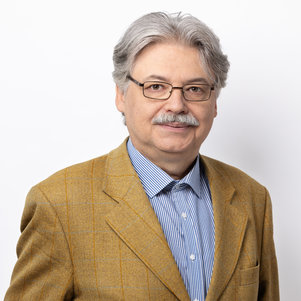
Florian Bociort is an Assistant Professor at the Optics Research Group , Delft University of Technology (Faculty of Applied Sciences). He holds a PhD in Physics from TU Berlin (1994) and has dedicated his career to optical system design, gradient-index optics, and computational methods in lens design. Research Interests Bociort’s research focuses on design landscapes of optical systems , where he pioneered the use of saddle points to escape local minima in optimization. His work spans Gradient-index optics (conversion of homogeneous lenses to GRIN media) Artificial intelligence in lens design Optics education (simulation-driven learning) Academic Contributions He has supervised multiple PhD theses on topics like: A. M. Boyd (2025): Generalized gradient-index lens optimization Z. Hou (2023): Systematic lens design searches Y. Shao (2021): Imaging coherence and optimization M. Strauch (2020): Tunable optics M. Mout (2019): Ray-based diffraction simulation Recent Publications His 2025-2018 publications show a trajectory from classical optical design to modern computational approaches, including simulation-driven education, gradient-index conversions, and high-NA diffraction modeling. The 2024 paraxial reconstruction and 2025 simulation-education articles exemplify this evolution. Patents & Expertise He co-invented two ASML-related patents in lithographic design and served as expert witness in the 2018 ASML-Nikon patent lawsuit. His personal webpage details his networks of local minima and fractal basins in optimization.
Dr. Boris Paschke serves as a Guest Associate Professor of New Testament at the Evangelische Theologische Faculteit Leuven . Holding a Ph.D. in New Testament Studies from ETF Leuven (2009), he has been actively engaged in theological education since 2001, teaching at ETF Leuven and in public secondary schools in Brussels. Ph.D. in New Testament Studies (ETF Leuven, 2009) Licentiaat in de godgeleerdheid (M.Th., ETF Leuven, 2004) M.A. in Biblical Studies (University of Gloucestershire, 2001) Paschke's research focuses on New Testament theology , apocryphal literature , and early Christian worship practices , particularly prayer to Jesus and the Holy Spirit. His work explores intertextuality (e.g., Song of Songs in Romans 3), historical contexts (Roman censorship, slavery), and theological intersections between Christianity and Islam. Recent publications highlight trends in liturgical theology (2024 analyses of 1 Timothy 1:12 and Peräa), prayer studies (2023 essays on Tertullian and 2 Timothy 1:18), and historical criticism (2016-2022 works on Semler, Acts of John, and Philemon). He participates in multiple academic societies, including the Society of Biblical Literature and the Association pour l’étude de la littérature apocryphe chrétienne , and has co-authored works on ancient speech impediments (2016, 2023).
Neil Snow is a Professor of Botany and Director of the T.M. Sperry Herbarium at Pittsburg State University. He specializes in plant systematics, taxonomy, and herbarium management, with a focus on biodiversity research. Ph.D., Washington University in St. Louis His research spans four key areas: (1) Myrtaceae family studies in New Caledonia and Madagascar, where he has described 120+ new taxa; (2) Grass family (Poaceae) taxonomy through collaborations with the Smithsonian Institution; (3) Floristic inventories in the Northern Great Plains, uncovering novel state and county plant records; and (4) Herbarium curation , managing a regional collection aligned with APGIV standards and enhanced by NSF-funded infrastructure upgrades. Recent publications highlight his work on Myrtaceae, Poaceae revisions, and floristic surveys. His lab emphasizes fieldwork-driven discovery and graduate student mentorship in taxonomy and invasive species management. He supervises graduate projects in Idaho and Missouri, integrating ecological and taxonomic approaches. The T.M. Sperry Herbarium under his direction serves as a critical resource for vascular plant and bryophyte research, accessible via the Northern Great Plains Herbarium Consortium portal.
Dr. Yin-Long Qiu is an Associate Professor in the Department of Ecology and Evolutionary Biology at the University of Michigan, where he also serves as Associate Curator of the U-M Herbarium. His research focuses on understanding the evolution of land plants through molecular approaches. Dr. Qiu received his Ph.D. from the University of North Carolina, Chapel Hill in 1993, followed by an NIH postdoctoral fellowship at Indiana University in 1997. His academic journey has positioned him as a leading researcher in plant evolutionary biology. Dr. Qiu's research spans three primary areas: reconstructing plant phylogeny using molecular approaches, investigating evolution of mitochondrial and nuclear genomes in early land plants, and examining the effects of environmental changes on plant evolution. His work has particularly focused on group II introns in mitochondrial genomes, early land plant diversification patterns, and the genetic basis of plant-environment interactions. His lab continues to advance knowledge in these areas while developing new projects on nuclear genome evolution, particularly the roles of introns and transposons. Analysis of Dr. Qiu's publication record reveals a consistent focus on plant evolutionary genomics, with particular emphasis on mitochondrial genome evolution across land plants. His research spans from molecular dating of plant divergences to detailed genomic structural analyses, with significant contributions to understanding bryophytes, lycophytes, and early vascular plants. NIH postdoctoral fellowship Dr. Qiu teaches Plant Evolution (EEB 420), an advanced course that covers plant phylogeny, evolutionary genomics, evolutionary developmental biology, and evolutionary ecology of plants. His graduate student Alexander Taylor continues his research tradition in plant evolutionary studies. Dr. Qiu's work has been supported by various research grants that have enabled extensive genomic analyses across diverse plant lineages. As Associate Curator of the U-M Herbarium, Dr. Qiu integrates traditional botanical resources with modern genomic approaches to advance plant evolutionary research.
Maria Sydnes serves as an Associate Professor in the Department of Technology and Security at UiT The Arctic University of Norway, Tromsø. Her academic work focuses on emergency management and organizational resilience within high-risk Arctic environments, with particular emphasis on maritime safety and cross-border crisis coordination between Norway and Russia. Her research interests span interorganizational coordination during emergencies, organizational learning for resilience building, and practical applications of lean production principles in crisis contexts. She investigates Arctic-specific challenges including avalanche response in Longyearbyen, oil spill management in polar waters, and integration of unorganized volunteers into formal emergency systems, consistently addressing the intersection of climate change impacts and security vulnerabilities. Analysis of her publication record reveals a strong trend toward interdisciplinary solutions for Arctic safety, with recurring themes of Norwegian-Russian cooperation, maritime risk assessment, and adaptive governance structures. Her work bridges theoretical frameworks with real-world case studies—from Svalbard waters to the Barents Sea—demonstrating practical approaches to disaster risk reduction in extreme environments. Dr. Sydnes actively participates in multiple research initiatives including the Climate Change Adaptation and Secure Societies groups. Her current projects encompass Co-producing knowledge about risk and safety of maritime activities around Svalbard SPRICE (spray icing modelling for maritime decision support) GLOBSEC (North-South security partnerships) NoCoU (civil security for Norwegian communities) Beredt! (risk-based governance for climate-driven natural hazards) highlighting her commitment to scalable, community-focused security solutions in vulnerable Arctic regions.
Dr. Lei-Shih Chen is a Professor in the Department of Health Behavior at the School of Public Health, Texas A&M University. With over 20 years of research experience, her work focuses on public health genomics, health disparities, disabilities, autism spectrum disorder, and cancer prevention and control, securing approximately $13 million in research funding from NIH, NSF, and Texas agencies. Her educational background includes: PhD in Health Education from Texas A&M University (2007) MS in Occupational Medicine and Industrial Hygiene from National Taiwan University (2001) BS in Physical Therapy from National Taiwan University (1999) Dr. Chen's research employs community-based participatory methods to address health inequities through culturally tailored interventions. She specializes in genetic education for underserved populations, particularly Chinese Americans and Latinas, with emphasis on autism spectrum disorder and cancer prevention. Her work bridges genomic science with practical public health applications to reduce disparities. Recent publications (2022-2025) reveal consistent focus on community health worker interventions, genetic testing education, and culturally specific cancer prevention strategies. These studies predominantly target vulnerable groups using mixed-methods approaches to develop accessible health solutions while examining BMI, nutrition, and physical activity impacts on health outcomes. Dr. Chen's scientific recognition includes: Pathway Award (2024) ASHG Education Award (2023) Faculty Research Excellence Award (2023) Association of Former Students Distinguished Achievement Award for Teaching (2022) Public Health Diversity, Equity, and Inclusion Award (2022) Outstanding Research Award (2019, 2022) Armstrong Scholar Award (2021) Young Professional Award (2018) She has chaired 39 graduate students (29 graduated), mentored 10 post-doctoral associates, and advised approximately 300 undergraduates. Her $13 million research portfolio includes major grants from NIH, NSF, Texas Council for Developmental Disabilities, and the Cancer Prevention and Research Institute of Texas for community-based genomic and cancer prevention initiatives. Dr. Chen leads community-engaged research teams developing culturally competent health worker certification programs and family history-based interventions for Chinese American and Latino communities across Texas.
Ping Ma, PhD, is an Associate Professor in the Department of Health Behavior at Texas A&M University School of Public Health. She specializes in social and environmental determinants of health, focusing on underserved populations including maternal women, adolescents, racial/ethnic minorities, and older Asian populations. Her methodological expertise spans survey development, mixed methods, and multi-level analysis. Liaoning University, BA in Social Welfare/Social Work (2003) Liaoning University, MA in Population Studies/Demography (2006) Linköping University & EHESS, MA in Dynamics of Health and Society (2008) Tulane University, PhD in Public Health (2013) UT Southwest Medical Center, Postdoctoral Training Certificate (2015) Dr. Ma's research examines health disparities, social determinants of health, maternal and child health, mental health service access, and health behavior interventions. She utilizes community-based participatory research and integrated care models to address disparities in mental health, chronic diseases, and substance use among vulnerable groups. Her recent publications focus on air pollution impacts, cancer prevention strategies, mental health trends during the pandemic, illicit drug use patterns, and culturally adapted interventions. Key themes include environmental health equity, digital health technologies, and multi-level analysis of health outcomes. Early Career Faculty Research Excellence Award (2022) Health Disparities Research Scholar (2022) NCFDD Faculty Success Fellow (2021) Robert Woods Johnson Foundation Interdisciplinary Research Leader (2020) Dr. Ma teaches courses in Grant Writing, Public Health Intervention, and Public Health Evaluation. She collaborates with clinical providers, community organizations, and health workers, with funding from NIH, HRSA, CPRIT, Gulf grants, and the Robert Wood Johnson Foundation.
Dr. Reza Samavi is an Associate Professor at Toronto Metropolitan University's Department of Electrical, Computer, and Biomedical Engineering, Faculty of Engineering & Architectural Science. He is also a Faculty Affiliate with the Vector Institute for Artificial Intelligence and directs the Trustworthy AI Research Lab (TAILab). Previously, he served as Assistant Professor and eHealth Graduate Program Coordinator at McMaster University's Department of Computing and Software (2014-2020). Holding a PhD in Computer Science (University of Toronto, 2013), his academic journey bridges industry experience with rigorous scholarly contributions. His research lies at the critical intersection of Trustworthy AI , Machine Learning Security , and Medical Informatics . He investigates Safety & Security of ML Algorithms Privacy-Preserving AI Systems Transparency Frameworks for Medical AI Blockchain-enabled Privacy Auditing Game Theory for Model Robustness Optimization-based Anonymization Techniques The TAILab research group under his leadership has produced groundbreaking work in Uncertainty Quantification for Neural Networks Robustness Against Adversarial Attacks Medical Image Analysis Clinical Decision Support Systems Emergency Medicine Predictive Modeling His recent projects focus on enhancing migrant youth mental health through LLM-based conversation agents and developing certified robustness guarantees for ensemble networks. Dr. Samavi's scholarly excellence is recognized through Privacy Technologies Research Award (IBM) Privacy By Design Research Award (Ontario IPC) Bridging Divides Emerging Research Grant (TMU) NSERC PGS-D Recipient (Co-supervised student) SOSCIP Accelerator Grant He has secured major funding from NSERC , SOSCIP , MITACS , HHS , and IDEaS programs. As a dedicated educator, Dr. Samavi teaches graduate courses in Secure Machine Learning and Software Testing while mentoring 15+ graduate students across PhD , MASc , and MEng programs. His lab has presented at premier venues including AAAI , IJCAI , and IEEE Transactions while maintaining active collaborations with institutions like Harvard, ETH Zurich, and the University of Waterloo.
Stephen Holmes serves as Senior Lecturer in Theology at the University of St Andrews' School of Divinity, where he has established himself as a prominent scholar in historical and systematic theology with particular expertise in Baptist and Reformed traditions. His academic profile demonstrates significant engagement with the Centre for Higher Education Research and active participation in postgraduate supervision, with 14 supervised works documented in his profile. Holmes maintains professional connections with numerous religious organizations including the Baptist World Alliance (2025-2030) and the European Baptist Federation (2023-2028). Dr. Holmes' research interests span systematic and historical theology, with a particular focus on the development of Reformed and Baptist theological traditions from the sixteenth to nineteenth centuries. His work centers on the history of the doctrine of God, especially Trinitarian thought, while also extending into practical theology, philosophical theology, and patristics. Current research directions include seventeenth-century General Baptists (particularly Matthew Caffyn), eighteenth-century Particular Baptists (including editing Andrew Fuller's sermons), constructive Trinitarian theology, and methodological approaches to systematic theology using the extent of atonement as a test case. Analysis of his recent publications reveals a consistent focus on Baptist identity, ecclesiology, and historical theological development, with increasing attention to contemporary applications of traditional doctrines in digital contexts (as evidenced by his 2023 article on online Eucharist). His scholarship demonstrates deep engagement with primary historical sources, including recent deciphering of Andrew Fuller's shorthand sermons, and maintains relevance to current theological debates about gender, ministry, and sacramental practice. Chair of Theology and Public Policy Advisory Committee of the Evangelical Alliance (2007) Member of Doctrine and Worship Committee, Baptist Union of Great Britain (2004) As an academic supervisor, Holmes has guided 14 postgraduate research projects, including doctoral work on Ukrainian Baptist ecclesiology. His external consultancy work demonstrates significant impact beyond academia, serving Christian denominations and charitable organizations including the British and Foreign Bible Society, Evangelical Alliance, Baptist Union of Great Britain, and Churches Together in Great Britain and Ireland. He has secured research funding from notable sources including The Russell Trust and John Templeton Foundation for projects on Andrew Fuller's shorthand sermons and the Encyclopedia of Theology. Dr. Holmes maintains active scholarly networks through the Centre for Higher Education Research at St Andrews and participates in international theological discourse through organizations like the Baptist World Alliance and European Baptist Federation, contributing to both academic and practical theological conversations through invited talks, conference presentations, and editorial work.
Kelly Bijanki is an Associate Professor of Neurosurgery, Director of Intracranial Monitoring Research, and holds joint appointments in Psychiatry and Neuroscience at Baylor College of Medicine. Her work bridges clinical neurosurgery and neuroscience, focusing on understanding the neural basis of affective disorders and developing neuromodulation therapies. She directs the Translational Neuromodulation Lab, where she leverages stereotactic electroencephalography (sEEG) to study deep brain structures critical to emotional functioning. Dr. Bijanki's research explores the electrophysiological, neurobiological, and behavioral correlates of neuromodulation of affective neural circuits. Her lab primarily works with patients undergoing intracranial monitoring for epilepsy or depression, using this unique platform to conduct in-vivo studies of neural correlates to affective function. Her work has identified novel stimulation-based strategies for evoking positive affect and anxiolysis, including the discovery that stimulation to the cingulum bundle evokes changes in anxiolysis, mirth, and euphoria, which was featured as a cover article in the Journal of Clinical Investigation and highlighted in the NIH Director's Blog. Analysis of her recent publications reveals a consistent focus on mapping neural circuits involved in emotion processing, particularly using stereo-EEG informed deep brain stimulation approaches. Her work spans multiple psychiatric conditions including depression, obsessive-compulsive disorder, and anxiety disorders, with a strong emphasis on translating electrophysiological findings into therapeutic applications. The integration of computational approaches, particularly machine learning for decoding neural activity related to mood states, represents a growing trend in her research program. Her scientific achievements include: United States Patent (US:11,241,575) for a novel stimulation-based strategy for evoking positive affect and anxiolysis Journal of Clinical Investigation cover article (March 2019) on cingulum stimulation enhancing positive affect NIH Director's Blog feature highlighting her groundbreaking work Multiple NIH grants including R01, R21, and K01 awards Dr. Bijanki mentors a diverse team including graduate students, postdoctoral fellows, and undergraduate researchers. Her research program is generously funded by multiple NIH grants (R01-MH127006, R01-MH130597, K01MH116364, R21NS104953, UH3NS103549), as well as support from the ARCO Foundation, Caroline Wiess Law Fund, American Foundation for Suicide Prevention, and NARSAD. She maintains strong collaborations with researchers at institutions including UTSW, Iowa, Duke, UCLA, Brown, UPenn, and WashU. The Translational Neuromodulation Lab operates at the intersection of clinical neurosurgery, neuroscience, and engineering, utilizing stereo-EEG as a research platform to study deep brain structures involved in emotional processing. The lab employs multiple methodologies including advanced surgical neuroimaging, affective electrophysiology, autonomic surveillance, facial motor analysis, and pulse-evoked potentials to comprehensively characterize mood-relevant neural circuits. Their current flagship project involves using explainable artificial intelligence to map the relationship between mood and intracranial neural activity, with the goal of developing naturalistic patterns of intracranial stimulation for therapeutic applications.
Professor Andreas Kortenkamp is a leading academic in the field of Human Molecular Toxicology, affiliated with Brunel University's Department of Life Sciences within the College of Health, Medicine and Life Sciences. His research focuses on understanding combined effects of environmental pollutants, developing regulatory strategies for chemical mixtures, and studying hormonal carcinogenesis. Education and Career: Bachelor's in Chemistry, Philosophy, and Educational Sciences (University of Münster, 1983) PhD in Chemistry (University of Bremen, 1989) Post-doctoral Fellowships and academic roles at Queen Mary University of London and the School of Pharmacy, University of London (1990–2011) Since 2011, Professor at Brunel University's Institute for the Environment Research Interests: Mixture toxicology and predicting combined chemical effects Endocrine disruptors and their regulatory implications Hormonal mechanisms in breast cancer Impact of environmental chemicals on human and wildlife health Grants and Collaborations: EU-funded projects on endocrine disruptors and mixture toxicity Collaborations with institutions like the European Commission, WHO, and US National Academy of Sciences Contributions to policy decisions on chemical regulation Current Projects: State of the Art Assessment for Endocrine Disrupters (EU Commission) Research on semen quality decline linked to chemical mixtures Development of thyroid hormone disruption assays (ATHENA Project) Advising and Teams: Supervises PhD students in hormonal carcinogenesis and toxicology Leads research groups focused on environmental health and toxicology
Professor Selva Selvanathan is a Professor of Econometrics at Griffith University, affiliated with the Department of Accounting, Finance, and Economics at the Griffith Business School. He serves as Director of the Economics Policy Analysis Program (EPAP) and a member of the Griffith Asia Institute. His research focuses on applied econometrics, time series modeling, tourism and energy economics, and consumer demand analysis. He has authored/co-authored over 100 articles and multiple monographs, contributing to leading journals such as the Review of Economic Studies and Journal of Econometrics . Education: PhD in Economics (University of WA and Murdoch University, Australia), MSc (University of Bucharest, Romania), BSc (University of Jaffna, Sri Lanka). Research Interests: Professor Selvanathan’s work spans econometric methodologies, tourism economics, energy policy, and consumer behavior. His recent studies include modeling financial asset demand in Sri Lanka, analyzing alcohol consumption patterns in Australia, and exploring the gender dimensions of cleaner energy transitions. Awards and Honors: Pro-Vice Chancellor’s Research Excellence Award 2014 (Research Supervision) University of Western Australia Distinguished Teaching Award (1988) Griffith Awards for Excellence in Teaching 2005 – Innovation Across the Institution Grants and Collaborations: Leading projects funded by the Department of Foreign Affairs and Trade, Australian Research Council, and Griffith University. Notable grants include policy capacity-building initiatives in Vietnam and Sri Lanka, and studies on alcohol control measures. Advising and Mentorship: Supervised over 20 doctoral students, including works on foreign aid impacts, renewable energy transitions, and rural livelihoods. Current research includes market integration dynamics and energy policy effectiveness. Labs/Teams: Active in Griffith Asia Institute and EPAP, fostering interdisciplinary research on Asian economies and policy analysis.
Prof. Niels Bosma is a Full Professor of Social Entrepreneurship and Director of Studies at the Utrecht University School of Economics (U.S.E.), part of Utrecht University's Faculty of Law, Economics and Governance. He holds a PhD in Economic Geography from Utrecht University and an MSc in Econometrics from the University of Groningen. His research focuses on entrepreneurship in regional and social contexts, including social entrepreneurship, entrepreneurial ecosystems, and the Global Entrepreneurship Monitor (GEM). He currently serves as a Member of the Board of Directors and Senior Research Advisor for GEM, having previously held roles such as Research Director and co-author of GEM's global reports (2006–2021). Key affiliations include the Utrecht Centre for Entrepreneurship and the Utrecht University Social Entrepreneurship Initiative. His expertise spans entrepreneurship education, innovation policy, and the intersection of entrepreneurship with societal challenges. Notable contributions include advancing public policy for social and high-growth enterprises and exploring the role of culture in entrepreneurial ecosystems. He has published extensively in leading journals such as Small Business Economics , Regional Studies , and Journal of Medical Internet Research . His research interests emphasize understanding entrepreneurial behavior in diverse contexts, particularly how social and regional factors influence economic development. He has collaborated with international organizations like the European Commission and contributed to policy frameworks addressing entrepreneurship's societal impact. His work bridges academic research with practical applications, aiming to foster inclusive and innovative entrepreneurial ecosystems globally.
Dr. Chijun Sun is an Assistant Professor in the Department of Earth and Planetary Sciences at the University of California, Davis. He holds a Ph.D. from The University of Texas at Austin (2021) and completed postdoctoral research as an ASP Fellow at the National Center for Atmospheric Research. His research focuses on paleoclimatology, utilizing biomarkers and climate models to reconstruct past climate changes and assess model performance. Key themes include orbital-to-millennial climate variability, ocean-atmosphere dynamics, and paleoextreme weather events. He integrates proxy data with high-resolution simulations to explore mechanisms driving abrupt climate shifts and their implications for future climate projections. Dr. Sun’s work emphasizes understanding climate forcings (e.g., volcanic activity, orbital changes) and their impacts on hydroclimate patterns, monsoons, and Arctic expansion. His lab recruits graduate students to advance interdisciplinary research at the intersection of geochemistry, climate modeling, and paleoenvironmental reconstruction. Current projects address the role of land-ocean interactions in Northern Hemisphere glaciation and the influence of meltwater events on deglacial climate dynamics. Education: Ph.D., The University of Texas at Austin (2021) Postdoctoral Training: National Center for Atmospheric Research (NCAR) Labs/Teams: UC Davis Paleoclimate Research Group His research bridges observational proxy records (e.g., biomarkers, isotopic analyses) with advanced climate models to address unresolved questions about climate system sensitivity and past climate extremes. Recent efforts focus on atmospheric rivers, mesoscale convective systems, and tropical cyclone dynamics under past and future climate scenarios.
Geoffrey Hunt is a Professor at the Centre for Alcohol and Drugs Research, Aarhus University, Denmark, and Director of the Institute for Scientific Analysis in San Francisco, USA. He co-edited the comprehensive Routledge Handbook of Intoxicants and Intoxication (2022), which synthesizes multidisciplinary perspectives on global intoxication practices across 34 chapters and eight thematic sections. His research spans dual domains: (1) alcohol and drug studies examining social/cultural dimensions of intoxication (evident in his editorial work on global intoxicant practices across 19+ countries), and (2) special educational needs with focus on evidence-based interventions for intellectual disabilities, autism spectrum disorders, and language impairments. Key interests include ethical frameworks for European psychologists, mediation in educational disputes, and historical policy analysis since the Warnock Report. Recent publications (2020-2025) reveal strong methodological emphasis on randomized controlled trials (E-PAtS program), cost-effectiveness analysis of mediation services, and systematic reviews of inclusive education practices. The work consistently addresses UK policy contexts while maintaining international relevance through European psychology ethics frameworks and cross-cultural intoxication studies.