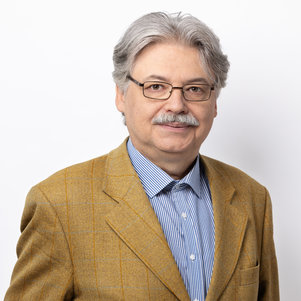
Rik Crutzen is a Full Professor at the Faculty of Health, Medicine and Life Sciences, Maastricht University, specializing in health promotion and digital interventions. His research focuses on leveraging technology to improve health behaviors across diverse populations, including adolescents, older adults, and immigrant communities. He leads projects in the CAPHRI research group for Promoting Health & Personalised Care. Research trends include: Digital health innovations (e.g., helplines, apps, algorithms) Chronic disease management (post-COVID-19, dementia risk) Health equity in immigrant populations (cervical cancer, maternal care) Behavioral interventions (physical activity, sleep, STI prevention) Systematic reviews and mixed-methods studies He has supervised 22 academic works and contributed to datasets on activity patterns and sleep-activity correlations. His work spans public health policy, health education, and technology integration.
Arjen Boin is a Professor of Public Institutions and Governance at Leiden University's Institute of Political Science. He serves as Director Strategy and Organisation on the Institute Board. Previously, he held roles at Utrecht School of Governance and Louisiana State University. His research focuses on crisis management, institutional resilience, and EU crisis coordination. He has authored influential books like Governing the Pandemic and The Politics of Crisis Management , which won the APSA Herbert A. Simon Award. Boin edits journals like Journal of Contingencies and Crisis Management and advises via Crisisplan BV. His teaching spans BSc and MSc Political Science programs. Education: Previous academic positions imply advanced degrees in political science, though specific education details are not explicitly provided in the text. Research Interests: Crisis management strategies, disaster coordination mechanisms, institutional resilience, and EU transboundary crisis capacities. His work bridges theory and practice, emphasizing policy design and leadership during crises. Recent focus includes pandemic governance and creeping crises. Grants/Awards: APSA Herbert A. Simon Book Award. He collaborates widely, including with the European Societal Security Research Group. PhD supervision areas include crisis management and institutional resilience. Labs/Teams: Affiliated with Leiden University Centre for International Relations and the Quantification, Administrative Capacity, and Democracy (QUAD) research group.
Massimo Mischi is a Full Professor at the Faculty of Electrical Engineering of the Eindhoven University of Technology (TU/e) and chairs the Signal Processing Systems (SPS) Division , the largest division at TU/e with over 250 researchers. He founded the Biomedical Diagnostics (BM/d) Lab in 2012, which now includes 180 researchers and clinical/industrial advisors, focusing on biomedical signal processing for diagnostics and monitoring.
Mathias Funk is an Associate Professor in the Industrial Design department at Eindhoven University of Technology (TU/e), leading the Things Ecology lab. His research focuses on designing with data and systems behavior, particularly in IoT and medical technology contexts. He co-founded UXsuite GmbH and developed the OOCSI communication framework. With a PhD in Electrical Engineering from TU/e (2011), Funk has held academic roles since 2013, including postdoctoral positions in Electrical Engineering and Industrial Design. He teaches courses like 'Data-enabled design' and supervises projects on AI, data foundry, and OOCSI applications. His work bridges engineering and design, addressing sustainability and human values through systemic design approaches. Education: PhD in Electrical Engineering, TU/e (2011) Computer Science background from RWTH Aachen Postdoc at TU/e's Electrical Engineering and Industrial Design departments Research Interests: Data-driven design methodologies, IoT systems, medical technology innovation, sustainable design practices, and interactive systems for musical expression. Recent work emphasizes telemonitoring efficacy in heart failure care and federated learning applications. Awards: Best Paper Award (2014) Honorable Mention (2021) Grants/Projects: Leading initiatives like MEDICAID (medtech solutions), ACACIA (interpretable AI), and Data-Driven Servitizing in Professional Printing. Active in clinical workflow prototyping and cardiovascular disease detection projects. Lab Activities: Manages the Things Ecology lab, focusing on systemic design challenges in smart ecosystems. Collaborates internationally through spin-offs and visiting lectureships.
Alfons Oude Lansink is a Professor and Chairholder in Business Economics at Wageningen University, Netherlands. He holds adjunct professorships at Universitas Padjadjaran (Indonesia) and the University of Florida (USA), and serves on the Dutch Ministry of Agriculture's CDM committee and Rabobank's scientific advisory board. His academic career spans roles as director of Wageningen School of Social Sciences (WASS) and Secretary-General of the European Association of Agricultural Economists. Education: MSc and PhD in Agricultural Economics from Wageningen University Leadership: Head of Business Economics group since 2003 His research focuses on dynamic technical and economic efficiency , sustainable performance of food supply chains , and economics of plant health . Recent work examines climate adaptation strategies, circular economy applications, and cross-border agri-food innovation dynamics using advanced econometric models. Key projects include MINDSTEP (modeling farm decisions), Closing the Loop (insect-based agriculture), and Food Pro-tec-ts (transboundary food technologies). Publications address topics like: Technical efficiency in dairy and arable farming Economic impacts of climate change on agriculture Corporate social responsibility in food manufacturing Policy evaluation for biogas and organic farming He serves as: Secretary/Treasurer of agricultural economics journal foundation Advisor to Universitas Padjadjaran (Indonesia) on policy and PhD supervision Editorial board member of Agronomy Journal and European Review of Agricultural Economics
Dr. Ilias Gerostathopoulos is an Assistant Professor at the Faculty of Science, Vrije Universiteit Amsterdam, affiliated with the Network Institute and the Department of Information Management & Software Engineering. He specializes in self-adaptive systems, cyber-physical systems, and machine learning operations (MLOps). His work focuses on software architectures for autonomous systems, decision-making under uncertainty, and experiment-driven adaptation frameworks. He teaches courses such as 'Fundamentals of Adaptive Software' and 'Information Management', emphasizing practical applications of adaptive systems and data-driven decision-making. Gerostathopoulos has been awarded the Best Presentation Award (2021) for contributions to evaluating self-adaptive systems. His research addresses challenges in industrial self-adaptation, MLOps architectures, and robotics. Key research themes include: Architecture-based self-adaptation in robotics and CPS MLOps frameworks and systematic analysis of AI systems Uncertainty management in autonomous systems Experiment-driven learning and tool development Notable contributions include the ExpEngine tool for workflow optimization and the ReBeT framework for robotic systems. His work bridges theoretical software engineering with practical industrial implementations.
Carine J.M. Doggen is a Full Professor in Health Technology & Services Research at the TechMed Centre, University of Twente. She also serves as Scientific Director at Rijnstate Hospital since October 2017. Her academic career includes previous positions as Senior Researcher at Leiden University Medical Center (2000-2009), University of Washington, Seattle (2002-2003), and Sanquin Blood Bank (2006-2009). Her research focuses on evaluating healthcare innovations, particularly technologies enabling the transition of care from hospitals to home settings. Dr. Doggen specializes in assessing the implementation, reliability, and effectiveness of new medical technologies including wearable sensors and remote monitoring systems. Her work examines measurement validity and incorporates perspectives from both healthcare providers and patients. Analysis of her recent publications reveals strong expertise in cardiovascular technology evaluation, digital health interventions, and quality of life assessment. Her research shows particular strength in randomized clinical trials of medical devices, health technology assessment methodologies, and post-COVID health outcomes research. Dr. Doggen has presented her work at numerous conferences, with recent oral presentations including 'Towards personalised medicine: the potential of intensive longitudinal data to assess the interplay of chronic diseases' (2024) and 'Prognostic markers for acute heart failure in Chronic Obstructive Pulmonary Disease' (2021). She has also contributed to media discussions about healthcare innovations through the Rijnstate Collegetour series.
Dr. Hagay Shemesh is an Associate Professor at the Academic Centre for Dentistry Amsterdam (ACTA), specializing in Endodontology. He holds a prominent role in teaching courses such as 'Endodontologie' and 'Clinic Year 3', and has supervised 7 PhD theses. His research focuses on root canal treatment outcomes, CBCT applications, endodontic retreatment strategies, and dental education methodologies. Active in professional societies, he is a member of the European Society of Endodontology (ESE) and has organized major conferences like the Lustrum congress NVvE. His work bridges clinical practice with evidence-based approaches, emphasizing cost-effectiveness and prognostic factors in endodontic care. Research Interests: Root Canal Treatment Outcomes, CBCT Imaging in Endodontics, Dental Education Innovation, Health Economics of Dental Procedures, and Periapical Pathology Analysis. His recent studies address prognostic factors in endodontic treatment (2025), cost-effectiveness of retreatment methods (2023), and educational strategies for instrumentation techniques (2023). These contributions highlight his dual focus on clinical efficacy and pedagogical excellence. Advising & Grants: Supervised 7 PhD theses (specific titles not listed) and has contributed to research datasets like 'Research priorities for oral healthcare: agenda setting from the practitioners’ perspective' (2021). His activities include editorial work, invited lectures on root canal fillings, and collaborative projects such as the 'Kennisagenda Mondgezondheid' initiative.
Lonneke van Leeuwen is an Assistant Professor at Utrecht University (UMCU) affiliated with the Public Health Practice research group. Her work focuses on promoting health equity through addressing barriers to sports participation among disadvantaged youth and evaluating the implementation of lifestyle support services like UMCU's Schakelpunt Gezond Leven. Key research areas: Health disparities in youth, substance use prevention, community-based interventions. Grants: 2023 EWUU Seed Money grant for 'Reaching for success' project; 2022 Utrecht Sports Accord grant for Action research ClubVital@2040. Collaborations: Involved in ZonMw program evaluations and advisory roles for public health policy. Her publications span topics like financial support for sports, substance use typologies, and responsible communication in suicide prevention contexts. She works closely with policymakers, healthcare providers, and citizens to improve community well-being.
Dr. Tanja Stratmann is a Postdoctoral Researcher at Utrecht University 's Department of Earth Sciences within the Faculty of Geosciences since July 2025, with prior affiliations at NIOZ Royal Netherlands Institute for Sea Research (2022-2025), Max Planck Institute for Marine Microbiology (2019-2022), and Ghent University (2018-2019). PhD in Marine Sciences (2018) from NIOZ/Ghent University MSc in Statistical Data Analysis (2019) from Ghent University MSc in Biology (2014) from Aarhus University Her research focuses on extreme marine environments , particularly deep-sea ecosystems and polar regions . Key areas include: Environmental impacts of deep-sea mining Benthic food web dynamics using isotopic tracers Megafaunal roles in carbon/nitrogen cycling Dissolved organic matter cycling in Arctic systems Recent work analyzes 13C, 15N, 2H tracers in sponge feeding studies (2025) and Clarion-Clipperton zone food web integrity (2023). Her databases ( BenBioDen , ProkaBioDen ) support global marine research. Scientific Recognition: Veni Laureate (2022) Open Science XS Grant (2022) Rubicon Research Fellowship (2019-2022)
Nena Lejko serves as a Lecturer in the Department of Social Sciences at University College Groningen, University of Groningen. Her research focuses on neurocognitive mechanisms in psychiatric and neurodegenerative conditions, with particular expertise in neuroimaging techniques. Her primary research interests include Mild Cognitive Impairment , Functional Connectivity analysis, Dissociative Disorders , and application of Electroencephalography and fMRI in clinical populations. Current work examines biomarkers for acute dissociation and planning deficits in cognitive impairment. Lejko's publication portfolio demonstrates strong trends in neuroimaging methodology applied to cognitive decline, with significant emphasis on meta-analytic approaches and translational neuroscience. Her 2020 meta-analysis on alpha power connectivity has garnered substantial attention with 48 Scopus citations and Wikipedia references. Research collaborations span multiple institutions, with notable partnerships at University Medical Center Groningen. Her work shows consistent funding support evidenced by open-access publication status and research metrics indicating significant real-world impact through news coverage and social media engagement.
Lotty Hooft is a Full Professor at Utrecht University, affiliated with the University Medical Center Utrecht (UMC Utrecht), where she contributes to strategic research programs in Child Health and Methodology development. She holds key external roles as a member of the independent advisory committee for the Advenzo funding scheme at Zorginstituut and the Cochrane Council and Methods Groups for Prognosis, Screening, and Diagnostic Tests. Her research focuses on Evidence-Based Medicine, specializing in Systematic Reviews and Diagnostic Test Accuracy, with clinical applications in Paediatric and Perinatal Medicine. She investigates methodological challenges such as bias in diagnostic studies using expert panels, stakeholder engagement in paediatric trial reporting, and neonatal outcomes in preterm infants. Her work bridges rigorous methodology with real-world clinical impact across diverse medical domains. Analysis of her 2025 publications reveals a cohesive trajectory in advancing diagnostic methodology—particularly in reference standard development and bias mitigation—while expanding into patient-centered paediatric research and neonatal care. Her contributions to sleep medicine diagnostics and workforce well-being further demonstrate cross-disciplinary relevance in improving healthcare systems and clinical practice. No scientific awards were documented in the provided materials. Professor Hooft actively shapes research funding through her Advenzo committee role, evaluating project proposals and subsidy applications, though specific grant awards or student mentorship details remain unreported. Her Cochrane involvement underscores leadership in global evidence synthesis standards, yet no laboratory or dedicated research team structure is specified in the current data.
Hans van Ees is a Professor of Corporate Governance and Institutions at the Faculty of Economics and Business, University of Groningen, where he is affiliated with the Global Economics & Management department. His research focuses on corporate governance systems, executive compensation practices, and the influence of formal and informal institutions on corporate behavior. He maintains an active role in the academic and professional corporate governance community through editorial work and visiting professorships. Professor van Ees' research interests span several key areas in corporate governance. His work examines board diversity, executive compensation structures, corporate bribery, stewardship governance, and the evolving role of boards in corporate purpose and strategy. His approach combines theoretical frameworks with empirical analyses, particularly focusing on Dutch corporate contexts while maintaining international relevance. His research often takes a multilevel perspective, considering firm, industry, and macro environmental factors that shape governance practices. His recent publications demonstrate a strong focus on systematic reviews and interdisciplinary approaches to understanding boardroom dynamics. He has produced significant work on board diversity, examining both its antecedents and consequences through comprehensive literature reviews. His research also explores the relationship between CEO career horizons and corporate bribery, directors' digital expertise, and the transition from ambivalence to stewardship commitment in governance practices. These works collectively highlight trends toward more integrated, behaviorally informed approaches to corporate governance that consider both institutional contexts and individual decision-making processes. Professor van Ees serves on the Editorial Board of European Management Review and the Board of Jaarboek Corporate Governance. He is also a Visiting Professor at LUISS University in Rome and regularly contributes to corporate governance workshops including the Eden Workshop on Corporate Governance at the European Institute for Advanced Studies in Management. His expertise is frequently sought by media outlets, as evidenced by his expert commentary in popular press on corporate governance issues. In addition to his academic work, Professor van Ees has been actively involved in corporate governance education through the MBA and Executive Programs at the Faculty of Economics and Business. He has also contributed to governance capacity building in international contexts, including work with the Institute of Social Studies in Paramaribo, Surinam, in cooperation with Maastricht School of Management.
Yaping Luo is a part-time Assistant Professor at the Mathematics and Computer Science school of Eindhoven University of Technology (TU/e) , Netherlands. She also serves as the Research Lead of the Software Engineering and Automation team at ING Tech R&D since 2018. Her academic journey includes a PhD from TU/e (2016) and MSc/BSc degrees in Computer Science from Beihang University , China. PhD in Computer Science (2016) - Eindhoven University of Technology MSc in Computer Science - Beihang University BSc in Computer Science - Beihang University Her research spans two major domains: automotive safety engineering and software engineering methodologies . She pioneered model-based techniques for functional safety assessment in automotive systems and developed systematic approaches for safety evidence collection and metric design. Her recent work focuses on: Conceptual modeling and meta-modeling Low-code development platforms Business process modeling (BPM) Test automation and model-based testing Her publications demonstrate interdisciplinary applications of: Goal Structuring Notation (GSN) for safety cases Automotive architecture design ISO26262 safety standards Systematic evidence collection frameworks GSN pattern categorization She collaborates across sectors while maintaining her academic affiliation at TU/e.
Florian Bociort is an Assistant Professor at the Optics Research Group , Delft University of Technology (Faculty of Applied Sciences). He holds a PhD in Physics from TU Berlin (1994) and has dedicated his career to optical system design, gradient-index optics, and computational methods in lens design. Research Interests Bociort’s research focuses on design landscapes of optical systems , where he pioneered the use of saddle points to escape local minima in optimization. His work spans Gradient-index optics (conversion of homogeneous lenses to GRIN media) Artificial intelligence in lens design Optics education (simulation-driven learning) Academic Contributions He has supervised multiple PhD theses on topics like: A. M. Boyd (2025): Generalized gradient-index lens optimization Z. Hou (2023): Systematic lens design searches Y. Shao (2021): Imaging coherence and optimization M. Strauch (2020): Tunable optics M. Mout (2019): Ray-based diffraction simulation Recent Publications His 2025-2018 publications show a trajectory from classical optical design to modern computational approaches, including simulation-driven education, gradient-index conversions, and high-NA diffraction modeling. The 2024 paraxial reconstruction and 2025 simulation-education articles exemplify this evolution. Patents & Expertise He co-invented two ASML-related patents in lithographic design and served as expert witness in the 2018 ASML-Nikon patent lawsuit. His personal webpage details his networks of local minima and fractal basins in optimization.