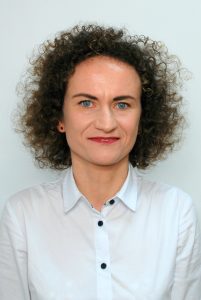
Associate Professor Dr. Maria Violeta GUIMAN is affiliated with the Department of Mechanical Engineering at the Transilvania University of Brașov. Her research focuses on biomechanics, technical acoustics, composite materials, and material resistance. Key interests include acoustic properties of materials, noise insulation, and structural dynamics. She has authored works such as Acustică Tehnică: Îndrumar de Laborator (2017) and contributed to studies on violin acoustics, wood properties, and sports biomechanics. Her publications emphasize innovative applications of composite materials and coatings in acoustics and environmental contexts. Recent work explores tuning acoustic properties via coating systems, porous composites for noise reduction, and cellulose-based materials. She has also investigated biomechanical aspects of sports movements, such as long jump kinematics, and structural responses under dynamic loads. No specific awards or student advisees are listed. Her academic contributions include experimental and theoretical studies on vibration analysis and material characterization, as well as collaborations on biomechanical motion capture technologies.
Prof. Adrian Filipescu is a full professor and PhD supervisor at the Department of Automation and Electrical Engineering, Dunărea de Jos University of Galati. He holds a PhD in Control Systems (1993) and has over 40 years of academic and research experience. His expertise spans numerical calculus, adaptive control, robotics, and Industry 4.0/5.0 applications. He has authored 12 books and over 110 indexed articles with an h-index of 11 (SCOPUS), and his work earned two UEFISCDI awards (2014, 2019). Education: Engineer diploma in Automatic Control (Polytechnic University of Bucharest, 1981) and PhD in Control Systems (Dunărea de Jos University, 1993). His research focuses on mechatronics systems integration, robotic control, digital twins, and industrial automation. Notable contributions include developing a mechatronics line with integrated autonomous robots, wheelchair systems for disabled users, and multidirectional autonomous vehicles. Research Themes: Digital twin frameworks, IoT-cloud robotics control, Industry 4.0/5.0 systems, inverse kinematics modeling, and autonomous robotic navigation. His recent work emphasizes cloud-based remote control, HIL simulation, and SCADA integration. Awards: Recipient of the 2014 and 2019 UEFISCDI 'Award for Research Results' for highly commended papers. He has led 10+ research projects, endowing labs with advanced robotic infrastructure and PLC-controlled systems. Advising & Grants: Supervised 7 completed PhD theses (including 1 international co-supervision). Projects focused on robotic-assisted manufacturing, autonomous systems, and mechatronics line optimization. Current lab facilities include mobile robots, industrial manipulators, and PLC-based control systems. Labs/Teams: Director of a research lab developing Industry 5.0-ready systems, including robotic assistants for elderly/disabled users and flexible assembly/disassembly technologies. Collaborations include NATO internships at Politecnico di Torino (Italy), INPG Grenoble (France), and ISR Coimbra (Portugal).
Ciprian Bogdan Chirila is a Senior Lecturer at the University Politehnica of Timisoara (Faculty of Automation and Computer Science, Computing and Information Technology Department) and also teaches at Ioan Slavici University . His career spans over two decades, with roles in teaching, research, and software development. Education : PhD in Computer Science (2010, University Politehnica Timisoara & University Nice-Sophia Antipolis) Master's in Computer Science & Software Engineering (2002) Engineer Diploma in Automation & Computer Science (2001) Analyst-Programmer Diploma (1996) Research Interests : His work focuses on reverse inheritance for software reusability, generative learning objects for education, and software quality assessment using code metrics. He explores interdisciplinary applications in healthcare, mathematics education, and industrial IT services. Article Trends : Recent publications emphasize adaptive e-learning frameworks , gamification in education , and model-driven development . Key themes include automated assessment , dynamic content generation , and integration of standards like SCORM and xAPI . Scientific Awards : Microsoft Award, Student Scientific Communications Session (2001) Award, Student Scientific Communications Session (2002) Third Place, Mechanics and Robotics Contest (1998) Fourth Place, Traian Lalescu Mathematics Contest (1998) Teaching & Development : He has led laboratory sessions and lectures in Data Structures , Compiler Design , Operating Systems , and Heuristic Methods . He organizes programming contests and develops centralized materials management software as a volunteer engineer.
Dr. Aurelian Catalin GALCA is a Senior Researcher I at the National Institute of Materials Physics (NIMP) in Magurele, Romania, where he works in the Laboratory of Complex Heterostructures and Multifunctional Materials (HeCoMat). He serves as NIMP's responsible for international collaborations with the Agence universitaire de la Francophonie (AUF) since 2016, managing administrative procedures and educational, training, and research activities for foreign PhD students and postdocs. Dr. GALCA's educational background includes: PhD in Physics from the University of Twente, Netherlands (2006) Master's degree in Solid State Physics from the University of Bucharest, Romania (2002) Bachelor's degree in Physics from the University of Bucharest, Romania (2002) Dr. GALCA's research focuses on the non-destructive characterization of nanoscaled materials using advanced techniques including spectroscopic ellipsometry, X-ray diffraction, UV-Vis and infrared spectroscopy, and Raman spectroscopy. His work also encompasses the preparation of dielectric/semiconductor/metallic thin films by physical vapor deposition methods and the development and testing of optoelectronic devices . His expertise spans materials science, nanotechnology, photovoltaics, and magnetooptics, with particular emphasis on thin film characterization and engineering for solar cell applications, memory devices, and other electronic applications. Analysis of Dr. GALCA's recent publications reveals a strong focus on advanced materials for energy applications , particularly photovoltaics and energy storage. His work spans thin film solar cells (CZTS, CBTS), perovskite solar cells, supercapacitors, and magnetocaloric materials. A common thread is the precise engineering of material properties through composition control, phase transitions, and surface morphology optimization. His research increasingly incorporates computational methods to complement experimental findings, demonstrating an interdisciplinary approach to materials science. Dr. GALCA has received notable recognition for his work, including: RADU GRIGOROVICI prize awarded by the Romanian Academy in 2011 for contributions to the optical characterization of oxide systems As a research leader, Dr. GALCA has coordinated three national projects, two of which as Principal Investigator, including the "Science and engineering of kesterites for the next generation of solar cells" project. He has also contributed to economic projects with CyberSwarm Inc. and Honeywell Romania. His expertise is sought after as a scientific reviewer for top journals including Scientific Reports, ACS Applied Materials & Interfaces, and Applied Surface Science, and as an Expert Evaluator for the European Commission (H2020), ANR (France), CNR (Italy), and Romanian funding agencies. Dr. GALCA leads research activities at the Laboratory of Complex Heterostructures and Multifunctional Materials (HeCoMat) at NIMP, where his team focuses on the characterization and development of advanced materials for optoelectronic applications. The laboratory is equipped with state-of-the-art instrumentation for thin film deposition and characterization, supporting research in photovoltaics, memory devices, and other electronic applications. Dr. GALCA's team collaborates extensively with international partners, reflecting his role as NIMP's responsible for AUF collaborations.
Leonard Gabriel MITU is a Lecturer at the Department of Product Design, Mechatronics and Environment , part of the Faculty of Product Design and Environment at the Technical University of Brașov. His research focuses on biomaterials, mechatronic systems, and advanced manufacturing techniques. He is particularly active in developing biocomposite materials for orthopedic prosthetics and exploring applications in MEMS (Microelectromechanical Systems). His work integrates interdisciplinary approaches, combining materials science, mechanical engineering, and biomedical applications. Dr. MITU’s research interests include the characterization of biomaterials like hydroxyapatite and polymers (e.g., PLA), optimization of composite reinforcement using glass and carbon fibers, and the development of lightweight prosthetic solutions. He has contributed to studies on manufacturing processes such as photolithography for MEMS and microfabrication techniques. His recent work emphasizes nano and micro-scale manufacturing methods in mechanical engineering, alongside systemic analysis of material behavior in medical devices. His publications span over 20 years, with a focus on biomaterials, composite testing methods, and biomedical applications. Notable contributions include studies on hybrid biocomposites for orthopedics and vibration analysis in renewable energy systems. He has collaborated on projects funded by institutional grants and maintains an active research profile in biomaterials and mechatronics. His address is located at Building C, Room CI 14, 1 Universității Str, Brașov, Romania.
Dr. Onet-Marian Zsuzsanna is a Lecturer in the Department of Computer Science at Babes-Bolyai University in Cluj-Napoca, Romania. Her research focuses on applying machine learning techniques to software engineering challenges, particularly software defect prediction and restructuring. Academic Rank: Lecturer Affiliation: Babes-Bolyai University Department: Computer Science Email: zsuzsanna.onet@ubbcluj.ro Research Interests : Dr. Marian specializes in developing machine learning models (clustering, association rules, reinforcement learning) for software defect detection, package-level restructuring, and test order optimization. She also explores applications of Formal Concept Analysis in text summarization and music pattern discovery. Recent Publications highlight her work in source-code embeddings, unsupervised learning for software analysis, and comparative studies of online/traditional learning environments. Her methods often integrate domain-specific metrics and AI-driven optimization. Contact : zsuzsanna.onet@ubbcluj.ro | Office: Teodor Mihaly street, Room 440
Professor Hakim Al-Samoui is a distinguished faculty member in the Department of Civil Engineering at the Faculty of Engineering, University of Tripoli. He has served at the university since 2003, obtaining the rank of Professor in 2005 and receiving a promotion to job grade 16 in 2022 (effective from January 1, 2017). His academic career spans over three decades with significant contributions to concrete technology research and education. Bachelor's degree from University of Tripoli (1988) Master's degree from University of Gdansk, Poland (1990) PhD from University of Gdansk, Poland (1996) Worked at University of Gdansk (1996-2002) Professor Al-Samoui specializes in concrete technology with particular expertise in two-stage concrete pouring, concrete durability, fabric formwork, concrete recycling, pozzolanic materials, and concrete mix design. His research bridges theoretical advancements with practical applications in construction engineering. He has published over eighty research papers in distinguished journals and presented at numerous international conferences worldwide, establishing himself as a leading expert in specialized concrete technologies. His recent publications demonstrate a clear trajectory toward sustainable construction materials, advanced concrete technologies, and computational approaches to material science. The research spans traditional concrete innovations while increasingly focusing on eco-friendly alternatives, waste material utilization, and cutting-edge technologies like 3D printing and machine learning applications in construction materials. Scientific Recognition: Fellowship from American Concrete Institute (2020) - first Libyan to receive this honor Active member of American Concrete Institute committees since approximately 1999 External evaluator for leading journals including Construction and Building Materials, American Concrete Institute publications, and American Society of Civil Engineering journals Professor Al-Samoui has supervised six Master's theses at University of Tripoli and served as advisor for graduate students from Gdansk Technical University (Poland), Tehran University (Iran), and Dublin Institute of Technology (Ireland). He has also acted as an external examiner for numerous Master's and PhD theses across multiple universities in Libya, Lebanon, Iraq, and India. His extensive international collaborations include research visits to Columbia University, University of South Carolina, Munich University, and Gdansk University of Technology. Through his active participation in international conferences across more than 20 countries and his role on scientific committees, Professor Al-Samoui maintains a robust research network that spans the global concrete technology community. His recent activities in 2023-2024 demonstrate continued research productivity and academic engagement.
Radu-Daniel Vatavu is Professor of Computer Science at Ștefan cel Mare University of Suceava, Romania, where he directs the Machine Intelligence and Information Visualization Lab (MintViz). His research focuses on human-computer interaction, gesture recognition, ambient intelligence, and accessible computing. Education includes PhD in Computer Science. He develops gesture recognition algorithms including $P and $Q recognizers used widely in HCI research. Awards include Mihai Draganescu Award of the Romanian Academy (2019), Ten-Year Technical Impact Award from ACM ICMI (2022), and multiple ACM CHI Best Paper Awards (2023, 2016, 2015). Research develops new interaction techniques for touchscreens, wearables, and smart environments. Creates open-source tools like Agreement Analysis Toolkit (AGATe) and Gesture Heatmaps Toolkit (GHoST).
Adrian Spătaru serves as a Lecturer at the Faculty of Mathematics and Computer Science, West University of Timisoara, Romania, with his office located in room 058. He maintains active academic engagement through direct contact channels including email (adrian.spataru@e-uvt.ro) and phone ((0256) 592 157), reflecting ongoing institutional affiliation and research activities within computer science. His research centers on the integration of edge, cloud, and high-performance computing resources within the cloud continuum framework. Key focus areas include service orchestration, resource management, blockchain applications for decentralized systems, and AI-driven optimization of cloud infrastructures. His work addresses critical challenges in heterogeneous platform integration, fault tolerance, and predictive maintenance across large-scale distributed environments, with notable contributions to container deployment and accelerator-aware application specification. Analysis of his publication trends reveals sustained emphasis on the edge-cloud-HPC continuum since 2018, evolving toward intent-based AI orchestration and heterogeneous hardware integration in recent works. His research bridges theoretical distributed systems concepts with practical applications in environmental monitoring (solar forecasting, freshwater quality assessment) and industrial cloud reliability, demonstrating both academic rigor and real-world impact. No scientific awards are documented in the provided institutional information. Details regarding student supervision, research grants, or laboratory affiliations are not specified in the available materials. Current research directions appear focused on advancing the edge-cloud-HPC continuum through heterogeneous platform integration, with 2025 publications indicating active development in this domain.
Răzvan-Virgil Bogdan is an Assistant Professor at the Faculty of Automation and Computer Science, Politehnica University of Timisoara (PUT), with expertise in Embedded Systems , Automotive Software Testing , and Dependability of Computer Systems . His research bridges Internet-of-Things and e-Learning , focusing on reliability, testing, and intelligent environments. University: Politehnica University of Timisoara School: Faculty of Automation and Computer Science Contact: razvan.bogdan@cs.upt.ro | Room B413A Research Focus: Bogdan's work emphasizes system reliability , embedded software quality , and automotive electronics , with projects like GEMSCLAIM (energy-efficient mobile systems) and HURO JCBICS (cross-border educational infrastructure). He also drives industrial collaborations (e.g., AC_G_xBU_Academy with Continental Automotive Romania). Teaching Career: Bogdan has taught courses such as Embedded Systems , Microprocessor Systems , and Advanced Embedded Systems at PUT, blending theoretical rigor with hands-on lab work in the Vector Lab . His pedagogical approach integrates software testing methodologies and energy-aware system design . Scientific Contributions: He has contributed to embedded systems validation, security frameworks for distributed systems (e.g., TD/54 project ), and automotive software tools. His publications span ACTA POLYTECHNICA HUNGARICA , BRAIN: Broad Research in Artificial Intelligence and Neuroscience , and conference proceedings like IEEE Sustainability and SACI. Awards: Mercy Diplomas 2021 Mercy Diplomas 2020 Memberships: IEEE ACM Prospective Students: Bogdan actively seeks undergrad, Masters, and PhD candidates, emphasizing practical research in automotive embedded systems and IoT . His lab provides direct access for project collaboration and discussions.
Oana AMĂRICĂI-BONCALO is a Professor at the Computer and Information Technology Department of University Politehnica Timisoara. She holds a Dr. Habil. Eng. degree and has served as Assistant Professor, Lecturer, and Associate Professor since 2009. Her research focuses on reconfigurable systems, system reliability, embedded systems, and forward error correction with FPGA applications. Education: Engineering Degree (2006) and PhD in Computer Engineering (2009), both from University Politehnica Timisoara. She was an invited researcher at University College Cork (2012) and University of Cergy-Pontoise (2016). Since 2017, she has been an Editor for Microprocessor and Microsystems (Elsevier). Research projects include GEMSCLAIM (green energy management in mobile systems). She supervises PhD student Andrei-Bogdan MIHĂILESCU. Recent publications emphasize LDPC decoding architectures, FPGA-based solutions, and reliability assessment in quantum circuits. Notable contributions include innovations in layered decoding algorithms, memory optimization for LDPC decoders, and one-hot data representation techniques. Her work intersects VLSI design, digital signal processing, and embedded systems reliability. Event organization includes a 2024 workshop on audio-video technical solutions and participation in IEEE symposiums. She contributes to academic events like the Mobile Applications Student Contest (SCMUPT).
Sorin Vlase is a Professor in the Department of Mechanical Engineering at the Faculty of Mechanical Engineering, Transilvania University of Brașov, Romania. His office is located in Building N, room NP1 at Politehnicii 1, Brașov. He can be contacted via email at svlase@unitbv.ro and by telephone at +40 268 474761. Professor Vlase's research focuses on several key areas in mechanical engineering and applied mechanics. His primary research interests include: Dynamics systems Multibody systems Analytical mechanics Composite Materials His extensive publication record demonstrates expertise in both theoretical mechanics and practical engineering applications. Professor Vlase has published numerous articles in high-impact journals including Springer publications, Polymers (FI=4.329), Mathematics (FI=2.258), and Symmetry-Basel (FI=2.713). His recent work spans fundamental mechanics topics such as statics and equilibrium principles alongside advanced applications in automotive safety systems, composite materials, and structural dynamics. The breadth of his research indicates strong analytical capabilities combined with practical engineering knowledge. Professor Vlase maintains an active research program with publications continuing through 2025, showing consistent scholarly output across multiple domains within mechanical engineering. His work bridges theoretical mechanics with real-world engineering challenges, particularly in material behavior analysis and structural safety applications.
Dr. Nan Alexandrina Emilia is a Senior Researcher (R4 - CS I) at the National Institute for Research and Development of Isotopic and Molecular Technologies (INCDTIM) in Cluj-Napoca, Romania. She leads research in the Department of Materials, Energy and Advanced Technologies, specifically within the Multifunctional Materials and Biologically Active Compounds group. With expertise spanning materials science, nanotechnology, and polymer chemistry, her work focuses on developing advanced functional materials for environmental and biomedical applications. Her educational background includes: MSc in Heterocyclic Chemistry (2001) from Babes-Bolyai University PhD in Chemistry (2005) from Babes-Bolyai University Dr. Nan's research explores the synthesis and characterization of polymeric nanostructures, metal oxide nanoparticles, and functionalized materials for applications in wastewater treatment, magnetic hyperthermia, and sustainable construction. Her work bridges fundamental chemistry with applied nanotechnology, emphasizing green synthesis methods and circular economy principles in materials development. Analysis of her recent publications reveals strong emphasis on: Eco-friendly nanocomposites for environmental remediation Thermally conductive polymer systems Magnetic nanostructures for biomedical applications Waste-derived construction materials Advanced characterization of multifunctional materials Her research consistently integrates materials chemistry with sustainability goals. Dr. Nan actively leads and contributes to significant national research projects including: PN-III-P4-ID-PCE-2020-1595: Neoteric polymers with tunable thermal conductivity (Project Coordinator) PN-III-P1-1.2-PCCDI-2017-0769: Novel radiopharmaceuticals for oncology (Key Expert) PN-II-PT-PCCA-2013-4-0948: Magnetic nanofluid sealing systems (Team Leader) PN-III-P2-2.1-PED-2021-1821: Industrial wastes in bituminous materials She directs research within the Multifunctional Materials and Biologically Active Compounds laboratory, focusing on developing nanostructured materials for environmental and biomedical applications through interdisciplinary collaboration.
Serhiy Georgievich Lutsenko is a Senior Lecturer at the Department of Physical Culture, Olympic and Non-Olympic Sports within the Department of Physical Culture and Sports at Zaporizhzhia Polytechnic National University. With over 20 years of experience since joining the university in 2004, he has established himself as a dedicated educator and researcher in the field of physical education and sports science. Higher education from Zaporizhia State University (1992) Specialty: Physical Education Qualification: Physical Education Teacher, Sports Coach (volleyball) Sports title: Candidate for Master of Sports in Volleyball Lutsenko's research primarily focuses on physical education and sports in higher education institutions, with special emphasis on volleyball training methodologies, physical rehabilitation techniques, and sports dietetics. His work demonstrates a commitment to improving physical fitness assessment methods and developing innovative training approaches for students. His research spans multiple areas including volleyball performance analysis, physical rehabilitation for various populations, and the application of alternative exercise methods like hatha yoga in educational settings. His scholarly output over the past decade reveals consistent contributions to sports science literature, with publications appearing in Ukrainian academic journals specializing in physical culture and sports. His work shows particular interest in practical applications of sports science research within university educational settings. Multiple certificates of honor from Zaporizhia regional authorities (2008-2021) Recognition for contributions to physical education and sports development Active participation in regional sports education initiatives As an educator, Lutsenko has developed specialized training programs including 'Innovative technologies for the development of physical qualities and sports improvement (volleyball)' and 'Physical education (volleyball)'. He maintains active involvement in sports community through his role as a Category 2 volleyball referee and membership in the Zaporizhia Region Volleyball Federation.
Dana Petcu is a Professor at the Computer Science Department of the Faculty of Mathematics and Computer Science at West University of Timisoara. She serves as Director of both the Institute for Advanced Environmental Research and Institute e-Austria Timisoara. With expertise in distributed and parallel computing, she has published over two hundred papers on Cloud, Grid, Cluster, and HPC computing. She is also the chief editor of the open-access journal Scalable Computing: Practice and Experience (SCPE) and has coordinated multiple European Commission-funded projects. Education: Ms. Degree in Computer Science Ph.D. in Numerical Analysis Dana Petcu's research focuses on distributed and parallel computing systems. Her current interests include Cloud & Grid computing, and HPC & Cluster computing. Previously, she worked on Mathematical software, Numerical methods, and Computer graphics. Her work bridges theoretical foundations with practical implementations, particularly in resource management, scheduling algorithms, and scalable computing architectures. She has developed significant expertise in applying these technologies to scientific computing, data-intensive applications, and multi-cloud environments. Her scholarly output demonstrates consistent focus on cloud and distributed computing evolution. Over the past decade, her research has shifted from foundational grid computing to modern cloud technologies, edge computing, and exascale systems. Key themes include resource management across heterogeneous environments, autonomic systems, security SLAs, and multi-cloud portability. Her work shows increasing interdisciplinary connections, particularly with AI/ML techniques applied to resource optimization and anomaly detection in large-scale systems. Scientific Awards: Maria Sibylla Merian-Award (2005) IBM Faculty Award (2009) MLNR Award "Spiru Haret" (2015) Romanian Academy Award "Gheorghe Cartianu" (2015) Dana Petcu has advised numerous graduate students through various master's programs in Distributed and Parallel Computing. She has secured substantial research funding as coordinator of FP7 projects HOST and SPRERS, and as scientific coordinator of mOSAIC. Her grant portfolio includes multiple European Commission-funded initiatives focused on cloud computing infrastructure, resource management, and multi-cloud environments. She has also contributed to EU Research Activities in Cloud Computing as an editor, demonstrating her leadership in shaping European research agendas in this field. She leads the Computer Science Research Center (CCI) and High Performance Computing Service Center (HPC-UVT) at West University of Timisoara. Her teams develop and maintain significant infrastructure for distributed computing research, including simulation environments like CloudSim and iFogSim. She has established strong connections between academic research and practical applications through Institute e-Austria Timisoara, fostering technology transfer and innovation in cloud computing solutions.