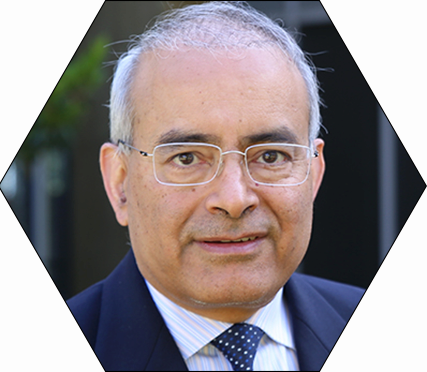
Prof. Dr. Norbert Wehn is a Professor of Microelectronic Systems Design at the RPTU Kaiserslautern, leading the EMS research group. He holds a Dipl.-Ing. from TU Darmstadt (1984), where he also earned his PhD 'summa cum laude' (1989). Before academia, he worked at Siemens AG in VLSI Design (1984–1991) and later led product development for embedded systems (1991–1997). His research focuses on energy-efficient architectures, IoT, machine learning accelerators, and sustainable electronics. Education: 1978–1984: Dipl.-Ing., TU Darmstadt, Data Technology 1989: PhD 'summa cum laude', TU Darmstadt Key Roles: Vice President for Teaching & International Affairs at TU Kaiserslautern (2013–2017) Chair of the European Design Automation Association (2009–2012, 2020–present) Conference Leadership: DATE, DAC, FPL, and others His research drives innovations in low-power SoC architectures, processing-in-memory, and embedded systems. He has received over 20 awards, including the Goebel Prize (1989), HiPEAC Technology Transfer Awards (2015, 2020), and multiple best-paper recognitions. His work bridges academia and industry, with advisory roles for tech firms and national/international committees.
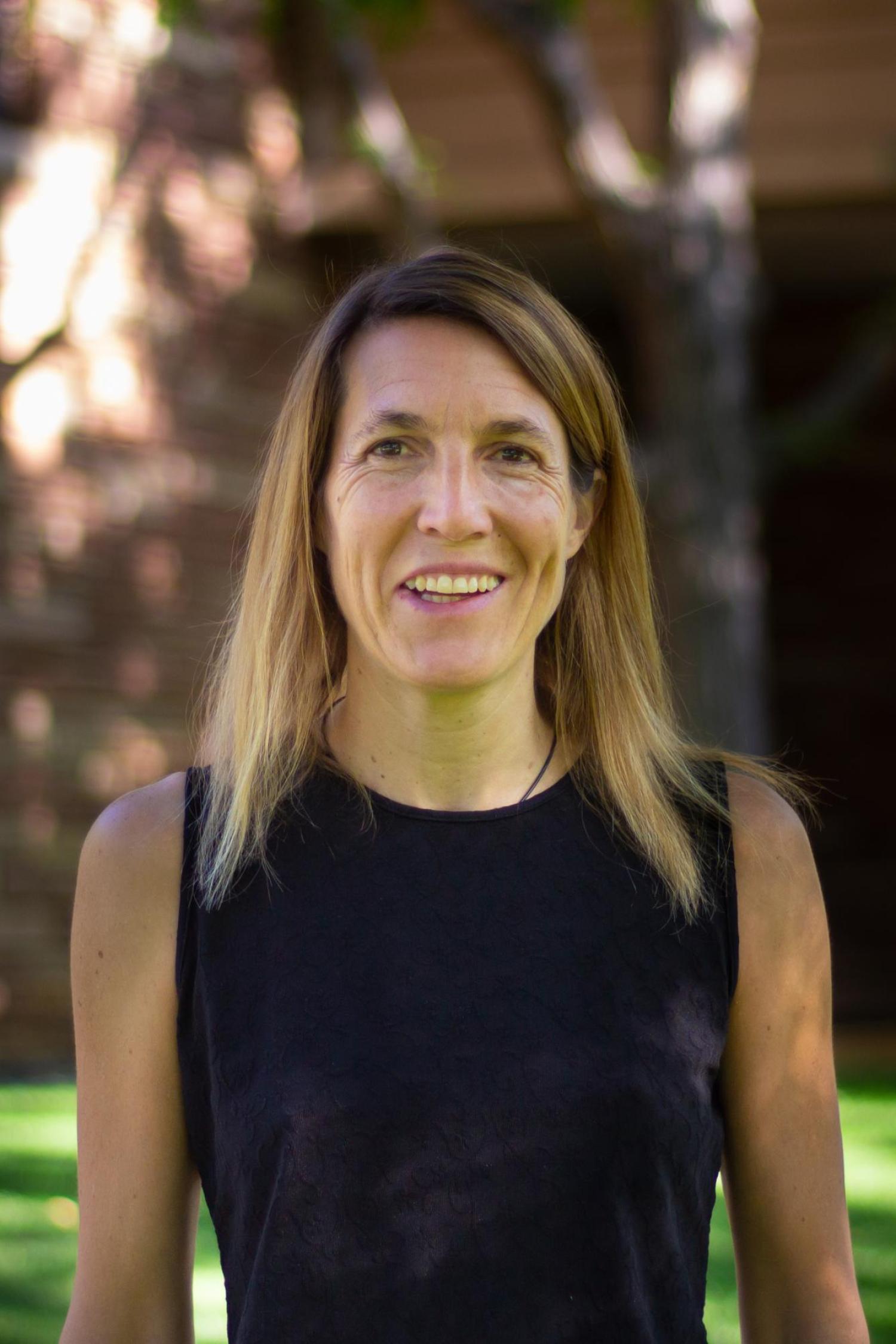
Svenja Knappe is an Associate Research Professor at the University of Colorado Boulder, affiliated with the Department of Mechanical Engineering and previously serving as an adjunct professor in Psychology and Neuroscience. She leads research in quantum sensor technologies, particularly microfabricated atomic magnetometers for biomedical, aerospace, and industrial applications. Her work includes developing portable magnetoencephalography (MEG) systems using optically pumped magnetometers (OPMs), enabling non-invasive brain imaging and neurological diagnostics. She co-founded FieldLine to commercialize these innovations and collaborates with the National Institute of Standards and Technology (NIST). Education: B.Sc. (1998) and Ph.D. in Physics (2001) from Rheinische Friedrich-Wilhelms-Universität (Germany). Dissertation focused on dark resonance clocks and magnetometers. Research emphasizes miniaturized quantum sensors for applications ranging from CubeSat-based Earth magnetic field mapping to medical devices like fetal magnetocardiography. Her interdisciplinary approach integrates microfabrication, frequency control, and novel packaging techniques. Ongoing projects include the Compact Spaceborne Magnetic Observatory (COSMO) CubeSat mission and magnetic communication systems using atomic magnetometers. Key collaborations involve the CUBit Quantum Initiative (funded through a seed grant for chip-scale atomic clocks) and the HUNTER sterile neutrino search experiment. She holds patents on atomic magnetometer designs and related technologies.
Yogendra Joshi is the John M. McKenney and Warren D. Shiver Distinguished Chair in Building Mechanical Systems and Professor at the Georgia Institute of Technology's College of Engineering, Department of Mechanical Engineering. His research focuses on thermal management of electronics, combustion, energy systems, and microthermal systems. He holds a Ph.D. from the University of Pennsylvania (1984), M.S. from SUNY Buffalo (1981), and B.Tech. from IIT Kanpur (1979). Prior to joining Georgia Tech in 2001, he held positions at the University of Maryland and Naval Postgraduate School. His research addresses transport phenomena in emerging technologies, including compact thermal management devices for high-heat-flux electronics, conjugate transport mechanisms in multi-scale systems, and energy-efficient data center thermal management. Key innovations include microfabricated thermosyphons, computational modeling for thermal design, and embedded evaporative cooling systems. Dr. Joshi has received awards such as IEEE Fellow (2012), IIT Kanpur Distinguished Alumnus (2010-2011), and IBM Faculty Award (2008). His lab (METTL) explores microelectronics thermal challenges and eco-friendly cooling solutions. Advising includes students like Adya Ali, and he has contributed to over 150 publications and patents. His work bridges thermal sciences, materials, and semiconductor engineering to enable next-gen electronics and sustainable energy systems.
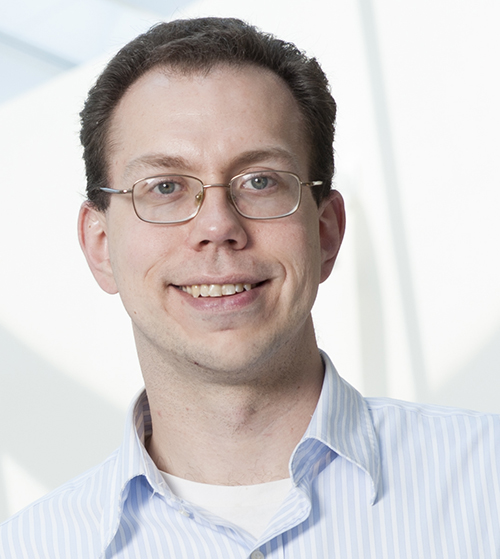
Dr. Peter Bermel is the Elmore Professor of Electrical and Computer Engineering at Purdue University, affiliated with the Birck Nanotechnology Center. His expertise lies in nanophotonics, with a focus on improving photovoltaic, thermophotovoltaic, and microelectronic systems through advanced electromagnetic theory, simulation, and material engineering. Education: B.S. in Physics, University of North Carolina, 2000 MPhil in Physics, University of Cambridge, 2002 PhD in Physics, Massachusetts Institute of Technology, 2007 Research Interests: Dr. Bermel’s research spans photonic crystal design, thermal emitter optimization, and light-trapping strategies for solar cells. His work integrates computational modeling, fabrication, and experimental characterization to enhance energy conversion efficiency. Notable contributions include silicon photonic crystal solar cells and chip-scale thermophotovoltaic systems. Recent Trends in Publications: Recent work emphasizes high-temperature materials for thermophotovoltaics, radiative cooling for photovoltaic efficiency, and quantum sensing with nanodiamonds. His research bridges theory and application, addressing challenges in energy harvesting, semiconductor reliability, and sustainable agrivoltaic systems. Awards & Honors: NSF CAREER Award (2015–2020) Winston Churchill Foundation Scholar (2000–2001) NSF Graduate Research Fellowship (2001–2004) Advising & Grants: Currently supervises graduate students in topics like agricultural photovoltaics and quantum optoelectronics. Over $10M in grants secured from NSF, industry partnerships, and federal initiatives, including the NSF CAREER Award and NEPTUNE Center projects. Labs & Teams: Leads a lab focused on nanophotonics and energy systems at Purdue. Collaborates with MIT, NREL, and industry partners on advanced photovoltaic and thermal management technologies.
Prof. Laura Bégon-Lours is an Assistant Professor at ETH Zürich's Department of Information Technology and Electrical Engineering, specializing in neuromorphic electronics and AI hardware. Her research focuses on developing analog in-memory computing systems using novel materials like conductive-metal-oxide/HfOx ReRAM and ferroelectric nanolaminates. She explores applications in bio-inspired computing, low-power neuromorphic processors, and beyond-CMOS device integration. Her work bridges material science and electronics engineering, emphasizing scalable, energy-efficient computing architectures. Key contributions include crossbar operation of ferroelectric tunnel junctions, BEOL integration of synaptic weights, and unsupervised learning models leveraging memristive systems. Current projects target multi-timescale synaptic weights and photonic-electronic hybrid systems for next-generation AI acceleration. Publications highlight advancements in resistive switching mechanisms, ferroelectric field effects, and neuromorphic processor design. Her research has been published in top journals, with recent focus on 2023-2025 innovations in analog computing and neuromorphic circuits.
Hyo Jeong Kang is an Assistant Professor at the University of Florida's Digital Worlds Institute, specializing in VR/AR interaction design for educational and workforce training applications. She holds a Ph.D. in Design Studies from the University of Wisconsin–Madison with a concentration in Virtual Reality, complemented by an M.S. from Seoul National University and a B.B.A. from Ewha Womans University. Her research develops intuitive VR interfaces for non-technical users, focusing on microelectronics training, autism support tools, and inclusive design addressing racial microaggressions. Dr. Kang leads multiple NSF-funded projects including semiconductor workforce development programs and VR training for microelectronics physical assurance. Her work bridges immersive technology with practical applications in industry training and social equity. Major Grants: NSF ExLENT: Preparing Autistic individuals for Semiconductor QA Engineering ($620,104) NSF SaTC:EDU: Next-Gen VR Training for Microelectronics ($497,905) NSF Engine: Central Florida Semiconductor Innovation Engine ($2.35M UF sub-award) US Army SCALE: Microelectronic Workforce Development ($450,000 UF sub-award)
Michael Mayer is an Associate Professor in the Department of Mechanical and Mechatronics Engineering at the University of Waterloo, Canada. His research focuses on microjoining processes, laser welding of biological materials, and direct bonding for photonics applications. He has extensive industrial collaboration experience with companies like Bosch, Intel, and Tesla. Education: PhD in Technical Sciences, Swiss Federal Institute of Technology (ETH) Zurich, 2000 Diploma in Physics, Swiss Federal Institute of Technology (ETH) Zurich, 1994 Research Interests: Dr. Mayer's work addresses challenges in microelectronics, medical devices, and aerospace through advanced joining techniques. His lab develops real-time monitoring systems using ultrasonic sensors and numerical modeling to improve process reliability. Current projects include laser welding for surgical applications and low-temperature direct bonding for solid-state lasers. Recent Article Trends: Publications emphasize thermal management, electromigration in solder joints, and wire bonding optimization. Recent work explores nanocomposite gels for laser tissue welding and interface characterization of bonded glass substrates. Awards: 2010 Best Paper of Session (IEEE) Advising & Grants: Supervises graduate students who have joined leading tech firms. Collaborates with industry on reliability testing and process development. Holds Sole-Supervisory Privilege Status (SSPS) for graduate admissions. Labs/Teams: Leads a multidisciplinary group integrating experimental, analytical, and numerical investigations. Partners with campus research teams on materials innovation and microsystem technologies.
Valeria Nicolosi serves as Chair of Nanomaterials and Advanced Microscopy at Trinity College Dublin's School of Chemistry, a position she has held since 2016. She is the first woman to achieve a Chair position in the School of Chemistry since Trinity College Dublin's founding in 1592. Her academic journey includes ERC Research Professorship at TCD (2012-2014), Departmental Lectureship at Oxford Materials (2010-2011), and multiple fellowships at the University of Oxford. Her educational background features a BSc in Chemistry from the University of Catania (2001) and a PhD in Physics from Trinity College Dublin (2006), completed under Prof. J.N. Coleman focusing on liquid phase processing of 2D nanomaterials. Nicolosi's research centers on 2D materials and nanomaterials for energy applications, with particular expertise in MXenes , battery electrodes , supercapacitors , and advanced electron microscopy . Her work bridges fundamental nanomaterial synthesis with practical energy storage solutions, emphasizing scalable production methods like liquid-phase exfoliation. Analysis of her recent publications reveals a strong focus on MXene-based energy storage systems , with significant contributions to micro-supercapacitor fabrication, silicon anode development, and transparent conductive electrodes. Her work consistently addresses industrial scalability challenges while maintaining high electrochemical performance. Trinity College Dublin ERC Researcher of the Year (2017) Science Foundation Ireland Young Scientist of the Year (2016) President of Ireland Young Researcher Award (2014) World Economic Forum Young Scientist (2013) RDS/Intel Prize for Nanoscience (2012) Women Business Forum Women of the Decade in Science & Innovation (2018) Nicolosi has secured substantial research funding through ERC grants and Science Foundation Ireland awards, enabling her leadership in nanomaterials research. She previously held a Junior Kurti Fellowship at Brasenose College, Oxford (2009-2012), and served as a Visiting Scientist at Oxford's Department of Materials (2012-2017). Her collaborative work spans international institutions including the CRANN nanoscience institute at TCD. Her laboratory focuses on advanced microscopy techniques for nanomaterial characterization, with strong industry partnerships for energy storage applications. Current research emphasizes translating lab-scale nanomaterial discoveries into commercially viable energy storage solutions through scalable processing methods.
Joachim Becker is a Lecturer at the Institute of Microelectronics, part of the Faculty of Engineering, Computer Science and Psychology at the University of Ulm. He teaches multiple courses in the Summer semester 2025 including Signal Processing , Mixed-signal CMOS Chip Design , Analog Circuits , and Microcontroller Project . His expertise spans microelectronics with a focus on analog circuit design, integrated systems, and CMOS technologies. Research interests include advanced signal processing techniques, mixed-signal system design, and video technology applications. Though no specific awards or grants are listed, his active teaching involvement suggests ongoing contributions to engineering education.
Jaume Verd Martorell is a University Professor in the Department of Electronic Technology at the School of Engineering, University of the Balearic Islands (UIB). He holds a Telecommunications Engineering degree from UPC and a PhD in Electronic Engineering from UAB. Since 2001, he has taught across Engineering and Physics disciplines at both UIB and UAB. His research focuses on exploiting CMOS-MEMS devices for compact systems-on-chip (SoCs), with primary applications in biosensing and chaos-based secure communications . His expertise spans integrated circuit design, microelectronics, and MEMS transducer development. As a specialist in CMOS-MEMS technology, he bridges semiconductor fabrication with mechanical systems for novel sensing applications. Four teaching quinquenios (Spanish academic recognition) Three research sexenios (Spanish academic recognition) Professor Verd Martorell leads teaching in power electronics, electrical machines, and MEMS transducers across undergraduate and master's programs. He serves as thesis advisor for final degree projects and master's theses in electronic engineering. His laboratory work centers on the Electronic Systems Group (GSE-UIB), where he investigates reliability and radiation effects on integrated systems. Current research directions include biosensor development using CMOS-MEMS platforms and secure communication systems leveraging chaotic dynamics.
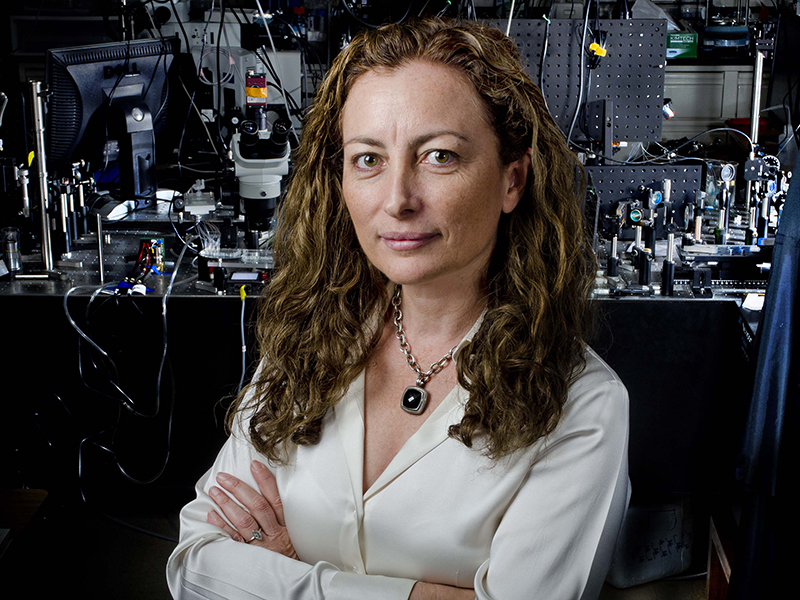
Adela Ben-Yakar is the Harry L. Kent, Jr. Professor of Mechanical Engineering at the University of Texas at Austin, affiliated with the College of Engineering. She specializes in femtosecond laser applications in life sciences, nonlinear microscopy, and plasmonic nanoengineering. Her work bridges mechanical engineering, biomedical research, and nanotechnology, focusing on laser nanosurgery, microfluidic platforms, and high-throughput drug screening for diseases like Alzheimer's. Education details are not explicitly provided, but her academic trajectory is evident through her roles and publications. Research interests include femtosecond laser-tissue interactions, nanoengineering for medical applications, and imaging technologies. Her articles span ultrafast laser surgery, microscopy innovations, and microfluidic systems. Key contributions include developing laser-based tools for nerve regeneration studies, endoscopic imaging probes, and automated toxicity testing platforms. Recent work emphasizes clinical applications in spine surgery and vocal fold restoration. Awards: CPRIT Grant (2013), NIH Transformative Research Award (2011), NSF CAREER Award (2010) Grants: NSF (2004/2005), Texas Higher Education Coordinating Board (2013), CPRIT (2013) Labs/Teams: Active in the Thermal/Fluid Systems program, Institute for Neuroscience, Texas Materials Institute, and Microelectronics Research Center. Her group collaborates on interdisciplinary projects involving engineering, biology, and medicine.
Suraj Cheema is the AMAX Career Development Professor and Assistant Professor of Materials Science and Engineering at MIT, with a joint appointment in Electrical Engineering and Computer Science. His research focuses on atomic-scale engineering of ferroelectric materials for energy-efficient microelectronics, including negative capacitance effects to enhance device performance. He leads the Ferroelectric Materials and Devices Group, emphasizing lab-to-fab translation of next-generation technologies. Education: B.S. in Applied Physics and Applied Mathematics from Columbia University (Francis Rhodes Prize recipient), Ph.D. in Materials Science and Engineering from UC Berkeley, and postdoc in Electrical Engineering and Computer Science at Berkeley. His internship at MIT Lincoln Laboratory integrated ferroelectric materials into defense transistor technologies. Research interests span ferroelectric heterostructures, energy storage capacitors, and self-powered microsystems. Recent work explores ultralow-power logic transistors and on-chip energy harvesting. Key awards include the 2024 Early Career Development Award (MIT RLE), 2023 Young Faculty Award (MIT.nano), and the 2023 Richard L. Greene Dissertation Award (APS). His articles address advanced transistor design, ferroelectric memory, and material characterization. Future projects aim to develop self-powered intelligent microsystems combining computing, memory, and sensing. His work bridges materials innovation with practical applications in sustainable electronics.
Professor Eric Yeatman is a Professor of Microengineering at Imperial College London's Department of Electrical and Electronic Engineering, leading the department since 2015. His affiliations include the Hamlyn Centre for Robotic Surgery, the Data Science Institute, and the Energy Futures Lab. He specializes in microengineering, MEMS, energy harvesting, and medical robotics, with over 250 publications and patents. A Fellow of the Royal Academy of Engineering, IEEE, and IET, he received the Royal Academy of Engineering Silver Medal in 2011. Co-founder and Chair of Imperial-X, he also served as CEO and Chairman of Microsaic Systems, developing miniature mass spectrometers. His research bridges microelectronics and healthcare, focusing on energy-autonomous systems, tactile sensing, and minimally invasive surgical tools. Projects include thermally drawn fibers for medical catheters and AI-driven bionic systems. Over £25M in research funding has supported collaborations with industry and academic partners. Education: Details not specified in text. Awards: Royal Academy Silver Medal (2011), multiple fellowships. Grants: Principal investigator on 30+ projects with £25M funding. Labs: Hamlyn Centre, Energy Futures Lab, Space Lab.
Kristofer Pister is a Professor of Electrical Engineering and Computer Sciences (EECS) at the University of California, Berkeley, and Co-Director of the Berkeley Sensor & Actuator Center (BSAC) and the SWARM Lab. He holds a B.A. in Applied Physics from UC San Diego (1986) and M.S./Ph.D. in EECS from UC Berkeley (1989/1992). His research focuses on MEMS, robotics, low-power circuits, and wireless sensor networks, notably developing the Smart Dust project and micro-robotics systems. He teaches EE 105 (Microelectronic Devices and Circuits) and advises on projects like crystal-free radios and swarm robotics. His awards include the Alexander Schwarzkopf Prize (2006), Alfred F. Sperry Founder Award (2009), and NSF CAREER Award (1996). Pister co-founded Dust Networks (acquired by Linear Technology) and pioneered innovations in microrobot actuation, implantable sensors, and space exploration swarms. His labs (BSAC, SWARM) explore MEMS integration, autonomous systems, and energy-efficient communication. Recent work includes crystal-free IoT devices, interplanetary swarm missions (BLISS), and ultrasonic radiation detection implants. Pister emphasizes interdisciplinary collaboration, with contributions spanning hardware design, control systems, and AI-driven robotics.
Dr. Ali Mohammadi is a Senior Lecturer in the Department of Electronic & Electrical Engineering within the Faculty of Engineering & Design at the University of Bath. He leads innovative research in Micro-electromechanical Systems (MEMS) and serves as an Associate Editor for IEEE Sensors. His work is supported by multiple EPSRC-funded research projects with strong industry collaboration, totaling over £1.5 million across five projects. Dr. Mohammadi is embedded within several key research units: Electronics Materials, Circuits & Systems Research Unit (EMaCS), The Foundry: Centre for Digital, Manufacturing & Design, Centre for Bioengineering & Biomedical Technologies (CBio), and the Bath Institute for the Augmented Human. Dr. Mohammadi's academic background includes postdoctoral research at the Department of Engineering Science, University of Oxford (2016-2017) and the Department of Electrical and Computer Systems Engineering, Monash University, Australia (2014-2016). This foundation has enabled his interdisciplinary approach to micro/nano-electromechanical systems and electronic circuit design. His research program addresses fundamental challenges in micro/nano-electromechanical transducers and electronic interface circuits, with specific innovations in on-chip atomic force microscopy, implantable energy harvesters, and high precision coupled resonator sensors. These contributions span multiple UN Sustainable Development Goals, particularly advancing clean energy technologies and healthcare solutions. Dr. Mohammadi's work uniquely bridges electrical engineering, mechanical systems, and materials science to develop next-generation sensing and energy harvesting technologies with real-world applications. Analysis of his 48 research outputs reveals a clear trajectory from fundamental MEMS device development toward integrated sensor systems with practical applications. His most recent publications (2023-2025) demonstrate increasing integration of machine learning with precision sensing technologies, particularly for manufacturing condition monitoring and biomedical applications. The research shows progression from individual components to complete systems, with growing emphasis on real-time data processing at the sensor edge and human-machine interfaces. Dr. Mohammadi's professional standing includes: Member of the Institute of Electrical and Electronics Engineers (IEEE) Associate Editor of IEEE Sensors Journal As a doctoral supervisor, Dr. Mohammadi actively mentors students in Microelectromechanical Systems and Electronic Integrated Circuits. His research portfolio includes two active EPSRC projects: 'Transforming the use of Ansys simulation software within engineering curricula' and 'SENSYCUT- Sensor Enabled Systems for Precision Cutting,' demonstrating strong industry-academic collaboration. These projects focus on practical engineering solutions for manufacturing optimization, condition monitoring, and human-computer interaction, with direct applications in industrial settings. Dr. Mohammadi's research ecosystem spans multiple interdisciplinary centers at Bath. Within EMaCS, he advances fundamental electronic materials and circuit design. Through The Foundry, he contributes to digital manufacturing innovation. His CBio affiliation enables medical applications of his sensor technologies, while the Bath Institute for the Augmented Human provides context for human-centered applications of his tactile display research. This multi-faceted institutional integration allows his work to progress from laboratory prototypes to real-world implementations across healthcare, manufacturing, and human augmentation domains.