W. Travis Horton is an Associate Professor of Civil Engineering at Purdue University, with a courtesy appointment in Mechanical Engineering. He holds a Ph.D. from Purdue University and has over 20 years of academic and industry experience in thermal systems research. His affiliations include the Lyles School of Civil Engineering and the Ray W. Herrick Laboratories at Purdue, focusing on advanced thermal energy conversion systems and sustainable building technologies. Dr. Horton’s research emphasizes integration of HVAC systems with renewable energy, optimization of ground-source heat pumps, and innovative compressor/expander technologies. He leads projects on building energy modeling, combined heat and power systems, and waste heat recovery. His work bridges experimental facilities with computational models for system analysis and optimization. His teaching includes courses on building mechanical systems design and energy audits. He is a licensed Professional Engineer (Michigan) and holds universal refrigerant certification. Active in professional organizations like ASHRAE, his research has produced over 50 peer-reviewed articles since 2001, addressing thermal efficiency, energy systems integration, and sustainable building design.
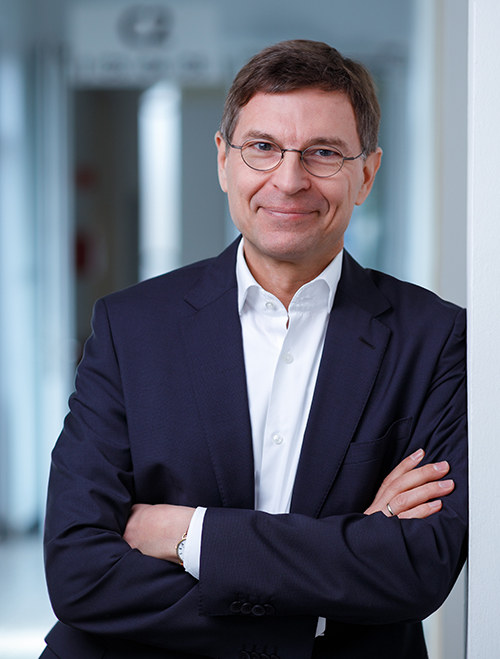
Prof. Stefan Wrobel is a Professor of Computer Science at the University of Bonn and Director of the Fraunhofer Institute for Intelligent Analysis and Information Systems (IAIS). He holds leadership roles, including Co-Director of the Lamarr Institute for Machine Learning and Artificial Intelligence and Managing Director of the Bonn-Aachen International Center for Information Technology (b-it). His research focuses on AI, machine learning, and big data applications in industry and society. He earned his PhD from the University of Dortmund and has held academic positions at Magdeburg University and Berlin Technical University. Active in national/international AI initiatives, he chairs the Fraunhofer Strategic Research Field on Artificial Intelligence and co-leads the Machine Learning Rhine-Ruhr (ML2R) Competence Center. Education: Master's (Georgia Tech), PhD (University of Dortmund). Research emphasizes intelligent algorithms, data analysis, and AI ethics. Awarded GI-Fellow (2022) and honored by the German Computer Science Society for contributions to AI history. Key roles include Editorial Board member of Machine Learning journals and advisory roles in AI ethics and certification. Scientific contributions span over 100 publications in machine learning, data mining, and visual analytics. Advised numerous PhD students on topics like graph mining and trustworthy AI. Leadership in institutions like Fraunhofer Technology Hub for Machine Learning and the German Computer Science Society's Special Interest Group on Knowledge Discovery.
Chenyu You is an Assistant Professor in the Department of Applied Mathematics & Statistics and Department of Computer Science at Stony Brook University. He is affiliated with CVLab, AI Institute, and Institute for Advanced Computational Science. His research focuses on principles and practice of trustworthy machine intelligence, emphasizing generalization and reliability in machine learning, with applications to healthcare, biomedical imaging, and cognitive neuroscience. Ph.D. in Electrical Engineering from Yale University (2024) M.S. in Electrical Engineering from Stanford University (2019) B.S. in Electrical Engineering from Rensselaer Polytechnic Institute (2017) His research spans three major areas: Efficient World Foundation Models (task-agnostic pretraining, scalable adaptation), Learning with Imperfect Data (label scarcity, class imbalance), and Biomedical Foundation Models (large-scale medical AI agents). Applied work includes healthcare, biomedical imaging, and cognitive neuroscience. Recent publications (2025) include breakthroughs in sparse coding (ICML), cycle-consistent diffusion models (ICCV), optimal transport for survival analysis (MICCAI), and prompt theory (ACL). His team addresses challenges in trustworthy AI, spurious correlation mitigation, and multi-modality robustness. Scientific recognition includes Excellence in Teaching Award (2025) , World's Top 2% Scientists (2024) , and multiple IEEE TMI Platinum Distinguished Reviewer awards. He advises students Qin Ren and Yifan Wang, with alumni pursuing roles at Two Sigma, Amazon Science, and top PhD programs. His lab collaborates with leading institutions and actively seeks motivated students for flexible-start positions. He serves as Associate Editor for IEEE Transactions on Medical Imaging and Area Chair for major conferences like MICCAI and NeurIPS.
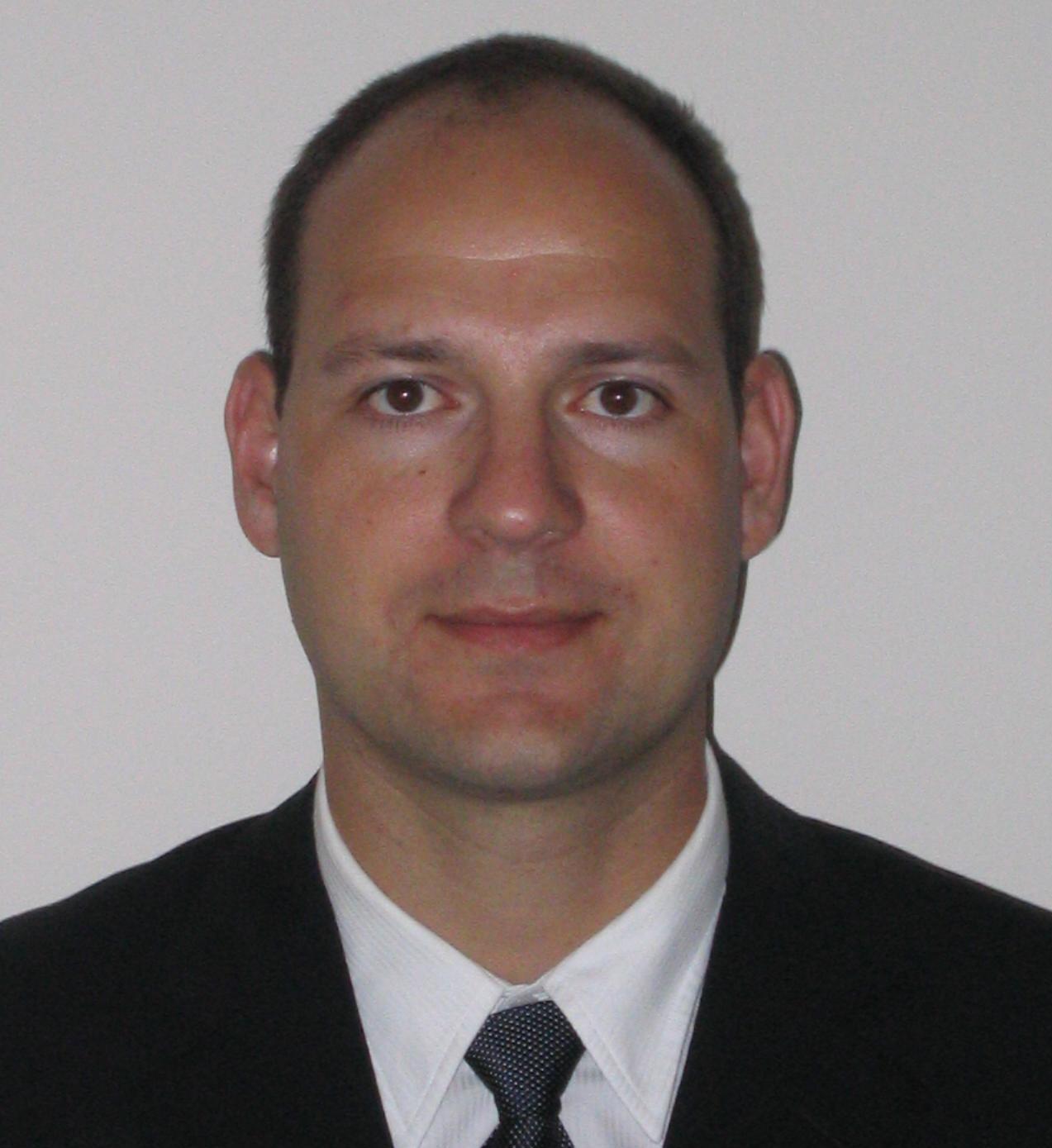
Yiorgos Makris is a Professor in the Department of Electrical and Computer Engineering at the Erik Jonsson School of Engineering & Computer Science, The University of Texas at Dallas, since July 2011. Previously, he was a faculty member at Yale University for over a decade. He holds a Ph.D. in Computer Engineering from the University of California, San Diego, and a Diploma in Computer Engineering from the University of Patras, Greece. Education: Ph.D. in Computer Engineering, University of California, San Diego (2001) M.S. in Computer Engineering, University of California, San Diego (1997) Diploma in Computer Engineering and Informatics, University of Patras, Greece (1995) Research Interests: Hardware Security and Trustworthiness Statistical Side-Channel Fingerprinting Machine Learning in Semiconductor Manufacturing Trusted and Reliable Integrated Circuits Hardware Trojans in Wireless Cryptographic ICs On-Die Learning and Emergent Technologies His work focuses on enhancing hardware security through statistical methods, machine learning, and formal verification, with applications in analog/RF ICs, post-production calibration, and secure IC design. Key Contributions: Co-Founder and Site-PI of NSF CHEST I/UCRC (Hardware and Embedded System Security and Trust) Leader of the Safety, Security, and Healthcare Thrust at TxACE (Texas Analog Center of Excellence) Director of the Trusted and RELiable Architectures (TRELA) Lab Grants and Funding: NSF, NIH, SRC, ARO, AFRL, AFWERX, DARPA, DOE, and industry partnerships with Boeing, Northrop Grumman, IBM, Intel, Qualcomm, etc. Recent grants include projects on DNA storage security, analog neural networks, and malicious hardware detection. Awards and Recognition: IEEE Fellow (2025) Best Paper Awards at DATE'13, VTS'15, DCAS'22 Best Hardware Demonstration Awards at HOST'16 and HOST'18 Erik Jonsson School Faculty Research Award (2020) Labs and Teams: TRELA Lab (Focus: Secure Hardware Design, Trusted Architectures) CHEST I/UCRC (Industry-University Collaboration)
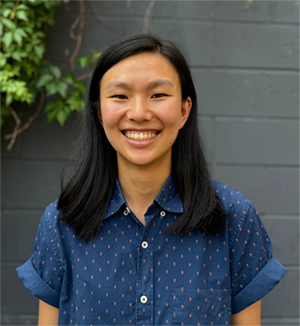
Angelina Wang is an incoming Assistant Professor at Cornell Tech and the Department of Information Science at Cornell University, starting Fall 2025. Her research focuses on responsible AI, particularly machine learning fairness and algorithmic bias. She holds a Ph.D. in Computer Science from Princeton University and a B.S. in Electrical Engineering and Computer Science from UC Berkeley. Current postdoctoral work at Stanford’s HAI and RegLab explores sociotechnical challenges in AI deployment. Her research addresses fairness evaluation in generative AI, societal impacts of AI systems, and ethical trade-offs in algorithm design. Notable awards include the NSF GRFP, Siebel Scholarship, and Microsoft AI & Society Fellowship. Her work bridges technical and social dimensions of AI, emphasizing human-centered evaluation and interdisciplinary collaboration. Recent publications span medical AI applications (e.g., Alzheimer’s subphenotypes, corticosteroid treatment efficacy) and foundational fairness research. She advocates for proactive ethical considerations in technical work, citing examples like surveillance risks in facial recognition and dataset biases in computer vision. Angelina advises prospective PhD students in Cornell’s Information Science program and collaborates on projects like SciDaSynth for scientific knowledge synthesis. Her advocacy includes challenging fairness impossibility theorems and promoting algorithmic pluralism in auditing practices.
Tijay Chung is an Associate Professor at the College of Engineering , Virginia Tech , specializing in Internet Security and Internet Measurement . His work bridges theoretical and applied aspects of cybersecurity, focusing on secure communication protocols and infrastructure. Education Ph.D., Computer Science and Engineering, Seoul National University (2015) B.S., Computer Science and Engineering, Pohang University of Science and Technology (2009) Research Interests Chung's research centers on improving certificate revocation mechanisms, DNSSEC, and TLS security. He explores vulnerabilities in web encryption, develops decentralized cryptographic solutions, and analyzes internet governance protocols like BGP and RPKI. His work also extends to privacy in contact-tracing technologies and understanding content distribution dynamics in peer-to-peer systems. Recent publications highlight trends in : Enhancing TLS and DNSSEC operational security Decentralized cryptographic accumulators for revocation Longitudinal studies of PKI and certificate ecosystems Privacy guarantees in Bluetooth Low Energy (BLE) systems Advising No student names were explicitly listed in the provided materials.
Giuseppe Bruno Averta is a Fixed-term Researcher at the Department of Control and Computer Science (DAUIN), Polytechnic University of Turin, and a member of the Interdepartmental Center SmartData@PoliTO - Big Data and Data Science Laboratory. He is affiliated with the College of Computer, Film and Mechatronics Engineering and contributes to national and international research in artificial intelligence and robotics. Averta has held a Visiting Researcher position at the Massachusetts Institute of Technology (MIT) from January to June 2019. His research interests include Computer Vision, Deep Learning, Robotics, Neural Architecture Search, Egocentric Vision, Embodied Intelligence (Edge/Tiny ML), and Human-Robot Collaboration . His work is aligned with ERC sectors in Artificial Intelligence, Machine Learning, and Robotics, and contributes to UN SDGs such as Good Health and Well-being, Industry Innovation and Infrastructure, and Responsible Consumption and Production. The recent publication trends highlight his focus on vision-language models (e.g., CLIP), egocentric action recognition, efficient neural architectures (e.g., BiSeNet, MaskFormer), and robust deep learning. His research bridges theoretical advances with practical robotics applications, including grasping and manipulation. Scientific Awards and Recognitions: Georges Giralt PhD Award (euRobotics AISBL, 2021) Wiley Best Reviewer (Wiley, Italy, 2021) Best Paper Award, ICUMT 2015 (2017) Fellow, ELLIS Network of Excellence (2022–) Fellow, DAAD AInet (2022–) DAAD AInet Fellowship Advising and Grants : Averta supervises multiple PhD students in the Artificial Intelligence and Computer and Systems Engineering doctoral programs at Politecnico di Torino. He is involved in teaching at both the master’s and doctoral levels, including courses on Robot Learning and Machine Learning and Deep Learning. He is also a co-inventor on a national and international patent for a method and algorithm for the automatic design of neural networks through machine learning, indicating active research funding and innovation. Labs and Research Groups : He is a member of the SmartData@PoliTO center and contributes to research in the VANDAL PoliTO lab (as indicated by his student Davide Buoso). His work is deeply integrated with teams working on egocentric vision, embodied AI, and neural architecture search.
Dr. Jose R Juan Sanchez is a full Professor at the Faculty of Law, Universitat de València, specializing in Procedural Law within the Institute of Criminology and Criminal Science (ICCP). He serves in the Administrative Department and leads the NCPJ New conflicts and judicial process research group. Doctorate in Law (1997) from Universitat de València Thesis: Autonomous Communities as Parties in Civil Proceedings Supervised by Dr. Manuel Ortells Ramos His research focuses on procedural law, judicial management, and legal reforms. He investigates tribunal jurisdiction, victim rights, and data protection in criminal proceedings. Recent work includes Photovoice analysis of pandemic healthcare systems and efficiency in Spanish criminal justice. Key article trends span judicial reforms (2015-2024), victim rights in EU legal frameworks (2020-2023), digital justice systems (2016-2017), and social justice in legal education (2022-2023). His work bridges law, criminology, and policy analysis. Current affiliations: Universitat de València, ICCP Institute Research group: NCPJ New conflicts and judicial process
Pradeep Lall is the MacFarlane Endowed Distinguished Professor and Alumni Professor in the Department of Mechanical Engineering at Auburn University’s Samuel Ginn College of Engineering. He serves as Director of the Auburn University Electronics Packaging Research Institute (EPRI) and holds a joint courtesy appointment in the Department of Electrical and Computer Engineering. A leader in flexible hybrid electronics and harsh environment systems, Dr. Lall has built a world-renowned research program focused on additive manufacturing, electronics reliability, and sustainable materials. Ph.D. in Mechanical Engineering, University of Maryland M.B.A. in Finance and Strategy, Northwestern University M.S. in Mechanical Engineering, University of Maryland B.E. in Mechanical Engineering, Delhi College of Engineering Dr. Lall’s research centers on Flexible Hybrid Electronics (FHE) , Harsh Environment Electronics , Semiconductor Packaging , and Prognostics Health Management . His work leverages additive manufacturing techniques such as Aerosol-Jet, InkJet, and screen printing to develop conformal, robust, and sustainable electronic systems. His innovations include the Flexible Biometric Band for monitoring workers in hazardous environments and additively printed antennas for aerospace applications. His recent focus includes eliminating PFAS from electronics and developing water-based inks for eco-friendly manufacturing. The 15 most recent publications reflect a strong trend toward sustainability , additive manufacturing , and real-world applications in defense, aerospace, automotive, and healthcare. His work bridges fundamental research with industrial realization, particularly through partnerships with NextFlex and federal agencies. Themes include reliability under shock and vibration, sensor development for extreme environments, and workforce training in advanced manufacturing. Dr. Lall has received numerous scientific honors, including: SMTA Founder’s Award (2024) SEMI FlexTech R&D Achievements Award (2023) ASME Avram Bar-Cohen Memorial Medal (2022) IEEE Biedenbach Outstanding Engineering Educator Award (2020) IEEE Sustained Technical Contributions Award (2018) NSF Alex Schwarzkopf Prize (2016) Fellow of ASME, IEEE, NextFlex, and Alabama Academy of Science Dr. Lall has secured over $2 million in annual research funding from SRC, NSF, and NextFlex, leading large-scale projects on sustainable electronics and workforce development. He mentors numerous graduate and undergraduate students and leads the NSF-CAVE3 Center. As founding faculty advisor of the SMTA student chapter, he promotes student engagement in electronics manufacturing. His lab, EPRI, features a full prototyping line for additive electronics and collaborates with industry and government to advance domestic manufacturing capabilities. EPRI, under Dr. Lall’s leadership, partners with the Auburn University Research and Technology Park, the Office of Economic Development, and multiple colleges to drive technology commercialization and workforce education in electronic packaging. The institute is at the forefront of the national effort to reestablish U.S. leadership in semiconductor packaging and advanced electronics manufacturing.
Onur Mutlu is a Professor of Computer Science at ETH Zurich, affiliated with the Department of Information Technology and Electrical Engineering. He also holds adjunct professorships at Carnegie Mellon University and Bilkent University. His research focuses on computer architecture, systems security, bioinformatics, and energy-efficient computing. He has pioneered work on memory-centric computing paradigms, RowHammer security vulnerabilities, and bio-inspired computing systems. He teaches courses such as Digital Design & Computer Architecture and supervises the SAFARI research group, which explores cutting-edge topics in memory systems, AI accelerators, and genomics. Recent activities include keynote talks at ISCA, HiPEAC, and IEEE conferences, emphasizing emerging hardware-software co-design principles. Key contributions include foundational work on memory reliability, cross-layer system design, and accelerating genomic data analysis. His research has been showcased in over 200 publications and industry collaborations with tech leaders like Intel, Huawei, and Micron.
Simon Yang is a Professor in the School of Engineering at the University of Guelph, part of the College of Engineering and Physical Sciences. His research focuses on artificial intelligence, robotics, sensors, control systems, and bio-inspired intelligence. He has contributed to advanced robotics applications, including mobile robot navigation, underwater vehicle control, and agricultural automation. Dr. Yang holds editorial roles for journals such as the International Journal of Robotics and Automation and IEEE Transactions on Cybernetics . His work bridges theoretical advancements with practical implementations in areas like sensor networks, machine learning, and multi-agent systems. Recent projects include developing robust control frameworks for autonomous systems, digital twin applications, and bio-inspired neural network algorithms. His research emphasizes real-world challenges in robotics, environmental monitoring, and precision agriculture, with a focus on integrating AI-driven solutions for enhanced decision-making and system reliability. Professional contributions include advisory roles in multiple journals and conference committees, reflecting his leadership in the field.
Vidar Hepsø is a Professor at the Department of Computer Technology and Informatics, Faculty of Information Technology and Electrical Engineering, Norwegian University of Science and Technology (NTNU). His work bridges anthropology of science and technology with practical challenges in digitalization, energy transition, and remote operations. Research focuses on digital infrastructures, socio-technical systems, and human factors in oil and gas industries Active in NTNU Applied Information Technology and NTNU Energy Transition Initiative Publications emphasize open-source ecosystems, autonomous systems, and environmental monitoring His scholarly output spans computer-supported collaborative work, IT infrastructure governance, and risk-informed anomaly detection in subsea systems. He leads projects connecting digital innovation with offshore wind and petroleum geoscience.
Taiwo Amoo is an Assistant Professor of Business and Quantitative Methods at Brooklyn College, CUNY , where he has been employed since 1999. His academic career spans institutions including Baruch College (substitute and adjunct roles, 1993-1999) and Kaduna Polytechnic, Nigeria (1987-1988). With a PhD in Operations Research (University of Exeter, 1992) and a BSc in Statistics (University of Ibadan, 1986), Amoo specializes in operations management, statistical analysis, and educational innovation. Current position: Assistant Professor (Brooklyn College, CUNY) Key expertise: Operations Management, Queueing Theory, Rating Scale Methodology Technological proficiency: SAS, SPSS, Oracle Database Systems His research focuses on optimizing rating scale design , integrating technology in education , and interdisciplinary approaches to business programs . Publications from 2000-2002 examine biases in survey construction, humor as an educational tool, and the relevance of traditional disciplinary structures in modern academia. Notable awards include PSC CUNY Grants and recognition as the Best Statistics Student at the University of Ibadan. Current affiliations: Brooklyn College (CUNY) Past affiliations: Baruch College (CUNY), University of Exeter, Kaduna Polytechnic
Prof. Frieder W. Scheller is affiliated with the Institute of Biochemistry and Biology at the University of Potsdam, Germany. His work centers on advanced biosensing technologies, particularly molecularly imprinted polymers (MIPs), bioelectronics, and biomimetic recognition systems. Research Interests: His primary fields include Bioanalysis, Bioelectronics, Biosensors, Molecularly Imprinted Polymers, Electrochemical Sensing, and Plastibodies. His research bridges chemistry, materials science, and biotechnology to develop synthetic alternatives to biological receptors for medical and environmental applications. The recent publications (2019–2024) highlight a strong trend in designing MIP-based nanofilms for protein and virus recognition, including applications in SARS-CoV-2 detection and enzyme monitoring. These studies focus on improving selectivity, stability, and reliability of electrochemical biosensors using innovative polymer architectures. Scientific Contributions: Developed Strep-tag imprinted polymer platforms for bio(electro)catalysis. Explored ACE2-mimicking MIPs for viral epitope recognition. Investigated challenges in MIP sensor reliability and non-specific binding. Advanced the concept of plastibodies for biomacromolecules, viruses, and cells. Collaborations and Advising: Prof. Scheller has collaborated with over 145 co-authors globally, indicating strong network engagement. While no formal students are listed in the provided text, his collaborative output suggests mentorship and team leadership roles in multidisciplinary research projects involving materials, electrochemistry, and biotechnology. Laboratories and Research Teams: His work is conducted within the Institute of Biochemistry and Biology at the University of Potsdam, likely involving a research group focused on bioanalytical chemistry and sensor development. The frequent co-authorship with researchers like Aysu Yarman and Xiaorong Zhang indicates an active, interdisciplinary team working on next-generation biosensing platforms.
Dr. Huadong Mo is a Senior Lecturer at the School of Systems and Computing, University of New South Wales (UNSW) Canberra, Australia. He holds a B.E. degree in automation from the University of Science and Technology of China (2012) and a Ph.D. in systems engineering and engineering management from the City University of Hong Kong (2016). Prior to his current position, he was a research associate at ETH Zurich's Reliability and Risk Engineering Lab (2016-2019) and a Lecturer at UNSW Canberra (2019-2021). Dr. Mo's educational background includes a strong foundation in systems engineering with international experience across China, Switzerland, and Australia. His career trajectory demonstrates a progression from academic research to faculty positions with increasing responsibilities in teaching and research leadership. His research focuses on enhancing the resilience, performance, and security of complex systems using learning-based algorithms, primarily in power and energy systems, cyber-physical systems, and manufacturing systems. He applies data analytics to understand system evolution under uncertainties, with particular emphasis on prognostics and health management, sustainable transportation, robust operation of power systems under extreme events, and reinforcement learning-based asset management. His work bridges theoretical advances with practical applications in critical infrastructure. Analysis of Dr. Mo's recent publications reveals a strong focus on energy systems, particularly in the integration of machine learning with power grid management, battery storage systems, and resilience against cyber threats. His research shows a clear trajectory toward increasingly complex system integration, with growing emphasis on multi-vector energy communities, cross-domain prediction, and uncertainty-aware energy management. The interdisciplinary nature of his work spans electrical engineering, computer science, and operations research. 2024 IEEE SMC Early Career Award 2023 Visiting Research Fellowship (Jean d'Alembert Pour Fellowship) Gold Medal in 2024 China International College Student Innovation Competition (as supervisor) Arc PGC Supervisor Award (2021) IEEE SMC Outstanding Chapter Award (2021) Alumni Achievement Award from City University of Hong Kong (2019) Dr. Mo actively supervises numerous HDR students working on cutting-edge research topics including battery health monitoring, quantum control, reinforcement learning for power systems, and explainable AI for energy management. He leads multiple significant research grants totaling over 3 million AUD, including projects funded by ARC, Energy Innovation Fund, and international collaborations with institutions like ETH Zurich, Cambridge, and Tsinghua University. His research group maintains strong international connections, facilitating student exchanges and collaborative research. As Postgraduate Course Coordinator of Systems Engineering and Chair of IEEE SMC ACT Chapter, Dr. Mo plays a significant role in academic leadership and professional community building. His research team collaborates with industry partners on practical implementations of their theoretical work, particularly in the energy sector.