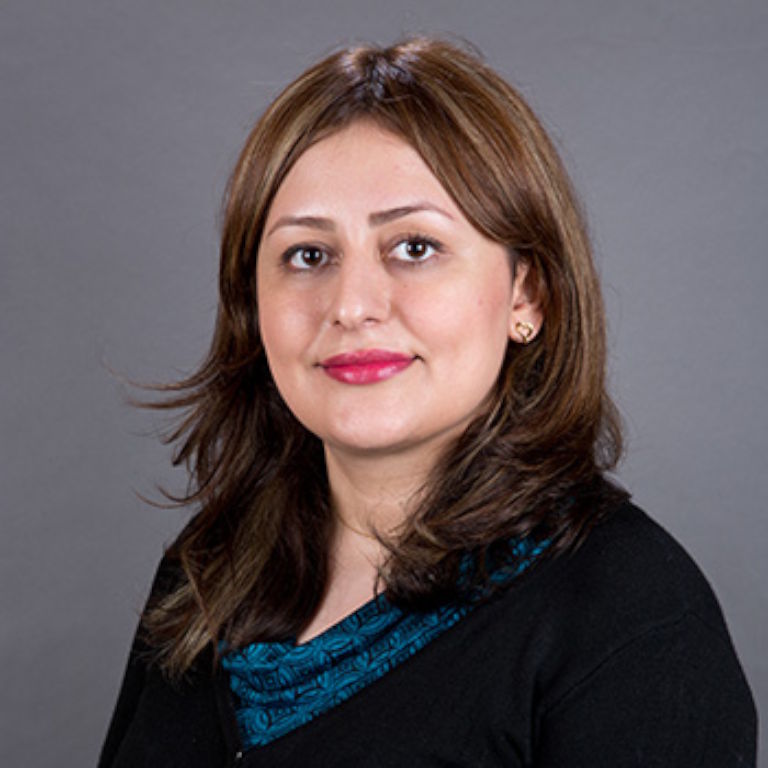
Dr. Marzieh Amini is an Associate Professor at Carleton University, cross-appointed to the School of Information Technology and Department of Systems and Computer Engineering . She coordinates the Optical Systems and Sensors undergraduate program and leads research in computer vision, sensor fusion, and biomedical signal processing . PhD in Electrical and Computer Engineering (2016), Concordia University Postdoctoral Fellow (2020), McGill University Research Interests focus on autonomous vehicle perception systems integrating machine learning and statistical modeling . Her work addresses multi-sensor integration for reliable operation in diverse environments, including biomedical applications and critical infrastructure monitoring . Recent publications emphasize wildfire management , LiDAR-based infrastructure monitoring , and adverse weather adaptation in autonomous systems . She has received grants from NSERC, NRC, and FRQNT . Honors & Awards include: Volunteer Recognition Awards (IEEE Montreal, 2022 & 2019) FRQNT Postdoctoral Fellowship (2018) IEEE ISCAS Travel Support (2016) Professional Service includes leadership roles in IEEE committees and conference organization.
Carine J.M. Doggen is a Full Professor in Health Technology & Services Research at the TechMed Centre, University of Twente. She also serves as Scientific Director at Rijnstate Hospital since October 2017. Her academic career includes previous positions as Senior Researcher at Leiden University Medical Center (2000-2009), University of Washington, Seattle (2002-2003), and Sanquin Blood Bank (2006-2009). Her research focuses on evaluating healthcare innovations, particularly technologies enabling the transition of care from hospitals to home settings. Dr. Doggen specializes in assessing the implementation, reliability, and effectiveness of new medical technologies including wearable sensors and remote monitoring systems. Her work examines measurement validity and incorporates perspectives from both healthcare providers and patients. Analysis of her recent publications reveals strong expertise in cardiovascular technology evaluation, digital health interventions, and quality of life assessment. Her research shows particular strength in randomized clinical trials of medical devices, health technology assessment methodologies, and post-COVID health outcomes research. Dr. Doggen has presented her work at numerous conferences, with recent oral presentations including 'Towards personalised medicine: the potential of intensive longitudinal data to assess the interplay of chronic diseases' (2024) and 'Prognostic markers for acute heart failure in Chronic Obstructive Pulmonary Disease' (2021). She has also contributed to media discussions about healthcare innovations through the Rijnstate Collegetour series.
Bernhard Salow is an Associate Professor of Philosophy and Tutorial Fellow at Magdalen College, University of Oxford. His academic journey includes a Ph.D. in Philosophy from MIT (2011–2015), a BPhil from New College, Oxford (2009–2011), and an MMathPhil from St Hugh’s College, Oxford (2005–2009). He previously held a Junior Research Fellowship at Trinity College, Cambridge (2015–2018). Salow’s research focuses on formal epistemology, particularly exploring topics like the KK principle, belief revision, and externalism. His work bridges philosophical analysis with formal methods, addressing issues in decision theory, probability theory, and epistemic risk. Recent contributions include examining iterated knowledge, the value of evidence, and normative frameworks for belief revision. His publications span journals such as Mind , Noûs , and Philosophical Studies , with a strong emphasis on rigorous theoretical exploration. He maintains an active academic blog and personal website at http://users.ox.ac.uk/~shug2406/ . Salow’s teaching responsibilities at Magdalen College involve mentoring undergraduates in Philosophy and Mathematics. His research often intersects with interdisciplinary questions in philosophy of science and cognitive science, reflecting a commitment to both theoretical depth and practical relevance.
Christopher Goyne is an Associate Professor in the Department of Mechanical and Aerospace Engineering at the University of Virginia (UVA) and Director of the UVA Aerospace Research Laboratory. He holds a B.Eng. (1991) and Ph.D. (1999) in Mechanical Engineering from the University of Queensland, Australia. His research focuses on hypersonic propulsion, scramjet technology, instrumentation development, and advanced manufacturing. He leads the UVA Hypersonics Research Complex and is a key figure in the University Consortium for Applied Hypersonics. Goyne’s work includes contributions to NASA’s Hyper-X Program and the HyShot scramjet flight test program. He is an Associate Fellow of the AIAA and serves on editorial and advisory boards for journals and organizations such as the Shock Waves journal and Virginia’s Aerospace Advisory Council. Education: B.Eng. (Mechanical Engineering, University of Queensland, 1991); Ph.D. (Mechanical Engineering, University of Queensland, 1999). Research Interests: Hypersonics and scramjet propulsion Diagnostic techniques (e.g., laser-based methods, optical emission spectroscopy) Wind tunnel and flight testing Controls and adaptive systems for hypersonic flow paths Advanced manufacturing for aerospace components Awards: Recipient of the 2023 James C. McDaniel Fellow Award and 2022 Outstanding Researcher Award. Holds leadership roles in AIAA committees, including past Chair of the HyTASP Program Committee. Recognized with the Sigma Gamma Tau Outstanding Aerospace Professor Award (2006) and multiple research fellowships. Grants and Projects: Funded by NASA, the Air Force Office of Scientific Research, and industry partners. Leads UVA’s contributions to hypersonic ground and flight testing, including sensor development and combustion efficiency studies. Labs and Teams: Directs the UVA Aerospace Research Laboratory, collaborating on projects such as the UVA Hypersonics Research Complex and the University Consortium for Applied Hypersonics. Advises student chapters of AIAA and Sigma Gamma Tau.
Professor Washington Yotto Ochieng serves as Head of the Department of Civil and Environmental Engineering and Chair Professor in Positioning and Navigation Systems at Imperial College London. He directs the Centre for Active Resilience and Security (CARS) and maintains key affiliations with the Centre for Systems Engineering and Innovation, Centre for Transport Engineering and Modelling, Institute for Molecular Science and Engineering, and Space Lab. His extensive advisory roles include the Science Museum Group Board of Trustees, Royal Institute of Navigation Presidency, and Royal Academy of Engineering Africa Steering Committee. His educational background includes a BSc (First Class) in Engineering from the University of Nairobi and MSc (Distinction) and PhD in Civil Engineering from the University of Nottingham. He received an honorary DSc from Technical University of Kenya in 2023. Ochieng's research pioneers critical infrastructure resilience, user-centric mobility, and positioning/navigation/timing (PNT) systems. He has designed satellite navigation systems (including Europe's EGNOS and GALILEO) for multi-domain applications and advanced Air Traffic Management and Intelligent Transport Systems. His work integrates geomatics, transportation engineering, and sustainable mobility to solve global urban infrastructure challenges, with recent emphasis on decarbonization and AI-driven solutions. His 2024-2025 publications reveal strong trends in sustainable transportation decarbonization, AI-optimized traffic management, and resilient urban positioning systems. Research focuses on hydrogen fuel cell trains, carbon-efficient aviation, and deep reinforcement learning applications for emission reduction, demonstrating interdisciplinary integration of engineering, environmental science, and artificial intelligence to address climate challenges. Fellow of the Royal Academy of Engineering (2013) Harold Spencer-Jones Gold Medal from Royal Institute of Navigation (2019) Doctor of Science (honoris causa) from Technical University of Kenya (2023) Elder of the Order of the Burning Spear (EBS) from Kenya (2023) Commander of the Order of the British Empire (CBE) (2024) Ochieng provides strategic guidance to UK Government bodies (Government Office for Science, Department for Transport, FCDO), European Parliament, and European Court of Auditors. His advisory work shaped the Blackett Review on Satellite-derived Time/Position, UK Space Strategy, and Future of Mobility report. He chairs the Science Museum London Advisory Board and leads FCDO's Sustainable Urban Economic Development program in Africa, with significant grant influence through UK National Physical Laboratory and Department for International Development. He directs the Centre for Active Resilience and Security (CARS) and leads Space Lab initiatives, focusing on mission-critical PNT systems and infrastructure resilience. His teams collaborate with international consortia including RTCM Special Committee 134 and US Institute of Navigation, developing next-generation navigation solutions for safety-critical applications across transport, aviation, and urban environments.
Paolo Mastropietro is a Research Professor at the Institute for Research in Technology (IIT) of Comillas Pontifical University in Madrid. He holds a Master's degree from the University of Rome Tor Vergata (2009) and a PhD from Comillas University (2016), focusing on capacity remuneration mechanisms. His career includes private sector work in Italy and Spain, a UNV Project Officer role in Ethiopia (2011), and joining IIT in 2012 under the SETS Erasmus Mundus PhD program. Affiliations: IIT, School of Engineering (ICAI), Comillas Pontifical University Research Interests: Power sector regulation, security of supply, capacity remuneration mechanisms, regional markets, tariff design, and energy sustainability His research emphasizes regulatory frameworks for energy transition and decarbonization, with contributions on hydrogen markets, electricity storage, and demand response integration. Recent work includes analysis of EU market reforms, pandemic-related energy poverty measures, and capacity mechanisms in Latin America. Key projects include the EU-funded ONESYSTEM (2023–2028) and DEFINER (2022–2025) initiatives, focusing on energy system integration and demand flexibility. He advises on regulatory modernization in Peru, Colombia, and Panama, and has authored over 40 journal articles, books, and technical reports. Awards: 2015 ICER Distinguished Scholar Award, Iberdrola Scholarship (2020) Grants: Projects funded by MICIU, World Bank, European Commission, and others He supervises doctoral research, including P. Brito Pereira’s work on future-proof capacity mechanisms. His expertise spans international energy policy, with engagements at ACER and MIT, and contributions to energy transition strategies globally.
Dr. Yiting Xia is a tenure-track faculty member at the Max Planck Institute for Informatics (MPI-INF), leading the Network and Cloud Systems research group. She previously worked as a research scientist at Facebook and holds a PhD in Computer Science from Rice University (2018) and a B.S. in Telecommunications Engineering from Beijing University of Posts and Telecommunications and Queen Mary University of London (2011). Her research focuses on high-performance and energy-efficient networking for cloud computing, including reconfigurable data center networks, optical communications, and network protocols. Notable contributions include innovations in transport protocols, time synchronization for optical networks, and failure-resilient network design. Education: PhD in Computer Science, Rice University, 2018 M.S. in Computer Science, Rice University, 2014 B.S. in Telecommunications Engineering, BUPT & QMUL, 2011 Research Interests: Data center networking, optical communications, cloud systems, network protocols, distributed systems, and network security. Her work bridges theoretical contributions with practical implementations, addressing challenges in latency-sensitive flows, traffic engineering, and system reliability. Awards include the Ken Kennedy-Cray Fellowship and the N2Women Rising Star Award (2021). She has co-lectured courses on distributed systems and data networks at Saarland University and previously contributed to teaching at Rice University. Key projects include Aurora (for MoE inference optimization), Lighthouse (an open research framework for optical networks), and Occam (a reliable network management system). Grants & Projects: Focus on deployable optical network architectures and resilient backbone management during pandemic-driven traffic shifts. Labs/Teams: Leads the Network and Cloud Systems group at MPI-INF, collaborating with academia and industry on cutting-edge networking solutions.
Dr. John Wickerson is an Associate Professor in the Circuits and Systems group at the Department of Electrical and Electronic Engineering, Imperial College London. His research focuses on improving the reliability of high-performance computing through formal methods, with contributions to high-level synthesis, memory models, and concurrency verification. He holds leadership roles including Course Director for the Electrical and Information Engineering degree and Deputy Tutor for PhD students. Research Interests: Formal Verification of Hardware/Software Systems High-Level Synthesis (HLS) and FPGA Compilation Weak Memory Models and Concurrency Semantics Fuzz Testing for Hardware Tools Compiler Optimization and Correctness Digit Elision and Arbitrary-Precision Arithmetic Notable Achievements: Best Paper Award at EuroSys 2024 (database isolation validation) Pioneered formal methods for HLS tools (e.g., QuteFuzz, C4) Co-developed the C4 C compiler concurrency checker Published over 60 peer-reviewed papers across top venues (ASPLOS, PLDI, FPGA) Lab/Team: Part of the Circuits and Systems group at Imperial College, collaborating with industry partners like Kaihong Yann and ARM.
Turhan Hilmi Demiray is the Head of the Research Center for Energy Networks (FEN) at ETH Zürich, Switzerland , where he leads industrial and academic research projects in energy systems. His academic background includes a Ph.D. in Electrical and Computer Engineering from ETH Zürich (2008) and an M.Sc. in Telecommunications from TU Vienna (2003). He has held academic and industry roles at ABB Vienna AG, NEPLAN AG, and ETH Zürich’s Power Systems Laboratory.
Professor Paul Black is a distinguished academic at King's College London, affiliated with the School of Education, Communication & Society and the Centre for Research in Education in Science, Technology, Engineering & Mathematics (CRESTEM). His career has centered on advancing educational assessment and pedagogy, particularly in STEM disciplines. He is renowned for pioneering formative assessment strategies that integrate learning and evaluation to enhance student outcomes. Research Interests: Black's work explores how teacher-led assessments can drive classroom innovation, emphasizing the synergy between formative and summative methods. His contributions address global educational challenges, including standardization debates and the equitable implementation of assessment frameworks. Key Article Trends: His publications from 2013–2020 highlight themes like ethical assessment practices, the historical impact of formative assessment, and bridging theory-practice gaps in STEM education. Recent works underscore the adaptability of assessment strategies in diverse cultural and linguistic contexts. Professional Impact: The 2023 book 'Educational Assessment: The Influence of Paul Black on Research, Pedagogy and Practice' documents his legacy, noting his influence on scholars worldwide. His ideas have informed policy responses to crises like pandemic-related exam cancellations. Advising & Grants: While specific grants or advisees are not detailed here, his work reflects collaborative research with educators and policy experts. The CRESTEM centre serves as a hub for advancing his vision of holistic educational reform.
Roman Obermaisser is a Professor at the Vienna University of Technology (TU Wien), affiliated with the Cyber-Physical Systems department. His research focuses on real-time systems, system architectures, communication protocols, safety-critical systems, distributed algorithms, and fault-tolerance. He holds a PhD in Computer Science from TU Wien, awarded in 2003 for his work on integrated architectures for control paradigms. His academic contributions span over two decades, with publications in top-tier conferences and journals. Key research themes include time-triggered architectures (TTA), fault containment in embedded systems, and integration of heterogeneous communication protocols like CAN and Ethernet. He has supervised numerous graduate students, contributing to advancements in system-on-chip (SoC) design, transient-resilient architectures, and diagnostic frameworks for real-time systems. Obermaisser’s work emphasizes practical applications in automotive and industrial systems, addressing challenges such as scalability, reliability, and composability. His involvement in projects like GENESYS and DECOS highlights his role in developing cross-domain reference architectures for embedded systems. Recent efforts include evaluating ontology-based reconfiguration and COTS-based Ethernet solutions for safety-critical networks. His articles reflect a focus on real-time communication protocols, fault-tolerant design, and system integration, with applications ranging from automotive networks to smart transducers. Advising over 20 students underscores his commitment to nurturing the next generation of embedded systems researchers.
Professor Michael Keidar holds the A. James Clark Professorship at the George Washington University (GW) , School of Engineering and Applied Science, within the Mechanical and Aerospace Engineering department. He leads the Micropropulsion and Nanotechnology Lab , pioneering research in plasma medicine, micropropulsion systems, and plasma nanoscience. His lab collaborates with industry partners like Vector (licensed plasma thruster technology) and US Patent Innovations, LLC (a $5.3M grant for cold plasma cancer therapy). Key research areas include: Cold plasma applications in biomedical treatment Microthrusters for nanosatellites Synthesis of graphene and carbon nanotubes Multi-scale plasma simulations Scientific accolades include the 2017 Ronald C. Davidson Award and AIAA Engineer of the Year (2016-2017), alongside leadership in interdisciplinary projects with GW’s Global Food Institute .
Babak Moaveni is a Professor in the Department of Civil and Environmental Engineering at Tufts University, serving as the Associate Chair since September 2024. He also holds a joint appointment as a Professor in Electrical and Computer Engineering. His research focuses on structural health monitoring, Bayesian inference, earthquake engineering, and offshore wind energy systems. Moaveni earned his Ph.D. in Structural Engineering from the University of California San Diego (2007), following an M.S. (2001) and B.S. (1999) from Sharif University of Technology in Tehran, Iran. His research interests span probabilistic system identification, signal processing, uncertainty quantification, and verification/validation of computational models. Notable grants include leadership in the PIRE project on offshore wind energy digital twins and the Coastal Virginia Offshore Wind Pilot Project. He has supervised multiple Ph.D. and M.S. students, with current advisees including Mehdi Akhlaghi and Nasim Partovi-Mehr. Moaveni has received the Best Presentation Award at the 2022 EDGE Symposium and serves on editorial boards for journals like Structural Health Monitoring and Frontiers in Built Environment . His lab, the Structural Health Monitoring Lab, specializes in infrastructure management and offshore wind energy systems. Key professional activities include membership in the American Society of Civil Engineers (ASCE) and roles on Tufts' Tenure and Promotion Committee. His teaching includes courses on structural health monitoring, numerical methods, and structural reliability.
Patrick Wu is a Professor in the Department of Computer Science at American University, with additional affiliations as Faculty Fellow at the Center for Data Science and Faculty Affiliate at the Center for Security, Innovation, and New Technology. He holds a PhD in Political Science and Scientific Computing from the University of Michigan, an MA in Statistics from Michigan, and a BA in Political Science and Statistics from the University of Chicago. His research develops AI/ML and natural language processing approaches for computational social science, focusing on: Political elite and non-elite ideology measurement Affective polarization on social media platforms Detection of hateful/abusive speech and memes Application of large language models to political science research Recent work explores innovative methods for political attitude measurement using LLMs, in-context learning techniques for social media analysis, and frameworks for multimodal representation learning. His publications demonstrate consistent innovation in applying NLP and machine learning to political discourse analysis, with emerging focus on generative AI's impact on political science education and methodology. Wu teaches courses including Object-Oriented Programming and topics in Natural Language Processing/Text as Data.
John Dalsgaard Sørensen is a Professor and Head of Research Group at the Department of the Built Environment, Aalborg University, within the Faculty of Engineering and Science. He leads the Risk, Resilience, Safety, and Sustainability of Systems Research Group and is affiliated with the Danish Centre for Risk and Safety Management. His research focuses on structural safety, wind turbine reliability, probabilistic design, and risk assessment of infrastructure systems. He has supervised 13 PhD students and contributed to over 600 publications. Key research areas include wind turbine structural integrity, fatigue analysis of offshore and onshore structures, probabilistic design standards (e.g., Eurocodes), and risk-based decision-making for infrastructure. He leads projects like Windscanner (remote sensing for wind measurements) and MANTIS (cyber-physical maintenance systems). Collaborations span academia and industry, addressing challenges in energy systems, civil infrastructure, and safety engineering. His work emphasizes practical applications of advanced modeling techniques, such as Bayesian networks and stochastic simulations, to enhance reliability and reduce operational costs. He is actively involved in standardization efforts for structural design and serves on boards like Energi- og MiljøData Fonden. Recent activities include presenting at international conferences and advising on media debates related to structural safety.