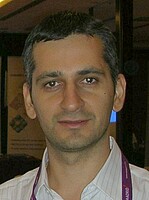
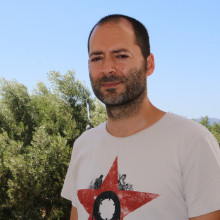
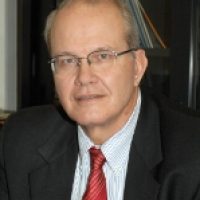
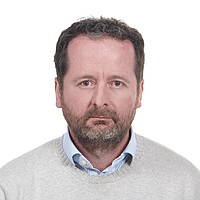
Chasalevris Athanasios is an Assistant Professor at the School of Mechanical Engineering, National Technical University of Athens (NTUA), specializing in Rotordynamics and Tribology. His research focuses on nonlinear dynamics of machines, active bearings, and turbomachinery design. He holds a Ph.D. in Rotordynamics from the University of Patras (2009) and a Diploma in Mechanical & Aeronautical Engineering (2004). Research Interests: Machine Dynamics, Turbomachinery, Active Bearings, Bifurcation Analysis, Crack Detection. Teaching: Dynamics of Rotating Machines, Kinematics and Dynamics of Mechanisms, Machine Elements I. Collaborations: KIT (Germany), RPI (USA), MTU Aero Engines (Germany), and Cleveland State University (USA). Awards include the Humboldt Foundation Fellowship (2010), GE's 'Beyond and Ahead' Award (2017), and recognition as a Top 2% Scientist (2023). He has authored over 40 publications and supervised numerous graduate students. Current roles include Academic Advisor at DOATAP and Associate Editor for journals like ASME Journal of Tribology.
Kyprianos Papadimitriou is a Researcher at the Microprocessor and Hardware Laboratory within the School of Electrical and Computer Engineering at the Technical University of Crete . He holds a PhD in Electronic and Computer Engineering (2012) and has been involved in teaching laboratory courses such as Logic Design , Computer Architecture , and VLSI/ASIC Circuit Design . Research Areas : His work spans Reconfigurable Systems , Hardware Design , Computer Architecture , RFID Systems , and Real-Time Systems . He has developed innovative approaches in FPGA-based dynamic reconfiguration, MPSoC security, and 3D stereo vision for surveillance. Key Trends : Runtime reconfiguration for FPGAs Security frameworks for NoC-based MPSoCs Low-cost embedded vision systems Optimization of reconfiguration overhead Hardware task scheduling methodologies Genetic algorithm implementations on FPGAs Scientific Contributions : 1 USA patent (2005) Co-author of VLSI-SoC 2013 paper nominated for 1st Prize Active member of scientific committees (FPL, ReConFig) Peer reviewer for IEEE, Elsevier, and Springer journals Session chair at IEEE CNS and HPCC conferences Grants & Projects : Participated in competitive European and national programs, serving as scientific manager, coordinator, and technical coordinator. Developed spin-off company (2003-2005) to commercialize master's thesis research. Laboratory & Teaching : Affiliated with the Microprocessor and Hardware Laboratory , focusing on practical training in digital systems, processor-based systems, and VLSI design.
Manos Kapritsos is an Associate Professor in the Department of Computer Science and Engineering at the University of Michigan's College of Engineering. He leads the GLaDOS research group focusing on reliability of distributed systems through formal verification and fault-tolerant replication techniques. His research spans: Formal verification of concurrent and distributed systems Fault-tolerant replication protocols beyond client-server models Automation of verification processes for complex systems Performance verification including latency properties Reliable cryptographic code implementation Analysis of his publications reveals strong emphasis on: developing automated verification tools (Armada, Vale, IronFleet), creating novel replication protocols (Aegean), verifying performance characteristics (Performal), and improving specification reliability (IronSpec). His work consistently bridges theoretical formal methods with practical systems implementation. Awards and honors include: Jay Lepreau Best Paper Award at OSDI 2025 Jon R. and Beverly S. Holt Award for Excellence in Teaching (2022) NSF CAREER Award (2021) Distinguished Paper Award at PLDI 2020 Google Faculty Award (2017) Distinguished Paper Award at USENIX Security 2017 Grant support includes NSF FMitF grants (2020, 2023), NSF Large grant (2021), DARPA grant (2020), and Google Faculty Award (2017). He advises PhD students through the GLaDOS group, focusing on distributed systems verification. He directs the GLaDOS lab at University of Michigan, developing verification frameworks and reliable distributed systems. Current projects include automated proof generation (Basilisk) and efficient communication protocols (Scrooge).
Dr. Pinon Hermida Victor is a Researcher at the Institute of Electronic Structure and Laser (IESL) under the Foundation for Research and Technology – Hellas (FORTH). He holds a PhD in Physics from the University of A Coruña (2011) and has conducted extensive research on Laser-Induced Breakdown Spectroscopy (LIBS), focusing on femtosecond lasers, double-pulse configurations, and applications in material analysis, archaeology, and environmental science. His career includes roles at Applied Photonics Ltd (UK) as Senior Applications Scientist (2014-2020) and postdoctoral fellowships at FORTH-IESL through the Marie Curie ATLAS program (2006-2008). Research interests span LIBS methodology development, optical fiber systems for high-power lasers, and software for spectral analysis. Notable contributions include portable LIBS instrument design and radiation-resistant optical components for nuclear facilities. Awards include the 2008 LIBS Contest and the 2011 Premio Extraordinario de Doctorado. Recent work focuses on applying LIBS to archaeological mollusc shell analysis for climate and environmental studies. He collaborates internationally on LIBS quantification challenges and instrument durability in harsh environments. Education: PhD in Physics (2011), University of A Coruña; Diploma in Physics (2001), University of Santiago de Compostela Key Roles: Senior Applications Scientist (Applied Photonics), Marie Curie Fellow (FORTH-IESL), Researcher (Laboratory of Industrial Applications of Lasers) Lab Affiliations: IESL-FORTH and University of A Coruña laser labs
Stavros Nikolopoulos is a Professor in the Department of Computer Science & Engineering at the University of Ioannina, Greece. He serves as Director of the Algorithms Engineering Lab and holds a PhD in Computer Science (1991, University of Ioannina). His research focuses on Algorithmic Graph Theory, Parallel Algorithms, Malware Detection, and Software Watermarking. He has published extensively in top-tier journals and conferences, including Discrete Applied Mathematics and Theoretical Computer Science. Education: B.Sc. in Mathematics, University of Ioannina (1982) M.Sc. in Computer Science, University of Dundee (1985) Ph.D. in Computer Science, University of Ioannina (1991) Research Interests: Design and Analysis of Algorithms Graph Algorithms (e.g., permutation graphs, cographs) Malware Detection via System-call Group Analysis Graph-based Watermarking Systems Discrete Event Simulation Awards & Recognition: Best Student Paper Award (WEBIST'13) Best Paper Award (CompSysTech'13) Labs & Projects: Director, Algorithms Engineering Lab Principal Investigator in EU-funded projects (e.g., HRAKLITOS, PENED-05)
Emmanouel (Manos) Varvarigos is a Professor at the School of Electrical and Computer Engineering, National Technical University of Athens (NTUA), where he leads the High Speed Communication Networks Laboratory. He holds a Diploma from NTUA (1988) and an M.S./Ph.D. from MIT (1990/1992). Prior roles include Professorships at UC Santa Barbara (1992-1998) and Delft University (1998-1999), and leadership at the University of Patras (1999-2015). He has coordinated over 30 EU research projects, including H2020 initiatives like ORCHESTRA and FLEXGRID. His research focuses on optical networking, cloud computing, smart energy grids, and high-speed network protocols. He has published over 450 papers and serves on numerous conference committees. Awards include the NSF Research Initiation Award. His lab employs 5 postdocs and 10+ PhD students, addressing challenges in networking, data centers, and grid computing. Education: Ph.D., Electrical Engineering and Computer Science, MIT, 1992 M.S., Electrical Engineering and Computer Science, MIT, 1990 Diploma in Electrical and Computer Engineering, NTUA, 1988 Research Interests: Optical networking, high-speed network protocols, data center architectures, cloud computing, smart energy grids, wireless networks, and distributed systems. Grants & Projects: Coordinated 7 EU projects (e.g., FLEXGRID, ORCHESTRA) and participated in 35+ others. National projects include roles as Scientific Director of the Greek School Network and CTI’s Network Technologies Division. Labs & Teams: Directs the High Speed Communication Networks Lab (HSCNL), collaborating with global institutions on optical networks, edge cloud, and smart grids. The lab’s work includes EU-funded projects on 5G, data centers, and renewable energy integration.
George Vasilakopoulos is a Professor in the Department of Digital Systems at the University of Piraeus , where he also serves as Vice-Chancellor for Academic Affairs and Personnel. By law, he is President of the Quality Assurance Unit (MODIP) and the Employment and Career Structure (DASTA) of the university, overseeing the development of modern information systems. He earned his PhD from the University of London and has held leadership roles including Department President, Director of Postgraduate Programs, and Scientific Director of the Digital Health Services Laboratory. PhD: University of London Current Roles: Vice-Chancellor, Department of Digital Systems Professor Labs: Digital Health Services Laboratory His research focuses on Health Informatics , Cloud Computing , and Medical Data Security , with key contributions to: Emergency healthcare process automation Privacy-preserving personal health record systems Context-aware authorization models Cloud-based medical service frameworks Machine learning in clinical data analysis Interoperable health information systems The trends in his 15 most recent articles (2010-2015) reveal a consistent emphasis on integrating cloud infrastructure , semantic technologies , and mobile platforms to enhance emergency care, chronic disease management, and patient data security. His work bridges biomedical engineering , software architecture , and public health policy . He has held advisory roles for the Minister of Health on IT issues, served on hospital boards, and contributed to national committees for healthcare technology standards. His professional activities include project evaluation for Greek and European research programs and authoring three books on health informatics.
Margiolakis Irini is a Professor at the Department of Cell & Developmental Genetics Biology, University of Patras. Her research focuses on structural biology, protein crystallography, and pharmaceutical applications using synchrotron radiation and X-ray diffraction. She actively collaborates with institutions like the European Synchrotron Radiation Facility (ESRF) and contributes to international crystallography networks. University: University of Patras Department: Cell & Developmental Genetics Biology Email: imargiola@upatras.gr | margiolaki@esrf.fr Research Interests: Structural analysis of proteins and peptides, drug design, insulin polymorphism studies, virus-derived macromolecules, and development of advanced diffraction methods. Her work bridges biophysics, pharmaceutical sciences, and materials science, with a focus on vaccine and diabetes drug development. Recent Article Trends: Publications emphasize synergistic NMR-X-ray powder diffraction approaches for polymorph screening, humidity effects on crystal structures, and pharmaceutical peptide design (e.g., Octreotide, insulin variants). Collaborative efforts span virology (Dengue, Arenaviridae) and methodological innovations in macromolecular crystallography. Scientific Awards: Unesco L'Oreal Fellow (2010) for Young Women in Life Sciences Leadership & Networks: Co-organizer of international crystallography workshops, member of European Powder Diffraction Committee, and co-editor of Acta Crystallographica . Leads initiatives for Greece's integration into synchrotron radiation research via the Greek Synchrotron User Network (GrSUN).
Professor Rodrigo Olivares-Caminal is a leading academic in Banking and Finance Law at Queen Mary University of London's Centre for Commercial Law Studies (CCLS). He holds an LLB from Buenos Aires, an LLM from Warwick, and a PhD from London. His roles include Editor-in-Chief of the Business Law Review and advisory roles at UNCTAD, World Bank/IFC, and international law firms. His expertise focuses on international finance, insolvency law, cross-border litigation, and sovereign debt restructuring. Education: LLB (Buenos Aires) LLM (University of Warwick) PhD (London) Research Interests: Specializes in sovereign debt crises, cross-border insolvency frameworks, and legal aspects of financial crises. His work bridges law, economics, and public policy, addressing systemic risk, creditor equality, and the design of sustainable debt management frameworks. He advocates for improved transparency in sovereign lending and equitable restructuring mechanisms. Professional Contributions: Authored/edited 7 books and over 100 peer-reviewed articles/chapters. Key works include *Debt Restructuring* (OUP), *Expedited Corporate Debt Restructuring in the EU*, and *Legal Aspects of Sovereign Debt Restructuring*. Serves on editorial boards of major law journals and advises international institutions on financial regulation and crisis containment. Grants & Awards: No specific awards mentioned, but recognized internationally for contributions to insolvency law and sovereign debt policy. Has received honors from Saudi Arabia’s Bankruptcy Commission and participation in high-level policy dialogues (e.g., UNCTAD, IMF). Teaching & Mentorship: Leads postgraduate courses on Corporate Finance Law, Sovereign Debt Restructuring, and Bank Resolution. Teaches globally at institutions in Spain, Italy, Greece, France, China, and Argentina. Active in professional training programs across Africa, Asia, Middle East, and Europe. Labs/Teams: Core member of Queen Mary’s Insolvency & Governance Research Group. Collaborates with global networks like the International Insolvency Institute and the European Banking Authority. Leads interdisciplinary projects on sovereign debt frameworks and cross-border financial stability.
Christos Makris is an Associate Professor in the Department of Computer Engineering and Informatics at the University of Patras, Greece. His academic career spans over two decades with significant contributions to computer science, particularly in data structures, algorithms, and information systems. He maintains active research collaborations and supervises graduate students in his areas of expertise. Dr. Makris's research spans several key areas in computer science with a strong focus on efficient data organization and processing. His work encompasses Data Structures , Information Retrieval , Data Mining , String Management and Processing Algorithms , Computational Geometry , Internet Technologies , Bioinformatics , and Multimedia Databases . His interdisciplinary approach bridges theoretical computer science with practical applications across various domains including web technologies, bioinformatics, and emergency response systems. Analysis of Dr. Makris's publication record reveals a consistent research trajectory focused on efficient algorithms for information management. His work demonstrates evolution from foundational data structure research in the 1990s to more applied work in web technologies, social media analysis, and machine learning applications in recent years. A notable pattern is his ability to adapt core algorithmic techniques to emerging application domains while maintaining theoretical rigor. Dr. Makris maintains an impressive scholarly record with over 3,000 citations, an h-index of 29, and an i10-index of 71 according to Google Scholar metrics. These indicators reflect the significant impact of his research within the computer science community. As an active faculty member, Dr. Makris maintains regular office hours on Tuesdays from 18:00-20:00 and Thursdays from 12:00-14:00. He is accessible via email at makri@ceid.upatras.gr or makri@upatras.gr for academic inquiries and student supervision.
Pavlos S. Georgilakis is a Professor at the School of Electrical and Computer Engineering, National Technical University of Athens (NTUA), specializing in modern techniques for power system analysis, optimization, and renewable energy integration. He holds a Diploma (1990) and PhD (2000) in Electrical Engineering from NTUA. His career includes roles as Lecturer (2009) and Associate Professor (2018–2023) at NTUA, and Assistant Professor at the Technical University of Crete (2004–2009). Research focuses on power transmission/distribution systems, transformer design, and applying AI/optimization for grid efficiency. He led 10 research projects, including Horizon 2020 initiatives SHAR-Q, WiseGRID, and NobelGrid. He authored 3 books and over 230 publications (SCOPUS citations: >5,500). Editor of IET Smart Grid, Energies, and Electricity journals; senior IEEE member. He supervised 4 doctoral, 9 master’s, and 76 diploma theses. Awards include the 2013 Best Reviewer Award from Electric Power Systems Research. Active in energy storage, smart grids, and decentralized energy resource integration.
Athanasios Liavas is a Professor at the Technical University of Crete in the School of Electrical and Computer Engineering , specializing in Signal Processing for Telecommunications and Information Theory . He has held administrative roles as Department Chair (2009-2011), Vice Chair (2011-2013), and Dean of the ECE School (2017-2021). Education: Diploma (1989) and PhD (1993) in Computer Engineering and Informatics from the University of Patras. Professional Background: Postdoctoral Marie Curie Fellow at INT, Evry (1996-1998); Lecturer at University of Ioannina (1999-2001); Assistant/Associate Professor at University of the Aegean (2001-2004) and Technical University of Crete (2004-present). His research focuses on Signal Processing for Telecommunications , Information Theory , and Tensor Decomposition . Recent work involves nonnegative tensor factorization , parallel algorithms , and fMRI data analysis , with applications in wireless communications and medical imaging . Articles show trends in optimization algorithms , LDPC code design , and MIMO system robustness . Scientific Awards include: Marie Curie Fellowship (1996-1998) Associate Editor, IEEE Transactions on Signal Processing (2005-2009) Elected Member, IEEE Signal Processing for Communications and Networking Technical Committee (2006-2011) He has taught courses like Telecommunications Systems II , Wireless Communications , and Information Theory , and supervised students such as Despoina Tsipouridou (PhD) and Alex Balatsoukas-Stimming (Graduate). He leads projects like Partensor (Parallel Tensor Toolbox) and COOPCOM (Cooperative Communications), and contributes to labs including the Telecommunications Laboratory .
Full Professor at the School of Informatics, Aristotle University of Thessaloniki (AUTh), Greece. Previously served as Associate Professor (2015-2020), Assistant Professor (2008-2015), and Lecturer (2002-2008) at the same institution. Also worked as an Informatics Teacher in Greek Secondary Education from 1989-2002. His research focuses on Learning Technologies with emphasis on Conversational Agents in Education, Learning Analytics, Computer-Supported Collaborative Learning, Computational Thinking, Teaching Machine Learning at School, and Massive Open Online Courses (MOOCs). His recent work heavily investigates the application of AI, particularly conversational agents and large language models, in educational contexts. His publications show a strong trend toward AI applications in education, particularly focusing on conversational agents, learning analytics, and automated grading systems. The research spans multiple educational contexts from K-12 to higher education, with particular attention to student self-regulation, collaborative learning, and ethical considerations in AI implementation. 3 Best paper awards at international conferences Interview by Educational Technology Magazine (2013) Cubes Coding project - Winners of Open Education Challenge 2014 Cubes Coding project - Winners of NUMA Competition 2014 Has supervised 5 completed PhD theses, 4 ongoing PhD theses, over 60 Master's theses, and over 120 undergraduate theses. Led the colMOOC project (2018-2020), a €999,000 EU-funded project on integrating conversational agents and Learning Analytics in MOOCs. Also coordinated the T4E project (2020-2022) on Teachers' Fast-paced Distance Training on Tele-education and a MOOC in Greek on Introduction to Programming with Python. Previously served as Director of the Software and Interactive Technologies Laboratory (SWITCH Lab) until 2020, Member of AUTH Educational Policy Committee until 2020, and Chair of the Scientific Supervisory Board of the 2nd Experimental Junior High School in Thessaloniki until 2020.
Dr. Grigorios L. Kyriakopoulos (National Technical University of Athens, School of Electrical and Computer Engineering) is a multidisciplinary academic with 25+ years of teaching experience at NTUA and 10+ years across institutions like the Naval Academy and Athens School of Pedagogical and Technological Education. Holding dual PhDs in Low Carbon Economy and Chemical Engineering, he has 22 academic qualifications spanning Environmental Design, Energy, Theology, and Mental Health Counselling. PhD: Low Carbon Economy (Democritus University of Thrace, 2022) PhD: Chemical Engineering (NTUA, 2005) MSc: Environmental Design of Cities & Buildings (Hellenic Open University, 2018) MSc: Energy (Heriot-Watt University, 2017) MA: Orthodox Theology (Hellenic Open University, 2016) As a Researcher at NTUA, his work bridges Engineering, Energy, and Environmental Economics , with 134 publications, 2160 peer-reviewed papers reviewed, and 6700+ manuscript evaluations. He ranks in the World's Top 2% of Highly Cited Scientists (Stanford University, 2020-2023) and received the Sentinels of Science Award (2016) . His editorial roles include Frontiers in Environmental Science and PLOS ONE , while leading special issues on Microplastics Pollution and Digital Transformation Sustainability . Key research themes include Circular Economy , Renewable Energy Systems , and Behavioral Ecology , with empirical work on Wastewater Reuse and Climate Neutrality implementation. His 17833 citations (Scopus top-250 papers) reflect global impact, particularly in Energy Policy and Environmental Systems . Conference participation spans 500+ reviews at events like NEFES and DTI , with leadership in SMART-ICAE 2018 and NEFES 2022 .
Aris T. Pagourtzis is a Professor of Computer Science at the School of Electrical and Computer Engineering of the National Technical University of Athens (NTUA), where he also serves as the Head of the Computer Science Division. He is additionally a Lead Researcher at the Archimedes Research Center, Athena RC. His academic career includes positions at the University of Ioannina, the University of Liverpool, the ETH Zuerich, the University of Athens, and the Athens University of Economics and Business. Education: Diploma in Electrical Engineering (1989) and Ph.D. in Electrical and Computer Engineering (1999), both from the National Technical University of Athens Professor Pagourtzis's research spans multiple areas of theoretical computer science, with particular emphasis on computational complexity, graph algorithms, distributed algorithms, approximation algorithms, network algorithms, cryptography, and counting complexity. His work often bridges theoretical foundations with practical applications in network design, security protocols, and optimization problems. He has developed novel algorithms for problems ranging from community detection in networks to Byzantine fault-tolerant protocols and privacy-preserving voting systems. His recent publications show a continued focus on fundamental algorithmic problems while expanding into newer areas like temporal graph analysis, blockchain applications, and privacy-preserving technologies. There's a clear trend toward addressing real-world challenges through rigorous theoretical frameworks, particularly in distributed systems, secure computation, and optimization under constraints. Professor Pagourtzis has served on program and organizing committees for numerous theoretical computer science and cryptography conferences, co-chairing CIAC 2017 and FCT 2021. His research has received funding from diverse sources including US, UK, French, EU, and Greek national resources. He is actively involved in teaching both undergraduate and graduate courses at NTUA, including Algorithms and Complexity, Foundations of Computer Science, Computational Cryptography, and Network Algorithms and Complexity. He leads the Computation and Reasoning Laboratory (corelab) at NTUA, which focuses on theoretical computer science research.