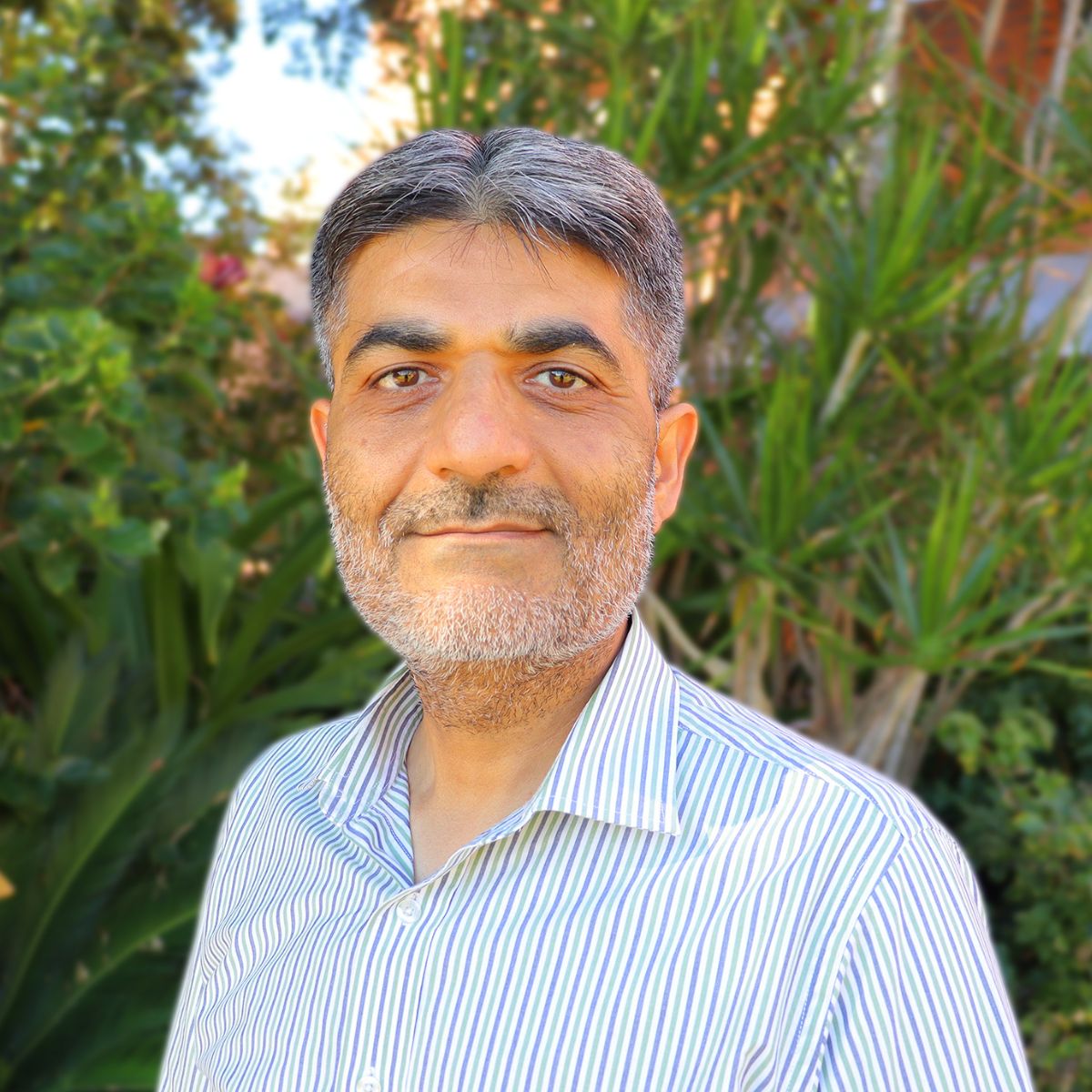
Associate Professor Waqar Asad holds a leadership role as Deputy Head of School (Mining Engineering) at Curtin University's WA School of Mines. He has over 26 years of experience in academia and industry, specializing in stochastic optimization of mineral supply chains and sustainable mining practices. He earned his PhD and MSc from the Colorado School of Mines and BSc from the University of Engineering and Technology, Peshawar. His research focuses on mathematical models for optimizing open-pit mine operations, including cut-off grade policies, production scheduling, and waste management. He has secured over $1M in research grants and published extensively in top-tier journals like European Journal of Operational Research and Resources Policy . Notable contributions include stochastic pit design models and waste encapsulation strategies. Teaching areas include mine planning, mining systems, and open-pit design. He has held leadership roles such as Head of Discipline (2014-2017) and Discipline Lead (2021-2023). His work is recognized internationally, including ranking in the top 2% of global mining scientists.
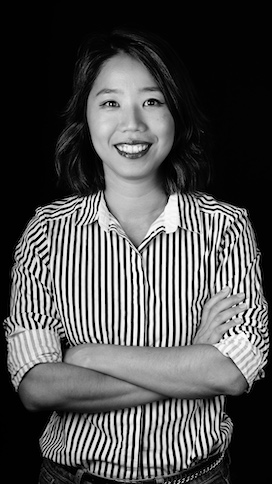
Associate Professor Kod Pojtanabuntoeng holds the Chevron-Woodside Chair in Materials & Corrosion Engineering at Curtin University's Curtin Corrosion Centre. He is affiliated with the School of Minerals, Energy and Chemical Engineering under the Faculty of Science and Engineering. His research focuses on corrosion mechanisms in industrial environments, including wet gas pipelines, corrosion under insulation (CUI), and localized corrosion of corrosion-resistant alloys (CRAs). He is a member of the Australasian Corrosion Association (ACA) and National Association of Corrosion Engineers (NACE). His work spans advanced materials characterization, coating durability under extreme conditions, and non-destructive testing (NDT) methodologies. Key projects include evaluating epoxy-amine coatings under thermal aging, UV weathering, and hygrothermal exposure. He also investigates corrosion mitigation strategies for carbon steel and stainless steel in oil and gas applications, with a focus on CO₂ corrosion and microbiologically influenced corrosion (MIC). Recent studies highlight his contributions to understanding residual stress in coatings, terahertz spectroscopy for adhesion assessment, and additive manufacturing corrosion behavior. His interdisciplinary research integrates materials science, electrochemistry, and environmental engineering to address industrial corrosion challenges.
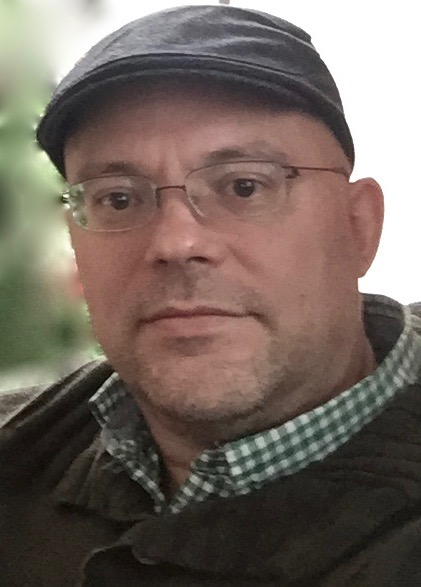
Dr. Darren Bryant is a Professor in the School of Education at Curtin University, Perth, Australia, and currently serves as Deputy Head of the School. He previously held leadership roles at The Education University of Hong Kong, including Head of the Department of Education Policy and Leadership and Associate Director of the Asia Pacific Centre for Leadership and Change. His academic journey includes positions as Associate Professor (2018–2023) and Assistant Professor (2012–2018) in Hong Kong. Bryant is an Adjunct Professor at The Education University of Hong Kong and a Senior Research Fellow at the Asia Pacific Centre for Leadership and Change. His research focuses on leadership development, middle leadership roles, policy enactment, and international education, with a particular emphasis on improving educational outcomes through collective leadership efforts. Bryant has secured over 10 competitive research grants, including studies on the impact of the International Baccalaureate (IB) Middle Years Programme, cross-cultural student leadership, and global education in international schools. He has contributed to 13 teaching-related grants, advancing pedagogical innovation and curriculum design. Bryant’s scholarly work spans leadership structures, teacher entrepreneurship, and policy mediation. His recent studies include analyses of middle leadership development programs in Hong Kong and New Zealand, the role of principals in fostering entrepreneurial teacher behavior, and the socio-cultural dimensions of global education. He serves on editorial boards for journals such as Education Innovations: Systems and Future Learning and School Leadership and Management , reflecting his commitment to advancing educational leadership discourse.
Hiroshi Hasegawa is a Senior Lecturer at Curtin University's School of Education within the Faculty of Humanities. His academic career spans primary to tertiary education, with a focus on Japanese language education, TESOL, and applied linguistics. He holds a PhD from the University of Tasmania, along with advanced degrees in education and language teaching from UTS and other institutions. Education: PhD (University of Tasmania) Master of Education Studies in LOTE and Master of Education in TESOL (University of Tasmania) Graduate Diploma in Education (Language Teaching) (University of Technology Sydney) BA (Tokai University) Dr. Hasegawa's research explores pedagogical innovations in language education, particularly the integration of technology in Japanese and second-language learning. Key themes include cross-cultural communication, online/digital instruction efficacy, and challenges faced by students with disabilities in language studies. His work critically evaluates policies like Japan's English education reforms and the WACE heritage language examination framework. His publications consistently analyze assessment methodologies, program effectiveness (e.g., language assistant programs, mentor systems), and cultural factors influencing language acquisition. While no awards are listed, his prolific output demonstrates sustained contributions to language education research across multiple continents. Advising & Grants: No specific advising/grants data is provided in the profile. His work appears to focus on collaborative research rather than student supervision. Dr. Hasegawa remains active in international conferences and has contributed to forums on research ethics, language policy, and intercultural education strategies.
Dr. Nicola Browne is an Adjunct Senior Lecturer at Curtin University's School of Molecular and Life Sciences, part of the Faculty of Science and Engineering. She also serves in the Office of the Provost. Her research focuses on coral reef ecology, carbonate production dynamics, and coastal water quality, with projects spanning Australia, Asia, and Africa. Key areas include the resilience of inshore turbid zone reefs, impacts of environmental stressors, and reef responses to climate change. Her research interests include coral physiology, reef geomorphology, and the interplay between sediment transport and reef stability. Notable projects include ARC DECRA-funded studies on island responses to sea-level rise and CMRI-supported carbonate budget modeling in Borneo. She has authored over 50 peer-reviewed publications, with recent work emphasizing climate change impacts on marginal reefs. Teaching roles include coordinating Coastal and Marine Science courses and units like Biological Computing and Marine Ecology. Commendations include the ARC DECRA Fellowship (2018–present). Publications highlight advancements in carbonate budgeting, coral geochemistry, and turbid reef resilience, with a focus on climate adaptation strategies. Collaborative efforts involve international teams investigating sediment dynamics, coral bleaching thresholds, and living shoreline solutions. Her work bridges ecological, geological, and climate science to address pressing coastal challenges.
Dr Rob Manwaring is an Associate Professor at Flinders University’s College of Business, Government and Law, specializing in political parties and centre-left politics. He serves as President of the Australian Political Science Association (2023–2024) and co-editor of the Australian Journal of Political Science. His research focuses on social democracy, comparative politics, and public policy, with notable works including his 2021 book The Politics of Social Democracy , which received an APSA Crisp Prize Honourable Mention. Education: BA Joint Honours, MSc (Politics and Sociology), PhD. Professional roles include Director of Studies for the Bachelor of Government and Public Management and membership in the British PSA’s Labour Movements Group. Research Interests: Labour and social democratic politics, comparative politics, democracy, public policy, Australian and South Australian politics, British politics. Key contributions include analyses of the Australian Labor Party’s economic policies and democratic engagement. Awards: APSA Crisp Prize (2022), Certificate of Excellence (2019), and Faculty Citation for Teaching (2014). Advising & Impact: Supervised Josh Holloway (2018 Best Higher Degree by Research Student). Engaged with media via ABC, BBC, and The Conversation. Core team member at the Jeff Bleich Centre for Democracy and Disruptive Technologies. Labs/Teams: Active researcher at the Jeff Bleich Centre, focusing on democracy, technology, and governance challenges.
Associate Professor Jacob Wood serves as Associate Dean of Research at James Cook University (Singapore Campus) and specializes in international trade negotiation, non-tariff barriers, and employee engagement in HRM. He holds a PhD in International Studies from Sogang University, a Master of Management (Banking) from Massey University, and dual Bachelor degrees from Otago University. Doctor of Philosophy (PhD), Sogang University Master of Management (Banking), Massey University Bachelor of Commerce (Management), Otago University Bachelor of Tourism, Otago University Graduate of Australian Institute of Company Directors (GAICD) His research examines the intersection of economic development and sustainability in the Tropics, with a focus on trade policy impacts, digital transformation in tourism, and carbon emission mitigation. His recent work includes studies on low-carbon tourism models, blockchain applications in fishery supply chains, and trade war effects on global value chains. Key trends in his publications include: Trade Policy Analysis (US-China, Belt and Road Initiative) Sustainable Tourism and Carbon Pricing Technology Adoption in Logistics Digital Transformation in Manufacturing Environmental Resilience in Developing Economies Trade Facilitation and Economic Growth Previously, he held academic roles at Korea University of Technology and Education and Chungnam National University (South Korea). His work appears in journals such as Journal of Cleaner Production , Sustainability , and World Trade Review .
Professor Maziar Arjomandi is a faculty member in the School of Electrical and Mechanical Engineering at the University of Adelaide, part of the Faculty of Sciences, Engineering and Technology. He holds roles including Aerospace Coordinator, Postgraduate Coordinator, and Research Director, and contributes to the Heavy Industry Low-carbon Transition Commonwealth Research Centre. His research focuses on experimental and numerical aerodynamics, fluid mechanics, and renewable energy systems. Professor Arjomandi earned his PhD in Aerospace Engineering from the Moscow Aviation Institute (1999). His research interests span renewable energy (solar thermal, wind/wave energy), aerodynamics (flow control, bluff body dynamics), fluid mechanics (vortex-induced vibration, multiphase flows), and heat transfer (natural convection, combustion). He has supervised over 50 research projects across PhD/Masters/Undergraduate levels, including studies on heliostat wind loads, cardiovascular hemodynamics, and wave energy converters. Key technical contributions include innovative approaches to turbulent boundary layer control using micro-cavities, optimization of heliostat wind load designs, and experimental validation of coronary artery hemodynamics models. His work integrates advanced measurement techniques like particle image velocimetry (PIV) and computational fluid dynamics (CFD). Recent research highlights include studies on heliostat wind load dynamics in atmospheric boundary layers, drag reduction mechanisms, and biomedical applications of fluid dynamics. He has led collaborative projects with industry partners to advance concentrated solar power technologies and low-carbon industrial processes. Professor Arjomandi’s lab facilities include the University of Adelaide’s Atmospheric Boundary Layer Research Facility, enabling large-scale wind tunnel experiments. His interdisciplinary approach bridges mechanical engineering, aerospace systems, and biomedical applications.
Professor Benjamin Cazzolato is a faculty member in the School of Electrical and Mechanical Engineering at the University of Adelaide, affiliated with the Faculty of Sciences, Engineering and Technology. He holds the academic rank of Professor and specializes in system dynamics and control, with a focus on vibro-acoustics, finite element analysis, and modal analysis. His research spans energy transfer via wave propagation across multiple scales, from atomic to oceanic levels. His primary research areas include sound and vibration control, ocean energy systems (e.g., wave energy converters and oscillating cylinders), dynamics and control of mechanical systems, and robotics. He leads the Acoustics, Vibration and Control Group and the Robotics Group at the University of Adelaide, overseeing projects in robotics, control systems, and energy conversion. Professor Cazzolato's recent publications emphasize advancements in wave energy harvesting, turbulence control in boundary layers, and smart water network monitoring. His work often intersects fluid dynamics, acoustics, and control engineering, with applications in renewable energy, coastal protection, and biomedical systems. He actively supervises postgraduate students and collaborates on grants related to energy systems and structural health monitoring. His research lab focuses on experimental and computational studies, including hydrodynamic testing of offshore energy systems and acoustic drug delivery mechanisms. He is also involved in developing innovative solutions for environmental noise reduction in industrial settings, such as gas turbine exhaust systems.
Hossein Ranjbar is a researcher at the University of Adelaide's School of Electrical and Mechanical Engineering, part of the Faculty of Sciences, Engineering and Technology. His work focuses on multidisciplinary engineering design, particularly in the Mine Operational Vehicle Electrification project, which aims to transition Australian mining operations to sustainable electrification using renewable energy and battery storage systems. Before his current role, he was a postdoc at Sharif University of Technology (Iran), where he earned his M.Sc. and Ph.D., and a visiting researcher at the University of Calgary (Canada), focusing on power systems and renewable integration. His research interests span power system planning, transactive energy, and optimization, with an emphasis on renewable energy applications. His recent publications emphasize microgrid planning for mining, EV integration, and resilient energy systems. He is eligible to supervise Masters and PhD students as a co-supervisor, reflecting his active role in academic mentorship.
Dr. Matthew Stevens is a Grant-Funded Researcher (B) at the University of Adelaide's School of Biomedicine within the Faculty of Health and Medical Sciences. He holds a PhD in Clinical Psychology (2021) from the same institution. His primary research focuses on substance use disorder interventions, screening tool validation, and public health initiatives. Key projects include: scaling Screening, Brief Intervention, and Referral to Treatment (SBIRT) programs in healthcare settings; adapting the ASSIST screening tool for Pitjantjatjara language speakers; validating the ultra-rapid ASSIST-Lite against DSM-5/ICD-11 criteria; and evaluating training programs for health professionals. These projects emphasize cultural competence, maternal health, and rural healthcare equity. He has contributed to over 15 peer-reviewed articles since 2016, with recent work addressing global gaming disorder prevalence and emergency department substance screening protocols. Dr. Stevens is actively involved in mentoring Masters and PhD candidates, focusing on translational research that bridges clinical practice and policy development.
Sally Butler is a Senior Lecturer in Medicine and Senior Research Fellow at the School of Rural Medicine, Charles Sturt University (CSU). She is based in Orange, NSW, and actively contributes to both teaching and research, with a strong focus on rural health, biostatistics, and translational research that improves healthcare delivery in regional communities. Education: Master of Biostatistics, University of Sydney (2014–2021) Bachelor of Nursing (BNurs) Her research interests lie at the intersection of health and frequentist statistical methodology, emphasizing ethical, community-benefiting research. She is particularly passionate about Wiradjuri country and First Nations research engagement. Her work spans epidemiology, health services, and public health outcomes, often involving collaborations with the Royal Flying Doctor Service and multiple Local Health Districts across NSW, as well as leading universities including the University of Melbourne, University of Sydney, Monash, and UNSW. The recent publications and conference presentations highlight a strong trend in rural health systems research, clinical audits, workforce dynamics, and primary care impact. Her work consistently addresses gaps in rural healthcare access, quality, and efficiency through robust statistical analysis and collaborative frameworks. Scientific Awards: Best Emerging Abstract winner (Oct 24, 2023) Sally is a key teaching coordinator for the fourth-year Medical Degree (MD) research project, guiding students in developing research and critical appraisal skills. She has supervised numerous student-led projects on topics such as heart failure management, emergency department performance, and aeromedical retrievals. She is also involved in major collaborative research initiatives, including the Murray-Darling Medical Schools Network. Her grants and external funding are implied through multi-institutional partnerships and health district collaborations. Labs and Research Teams: Sally is embedded in a vibrant research network focused on rural health, working with interdisciplinary teams across academia and health services. Her affiliations include the Statistical Society of Australia (Graduate Statistician), and she contributes to research culture and capacity building in Western NSW.
Aya Hussein is a Lecturer in Artificial Intelligence and Machine Learning at the University of Canberra, specializing in AI and Robotics research within swarm systems and human-autonomy interaction. Her work bridges theoretical AI with practical applications in complex environments requiring human-swarm teaming. Her educational background includes: PhD from UNSW Canberra (Australian Defence Force Academy), awarded 20 January 2021 Dr. Hussein's research centers on human-swarm interaction dynamics, focusing on machine teaching methodologies, autonomy level calibration, and decision-making frameworks for heterogeneous swarms. She pioneers approaches for context-aware control in adversarial scenarios and develops metaverse-based training environments for swarm systems, with significant contributions to swarm interpretability through neural translation techniques and SHAP analysis. Analysis of her 15 most recent publications (2022-2025) reveals dominant themes in swarm intelligence (87%), human-computer interaction (73%), and reinforcement learning (60%). Key trajectories include imitation learning for swarm observation (2023-2025), metaverse integration for multi-level autonomy (2023-2025), and security applications like adversarial patrolling (2024). Her work consistently addresses real-world challenges in search-rescue operations, misinformation resilience, and collective perception systems. Dr. Hussein serves as Co-Investigator on the active ARC-funded project 'Political Misinformation and Media Literacy: Australian Election 2025' (2025), examining misinformation dynamics in electoral contexts. She chairs IEEE Women in Engineering (ACT Section) and organizes the IT & Systems Student Research Conference, demonstrating strong commitment to community engagement and academic service through 12 documented activities including editorial work and peer review. Her research is conducted through the University of Canberra's AI and Robotics group, with significant external collaborations including UNSW Canberra and international institutions. Current projects integrate digital twin technology with swarm metaverse environments to develop next-generation human-swarm teaming frameworks for complex operational scenarios.
Gavin Ramsay is a researcher at Charles Sturt University actively engaged in agricultural and veterinary sciences. His work focuses on poultry diseases, genotype-environment interactions in crops, and development-led inquiry systems. Institution: Charles Sturt University Email: gramsay@csu.edu.au Key research areas include: Poultry disease dynamics in rural settings Genotype-environment interactions in chickpea cultivation Value chain analysis for agricultural development His work spans collaborations across South Africa (Eastern Cape), Australia, and Eastern Zambia, with notable contributions to livestock health and sustainable farming practices.
Tiziana Ferrero-Regis is an Associate Professor in the School of Design at Queensland University of Technology (QUT), within the Faculty of Creative Industries, Education & Social Justice. Her work bridges fashion, sustainability, cultural studies, and social justice, with a strong emphasis on circularity, ethical design, and policy development. She co-leads the TextileR: The Future of Fashion group and the Circularity programme at the QUT Resilience Centre, and is a Chief Investigator on an ARC Discovery Project focused on regenerative fashion economies. PhD in Historical Imagination in Italian Cinema, Griffith University Graduate of the Australian Institute of Company Directors (GAICD) Member, Australian Fashion Council Her research interests center on sustainable fashion, circular textiles, second-hand clothing practices, design ethics, and the cultural politics of fashion. She employs interdisciplinary methodologies to explore the intersections of place, culture, and industry. Her work critically examines global value chains, waste colonialism, and the socio-political dimensions of textile lifecycles, with a commitment to community engagement and justice-oriented research. Her recent publications reflect a strong trend toward interdisciplinary, policy-relevant, and environmentally conscious research. Themes include the critique of second-hand clothing trade, the sustainability narratives of wool on social media, bacterial cellulose as a biomaterial, gendered policy barriers in textiles, and the mapping of regional fashion networks. These works demonstrate a consistent focus on circularity, equity, innovation, and sustainability across the fashion lifecycle. Chief Investigator, ARC Discovery Project 2025: Valuing the Handmade Editorial Board Member, Clothing Cultures , Studies in Costume and Performance , ZoneModa Journal Advisor, National Clothing Product Stewardship Scheme Consultant for industry and government on circular economy transition Tiziana supervises PhD, Master’s, and Honours students on topics ranging from fashion curation to sustainable business models. She has led significant research projects on local procurement, circular communities, and sustainable fashion communication. She is actively engaged in community work, including with Aboriginal communities in Queensland and women workers in the textile industry in India. Her teaching includes fashion history, theory, design consequences, and design ethics at both undergraduate and postgraduate levels. She co-leads the TextileR research group and the Circularity programme at the QUT Resilience Centre, fostering collaborative, transdisciplinary research aimed at transforming fashion into a more sustainable and equitable industry.