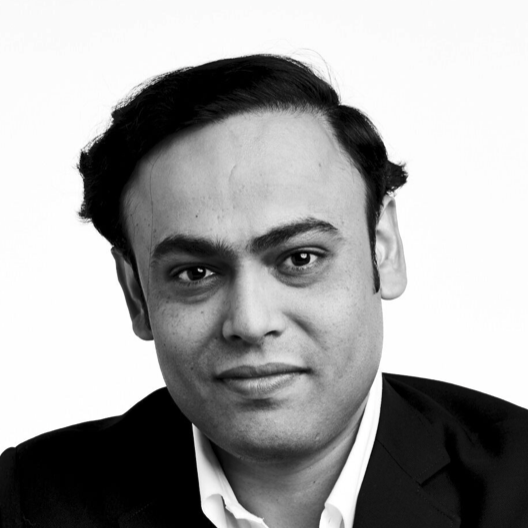
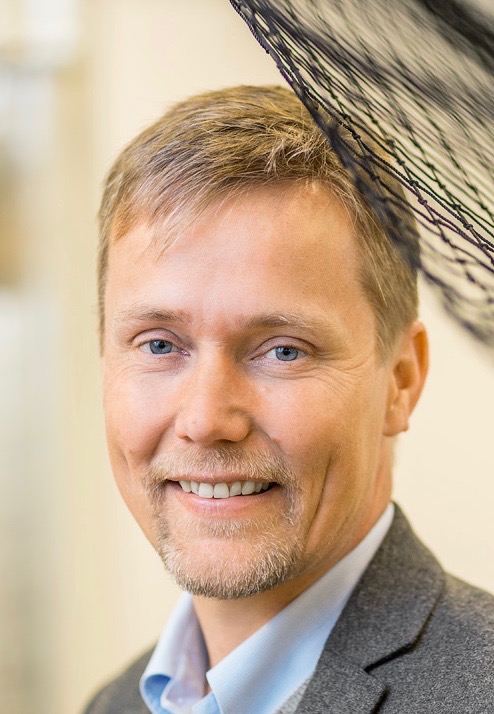
Henrik Sandberg is a Professor at the Division of Decision and Control Systems , KTH Royal Institute of Technology , Stockholm, Sweden. He holds the title of Deputy Head of Division and is affiliated with the School of Electrical Engineering and Computer Science . Education: MSc in Engineering Physics (1999) PhD in Automatic Control (2004) from Lund University Postdoctoral position at Caltech (pre-2007) Research Interests: Focus on cyber-physical systems security , power systems , model reduction , and fundamental limitations of control systems . Key sub-areas include attack detection , networked control , privacy-preserving estimation , and resilient control architectures . Publications: Over 150 papers across IEEE Transactions and Automatica , covering topics like stealthy attacks , distributed control , LQG optimization , and thermodynamic costs in filtering . Recent work includes LWE-based encrypted control and Bayesian deception mechanisms . Scientific Awards: Best Student Paper Award Finalist at IEEE CASE 2014; Best Student-Paper Award at IEEE CDC 2004. Grants & Projects: Leads the DYNACON project (WASP Cybersec cluster) and collaborates on CERCES (critical infrastructure resilience). Serves as examiner for multiple advanced courses in cybersecurity and control systems. Contact: Email: hsan@kth.se Phone: +46 (0)8 790 7294 Room: A:607, Malvinas Väg 10, Stockholm
Sara Stymne is a Senior Lecturer in Computational Linguistics at the Department of Linguistics and Philology, Uppsala University, where she has been working since 2012. She initially joined as a post-doc (2012-2015), then worked as a researcher (2015-2017), and served as an assistant professor (2017-2023) before her current position as Senior Lecturer. Prior to Uppsala, she was a researcher at Linköping University's Department of Computer and Information Science. Dr. Stymne earned her PhD in Computational Linguistics from Linköping University in 2012 with the thesis 'Text Harmonization Strategies for Phrase-Based Statistical Machine Translation,' following a Licentiate degree in Computational Linguistics (2009) and a Master's degree in Cognitive Science (2006), both also from Linköping University. During her doctoral studies, she spent the autumn of 2010 and spring of 2009 at Xerox Research Centre Europe in Grenoble, France. Her primary research interests focus on cross-lingual natural language processing and digital humanities, with particular emphasis on multilingual dependency parsing. Dr. Stymne is passionate about applying computational linguistics to solve research questions in other fields, including language history, literary analysis, and political science. Her earlier work concentrated on machine translation, with specific interests in discourse-aware translation, compound processing, and error analysis. She has made significant contributions to the development of language technology tools for analyzing dialogue, narrative, and stylistic features in literature. Analysis of Dr. Stymne's recent publications reveals a strong focus on cross-lingual and cross-domain natural language processing. Her work spans multiple subfields including dependency parsing across genres and topics, discourse relation analysis in low-resource languages like Egyptian Arabic, direct speech identification in Swedish literature, and causality detection in governmental documents. A notable trend is her application of NLP techniques to digital humanities problems, particularly in analyzing literary texts and historical language change. Her research often involves creating and utilizing specialized datasets for specific linguistic phenomena across multiple languages. Dr. Stymne actively supervises graduate students, having guided numerous master's and bachelor's theses on topics ranging from speech recognition to multilingual parsing and causality detection. She leads or participates in several research projects including 'Fictional prose and language change' (funded by VR, 2021-2023) and 'Enabling climate-resilient development' (funded by Marianne and Marcus Wallenberg Foundation, 2023-2027), demonstrating her commitment to interdisciplinary research with practical applications. Her work has resulted in several notable software resources including uuPronPred for cross-lingual pronoun prediction, uuparser for dependency parsing, and Docent for document-level machine translation. Within the Computational Linguistics and Language Technology group at Uppsala University, Dr. Stymne contributes to multiple research initiatives focused on developing language technology tools for digital humanities applications. Her team works closely with literary scholars and historians to create computational methods for analyzing large corpora of literary texts, particularly focusing on Swedish literature across different historical periods. Her research bridges the gap between theoretical computational linguistics and practical applications in the humanities, creating new methodologies for quantitative analysis of literary and historical texts.
Mikael Thollesson is a Senior Lecturer at Uppsala University, affiliated with the Department of Organismal Biology; Systematic Biology and Klubban’s Biological Station. His research focuses on evolutionary biology, phylogenetics, taxonomy, and molecular biology, particularly in marine and freshwater sponges (Porifera), bacterial pathogens, and computational methods in evolutionary analysis. Evolutionary Biology Marine Biology Taxonomy His recent publications highlight trends in sponge biodiversity, phylogeography, bacterial horizontal gene transfer, and mitochondrial gene evolution. Key articles include studies on Swedish demosponge faunas, Silene sect. Arenosae systematics, and computational tools like SPRIT for detecting gene transfers. No explicit awards or grants are mentioned.
Luca Peretti is an Associate Professor in Electric Machines and Drives at KTH Royal Institute of Technology, affiliated with the School of Electrical Engineering and Computer Science and the Department of Electrical Engineering, Division of Electric Power and Energy Systems. He works as a researcher in the EMD (Electric Machines and Drives) group and serves as Partner Director for KTH's strategic partnership with ABB. Education: M.Sc. in Electronic Engineering (2005) from University of Udine, Ph.D. from University of Padova (2008) Professional Experience: Postdoc at University of Padova (2009-2010), Principal Scientist at ABB Corporate Research (2010-2018), Associate Professor at KTH (2018-present) His research focuses on: Automatic parameter estimation in electric machines Multiphase drive systems Sensorless control algorithms Loss segregation in drive systems Condition monitoring of industrial and transportation applications Recent publications demonstrate expertise in variable phase-pole machines, harmonic plane decomposition, predictive control algorithms, and advanced modeling of permanent magnet motors. Key application areas include transportation electrification, wind energy systems, and industrial drive technologies. Scientific roles include: Associate Editor, IET Electric Power Applications Journal (2019-present) Theme Co-Leader, Swedish Electromobility Center (2020-present) Member, IEEE (2021-present) and IET (2006-present) He leads the strategic partnership with ABB and contributes to doctoral program committees at University of Padova.
Pan Xu is a tenure-track assistant professor with joint appointments in the Department of Biostatistics & Bioinformatics, Department of Computer Science, and Department of Electrical & Computer Engineering at Duke University. Previously, Xu was a Postdoctoral Scholar Research Associate at Caltech's Department of Computing and Mathematical Science and earned a Ph.D. in Computer Science from UCLA. Xu's research focuses on developing computationally- and data-efficient machine learning algorithms with strong empirical performance and theoretical guarantees. Xu's research interests center around Machine Learning with broad applications in Artificial Intelligence, Data Science, Optimization, Reinforcement Learning, and High Dimensional Statistics. The research specifically targets real-world problems in Bioinformatics and Healthcare, with recent work emphasizing distributionally robust decision making, efficient exploration strategies, and multi-agent systems. Xu has developed novel algorithms that address the challenges of exploration in sequential decision making and robustness to distributional shifts between training and deployment environments. Xu's recent publications demonstrate a strong trend toward developing theoretically grounded yet practical algorithms for reinforcement learning and bandit problems, with particular emphasis on distributionally robust methods, efficient exploration techniques, and applications to healthcare. The work spans both theoretical analysis (providing minimax optimal regret bounds) and practical implementations (validated on benchmarks like Atari games and real healthcare datasets). Whitehead Scholar award from Duke University School of Medicine (2023) Best Paper Award at ACM FAccT 2023 for Queer In AI paper PIMCO Postdoctoral Fellowship in Data Science (2022) TMLR Featured Certification (2023) NSF award on approximate sampling based exploration (2023) Xu actively mentors multiple Ph.D. students across Duke's Biostatistics & Bioinformatics, Computer Science, and Electrical & Computer Engineering programs, with several alumni now pursuing doctoral studies at top institutions. The research group has secured competitive funding including an NSF award for approximate sampling based exploration for sequential decision making. Xu serves as an action editor for TMLR and as an area chair for major conferences including ICML, NeurIPS, AAAI, ICLR, and AISTATS. Xu leads a dynamic research group focused on sequential decision making, with projects spanning theoretical algorithm development, implementation of practical systems, and applications to healthcare and bioinformatics. The group maintains active collaborations across Duke's medical and engineering schools, with recent work applying machine learning to epidemic forecasting during the pandemic.
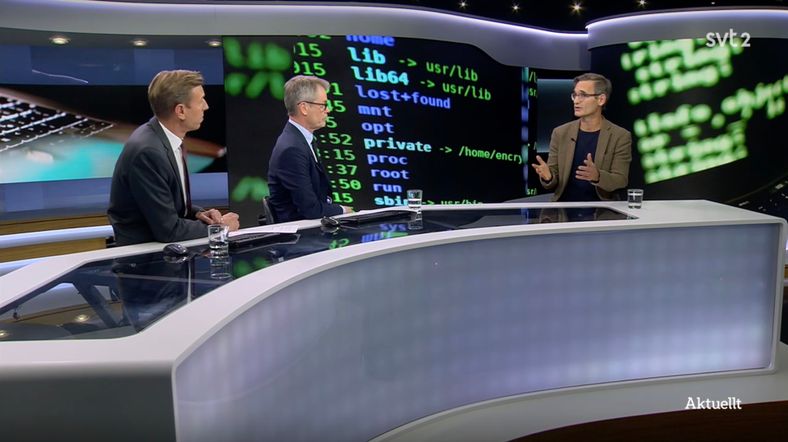
Pontus Johnson is a Professor at the KTH Royal Institute of Technology in Stockholm, Sweden. He leads the Center for Cyber Defense and Information Security (collaborating with Swedish Armed Forces, FRA, MSB, FOI, FHS) and serves as vice director of Cybercampus Sweden since 2024. His research focuses on cybersecurity , enterprise architecture analysis , and probabilistic threat modeling , particularly through his development of the Meta Attack Language (MAL) for simulating cyber attacks on networked systems. Education: MSc in Computer Science, Lund Institute of Technology (1997) PhD in Computer Science, KTH (2002) Docent title, KTH (2007) Leadership Roles: Director, Center for Cyber Defense and Information Security (2013–present) Vice Director, Cybercampus Sweden (2024–present) Board Member, Swedish Research Council (2025–present) Deputy Chair, Swedish Royal Academy of Engineering Sciences (IVA) Board (2024–present) His work spans cybersecurity research , attack simulation methodologies , and enterprise architecture frameworks . He has developed tools like securiCAD (acquired by Google) and pwnPr3d for probabilistic threat modeling. His 15 most recent publications highlight advancements in graph-based attack simulations , automated security assessments , and AI applications in cyber defense . Scientific recognition includes: Listed among Tech Awards Sweden's 50 Most Influential People in Swedish Tech (2022, 2023) Discovery of vulnerability in the Universal Turing Machine (2021) He supervises 16 PhD students and alumni (2005–2024), including Simon Gökstorp , Jakob Nyberg , and Sotirios Katsikeas . His academic service includes over 50 program committee roles and leadership positions in international conferences. He contributes to both academic and public domains through media appearances (SVT, Aftonbladet), courses in ethical hacking , and industry collaboration via his role at Google (20% of his time). His research group Software Systems Architecture and Security (SSAS) focuses on predictive security frameworks and system-of-systems analysis.
Xiaoming Hu is a Professor at the Division of Numerical Analysis, Optimization and Systems Theory within the Department of Mathematics at KTH Royal Institute of Technology (Kungliga Tekniska Högskolan) in Stockholm, Sweden. Born in Chengdu, China, he received his B.S. degree from University of Science and Technology of China in 1983, followed by M.S. and Ph.D. degrees from Arizona State University in 1986 and 1989 respectively. After serving as a research assistant at the Institute of Automation, Chinese Academy of Sciences (1983-1984), he was a Gustafsson Postdoctoral Fellow at KTH (1989-1990) before becoming a faculty member. His educational background includes: B.S. in Engineering, University of Science and Technology of China, 1983 M.S. in Engineering, Arizona State University, 1986 Ph.D. in Engineering, Arizona State University, 1989 Xiaoming Hu's research primarily focuses on multi-agent systems, nonlinear feedback stabilization, nonlinear observer design, and sensing and active perception. His work bridges theoretical control theory with practical applications in robotics and autonomous systems. He has made significant contributions to geometric control theory, mathematical systems theory, and nonlinear systems analysis and control. His research often involves developing theoretical frameworks for distributed control, formation control, and cooperative behavior in multi-robot systems. Professor Hu's publication record shows a consistent research trajectory with numerous high-impact publications in top-tier journals like Automatica, IEEE Transactions on Automatic Control, and Systems & Control Letters. His research has evolved from fundamental control theory to more applied problems in robotics and multi-agent systems, while maintaining strong mathematical foundations. Recent work shows increasing focus on safety-critical control, inverse problems in estimation, and networked systems. His scientific contributions include: Development of theoretical frameworks for multi-agent coordination and formation control Advances in nonlinear observer design for robotic systems Contributions to geometric control theory and systems theory Research on distributed estimation and control algorithms Applications of control theory to robotics and autonomous systems Professor Hu teaches several advanced courses including Mathematical Systems Theory, Geometric Control Theory, and Nonlinear Systems: Analysis and Control. He has supervised numerous degree projects at both undergraduate and graduate levels in mathematics, optimization, systems theory, and scientific computing. His teaching reflects his research expertise, providing students with both theoretical foundations and practical applications of control theory.
Lars Nordström is a Professor at the Division of Electric Power and Energy Systems within KTH Royal Institute of Technology, Stockholm, Sweden. His work bridges control systems , communication networks , and power systems , with a focus on future architectures, functionality, and quality aspects of ICT for power grid operations. He has led initiatives such as the Swedish Centre of Electric Power Engineering and served as Thematic Leader for Smartgrids in KIC InnoEnergy. In 2014, he was a Visiting Professor at Washington State University. Education : Ph.D., MSc.EE Nordström's research explores the intersection of smart grids , machine learning , and cybersecurity for power systems. Key areas include: Wide-Area Monitoring and Control (WAMC) systems Decentralized control strategies for DC microgrids Impedance modeling using neural networks Data-driven methods for islanding detection ICT reliability and protocol design for grid operations His recent publications emphasize machine learning applications in power systems, including LSTM networks for EV charging management, graph attention networks for stability monitoring, and digital twin approaches for cyber-attack mitigation. These works span disciplines such as Smart Grids, Power Electronics, and Data Science. Scientific Recognitions : Senior Member, IEEE Senior Member, CIRED Senior Member, Cigre Past Chairman, Swedish IEC TC57 Mirror Committee Nordström actively teaches and examines graduate courses like Communication and Control in Electric Power Systems and Computer Applications and Machine Learning in Electric Power Systems . His work influences industry practices through collaborations on digital substations, energy market analysis, and resilience strategies.
Zhibo Pang is an Adjunct Professor at KTH Royal Institute of Technology's Department of Intelligent Systems (EECS) and Senior Principal Scientist at ABB Corporate Research Sweden. His work focuses on digital transformation in industry and healthcare, spanning robotics, AI, control systems, and wireless communication. He leads projects in embodied intelligence, Industry 4.0, and Healthcare 4.0, with 23 granted patents and over 120 journal papers. Education: PhD in Electronic and Computer Systems (KTH, 2013), MBA in Innovation & Growth (University of Turku, 2012). Key Roles: IEEE Technical Committee Chair, Editor of 6 IEEE journals, ABB Inventor of the Year (2016, 2018, 2021). Research Interests: Robotics safety, wireless automation, federated learning, digital twins, and IoT security. Recent Projects: Cloud-fog automation frameworks, robot skin systems for healthcare, and latency-aware industrial control. His work bridges academia and industry through cross-functional collaborations.
Saurabh Amin is a Professor in the Department of Civil and Environmental Engineering at the Massachusetts Institute of Technology (MIT), where he also serves as the Edmund K. Turner Professor and Undergraduate Officer. He is a Principal Investigator at the Laboratory of Information and Decision Systems and holds affiliations with the Operations Research Center and the Center for Computational Science and Engineering. His educational background includes: B.Tech. 2002, Indian Institute of Technology (IIT) Roorkee M.S. 2004, University of Texas (UT) Austin Ph.D. 2011, University of California (UC) Berkeley Saurabh Amin's research focuses on the design and control of infrastructure systems using game theory and optimization in networks. His work spans three main areas: resilient network control, information systems and incentive design, and optimal resource allocation in large-scale infrastructure systems. By concentrating on critical infrastructure domains including highway transportation, electric power distribution, and urban water networks, his research develops innovative theory and tools to enhance system performance against both stochastic and adversarial disruptions. His approach involves modeling cyber-physical interactions in infrastructures to assess vulnerabilities, developing detection and response tools for failures at various scales, and designing economic incentive schemes that improve aggregate public good while accounting for dependencies and private information among strategic entities. Amin's work bridges mathematical systems theory with practical civil engineering applications, creating a rigorous theoretical foundation for infrastructure resilience that addresses diverse failure mechanisms from natural disasters to deliberate malicious actions. His recent publications demonstrate a strong focus on decarbonization of energy systems, resilient infrastructure planning under climate uncertainty, optimization methods for complex networked systems, and game-theoretic approaches to sustainable infrastructure management. His work increasingly integrates artificial intelligence and machine learning techniques with traditional control theory to address contemporary challenges in infrastructure resilience and sustainability. The research shows a clear trajectory toward addressing climate change impacts on infrastructure systems while maintaining economic efficiency and operational reliability. Professor Amin has received numerous prestigious awards and honors: Common Ground Excellence in Teaching Award, 2025 HSCC Test-of-Time Award, 2024 MIT CEE, Distinguished Service and Leadership Award, 2023 Samuel M. Seegal Prize (SoE) – inspiring students in pursuing and achieving excellence, 2022 Earll M. Murman for Excellence in Undergraduate Advising, 2022 C3.ai Digital Transformation Institute Research Award, 2020 MIT, Ole Madsen Mentoring Award, 2020 MIT, Energy Initiative Research Award, 2020 National Academy of Engineering, China-America Frontiers of Engineering Symposium speaker, 2019 MIT, Robert N. Noyce Career Development Professor, 2015-2018 Google Faculty Research Award, 2015 National Science Foundation CAREER Award, 2015 Siebel Energy Institute Research Award, 2015 MIT, Solomon Buchsbaum AT&T Research Fund Award, 2012 Professor Amin has been actively involved in significant research projects including the C3.ai DTI project on Causal Reasoning for Real-Time Attack Identification in Cyber-Physical Systems and another on Learning in Routing Games for Sustainable Electromobility. He serves as the chief scientist on multi-institutional NSF grants, including the $9 million Foundations of Resilient Cyber-Physical Systems (CPS) project. His teaching portfolio includes courses such as 1.008 Engineering for a Sustainable World, 1.104 Sensing and Intelligent Systems, 1.020 Engineering Sustainability: Analysis and Design, and 1.208 Resilient Networks. As Undergraduate Officer, he plays a key role in shaping the educational experience for civil and environmental engineering students at MIT. Professor Amin leads the Resilient Infrastructure Networks Lab at MIT, where his team develops theoretical foundations and practical tools for infrastructure resilience. The lab focuses on the intersection of control theory, game theory, and optimization applied to cyber-physical infrastructure systems. Current research directions include pandemic-resilient urban mobility and hurricane-resilient smart grid operations, reflecting the lab's commitment to addressing pressing societal challenges through rigorous systems engineering approaches.
Karl Henrik Johansson is a Professor at the School of Electrical Engineering and Computer Science, KTH Royal Institute of Technology in Stockholm, Sweden, where he also serves as the Founding Director of Digital Futures. He is a Fellow of both IEEE and the Royal Swedish Academy of Engineering Sciences, and has held leadership positions including Immediate Past President of the European Control Association and IEEE Control Systems Society Vice President Diversity, Outreach & Development. Dr. Johansson earned his MSc in Electrical Engineering and PhD in Automatic Control from Lund University. His academic journey includes visiting positions at prestigious institutions such as UC Berkeley, Caltech, and NTU. His research focuses on networked control systems and cyber-physical systems with applications in transportation, energy, and automation networks. His work investigates fundamental challenges in connecting physical world systems through communication networks, exploring how wireless communication and sensor technology can enhance system robustness, reliability, energy efficiency, and safety. Current research directions include security of cyber-physical systems, distributed optimization, multi-agent systems, and applications to intelligent transportation and energy networks. Analysis of his recent publications reveals a strong focus on distributed optimization algorithms, secure networked control, multi-agent systems, and applications to transportation and energy networks. His work increasingly integrates machine learning techniques with traditional control theory, addressing challenges in privacy-preserving distributed computation, resilient state estimation, and resource allocation in complex networked systems. IEEE Control Systems Society Hendrik W. Bode Lecture Prize (2024) Swedish Research Council Distinguished Professor (2018-2027) Wallenberg Scholar (2009-2026) IFAC Young Author Prize IEEE CSS Distinguished Lecturer (2017-2019) IFAC Outstanding Service Award IEEE Fellow Dr. Johansson has supervised over 100 postdocs and PhD students, with many now holding prominent positions at institutions worldwide. His research has been supported by significant grants including the Swedish Research Council Distinguished Professor Grant (2018-2027), multiple Wallenberg Foundation grants, and numerous EU and national research projects. He has directed major research centers including ACCESS Linnaeus Centre (2009-2016) and Strategic Research Area ICT TNG (2013-2020). His research group operates within the Digital Futures initiative and maintains strong connections with industry partners through projects like the Integrated Transport Research Lab (supported by Scania and Ericsson) and Smart Mobility Lab. The group actively collaborates with international institutions and participates in major EU-funded projects addressing challenges in cyber-physical systems, transportation, and energy networks.
Sven Werner is a Senior Professor at Halmstad University's Academy of Entrepreneurship, Innovation and Sustainability. His expertise lies in district heating and cooling systems, with a focus on decarbonization, energy efficiency, and fourth/fifth generation technologies. He has authored foundational textbooks, such as Energiförsörjning: En introduktion till vårt energisystem , and contributed to international platforms like DHC+ and the IEA's Low-Temperature District Heating Annex. His research includes pioneering the concept of 'Fourth Generation District Heating' and analyzing global heating/cooling demands. Key achievements include over 50 short courses for industry professionals and presentations across 20 countries. Current projects include a book on the world history of district heating. Research Highlights: Low-temperature systems, renewable integration, and thermal storage. Impact: Most-cited article on district heating (Annex X Final Report, 2014), cited every six hours in 2021. International Contributions: Co-developed the Pan-European Thermal Atlas (PETA) and advised the EU Energy Council on energy efficiency. Werner's work bridges academia and industry, emphasizing practical solutions for sustainable energy systems. His publications span journals, conference papers, and policy guides, addressing topics like heat distribution costs, industrial heat recovery, and smart grid technologies.
Paul Erhart is a Professor in Condensed Matter and Materials Theory at the Department of Physics, Chalmers University. He received his PhD from Technische Universität Darmstadt in 2006, followed by postdoctoral and staff positions at Lawrence Livermore National Laboratory from 2007, before joining Chalmers in 2011. His research bridges computational physics, materials science, and machine learning to tackle fundamental problems in materials design and characterization. Dr. Erhart's research focuses on computational materials science with particular emphasis on condensed matter physics, nanomaterials, and quantum materials. His work spans from developing computational methods like machine-learned potentials (GPUMD, neuroevolution potentials) to studying fundamental phenomena in perovskites, 2D materials, thermal transport, and plasmonics. He has pioneered approaches connecting simulation with experimental techniques through correlation functions and has made significant contributions to understanding phase transitions, defect physics, and electronic structure in complex materials systems. Analysis of his recent publications reveals a strong trend toward integrating machine learning with traditional computational physics methods. His work increasingly focuses on developing and applying neuroevolution potentials to study thermal properties, phase transitions, and optical phenomena in materials. There's also a clear emphasis on connecting computational results with experimental observations, particularly in neutron scattering, Raman spectroscopy, and plasmonic sensing applications. His research spans fundamental materials physics to applied areas like hydrogen sensing and sustainable materials development. Dr. Erhart has contributed to numerous software packages essential to the computational materials science community, including WulffPack for Wulff constructions, Dynasor for extracting dynamical structure factors, calorine for neuroevolution potential models, and ICET for alloy cluster expansions. His collaborative work spans multiple institutions and disciplines, reflecting the interdisciplinary nature of modern materials research. His contributions to understanding perovskite materials, thermal transport phenomena, and plasmonic systems have established him as a leading researcher in computational materials science.
Urban Johnson is a Professor at Halmstad University's School of Health and Welfare, specializing in sports psychology with a focus on sustainable participation in sports, health, and physical activity. His research examines psychological aspects of sports injury (pre- and post-injury) and healthy athletic engagement, particularly through pandemic-era studies of Swedish upper secondary sport students. Johnson's research interests center on: Psychological mechanisms in sports injury rehabilitation and prevention Adolescent athlete mental health and dropout dynamics Pandemic impacts on sport education systems Gender-specific responses to athletic challenges Longitudinal behavioral patterns in youth sports His work integrates qualitative analysis of student-athlete experiences with clinical psychology frameworks. His publication trends reveal intense focus on pandemic-related disruptions (2020-2025), with 12 of 15 recent articles examining COVID-19's impact on student-athletes, teachers, and sports systems. Key thematic clusters include: Sport injury psychology (ACL re-ruptures, prevention) Adolescent mental health during crises Fun/motivation dynamics in youth sports Cross-contextual leadership challenges Johnson actively supervises students at basic, advanced, and doctoral levels while teaching methodology courses. His collaborative projects include the Karolinska Football Injury Cohort Study and consensus statements on sport injury psychology. Current work emphasizes cocreation of injury prevention programs and psychological support services for elite handball.
Philipp Schlatter is a Professor in the Department of Mechanics at KTH Royal Institute of Technology. His research focuses on fluid mechanics, turbulence, and computational fluid dynamics (CFD), with expertise in high-performance computing and direct numerical simulations (DNS). He leads projects involving scalable CFD frameworks like Neko and Nek5000, and investigates turbulent boundary layers, flow control, and coherent flow structures. His work includes experimental and numerical studies of wing profiles, rotating systems, and transition dynamics. Schlatter teaches courses on computational fluid dynamics and turbulence, emphasizing both theoretical and practical aspects of fluid mechanics. Key research interests include developing numerical methods for high-fidelity simulations, understanding turbulence mechanisms, and optimizing flow control strategies. His contributions span aerodynamics, heat transfer, and the application of machine learning to fluid dynamics problems. Schlatter collaborates extensively on interdisciplinary projects, leveraging advanced computing resources to address complex fluid flow phenomena. Publications highlight advancements in DNS frameworks, Bayesian optimization for flow control, and analysis of turbulent structures in pipe and boundary layer flows. His research also addresses challenges in measurement techniques and uncertainty quantification in CFD simulations.