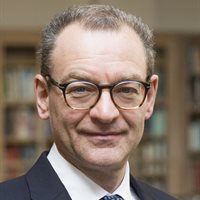
Wim A Van der Stede is a **Professor of Accounting and Financial Management** at the **London School of Economics (LSE)**, specifically within the **Department of Accounting**. He holds the prestigious **CIMA Professorship** and serves in leadership roles such as LSE Council Member and Houghton Street Ventures Advisory Board member. His research focuses on **management control systems**, **corporate governance**, **executive compensation**, and **performance measurement**, with notable contributions to understanding incentive systems and organizational design. He has authored influential books like *Management Control Systems: Performance Measurement, Evaluation, and Incentives*, translated into multiple languages. Van der Stede’s academic leadership includes editorial roles in top journals like *Management Accounting Research* (Editor-in-Chief 2015–2024), and he has received awards such as the LSE Teaching Excellence Award (2016/17) and the AAA Outstanding International Educator Award (2019). His work integrates empirical studies with practical insights, addressing topics like budgeting, innovation selection, and the impact of information technology on organizations. He actively contributes to global accounting discourse through research, teaching, and advisory roles.
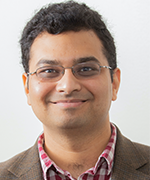
Aditya Prakash is an Associate Professor and Associate Chair for Academic Affairs in the School of Computational Science and Engineering at Georgia Tech. He holds a PhD from Carnegie Mellon University (2012) and a B.Tech from IIT Bombay (2007). His research focuses on data science, machine learning, and AI applied to epidemiology, healthcare, security, and urban computing. His work has led to impactful tools used by organizations like CDC, ORNL, and Walmart. Notable awards include the NSF CAREER Award (2018) and IEEE's 'AI Ten to Watch' (2017). Education: PhD (Computer Science, CMU, 2012), B.Tech (IIT Bombay, 2007) Research Interests: Epidemic forecasting, network analysis, healthcare informatics, and large-scale data-driven solutions for societal challenges. He has authored over 80 papers and holds two patents. His lab develops methods for disease modeling, urban infrastructure analysis, and cybersecurity. Key projects include the NSF-funded BEHIVE initiative for pandemic prediction and collaborations with MIDAS network for infectious disease modeling. Awards: NSF CAREER, Facebook Faculty Award, IEEE AI Recognition, and multiple best-paper awards. His group advises students across PhD, MS, and undergraduate levels, with notable alumni in academia and industry. Labs & Affiliations: Core faculty at ML@GT (Machine Learning Center) and IDEaS (Institute for Data Engineering and Science). Active in organizing conferences like AAAI, KDD, and SIGMOD.
Gaetano Valenza is an Associate Professor of Bioengineering at the University of Pisa, Italy, where he leads the Neuro-Cardiovascular Intelligence Lab at the Enrico Piaggio Research Centre. He holds affiliations with the Neuroscience Statistics Research Laboratory at MIT and has served as a Research Fellow at Harvard Medical School and Massachusetts General Hospital. His academic work spans bioengineering, computational physiology, and affective computing. His research focuses on statistical and nonlinear biomedical signal and image processing , cardiovascular and neural modeling , and physiologically interpretable artificial intelligence . He develops wearable systems for physiological monitoring, with applications in autonomic nervous system assessment, brain-heart interactions, and mental health. His work has led to novel metrics such as the Sympathetic and Parasympathetic activity indices derived from ECG. The 15 most recent publications reflect a consistent trend in brain-heart interplay , complexity analysis of physiological signals , explainable AI in healthcare , and virtual reality applications in mental health . His work integrates advanced signal processing, nonlinear dynamics, and machine learning to decode emotional and cognitive states from physiological data. Dr. Valenza is a Senior Member of IEEE and serves on several technical committees. He is an active editorial leader, currently serving as Associate Editor for IEEE-EMBC , Plos One , Complexity , and Scientific Reports , and has guest-edited special issues in Philosophical Transactions of the Royal Society A and IEEE Journal of Biomedical and Health Informatics . He has led or participated in numerous international research projects, including FP7 and H2020 initiatives such as NEVERMIND and EXPERIENCE. He teaches courses in Biostatistics, Probability & Biostatistics, and Advanced Image Processing at the University of Pisa. As lab head and project coordinator, he leads a multidisciplinary team working on neuro-cardiovascular intelligence, wearable systems, and AI-driven mental health interventions.
Pablo Fajardo Peña is a Full Professor in the Department of Aerospace Engineering at Universidad Carlos III de Madrid (UC3M). He leads the Plasmas and Space Propulsion Team (EP2) and co-directs the Aerospace Engineering Research Group. His research focuses on advanced propulsion technologies for space applications, including plasma thrusters, electric propulsion, and fluid-thermal systems. Professor Peña's work spans computational modeling of plasma dynamics, experimental characterization of propulsion systems, and development of novel thrusters like Hall effect thrusters and electrospray systems. His recent publications analyze plasma discharge mechanisms, thruster plume behavior, magnetic nozzle effects, and propellant interactions. He leads multiple EU and Spanish-funded projects including HIPATIA (Helicon Plasma Thruster), CHEOPS (Hall Effect Orbital Propulsion), and ADAPT (Advanced Plasma Propulsion). These initiatives focus on developing efficient propulsion systems for spacecraft and addressing challenges in space debris removal. Professor Peña supervises doctoral research on plasma diagnostics and thruster simulation, and has developed simulation tools like HYPHEN (Hybrid Plasma Thruster Holistic Environment). His team collaborates with ESA, Airbus, and SENER Aeroespacial on propulsion technology validation.
Prof. Dr. Amelie Hagelauer holds a professorship in Micro- and Nanosystem Technology at the TUM School of Computation, Information and Technology, Technical University of Munich. Her work focuses on advanced electronics and systems integration across quantum computing hardware, resistive memory technologies, and high-frequency RF systems. She has contributed to innovations in superconducting qubit readout architectures, multi-level RRAM designs, and 3D-integrated CMOS-compatible quantum devices. Research interests span quantum hardware design, nanoelectronic devices, RF front-end systems, and emerging memory technologies. Her work emphasizes practical implementation challenges such as low-power operation, high-voltage handling in RF switches, and wafer-scale fabrication processes. Recent projects include D-band radar systems, energy-efficient 60 GHz transceivers, and antenna tuning solutions for 5G applications. Publications from 2023-2025 showcase advancements in resistive switching device characterization, mitigation of TLS losses in superconducting qubits, and reconfigurable AI accelerators using RRAM-based digital twins. Her work bridges theoretical device physics with practical integrated circuit design, addressing scalability and reliability in next-gen electronics. Awards and grants: None explicitly listed in provided texts. Active collaborations include EU-funded projects on quantum computing platforms and TUM's Electronic Photonic Integration initiatives. Leads research teams in microsystem technology with emphasis on cross-disciplinary approaches combining CMOS processes, MEMS, and quantum engineering.
Jennifer C. McIntosh is a Professor and University Distinguished Scholar in the Department of Hydrology and Atmospheric Sciences at the University of Arizona (UA), with a joint appointment in the Department of Geosciences. She is also an Adjunct Professor at the University of Saskatchewan. Her academic roles include teaching advanced hydrogeology courses and advising graduate students. She holds a BA in Geology-Chemistry from Whitman College, MS and PhD in Geology from the University of Michigan, and completed a postdoctoral fellowship at Johns Hopkins University. Her research focuses on the interplay between hydrology, geochemistry, and microbiology in the Earth’s crust, spanning micro-to-macro scales. Key projects include studying subsurface fluid dynamics, microbial methane production, and the impacts of climate and human activities on groundwater systems. She has applied these methods to critical zones, sedimentary basins, and oil/gas reservoirs, with fieldwork in the Colorado Plateau, Paradox Basin, and Western Canada. McIntosh has received numerous awards for research and teaching, including the Blitzer Award for Excellence in Teaching Physics-Related Sciences (2019) and the UA Distinguished Scholar Award (2017). She actively serves on national committees for the US EPA, National Academies, and Nuclear Waste Technical Review Board. Education: BA (Whitman College), MS/PhD (University of Michigan), Postdoc (Johns Hopkins University) Notable Awards: GSA Fellow (2019), CIFAR Earth 4D Program (2019), Morton K. Blaustein Fellowship (2004) Labs/Teams: Jemez River Basin Critical Zone Observatory, Siljan Impact Structure Research Group Future Works: Investigating anthropogenic impacts on deep groundwater systems and astrobiology of subsurface microbes
Charles A. Bouman is the Showalter Professor of Electrical and Computer Engineering and Biomedical Engineering at Purdue University, with a courtesy appointment in Mathematics. He is a leading researcher in computational imaging, integrating statistical signal processing, physics, and computation for applications in healthcare, scientific, and industrial imaging. Education: B.S.E.E., University of Pennsylvania, 1981 M.S., University of California at Berkeley, 1982 Ph.D. in Electrical Engineering, Princeton University, 1989 His research focuses on computational imaging , including statistical image models, multiscale techniques, tomographic reconstruction, and fast algorithms. Key areas include Model-Based Iterative Reconstruction (MBIR), Plug-and-Play priors, document processing, and multiscale segmentation. His work has led to foundational contributions in total variation regularization and sparse-view reconstruction. The recent publications highlight a strong trend in integrating machine learning with physical models for image reconstruction, particularly through Plug-and-Play methods. His work spans optical tomography, halftoning, image scaling, and document compression, demonstrating consistent innovation in both theory and practical software implementation. Scientific Awards and Honors: Member, National Academy of Inventors Life Fellow, IEEE Fellow, IS&T; Honorary Member (2022); Service Award (2023) Fellow, SPIE and AIMBE IEEE Signal Processing Society Claude Shannon-Harry Nyquist Award (2021) Electronic Imaging Scientist of the Year (2014) SIAM Imaging Science Best Paper Prize (2020) Founder, IS&T Computational Imaging Conference (2003) Co-Founder, IEEE Transactions on Computational Imaging Vice President, IS&T; Former VP of Publications (2000–2004) Bouman has advised numerous graduate students and leads a vibrant research group developing open-source tools like MBIRJAX , SVMBIR , and OpenMBIR . His research has been supported by the National Science Foundation, General Electric, Intel, Xerox, Hewlett-Packard, and the State of Indiana 21st Century Fund. He maintains an active presence through tutorials, conference leadership, and educational resources including video lectures and a textbook on Foundations of Computational Imaging. Labs and Research Teams: His group develops cutting-edge software for tomographic reconstruction, clustering, segmentation, and dynamic sampling. Projects include Gaussian Mixture modeling (GMCluster), Plug-and-Play implementations, Sparse Matrix Transforms, and UAV sensing datasets. The research is highly interdisciplinary, bridging engineering, mathematics, and biomedical applications.
Andrew Friend is a Researcher at the University of Cambridge , affiliated with the Department of Geography . His work focuses on terrestrial ecosystem dynamics, particularly the interplay between vegetation, carbon fluxes, and climate systems. He develops process-based computer models to simulate vegetation growth, competition, and carbon cycle responses, while also conducting experimental and field studies in collaboration with institutions like the Sainsbury Laboratory, NIAB, and Forestry England. Friend’s research integrates plant physiological knowledge with global vegetation modeling . Key interests include source-sink carbon interactions, physiological diversity in ecosystems, and the impact of climate extremes on forest resilience. His models address challenges such as drought, temperature changes, and deforestation, with applications in predicting future carbon balances and informing climate mitigation strategies. The 15 most recent articles highlight his contributions to understanding Amazon deforestation tipping points , wood formation mechanisms , and fire/disturbance impacts on ecosystems . These works span climate science , forest ecology , and biogeochemical cycles , emphasizing multi-scale approaches from cellular processes to global systems. Friend collaborates with institutions like Forestry England (Thetford Forest studies), Sainsbury Laboratory , and the C-CLEAR Doctoral Training Partnership . His work bridges computational modeling, experimental validation, and field data to advance terrestrial carbon cycle science.
Rahul Mangharam is a Professor in the Department of Electrical and Systems Engineering at the University of Pennsylvania's School of Engineering and Applied Science, with a secondary appointment in Computer and Information Science. He directs the Safe Autonomous Systems Lab (mLAB) and is a founding member of the PRECISE Center. Mangharam serves as Penn Director for the Safety21 DoT National University Transportation Center ($20MM), Director of the Autoware Center of Excellence, and leads the F1Tenth Autonomous Racing Community. Education: Ph.D. in Electrical & Computer Engineering, Carnegie Mellon University M.S. in Electrical & Computer Engineering, Carnegie Mellon University B.S. in Electrical & Computer Engineering, Carnegie Mellon University His research bridges formal methods, machine learning, and control systems with applications in medical devices, autonomous systems, and energy-efficient buildings. Key focus areas include safety verification for autonomous vehicles, real-time control systems, and patient-specific cardiac modeling for clinical applications. Recent work explores conformal prediction for safe perception, differentiable control barrier functions, and explainable autonomous systems. Mangharam's publication trends show strong emphasis on autonomous systems safety (control synthesis, uncertainty quantification) and biomedical applications (cardiac modeling, clinical decision support). His 2022-2023 publications demonstrate cross-disciplinary approaches combining control theory, machine learning, and formal methods for robust autonomous systems. Awards and Honors: Presidential Early Career Award (PECASE) 2016 IEEE Benjamin Franklin Key Award 2014 NSF CAREER Award 2013 Intel Early Faculty Career Award 2012 National Academy of Engineers US Frontiers of Engineering (2012, 2018) Stephen J. Angelo Term Chair (2008-2013) He leads multiple major grants including NSF CAREER, DoT Safety21 Center ($20MM), DoE Energy-Efficient Building Hub ($160MM), and DARPA HACMS. Current PhD students include Zirui Zang. Mangharam founded the F1Tenth autonomous racing platform used globally for education and hosts international competitions through the Autoware Center of Excellence.
Du Changwen is a Researcher (Professor) at the Nanjing Institute of Soil Science, Chinese Academy of Sciences, serving as Deputy Director of the National Engineering Laboratory for Soil Nutrient Management. He supervises doctoral and master's students in soil science and agricultural technology development. His academic journey includes: Bachelor's degree from Huazhong Agricultural University's College of Resources and Environmental Science (1997) Master's degree from Huazhong Agricultural University's Trace Element Laboratory (2000) PhD from Nanjing Institute of Soil Science, Chinese Academy of Sciences (joint program with Technion - Israel Institute of Technology) (2003) Dr. Du's pioneering research focuses on precision fertilization technologies, particularly polymer-coated controlled-release fertilizers developed through model membrane and water-based reaction film-forming techniques. His work integrates Fourier Transform Infrared spectroscopy (ATR and PAS modes) with engineering mathematics to monitor nutrient release dynamics, soil chemistry processes, and plant nutrition in real-time. This interdisciplinary approach bridges agricultural chemistry, materials science, and environmental engineering to optimize fertilizer efficiency while minimizing ecological impact. Analysis of his 2015-2017 publications reveals a consistent emphasis on spectroscopic methods for soil-plant system analysis, with dominant themes in controlled-release fertilizer development, soil organic matter characterization, and in-situ nutrient monitoring. His work demonstrates strong cross-disciplinary integration between agricultural technology, analytical chemistry, and environmental science. His scientific recognition includes: Special Award of the First China Agricultural Science and Technology Innovation and Entrepreneurship Competition First Prize of Jiangsu Science and Technology Award First Jiangsu Youth Entrepreneurship Award Second Prize of Chinese Academy of Sciences Science and Technology Contribution Award First Prize of China Agricultural Science and Technology Award Dr. Du has secured major research funding including National Natural Science Foundation projects (key, general, youth), National '973' Basic Research Program, '13th Five-Year' R&D Plan sub-projects, '863' High-tech Program sub-projects, and Jiangsu Provincial Science and Technology Support Plan initiatives. His leadership in the National Engineering Laboratory for Soil Nutrient Management drives innovation in fertilizer technology, with significant outputs including 198 academic papers (89 SCI, 35 EI), 6 monographs, 1 international patent, 8 national patents, and 2 software copyrights. His laboratory specializes in advanced spectral analysis of soil-plant systems, utilizing FTIR-ATR and FTIR-PAS technologies for real-time monitoring of nutrient dynamics and polymer membrane reactions. Current research focuses on next-generation controlled-release fertilizers, machine learning-enhanced spectral analysis, and precision nutrient management systems for sustainable agriculture.
Michael Mühlebach is a Research Group Leader at the Max Planck Institute for Intelligent Systems in Tübingen, Germany, leading the independent Learning and Dynamical Systems group. His academic journey began at ETH Zurich where he earned his B.Sc. (2010) and M.Sc. (2013) in mechanical engineering, specializing in robotics, systems, and control. He completed his Ph.D. at ETH Zurich in 2018 under Prof. R. D'Andrea, followed by postdoctoral research at UC Berkeley with Prof. Michael I. Jordan. Dr. Mühlebach's research spans machine learning, dynamical systems, control theory, and optimization . His work bridges theoretical foundations with practical applications in robotics, developing methods that incorporate physical constraints and system dynamics into learning frameworks. His group focuses on online learning, physics-informed machine learning, and large-scale optimization for cyber-physical systems, with applications in electromagnetic navigation, robotic table tennis, and energy-efficient flight systems like the shape-changing robot Floaty . His publication record shows a strong focus on constrained optimization, with recent work exploring decision-dependent stochastic optimization, nonlinear feedback, and the theoretical foundations of reinforcement learning. His research integrates perspectives from control theory, dynamical systems, and optimization to develop algorithms with strong theoretical guarantees and practical performance. Outstanding D-MAVT Bachelor Award Willi-Studer prize for best Master's degree ETH Medal and HILTI prize for doctoral thesis Branco Weiss Fellow (2018) Emmy Noether Fellowship (2020) Amazon Fellowship (2024) Dr. Mühlebach actively mentors doctoral researchers and is seeking talented students for PhD and Master's projects. His research group has received funding from multiple prestigious fellowships and maintains collaborations across institutions including ETH Zurich, UC Berkeley, and various Max Planck research units. The group's work spans theoretical developments to practical implementations on robotic systems, demonstrating strong connections between mathematical theory and physical realization.
Dr. Mario P. Wiesenfeldt is an independent research group leader at Ruhr-Universität Bochum and the Max-Planck-Institut für Kohlenforschung, affiliated with the Cluster of Excellence RESOLV. His laboratory focuses on developing synthetic organic methodologies using photoredox catalysis and radical intermediates to address challenges in medicinal chemistry. Education: PhD in Organic Chemistry (WWU Münster, 2015–2019) M.Sc. Chemistry (Ruprecht-Karls-Universität Heidelberg, California Institute of Technology) B.Sc. Chemistry (Ruprecht-Karls-Universität Heidelberg) Research Interests: Dr. Wiesenfeldt's work integrates physical organic chemistry with synthetic methodology, emphasizing solvent effects, radical stability, and photoredox activation. Key areas include: Development of bioisosteres for drug discovery Stereoselective hydrogenation of (hetero)arenes Mechanistic studies of radical intermediates Sustainable catalysis under mild conditions Publication Trends: His recent work demonstrates a strong focus on photoredox-mediated transformations (2023–2024), expanding into medicinal chemistry applications like cubane bioisosteres. Earlier publications (2017–2020) established expertise in enantioselective hydrogenation and fluoroarene chemistry. Awards and Honors: Thieme Chemistry Journals Award (2022) Liebig Scholarship, Fonds der Chemischen Industrie (2021) GDCH Prize for university innovation (2021) Leopoldina Postdoctoral Scholarship (2019) WWU Dissertation Prize (2018) Evonik Prize (2018) Research Group: Leads the Wiesenfeldt Lab at ZEMOS (Centre for Molecular Spectroscopy), supervising four PhD students. The lab utilizes state-of-the-art facilities for organic synthesis and collaborates with RESOLV for solvation science studies.
Andrew Yonelinas is a Professor in the Department of Psychology at the University of California, Davis, where he directs the Human Memory Lab. He holds additional leadership roles as Associate Director of the Center for Mind and Brain and is an affiliated faculty member with the UC Davis Center for Neuroscience. His research bridges cognitive psychology and neuroscience to investigate fundamental memory mechanisms and their neural substrates. His educational background includes a Ph.D. in Experimental Psychology from McMaster University (1995) and a B.S. in Cognitive Science from the University of Toronto (1990). These foundational studies established his expertise in experimental methodologies and cognitive theory. Yonelinas specializes in dual-process models of memory, distinguishing between recollection (detailed contextual retrieval) and familiarity (vague recognition). His lab employs process dissociation, remember/know procedures, and ROC modeling alongside neuroimaging (fMRI, ERP) and clinical studies with amnesic and Alzheimer's patients. Recent work expands into auditory working memory, multisensory integration, and the impact of mental illness on cognitive processes, revealing hippocampal roles across memory systems. His research consistently addresses how memory fails in clinical conditions while developing unified theoretical frameworks. Analysis of his 2024-2025 publications shows a strong focus on memory mechanisms across sensory modalities, with increasing emphasis on clinical applications. Key trends include hippocampal contributions to visual/auditory working memory, EEG-based biomarkers for mental illness, and the interplay between schema knowledge and memory distortion in aging populations. His work demonstrates methodological innovation through model-based EEG phenotyping and multisite clinical collaborations. His scientific recognition includes: American Psychological Society’s Shahin Hashtroudi Memorial Award University of California Chancellor’s Fellow Award European Brain and Behavior Society International Lecture Award Yonelinas actively shapes his field through editorial roles at top journals including Proceedings of the National Academy of Sciences and Journal of Experimental Psychology, while serving as a grant reviewer for NIH, NSF, and international funding bodies. His Human Memory Lab trains next-generation researchers in memory theory and methodology, with recent projects examining stress effects on memory precision and neural mechanisms of action slips. The Human Memory Lab operates within UC Davis's neuroscience ecosystem, collaborating closely with the Center for Mind and Brain on projects involving clinical populations and neuroimaging. Current initiatives include the CNTRACS Consortium for EEG standardization in mental illness and investigations into how stress modulates memory binding through hippocampal mechanisms.
Nallan C. Suresh is the Associate Dean for Faculty, Research and Centers and a SUNY Distinguished Professor in the Operations Management and Strategy department at the School of Management, University at Buffalo . His work bridges academic research with industry practice, focusing on manufacturing systems, supply chain agility, and sustainable operations. PhD , University of Cincinnati MBA , McMaster University, Canada BTech , Indian Institute of Technology Suresh's research spans cellular manufacturing , flexible automation , forecasting models , and reverse supply chains . He has pioneered frameworks for evaluating manufacturing systems and optimizing supply chain agility through empirical and simulation-based studies. Recent publications emphasize sustainability and disruptive technologies in supply chains, including reverse logistics for plastics recycling and agile responses to catastrophic events using data analytics. His work integrates DEA models , neural networks , and policy analysis . Summer Research Fellowship, University at Buffalo Joseph T.J. Stewart Faculty Scholar Alfred V. Bodine/SME Award for Machine Tool Economics Cleveland Foundation Grant for High Technology Firms Suresh has secured grants totaling over $145,000, advised numerous students, and contributed to global research through empirical studies in the Netherlands and executive training in China/Latvia. His consulting spans automotive, electronics, and manufacturing sectors.
Dr. Chitraleema Chakraborty is an Assistant Professor in the Departments of Materials Science and Engineering and Physics and Astronomy at the University of Delaware. Her research focuses on solid-state quantum emitters, 2D materials, and quantum optics, aiming to develop quantum technologies for computing, communication, and sensing. She combines computational and experimental approaches to predict, fabricate, and image quantum emitters integrated with photonic devices. Education: Ph.D. in Materials Science, University of Rochester (2018) Dual MS and MTech in Nanophysics and Nanostructures, University of Delhi and Joseph Fourier University, Grenoble (France) BSc Honors in Physics, Jadavpur University, Kolkata (2009) Research interests include quantum emitters in 2D materials, integrated photonics, and hybrid quantum systems. Her work bridges theoretical predictions and experimental validation to advance applications in quantum information and nanoscale sensing. Publications highlight advancements in strain-tunable quantum emitters, on-chip photonic integration, and room-temperature ferromagnetism in van der Waals materials. Recent trends emphasize scalable synthesis methods and defect engineering for quantum technologies. Awards: Carl E. Anderson Outstanding Doctoral Thesis Finalist (2019) Rising Star in EECS (2019) Outstanding Dissertation Award, University of Rochester (2018) Best Student Speaker at MRS Fall Meeting (2017) Egide Scholar, France (2010-2011) Her research group actively explores nanoscale confinement effects and electrical tuning of quantum systems. Collaborations focus on integrating 2D materials with photonic platforms for scalable quantum devices. Ongoing projects aim to develop robust quantum emitters for real-world applications.