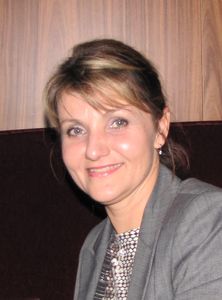
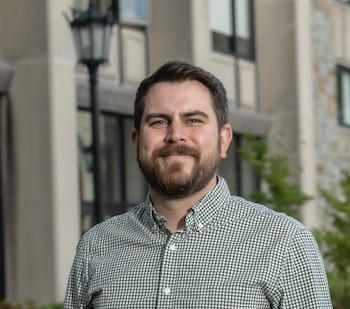
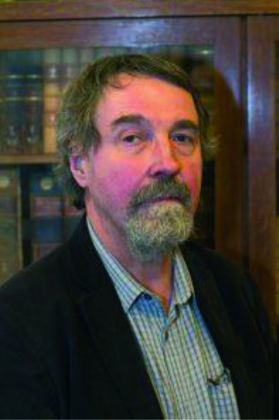
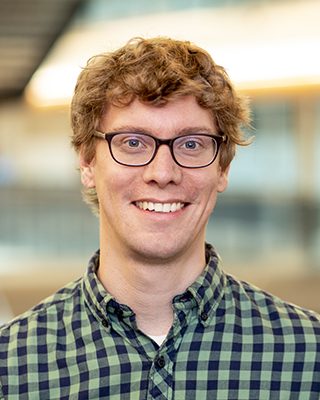
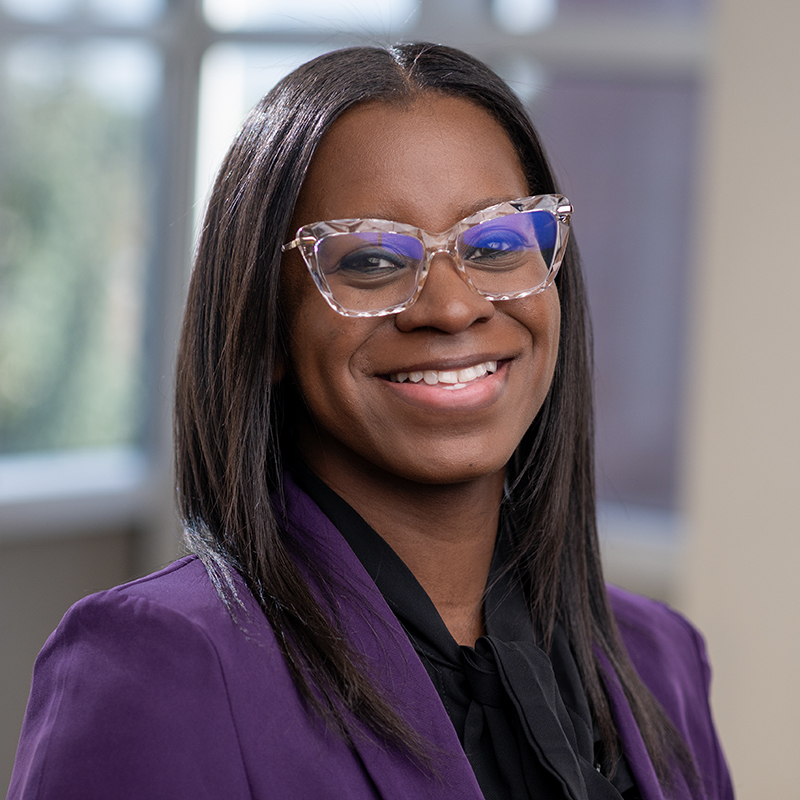
Dr. Hassan Qudrat-Ullah is a Professor at the School of Administrative Studies, York University, and Coordinator of the Certificate in Logistics Management. He holds a PhD in Decision Sciences from NUS Business School and completed a post-doctoral fellowship at Carnegie Mellon University. His research focuses on dynamic decision making, system dynamics modeling, energy planning, and interactive learning environments. He teaches courses on quantitative methods, logistics, and decision analysis, informed by global industry experience across 20+ countries. Research interests include sustainability, climate change, systems thinking, and educational applications of decision sciences. He serves as Editor-in-Chief of the International Journal of Complexity in Applied Science and Technology and is a member of IEEE, DSI, and the International System Dynamics Society. His work has been published in Energy , Decision Support Systems , and others. Key projects include studies on 'structured-debriefing in dynamic decision making' and renewable energy policies in Africa. His recent articles (2023–2025) address AI integration in energy governance, system dynamics for supply chain resilience, and education for sustainability. Hassan advocates for systems thinking in K-12 education and enjoys traveling (visited 129 countries) and bird-watching.
Dr. Kaya de Barbaro is an Associate Professor in the Department of Psychology at the University of Texas at Austin (College of Liberal Arts). She holds a Ph.D. from the University of California San Diego. Her research focuses on bridging computer science and developmental/clinical psychology, particularly maternal mental health and infant social-emotional development. She directs the Daily Activity Lab, which uses mobile/wearable sensors and machine learning to analyze real-world interactions, aiming to develop just-in-time interventions for new mothers. Key research areas include maternal-infant dynamics, physiological synchronization, and the impact of environmental chaos on development. She has pioneered methods for analyzing high-density data, such as Granger causality and machine learning algorithms to detect behaviors like crying and holding. Recent work emphasizes leveraging ecological momentary assessment surveys and 24-hour LENA audio recordings to understand proximal mechanisms of development. Dr. de Barbaro teaches Psychology 333D (Introduction to Developmental Psychology) and has developed curricula for both in-person and online formats. She is actively involved in training students through the Eureka program at UT Austin. Her lab collaborates on tools like chatbots for postpartum mental health and has published extensively on sensor-based methodologies in developmental science.
Dr. Laura Channing serves as Assistant Professor in Economic History within the Department of History at Durham University, concurrently holding roles as Department Representative and Fellow of the Durham Research Methods Centre. Her academic foundation includes a History degree from King's College London, followed by an MPhil in Economic and Social History (2017) and PhD in History (2021) from the University of Cambridge. Distinguished appointments include the Jane Eliza Procter Fellowship at Princeton University (2019-2020), Economic History Society Anniversary Fellowship at the Institute of Historical Research, and Visiting Fellowship at LSE's Department of Economic History. Channing's research pioneers interdisciplinary analysis of West African economic development from the 19th-20th centuries, specializing in colonial taxation systems, labor dynamics, and living standards. Her methodological innovation integrates qualitative archives with newly digitized quantitative sources from British and African repositories, currently culminating in a monograph on taxation-representation relationships in West African colonies. Recent publications reveal consistent focus on fiscal governance within composite colonial states and African agency in humanitarian frameworks. Jane Eliza Procter Fellow at Princeton University Economic History Society Anniversary Fellow at the Institute of Historical Research Her teaching expertise in African and Economic History, demonstrated during LSE appointments, complements active contributions to the Durham Research Methods Centre's interdisciplinary initiatives in historical methodology and data analysis.
Assoc. Prof. Tatyana Yordanova is affiliated with the National Academy of Sports in Bulgaria, where she serves in the Faculty of Sports and Department of Technical and Ice Sports . She holds the academic rank of Associate Professor and has been leading the department since 2024. Education: Master's from State Central Institute of Physical Culture (1987); Doctorate in Sports Science (2019) Languages: English, Italian, Russian Her research focuses on technical elements in figure skating , speed-power abilities , balance stability , and judging systems . She has extensively studied jump mechanics and anthropometric factors in skaters. Her publications from 2018-2024 include studies on judging systems, jump techniques, and sports management. Key themes in her work involve training methodology, competition analytics, and biomechanics of skating. Since 2002, she has worked as an international figure skating judge, including at the Sochi 2014 Olympics . She chaired the Bulgarian Skating Federation (2011-2023) and participated in projects like Erasmus+ mobility (2022, 2024). Her pedagogical career includes roles as scientific assistant (1988), senior assistant (2006), and associate professor (2023).
Josh Seim is an Assistant Professor of Sociology at Boston College, affiliated with the Morrissey College of Arts and Sciences. His work focuses on the sociologies of work, medicine, welfare, punishment, pedagogy, and ethnographic methods. He holds a Ph.D. from the University of California, Berkeley, and has published widely in top journals including *American Sociological Review* and *Social Problems*. Education: B.A., Gonzaga University M.S., Portland State University Ph.D., University of California, Berkeley Research Interests: His research explores how institutions like healthcare systems, welfare offices, and penal institutions interact with urban poverty. Recent projects include studies on ambulance crews’ labor processes, welfare bureaucracy, and post-prison labor. His writing also emphasizes pedagogical innovation in sociology teaching and ethnographic methodological rigor. Key themes include the governance of suffering, medical labor, and carceral systems. Publications & Books: Bandage, Sort, and Hustle: Ambulance Crews on the Front Lines of Urban Suffering (UC Press, 2020) The Welfare Assembly Line: Public Servants in the Suffering City (forthcoming UC Press, 2026) Teaching: Sociology 7715: Classical Sociological Theory (graduate) Sociology 7716: Contemporary Sociological Theory (graduate)
Steven Jackson is a Professor of Information Science and Science and Technology Studies at Cornell University's Bowers College of Computing and Information Science, with additional graduate field appointments in Communication and Public Affairs. Since July 2023, he has served as Vice-Provost for Academic Innovation at Cornell, and previously held leadership positions as Chair of Information Science and Dean of William Keeton House. His work bridges academic research with significant institutional leadership in higher education innovation. Dr. Jackson's research focuses on critical intersections of technology, society, and the environment, with three primary strands: technology ethics, law and policy; maintenance, repair and sustainability; and technology, inequality and global development. His work draws from American pragmatism, political economy, and science and technology studies, integrating methods from sociology, anthropology, philosophy, and media studies. He is particularly interested in how computing practices meet social and material worlds, with implications for infrastructure, collaboration, sustainability, and cultural practice. His recent publications reveal a strong emphasis on repair as both theoretical concept and practical methodology, exploring 'ordinary hope' as a framework for technological engagement and examining unmaking as a necessary counterpart to design. The research spans diverse geographical contexts from the global North to South, addressing caste dynamics in computing, digital authoritarianism, and infrastructure challenges in developing contexts. Dr. Jackson has received significant recognition including an NSF CAREER award and more than twenty paper awards at leading computing and information science venues. His research has been supported by major organizations including the U.S. National Science Foundation, Social Science Research Council, Ford Foundation, Sloan Foundation, World Bank, Intel Research, Atkinson Center for Sustainability, and the Canadian Social Science and Humanities Research Council. As an advisor, Dr. Jackson has mentored numerous graduate students who have gone on to prominent positions at institutions worldwide. He currently advises Jen Liu, Amy Cheatle, Daniel Mwesigwa, Johan Michalove, and Ritik Batra, while his former students include Palashi Vaghela (Assistant Professor at Simon Fraser University), Samir Passi (Responsible AI Researcher at Microsoft), Maggie Jack (Assistant Professor at NYU), and Ranjit Singh (Senior Researcher at Data and Society). Dr. Jackson convenes the Computing On Earth Lab, an experimental collaboration bringing together social scientists, humanists, artists, and engineers to rethink the material and planetary foundations of computing. The lab reflects his commitment to interdisciplinary approaches that address computing's environmental impacts and sustainability challenges.
Martin Procházka is Professor of English, American, and Comparative Literature at the Faculty of Arts, Charles University, Prague. He holds visiting roles at the University of Porto and the University of Kent, including Honorary Visiting Professor since 2021. His research spans Intercultural communication Romanticism Comparative literature Scottish literature American colonial literature , with a focus on authorship, adaptation studies, and the intersections of European Romanticism with Czech cultural contexts. Procházka's recent publications include the 2024 edited book From Shakespeare to Autofiction , which critically engages with Roland Barthes and Michel Foucault's theories of authorship, and the 2022 theoretical work on autopoietic systems and intercultural communication. His scholarship often bridges historical and contemporary debates, such as in the 2021 Romanticism and Periodisation roundtable. He has received the Comenius Medal (1992) for educational research and led the H2020 MSCA ITN European Joint Doctorate Migration and Modernity (MOVES) from 2018 to 2023. Procházka also served as President of the Czech Association for the Study of English (2004-2014) and on the Advisory Board of the International Association of Byron Societies (1999-2024). As founding editor of the Scopus-indexed journal Litteraria Pragensia , he has shaped academic discourse on literary theory and comparative studies. His work on Scottish Enlightenment and Czech modernist reception of William Blake highlights his interdisciplinary approach.
Tim Althoff is an Associate Professor at the Paul G. Allen School of Computer Science & Engineering, University of Washington, specializing in Artificial Intelligence and Human-Centered Computing. His research focuses on behavioral data science, combining Data Science Natural Language Processing Social Computing Human-Centered AI Ethics & Fairness to extract insights about health and well-being. Recent publications highlight advancements in: Mental health support through AI Wearable sensor health monitoring Online community analysis Reproducibility in data science Public health interventions with notable papers in ACL, Nature Machine Intelligence, and NeurIPS. Scientific recognition includes: ACL 2023 Outstanding Paper Award WWW 2021 Best Paper Award Double ICWSM 2021 Best Paper Awards SIGKDD Dissertation Award 2019 Fulbright Scholarship German National Merit Foundation Actively mentoring postdoctoral researchers and seeking PhD students in areas like neural representation learning, NLP applications to psychology, and mobile health technologies through his Behavioral Data Science Group .
Anette Mikes is an Associate Professor of Accounting at the University of Oxford’s Saïd Business School and a Hertford College Fellow. She specializes in risk management, corporate governance, and sustainability, with a focus on the intersection of ethics and organizational control systems. Her research explores how risk frameworks shape corporate decision-making, particularly in climate change and decarbonization contexts. Education: PhD in Accounting from the London School of Economics (2005) Pre-doctoral work in the City of London (2006–2007) studying Chief Risk Officer roles Research Interests: Behavioral approaches to risk management Management control systems for sustainability Ethics in corporate governance Decarbonization strategies in heavy industries Her 2012 Harvard Business Review article (with Robert Kaplan) on risk frameworks remains influential, while her documentary on the Kursk submarine disaster highlights crisis management failures. Awards: 2025 Honorary Doctorate from Uppsala University 2017 ACA Prize for Risk Management Contributions 2014 Global Risk Forum Film Award Key Contributions: Co-developed Harvard’s Risk Management executive program Leads research on ‘Values at Risk’ and corporate purpose Published widely on climate risk governance and ethical leadership Her recent work emphasizes decarbonization strategies and moral accountability in business, bridging accounting practices with environmental and ethical imperatives.
Oscar Westlund serves as Professor at the Department of Journalism and Media Studies within the Faculty of Social Sciences at Oslo Metropolitan University (OsloMet), where he co-leads the OsloMet Digital Journalism Research Group. He maintains a secondary appointment at the University of Gothenburg and acts as Editor-in-Chief of Digital Journalism . His research spans digital journalism, fact-checking, platform dynamics, media management, news consumption, and mobile media. Westlund's scholarly focus centers on journalism safety in digital environments, sociotechnical dimensions of misinformation combat, and platform-induced challenges for news organizations. His work examines professional fragilities of journalists, epistemological foundations of data journalism, and legitimacy paradoxes in public service media-platform relationships. Current projects address disinformation countermeasures through the SCAM initiative (Source Criticism And Mediated Disinformation). Analysis of his 2022-2024 publications reveals dominant themes: journalism safety frameworks (33%), platform-journalism tensions (27%), and fact-checking as sociotechnical practice (23%). Key methodological approaches include cross-national comparative studies, epistemological analysis, and practice theory applied to digital news production. Westlund actively contributes to academic discourse through editorial leadership at Digital Journalism and special issue guest editing. His research group coordinates interdisciplinary collaboration on digital journalism studies, while the SCAM project develops practical methodologies for disinformation detection in democratic contexts. Recent work demonstrates increasing emphasis on mobile news ecosystems and journalist safety cultures. He co-leads the OsloMet Digital Journalism Research Group, which investigates platform impacts on news production, mobile journalism evolution, and epistemological shifts in data-driven reporting. The group maintains strong international partnerships, particularly with Swedish institutions through his University of Gothenburg affiliation.
Haijun Xia is an Assistant Professor at the University of California, San Diego (UCSD), where he directs the Foundation Interface Lab and contributes to the Cognitive Science and Design Lab. His work focuses on Human-Computer Interaction (HCI) and Human-AI Collaboration , emphasizing the development of dynamic, malleable interfaces that integrate human cognition with intelligent systems to enhance thinking and working paradigms. Education: Bachelor's, Tsinghua University Master's and PhD, University of Toronto His research spans generative AI , interface design , and creative collaboration , with applications in data visualization, programming, and scholarly work. He advocates for treating information as a malleable material that can be flexibly manipulated by users and AI agents. Recent publications highlight advancements in: 2025 CHI Conference - Generative user interfaces, malleable overview-detail designs, and compositional structures for human-AI co-creation 2024 CHI Conference - Structured design space exploration with LLMs, ASCII diagram analysis, and adaptive presentation systems 2023 CHI/UIST Conferences - Data particle visualization, contextual logging tools, and metaphor generation for science communication Scientific recognitions include: Multiple Best Paper Awards and Honorable Mentions at CHI and UIST Hellman Fellowship and grants from NSF , Microsoft , Google , Meta , Apple , and Adobe He actively recruits undergraduate and graduate interns and has an upcoming postdoc position in early 2025 for researchers interested in foundational interface development.
Dr Kingsley Edney is an Associate Professor in International Relations of China at the University of Leeds' School of Politics and International Studies. He holds a PhD (International Relations) and MA (Political Science) from the University of Melbourne, along with a BA(Hons) in Politics and Anthropology from Victoria University of Wellington. Fluent in Chinese and with experience living in Shanghai and Beijing, his research focuses on China's non-material international security dynamics, including cultural diplomacy, propaganda, and ideological strategies to manage global information flows. His expertise includes Chinese soft power, the role of ideology in foreign policy, and the intersection of domestic political cohesion with international security objectives. He teaches undergraduate and master's courses on China's domestic and international politics. Current postgraduate researchers under his supervision are Jinru Huang, Yanyu Lu, and Hengfeng Zhao. Edney's research outputs span topics like public perceptions of China in the Anglosphere, Chinese youth nationalism, and environmental governance. His work often bridges theoretical frameworks with empirical analysis of China's evolving global engagement strategies. He maintains active academic engagement through platforms like Google Scholar and ORCID.
Dr. Janet Garcia-Hallett is an Associate Professor of Criminal Justice in the Henry C. Lee College of Criminal Justice and Forensic Sciences at the University of New Haven. She earned her Ph.D. in Criminal Justice from Rutgers University School of Criminal Justice and specializes in research examining the intersection of race, gender, and the criminal legal system, with particular focus on formerly incarcerated mothers of color. Dr. Garcia-Hallett's educational background includes: Ph.D., Criminal Justice, Rutgers University School of Criminal Justice M.A., Criminal Justice, Rutgers University School of Criminal Justice B.A., Cum Laude, Honors in Sociology and Psychology, CUNY Macaulay Honors College: Hunter College Her research interests focus on the detrimental impact of incarceration on communities of color and the intersectional obstacles women of color face throughout the criminal legal process. She examines how formerly incarcerated mothers navigate motherhood while confronting systemic barriers related to gender, race, and criminal record. Her work challenges traditional narratives about mass incarceration that have historically centered on men, instead highlighting the unique experiences of women of color who must perform motherwork under oppressive conditions of surveillance and marginalization. Analysis of Dr. Garcia-Hallett's publications reveals consistent themes across criminal justice, gender studies, and race theory. Her work demonstrates a strong focus on qualitative methodologies to center the voices of marginalized populations, particularly examining the intersection of motherhood and incarceration. Recent publications increasingly address public health issues within correctional settings and community reentry challenges. Her research consistently applies critical race and feminist frameworks to challenge systemic oppression within the criminal legal system. Dr. Garcia-Hallett has received significant recognition for her scholarship: 2023 ASA Ida B. Wells-Barnett Distinguished Book Award Multiple 2023 finalists and honorable mentions for book awards 2019 SAGE Junior Faculty Professional Development Teaching Award University of Missouri President's Award for Intercampus Collaboration Her grant funding demonstrates substantial research impact, including the Prison Research and Innovation Network ($200,000) and collaboration on a $2.8 million Arnold Ventures grant for the Missouri Prison Transformation Project. Dr. Garcia-Hallett actively engages in community partnerships, such as her work with Winning Ways Inc. to empower women in the community. Her media presence shows significant public engagement through op-eds in Ms. Magazine and Hartford Courant addressing critical issues like abortion rights for incarcerated women.
Anamaria Crisan is an Assistant Professor at the University of Waterloo, affiliated with the Insight Lab. Her research focuses on interdisciplinary work at the intersection of Human-Computer Interaction (HCI), Data Visualization, and Applied AI/ML. She explores human-centered approaches to AI/ML systems, visualization design for decision-making, and healthcare data science applications. Dr. Crisan holds a PhD in Computer Science from the University of British Columbia (2019), an MSc in Bioinformatics (2010), and a BComp in Biomedical Computing from Queen’s University (2008). Her educational background bridges computer science, biology, and healthcare informatics. Her research interests include responsible AI/ML systems, interactive visualization for data-driven decisions, and leveraging visualization in healthcare to improve outcomes. She emphasizes transparency, trustworthiness, and human alignment in AI technologies. Her work spans diverse applications such as genomic epidemiology, dashboard design, and ethical AI evaluation. Notable contributions include studies on human-AI collaboration, visualization linters, and scalable dashboard census methodologies. She has published widely in top-tier venues like IEEE VIS and ACM CHI. Dr. Crisan’s lab (UW Insight Lab) focuses on human-centered approaches to automating data science and improving visualization practices in critical domains like healthcare and public health.
Trevor Campbell is an Associate Professor in the Department of Statistics at the University of British Columbia (UBC), Vancouver. He holds a Ph.D. in Machine Learning and Statistics from MIT and a B.A.Sc. in Aerospace Engineering from the University of Toronto. His research focuses on automated, scalable Bayesian inference algorithms, Bayesian nonparametrics, and streaming data analysis. Campbell is a core contributor to probabilistic programming tools like Pigeons.jl and has developed influential methods for coreset-based Bayesian inference. Education : Ph.D. in Machine Learning and Statistics (2016), MIT M.S. in Aeronautics and Astronautics (2013), MIT B.A.Sc. in Aerospace Engineering (2011), University of Toronto Research Interests : His work emphasizes scalable Bayesian computation, including variational inference, MCMC optimization, and coresets. He develops algorithms that balance statistical accuracy with computational efficiency, particularly for large-scale datasets. His recent work explores adaptive samplers (e.g., AutoStep, autoMALA) and theoretical guarantees for coreset methods. Applications span astrophysics, materials science, and network analysis. Awards & Grants : NSERC Discovery Grant (2025) Blackwell-Rosenbluth Award (2021) PIMS Early Career Award (2023) Google Perception Academic Funding (2020) Advising & Labs : He supervises a team of PhD and M.Sc. students at UBC, focusing on Bayesian methodology and computational tools. His lab collaborates with institutions like SFU and MIT on projects involving distributed sampling and probabilistic modeling. He co-organizes workshops on Bayesian computation and serves on editorial boards for Bayesian Analysis and TMLR.