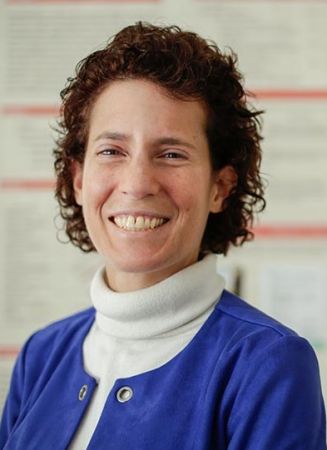
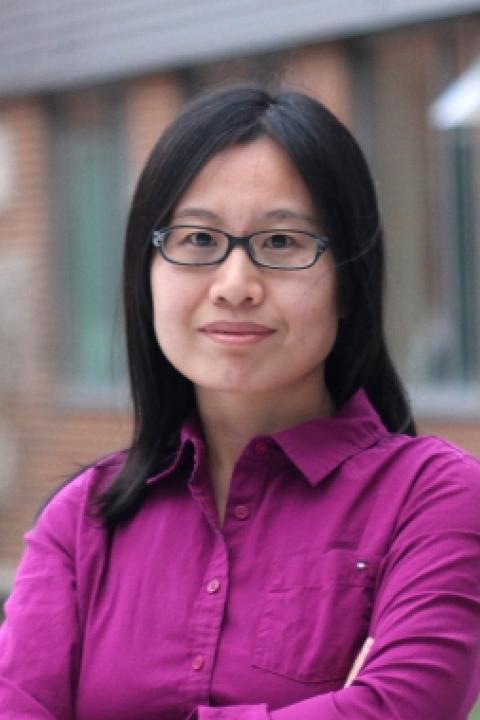
Lori Herz is a full-time Professor and Associate Chair of the Bioengineering Department at Lehigh University, where she has taught since 2008. She leads undergraduate program operations and instructs courses in metabolic engineering, regulatory affairs, and biotechnology laboratory practices. Ph.D., Chemical and Biochemical Engineering, Rutgers University, 2000 B.S., Chemical Engineering, Cornell University, 1993 Her research focuses on pharmaceutical process development, including sterile drug manufacturing, technology transfer, and regulatory compliance. She specializes in cell culture, tangential flow filtration, and lyophilization processes, bridging academic training with industrial applications. Her recent recognition includes the 2025 Rossin Awards, highlighting her contributions to bioengineering education and industry collaboration. Lori maintains active ties to the pharmaceutical industry through consulting projects and previously worked at Bristol-Myers Squibb, managing facilities for clinical operations and protein therapeutic scale-up.
Marçal Gallemí Rovira is a Researcher at the Bioengineering Department of IQS School of Engineering. He leads an active research group focused on molecular mechanisms of viral infections, plant genetics, and immune responses. His current project (2023-2026) investigates postdoctoral research collaborations in these areas. Research interests span molecular biology, virology, and plant engineering. Notable projects include developing modular cloning tools for microalgae and studying immune responses to SARS-CoV-2 and mpox viruses. His work bridges basic science with clinical applications, particularly in vaccine development and antiviral strategies. Recent publications (2023-2025) highlight advancements in viral entry inhibition, T cell immunity analysis, and chloroplast engineering techniques. Research frequently involves interdisciplinary collaborations, addressing both human health challenges and biotechnological applications. He serves as Principal Investigator on a Beatriu de Pinós postdoctoral fellowship program, demonstrating sustained academic engagement. His work has been cited across diverse fields including public health and synthetic biology.
Amy J. Karlsson is an Associate Professor in the Department of Chemical and Biomolecular Engineering at the University of Maryland, College Park. Her research focuses on protein and peptide engineering to combat fungal pathogens, particularly Candida albicans, with applications in drug delivery and therapeutic design. Her lab employs both rational design and directed evolution to engineer antifungal peptides, aiming to enhance their stability against proteases and efficacy against biofilms. Recent work includes studies on histatin 5 variants, lipid-binding proteins like Osh4, and the development of peptide-based hydrogels for wound healing. She has also contributed to chemical engineering education, investigating learning outcomes in laboratory courses and integrating process safety education through incident reporting systems. Her lab emphasizes interdisciplinary approaches, combining biochemical experiments with computational modeling to understand protein-membrane interactions. Key collaborations include work on unit operations laboratory curricula and partnerships with institutions to advance antifungal research. Dr. Karlsson has advised multiple graduate and undergraduate students, many of whom have transitioned to industry roles (e.g., Dinara Konakbayeva at Merck). Her lab’s innovations address urgent healthcare needs, such as combating drug-resistant fungal infections and improving laboratory safety standards.
Evangelos Topakas is a Professor of Industrial Biotechnology at the School of Chemical Engineering, National Technical University of Athens (NTUA), where he leads the Industrial Biotechnology and Biocatalysis (IndBioCat) research group. He also holds a concurrent position as Visiting Associate Professor at Luleå University of Technology, Sweden, fostering international collaboration in sustainable bioprocesses. Research Interests: His work spans industrial enzyme discovery, biocatalysis, biorefineries, and biomass valorization for second-generation biofuels and high-value chemicals. He pioneers the application of plant cell wall-degrading enzymes in plastic upcycling, integrating omics, genetic engineering, and protein engineering. His interdisciplinary research unites chemical engineers, biochemists, molecular biologists, and physicists in advancing the bioeconomy. Publication and Editorial Leadership: With over 170 peer-reviewed publications and participation in more than 35 national and European research programs, Dr. Topakas is a leading voice in environmental and industrial biotechnology. His recent articles reflect strong trends in enzyme engineering, microbial systems, waste valorization, and sustainable production. He serves as Editor-in-Chief for Biotechnology for the Environment (Springer Nature) and the Biocatalysis section of Catalysts (MDPI), and as Associate Editor for Biotechnology for Biofuels , Frontiers in Biotechnology and Bioengineering , and Frontiers in Microbiology . Editor-in-Chief, Biotechnology for the Environment (Springer Nature) Editor-in-Chief, Biocatalysis Section, Catalysts (MDPI) Associate Editor, Biotechnology for Biofuels (Springer Nature) Associate Editor, Frontiers in Biotechnology and Bioengineering - Industrial Biotechnology Associate Editor, Frontiers in Microbiology - Systems Microbiology Advising and Grants: Dr. Topakas has supervised numerous BSc, MSc, and PhD researchers and has co-authored 35+ national and European research grants, reflecting extensive success in securing competitive funding and mentoring early-career scientists. Labs and Teams: He leads the Industrial Biotechnology and Biocatalysis (IndBioCat) group at NTUA, a dynamic team advancing cutting-edge research in enzyme technology, microbial engineering, and sustainable bioprocesses, inspiring the next generation of chemical engineers and biologists.
Prof. Dr. Tsing-Young Dora Tang is a Professor in the Department of Biosciences at the Faculty of Natural Sciences and Technology, Universität des Saarlandes, Saarbrücken, Germany. She leads the Tang Lab, an interdisciplinary research group focused on building minimal synthetic cellular systems through bottom-up synthetic biology, biochemistry, and biophysics. Her work addresses fundamental questions in the origin of life and artificial cell synthesis. Research Interests: Her lab investigates the role of compartmentalization in regulating biochemical reactions, strategies to establish and sustain out-of-equilibrium behavior in synthetic cells, and engineering communication networks for robustness in synthetic cellular systems. The research bridges disciplines to unravel physico-chemical principles of biological systems and engineer 'Life 2.0'. Recent Research Trends: Analysis of her recent publications (2022–2025) reveals a strong focus on coacervates and protocells as models for early life, exploring how physical and chemical properties (like charge density, fluidization, and environmental conditions) affect catalytic activity (e.g., ribozymes) and system dynamics. There is a consistent theme of integrating microfluidics , cell-free expression , and gene circuits to build and control synthetic cellular systems with emergent functionalities. Scientific Awards: No specific awards were mentioned in the provided text. Advising and Grants: While specific students and grant details are not listed, Prof. Tang leads an active research team and collaborates widely, as evidenced by her extensive publication record with numerous co-authors. Her lab utilizes advanced instrumentation, suggesting successful funding acquisition. She is a corresponding author on many high-impact papers, indicating leadership in significant research projects. Labs and Teams: The Tang Lab is an interdisciplinary team using a synthetic cell toolkit that includes cell-free expression, microfluidics, gene circuits, optical microscopy, and various biochemical and biophysical methods. The team works with diverse synthetic cellular chassis like coacervates, liposomes, and proteinosomes.
Lukas Leibetseder is a researcher at the Institute of Bioprocess Science and Engineering, part of the Department of Biotechnology and Food Science at the University of Natural Resources and Life Sciences, Vienna (BOKU). His work focuses on bioprocess development and enzyme engineering for environmental applications. His research interests include: Bioprocess Engineering Enzyme Engineering Plastic Degradation Microbial Biotechnology Protein Engineering Leibetseder's recent publication demonstrates expertise in microbial protein production systems for environmental applications, specifically focusing on enzymes that degrade synthetic polymers. His work represents cutting-edge research at the intersection of biotechnology and environmental sustainability. His scientific contributions focus on developing biotechnological solutions for plastic waste management through enzyme-based approaches, addressing one of the most pressing environmental challenges of our time.
Azeem Ahmad is a Researcher at the Department of Physics and Technology , UiT The Arctic University of Norway. His work focuses on advanced imaging techniques in ultrasound, microwaves, and optics , particularly in the areas of quantitative phase microscopy , acoustic microscopy , and photonic chip engineering . Key research areas: Quantitative phase imaging, acoustic wave modeling, biomedical diagnostics, interferometry, machine learning integration, and photonic device optimization Collaborative projects: Developments in label-free histology, super-resolution microscopy, and noise reduction algorithms Recent publications: 2025 studies on subsurface damage detection in ceramics and acoustic transducer modeling His work bridges optical engineering , biomedical applications , and computational imaging , with affiliations to the Ultrasound, Microwaves and Optics and Optical Nanoscopy research groups.
María Dávila Sulbarán is a researcher affiliated with the Institute for Bioengineering of Catalonia (IBEC) , a leading research institution dedicated to transforming scientific results into practical applications for society. She is part of the Smart Nano-Bio-Devices group, which focuses on cutting-edge technological advancements at the intersection of engineering and life sciences. Her research interests align with IBEC’s mission of excellence and social impact, encompassing areas such as: Nanobioengineering Biosensors Biomedical signal processing Synthetic biology Cell engineering The institute emphasizes interdisciplinary collaboration through initiatives like the Open Innovation Lab and networks such as the ISCIII Biobanks and Biomodels Platform . María contributes to this mission by advancing technologies like fibrosens (muscular dystrophy sensors) and protocellular systems, as seen in recent news items (July-August 2025).
Professor Liao Junzhi is a leading researcher in metabolic and synthetic biology at the Institute of Biochemistry, Academia Sinica . With a career spanning institutions like the University of California, Los Angeles (UCLA) and Texas A&M University, he has pioneered innovations in microbial fuel synthesis and metabolic pathway modification. His work includes developing network component analysis and ensemble modeling to engineer artificial gene circuits and optimize biofuel production. Key Affiliations : President of Academia Sinica (2016–present), Ralph M. Parsons Foundation Professor at UCLA (2011–2016), and member of the U.S. National Academy of Sciences (2015). Research Focus : Liao’s research bridges biochemical engineering with systems biology. His laboratory investigates: Carbon fixation in cyanobacteria CO2-reduction strategies via synthetic metabolic systems Methanol-dependent microbial growth and one-carbon metabolism Metabolic repair mechanisms through pathway evolution Quantitative modeling for biofuel yield optimization Scientific Awards : Liao has received numerous prestigious awards, including the Gregory N. Stephanopoulos Award (2023), Israel Samson Award (2021), and memberships in EMBO (2024), U.S. National Academy of Sciences (2015), and National Academy of Engineering (2013). His work has also been recognized with the White House Renewable Energy Innovation Award (2012) and the U.S. EPA Green Chemistry Presidential Award (2010). Publications and Impact : Liao’s recent publications (2023–2017) span high-impact journals like Nature Metabolism , Nature Catalysis , and Cell . These works emphasize synthetic biology approaches to carbon fixation, viral genome analysis, and biofuel optimization. His research trends integrate computational modeling with experimental validation to address energy and health challenges, including SARS-CoV-2 pathogenesis and climate change mitigation through plant science.
Dr. Marc Carnicer Heras is an Assistant Professor in the Department of Bioengineering at IQS School of Engineering, Universitat Ramon Llull. He serves as Project Manager of the Bioprocess Pilot Plant at IQS and is an active researcher in the Biological and Biotechnological Chemistry Group (GQBB). His academic background includes a PhD in Biotechnology from Autonomous University of Barcelona (2012), an MSc in Advanced Biotechnology from the same institution (2008), and a Bachelor's Degree in Biochemistry from University of Barcelona (2007). Prior to his current position, he worked as a Postdoctoral Researcher at INSA de Toulouse (2012-2014). Dr. Carnicer Heras specializes in metabolic engineering, with research focusing on optimization of recombinant protein and metabolite production through metabolic flux analysis. His work involves using alternative carbon sources like methanol for biotechnological applications and developing metabolic engineering strategies through flux balance analysis. His research spans industrial biotechnology, microbial physiology, and bioprocess development. His recent publications demonstrate expertise in vitamin B12 production, microalgal chloroplast engineering, and metabolic characterization of methylotrophic bacteria. His work shows a consistent focus on applying systems biology approaches to solve biotechnological challenges in microbial production systems. Dr. Carnicer Heras is actively involved in multiple research projects including CROPSAFE (focusing on environmentally-friendly agriculture), GLYCOENGIN (glycoenzyme engineering), and paCOSVALOR (biotechnological production of chitosan oligosaccharides). These projects reflect his commitment to translating fundamental research into practical applications. As a member of the GQBB research group, he contributes to the group's three main research areas: identification and molecular analysis of proteins and enzymes, their use as therapeutic targets, and the design and application of enzymes in biocatalysis and biotechnology in microorganisms.
Kang Wu is an Associate Professor in the Department of Chemical Engineering & Bioengineering at the University of New Hampshire. He specializes in synthetic biology, gene circuit design, and bioremediation technologies. Dr. Wu teaches courses including Biochemical Engineering , Mass Transfer & Stagewise Operations , and Doctoral Research . Ph.D., Chemical Engineering, University of Illinois at Urbana-Champaign M.S., Chemical Engineering, University of Illinois at Urbana-Champaign B.S., Biochemical Engineering, Tianjin University His research focuses on synthetic biology applications for environmental remediation, particularly through bacterial surface display systems for heavy metal capture and genome editing in Bacillus species. He has developed modular gene amplifiers and biosensors for toxic metals like cadmium, lead, and arsenic. Dr. Wu's publications reveal expertise in computational modeling of gene circuits, protein engineering for bioremediation, and synthetic regulation of sporulation genes. He has contributed to advancements in bacterial spore engineering for industrial applications. Phone: (603) 862-4388 Office: Kingsbury Hall, Room W315, Durham, NH 03824 Website: FindScholars@UNH
Professor Cormac Murphy is a Professor and Head of the School of Biomolecular and Biomedical Science at University College Dublin (UCD), a position he assumed in September 2023. Previously, he served as the Vice Principal for Research and Innovation in the College of Science from 2011 to 2013 and was the academic director of the MSc programmes in Biotechnology from 2015 to 2023. With over two decades of academic experience at UCD, he has progressed from Assistant Lecturer in Industrial Microbiology to his current professorship. Professor Murphy earned his BSc and PhD from Queen's University Belfast, followed by postdoctoral research at Dalhousie University in Canada and St Andrews University in Scotland. His academic journey reflects a strong foundation in microbiology and biochemistry that has shaped his research trajectory. His research program focuses on the microbial biosynthesis and biotransformation of fluorinated compounds , with particular emphasis on how microorganisms interact with organofluorine compounds that are increasingly prevalent in pharmaceuticals and environmental contaminants. Professor Murphy has developed significant expertise in the fungus Cunninghamella elegans as a microbial model for mammalian xenobiotic metabolism, leveraging its extensive cytochrome P450 activity. His laboratory investigates how microorganisms can biodegrade per- and poly-fluorinated alkyl substances (PFAS), which are persistent environmental pollutants. This work bridges fundamental microbiology with practical applications in environmental remediation and pharmaceutical development. Analysis of Professor Murphy's recent publications reveals a consistent focus on fluorinated compounds across multiple contexts - from the synthesis of fluorinated analogs of bioactive compounds to the biodegradation of fluorinated environmental pollutants. His work demonstrates an interdisciplinary approach combining organic chemistry, microbiology, and environmental science to address challenges in both pharmaceutical development and environmental contamination. Outstanding Reviewer for RSC Advances (2019) Institute of Chemical Engineers Judges' Award for "Discovery of the first fluorinating enzyme" (2002) President's Research Award (2002) Professor Murphy has supervised 22 PhD students to completion and published over 100 peer-reviewed papers and book chapters. His research has been supported by significant funding from multiple sources including Science Foundation Ireland (Research Ireland), Enterprise Ireland, Irish Research Council, and the European Union. Current major projects include "A Sustainable Solution for the Disposal of PFAS-containing Aqueous Film Forming Foams (AFFF)" and the BEACON Partnership with the University of Nottingham. His laboratory maintains a strong focus on the application of microbial systems for biocatalysis and biodegradation, with particular emphasis on biofilm systems that enable continuous biotransformation processes. The team actively investigates the enzymatic mechanisms underlying the metabolism of fluorinated compounds, with implications for both environmental remediation and pharmaceutical development.
Dr. Jens Gaitzsch is the Head of the Department for Bioactive and Responsive Polymers and leader of a research group at the Leibniz Institute for Polymer Research Dresden (IPF). He is affiliated with the Macromolecular Chemistry department under Prof. Dr. Brigitte Voit. His research group focuses on Functional Polyesters from Radical Ring-Opening Polymerization (RROP). Dr. Gaitzsch completed his diploma in chemistry at TU Dresden in 2009 under Prof. Peter Metz and earned his PhD at IPF under Prof. Brigitte Voit. He conducted postdoctoral research at University College London under Prof. Giuseppe Battaglia (funded by DFG) and later worked as a Senior Postdoc with Prof. Wolfgang Meier at the University of Basel. His research interests center around biodegradable polymers, particularly radical ring-opening polymerization, with 50+ publications, an h-index of 24, and an i-10 index of 35+. His research portfolio shows a consistent focus on responsive polymer systems, particularly polymersomes and hydrogels. The publication trends indicate strong emphasis on microfluidic applications, enzyme cascades, and the development of biodegradable materials through radical ring-opening polymerization techniques. Recent work explores supercritical CO 2 as a green solvent and pH-responsive systems for controlled release applications. Scientific Awards: Gastprofessor für Polymerchemie an der BTU Cottbus-Senftenberg (2021-2022) Novartis-Universität Basel Stipendiat für Excellenz in den Lebenswissenschaften (2019) DFG Postdoc-Stipendium (2014) Promotionspreis des IPF Dresden (2014) Promotionsstipendium der Rosa-Luxemburg-Stiftung (2010) Dr. Gaitzsch has successfully mentored numerous researchers through his work at IPF and previously at the University of Basel. His research has been supported by prestigious funding bodies including the DFG and Novartis. His work bridges fundamental polymer chemistry with practical biomedical applications, particularly in drug delivery and synthetic biology systems. His laboratory at IPF focuses on developing novel polymerization techniques for creating responsive and biodegradable materials with applications in nanomedicine and biotechnology.
Dr. Daniel Frankel is a researcher affiliated with Newcastle University , specializing in interdisciplinary studies at the intersection of biochemistry, biophysics, and nanotechnology. His work focuses on protein-lipid interactions, viral assembly, and bio-machine interfaces. Key research areas include membrane biophysics, HIV protein dynamics, and synthetic biology applications. Collaborations span catalysis, biomedical materials, and cancer biology. His publications from 2001–2020 highlight expertise in structural virology (e.g., HIV capsid assembly), extracellular matrix characterization (fibronectin-integrin complexes), and biohybrid systems for cell-machine communication. He has contributed to studies on naked mole-rat hyaluronan and its implications in cancer resistance. No specific awards or student mentorship details are mentioned in the source data.
Dr. Harald König is a Researcher at the Institute for Technology Assessment and Systems Analysis (ITAS), Karlsruhe Institute of Technology, where he has worked since 2011. He leads the research group 'Health and the Technization of Life,' focusing on ethical and societal implications of emerging biotechnologies. Education includes: Diploma in Biology, University of Karlsruhe (1982-1989) PhD in Biology, University of Karlsruhe (1989-1992) Postdoc at Center for Molecular Biology Heidelberg (1992-1994) Habilitation in Genetics, University of Karlsruhe (1999) His research examines societal dimensions of synthetic biology, genome editing, and AI in genomics, emphasizing risk governance and policy frameworks. Recent work analyzes biosecurity challenges, technology assessment methodologies, and regulatory needs for gene drives and bacteriophage applications. Publications demonstrate consistent focus on: Governance of emerging biotechnologies Ethical frameworks for AI in biomedicine Policy development for genetic engineering Socio-technical implications of life science innovations No awards or supervised students are documented. He maintains active research collaborations on European technology assessment projects.