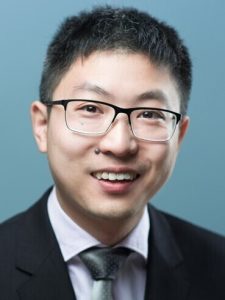
Christine ABDALLA MIKHAEIL is an Assistant Professor in the Department of Management of Information Systems at IÉSEG School of Management in France. She holds dual Ph.D. degrees in Business Administration with a focus on Information Technology from the University of Paris Dauphine (France) and Georgia State University (USA), alongside advanced degrees in Business Consulting and Administration from Paris Dauphine. Her research focuses on collective action dynamics in social media, cybersecurity and privacy challenges, artificial intelligence applications, and disinformation propagation. Recent work explores the adoption of privacy-enhancing technologies (PETs), paradoxes in hybrid work visibility, and data adequacy in qualitative IS research. She has published in leading journals such as Information Systems Journal and Information and Organization . Her articles reflect a strong emphasis on understanding socio-technical systems through interdisciplinary lenses, combining behavioral theories with digital technology analysis. No specific awards or grant details are mentioned in her profile. She currently advises no formally listed students.
Prof. Kat Smith is a Professor of Public Health Policy at the University of Strathclyde, leading the Centre for Health Policy and the Scottish Health Equity Research Unit (SHERU). Her research focuses on policy impacts on public health and inequalities, with expertise in qualitative and mixed methods. She co-leads the Health-Justice Nexus initiative and contributes to the ESRC Centre for Lifecourse Health Equity (Equalise). Her career includes roles at Edinburgh, Bath, and Durham Universities, analyzing UK health policies and corporate influence. She has authored/co-authored over 125 publications and a forthcoming book on reducing health inequalities. Education: PhD in Health Inequalities (University of Edinburgh, 2008), MSc Geography (Edinburgh, 2004), MA(Hons) Geography (Edinburgh, 2002) External Roles: Fellow, Academy of Social Sciences; Honorary Professor (Edinburgh University, 2019-2022); Co-Editor of Evidence & Policy Research interests include policy implementation, health equity, and intersectoral collaboration. Notable awards include the BMA Public Health Book Prize (2016) and the Cambridge University Prize for Excellence in Social Policy (2018). She mentors graduate students in public health policy and advocates for evidence-based decision-making. Key projects include the Health-Justice Nexus (2024-2029) and the UKRI Population Health Network Cluster. Her work addresses social determinants of health, corporate influence, and equitable policy design.
Prof. Robert Güttel is the Director of the Institute for Chemical Engineering at the University of Ulm. He is a member of the Ulm Center for Thermal and Environmental Technology (UZWR) since 2016 and serves on its executive board. His work focuses on catalytic reaction engineering, particularly in CO2 utilization, methanation, Fischer-Tropsch synthesis, and process intensification. Research emphasizes catalyst design, reaction kinetics, and reactor modeling under dynamic conditions. Educations : Not explicitly stated in the provided text. His academic career is highlighted through his leadership roles and publications. Research Interests : Güttel’s research spans heterogeneous catalysis for CO/CO2 hydrogenation, transient kinetic analysis, polymeric reactors for extraterrestrial applications, and AI-driven reactor design. His team develops advanced catalysts (e.g., Ru/TiO2, cobalt@silica core-shell structures) and investigates novel reactor concepts like fibrous structured catalysts and sorption-enhanced processes. Recent work explores in-situ methanation on Mars and the impact of light on catalytic selectivity. Publications Trends : His 2024–2025 articles focus on low-temperature methanation beyond Earth, AI-based residence time analysis, and deactivation mechanisms. Studies highlight both experimental and computational approaches to optimize catalytic systems for sustainability and industrial relevance. Awards : No specific scientific awards mentioned in the text. Grants/Labs : Leads the Institute for Chemical Engineering at Ulm, collaborating on EU-funded projects related to power-to-X technologies and extraterrestrial chemistry. Active in developing lab-scale reactor systems and industrial partnerships for catalyst testing. Labs/Teams : Directs research groups focused on catalytic reactor design, transient kinetic methods, and sustainable process engineering. Collaborates with institutions on Mars habitat resource utilization and green hydrogen production systems.
Eric Coatanea is a Professor at Tampere University, affiliated with the Automation Technology and Mechanical Engineering department within the Faculty of Engineering and Natural Sciences. His research focuses on manufacturing systems, causal graph networks, multi-disciplinary optimization, and AI integration in engineering design. He holds a BSc from University of West Brittany (1990), MSc from INSA Toulouse (1993), and teaching certification from Ecole Normale Supérieure (1994). Research interests include modeling manufacturing systems, additive manufacturing (e.g., Directed Energy Deposition), causal graphs for decision-making, and systems engineering. Notable awards include the Chevalier des Palmes Académiques (2018) and Marie-Curie Fellowship (2006–2008). Recent publications emphasize optimization algorithms combining AI (e.g., L-ANN-GWO), viscosity effects in 3D printing, and causal graph applications in MDO. His work bridges theoretical frameworks with practical engineering challenges, focusing on early design synthesis and sustainable manufacturing. Commitments include editorial roles (Journal of Integrated Design & Process Science), NSERC Canada advisory, and board memberships (Dynavio Cooperative Oy, Selko Oy). Current projects include LILIAM, ÄVE, and DIGITBrain initiatives.
Alberto Viglione is an Associate Professor at the Politecnico di Torino , Department of Environment, Land and Infrastructure Engineering (DIATI), and a member of the Interdepartmental Center SmartData@PoliTO. He has been a faculty member since 2019, following a decade as a Research Fellow at the Vienna University of Technology. University: Politecnico di Torino Department: DIATI – Department of Environment, Land and Infrastructure Engineering Rank: Associate Professor Email: alberto.viglione@polito.it His research focuses on flood hydrology, water resources, and hydro-meteorological extremes , integrating statistical analysis, climate change impacts, land use dynamics, and socio-hydrological modeling. He investigates the spatio-temporal dynamics of climatic, hydrological, and human processes in river basins and their implications for extreme event risks. His work emphasizes data integration, conceptual modeling, and risk assessment across scales. The recent publications highlight a strong trend in analyzing European flood dynamics , the impacts of climate change , and the development of socio-hydrological frameworks that incorporate human behavior and societal memory into flood risk modeling. His research spans from statistical hydrology in ungauged basins to large-scale assessments of climate-flood interactions. Scientific Awards and Honors: AMGA Award for best PhD thesis on water resources (2009) Editorial and Professional Service: Associate Editor, Water Resources Research (2014–present) Associate Editor, Hydrological Sciences Journal (2012–2018) Associate Editor, WIRES Water (2012–2020) Associate Editor, Journal of Hydrology and Hydromechanics (2019–present) Scientific Committee Member, European Geosciences Union (2019–2023) Secretary, International Commission on Water Resources Systems, IAHS (2015–present) Teaching and Advising: He teaches courses such as Bayesian Inference , Applied Hydrology , Fundamentals of Environmental Geosciences , and Hydro-meteorological Risk Assessment . He is a PhD supervisor and member of multiple PhD colleges in Civil and Environmental Engineering at Politecnico di Torino. He currently advises PhD students including Tsion Ayalew Kebede , Emanuele Mombrini , Luigi Cafiero , Luca Lombardo , and Matteo Pesce . His research is supported by grants from national (PRIN), EU, and commercial sources, including projects like Clim2FlEx , RETURN , and ATO4WATER . Research Labs and Teams: He is affiliated with the SmartData@PoliTO laboratory, focusing on big data and data science applications in hydrology and environmental systems.
Ke Li is an Assistant Professor at Simon Fraser University (SFU) in Vancouver, Canada. He previously worked at Google and the Institute for Advanced Study (IAS) in Princeton. He holds a Ph.D. from UC Berkeley, advised by Jitendra Malik, and a B.Sc. in Computer Science from the University of Toronto. His research focuses on machine learning, computer vision, and algorithms, with contributions to generative modeling, neural rendering, fast nearest neighbor search, and meta-learning. Education: Ph.D. in Computer Science, UC Berkeley (2016) B.Sc. in Computer Science, University of Toronto (2008) Research Interests: Dr. Li explores foundational challenges in machine learning, including: - Generative Modeling : Developing methods like Implicit Maximum Likelihood Estimation (IMLE) to improve generative model training. - Neural Rendering : Innovating techniques like Proximity Attention Point Rendering (PAPR) for dynamic 3D scene representation. - Fast Nearest Neighbor Search : Pioneering algorithms to overcome dimensionality curses. - Learning to Optimize : Automating algorithm design through reinforcement learning. Professional Activities: Organized the IAS Seminar Series on Theoretical Machine Learning with Sanjeev Arora Lead organizer of the BIRS Workshop on 3D Generative Models Reviewer for NeurIPS, ICML, CVPR, and other top conferences Teaching: Recently taught CMPT 726: Machine Learning and CMPT 983: Generative Models at SFU.
Majed S. Fataftah is an Assistant Professor of Chemistry at the University of Illinois, affiliated with the College of Liberal Arts & Sciences. He leads the Fataftah Research Group, focusing on physical inorganic chemistry at the intersection of chemistry, physics, and materials science. His research emphasizes synthetic chemistry to control photophysical properties for quantum information science, magnetic properties for novel materials, and reactivity modeling for catalysis. Education : B.S. in Chemistry & Biochemistry, University of Washington (2013) Ph.D. in Chemistry, Northwestern University (2019) Postdoctoral Fellow, Yale University (2019–2023) Research Interests : Inorganic and bioinorganic chemistry: synthesis, spectroscopy, electronic structure Metal-organic frameworks Molecular magnetism Quantum information science Key Research Themes : Students in his lab develop expertise in synthesizing small molecules/materials, X-ray crystallography, magnetometry, and advanced spectroscopic techniques (EPR, UV-vis-NIR, Mössbauer). Recent work includes studies on nickel-iron clusters, mixed-valence iron complexes, and vanadium-based molecular qubits. Labs/Teams : The Fataftah Group (2024) includes researchers like Garrett, Austin, Mari, Arsha, Joshua, Adrienne, Cayden, and Gwen, though formal student lists are not explicitly documented.
Dr. Michael S. Matthews is a Professor and Interim Department Chair in the Department of Special Education and Child Development at the University of North Carolina at Charlotte (UNC Charlotte). He also serves as Director of the Academically/Intellectually Gifted M.Ed. Program. His primary roles include teaching, research, and leadership in gifted education policy, program development, and equity initiatives. He is co-editor of the Gifted Child Quarterly and a board member of the National Association for Gifted Children. Education: Ph.D. in Educational Psychology (Gifted & Creative Education), University of Georgia (2002) M.A. in Anthropology (Archaeology), University of Wisconsin (1991) B.A. in Chemistry, magna cum laude, University of Tennessee at Chattanooga (1989) Research focuses on: Gifted education policy and equity Assessment and identification of advanced learners Parental influence on gifted children Underachievement prevention Science education for gifted learners Homeschooling dynamics Publications highlight methodological rigor, transparency in research, and addressing disparities in gifted program access. He advocates for open science practices and has led initiatives to improve identification rates for underrepresented groups. His work bridges academia and policy, emphasizing real-world applications for diverse learners. Awards include the NAGC Early Scholar Award (2014), AERA Pyryt Collaboration Award (2017), and the Texas AGT Legacy Book Award (2019). He has advised numerous graduate students and contributed to national education reforms through board memberships and advisory roles.
Kai Landskron is a Professor in the Department of Chemistry at Lehigh University. His research focuses on high-pressure synthesis of mesoporous materials, supercapacitive swing adsorption for CO2 separation, and electrochemical engineering. He has been at Lehigh since 2006 and was promoted to full professor in 2018. Diplom in Chemistry, University of Bayreuth, Germany PhD in Chemistry, Ludwig Maximilians University of Munich Research interests include Energy and Catalysis , Molecular Assembly , Materials Science , and Nanoscience . Key areas are supercapacitive CO2 capture, high-pressure synthesis of mesoporous materials, and electrochemical methods for gas separation. Recent publications highlight trends in supercapacitive swing adsorption (2024, 2014), high-pressure synthesis of nanomaterials (2010, 2009), and CO2 separation technologies (2019, 2017). Subfields span adsorption kinetics, porous frameworks, and material stability under extreme conditions. Current students include Alysson Bermudez, Jacob Dooley, Jiajie Li, and Muhammad Bilal Zarafullah. The Landskron Research Group explores periodic mesoporous organosilicas, coesite nanocrystals, and diamond monoliths.
Dr. Frank Hennrich is a Project Leader at the Institute of Nanotechnology (INT), Karlsruhe Institute of Technology (KIT), Germany, within the Research Unit for Physical Chemistry of Nanoscale Systems. His research focuses on the synthesis, separation, and functionalization of carbon nanotubes and related nanomaterials. His primary research interests include nanomaterials, particularly carbon nanotubes and fullerenes, with an emphasis on their physical chemistry, spectroscopic characterization, and optoelectronic properties. His work spans synthesis, separation techniques, defect engineering, and applications in photonics and electronics. Recent publications highlight investigations into electroluminescence from quantum-defect-engineered nanotubes, ion mobility of metalated complexes and superatoms, and advanced separation methods for nanotubes. The trend in his recent publications shows a strong focus on the fundamental physical and chemical properties of low-dimensional carbon materials. His work integrates advanced spectroscopic and separation techniques such as trapped ion mobility spectrometry, Raman spectroscopy, and dielectrophoresis to understand and manipulate nanotube chirality, electronic type, and defect states. There is a clear trajectory toward optoelectronic applications, particularly in quantum light sources and integrated photonic devices operating in the telecom band. Dr. Hennrich has not been mentioned to have received any specific scientific awards in the provided text. He has collaborated extensively with leading researchers such as R. Krupke, M. M. Kappes, P. Weis, and others across numerous publications, indicating a strong network in the nanomaterials research community. While no specific grants are listed, his sustained publication record in high-impact journals suggests ongoing research funding. He has contributed significantly to the development of methods for sorting and functionalizing carbon nanotubes, which are foundational for their technological applications. His research is conducted within the Institute of Nanotechnology at KIT, a prominent institution for nanomaterials research, where he leads a group focused on the physical chemistry of nanoscale systems, particularly carbon-based nanostructures.
Jun Xiao is an Assistant Professor in the Department of Materials Science and Engineering at the University of Wisconsin-Madison since August 2021. He holds additional affiliations with the Physics and Electrical & Computer Engineering departments. His research focuses on quantum materials, light-matter interactions, and terahertz optoelectronics. Ph.D. in Applied Science and Technology from UC Berkeley (2018) Postdoctoral scholar at Stanford University and SLAC National Accelerator Laboratory Bachelor's degree in Physics from Nanjing University Research interests include structure-property relationships in quantum materials, ultrafast optical engineering, and THz device development. His lab explores non-equilibrium phase transitions, quantum collective excitations, and photocarrier dynamics for energy and computing applications. Recent publications emphasize topological semimetals for THz sensing, stacking order engineering in 2D materials, and spin-mechanical coupling in antiferromagnets. His group integrates ultrafast lasers, quantum transport measurements, and in-situ strain control to study ferroelectricity, magnetism, and electron correlations. Scientific awards include Nature Communications Editor's Suggestion (2018) Nature Nanotechnology publication (2015) Jun Xiao's lab operates 2D material preparation and multimodal characterization facilities, including ultrafast laser systems, CW light sources, and cryogenic strain cells. He teaches courses on quantum materials and device physics, including MS&E 803 and MS&E 456.
Tommy Lundberg is a Senior Lecturer and Docent in Physiology at Karolinska Institutet. He works at the Department of Laboratory Medicine, Division of Clinical Physiology. His email address is tommy.lundberg@ki.se, and his postal address is H5 Laboratoriomedicin, H5 Klinisk Fysiologi Gustafsson, 141 52 Huddinge. Lundberg is affiliated with the university library and has held positions since 2022. Research Interests: Lundberg's research focuses on skeletal muscle mass and function adaptation, particularly in athletic performance, disease contexts, aging, and transgender individuals undergoing hormone therapy. He investigates molecular, metabolic, morphological, and functional responses to resistance and aerobic exercises. His work also explores biological maturity selection biases in youth sports, bio-banding applications in soccer and ice hockey, and the impact of anti-inflammatory drugs on muscle hypertrophy. Article Trends: Lundberg's recent publications (2025–2024) cover topics like sex differences in disc golf, muscle atrophy in space exposome, longitudinal hormone therapy effects in transgender individuals, and bio-banding in youth sports. Earlier works delve into molecular pathways in muscle hypertrophy, concurrent training effects, mitochondrial function, and imaging techniques (CT/MRI) for muscle assessment. Scientific Recognition: Most prominent young researcher in Sport Science, Swedish Central Association for Sport Promotion (SCIF), 2017 Teaching and Editorial Roles: Lundberg teaches human physiology and sports science in nursing, physiotherapy, and biomedical analytics programs. He leads a contract education course in advanced exercise physiology and contributes to a PhD course on scientific writing. He is an Associate Editor for Frontiers in Physiology - Exercise Physiology (2022) and a member of the editorial board for Translational Exercise Biomedicine (2024). Collaborations and Expertise: He collaborates with the Swedish Football Association and Swedish Ice Hockey Association on bio-banding studies. Lundberg served as an invited speaker at the ACSM Annual Meeting (2024) on transgender athletes and as an expert panelist for World Rugby's transgender workshop (2020). His supervision includes Andrea Tryfonos (2021) and thesis evaluations at Mid Sweden University and Linköping University.
Deyu Lu is a Physicist with continuing appointment at the Center for Functional Nanomaterials (CFN), Brookhaven National Laboratory, a position held since 2018, and concurrently serves as an Adjunct Professor in the Department of Materials Science and Engineering at Stony Brook University since 2012. His work bridges theoretical physics and materials engineering through advanced computational methodologies. Dr. Lu's educational background includes: B.S. in Physics, Tsinghua University, China, 1997 M.S. in Physics, Chinese Academy of Sciences, 2000 Ph.D. in Physics, University of Illinois at Urbana-Champaign, 2000 His research centers on developing first-principles computational methods including density functional theory and many-body perturbation theory to investigate materials properties. Current focus areas encompass catalytic behavior of 2D zeolites, computational modeling of X-ray spectroscopy (XPS/XAS/XES) for catalysis and battery systems, and machine learning applications for structure-property relationship analysis. This work positions him at the intersection of computational physics, materials characterization, and data science. Analysis of his 2017-2024 publications reveals a progressive integration of machine learning with spectroscopic techniques, particularly in X-ray absorption analysis. Key contributions include the Lightshow Python package for computational spectroscopy inputs and methods for decoding structure-spectrum relationships using physically constrained latent spaces, demonstrating significant advancement in data-driven materials characterization. Within Brookhaven's CFN, Dr. Lu actively contributes to the Theory/Computation group and has organized multiple workshops at NSLS-II and CFN User Meetings, including the 2023 Workshop on X-ray Absorption Spectroscopy Curation, the 2022 Symposium on Electronic Structure of Nanomaterials honoring Dr. Mark Hybertsen, and 2021-2022 workshops on machine learning for battery development and X-ray scattering.
Professor Eduardo Saiz Gutierrez is a Chair in Structural Ceramics at the Department of Materials, Faculty of Engineering, Imperial College London. He leads the Centre for Advanced Structural Ceramics (CASC) and coordinates the BioBone Initial Training Network under FP7, involving nine academic and industrial partners. His research spans ceramic composites, graphene-based materials, and bioceramics for bone repair. Research Interests Hierarchical bioinspired ceramic composites High-temperature interfacial phenomena (spreading, capillarity) Graphene synthesis and composite fabrication Biomaterials for bone tissue engineering Advanced processing techniques for ceramics Key Affiliations Centre for Advanced Structural Ceramics (Director) Institute for Molecular Science and Engineering LFC-UK (Laminar Flow Control underpinning technology) The Composites Centre Scientific Contributions He has supervised numerous PhD and MSc students, including Claudio Ferraro, Gil Machado, and Eleonora D'Elia, while securing significant grants for projects like BioBone. His group has developed novel methods for graphene growth, ceramic sintering, and self-healing composites.
Simon Harvey is a Professor in Energy Engineering at Chalmers University of Technology, Sweden. With a background in Mechanical Engineering and over two decades of academic leadership, he focuses on industrial energy systems optimization and sustainable process integration. PhD from Thayer School of Engineering, Dartmouth College (1994) Assistant Professor at Chalmers (1997-2011) Full Professor since 2011 His research spans : Energy efficiency in chemical processes Biomass-based industrial energy systems Biorefinery techno-economics Climate impact assessment methodologies Energy market scenario modeling Recent publications demonstrate expertise in carbon capture integration, heat recovery optimization, and biomass utilization for negative emission technologies. Collaborative work emphasizes cross-sectoral energy synergies and uncertainty analysis in industrial retrofits. Key trends include: Decarbonization of pulp/refinery operations Hybrid electric/steam generation systems Excess heat valorization in district heating Process flexibility under uncertain parameters