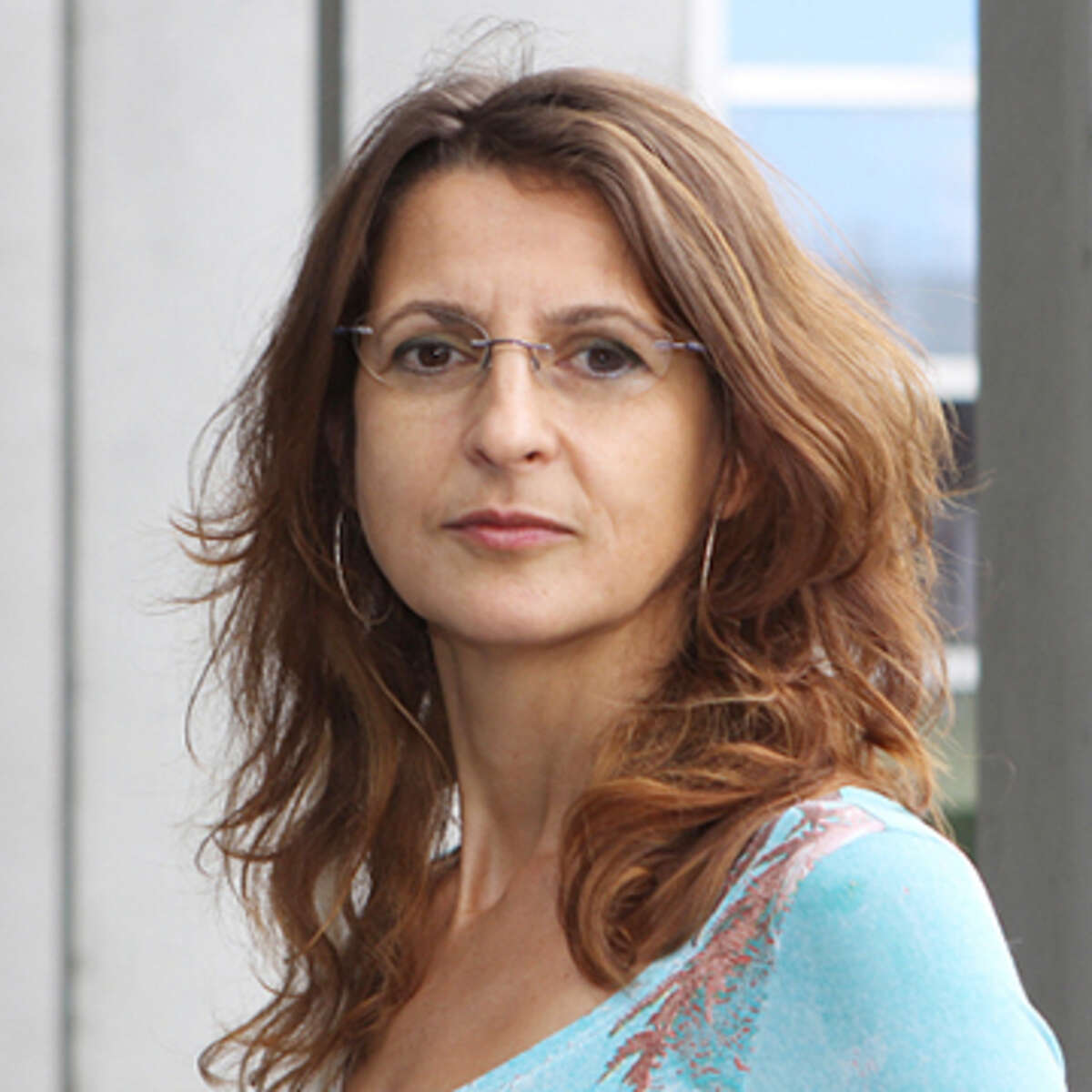
Oliver Kröcher is an Adjunct Professor at the École Polytechnique Fédérale de Lausanne (EPFL) within the School of Basic Sciences (SB) , specifically in the Institute of Chemical Sciences and Engineering (ISIC) and the SCGC-ENS group. His research focuses on heterogeneous catalysis for environmental and energy applications, including emission control, NOx and N2O abatement, methane oxidation, and CO2 utilization. He also contributes to educational initiatives, such as Catalysis for emission control and energy processes .
Harm-Anton Klok is a Full Professor at the Swiss Federal Institute of Technology Lausanne (EPFL) , affiliated with the School of Engineering (STI) and the Institute of Materials (IMX) . He actively contributes to teaching programs in Materials Science and Engineering, Chemistry, and Chemical Engineering, while leading the Polymers Laboratory. Email: harm-anton.klok@epfl.ch Main office: MXD 112, EPFL, Lausanne Research Interests: His work focuses on polymer design at the nanoscale , biologically-inspired polymers , and precision polymerization . The laboratory employs a bottom-up approach to develop advanced materials for optics, electronics, and medicine, emphasizing structure-property relationships. Key methods include controlled/living polymerization and automated synthesis, with characterization via scattering and microscopy. Scientific Recognition: Recognized as a Rising Star in polymer science by ACS Polymers Au in 2023 and 2022, highlighting his influence in materials research. Academic Contributions: He mentors numerous current and former PhD students and leads interdisciplinary teaching initiatives. His research spans polymer self-assembly, mechanochemistry, and biofunctional surfaces, with significant publication output in high-impact journals.
Prof. Dr. Mihaela Zavolan is a Professor in Computational Biology/Genomics at the Biozentrum, University of Basel since 2014, where she leads her research group investigating gene expression regulation. She is also a group leader at the SIB Swiss Institute of Bioinformatics since 2003, combining computational approaches with biological insights to understand RNA processing and protein synthesis mechanisms. Dr. Zavolan earned her MD from the University of Medicine and Pharmacy of Timisoara, Romania (1992), followed by an M.Sc. (1996) and PhD (1999) in Computer Science from the University of New Mexico. Her interdisciplinary background bridges medicine, computer science, and molecular biology, enabling her unique approach to systems biology problems. Her research focuses on understanding how gene expression is regulated during stem cell differentiation, aging, and cancer development. Using a systems biology approach, her lab develops and applies computational methods to measure RNA, protein, and variant amounts across different cell types. They investigate mRNA variants and protein synthesis adaptation under various conditions, with particular interest in identifying cell-type specific biomarkers for age-related diseases and cancer. Analysis of her recent publications reveals a consistent focus on RNA processing mechanisms, particularly polyadenylation, translation dynamics, and the development of computational tools for RNA-seq analysis. Her work spans from fundamental molecular mechanisms to cancer applications, with increasing emphasis on single-cell technologies and multi-omics integration in recent years. Fellow of the International Society for Computational Biology (2024) Elected member of the European Molecular Biology Organization (EMBO) (2015) Appointed member of the Academia Europaea (2014) Scientific Advisory Committee, European Molecular Biology Laboratory (EMBL) (since 2018) As an editorial board member for journals including PLOS Genetics, Cells, Bioinformatics, RNA, and Genome Biology, Dr. Zavolan actively contributes to the scientific community. Her lab at the Biozentrum develops computational methods to measure RNA and protein variants across tissues and cell types, using computer models to identify regulatory signals and factors. The Zavolan Lab maintains strong collaborations with the Swiss Institute of Bioinformatics and participates in major research networks including the NCCR RNA & Disease.
Prof. Dr. Jasmin Wandel serves as a Professor at Bern University of Applied Sciences within the School of Engineering and Computer Science. Her academic profile combines teaching responsibilities in engineering disciplines with active research in biomechanics and medical engineering applications. Her educational background includes a 2013 PhD dissertation on statistical methods for extreme value analysis in Gaussian processes, establishing her foundation in quantitative research methodologies. This statistical expertise informs her interdisciplinary approach to engineering problems. Professor Wandel's research program centers on biomechanical analysis of bone structures and medical device optimization . Key focus areas include: Computational modeling of fracture mechanics using finite element analysis Thermal management in surgical robotics and bone drilling procedures Biomechanical characterization of bone-implant interfaces Statistical methods for medical engineering data analysis Her work bridges theoretical engineering principles with clinical applications, particularly in orthopedics. Analysis of her publication trends (2013-2019) reveals consistent output in high-impact biomechanics journals, with increasing focus on clinically applicable research. The majority of her work involves collaborative projects with University of Bern researchers, demonstrating strong institutional partnerships in the Swiss medical engineering ecosystem. While specific awards aren't documented in available sources, her publication record in journals like Bone and Medical Engineering & Physics indicates peer recognition of her contributions to biomechanical research. Professor Wandel maintains active supervision of master's students at BFH, with research projects typically involving computational modeling and experimental validation. Her collaborations with University of Bern and industry partners like SVGW provide students with access to clinical datasets and real-world engineering challenges. Current research appears funded through institutional partnerships and applied research grants typical of Swiss Universities of Applied Sciences. Based at the Burgdorf campus, Professor Wandel contributes to BFH's strategic focus on Humane Digital Transformation through her work in medical robotics and computational biomechanics, integrating engineering solutions with human-centered healthcare applications.