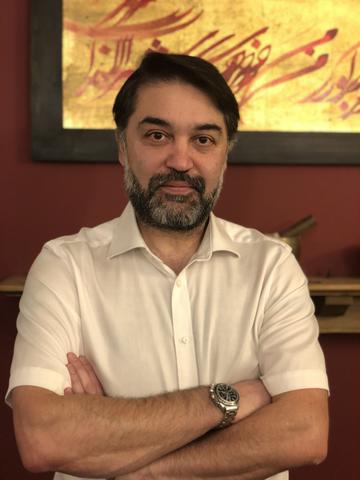
Arash Zeini is a Bahari Research Fellow at the Faculty of Asian and Middle Eastern Studies, University of Oxford, specializing in pre-Islamic Iranian cultures and languages with a focus on Zoroastrianism and late antique exegesis of the Avesta. His research interests span: Zoroastrianism and its scholastic traditions Religious culture of the Sasanian era Middle Persian administrative documents and philology Digital humanities applications in Iranian studies Decipherment of documentary Middle Persian texts Analysis of his 15 most recent publications reveals a cohesive scholarly trajectory centered on Zoroastrian exegesis (Zand), Sasanian-era religious thought, and textual analysis of Middle Persian documents. His work consistently bridges philology, religious studies, and historical linguistics, with increasing emphasis on digital methodologies and collaborative editorial projects. Key scientific recognition includes: Election as Fellow of the Royal Historical Society (2025) AIS Book Prize for Ancient Iranian Studies (2022) for Zoroastrian Scholasticism in Late Antiquity Zeini co-edits the open-access journal Berkeley Working Papers in Middle Iranian Philology and founded the bibliographic resource Bibliographia Iranica (2015). His editorial work includes Festschrift volumes honoring Dieter Weber (2024) and François de Blois (2021), demonstrating leadership in fostering scholarly collaboration within Iranian studies.
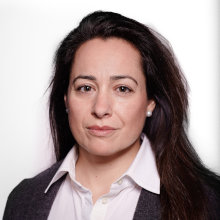
Laura Nadal Sanchis is an Associate Professor at the Department of Comparative Linguistic and Cultural Studies , Ca' Foscari University of Venice . She specializes in Spanish discourse markers , experimental linguistics , and inclusive language studies through cognitive and pragmatic approaches. Linguistics Translation Studies Cognitive Science Language Education Her research focuses on cognitive processing of linguistic elements in Spanish, including anaphoric encapsulation , discourse coherence , and gender-inclusive language effects . She employs experimental methods and eye-tracking technology to analyze these phenomena in L1 and L2 speakers. Current publications highlight her work on discourse markers in Romance languages , cross-linguistic analysis , and educational applications through CLIL methodology and translator training . While specific awards aren't listed, her extensive publication record demonstrates significant contributions to experimental linguistics and discourse analysis .
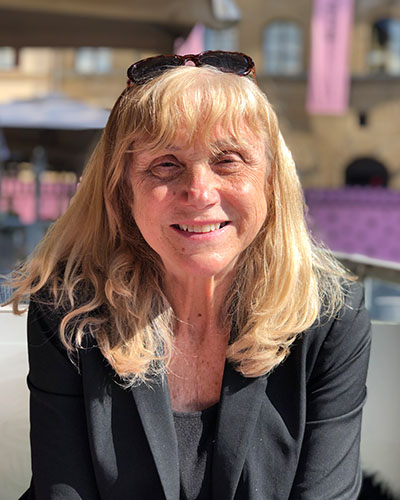
Dr. Bridget Drinka is a Professor in the Department of English at the University of Texas at San Antonio's College of Liberal and Fine Arts (COLFA), where she has served since 1991. She holds a Ph.D. in Indo-European and historical linguistics from the University of Texas at Austin, an M.S. from Georgetown University, and a B.A. from the University of Illinois at Urbana-Champaign. Her research focuses on sociolinguistic motivations for language change , contact-driven linguistic innovation , and geographical diffusion of grammatical features across Indo-European languages. She is internationally recognized for her work on the periphrastic perfect and language contact phenomena, with interdisciplinary connections to digital humanities. Analysis of her publications reveals dominant themes in language contact mechanics , Indo-European syntax evolution , and areal linguistics , particularly examining tense systems in Dutch, Spanish, Greek, and Slavic languages. Her work frequently employs corpus-based methods and historical stratification frameworks. Awards and Honors: Leonard Bloomfield Book Award (2019) for Language Contact in Europe Chancellor’s Council Outstanding Teaching Award (1999) Richard S. Howe Outstanding Undergraduate Teaching Award (2016) Fulbright Senior Lectureship at Moscow State University (1998) She has held significant leadership roles including President of the International Society for Historical Linguistics (2015-2017), organizer of the International Conference on Historical Linguistics (2017), and current service on editorial boards for Edinburgh Studies in Historical Linguistics and Studi e Saggi Linguistici . As Co-Director of COLFA Semester in Urbino, she oversees international academic programs in Italy.
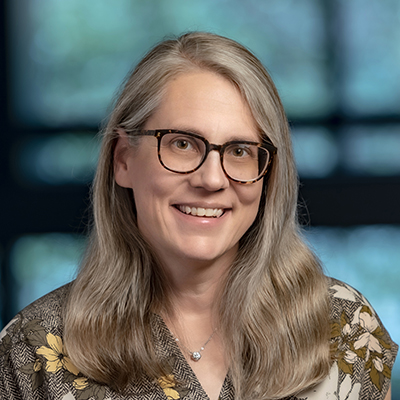
Stephanie Weirich is the ENIAC President's Distinguished Professor in the Department of Computer and Information Science at the University of Pennsylvania's School of Engineering and Applied Science. Her research focuses on programming languages, with emphasis on dependent types, formal verification, and functional programming semantics. She leads Penn's Programming Languages Group (PLClub) and teaches courses including Advanced Programming (CIS 5520) and Programming Languages and Techniques (CIS 120). Research Areas: Her work spans theoretical foundations and practical implementations, including type systems for security, mechanized program verification, cost analysis for lazy evaluation, and language-based techniques for probabilistic programming. Recent projects explore indistinguishability in dependent types and effects systems for resource-aware computation. Honors: SIGPLAN Robin Milner Young Researcher Award (2016) NSF CAREER Award (2004) Microsoft Outstanding Collaborator (2016) Most Influential Paper Award, ICFP (2016) DARPA Computer Science Study Panel (2007-2008) Advising: Mentored 15+ PhD graduates including Richard Eisenberg (2016 Reynolds Award winner) and Vilhelm Sjöberg. Current students work on stratified type theory and mechanized logical relations. Secured grants from NSF and DARPA for research in dependently typed systems. Collaborations: Leads the PLClub research group; collaborates with industry (Microsoft) on Haskell extensions and verification tools like Hs-to-Coq.
Dr. Elena Tribushinina is an Associate Professor at Utrecht University's Department of Languages, Literature and Communication , affiliated with the Institute for Language Sciences . Her expertise spans Child Multilingualism , Developmental Language Disorders , and Foreign Language Pedagogy , with a focus on educational interventions and cognitive mechanisms in language acquisition. Research Themes : Language Acquisition, Processing, and Disorders; Dynamics of Youth (DoY). Teaching : Courses in English Language and Culture (BA/MA), Multilingualism, and Topics in Language Acquisition. Her research investigates how bilingualism and language disorders interact in foreign language learning, using eye-tracking and intervention studies to differentiate between bilingual and DLD profiles. Recent projects include CodeTaal App for DLD children and support for Ukrainian refugee pupils. Key publication trends (2022–2025) reveal a focus on bilingual advantages , cross-linguistic transfer , connectives in discourse , and explicit instruction strategies for learners with DLD or dyslexia. She collaborates with institutions in Alberta , Antwerp , and Russia . She leads the research group Language Acquisition, Processing and Disorders and serves as Associate Editor for the Journal of Child Language . Her methodological toolkit includes eye-tracking , longitudinal studies , and meta-analyses of pedagogical interventions.
Mario Alviano is a Full Professor in Computer Science (INF/01) at the University of Calabria, Department of Mathematics and Computer Science. He leads the LAIA lab (Laboratorio di Applicazioni dell'Intelligenza Artificiale) and serves as co-PI in the PRIN project PRODE ('Probabilistic Declarative Process Mining'). Current projects: FAIR ('Future AI Research'), Tech4You ('Technologies for climate change adaptation'), SERICS ('SEcurity and RIghts in the CyberSpace'), CAL.HUB.RIA , RADIOAMICA , and STROKE 5.0 His research focuses on Answer Set Programming (ASP), particularly in optimization, nonmonotonic reasoning, and applications to logistics, healthcare, and cybersecurity. He has authored over 120 publications in top venues like AIJ, AAAI, and IJCAI. Recent academic contributions includes work on: Temporal Many-valued Conditional Logics Weighted Knowledge Bases with Typicality Explainable AI via xASP and ASP Chef Defeasible Reasoning Scalability Notable awards: Artificial Intelligence Award 'Marco Somalvico' (2017) ICLP Best Paper Awards (2015, 2016) LPNMR Best Paper Award (2022) CILC Best Paper Award (2023)
Nicolò Cesana-Arlotti is an Assistant Professor of Psychology at Yale University, with a Ph.D. from Pompeu Fabra University (2016). His work bridges developmental psychology, vision science, psycholinguistics, and philosophy to explore the origins of logical cognition in infants, children, and adults. Education: Ph.D., Pompeu Fabra University (2016). His research investigates how logical representations emerge in preverbal infants, their role in learning and decision-making, and the interface between language and non-linguistic cognition (e.g., vision). Key findings include evidence of logical reasoning in 12-month-olds and the developmental trajectory of disjunctive inference from infancy to adulthood. Recent publications highlight his focus on modal cognition, logical quantification, and the interaction between linguistic and perceptual systems. Studies span human infants, toddlers, adults, and non-human primates, revealing cross-species and developmental insights into logical frameworks. He employs innovative methods like pupillometry to measure cognitive engagement with alternative possibilities and examines how language acquisition shapes logical decision-making in preschoolers. His work has implications for understanding the cognitive architecture underlying human linguistic productivity and flexible learning.
Katalin É. KISS is a Research Professor at the Institute for Historical and Uralic Linguistics at Eötvös Loránd University and a distinguished member of the Hungarian Academy of Sciences. Her academic career spans over five decades with extensive contributions to the field of linguistics, particularly in syntactic theory, diachronic syntax, and Uralic languages research. She maintains an active research profile with numerous publications appearing through 2025. Professor KISS's research interests encompass syntactic theory, diachronic syntax, the syntax of Hungarian and Uralic languages, the evolution of finite subordination in Uralic, information structure, and the emergence of structural focus positions in Old Hungarian. Her work bridges theoretical linguistics with historical language change, demonstrating how grammatical structures evolve across centuries. She has made significant contributions to understanding the relationship between word order, information structure, and grammaticalization processes in Hungarian and related languages. Her recent publications reveal a consistent focus on diachronic syntactic change, particularly examining Hungarian dialects (especially Moldavian Hungarian), Uralic language comparison, and grammaticalization phenomena. The pattern across her work shows a sophisticated integration of theoretical syntax with historical linguistics, often drawing connections between seemingly disparate phenomena in language change. Her research frequently addresses how language contact influences grammatical development, with particular attention to Balkan linguistic influences on Hungarian varieties. Member of the Hungarian Academy of Sciences Professor KISS has been instrumental in establishing the Diachronic and Comparative Syntax Research Group at the Institute for Historical and Uralic Linguistics. Her work has significantly shaped Hungarian linguistic scholarship, including co-authoring the influential New Hungarian Grammar with Ferenc Kiefer and Péter Siptár. She has supervised numerous academic projects focused on documenting endangered Uralic languages and analyzing historical Hungarian texts. Her research continues to explore the intricate relationships between syntax, information structure, and historical change across language families. Professor KISS maintains strong connections with international linguistic communities through the Uralic Information Centre and has extensive collaborations with scholars across Europe. Her laboratory work focuses on comparative syntactic analysis of Uralic languages, with particular emphasis on documenting grammatical structures in endangered varieties. Current projects include the Hanti database (KhDB) and continued investigation into the evolution of focus and topic marking in Hungarian historical stages.
Margaret Lei is a Lecturer at the Department of Linguistics and Modern Languages at The Chinese University of Hong Kong . She holds a PhD in Linguistics and actively contributes to research in language acquisition, syntax, and the intersection of language and numerical cognition. Prior to her current position, she served as a Postdoctoral Fellow and Lab Manager at CUHK's Language Acquisition Laboratory and as a part-time lecturer at HKUST. BEng (Information Engineering) - CUHK PgDip (Psychology) - CUHK MA (Linguistics) - CUHK MPhil (Linguistics) - CUHK PhD (Linguistics) - CUHK Research Interests: Margaret specializes in first and second language acquisition , with particular focus on semantics and syntax in Chinese dialects. Her work explores: • Quantifier acquisition in Cantonese and Mandarin • Cardinal/ordinal number development in L1 Cantonese • Language's role in numerical cognition • Syntactic change in Hong Kong Cantonese • Early grammar in Shanghainese-speaking children • Quantifier scope and aspect interaction Scientific Contributions: Her publications demonstrate expertise in quantification theory , aspect interpretation , and tonal language acquisition . She has received special recognition through the Linguistic Society of Hong Kong's 2017 Outstanding PhD Thesis Award. 2017 : Linguistic Society of Hong Kong Outstanding PhD Thesis Award 2022 : CUHK Faculty of Arts Outstanding Teaching Award Teaching Portfolio: At CUHK, she teaches both postgraduate and undergraduate courses including: • Foundations in Language Acquisition (LING5103A/B/C) • Linguistic Argumentation (LING2007/2008) • Language Acquisition for Speech-Language-Pathology (SLPA5403) Her work extends to interdisciplinary collaboration with the Faculty of Medicine's Speech Therapy Division.
Dr. Caitlin Meyer is an Assistant Professor of Dutch Linguistics at the Faculty of Humanities, University of Amsterdam (UVA), specializing in language acquisition and theoretical linguistics. Her research focuses on syntactic development, numerical cognition, and pragmatic particle usage in Dutch, with significant contributions to understanding verb clusters and ordinal number acquisition. Education: PhD in Linguistics from UVA Research: Language acquisition, Dutch syntax, cognitive development, experimental linguistics Collaborations: Engaged with Leiden University Centre for Linguistics (LUCL) for interdisciplinary research Her recent publications analyze Dutch verb cluster acquisition (2015-2020), ordinal number learning strategies (2016-2021), and pragmatic particle development (2017). She employs experimental methods and cross-linguistic comparisons in her work, leveraging LUCL's Phonetics, EEG, and Eye-tracking labs. While no formal awards are listed in this dataset, her research has been published in key academic outlets. She contributes to teaching through formal programs at University of Amsterdam and participates in LUCL's educational initiatives.
Adele Goldberg is the Moses Taylor Pyne Professor of Psychology and Associate Chair at Princeton University. She leads the Psychology of Language Lab, where she conducts research on the usage-based constructionist approach to language, emphasizing emergent generalizations based on construction functions, input statistics, and domain-general cognitive processes. Dr. Goldberg's research spans construction grammar, language acquisition, metaphor processing, autism and language, neurolinguistics, and computational linguistics. Her groundbreaking work demonstrates that humans learn language through general cognitive processes rather than language-specific knowledge. She has shown that knowledge of language consists of form-function correspondences (constructions) and that conventional metaphors are more emotionally engaging than literal paraphrases, as evidenced by increased amygdala activation in fMRI studies. Her research on autism has revealed challenges faced by autistic individuals in language learning, particularly regarding flexible extension of word meanings and processing complex word meanings. She has extensively studied statistical preemption in language learning - how speakers learn to constrain generalizations based on the frequency of competing alternatives. Her work with Boyd demonstrated that younger children are less likely to generalize abstract constructions compared to older learners when exposed to the same input. Moses Taylor Pyne Professor of Psychology, Princeton University Associate Chair, Department of Psychology Director, Psychology of Language Lab Dr. Goldberg has mentored numerous students including Abby Fergus and collaborates extensively with researchers like Sammy Floyd, Arielle Belluck, and Karina Tachihara. Her recent work explores parallels between usage-based constructionist approaches and large language models, examining how both human and artificial systems learn from statistical patterns in language input.
Dr. Osamu Amazaki is a Senior Lecturer at the Centre for Language Studies, National University of Singapore (NUS), specializing in Japanese Language Education through the Department of Japanese Studies. With a PhD and MA in Linguistics from the State University of New York at Buffalo and an MA in Area Studies from the University of Tsukuba, Japan, his work bridges Functional Linguistics and foreign language pedagogy. PhD in Linguistics, SUNY Buffalo, USA MA in Linguistics, SUNY Buffalo, USA MA in Area Studies, University of Tsukuba, Japan His research focuses on leveraging Internet media for language learning, particularly through blog reading assignments to enhance authentic exposure and independent learning . He advocates for contextualized conversational exercises over mechanical drills to improve learners' sensitivity to speech styles and contextual cues. Recent publications include studies on Japanese numeral quantifier constructions and a 2008 report on Asian youth culture. His teaching philosophy emphasizes student motivation , self-reflection , and technology integration to create a relaxed yet effective classroom environment. Dr. Amazaki also explores how input size and type affect language memorization and reproduction, aiming to develop methodologies that foster long-term language proficiency and cultural engagement.
Dr. Kimon Krenz is a Senior Research Fellow at the Bartlett School of Architecture, University College London, where he works at the Space Syntax Laboratory. As a spatial data scientist and urban health researcher, his work focuses on the spatial determinants of health and inequality. He has developed novel methodologies to measure individual-level environmental exposures and link them to large-scale health datasets, resulting in internationally recognized publications. With over £9 million secured in research funding, he bridges architecture, urban planning, and public health through interdisciplinary collaboration. Doctorat, University College London (2018) Master of Science, University College London (2013) Bachelor of Science, University of Applied Sciences (2012) Recognized by the HEA as a Fellow (2017) Dr. Krenz's research centers on using computational methods to quantify and analyze the built environment to study how space shapes human behavior, particularly focusing on how spatial data science can uncover social, health, and spatial inequalities. His expertise lies in spatial data science and space syntax, with particular emphasis on advanced computational methods to analyze and model the built environment and its use. His work informs evidence-based planning and public health interventions, often working with cohort studies, primary and secondary health data, and in data anonymization and secure research environments. His research spans urban morphology, environmental exposure, network analysis, and the intersection of architecture with public health. Analysis of Dr. Krenz's recent publications reveals a consistent focus on the relationship between urban form and health outcomes. His work employs sophisticated spatial analysis techniques to measure environmental exposures across multiple domains including air quality, road traffic, greenness, public transport, food environment, and street centrality. He frequently works with the Born in Bradford cohort study, examining how spatial factors influence mental health, social isolation, childhood obesity, and common mental disorders. His methodological contributions include developing innovative approaches to measure individual-level environmental exposures and creating taxonomies of urban form. ATQ03 - Recognised by the HEA as a Fellow (2017) Dr. Krenz has extensive teaching experience since 2014 as a Course Coordinator, Tutor, and Teaching Fellow for MSc programmes at UCL, specializing in spatial analysis, GIS, and urban health. He has supervised student projects including field trips to Rio de Janeiro and Venice, with a focus on informal settlements. His research funding includes projects such as ActEarly – Healthy Places, Connected Bradford Health and Environment, Migrant Mobility and Access to Public Urban Resources, and the Urban Dynamics Lab. He combines a flipped classroom approach with active learning and real-world applications in his teaching methodology. Dr. Krenz leads and participates in the Space Syntax Laboratory seminars series and is actively involved in the Urban Dynamics Lab at UCL, which is part of a five-year EPSRC-funded research project exploring questions at the intersection of city and regional economic development and urban modeling.
Dr. Agnieszka Konopka is a Lecturer in the School of Psychology at the University of Aberdeen, where she conducts research and teaches while actively accepting PhD students for supervision. Her office is located in Room G33 of the William Guild Building on the University of Aberdeen campus. Her academic appointments include: Lecturer, School of Psychology, University of Aberdeen SONA and research participation coordinator Associate Editor, Journal of Experimental Psychology: General Editorial Board Member, Journal of Experimental Psychology: Learning, Memory, and Cognition Editorial Board Member, Applied Psycholinguistics Dr. Konopka's research focuses on the cognitive mechanisms underlying language production and memory for language. She investigates how speakers plan and formulate messages and sentences across different languages, examining incrementality and flexibility in message and sentence formulation. Her work also bridges bilingual sentence processing with reconstructive memory research to understand how language learning affects memory for linguistic information. Her research interests include: Language production and message formulation Sentence formulation and incrementality Cross-linguistic differences in language processing Linguistic diversity and bilingualism Syntax and memory for language Source memory and metacognition Her publication record shows a consistent trajectory of high-impact research in psycholinguistics and cognitive psychology, with recent work expanding into cross-cultural aspects of emotion recognition and social category influences on cognitive processes. She frequently employs eye-tracking and other experimental methodologies to examine the precise time-course of linguistic processing. Her teaching responsibilities include: Memory & Language Methodology B MRes programme instruction Dr. Konopka maintains an active presence in the academic community through her editorial roles and continues to advance research at the intersection of language, cognition, and social processes.
Drew Nobile serves as Associate Professor of Music Theory at the University of Oregon's School of Music and Dance. His academic appointments include previous faculty positions at the University of Chicago (2013–15) and Brooklyn College (2010–13). He earned his Ph.D. in Music Theory from CUNY Graduate Center in 2014, with additional degrees from University of Washington (M.A., 2009) and Brown University (Sc.B. in Mathematics and Music, 2007). Nobile specializes in the theory and analysis of popular music, with research focusing on rock and pop song structure, harmonic function, voice leading, and the relationship between vocal delivery and formal design. His work bridges traditional music theory with popular music studies, particularly examining how timbre, texture, and lyrical narrative interact with harmonic structures to create formal teleology in popular songs. He advocates for expanding music theory curricula beyond traditional Western art music canons. His publications include the award-winning monograph Form as Harmony in Rock Music (Oxford University Press, 2020), which received the Society for Music Theory's Emerging Scholar Award. Current research includes his NEH-funded second book project Voicing Form in Rock and Pop, 1991–2020 , analyzing vocal delivery's structural role in contemporary popular music. His articles appear in leading journals including Music Theory Spectrum , Journal of Music Theory , and Music Theory Online , where he serves as Associate Editor since November 2022. National Endowment for the Humanities Summer Stipend (2022) Society for Music Theory Emerging Scholar Book Award (2021) Adam Krims Award, SMT Popular Music Interest Group (2017) Oregon Humanities Center Faculty Research Fellowship (2022 & 2016) UO Faculty Research Award (2022 & 2017) Nobile is a dedicated pedagogue who has overhauled the first-year theory curriculum to be more inclusive regarding both repertoire and teaching methodologies. He implements progressive techniques such as ungrading, universal design, and peer instruction. His scholarly work demonstrates how structural listening reveals essential features of popular music that challenge simplistic notions about the genre's musical complexity.