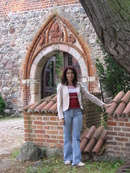
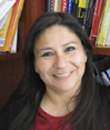
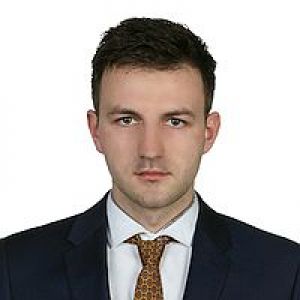
Dr. hab. Anna Bloch-Rozmej is an Assistant Professor at the Department of Applied Linguistics , Institute of Linguistics , within the Faculty of Humanities at the John Paul II Catholic University of Lublin . Her academic career spans theoretical and applied linguistics, with a focus on phonology, minority languages, and language acquisition. Research Interests: Theoretical phonology, contrastive phonology (Irish, English, Polish, German), minority languages (Vilamovian/Wilamowicean), second language acquisition, sociolinguistics. Teaching: English phonetics/phonology, TEFL, descriptive grammar, government phonology, sociolinguistics. Publications highlight her expertise in Government Phonology, Celtic linguistics, and Slavic phonological phenomena. Notable works include studies on Irish phonology (1998), Vilamovian sound systems (2015), and recent explorations of euphemisms (2023). Her research spans formal phonology, phonetic analysis, and educational applications. Administrative Roles: She has served as Head of Department since 2019, with prior terms from 2010–2014 and 2014–2019, indicating sustained leadership in academic governance.
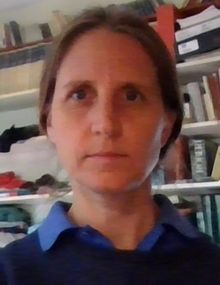
Dr hab. Cecylia Galilej is an assistant professor of Polish linguistics at the John Paul II Catholic University of Lublin , Faculty of Humanities, Institute of Linguistics, Department of Polish Language. Her scholarly profile centres on historical semantics, lexicography, and the linguistic analysis of 17th-century Polish agronomic and religious texts, alongside contemporary media discourse. Research interests span historical linguistics, corpus linguistics, dialectology, translation studies, and genre analysis. She focuses on: semantic relations in historical agrarian vocabulary (especially works of Jakub Kazimierz Haur); linguistic features of 17th-century Polish Christmas carols and pastoral literature; borrowing and translation issues between Polish and English; contemporary journalistic discourse, hyperbole, and headline construction. Awards & recognition: Individual Award II° (internal university prize) for outstanding scholarly achievement. Expert services & outreach: Repeated linguistic verification of volumes in the Roczniki Humanistyczne series (Corpus Linguistics and Translation Studies). Organiser of international conferences Termes et relations autour du pain (2017) and Termes et relations dans les textes spécialisés (2015). Workshop leader at the Academy of Young Humanists (Akademia Młodych Humanistów) introducing secondary-school students to linguistics. Author of popular-science articles and language-consultancy for regional cultural journals.
Xiangdong Xing is a Distinguished Professor and Changjiang Scholar at Shaanxi Normal University, leading the Language Resource Development Research Center. He holds a PhD from Shandong University (2000) and completed postdoctoral research at Nankai University (2000-2003). His research focuses on tone sandhi, Mandarin dialectology, and syntax-morphology interfaces, with over 100 publications and authored works on Shaanxi dialects. During April 2019, he participated in EHESS's Visiting Professors Program, delivering lectures on topics such as word tone dynamics, nominal diminutives, and Guanzhong dialect syntax-semantics. His work emphasizes methodological advancements in dialect surveys and typological studies of Mainland East Asia. Education: PhD, Shandong University (2000) Postdoctoral Research, Nankai University (2000-2003) Research interests include the interplay between lexical tone systems and morphosyntactic structures, particularly in Western Mandarin and Jin dialects. His recent work investigates reduplication patterns and their implications for nominal morphology. He has pioneered studies on deadjectival nouns in Guanzhong dialects, revealing their prosodic and syntactic functions. Recent lectures at EHESS highlighted advancements in understanding tone sandhi’s role in lexical and grammatical processes. These presentations contributed to broader discussions on areal typology in East Asian languages. Awards: Changjiang Scholar Xing heads research initiatives focusing on language resource development, integrating empirical fieldwork with theoretical linguistics. His current projects aim to refine methodologies for dialect documentation and comparative analysis.
Aude Rebotier is a Lecturer at the UFR Letters and Human Sciences of the University of Reims Champagne-Ardenne, where she also serves as Director of the Department of German Studies. She holds a Doctorate in Germanic Studies from Grenoble Alpes University (2005) and a Master's in automatic language processing from the same institution (2006). Her research focuses on linguistic aspects of time and temporality, aspectuality, and contrastive studies between German, French, and Italian. Her academic roles include heading the English-German course for the LEA degree and overseeing the LEA degree model. She teaches German language grammar, translation, and specialized computing applications in linguistics and digital humanities. Her publications emphasize cross-linguistic analysis of tense systems, grammaticalization processes, and temporal metaphors. Recent work explores narrative tense usage in French and Italian, participle agreement in French, and comparative studies of German and French perfect constructions. She contributes extensively to Romance languages research through studies in Revue de Sémantique et de Pragmatique , Textes et Contextes , and international linguistics collections. Rebotier has supervised numerous doctoral students within the CIRLEP research team, which includes 39 main researchers, 7 associate researchers, and 35 PhD candidates. Her work intersects cognitive linguistics, historical syntax, and computational language processing.
Milagros Fernández Pérez is a Professor at the University of Santiago de Compostela's Faculty of Philology, affiliated with the Department of Spanish Language and Literature, Theory of Literature and General Linguistics. She is a member of the Humanities Research Institute (iHUS) and the KOINÉ research group focused on interdisciplinary communication studies. Her doctoral thesis (1982) explored Chomskian generative-transformational grammar through a philosophy of science lens under Dr. Guillermo Rojo Sánchez's supervision. Her research interests span biolinguistics, clinical linguistics, child language development, and the intersection of language with cognitive and cultural factors. Key areas include corpus-based studies of child speech (Koiné Corpus), pragmatics in disordered language, and the application of linguistic theory to clinical contexts. She has published extensively on topics such as language acquisition mechanisms, interdisciplinary approaches to communication disorders, and theoretical linguistics' philosophical foundations. Her work bridges theoretical linguistics with applied domains, addressing language variation, sociolinguistic dynamics, and the methodological underpinnings of linguistic research. Recent publications (2025–2020) emphasize biolinguistics' role in understanding language evolution and the cognitive architecture of linguistic competence.
Vitor Miguez Rego is an Assistant Professor at the Department of Galician Philology, Faculty of Philology, University of Santiago de Compostela. He is affiliated with the Galician Language Institute (ILG) and the research group FILGA (Galician Philology and Linguistics). He holds a Doctorate from the University of Santiago de Compostela, awarded in 2021 for his thesis on epistemic modality in Galician adverbs. His research focuses on Galician grammar through corpus linguistics, emphasizing modality systems, syntactic alternations, and the interplay between grammar and pragmatics. Notable contributions include a monograph on epistemic adverbs in Galician (John Benjamins, 2024) and multifactorial analyses of mood alternations in adverbs of uncertainty. His work spans theoretical linguistics, historical semantics, and sociolinguistic aspects of Iberian language contact. Recent publications explore lexical frequency patterns in Galician corpora, diachronic changes in adverb semantics, and syntactic parameters in prepositional complements. He actively contributes to corpus development projects like CORGA and CORTEGAL, advancing tools for linguistic analysis in Galician and beyond.
Elena Gaspar Garcia is an Associate Professor in Hispanic Linguistics at the University of Rouen Normandy, affiliated with the UFR Letters and Human Sciences and the ERIAC research unit (UR 4705). Her research focuses on Spanish syntax, verbal and lexical aspect, prepositions, and the interaction between aspectual systems and discourse markers. She coordinates Erasmus exchange programs and has led teaching missions in Spain and Mexico. Dr. Gaspar Garcia is a member of the editorial board for the journal Epilogos and organized the 2015 Colloquium on Ibero-Romance Linguistics. Her work bridges historical linguistics with contemporary language analysis, particularly examining diachronic changes in Spanish syntax and pragmatic constraints in verbal periphrasis. Doctor of Hispanic Linguistics (qualified for MCF position) Erasmus coordinator for Romance Studies and LEA departments (2016–2020) Head of L3 Spanish program (2016–2020) Her research group participates in projects like the Rouen Ethnolinguistics Project and the Eulalia Latin linguistic assessment initiative. Notable contributions include editing the 2017 volume Time, Mode and Aspect in Spanish and analyzing the polysemy of lexical items like cojones in sociolinguistic contexts. She has been a certified CLES evaluator since 2018 and has contributed to DELE preparation materials for advanced learners.
Jill Jegerski is an Associate Professor in the Departments of Spanish and Portuguese and Linguistics at the University of Illinois at Urbana-Champaign. Her research focuses on second language acquisition, bilingualism, and psycholinguistic methods, with a specialization in Spanish as a heritage language and heritage speaker processing. Jegerski holds a Ph.D. from the University of Illinois at Chicago, alongside an M.A. and B.S. from the same institution and University of Illinois at Urbana-Champaign, respectively. Her work employs experimental techniques like self-paced reading, eye-tracking, and ERPs to investigate real-time language processing. Key themes include verb morphology, syntactic case marking, and relative clause attachment in heritage and L2 Spanish speakers. Jegerski has collaborated on studies exploring the psycholinguistics of heritage languages, including contributions to the Cambridge Handbook of Heritage Languages and Linguistics (2022). Her publications analyze how heritage speakers process morphosyntactic features like differential object marking and subjunctive mood, often contrasting their performance with monolingual and advanced L2 learners. Jegerski’s research highlights the cognitive mechanisms underlying bilingual language representation and the impact of language attrition or incomplete acquisition in heritage contexts. Jegerski frequently presents invited talks on heritage language processing, case marking, and experimental methods in psycholinguistics. Her work bridges theoretical SLA frameworks (e.g., Krashen’s input hypothesis) with empirical evidence from real-time processing experiments, offering insights into both linguistic competence and communicative proficiency.
Jolanta Klimek-Grądzka , Professor at the John Paul II Catholic University of Lublin , is a leading scholar in Historical Linguistics with a focus on Polish borderlands language and historical stylistics . Her work spans language corpora , religious texts , and digital humanities , particularly in archival research and historical editing . As Deputy Dean for Student Affairs at the Faculty of Humanities, she bridges academic administration with scholarly rigor. Research Pillars : Kyiv Polish dialects, Orthodox linguistic traditions, historical semantics, and sociolects. Editorial Role : Secretary of the editorial board for the journal Roczniki Humanistyczne . Academic Engagement : Regular office hours via MS Teams on Tuesdays and Fridays (12:00–13:00). Her publications emphasize 17th-century Polish , including analysis of aorist forms , interconfessional dialogues , and linguistic borrowings . She contributes to digital edition planning of historical texts like the Archiwum filomatów and Żołtarz Psalter . While no scientific awards are listed, her impact on Polish language heritage is profound through over 15 recent articles (2024–2009) that explore language contact zones , religious-political rhetoric , and Baroque stylistic varieties . Her work bridges manuscript studies with modern linguistic theory , making her a key figure in Polish historical language research .
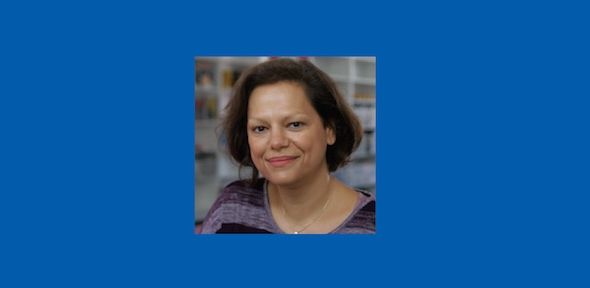
Professor Ianthi Maria Tsimpli is the Chair of English and Applied Linguistics at the University of Cambridge , affiliated with the Faculty of Modern and Medieval Languages and Linguistics and the Department of Theoretical and Applied Linguistics . She co-founded the Language Development Lab at Aristotle University of Thessaloniki and has held academic positions at University College London, University of Newcastle-upon-Tyne, and University of Reading. Her educational background includes a BA in Modern Greek Literature and Byzantine Studies from the University of Athens and a PhD in Linguistics from University College London (1992), with her thesis published as Functional Categories and Maturation: The Prefunctional Stage of Language Acquisition (Garland, 1996). Research Interests: Language development in first and second languages, bilingualism, language disorders, language-cognition interaction, syntax, and literacy. Projects: ESRC-DFID Multilingualism and Multiliteracy (India), EU/NSRF-funded THALES (bilingualism effects on cognition), and Excellence I (individual differences in anaphora resolution). Scientific Awards: Guest of the Rector Fellowship (2012, NIAS). She has published extensively on topics like bilingual children’s narratives, L1 attrition in heritage speakers, and language processing in Broca’s aphasia. Her editorial roles include Associate Editor of Lingua and Editorial Board memberships in journals such as Bilingualism: Language and Cognition and Second Language Research . She welcomes MPhil and PhD inquiries related to her research areas.
Dr. Pilar Valenzuela is a Professor in the Department of World Languages and Cultures at Wilkinson College of Arts, Humanities, and Social Sciences , Chapman University. Her work focuses on Panoan and Kawapanan languages of the Peruvian Amazon, including Shiwilu (Jebero) and Amahuaca , with expertise in linguistic typology, phonology, morphosyntax, and language revitalization . Education: Pontifical Catholic University of Peru (BA in Hispanic Linguistics & Literature, Diploma in Anthropology) University of Oregon (MA and PhD in Linguistics) Research Highlights: She has published three books and numerous articles on synchronic and historical syntax , verb borrowing , and ethnobiological taxonomies . Her PhD dissertation on Shipibo-Konibo grammar won the Mary R. Haas Book Award . Awards & Grants: Recipient of the Wang-Fradkin Professorship (2006-2008) and a National Science Foundation grant (DEL BCS-0853285) for documenting Kawapanan languages. In 2012, she received the Global Engagement Research Award from Chapman University. Teaching: Offers courses in Spanish linguistics, advanced grammar, and documenting Shiwilu , a critically endangered language. Collaborates with Chapman undergraduate students on creating a trilingual (Shiwilu-Spanish-English) dictionary . Publications: Recent work explores lexical tone in Amahuaca , temporal constructions , and body-part terminology in Pano-Takana languages.
Ken Safir is a Distinguished Professor in the Department of Linguistics at Rutgers University, within the School of Arts and Sciences. His research centers on syntactic theory, binding, and the syntax of African and Germanic languages. He leads the Afranaph Project, an NSF-funded initiative to document anaphoric phenomena in African languages. Research Interests: His work focuses on the architecture of syntactic theory, anaphora and dependency, clausal complementation, movement, and the morphosyntax of understudied languages. He is especially known for his contributions to binding theory and the analysis of reciprocal and reflexive constructions in Bantu and other Niger-Congo languages. The most recent publications show a sustained focus on anaphora, phase theory, clausal selection, and morphosyntactic variation in African languages. His work combines formal syntactic theory with rich empirical data from fieldwork, often resulting in detailed grammar sketches and technical reports. The Afranaph Project has produced a comprehensive database and numerous open-access resources. NSF Grant BCS-0919086 (Afranaph Project) NSF Grant BCS-0523102 (Afranaph Project) Distinguished Professor Title (Rutgers University) Ken Safir has advised and collaborated with numerous graduate students and researchers, particularly in African linguistics. His work has been supported by continuous NSF funding, reflecting its significance in the field. He has contributed to major theoretical debates in generative grammar and has published extensively in top-tier journals. The Afranaph Project, under his leadership, maintains a robust infrastructure for linguistic data, including case files, questionnaires, and technical reports, serving as a vital resource for researchers worldwide.
Kimberly Swanson is an Associate Professor of French at the University of Kansas. She serves as the French Language Program Director and oversees Graduate Teaching Assistant training. Her work extends to the Language Training Center, providing military-focused language and culture education. Education: Ph.D. in French Linguistics and General Linguistics, Indiana University M.A. in French Linguistics, Indiana University B.A. in International Studies and French, Hamline University Professor Swanson’s research focuses on French linguistics, phonology/phonetics, and historical evolution of French. Her pedagogical work bridges SLA theory with classroom practice, emphasizing phonological acquisition, constraint demotion, and cultural integration in language learning. Her publications highlight trends in French pedagogy, including interactive digital resources, textbook supplements, and theoretical studies on phonology and syntax. These works reflect interdisciplinary approaches combining linguistics, cognitive theory, and educational technology. Scientific Awards: KU Cramer Professorship for 2009-2011 KU Cramer Award for excellence in teaching and research (2008) Outstanding Woman Educator, KU Emily Taylor Woman’s Resource Center (2011) Professor Swanson supervises Graduate Teaching Assistants and lecturers in elementary French instruction. Current projects include Quel accent?! (a book with KU’s Open Language Resource Center) and studies on L2 acquisition of palatalization and constraint hierarchy processing in French/English interlanguage. She collaborates with teams in the French Language Program and Language Training Center, integrating research into military and academic language instruction frameworks.
William J. Hanna is a Part-Time Lecturer in Linguistics at Gordon College, affiliated with the School of Humanities and Social Sciences. He has been teaching Sociolinguistics since 2020. With 36 years of experience in Thailand, he previously taught linguistics at two universities there and contributed to Bible translation projects for minority languages. Education: B.A. in Cultural Anthropology, Lehigh University M.A. in Linguistics, University of Texas at Arlington His research centers on the syntax and morphology of Southeast Asian languages, particularly Tai Lue (Dai Lue). His work includes lexicography, language documentation, and the study of numeral classifiers and expressive forms. He emphasizes the linguistic structures of understudied languages and their cultural contexts. Hanna's recent publications show a strong trend in language documentation and lexicography, especially for the Tai Lue language. His work spans dictionaries, syntactic analysis, and digital language resources, reflecting a commitment to preserving and analyzing minority languages of Southeast Asia. Scientific Awards: No awards listed in the provided text. William J. Hanna has not advised any named students in the provided information and there is no mention of grants. However, his long-term engagement in linguistic fieldwork and collaborative translation projects suggests informal mentorship and project-based funding, particularly in applied and community linguistics. He is associated with digital language documentation efforts, particularly through the Webonary platform, and has worked with teams of pastors on translation, indicating collaboration in community-based linguistic teams focused on minority language development.
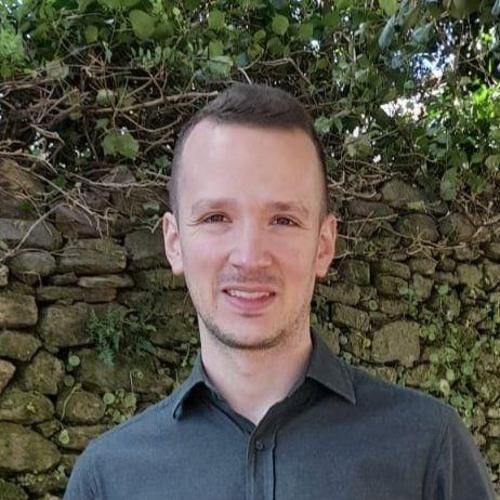
Krzysztof Hwaszcz is a Postdoc (Adiunkt – stażysta podoktorski) at the Faculty of English, Adam Mickiewicz University (UAM), Poznań, Poland. He holds a Ph.D. in Linguistics with distinction from the University of Wrocław (2020), and has interdisciplinary training with degrees in English Philology and Mechanical Engineering. Education: B.A. in English Philology, Legnica, 2013 M.A. in English Philology, Wrocław, 2015 Eng. in Mechanical Engineering, Wrocław, 2016 Ph.D. in Linguistics (with distinction), Wrocław, 2020 His research centers on experimental and corpus-based linguistics, with a focus on the syntax-semantics interface, compound word processing, psycholinguistics, and second/third language acquisition. He investigates how syntactic and semantic components interact in language processing, particularly in Polish and bilingual contexts. His work combines cognitive experiments, priming studies, and corpus analysis to explore the mental lexicon and language representation. The recent publications reflect a strong trend in psycholinguistic experimentation, especially in the processing of compound words, semantic transparency, and hemispheric asymmetries in bilinguals. His work bridges theoretical syntax with cognitive science, using empirical data from reaction time and priming tasks. Topics include figurative language, indefinite articles in Slavic languages, and cerebral lateralization in L1/L2 processing. Scientific Grants and Projects: Principal Investigator, 2018–2019: 'Syntactic and semantic components of experimentally elicited compound blends in Polish' (FNP) Principal Investigator, 2016–2018: 'The numeral jeden as an indefinite article: A corpus-based study in Polish' (FNP) Principal Investigator, 2017–2018: 'The role of semantic transparency in the processing of Polish compound words' (FNP) Principal Investigator, 2016–2018: 'The representation and organization of the mental lexicon in the processing of Polish compound words' (FNP) Co-Investigator, 2022–2024: 'Across-Domain Investigations in Multilingualism (ADIM)', NCN GRIEG-1 (PI: Magdalena Wrembel) Co-Investigator, 2018–2019: 'Cerebral asymmetries in the processing of compounds in L1 and L2' (PI: Hanna Kędzierska) He has not advised any students listed in the provided text but has actively collaborated on research with scholars such as Hanna Kędzierska and Joanna Bożek. He has presented his work at numerous international conferences, including the University of Vienna (invited talk), ISMBS, and the European Conference on Formal Description of Slavic Languages. He is associated with research teams ADIM and CLIMAD, indicating ongoing collaborative projects in multilingualism and cognitive linguistics. Labs and Research Teams: He is affiliated with the ADIM (Across-Domain Investigations in Multilingualism) and CLIMAD research groups, which focus on experimental and corpus-based studies of multilingual cognition and language processing.