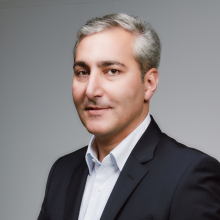
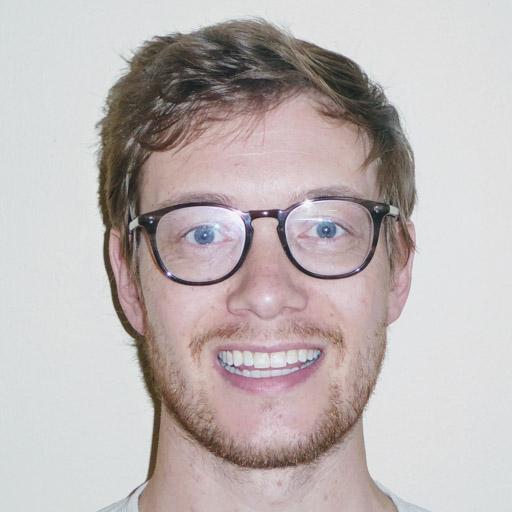
Dr. Fatih Nayebi is a Faculty Lecturer in Information Systems at McGill University while also serving as Vice President of Data & AI at the ALDO Group. He bridges academic research with enterprise innovation, focusing on data science, machine learning, and AI systems. Academic Background: Ph.D. in Computer Engineering from École de technologie supérieure M.Sc. in Software Engineering from Boğaziçi University B.Sc. in Computer Engineering from Boğaziçi University Dr. Nayebi's research interests include: Information Systems Data Science Machine Learning Engineering & MLOps Deep Learning Agentic AI Human-Computer Interaction AI in Retail His recent publications focus on AI for retail, mathematical foundations of AI, information integrity in democratic systems, and best practices for technical documentation. Dr. Nayebi also teaches graduate courses at McGill University including: Enterprise Data Science Machine Learning in Production Introduction to AI and Deep Learning Applications and Architectures of Deep Learning Designing and Developing Agentic AI Systems As an active speaker and thought leader, Dr. Nayebi has participated in events such as: World Summit AI Americas RETHINK Retail NRF Nexus 2025 Supply Chain Research Forum JOPT2025 - Annual Conference of Optimization Days He is also the founder of Gradient Divergence, an advisory studio focused on advanced AI solutions for retail and consumer brands.
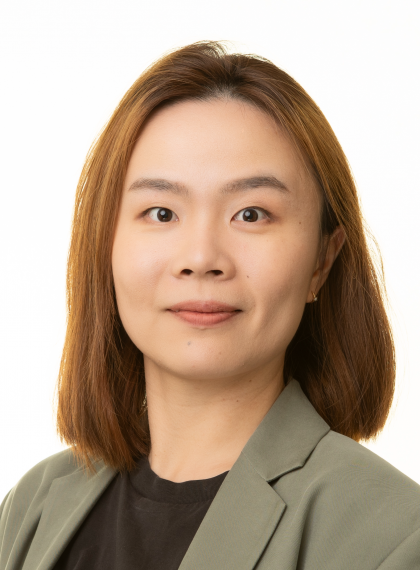
Zhao Zhao is an Assistant Professor at the School of Computer Science, University of Guelph. Her work focuses on wearable systems, human-robot interaction, and gamification for health and education. She holds a PhD from Carleton University (2019) and completed a postdoctoral fellowship at the University of Toronto (2019–2023) before roles at McMaster University and her current position. Education includes a BSc in Computer Science from University of Electronic Science and Technology of China (2011), MSc from Carleton University (2014), and PhD in Electrical and Computer Engineering (2019). Research interests span physiological computing, AI-assisted creativity tools, and adaptive systems leveraging wearable sensors. Key research areas include: 1) Wearable-based gamification for health and education, 2) Emotion sensing via physiological signals, and 3) Human-robot interaction enhanced by wearable data. Her lab uses Empatica EmbracePlus wristbands and Emotiv EEG headsets to analyze real-time physiological responses in diverse interaction scenarios. Recent publications (2020–2025) emphasize personalized exergame systems, child-robot interaction studies, and AI linguistic competency analysis. She actively seeks graduate students and industry partnerships in wearable technology, education tech, and HRI.
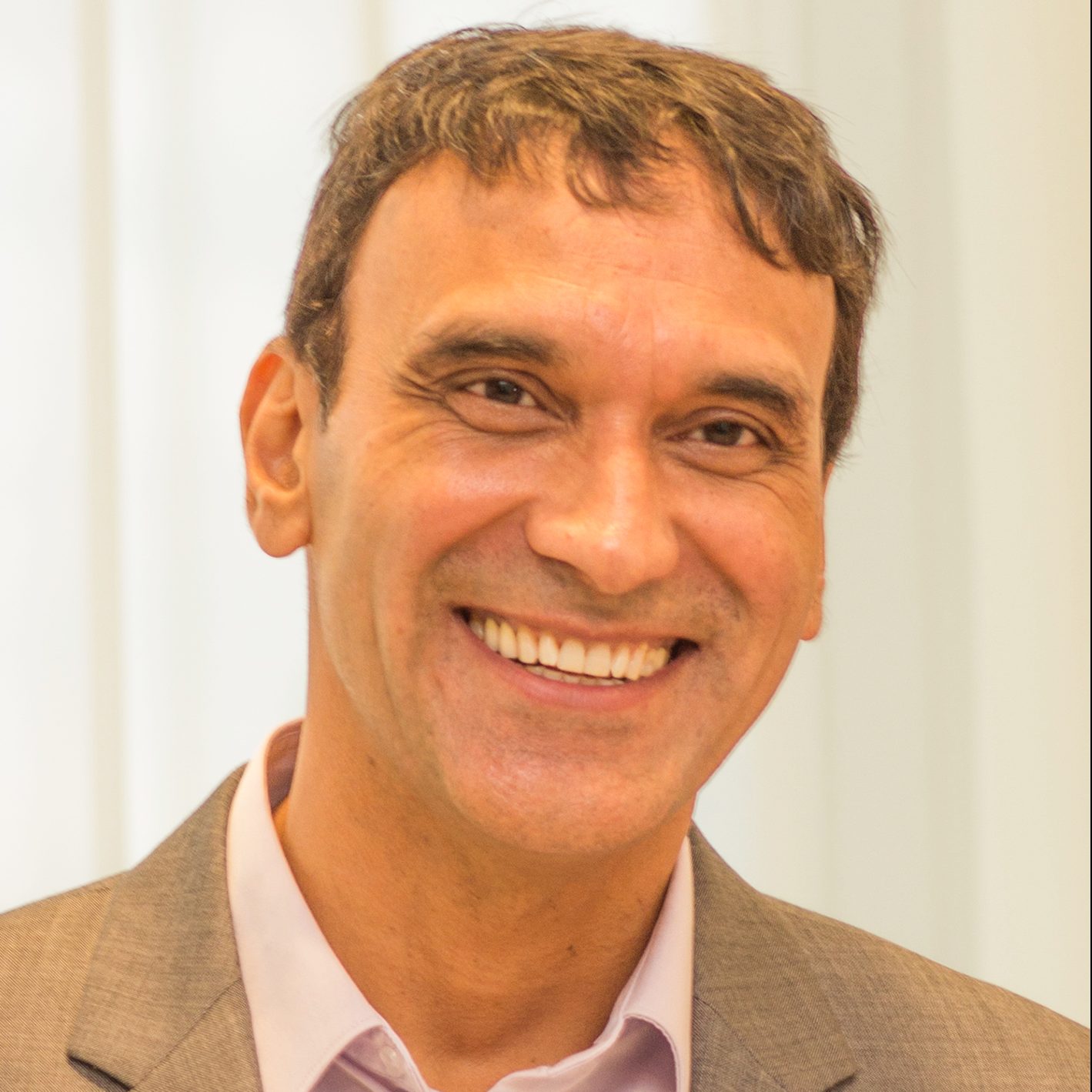
Roie Levin is an Assistant Professor at Rutgers University's Department of Computer Science. He received his PhD in Algorithms, Combinatorics and Optimization from Carnegie Mellon University in 2022, advised by Anupam Gupta. Prior to that, he worked at the Allen Institute for Artificial Intelligence (2015-2017) and earned dual BSc degrees in Computer Science/Applied Mathematics and Mathematics from Brown University (2015). Before joining Rutgers, he was a Fulbright Postdoctoral Fellow at Tel Aviv University under Niv Buchbinder. Current Role: Assistant Professor in Computer Science Academic Training: PhD (2022) CMU, BSc (2015) Brown University Postdoctoral: Fulbright Fellow at Tel Aviv University Levin's research focuses on approximation algorithms for uncertain environments (online/dynamic/streaming models) and submodular function optimization. His work spans theoretical foundations and practical implementations across distributed systems, geometric constraints, and reinforcement learning paradigms. Teaching includes graduate and undergraduate algorithms courses (CS 344, CS 513) with emphasis on problem-solving techniques, computational complexity, and modern algorithmic trends. His publications showcase expertise in online algorithms, submodular optimization, and approximation theory with applications in clustering, caching, and machine learning. The 2025 articles demonstrate continued exploration of online consistency and contention resolution, while 2023-2024 works focus on submodular optimization under uncertainty and dynamic environments. Earlier publications (2015-2017) cover semantic parsing, geometric approximation, and planar graph optimization. Fulbright Postdoctoral Fellow Levin's research connects theoretical guarantees with practical implementations, bridging classical algorithm design with modern machine learning applications. His recent work explores primal-dual methods in online settings and robust subspace approximation techniques for streaming data environments.
Rainier Grutman is a Full Professor of French and Translation Studies at the University of Ottawa, holding a cross-appointment in the Department of French and the School of Translation & Interpretation within the Faculty of Arts. Trained in Romance philology and Comparative Literature at Namur, Leuven, and Madrid universities, he completed his Ph.D. in French Studies at the University of Montreal in 1994. In 2022, he was elected to the prestigious Academy of Europe (Academia Europaea), class of 'Humanities,' section 'Literary and Theatrical Studies.' His educational background includes: Ph.D. in French Studies from Université de Montréal (1994) Romance and Hispanic philology from Universidad Complutense de Madrid (1989) M. Phil. in French and Romance Literatures from KU Leuven (1988) Teacher certification for upper-level high school from KU Leuven (1988) B. Phil. in French and Romance Literatures from Université de Namur (1986) Grutman's research primarily focuses on multilingualism in literature, self-translation, and translation studies, with particular attention to bilingual writers and multilingual texts. His work spans comparative literature, sociolinguistics, and postcolonial theory, examining how language functions within literary contexts across different cultural settings including Belgium, Canada, Spain, and Italy. He has made significant contributions to understanding how writers navigate multiple languages in their creative work and how these multilingual texts are translated and received by diverse audiences. His scholarly output reveals a consistent focus on self-translation as both a literary phenomenon and cultural practice. His research demonstrates how self-translation functions as a negotiation between languages and cultures, often revealing power dynamics between linguistic communities. Grutman's work frequently examines the intersection of language, identity, and power in literary contexts, with particular attention to how writers position themselves within multilingual frameworks. His most recent publications (2020-2024) continue this trajectory with studies on code-switching in literature, multilingual readership, and transatlantic self-translation practices. His major scholarly recognitions include: Gabrielle-Roy prize for Canadian literary criticism (for 'Des langues qui résonnent') Election to the Academy of Europe (Academia Europaea) in 2022 Grutman has supervised numerous graduate students and collaborated extensively with scholars internationally. His work has been supported by various research grants that have enabled him to explore multilingual writing across different cultural contexts. He has edited special journal issues and co-authored significant reference works in translation studies, including the French version of H. Van Gorp's 'Lexicon van literaire termen' and the comprehensive 'Histoire de la littérature belge.' His teaching at the University of Ottawa includes advanced courses on literary poetics, intertextuality, sociocriticism, and comparative literature with a focus on multilingual writing and self-translation. He maintains active research collaborations with institutions in Belgium, Spain, and Italy, reflecting his international scholarly network and the transnational nature of his research interests in multilingual literature and translation.
Guillaume Thomas is an Associate Professor in the Department of Linguistics at the University of Toronto. His research focuses on the study of meaning (semantics and pragmatics) in relation to morphosyntactic structures, particularly in Mbyá Guaraní, a Tupí-Guaraní language spoken in Argentina, Brazil, and Paraguay. He combines corpus linguistics and digital methods with fieldwork, developing resources like dependency treebanks and morphological analyzers. His work includes language documentation projects, such as the National Inventory of the Cultural Heritage of the Guaranis in Brazil, which involved community-based documentation of oral traditions. His research interests also encompass usage-based approaches, probabilistic models in language analysis, and the interface between semantics and syntax. Education: PhD in Linguistics from the Massachusetts Institute of Technology (MIT). Research Interests: Cross-linguistic semantics and pragmatics Morphosyntax and its interface with meaning Language documentation and digital linguistics Corpus-based methods and computational tools for endangered languages Funding: Supported by grants from the Social Sciences and Humanities Research Council of Canada and the Connaught Fund. His work integrates theoretical linguistics with practical applications in language preservation and computational modeling. Labs/Teams: He collaborates with the Indigenous Museum of Rio de Janeiro on documentation projects and contributes to the Universal Dependencies project for syntactic annotation.
Emily Elfner is Associate Professor in the Department of Languages, Literatures and Linguistics at York University, specializing in phonological interfaces. Education includes: PhD, University of Massachusetts Amherst MA, University of Calgary BA, University of Calgary Research investigates prosodic structures in endangered languages, particularly Kwak'wala phonology and Irish syntax-prosody interactions. SSHRC-funded fieldwork documents Kwak'wala intonation patterns. Publications demonstrate consistent focus on prosodic systems across diverse languages including Breton, Irish, Inuktitut, and Tlingit. Recent works examine word-order constraints, morphological-prosodic mappings, and recursive phonological structures.
Sunil Bhatt is an Associate Professor of Teaching specializing in Hindi-Urdu language instruction within the Department of Asian Studies at the University of British Columbia's Faculty of Arts. With a background in Comparative Linguistics and experience teaching South Asian languages across multiple continents, he brings a unique perspective to language education. His research focuses on linguistics, particularly Hindi-Urdu language teaching, sociolinguistics, and language acquisition. He has published extensively on topics including honorifics in Hindi, bilingual situations in India, and the integration of Bollywood culture in language instruction. His work demonstrates a commitment to understanding the complex sociopolitical dimensions of language teaching in South Asian contexts. Bhatt's recent publications reveal a consistent focus on pedagogical approaches to Hindi-Urdu instruction, with emphasis on heritage learners, pandemic-era teaching adaptations, and the relationship between language and cultural identity. His research spans theoretical linguistics, applied language teaching, and sociolinguistic analysis of language communities. As an educator, he teaches foundational and advanced courses including Introductory Hindi-Urdu, Sufi and Bhakti Devotional Literatures, and Introduction to Hindi Film, demonstrating his integration of language instruction with cultural studies. His scholarly contributions extend beyond traditional publications to include textbooks, edited volumes, and digital learning resources that have significantly impacted Hindi-Urdu language pedagogy internationally.
Virendra Bhavsar is an Honorary Research Professor and Professor Emeritus in the Department of Computer Science at the University of New Brunswick (UNB). He holds a PhD in Computer Science and is affiliated with UNB's Fredericton campus, located in Gillin Hall GE109A. His research focuses on natural language processing (especially for Hindi and other Indian languages), cognitive informatics, distributed systems, and bioinformatics. Bhavsar has also contributed to projects involving virtual reality in education, parallel computing, and machine translation systems. Education: PhD in Computer Science Research Interests: Development of NLP tools for free-word-order languages Optimization of in-memory data processing systems on NUMA architectures Cognitive learning environments using virtual reality Tree-based parsing algorithms for linguistic analysis High-performance spatial and spatio-temporal data systems Recent Work Trends: His articles from 2017–2022 highlight advancements in Hindi language processing, distributed computing optimizations, and cognitive informatics applications. Notable areas include improving data skew resilience in hash joins and developing visualization systems for language learning. Awards: No specific scientific awards listed in available materials. Advising & Grants: No formal advisee list or grant details provided in current data. His collaborations include work on grid computing frameworks like GARUDA and HPGC initiatives. Labs/Teams: Involved in projects related to distributed in-memory systems (e.g., DISTIL) and cognitive informatics research groups.
Peter Rigby is an Associate Professor at Concordia University's Department of Computer Science and Software Engineering. His research focuses on software engineering practices, AI-driven development tools, test automation, and developer productivity. He has contributed to industry-scale studies at Meta, Chrome, and Ericsson, addressing challenges in code reviews, flaky tests, and release management. Rigby's work emphasizes empirical software engineering and organizational dynamics in large-scale systems. His research interests span AI-assisted coding, test prioritization, code quality, and developer collaboration. He has explored the integration of large language models (LLMs) into release deployment and SQL authoring, aiming to enhance productivity and reduce risks. His studies also address practical challenges like dead code removal and batch testing optimization. Rigby's articles highlight trends in leveraging statistical models and empirical data to improve software development workflows. His work at Meta and Chrome includes analyzing developer focus, workload management, and knowledge retention amid high turnover. The research consistently bridges theory with industrial applications, emphasizing real-world impact.
Megan Lukaniec is an Assistant Professor in the Department of Indigenous Studies at the University of Victoria. She holds a Ph.D. in Linguistics from the University of California, Santa Barbara, an M.A. in Linguistics and Anthropology from Université Laval, and a B.A. in Native American Studies and French from Dartmouth College. Her research focuses on Indigenous language reclamation and revitalization, particularly through archival documentation of the Wendat language, which has been dormant for over 150 years. She has been actively collaborating with her community in Wendake, Quebec, since 2006 to revive this language. Her work also explores language contact, change, and lexicography, complemented by teaching interests in Indigenous languages and their reclamation. Her publications emphasize leveraging archival materials for language revitalization, data management in linguistic documentation, and second language acquisition in Indigenous contexts. She has contributed to edited volumes such as The Handbook of Languages and Linguistics of North America and The Open Handbook of Linguistic Data Management , alongside a 2016 study on Huron/Wendat-Seneca language interactions. While no scientific awards are listed, her research has notable implications for community-driven language preservation efforts. Megan’s advising and grants narrative remains unspecified, as no formal advisees or grant details are provided in the text. Her scholarly contributions are deeply tied to her community engagement, reflecting her commitment to relational responsibility and applied linguistic practices.
Azita Hojatollah Taleghani is an Associate Professor in the Teaching Stream of Linguistics at Language Studies, University of Toronto. She focuses on Persian language, literature, and linguistics, with cross-appointments in the Department of Near & Middle Eastern Civilizations. Education: PhD, Linguistics, University of Arizona MA, Linguistics, University of Arizona MA, General Linguistics, Tehran University BA, English Language and Translation, Tehran University Her research spans second-language and heritage speakers' pedagogy, Persian syntax/morphology, stylistic analysis of Persian women poets, and digital language teaching. Her publications explore theoretical linguistics, Persian second language acquisition, and the intersection of poetic techniques with linguistic processes. Key trends in her work include generative approaches to Persian tense structures, the role of archaism in poetry, and comparative studies of linguistic modules. She has contributed extensively to Persian syntax, aspect, and pedagogical frameworks.
Karim Achab serves as a Part-time Professor in the Department of Linguistics within the Faculty of Arts at the University of Ottawa, holding dual teaching responsibilities in linguistics and French as a Second Language. His research centers on Amazigh studies with deep expertise in Tamazight (Berber, Kabyle, Tuareg) linguistics, spanning syntax, morphology, and lexical semantics. He maintains a strong focus on North African geopolitics alongside broader interests in bilingualism, language contact, heritage languages, dialectal variation, minority languages, and second-language pedagogy. His multilingual capabilities in French, English, Tamazight varieties, Hungarian, and Spanish directly inform his interdisciplinary approach to linguistic diversity. While the source text confirms his active faculty status and research domains, it does not specify details regarding student advising, grant funding, laboratory affiliations, or collaborative research teams. No information about scientific awards or publications was provided in this institutional profile.
Ana Teresa Pérez-Leroux is a Professor of Spanish and Linguistics and Chair of the Department of Spanish and Portuguese at the University of Toronto . She also serves as Director of the Cognitive Science Program. Her research focuses on child language acquisition, bilingualism, and Spanish syntax, with an emphasis on understanding how children learn complex grammatical structures. She holds a PhD in Hispanic Linguistics from the University of Massachusetts Amherst. Key affiliations include the Faculty of Arts and Science , where she has been a professor since 2009, and leadership roles such as Chair of Spanish and Portuguese (2019–present) and Director of Cognitive Science (2014–2019). Earlier roles include Visiting Professorships at the Federal University of Rio de Janeiro and Michigan State University. Research Interests : Her work investigates syntactic and semantic development in monolingual and bilingual children, particularly recursion in noun phrases, clitic usage, and tense/mood systems. Recent projects include SSHRC-funded studies on noun phrase complexity ($158,848, 2014–2018), revealing insights into recursive structures across languages like Japanese, German, French, Spanish, and English. Grants and Collaborations : Co-PI on SSHRC Insight Grant exploring recursive embedding in children. Collaborators include Susana Bejar, Diane Massam, and Yves Roberge. Supervises over 20 graduate students and has published extensively in Bilingualism: Language and Cognition , Linguistics , and Language . Education : PhD in Hispanic Linguistics (1993), MA in Spanish & Linguistics (1992), both from UMass Amherst. BA in Modern Languages (1983) from Universidad Autónoma de Santo Domingo.
Chengnian Sun is an Associate Professor at the University of Waterloo's David R. Cheriton School of Computer Science. He holds a Ph.D. from the National University of Singapore (2013). His research focuses on software engineering, emphasizing software reliability, security, and developer productivity. His work spans compiler testing, program analysis, cybersecurity, and programming language tools. Key research trends include leveraging large language models (LLMs) for compiler testing and program reduction, probabilistic debugging techniques, and enhancing software security against ransomware and fuzzing attacks. His contributions address challenges in program simplification, fault localization, and vulnerability detection. Notable projects include frameworks like Perses (syntax-guided program reduction), T-Rec (language-agnostic program reduction), and tools like AddressWatcher for memory leak detection. His work bridges theoretical advancements with practical software engineering solutions. Chengnian advises on compiler reliability, cybersecurity, and developer productivity. His research has led to collaborations with industry on testing tools and security frameworks. He maintains an active lab focused on advancing software systems through rigorous analysis and innovation.
Robert Stainton is a Canadian philosopher and Distinguished University Professor at the Department of Philosophy, The University of Western Ontario since 2004. His work intersects philosophy of language, theoretical linguistics, and cognitive science. Education: BA (Glendon College, York University), PhD (MIT) Research areas: Syntax-semantics-pragmatics boundaries, metaphysical grounding of linguistic facts, clinical pragmatics (Autism communication deficits), history of philosophy of language Supervision: Philosophy of language, linguistics, epistemology, philosophy of mind Awards: Royal Society of Canada (2012) Grants: SSHRC Insight Grant for "Metaphysics and Epistemology of Languages" (2020s project with Christopher Viger) His recent publications focus on meaning pluralism, assertion theory, and historical analysis of language philosophy. His work bridges mainstream and clinical linguistic analysis. Award: Royal Society of Canada. The summary of publications shows expertise in language theory, pragmatics, and cognitive philosophy. He actively contributes to philosophy of language and linguistics through research grants and collaborations.