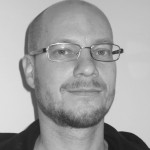
Fabio Del Prete is a Research Officer at the Cognition, Languages, Language, Ergonomics (CLLE) laboratory, affiliated with the University of Toulouse Jean Jaurès . His work bridges formal semantics, modal logic, and linguistic theory through rigorous analysis of natural language phenomena. Research Themes : Formal Semantics of Tense, Aspect, and Modality; Temporal Connectives; Scalar Approximation Adverbials; Modal Logic; Discourse Semantics; Event Concatenation Key Collaborations : Universitat Pompeu Fabra (Barcelona), Oxford University Press, Walter de Gruyter, CNRS Research Trends in his recent work include: Event concatenation in Sicilian verbal constructions Modal logic foundations for natural language semantics Cross-linguistic studies of temporal connectives Sign language temporal processing Italian polysemous adverbials Counterfactual conditionals in Romance languages Scientific Contributions include: Formal analysis of Sicilian Doubly Inflected Constructions Modal logic frameworks for temporal semantics Discourse presupposition models Experimental studies on temporal connectives Academic Activities span lectures at Universitat Pompeu Fabra, contributions to Genericity (Oxford University Press), and collaborative studies with leading institutions like ILLC Amsterdam and Institut Jean-Nicod.
Linda Ruth Wheeldon is a Professor of Experimental Linguistics at the Department of Foreign Languages and Translation, University of Agder, Norway. She leads the university's experimental linguistics research group and serves as PhD specialization leader for linguistics in the Faculty of Humanities and Education. Her academic journey includes positions at the University of Birmingham (Reader in Psycholinguistics, 2011; Associate Professor, 2000) and postdoctoral research at the Max Planck Institute for Psycholinguistics. PhD in Experimental Psycholinguistics (University of Cambridge, 1989) MSc in Psychology and Linguistics (University of Edinburgh, 1985) Research Focus : Her work bridges experimental psycholinguistics and theoretical linguistics, investigating language structure representation and its influence on comprehension/production. Current research examines how bilingualism and physical fitness mitigate age-related language decline. Methodologically, she employs reaction time studies, eye-tracking, and EEG/MEG neuroimaging to analyze sentence production, phonological representations, and morphological processing. Publications & Collaborations : With over 85 publications and 3,124 citations, her recent work explores bilingualism's impact on attention networks, fitness interventions for language comprehension, and neural mechanisms of syntactic binding. Collaborators include Sam Lucas (University of Birmingham) and Katrien Segaert (University of Birmingham). British Academy grant recipient Leverhulme Trust Fellow Laboratory : Leads the Experimental Linguistics Lab (ELL) at UiA, focusing on bilingual processing, aging, and cognitive-linguistic interactions.
Ümit Atlamaz is an Assistant Professor in the Department of Linguistics at Boğaziçi University, where he also serves as Deputy Department Head. His academic work spans theoretical morphosyntax and computational linguistics, with a focus on case theory, agreement phenomena, and computational approaches to linguistic analysis. Dr. Atlamaz received his academic training at prestigious institutions: PhD in Linguistics, Rutgers University, USA (2019) MA in Linguistics, Boğaziçi University, Turkey (2012) BA in Foreign Language Education, Boğaziçi University, Turkey (2009) His research expertise lies at the intersection of theoretical syntax and computational linguistics. Dr. Atlamaz investigates complex phenomena including case theory, differential object marking, agreement disruptions, and null arguments from a generative perspective. His computational work focuses on natural language inference, sentiment analysis, and ontological representations, particularly for Turkish and other languages. His theoretical work often examines challenging cases from Kurmanji, Laz, and Turkish to refine our understanding of syntactic principles. Dr. Atlamaz's publication record demonstrates a consistent trajectory from theoretical syntax toward increasingly computational approaches. While his earlier work focused on case and agreement phenomena in Kurdish and Caucasian languages, his recent publications show a growing emphasis on computational methods, including neural network approaches to morphological analysis and computational modeling of language change. His research bridges formal linguistic theory with practical computational applications. Dr. Atlamaz actively contributes to the academic community through teaching and collaboration. He teaches both undergraduate and graduate courses in syntax, semantics, and computational linguistics. He co-organizes the ST@BU (Syntactic Theory at Boğaziçi University) reading group, which focuses on advanced topics in syntactic theory. His collaborations span multiple institutions and include work with researchers at Facebook and Google on natural language processing projects. Dr. Atlamaz leads research projects including "Turkish Eksiltim" (Boğaziçi University Scientific Research Projects 19348) and participates in multiple collaborative research initiatives. He has presented his work at numerous international conferences and workshops, demonstrating active engagement with the global linguistics community.
Elena Guerzoni serves as Associate Professor in the Department of Linguistics at Boğaziçi University, where she advises MA and PhD students from her office in JF 305. Her academic foundation includes a Ph.D. in Linguistics from MIT (2003) and a Laurea in Philosophy from Università degli Studi di Milano (1997). Her educational background is reflected in her dual focus on formal linguistic theory and philosophical underpinnings of language. She has taught undergraduate courses including Introduction to Linguistics (Ling 101/111) and Semantics (Ling 305), alongside graduate seminars in Advanced Semantics (Ling 58C/V), Presupposition and Implicature (Ling 613), and Directed Readings in Linguistics (Ling 572/570/579). Guerzoni's research centers on the syntax-semantics-pragmatics interface, with pioneering work on negative polarity phenomena across languages. Her investigations into interrogative embedding predicates, presupposition projection in questions, and focus-sensitive particles like even have reshaped understanding of scalarity and exhaustivity. She examines how minimizer NPIs interact with question operators and why certain particles license negative polarity only in specific syntactic configurations. Analysis of her 13 publications (2000-2022) reveals consistent focus on negative polarity in interrogative contexts, with increasing attention to cross-linguistic variation and pragmatic strengthening mechanisms. Her work bridges formal theory with empirical data from Germanic, Romance, and Turkish, demonstrating how focus particles constrain interpretation in question-answer congruence. As an active contributor to linguistic discourse, she has delivered 15+ invited talks at institutions including MIT, UCLA, and Hebrew University, addressing topics like intervention effects in negative concord and the semantics of whether clauses. Her editorial work includes co-editing A Few from Building E39 (MIT Working Papers in Linguistics) and preparing You Can Ask Whatever You Want (Oxford University Press). No scientific awards are documented in the provided materials, though her publications appear in Q1 journals like Natural Language Semantics and Linguistics and Philosophy . She maintains active research through manuscripts on Turkish hani and Italian verb stress, continuing her investigation into the morphology-syntax-semantics interface.
Prof. Dr. Malte Zimmermann is a Full Professor of Semantics and Theory of Grammar at the Department of Linguistics, University of Potsdam. He is also a faculty and board member of the African Linguistics School (ALS), which biannually convenes in West African countries to advance formal linguistics knowledge among African scholars. His editorial roles include Associate Editor for Natural Language and Linguistic Theory and former Associate Editor for Linguistics and Philosophy . His educational background includes: Ph.D. in General Linguistics, Universiteit van Amsterdam (2002) M.A. in German Language and Linguistics/English/Anglistic/Philosophy, Universität zu Köln (1998) Abitur, Gymnasium Athenaeum, Stade/Niedersachsen (1989) Zimmermann's research centers on the interface between linguistic form and meaning, with specialization in formal semantics and grammar theory. His work spans quantification, tense, question semantics, discourse particles, and information structure, with particular emphasis on semantically under-researched West African languages (Chadic, Kwa, Grassfield Bantu). His research combines theoretical analysis with experimental methods, notably through projects like 'ExQ' examining embedded question interpretation across European and Non-European languages. He has led field research in Ghana, Cameroon, and Nigeria, challenging assumptions about language universals through empirical investigation of linguistic diversity. His publication trajectory reveals consistent focus on cross-linguistic semantic variation, particularly in focus interpretation, quantifier scope, and information structure phenomena. Recent work demonstrates growing integration of experimental methodologies with traditional formal approaches, with frequent comparisons between German, English, and diverse African languages. His investigations into serial verb constructions have been especially influential, uncovering hidden syntactic variability beneath surface similarities across languages like Akan and Igbo. As a supervisor, Zimmermann has guided numerous doctoral students to completion, with recent graduates including Giuliano Armenante (2024), Eva Shipova (2024), and Mareike Philipp (2023). His research has been supported by substantial funding including: SFB1287 Limits of Variability in Language, 'Limits of variability in interpretation' (2017-2021) SPP 1727 XPRAG.de, 'Exhaustiveness in embedded questions across languages' (2017-2020) SPP 1727 XPRAG.de, 'Exhaustivity in it-clefts' (2014-2017) DFG-Network 'Questions in Discourse' (2012-2016) SFB632 Information Structure projects (2007-2015) He leads the Potsdam semantics group (including Peter Sutton, Giuliano Armenante, Jeanne Lecavelier, Anna Struck, and Carla Bombi) which conducts fieldwork in West Africa. Currently, he co-directs the SFB-project on the 'Limits of Variability in Interpretation,' examining scope ambiguities, reconstruction, and bare NP interpretation across German, English, Akan, Igbo, and Medumba. His collaborative work with Edgar Onea (Graz) and Tatjana Scheffler exemplifies his commitment to bridging theoretical linguistics with empirical fieldwork and experimental validation.
Dr. Julie A. Van Dyke serves as Senior Research Scientist and Vice President of Research and Strategic Initiatives at Haskins Laboratories, an independent research institute affiliated with Yale University and the University of Connecticut. She holds adjunct professorships at McMaster University and the City University of New York Graduate Center while maintaining affiliate status at UConn's CT Institute for Brain and Cognitive Sciences. Her NIH-funded research investigates neurocognitive mechanisms underlying language comprehension and reading disorders. Her educational background includes: Ph.D. in Cognitive Psychology from University of Pittsburgh M.Sc. in Computational Linguistics from Carnegie Mellon University Honors B.A. in Computer Science and Linguistics from University of Delaware Dr. Van Dyke's research centers on cue-based retrieval theory, examining how retrieval interference causes comprehension failures in both normative processing and clinical populations (dyslexia, ADHD, age-related decline). She pioneered the application of speed-accuracy tradeoff methodology to diagnose direct-access retrieval mechanisms and investigates individual differences in eye-movement control during reading. Her work bridges cognitive theory with clinical applications through machine learning classifiers for reading disability and fixation-related brain imaging of word-by-word processing. Analysis of her recent publications reveals consistent focus on retrieval interference mechanisms across multiple methodologies: eye-tracking studies establish individual skill factors in oculomotor control, neuroimaging work identifies neural correlates of interference resolution, and machine learning approaches develop diagnostic classifiers. Key trends include the role of predictive timing in fluency disorders and dissociation between grammatical vs. semantic interference effects. Her scientific recognition includes: NIH/NICHD Institutional Post-doctoral National Research Service Award NIH/NICHD Individual Post-doctoral National Research Service Award Dr. Van Dyke actively shapes her field through editorial roles as Associate Editor for Journal of Experimental Psychology: General and Section Editor for Language and Linguistics Compass. Her NIH-funded grants support collaborative projects with researchers including Victor Kuperman, Luca Campanelli, and Clint Johns, focusing on retrieval interference, reading disability mechanisms, and neural underpinnings of comprehension. Current initiatives integrate computational linguistics with cognitive neuroscience to model real-time processing during reading. As Vice President at Haskins Laboratories, she leads a multidisciplinary team utilizing eye-tracking, EEG, fMRI, and machine learning to investigate language processing. Her lab collaborates with the CT Institute for Brain and Cognitive Sciences and maintains strong ties with UConn's neuroscience community, with ongoing data collection for fixation-related brain imaging studies.