Veska Dimitrova is an Associate Professor at the St. Cyril and St. Methodius University of Veliko Turnovo , affiliated with the Faculty of Modern Languages and Department of Romance Languages . Her academic career spans decades, focusing on French and Bulgarian linguistics, particularly phonetics, syntax, and functional grammar. Active in research projects like ALTA – Allophone Teacher Academy (2022–2025) and Science – a source of inspiration (2021–2022). Published extensively in Proceedings of University of Ruse and Proglas journal. Research Interests include: Phonetic variability in spoken French and Bulgarian. Functional substitution of vowels and consonants in oral language. Syntactic ellipsis and interrogative particles in French. Cross-linguistic comparisons of articulatory effort and sound patterns. Projects led by Veska Dimitrova aim to improve language education for allophones and enhance academic quality in French studies. She has contributed to international collaborations and cultural initiatives, including literary translations and conferences.
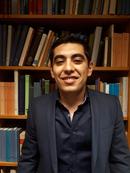
Richard W. Medina serves as a Lecturer of Hebrew and Jewish Studies in the Department of Religious Studies at the University of California, Santa Barbara (UCSB), College of Letters and Science. His academic office is located in HSSB 3074. Dr. Medina earned both his Master of Arts and Doctor of Philosophy degrees from the Hebrew University of Jerusalem, Israel, specializing in Hebrew Bible and Hebrew language studies. His doctoral dissertation, written in Hebrew, examined word order systems in Qumran Hebrew verbal clauses. His research focuses on: Wisdom Literature, particularly ritual of mourning and life-death representations Historical linguistics tracing semantic and syntactic changes from Classical Biblical Hebrew to Late Biblical Hebrew to Dead Sea Scrolls Hebrew Syntactic analysis of adverbial constructions and dependent clauses in Qumran manuscripts Dr. Medina's publications (2008-2019) demonstrate sustained scholarly engagement with the linguistic features of Second Temple period Hebrew, particularly in the Dead Sea Scrolls corpus. His work bridges linguistic precision with theological interpretation, revealing how syntactic evolution reflects broader cultural transformations in ancient Jewish communities. His notable contributions include analyses of 'together' adverbs in Dead Sea Scrolls Hebrew, comparative syntax in the War Scroll, and innovative spatial interpretations of life-death concepts in Proverbs and Job.
Daisuke Kawahara is a Professor at Waseda University's Faculty of Science and Engineering and a Visiting Professor at the National Institute of Informatics. He holds a PhD in Informatics from Kyoto University (2005) and has previously served as Associate Professor at Kyoto University and Senior Researcher at NICT. His research spans natural language processing, computational linguistics, and AI infrastructure. Education: Ph.D. in Informatics, Kyoto University (2005) Graduate Studies in Intelligent Informatics, Kyoto University (1999–2002) M.Eng. in Electronic & Communication Engineering, Kyoto University (1997–1999) B.Eng. in Electrical Engineering, Kyoto University (1993–1997) Research Focus: Kawahara specializes in NLP, including syntactic parsing, semantic role labeling, language resource development (e.g., JGLUE benchmark), and multilingual corpus construction. His work integrates machine learning with linguistic theory to improve text understanding systems, error correction tools, and dialogue agents. Publication Trends: His recent articles emphasize Japanese and Chinese NLP, neural network-based parsing, and practical applications like educational tools and pandemic information systems. Common themes include benchmarking, corpus annotation, and cross-lingual adaptation. Awards: 情報処理学会 自然言語処理研究会 優秀研究賞 (2025) 言語処理学会最優秀論文賞 (2024, 2023) 科学技術分野の文部科学大臣表彰 (2017) Multiple Best Paper Awards from NLP conferences (2000–2025) Projects & Advising: He leads JSPS-funded projects like Building General Language Understanding Infrastructure (2021–2025) and Acquisition of Knowledge Frames (2018–2021). No student advisees are listed. Labs & Teams: Collaborates with RIKEN Center for Advanced Intelligence Project and maintains ties to Kyoto University's NLP lab. Focuses on large-scale language modeling and collaborative AI-human intelligence frameworks.
Eran Yahav is an Associate Professor in the Computer Science Department at the Technion - Israel Institute of Technology. He previously served as a research staff member at IBM T.J. Watson Research Center from 2004 to 2010. His academic journey began with a B.Sc. from the Technion in 1996, followed by a Ph.D. from Tel Aviv University in 2005. Yahav's research focuses on program analysis, program synthesis, program verification, and machine learning for programming. His work bridges theoretical foundations with practical applications, particularly in developing techniques that help programmers work more effectively with complex frameworks and APIs. He has pioneered approaches that combine static analysis with machine learning to address challenges in code search, completion, and understanding. His recent work heavily intersects with neural network applications to programming tasks, demonstrating how deep learning can enhance traditional program analysis techniques. His publication record shows a clear evolution from traditional program analysis and verification toward integrating machine learning with programming language processing. The most recent articles reveal a strong focus on neural methods for code understanding, including structural language models, adversarial examples for code models, and neural approaches to binary analysis and program synthesis. This represents a significant shift toward leveraging AI techniques to solve longstanding problems in programming languages and software engineering. Yahav has received numerous accolades including the prestigious Alon Fellowship for Outstanding Young Researchers, the Andre Deloro Career Advancement Chair in Engineering, and an ERC Consolidator Grant. He also earned best paper awards at ISSTA 2006 and 2007. As an advisor, Yahav has mentored numerous Ph.D. and Master's students who have gone on to make significant contributions in academia and industry. His research has been supported by substantial grants, including the ERC Consolidator Grant. He also serves as CTO at Tabnine, demonstrating the practical impact of his research. Yahav leads multiple research projects including PRIME (Programming with Millions of Examples), Fender (Preserving Correctness under Weak Memory Models), Saint (Synthesis using Abstract Interpretation), and several others focused on program analysis, verification, and synthesis. His work often involves building practical tools that translate theoretical advances into usable software engineering solutions.
Nadia Polikarpova is an Associate Professor in the Computer Science and Engineering Department at the University of California, San Diego. She leads the Programming Systems group and serves as a member of IFIP Working Group 2.8 on Functional Programming since 2022. Her academic journey includes a PhD from ETH Zurich (Switzerland) under Bertrand Meyer's supervision in 2014, followed by postdoctoral work at MIT CSAIL with Armando Solar-Lezama. Her research interests center around program synthesis, program verification, and type systems, with a focus on building practical tools that enhance software security and reliability. Polikarpova's work bridges theoretical foundations with real-world applications, particularly in the emerging area of AI-assisted programming. Her recent publications demonstrate a strong trajectory in program synthesis techniques, with increasing integration of machine learning approaches. The research spans from foundational type-driven synthesis methods to practical applications for validating AI-generated code and synthesizing heap-manipulating programs. Her work frequently appears in top-tier programming languages venues including PLDI, POPL, ICFP, and OOPSLA. 2020 Sloan Fellow 2020 Intel Rising Stars Award 2020 NSF CAREER Award Distinguished paper awards at PLDI'21, ICFP'20, and POPL'19 Best paper award at FM'15 Polikarpova actively mentors PhD students and has advised numerous graduates who now work at Microsoft Research, University of Michigan, and various tech companies. She teaches core programming languages courses including CSE 130 and specialized graduate courses on program synthesis (CSE 291). Her service to the community includes program committee roles for major conferences and co-chairing the Haskell conference in 2022.
Ümit Atlamaz is an Assistant Professor in the Department of Linguistics at Boğaziçi University, where he also serves as Deputy Department Head. His academic work spans theoretical morphosyntax and computational linguistics, with a focus on case theory, agreement phenomena, and computational approaches to linguistic analysis. Dr. Atlamaz received his academic training at prestigious institutions: PhD in Linguistics, Rutgers University, USA (2019) MA in Linguistics, Boğaziçi University, Turkey (2012) BA in Foreign Language Education, Boğaziçi University, Turkey (2009) His research expertise lies at the intersection of theoretical syntax and computational linguistics. Dr. Atlamaz investigates complex phenomena including case theory, differential object marking, agreement disruptions, and null arguments from a generative perspective. His computational work focuses on natural language inference, sentiment analysis, and ontological representations, particularly for Turkish and other languages. His theoretical work often examines challenging cases from Kurmanji, Laz, and Turkish to refine our understanding of syntactic principles. Dr. Atlamaz's publication record demonstrates a consistent trajectory from theoretical syntax toward increasingly computational approaches. While his earlier work focused on case and agreement phenomena in Kurdish and Caucasian languages, his recent publications show a growing emphasis on computational methods, including neural network approaches to morphological analysis and computational modeling of language change. His research bridges formal linguistic theory with practical computational applications. Dr. Atlamaz actively contributes to the academic community through teaching and collaboration. He teaches both undergraduate and graduate courses in syntax, semantics, and computational linguistics. He co-organizes the ST@BU (Syntactic Theory at Boğaziçi University) reading group, which focuses on advanced topics in syntactic theory. His collaborations span multiple institutions and include work with researchers at Facebook and Google on natural language processing projects. Dr. Atlamaz leads research projects including "Turkish Eksiltim" (Boğaziçi University Scientific Research Projects 19348) and participates in multiple collaborative research initiatives. He has presented his work at numerous international conferences and workshops, demonstrating active engagement with the global linguistics community.
Mohammad Hamdaqa is an Associate Professor at the Department of Computer Engineering and Software Engineering at Polytechnique Montréal (Canada), where he leads the Software and Emerging Technologies Lab. He received his PhD in Software Engineering from the University of Waterloo in Canada in 2016 and holds multiple advanced degrees including a Master of Applied Science in Software Engineering and an MBA with a minor in Management Information Systems. His educational background includes: Ph.D. in Electrical and Computer Engineering, University of Waterloo, Canada Master in Electrical and Computer Engineering, Concordia University, Canada Master in Business Administration, New York Institute of Technology, USA Bachelor in Computer Engineering, Jordan University of Science and Technology, Jordan Dr. Hamdaqa's research focuses on the intersection of software engineering and emerging technologies. His work explores how software engineering approaches can be tailored to address the complexities of architecting, building, and deploying applications for new platforms like Cloud Computing and Blockchain. He is particularly interested in how emerging technologies can advance software creation, evolution, and management practices. His research spans model-driven software engineering, cloud computing, blockchain, and the application of AI in software development processes. His recent publications demonstrate a strong focus on smart contract security, infrastructure as code, model-driven engineering, and the application of large language models in software engineering tasks. His work bridges theoretical software engineering concepts with practical applications in cutting-edge technology domains, with particular emphasis on addressing security, sustainability, and maintainability challenges in next-generation software systems. Dr. Hamdaqa has received recognition through service on program committees for major software engineering conferences including ASE, ICSE, MODELS, and SANER. He serves on the editorial board of Service Transactions on Internet of Things and is a Member of the IEEE Computer Society and the Association for Computing Machinery. He has supervised multiple Master's students to completion, with recent theses focusing on OCL generation, smart contract auditing, epidemiological modeling, and infrastructure as code security. His current research group continues to explore innovative approaches at the intersection of software engineering and emerging technologies. Dr. Hamdaqa leads the Software and Emerging Technologies Lab at Polytechnique Montréal, which brings together researchers and students to investigate cutting-edge challenges in software engineering for new technology platforms. The lab focuses on practical solutions that balance theoretical rigor with real-world applicability.
Professor Jerzy Nawrocki is a distinguished academic at the Poznań University of Technology, where he serves in the Faculty of Computer Science and Telecommunications within the Institute of Computer Science. With a career spanning several decades since completing his doctoral dissertation in 1984 on 'Cost analysis of dynamic memory allocation in real-time systems,' he has established himself as a prominent researcher in software engineering. Professor Nawrocki's research primarily focuses on: Software Engineering methodologies and practices Requirements Engineering, particularly Non-functional Requirements Agile Software Development processes Use Case Analysis and specification Code Quality assessment and metrics Software Documentation quality models His recent work has examined task-specific code metrics, the application of Definition of Done in agile projects, and the maintenance of non-functional requirement templates. Professor Nawrocki has published extensively, with numerous articles in reputable journals such as IEEE Access, Journal of Systems and Software, and Information and Software Technology. Professor Nawrocki has supervised eight doctoral dissertations, mentoring researchers who have gone on to make their own contributions to the field of software engineering. His students include Sylwia Kopczyńska, Bartosz Alchimowicz, Jakub Jurkiewicz, and Mirosław Ochodek. His work demonstrates a consistent focus on empirical approaches to software engineering challenges, with many of his publications presenting empirical studies that validate or challenge existing practices in the field.
Robert Peter Ebert (b. 1944) is a Professor of Germanic Languages and Literatures at Princeton University, renowned for transformative leadership as Department Chair (1989-1999) and Director of the Program in Linguistics (1979-1985). His career spans the University of Chicago (Assistant Professor, 1972-1979) and UC Berkeley (Visiting Assistant Professor). His research redefined Germanic linguistics through sociolinguistic-historical synthesis. Key interests include: Historical syntax of German (1300-1750) Generative grammar applications Early New High German philology Interdisciplinary German studies Publications demonstrate evolution from generative grammar ( Infinitival Complement Constructions... , 1976) to interdisciplinary Frühneuhochdeutsche Grammatik . His work established foundational frameworks for analyzing medieval/modern German linguistic shifts. Awards include the Fulbright Fellowship (1966-1967). As an educator, he inspired graduate and undergraduate students through seminars in historical linguistics and thesis mentorship, embodying academic integrity.
Dr. Keshav Sood is a Senior Lecturer at Deakin University's School of Information Technology, where he leads research in cybersecurity, AI, and next-generation networks. His affiliations include roles as Graduate Research Coordinator and South Asia Country Coordinator. He completed his PhD at Deakin University and a post-doctoral fellowship at the University of Newcastle. Research Interests: Dr. Sood focuses on securing distributed systems, with emphasis on: Federated learning for intrusion detection in IoT/5G networks Biometric privacy in immersive technologies (VR/AR) RF fingerprinting for IoT device authentication Quantum-resistant software-defined networks Adversarial robustness in voice authentication systems His publications consistently explore AI-driven security frameworks, with recent work addressing data sparsity in IoT sensors, cross-domain IIoT authentication, and phishing mitigation using large language models. Awards: Professor of IT Award (2016) IEEE TNSE Excellent Reviewer (2023) Deakin HDR Supervision Award (2023) Course Team Award for Industry Certification Alignment (2021) Supervision & Grants: Dr. Sood currently advises 8 graduate researchers and has secured $655,313 in competitive funding. Key projects include: Smart Farming Cyber Resilience (DFAT Maitri Grant) Secure Access for Critical Infrastructure (Cyber CRC) IoT Data Integrity for Defense Systems (Australian Defence) He leads the Deakin Cyber Research and Innovation Centre, focusing on scalable security solutions for industry partners.
Dr. Berkan Sariaydin serves as Lecturer in the Department of Didactics of Ancient Languages within LMU Munich's Faculty of Languages and Literatures, while concurrently holding a Studienrat position at Wilhelmsgymnasium Munich. His dual academic-school roles focus on bridging classical philology with contemporary pedagogy through innovative multimedia approaches. His educational trajectory includes: MA-level studies in Latin, German and Philosophy at LMU Munich (2012-2018) First State Teaching Examination (2018) Doctoral degree from LMU Munich (2018-2024) Second State Teaching Examination (2024) Research centers on classical reception studies with emphasis on intermedial transformations of antiquity. His work analyzes how ancient narratives (particularly Virgil and Ovid) manifest in modern media like graphic novels and fantasy literature, while developing practical didactic frameworks for language instruction. Current projects explore mythological narratives as tools for addressing contemporary social challenges through the ERC-funded 'Modern Argonauts' initiative. His publication record shows consistent output since 2016, with increasing focus on methodological innovation in classical reception studies. Recent works demonstrate growing integration of multimedia analysis and pedagogical application, particularly in teacher training contexts. Award highlights include: Bavarian State Ministry award for exceptional teacher training (2024) German National Academic Foundation doctoral scholarship (2019) LMU's MZL Prize for academic excellence (2019) Germany Scholarship for undergraduate studies (2015) Grant involvement centers on the ERC Proof of Concept project 'The Modern Argonauts' at Warsaw University, where he develops multicultural educational programs using classical mythology. His teaching methodology emphasizes active student engagement with ancient texts through contemporary media adaptations. He actively contributes to academic discourse through LMU's 'Rejuvenated Antiquity' research seminar and international conferences, focusing on practical applications of classical studies in modern educational settings.
Frédéric Martin-Achard is a Senior Lecturer at Jean Monnet University's Faculty of Arts, Letters, and Languages, where he specializes in 20th-21st century French literature and stylistics. He holds leadership roles as Deputy Director of the ECLLA Laboratory, Director of the 'Lire au présent' book collection, and Co-director of the journal Voix contemporaines . His research examines contemporary narrative prose, linguistic imaginaries (inner speech, orality), irony, and literary representations of interiority. His publications focus on: Evolution of irony in French literature Stylistic analysis of authors like Annie Ernaux and Michel Houellebecq Theories of fictional characters and narrative techniques Active research projects include studying irony's transformation (1980-2020), popular language in novels, and shifts in literary theory. No awards or supervised students are mentioned in available texts.
Prof. Dr. Burak Beyhan is a Professor at the Faculty of Architecture, Department of Urban and Regional Planning, Muğla Sıtkı Koçman University. His academic journey includes: Education : Bachelor's in Urban and Regional Planning (Middle East Technical University, 1990–1996), MSc in Regional Planning (METU, 1996–1999), and PhD in Urban and Regional Planning (METU, 2000–2006). His research focuses on urban planning, GIS, regional development, and spatial analysis , with emphasis on historical cartography, socio-ecological resilience, and computational geospatial methods. He integrates open-source tools for spatial problem-solving. Publications (2011–2025) reveal trends in: Historical GIS and cultural memory revitalization. Urban morphology algorithms and open-source GIS tool development. Regional planning policy and sports-driven urban transformation in Turkey. Awards & Honors : ODTÜ Geliştirme Vakfı Book Award (2003) Young Social Scientists Award (Mansiyon, 2002) MFAY Incentive Award (2001) Prof. Dr. İlhan Tekeli MSc Thesis Award (1999) Supervision & Projects : Advised MSc theses on rural-industrial spatial organization and cultural planning. Led projects including: Development of campus spatial information systems (WEB-GIS). EU COST-A17 on SME regional development (2001–2005). TÜBİTAK-funded socio-economic change studies (2014–2016).
Martin Evlogiev is an Assistant Professor at the Department of Architectural Technology, Faculty of Architecture, University of Architecture, Civil Engineering and Geodesy (UACEG) in Sofia, Bulgaria. He has been teaching since April 2022, with previous experience as a part-time lecturer from February to April 2022. His teaching responsibilities include courses on computer technologies in architecture, building construction, and architectural structures for various year levels. Dr. Evlogiev received his architectural education at UACEG, Faculty of Architecture, where he completed his Master's degree in Architecture specialization with a focus on "Public Buildings" between 2009 and 2015. His earlier education includes attending secondary schools "Lev Nikolaevich Tolstoy" (1997-2004) and "Alexander Sergeyevich Pushkin" (2004-2009) in Sofia. He further enhanced his expertise with a Specialized Course in Cultural Heritage Conservation at Ecole de Chaillot from 2017 to 2019. Martin Evlogiev's research focuses on the intersection of architecture and advanced digital technologies. His work explores how artificial intelligence, building information modeling (BIM), and 3D visualization tools can transform architectural design processes and education. He investigates both the technical applications and ethical implications of these technologies in architectural practice. His research spans from practical software implementation challenges to broader questions about how digital tools reshape creative workflows and professional standards in architecture. His recent publications demonstrate a strong focus on artificial intelligence applications in architecture, with particular attention to visualization techniques, ethical considerations, and design automation. He also conducts research on educational aspects of technology adoption in architectural curricula and explores specialized applications of BIM and virtual reality in architectural practice. Dr. Evlogiev has received numerous awards and recognitions for his work: November 2024: Special Prize by Chaos for great contribution at AEC Hackathon in Sofia October 2022: Nomination in the "Computer Graphics" category at International Computer Art Forum "Computer Space" November 2020: Audience Award at Sixth national exhibition-competition for graduate thesis December 2019: First Prize in Logo Competition for the "Bulgarian Flying Disc Federation" September 2014: First prize as part of "Niconsult" team in Competition for the reconstruction of the monument "1300 years of Bulgaria" December 2013: Audience Award at Sofia Architectural Hall October 2013: First Prize in "Architecture" - Highest Architectural Potential Award at ArchHackathon April 2013: Special Award at Positive/Negative Competition May 2013: Third prize at "Keep caml & make DVOR" competition With extensive professional experience in architectural practice since 2013, Dr. Evlogiev brings real-world insights to his academic work. He has worked at firms including "Archont" (2019-2025), "Ivo Petrov Architects" (2015-2019), and "Niconsult" (2014-2015). His practical experience spans architectural design, computer-generated architecture, and internships at various architectural studios. He is also actively involved in research projects, including the "Sozopol 2021 Architectural Studio" analyzing the historic center of Sozopol. Dr. Evlogiev is a member of several professional organizations including CAB (with PPP), SAB ("SPA 15" Company, where he serves as Deputy Chairman), and BANHA. He is currently pursuing doctoral studies independently since 2025 and continues to develop his expertise in advanced architectural technologies.
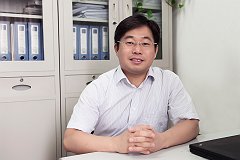
Chang-ai Sun is a full professor at the School of Computer and Communication Engineering, University of Science and Technology Beijing (USTB). He currently serves as Vice Dean of the Institute for Multidisciplinary Innovation (IMI), Head of the Department of Computer Science, and Director of the Software Engineering Institute at USTB. He received his bachelor's degree in computer science from the University of Science and Technology Beijing and his PhD in computer science from Beihang University, China. Prof. Sun's primary research focuses on software engineering with particular emphasis on software testing, program analysis, and service-oriented computing. Recently, he has been devoted to developing novel theories, techniques, and supporting tools for intelligent software development and maintenance. His work spans theoretical foundations to practical applications in software quality assurance, with increasing focus on AI-driven approaches to traditional software engineering challenges. His publication record shows consistent contributions to metamorphic testing, program repair, and the application of AI techniques to software engineering problems. Recent work explores the intersection of large language models and software testing methodologies, demonstrating both theoretical innovation and practical implementation. Prof. Sun has received significant recognition for his contributions: 11 national Software Prototype/Service Innovation Awards Senior Member of IEEE Distinguished Member of China Computer Federation (CCF) As principal investigator and major investigator, he has completed over 40 research projects funded by the European Union, Australia, China, and Hong Kong. His extensive grant portfolio demonstrates strong international collaboration and significant impact in the software engineering community. He actively mentors students and junior researchers through his leadership roles. Prof. Sun leads the Software Engineering Institute at USTB, where his team focuses on advancing research in software testing, program analysis, and intelligent software development tools. His leadership extends to departmental administration as Head of the Department of Computer Science, shaping curriculum and research directions for one of China's leading technical universities.