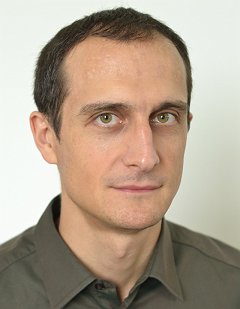
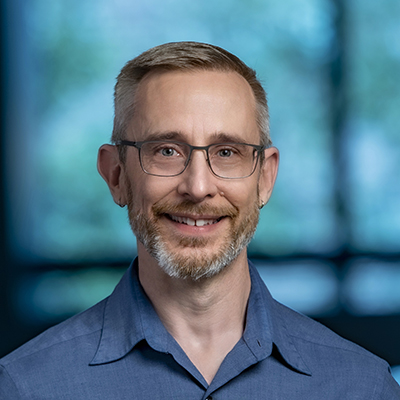
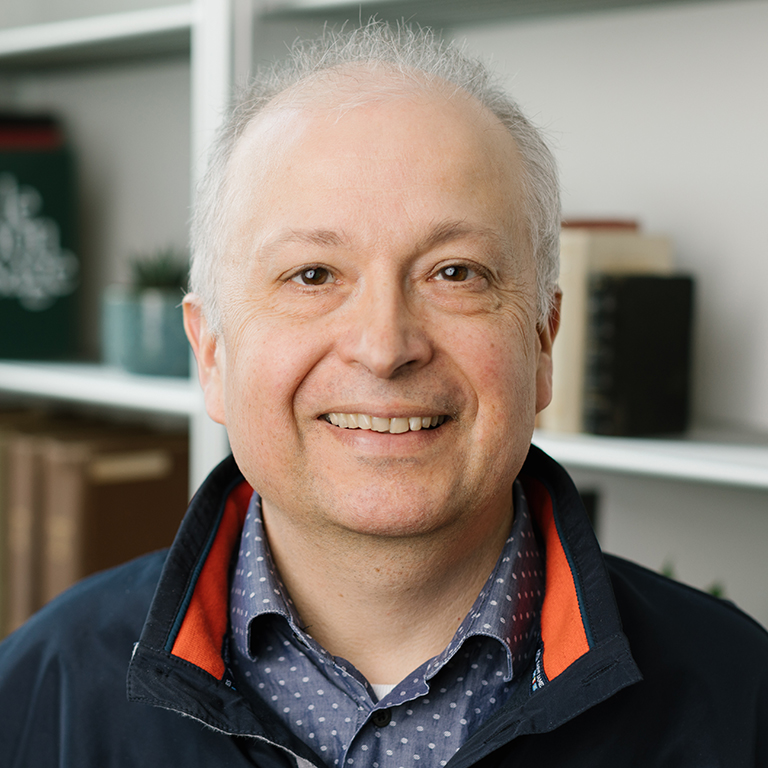
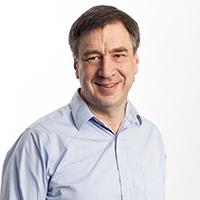
Steven T. Piantadosi is a Professor of Psychology at the University of California, Berkeley, and a member of the Helen Wills Neuroscience Institute. He leads the Computation and Language Lab (CoLaLa), focusing on computational and behavioral studies of language learning and conceptual systems. His work bridges cognitive science, linguistics, and neuroscience, emphasizing formal models and empirical methods. Piantadosi's research explores how humans acquire language, form concepts, and process numerical information. Notable contributions include studies on Amazonian indigenous communities' mathematical knowledge and critiques of Chomsky's linguistic theories. He also co-founded Science Homecoming, promoting scientist outreach to local media. He teaches courses like 'Compositionality' and 'Computational Cognitive Science,' and has conducted impactful legal advocacy, including a landmark lawsuit against the University of Rochester over sexual harassment policies. His open-source libraries (e.g., LOTlib3, kelpy) support cognitive science research.
Sylvain Schmitz is a Professor of Computer Science at Université Paris Cité, affiliated with the Institut de Recherche en Informatique Fondamentale (IRIF). He leads the automata and applications team and is a member of the modelling and verification team. His research focuses on logic, well quasi-orders, verification, formal languages, and database theory. He is actively involved in the academic community, serving on steering and program committees for major conferences such as STACS, LICS, and CSL. PhD in Computer Science, defended on September 24, 2007, at I3S Laboratory, Sophia Antipolis. Habilitation titled Algorithmic Complexity of Well-Quasi-Orders , defended on November 27, 2017, at ENS Paris-Saclay. His research interests span logic, well quasi-orders, verification, formal languages, database theory, theoretical computer science, complexity theory, program verification, automata theory, and model checking. His recent work explores complexity bounds in vector addition systems, reachability problems, and logical foundations of verification. His publications exhibit a strong focus on theoretical foundations of computation, particularly in the analysis of infinite-state systems, complexity hierarchies beyond elementary, and logical characterizations of computational problems. Key themes include well-structured transition systems, non-elementary complexity, and applications of ordinal analysis to verification. IUF junior (2018–2023) Sylvain Schmitz has supervised several PhD students, including Hector Buffière, Aliaume Lopez, Anthony Lick, and Simon Halfon, often in joint supervision with researchers such as Jean Goubault-Larrecq, David Baelde, and Philippe Schnoebelen. His research has been funded by multiple ANR projects including BraVAS, PRODAQ, ReacHard, and AVeriSS. He is a key member of the IRIF laboratory, contributing to research in automata, verification, and logic. He has organized major events such as ICALP 2022 and RP 2020, and is deeply involved in the European theoretical computer science community through committee memberships and conference organization.
Viktor Kunčak is an Associate Professor with tenure at the École Polytechnique Fédérale de Lausanne (EPFL) in the School of Computer and Communication Sciences. He leads the Laboratory for Automated Reasoning and Analysis (LARA) and has been at EPFL since 2007 after completing his PhD at the Massachusetts Institute of Technology (MIT). His educational background includes: PhD from Massachusetts Institute of Technology (MIT), 2007 Professor Kunčak's research focuses on bridging the gap between human goals and computational realizations through program synthesis , verification , and automated reasoning . His work has significant applications in software development, formal methods, and programming languages. He is particularly known for developing practical tools like Leon and Stainless that implement theoretical advances in automated reasoning. His recent publications demonstrate a consistent focus on advancing program synthesis techniques, verification frameworks, and formal methods. The research trajectory shows progression from foundational theoretical work to practical applications and tools that can be used by developers. Many papers focus on making verification and synthesis more accessible and efficient for real-world programming tasks. His notable scientific achievements include: ACM SIGSOFT Distinguished Paper Award for work on automated testing European Research Council (ERC) Grant of 1.5M EUR (2012) Communications of the ACM Research Highlight for a PLDI paper Professor Kunčak has supervised 13 completed PhD theses and teaches courses on functional and parallel programming, compilers, and verification at EPFL. He has also co-taught a popular MOOC on Parallel Programming that reached over 100,000 learners worldwide. His research has been supported by significant funding including a 5-year ERC grant. He has served in leadership roles for major conferences including as program co-chair for FMCAD 2014 and VMCAI 2012. He leads the Laboratory for Automated Reasoning and Analysis (LARA) at EPFL, which develops tools like Stainless for program verification. The lab has established an international presence through collaborations including a European COST Action to establish standardized formats for verification and synthesis (Rich Model Toolkit).
Fred Sullivan is an Associate Professor at Wilkes University in the Department of Math Physics and Computer Science. He teaches courses in mathematics and computer science, focusing on advanced topics like programming languages and functional programming. Responsible for managing the department's two computer labs and servers His research interests include: Multi-trajectory simulation with military applications Applied mathematics in computational contexts Operating systems and network architecture Functional programming languages, particularly Lisp Course materials show his emphasis on recursive function implementation, abstract syntax trees, and compiler design fundamentals. He maintains technical documentation and code repositories for courses like CS 319 Principles of Programming Languages.
Ruben van de Vijver is a Professor of Phonetics and Phonology at the Heinrich-Heine University Düsseldorf, Germany, within the Faculty of Arts and Humanities and Department of Linguistics. His office is located in Building 23.21, Room 04.048, with office hours held on Wednesdays from 15:00 to 16:00 and by appointment. His research centers on the sound structures of language, with primary interests in phonetics, phonology, morphology, and their interfaces. Key areas include laboratory phonology, metrical phonology, morphophonology, prosodic morphology, sociophonetics, and language acquisition. He investigates how phonetic detail influences phonological representations and how morphological knowledge interacts with phonological processes, particularly through experimental and computational approaches. Van de Vijver's recent publications (2023-2024) reveal a strong emphasis on discriminative learning models applied to linguistic phenomena, especially in Maltese and Kinyarwanda. His work bridges phonetics, phonology, and morphology using interdisciplinary methods from cognitive science and neuroscience, exploring word recognition, morphological acquisition, intonation variation, and neural correlates of language processing. He actively participates in professional communities as a member of the Deutsche Gesellschaft für Sprachwissenschaft (German Society for Linguistics), the Association for Laboratory Phonology, and GĦILM (International Association of Maltese Linguistics), reflecting his engagement with both theoretical frameworks and language-specific research.
Stephan Zdancewic is the Schlein Family President’s Distinguished Professor and Associate Chair in the Department of Computer and Information Science. His research primarily focuses on Programming Languages and Security , with emphasis on formal verification, language-based security mechanisms, and compiler design. He leads projects in quantum computing verification, parallel lambda calculus, and LLVM formalization. Research Interests: Formal methods for program verification and synthesis Security in programming language design and low-level systems Parallel and concurrent programming models Quantum computing reliability and error correction Educational initiatives in programming languages His recent publications demonstrate a strong focus on bridging theoretical computer science with practical applications, particularly in verification tools (e.g., Vellvm for LLVM), quantum error correction, and parallel computation models for AI systems. Work frequently appears in top venues like POPL and ECOOP. Awards & Honors: Distinguished Paper Award, ECOOP (2023) Distinguished Paper Award, POPL (2020) Lindback Award for Distinguished Teaching (2018) Alfred P. Sloan Research Fellowship (2009) NSF CAREER Award (2004) He advises PhD students including Calvin Beck, Lawrence Dunn, Joey Velez-Ginorio, Stephen Mell, and Nicholas Rioux. He directs the REU Site for undergraduate research in programming languages (REPL), emphasizing mentorship and formal methods education.
Torben Braüner is a Professor in the Department of People and Technology Programming, Logic and Intelligent Systems at Roskilde University, Denmark. His work bridges formal logic and cognitive psychology with significant contributions to autism spectrum disorder research. He maintains an active research program with 97 publications and multiple funded projects. Professor Braüner's research spans several interconnected domains: Development and application of hybrid logic systems Formal reasoning and proof theory Cognitive psychology, particularly Theory of Mind phenomena Autism Spectrum Disorder (ASD) diagnostic approaches Linguistic recursion and language development in neurodiverse populations Temporal logic and philosophical implications of formal systems His recent publications demonstrate a strong interdisciplinary trajectory, combining sophisticated logical frameworks with empirical psychological research. The majority of his work since 2019 focuses on applying hybrid logic to model cognitive processes in ASD populations, particularly analyzing false-belief tasks and linguistic recursion patterns. His research shows increasing collaboration with cognitive scientists and psychologists, reflecting the maturation of this interdisciplinary field. Professor Braüner has secured significant research funding including: VELUX FONDEN for 'Hybrid-Logical Proofs at Work in Cognitive Psychology' (2014-2019) The Danish Natural Science Research Council for 'HYLOCORE: Hybrid Logic, Computation, and Reasoning Methods' (2009-2013) The Danish Natural Science Research Council for 'HyLoMOL: Hybrid Logic Meets Other Logics' (2005-2008) His academic engagement includes regular presentations at major conferences such as the European Conference on Artificial Intelligence and the Nordic Logic Summer School, demonstrating his active role in both logic and cognitive science communities.
Ana T. Pérez-Leroux is a Professor of Spanish and Linguistics and Chair of the Department of Spanish & Portuguese at the University of Toronto. She holds a cross-appointment in the Department of Linguistics and is affiliated with Victoria College. Her research focuses on child language acquisition, bilingualism, and Spanish syntax, particularly the acquisition of recursive noun phrases and silent grammatical components. She has served on the editorial boards of Bilingualism: Language and Cognition , Borealis , and Revista de Logopedia y Foniatría , and is a co-editor since 2019. She has taught courses on language acquisition, Spanish grammar, and bilingualism. Education: PhD, Hispanic Linguistics, University of Massachusetts (1993) MA, Spanish & Linguistics, University of Massachusetts Amherst (1992) Licenciatura cum Laude, Modern Languages, Universidad Autónoma de Santo Domingo (1983) Administrative Service: Chair of the Department of Spanish & Portuguese, University of Toronto (2019–Present) Director, Cognitive Science Program, University of Toronto (2014–2019) Research Interests: Her experimental work explores how monolingual and bilingual children learn syntax and semantics, especially recursive structures and silent constituents. She investigates grammatical complexity in Spanish and other Romance languages, with recent emphasis on bilingual vulnerability and L2 acquisition challenges. Publications: Her recent work includes studies on NP recursion, clitic systems in bilingual children, and syntax-semantics interfaces. Key contributions address recursive modification, object omissions, and the interplay between language structure and cognitive development. Awards/Honors: Not explicitly listed in provided texts, though her editorial roles and leadership positions reflect academic recognition. Grants & Labs: Her research has been supported by grants focusing on language acquisition and bilingualism. She directs projects on child language development and collaborates internationally, including visits to Universidade Federal do Rio de Janeiro (2013–2014) and Michigan State University (2003–2004).
Michael Wilson, Ph.D., is a Visiting Assistant Professor in the Department of Linguistics and Cognitive Science at the University of Delaware, affiliated with the College of Arts & Sciences. He holds a Ph.D. in Linguistics from the University of Massachusetts Amherst and a B.A. in Linguistics and Hispanic Linguistics from the University of Texas at Austin. Dr. Wilson's research explores argument structure using theoretical and experimental methods, focusing on how verb and argument meanings interact with syntactic structures. He investigates computational language models' performance on psycholinguistic tasks, examining how their knowledge compares to human linguistic cognition. His recent publications center on syntactic phenomena like resultatives and verb alternations, computational linguistics, and the capabilities of large language models. Research trends show a strong emphasis on bridging theoretical linguistics with computational experiments. Dr. Wilson collaborates extensively with researchers like Bob Frank and Tom Roeper on projects involving recursion acquisition and computational model behavior analysis.
Michael Fourman is a Professor of Computer Systems at the School of Informatics, University of Edinburgh, within the College of Science and Engineering. His research focuses on applications of logic in Computer Science, Artificial Intelligence, and Cognitive Science, with contributions to formal methods, programming language semantics, and hardware specification. He has advised numerous PhD students and collaborated on EPSRC-funded projects, including work on probabilistic reasoning and program development tools like PropPlan. His research interests bridge mathematical logic, computer science, and cognitive science, emphasizing formal representations and their practical applications. He has explored categorical semantics for programming languages, hardware design tools, and AI planning systems. Recent work includes integrating logical and probabilistic reasoning frameworks. Key tools developed include PropPlan (BDD-based planner) and PropSat , alongside contributions to formal verification and categorical logic. His publications span over four decades, addressing topics from intuitionistic logic to modern informatics challenges.
Laurent Dekydtspotter serves as Professor and Chair of Second Language Studies at Indiana University Bloomington's College of Arts and Sciences, with additional appointments in French and Italian, Linguistics, and Germanic Studies. His leadership spans departmental administration and cross-disciplinary research initiatives focused on neural mechanisms in language acquisition. His academic foundation includes a Ph.D. in Linguistics from Cornell University (1995), an M.A. in TESOL/Linguistics from Washington State University (1989), and English degrees from Université Catholique de l'Ouest (M.A. 1987, B.A. 1985). Dekydtspotter's research pioneers the development of interpretive knowledge in L2 learners, examining how phrasal semantics, lexical semantics, and pragmatic inferences interact during sentence processing. His groundbreaking work demonstrates that second language learners engage in deep structural processing —contradicting theories of superficial lexical/contextual reliance—through meticulous experiments on context-syntactic integration in French acquisition. Current investigations leverage gamma oscillation analysis to map neural operational workspaces for syntax across L1/L2 processing. Analysis of his 15 most recent publications reveals an evolutionary trajectory from syntactic processing studies toward integrated neurolinguistic frameworks, consistently emphasizing a unified epistemology for native and nonnative language comprehension. This progression highlights methodological sophistication through time-frequency analyses of wh-movement, anaphora resolution, and agreement phenomena. His scholarly recognition includes: Teaching Excellence Recognition Award (TERA), 1999 Dekydtspotter actively mentors graduate researchers through co-authored publications while securing research support for his neurocognitive investigations. His teaching portfolio spans advanced French syntax, semantics, and pedagogy courses including Introduction to French Semantics and Topics in French Acquisition. Departmental leadership as Chair positions him at the forefront of shaping second language studies curricula and research directions. Through the Early African Cinemas Lab and cross-departmental collaborations, he contributes to IU's linguistic research ecosystem while advancing theoretical models of language faculty development through parsing-to-learn acquisition frameworks.
Sabine Iatridou is the David W. Skinner Professor of Linguistics at the Massachusetts Institute of Technology (MIT), affiliated with the Department of Linguistics and Philosophy. Her research focuses on syntax, semantics, and their interface, with particular emphasis on modality, negation, temporal adverbials, definiteness, and cross-linguistic variation. She has held leadership roles including serving as Linguistics Section Head at MIT. Key research interests include the syntax-semantics interface of imperatives, the composition of deontic modals, and the interaction between negation and temporal structures. Her work often employs cross-linguistic data to explore universal principles, with notable contributions on Turkish syntax and Greek clitics. Publications demonstrate sustained engagement with topics like X-marking theory, focus-sensitive constructions, and event semantics. Collaborations with scholars like Kai von Fintel and Hedde Zeijlstra highlight her contributions to formal semantics. Her work is frequently published in top journals such as Linguistic Inquiry and Linguistics and Philosophy . Educational roles include teaching advanced courses on modals and imperatives, and she has mentored numerous graduate students through MIT's linguistics program. Her research has been supported by grants including the LSA Institute and multiple conference presentations.
Dr. Ross Paterson is a Lecturer at City St George's, University of London, where he has been employed since 1998. He is a member of the Research Centre for Machine Learning and specializes in programming languages and functional programming. His research interests focus on functional programming techniques, embedded domain-specific languages, program transformations, and persistent data structures. His work bridges theoretical computer science with practical applications in programming language design and implementation. Dr. Paterson's publication record spans over three decades, with significant contributions to functional programming, type theory, and data structures. His most influential work includes the development of arrows as a general interface to computation, applicative functors, and finger trees as a general-purpose data structure. His research shows consistent focus on theoretical foundations with practical implementations in functional programming languages. Throughout his career, Dr. Paterson has maintained strong academic connections, having previously worked at the University of North London (1996-1998), Imperial College London (1990-1995), and the University of Queensland (1988-1989).
Dr. Sverrir Thorgeirsson is a Professor of Computer Science at ETH Zürich, affiliated with the Department of Computer Science under the School of Computer and Communication Sciences. His work focuses on innovative educational technologies and pedagogical frameworks to enhance programming education. His research interests include visual programming languages (e.g., Algot), cognitive aspects of learning (e.g., cognitive load measurement via EEG), and strategies to improve abstraction skills and software testing comprehension in students. He emphasizes bridging the syntax-semantics gap in programming through hands-on, interactive tools. Recent publications highlight his contributions to visual programming environments, failure-based learning, and the design of pedagogical frameworks. He actively explores how cognitive science principles can optimize educational outcomes in introductory and advanced CS courses. No scientific awards were explicitly listed. His advising and grants sections remain under development, pending additional data.
Belma Haznedar is a full Professor at Boğaziçi University's Faculty of Education, Department of Applied Linguistics. She holds a Ph.D. in Linguistics from Durham University and specializes in childhood bilingualism, language acquisition, and literacy development. Her research examines cognitive and linguistic aspects of bilingual education, particularly in Turkish-speaking populations. Education includes: Ph.D. in Linguistics, University of Durham (1997) M.A. in Applied Linguistics, University of Durham (1992) B.A. in English Language Education, Hacettepe University (1989) Her research explores morphosyntactic development in bilingual children, reading acquisition in transparent orthographies, and teacher training for migrant populations. Recent work focuses on developing digital tools for heritage language preservation and literacy assessment frameworks. Publications demonstrate sustained focus on bilingual cognition, with recent trends emphasizing technology-mediated language learning and cross-cultural educational strategies. She has advised 12+ graduate students on topics spanning reading acquisition, spelling development, and bilingual literacy. Active in EU-funded projects including EU-SPEAK-3 (migrant teacher training) and COST Action ELN (European Literacy Network). Collaborates with international researchers on multilingual education policy.