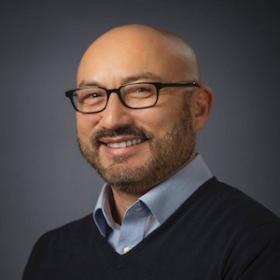
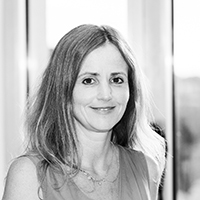
Cristina España-Bonet is a researcher at the Department of Computer Science (CS) in the Polytechnic University of Catalonia (UPC), where she works in the Natural Language Processing (GPLN) group. Previously, she was affiliated with the University of Barcelona (UB) in the Department of Astronomy and Meteorology (DAM), where she completed her PhD in Cosmology. Her research spans both Natural Language Processing and Cosmology , with a strong focus on Machine Translation and Multilingual Systems . Her work in NLP includes: Statistical and Hybrid Machine Translation Document-level Translation Multilingual Information Retrieval Sign Language Translation Low-resource Language Processing She has contributed to major projects such as: OPENMT MOLTO TACARDI Wikiparable Her research has produced significant resources including: Wikipedia-based comparable corpora Hybrid translation systems for patents Stopword lists for Occitan Sign language translation systems
Prof. Dr. Uta Itakura is a faculty member at the Institute of German Studies, Nihon University, Tokyo, Japan. She is currently a visiting scholar at the Leibniz Institute for the German Language (IDS) in Mannheim, Germany, where she presented her research on March 27, 2024, as part of the International Guest Forum. Her academic work bridges German linguistics, corpus-based analysis, and digital methods. Her research interests lie at the intersection of lexical semantics , corpus linguistics , and discourse analysis . She investigates collocations, polysemy, and sentiment patterns in language, particularly in German. Her recent work applies digital methods to analyze media discourse, such as the Ukraine discourse surrounding the 2014 annexation of Crimea. She emphasizes interdisciplinary approaches, combining linguistic analysis with social and historical contexts. The available publications indicate a strong focus on adjective semantics and collocational patterns in German, often analyzed through corpus data. Her work spans both theoretical and applied dimensions, including societal language change and multilingual interactions. The integration of digital tools in linguistic research is a recurring theme across her recent articles. She is an editorial and committee member of the Linguists' Seminar of the Japanese Society for German Studies and serves on the board of the Ohmon Society for German Studies. These roles reflect her active engagement in the academic community. Prof. Itakura earned her doctorate from the University of Mannheim in 2002, following studies in German and Japanese as foreign languages at Keio University and Saarland University. Her academic journey reflects a deep commitment to cross-cultural and comparative linguistic research. There is no public information on her advisees, grants, or awards in the provided text. She is not listed as retired or former staff at any institution, and there is no indication of part-time status. Her current visiting position at IDS suggests ongoing collaborative research activity.
Aleksín H. Ortega is a Lecturer in the Department of Modern Languages at the College of Staten Island, part of the City University of New York (CUNY) system, within the School of Humanities and Social Sciences. He holds a Ph.D., M.Ph., M.A., and B.A. from CUNY institutions, reflecting a deep academic engagement with the university. His research focuses on Colonial Spanish American Literature , especially in the Andean region, and on Heritage Language Teaching and Second Language Pedagogy . His scholarly work spans literary criticism, linguistic analysis, and cultural studies. Ortega's publications include journal articles on colonial discourse and myth in Latin American literature, co-authored academic books on Spanish language structure and syntax, an encyclopedia entry on cockfighting in Latino culture, and critical book reviews in journals such as Colonial Latin American Review and Inti . His recent publications reflect a sustained engagement with colonial historiography, postcolonial thought, and language education. Review of works on Inca Garcilaso de la Vega and postcolonial political thought (2020) Encyclopedia entry on 'Cockfighting' (2013) Co-authored books on Spanish structure and syntax (2012, 2010) Review of Quixote's influence in colonial America (2010) Analysis of myth in Hombres de maíz (2011) Study of colonial ideology in Sarmiento de Gamboa’s Historia índica (2011) He teaches undergraduate Spanish courses, including SPN 112, SPN 219, and SPN 313, contributing to language instruction and cultural education. Professionally, he has worked as a freelance translator and currently volunteers as a translator for TED, demonstrating a commitment to linguistic accessibility and public scholarship. No scientific awards, grants, or student advisees are mentioned in the available information.
Alfonsina Buonicontro is a Researcher in the Department of Humanities (DIPSUM) at the University of Salerno, Italy, where she conducts interdisciplinary research at the intersection of linguistic typology, cognitive linguistics, and language education. Her work focuses on motion event encoding, covert linguistic strategies, and pedagogical models for teaching general linguistics and text comprehension. Her research interests include: Linguistic and lexical typology, especially in Romance languages Motion event semantics and syntax (verb-framed vs. satellite-framed languages) Covert encoding and inferential meaning in motion expressions Constructional semantics and Gestalt theory in language interpretation Development of annotation tools like Modeg for motion event analysis Pedagogical innovation in linguistics education and reading comprehension Her recent publications reveal a strong focus on diachronic and cross-linguistic analysis of Italian, French, Spanish, Latin, and Ancient Greek, with an emphasis on how meaning is constructed beyond explicit lexical items. She explores how learners interpret motion and cohesion in texts, contributing to both theoretical linguistics and applied educational practices. Scientific contributions include: Development of the Modeg (MOtion DEcoding Grid) annotation tool for systematic motion event analysis Experimental educational project LeCo for enhancing reading comprehension in secondary schools Pioneering studies on boundary-crossing events in Romance languages Analysis of Source/Goal asymmetry in classical languages Proposals for top-down, semantics-first models in teaching linguistics Buonicontro actively publishes in peer-reviewed journals and conference proceedings, often in collaboration with scholars such as Claudio Iacobini and Debora Vena. While no formal list of advisees is provided, her involvement in educational projects suggests mentorship and curriculum leadership roles. She maintains a presence on academic platforms including ORCID, ResearchGate, and Academia.edu, indicating ongoing scholarly engagement.
Johannes Heim is a Lecturer in Language & Linguistics at the School of Language, Literature, Music and Visual Culture, University of Aberdeen, where he joined in 2022. He holds a PhD in Linguistics (Cognitive Stream) from the University of British Columbia (2019) and has previously held positions in Greifswald, Germany, and Newcastle, UK. He serves as Director of Postgraduate Research (PGR) for his School and is REF Co-lead for Linguistics (UoA27) alongside Professors Andrew Gorden and David Wheatley. He is also Co-director of the Centre of Training and Research in Linguistics with Professor Robert McColl Millar. PhD in Linguistics (Cognitive Stream), 2019, University of British Columbia His research lies at the intersection of syntax, pragmatics, prosody, and gesture, focusing on how adults and infants use multimodal cues to manage interaction. A central theme is non-assertive speech acts, particularly non-canonical questions, and how intonation, discourse particles, and gestures encode speaker expectations and attitudes. He investigates the syntactic integration of discourse particles across languages and how prosody interfaces with syntax to shape meaning. Recently, he has expanded into how infants use multimodal cues to scaffold language acquisition, emphasizing the role of caregiver feedback and interactional context. His recent publications (2022–2025) show a strong focus on the acquisition of interactional language, prosodic variation in questions, and multimodal communication. Key themes include the syntax-pragmatics interface, child language development, discourse particles (e.g., in Javanese), intonational meaning, and caregiver modelling. His work appears in high-quality journals such as Glossa , Speech Communication , and Journal of Pragmatics , as well as in peer-reviewed book chapters and conference proceedings. Johannes Heim is actively involved in mentoring and supervision. He is accepting PhD students in linguistics and is open to mentoring postdoctoral fellowship applications, including those for the British Academy, Leverhulme Trust, and Horizon Europe’s MSCA program. He also collaborates on interdisciplinary projects, such as developing models to address the hidden curriculum in higher education. He is a key member of several research initiatives, including the Centre of Training and Research in Linguistics, and contributes to major conferences such as WCCFL, DGfS, and LAGB. His work emphasizes empirical data from both adult and child language use, often combining corpus analysis with experimental and observational methods.
Agnes Löfgren is an Associate Professor at the Department of Culture and Society (IKOS), Linköping University, where she conducts research in linguistic and multimodal interaction within cultural contexts. She is affiliated with the Division of Language, Culture and Interaction (SKI) and contributes to the Language and Culture research environment. Research Interests: Her work primarily explores how people use language, voice, and body in real-time coordination, especially in artistic settings like opera rehearsals. Key areas include non-lexical vocalizations (e.g., 'ugh', 'aargh'), depictions, intersubjectivity, and the interplay between song and speech. Her research bridges linguistics, semiotics, and performing arts, emphasizing embodied and multimodal aspects of communication. The recent publications show a consistent focus on vocal and bodily practices in collaborative and performative settings, particularly in opera. These works highlight how syntax, prosody, and physical gestures are suspended or transformed during depiction, contributing to theories of interaction and cognition. No scientific awards listed Advising and Grants: Information about students, advisees, or funded grants is not available in the provided texts. Labs and Teams: Agnes is part of the Language and Culture research environment at Linköping University, focusing on interdisciplinary research at the intersection of language, interaction, and culture. She leads and participates in projects such as Non-lexical Vocalizations , which investigates vocal coordination in real-time collaborative activities.
Prof. Dr. Katja Hannß serves as a Professor in the Department of Linguistics at the University of Cologne, Germany. Her work centers on endangered Andean languages including Quechua, Aymara, Uru-Chipaya, Kallawaya, and Pukina, with emphasis on linguistic documentation and historical analysis. Hannß specializes in language documentation of vanishing Andean languages, particularly Uchumataqu (Uru) and Kallawaya. Her research integrates historical linguistics with pragmatic analysis of discourse structures, examining language contact phenomena and ethnobiological knowledge systems. She investigates how medicinal plant terminology in Kallawaya reflects cultural transmission and linguistic hybridity, bridging linguistic theory with anthropological inquiry into indigenous knowledge preservation. Her recent publications (2014-2019) demonstrate consistent focus on Kallawaya language formation, etymology, and ethnobiological lexicon, while advancing understanding of Uchumataqu grammar and Chipaya case systems. This body of work reveals patterns of language mixing in Andean secret languages and historical connections between extinct and surviving linguistic lineages. No scientific awards were documented in the source material. Hannß leads significant research projects including: The Chipaya subject clitics: a pragmatic approach (2017-2019) Word Formation in Kallawaya: Nominal Composition and Incorporation (2016-2017) Typological Profile of the Bolivian Mixed Language Kallawaya (2012-2015) These projects indicate sustained grant funding for Andean language documentation. No student advising activities were specified in the available information.
Leila Behrens serves as Associate Professor in the Department of Linguistics at the University of Cologne, specializing in semantics and pragmatics with emphasis on cross-linguistic diversity. Her research examines ambiguity, evidentiality, modality, and intercultural communication phenomena across diverse languages. Education: Habilitation in Theoretical Linguistics and Computational Lexicology, Universität München (1999) PhD in General Linguistics, Universität München (1987) MA in General Linguistics, Universität München (1982) Her scholarly focus spans semantic-pragmatic interfaces and cross-cultural variation , particularly investigating irony comprehension , metadiscourse markers , and evidentiality systems . Current work analyzes stance-taking in digital discourse, while earlier research established foundational insights into lexicon-grammar interactions, genericity, and reciprocal constructions across languages. Analysis of her publication trajectory reveals sustained engagement with typological semantics , especially evidentiality-modality relationships and cross-linguistic genericity patterns. Her methodological approach consistently bridges theoretical frameworks with empirical discourse analysis, increasingly incorporating digital communication contexts since 2010. Scientific Awards: No awards documented in source materials. Professor Behrens has secured substantial research funding including DFG support for 'Lexical Typology' (1996-2000), ARC-funded cross-cultural irony research at Melbourne University (2003), and Siemens-sponsored machine translation projects (1987-1993). While student advising details aren't specified, her 35+ year research trajectory indicates extensive mentorship through principal investigator roles.
Lidia Federica Mazzitelli is a researcher at the Department of Asian, African and Mediterranean Studies, University of Naples L'Orientale , with a focus on semantics, grammar, and language documentation. She has held academic positions at the University of Cologne (2017–2019), University of Oslo/Australian National University (2021–2023), and University of Bremen (2013–2015). Education : PhD in Slavic Linguistics (Mainz, La Sapienza, 2012), MA in Slavic Studies (La Sapienza, 2008), BA in German and Slavic Studies (La Sapienza, 2006). Research Interests include possession constructions, language contact in the Baltic states, and fieldwork on Oceanic languages. Her projects have documented endangered languages like Loxodumau (2017–2019) and Lavatbura-Lamusong/Konomala (2024–present). Publication Trends emphasize cross-linguistic analysis of predicative possession, valency patterns in Oceanic languages, and areal typology. She has contributed to journals such as Oceanic Linguistics and Language Documentation and Conservation , as well as edited volumes on possession in Europe and North-Central Asia. Grants include funding from the Endangered Language Documentation Program (ELDP) for the Loxodumau project (2017–2019). Her work bridges theoretical and descriptive linguistics, with fieldwork in Papua New Guinea and the Baltic region.
Prof. Dr. Archibald L.H.M. van Wieringen is a Full Professor at the Tilburg School of Catholic Theology (Texts in Contexts Department) at Tilburg University. His research focuses on Biblical exegesis, Old Testament studies, and intertextuality, with a particular emphasis on prophetic literature like Isaiah. He actively contributes to theological discourse through publications, lectures, and academic projects such as the Video clips Digital Hebrew initiative. His academic work bridges historical-critical analysis and contemporary theological relevance, addressing topics like artificial intelligence ethics (e.g., ANTIQUA ET NOVA ), hermit life in the Church ( DE VORM VAN HET EREMIETENLEVEN ), and Easter chronology ( A Fixed Date for Easter? ). He serves on editorial boards and organizes conferences, reflecting his leadership in academia. Van Wieringen’s research spans multiple disciplines, including Biblical Hebrew, liturgical studies, and interreligious dynamics surrounding holy places. His recent publications (2023–2025) highlight innovative approaches to Isaiah’s intertextuality and the integration of technology with theological reflection. He collaborates internationally, engaging with institutions like the Theological College of Pécs and the Rooms-Katholieke Kerk in Nederland. His teaching includes courses on Biblical Hebrew, Old Testament theology, and research methodology, underscoring his commitment to both scholarship and education.
Catherine Léger is an Associate Professor at the University of Victoria’s Faculty of Humanities, School of Languages, Linguistics and Cultures. Her research and teaching focus on French linguistics, particularly syntax, semantics, pragmatics, and contact linguistics in Acadian French and North American Francophone communities. Her academic expertise includes analyzing discursive markers like voir , en seulement , and tu in Acadian French, examining their pragmatic functions and role in linguistic insecurity. She has also contributed to edited volumes on morphosyntactic and pragmatic variation in Francophone Minority Communities. Recent publications highlight her work on cross-linguistic discourse markers, language ideologies in Acadian literature, and stative constraints in French verbs. Her research is supported by a SSHRC Insight Development Grant (2022–2024, extended to 2026).
Dr. Stefanie Goldschmitt is a Senior Academic Councillor at the Chair of Romance Linguistics within the Faculty of Philosophy at the University of Würzburg. Her office is located in Room 5.O.18 of the Philosophy Building. She holds a Magister Artium in Romance Studies (French, Spanish) and Germanistics from the Universities of Würzburg and Erlangen, completed her PhD in French Linguistics in 2007, and obtained the Bavarian University Teaching Certificate in 2019. Her research focuses on: Meaning change and grammaticalization processes Mood, modality, and verb semantics Contrasts between orality and literacy Latin American Spanish variations Motion event encoding across languages Her publications consistently explore linguistic dynamics, cross-linguistic influence, and sociolinguistic variation, with recent work examining language contact phenomena and empirical approaches to morphology. She received the Hochschul-Wissenschafts-Programm (HWP) scholarship during her doctoral studies. Goldschmitt maintains active international collaborations, including research stays in Bolivia (2010) and a teaching mobility at the University of Salamanca (2018).
Ahmed EL KALADI is a Lecturer in English at the College of Languages . His research focuses on Pronominal Anaphora, Discursive Cohesion, Translation Theory, Acculturation, and Postcolonial Literature . He has actively contributed to academic activities such as co-organizing international colloquiums and serving as an editorial secretariat for the journal Modèles Linguistiques . His publications span topics like psychomechanics of language, grammaticalization, and interculturality in translation. Notable activities include editing journal volumes and organizing academic conferences such as the Colloquium on Translation Studies in Arras (2000).
Mgr. Elena Smoleňová, PhD., is an Assistant Professor at the Faculty of Applied Languages, University of Economics in Bratislava, specializing in the Department of Romance and Slavic Languages. Since 1998, she has combined pedagogical, linguistic, and psychological research while contributing to digital and intercultural education. PhD in Linguistics (Romance Studies), University of Comenius, Bratislava M.A. in Non-Slavic Philology (Italian Language & Culture, Translation & Interpreting), University of Comenius Research Interests: Applied linguistics, legal linguistics, psycholinguistics, and color terminology. Her work explores: Semantic and morphosyntactic peculiarities in legal language Emotional factors in language acquisition Intercultural comparisons of color symbolism Terminology in business and finance Modern language teaching methodologies Recent Publications: Focus on contrastive analysis of Italian-Slovak legal lexicon, emotional dynamics in language education, and chromatic terminology (2017-2024). Awards: Principal investigator for VEGA 1/0107/18 grant on language teaching Professional Activities: Active in academic publishing, conference organization (e.g., international conferences in Bratislava, Sládkovičovo), and collaboration with the Italian Cultural Institute in Bratislava.
Martina Uličná is an Assistant Professor at the Faculty of Applied Languages, University of Economics in Bratislava, specializing in Slovak language instruction for foreigners. With academic affiliations at Comenius University (2006-2011, 2014-2017), Moscow State University, and the University of Prešov (1997-1999), her career spans three decades of language education and research. Her research focuses on: Color terminology in Slavic and Romance languages Language materials development Online language assessment Intercultural communication Floral lexical analysis Word order in Slovak acquisition Recent publications emphasize digital tools in language teaching, including monographs and textbooks for A1-A2 proficiency levels. Research projects include: VEGA 1/0107/18 Chromatism and its connotations KEGA 018EU-4/2020 ICT in online language education She has presented at international conferences in Kyiv and Pula, focusing on professional language assessment and online teaching methodologies.