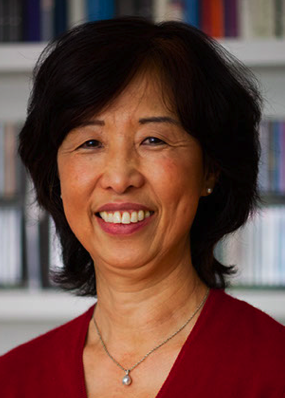
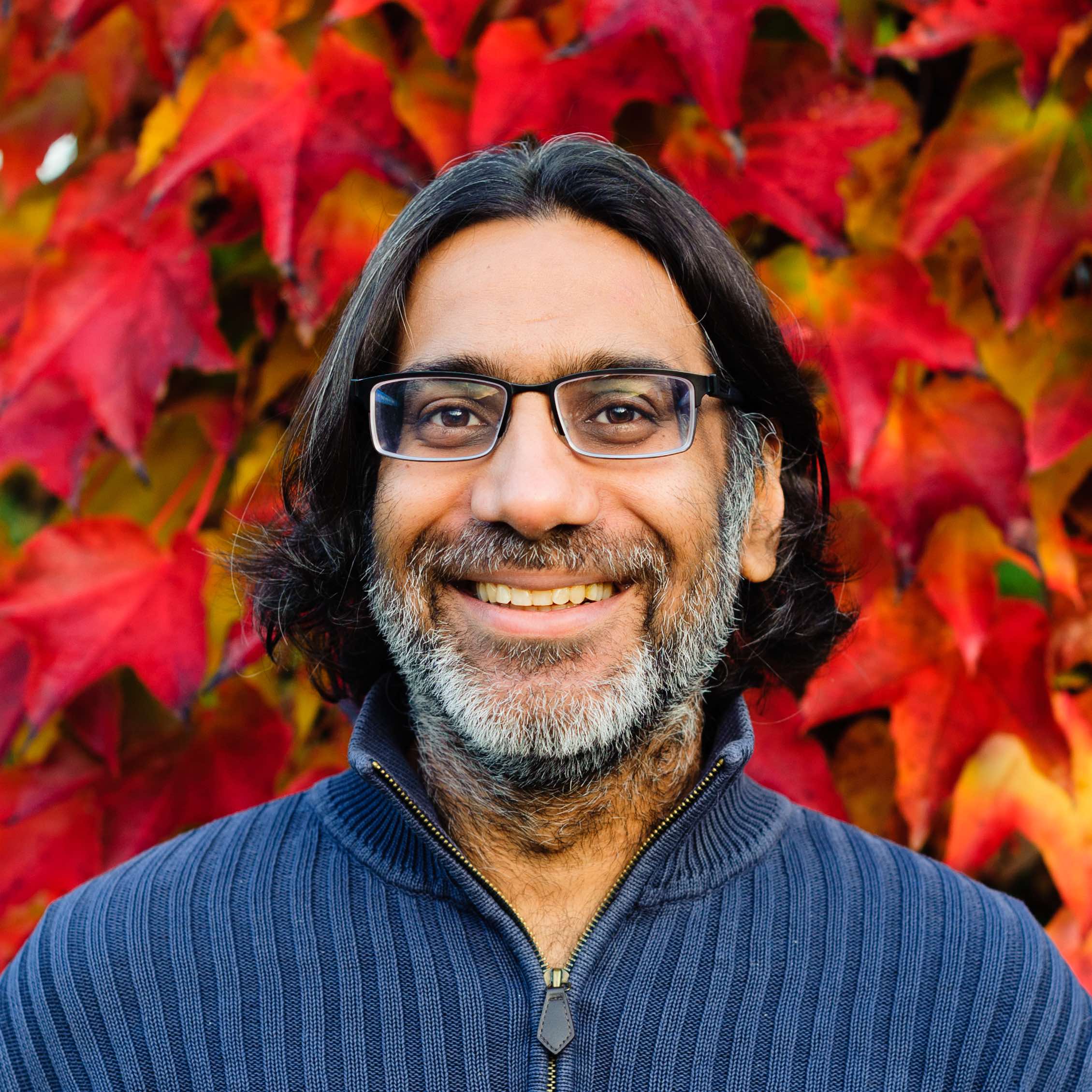
Svitlana Antonyuk-Yudina serves as a Lise Meitner senior postdoctoral researcher at the University of Graz, Austria, within the Institute of German Studies under the Austrian Science Fund (FWF) project M 3361-G "Deriving Discourse Configurationality of (East) Slavic" led by Prof. Victor Edgar Onea Gaspar. Her research centers on syntax-semantics interfaces , argument structure , and information structure in East Slavic languages (Ukrainian and Russian), with specific expertise in quantification, Instrumental syntax, Object Shift phenomena, and the realization of Givenness/Focus. Current investigations explore aspect-argument structure relations in East Slavic and cross-linguistic scope freezing, while her interests increasingly extend to generative typology and contact-induced language change. Dr. Antonyuk-Yudina holds the prestigious Lise Meitner Fellowship from the Austrian Science Fund (FWF). She is actively engaged in the FWF project M 3361-G and co-edits two Special Collection volumes for Glossa: a journal of general linguistics , with experimental work mapping East Slavic syntactic structures to prosodic realization upcoming.
Mark Post is a Senior Lecturer and Honours Coordinator in the Discipline of Linguistics at the Faculty of Arts and Social Sciences, The University of Sydney. He also serves as Deputy Head of School (Humanities) and is affiliated with the China Studies Centre, Sydney Southeast Asia Centre, and The Vere Gordon Childe Centre. His educational background includes a BA Hons from Wesleyan University, an MA from the University of Oregon, and a PhD from La Trobe University. Dr. Post's research focuses on describing and explaining the typologies and relationships among Greater Mainland Southeast Asian and Himalayan languages. His descriptive work relies exclusively on primary field data, with interests in improving fieldwork methodologies. He approaches linguistic explanation from a functional-diachronic perspective, viewing language as a dynamic process whose structures emerge from patterns of discourse and interaction. His extensive publication record reveals a strong focus on Eastern Himalayan languages, particularly Tani languages, with research spanning linguistic typology, historical linguistics, and language documentation. Key themes include classifiers, deixis, applicatives, and the ethnolinguistic prehistory of the Eastern Himalaya across more than 50 publications since 2004. His notable recognition includes: 2011 Recipient of the Association for Linguistic Typology's Pāṇini Award Dr. Post has supervised research students including Chintan SHETH on ethno-linguistic prehistory in the Eastern Himalaya. His grant history includes significant projects such as 'Pseudo grains and adaptiveness in the Eastern Himalayas' (ARC, 2023), 'Center for Cultural Linguistic Diversity - Eastern Himalayas' (Firebird Foundation, 2022), and 'A Documentation of the Upper Belt variety of Minyong (Adi)' (Endangered Languages Documentation Programme). He is a life member of the Galo Language Development Committee (Arunachal Pradesh, India) and actively participates in the Association for Linguistic Typology, Australian Linguistic Society, and North East Indian Linguistics Society.
Mark Steedman is a Professor in the School of Informatics at the University of Edinburgh, where he conducts research in Artificial Intelligence, Computational Cognitive and Social Science, and Natural Language and Speech Processing. He is affiliated with the Institute for Language, Cognition and Computation (ILCC), the Centre for Speech Technology Research (CSTR), and the Human Communications Research Center (HCRC). He also holds an adjunct professorship in Computer and Information Science at the University of Pennsylvania. His research focuses on Combinatory Categorial Grammar (CCG) , computational linguistics , prosody and intonation , temporal semantics , gesture in communication , and computational music analysis . He has authored foundational books including Surface Structure and Interpretation , The Syntactic Process , and Taking Scope . The recent publications reflect a strong trend toward integrating formal grammatical frameworks like CCG with modern neural and distributional models, particularly in semantic parsing, entailment reasoning, and cognitive modeling. His work bridges symbolic and statistical approaches in NLP, often focusing on robust, wide-coverage parsing and semantic interpretation. Best Paper Award at AACL/IJCNLP 2023 for 'Smoothing Entailment Graphs with Language Models' Best Paper Award at ACL 2023 for 'Extrinsic Evaluation of Machine Translation Metrics' Influential Paper Award 2017 from IFAAMAS for 'Animated Conversation' Mark Steedman has supervised numerous PhD students and collaborated widely across institutions. He leads research in formal grammar applications to cognitive modeling, dialogue, and multimodal communication. His lab contributes to CCG software and semantic parsing tools, and he continues to be actively involved in advancing the integration of symbolic and neural AI.
Elaine Francis is a Professor of English and Linguistics at Purdue University's College of Liberal Arts, where she serves as Associate Head of the Department of English and directs the Experimental Linguistics Lab. She holds additional affiliations as an Affiliate Faculty Member in the Department of Linguistics and a Courtesy Faculty Member in the Department of Speech, Language, and Hearing Sciences. Ph.D. in Linguistics, University of Chicago (1999) B.A. in Linguistics, College of William and Mary (1993) MA in Linguistics, University of Chicago (1995) Former Assistant Professor at the University of Hong Kong (1999-2002) Professor Francis's research focuses on syntax and its interfaces with semantics, discourse information structure, and language processing in production and comprehension. She employs experimental methods to investigate syntactic, semantic, discourse-pragmatic, and cognitive factors underlying complex sentence structures. Her primary research areas include word order alternations, filler-gap dependencies, resumptive pronouns, and grammatical acceptability. She examines how various factors contribute to grammatical alternations in language use and explores how processing pressures in production and comprehension contribute to grammatical conventions. Her recent publication record shows consistent output across multiple linguistic subfields, with a strong emphasis on experimental syntax and psycholinguistics. Her 2022 book, Gradient Acceptability and Linguistic Theory , represents a significant contribution to understanding acceptability judgment tasks in relation to syntactic theory. Her work spans theoretical syntax, experimental linguistics, second language acquisition, and cross-linguistic comparison, often bridging the gap between theoretical frameworks and empirical evidence. Regularly teaches short courses at Linguistic Society of America Linguistic Institutes Member of Linguistic Society of America Ethics Committee Editorial board member of Glossa Psycholinguistics Co-editor of Polymorphous Linguistics: Jim McCawley's Legacy (2005) Co-editor of Mismatch: Form-Function Incongruity and the Architecture of Grammar (2003) Professor Francis actively supervises graduate students in linguistics, though she has indicated she will be unable to take on new graduate students for the 2025-2026 academic year. She has received research support for her experimental work, particularly for investigating syntactic phenomena through controlled experiments and corpus analysis. Her collaborative work extends across multiple institutions and disciplines, including collaborations with researchers in computational linguistics, cognitive science, and clinical linguistics. She directs the Experimental Linguistics Lab at Purdue University, which conducts research on syntactic processing using various experimental methodologies. The lab investigates how speakers produce and comprehend complex sentence structures, with particular attention to how grammatical knowledge interacts with processing constraints. Current projects include research on relative clauses, syntactic islands, and acceptability gradient phenomena across multiple languages.
Paulina Łęska-Bayraktar is an Assistant Professor in the Department of English-Polish Comparative Linguistics at the Faculty of English, Adam Mickiewicz University in Poznań, where she conducts research and teaches in formal syntax and comparative linguistics. Her academic foundation is deeply rooted in the same institution, reflecting a sustained commitment to linguistic scholarship in Poland. Her educational background includes: B.A. in English Linguistics, Adam Mickiewicz University in Poznań (2012) M.A. in English Linguistics, Adam Mickiewicz University in Poznań (2014) Ph.D. in English Linguistics, Adam Mickiewicz University in Poznań (2019) Her research interests lie at the intersection of syntax, semantics, and cognitive grammar, with a strong focus on generative approaches to Slavic languages—particularly Polish. She investigates complex syntactic phenomena such as binding theory, pronoun distribution, quantifier scope, agreement, and the structure of relative and nominal clauses. Her work combines formal theoretical analysis with empirical data, often drawing on acceptability judgments and psycholinguistic methodologies. The trends in her recent publications reveal a sustained engagement with the syntax of Polish, especially in non-canonical constructions involving dative arguments, experiencers, and pronominal clusters. Her work contributes significantly to the understanding of how universal syntactic principles manifest in Slavic morphosyntax, and she frequently collaborates with leading scholars like Prof. Jacek Witkoś. She has received research funding from the Polish National Science Center through multiple grants, including OPUS, Beethoven, and Miniatura projects, which have supported her investigations into nominal expressions, pronouns, and anaphora in Polish. These grants underscore the national recognition of her research contributions. Paulina Łęska-Bayraktar actively participates in the international linguistics community, presenting her work at major conferences such as Formal Approaches to Slavic Linguistics (FASL), Formal Description of Slavic Languages (FDSL), and the Poznań Linguistic Meeting. She is also involved in collaborative research teams and has co-authored works with scholars from Humboldt-Universität zu Berlin and other institutions. Her academic presence is further strengthened by her profiles on ORCID and ResearchGate.
Jiayi Lu is a PostDoc Researcher at the University of Pennsylvania School of Arts & Sciences, working under the supervision of Dr. Julie Anne Legate. Her research focuses on syntax, psycholinguistics, and Chinese linguistics, with a particular emphasis on grammaticality judgments, satiation effects, and island phenomena. She has contributed to understanding how sentence processing and discourse factors influence syntactic structures. Her research interests encompass syntax, psycholinguistics, and formal semantics, with a focus on exploring grammaticality illusions, the role of discourse in syntactic constraints, and cross-linguistic variations in Chinese. Key areas include the study of extraction islands, coordination effects, and the cognitive mechanisms underlying sentence processing. Her recent work (2020-2024) demonstrates a strong focus on syntactic satiation, island effects, and experimental methods in syntax. Publications analyze both English and Chinese data, investigating how linguistic structures are processed and judged by speakers. Trends include exploring the generalizability of satiation across island types and the interplay between discourse and syntactic constraints. Dr. Lu has not listed any scientific awards or grants in the provided information. Dr. Lu has not listed any advisees or grants in the provided information.
Miloje Despic is an Associate Professor in the Department of Linguistics at Cornell University , affiliated with the College of Arts and Sciences . His research spans theoretical syntax , morphology , and semantics , focusing on cross-linguistic variation and the syntax-morphology interface. Research Focus : Cross-linguistic variation in functional elements (e.g., articles), syntax-morphology interactions (e.g., hybrid agreement, clitic-affix distinction). Languages Studied : Slavic (Serbian, BCMS), Turkic, Algonquian (Cheyenne). Publication Trends : Recent work addresses reflexive possessive agreement in Mongolian, nominal ellipsis in Serbian, cyclic and multiple agreement in Cheyenne, markedness in Algonquian theme signs, and non-intersective adjectives. His research intersects syntactic theory , morphological anomalies , and semantic interpretation .
Bernard Comrie is a Research Professor Emeritus in Linguistics at the University of California, Santa Barbara (UCSB), affiliated with the College of Letters and Science. He previously served as Director of the Department of Linguistics at the Max Planck Institute for Evolutionary Anthropology in Leipzig (1998–2015) and held a Distinguished Professorship at UCSB (2002–2021). His career includes teaching positions at the University of Cambridge, University of Southern California, and leadership roles in major research institutions. Comrie’s research focuses on Language universals and typology Historical linguistics Languages of the Caucasus, New Guinea, and Great Andamanese He emphasizes fieldwork-driven cross-linguistic analysis of topics like tense/aspect, transitivity, numeral systems, and prehistoric migration studies through collaborations with archaeologists and geneticists. His recent publications explore morphosyntactic variation (e.g., verb indexing in Asian languages, reflexivity in Tsez), language contact (Kanashi prehistory), and numeral system typology. Articles often bridge theoretical linguistics with empirical data from understudied languages. Notable contributions include the World Atlas of Language Structures and foundational work on Nakh-Daghestanian and Andamanese languages. He advocates for interdisciplinary approaches to reconstructing prehistoric human movements via linguistic evidence.
Prof. Stefan Müller is a Professor at the Institute for German Language and Linguistics , part of the Faculty of Languages and Literature at Humboldt University. His research focuses on syntax, formal grammar theories (especially Head-Driven Phrase Structure Grammar), and computational linguistics. He leads the CoreGram Project , developing cross-linguistic grammars using HPSG formalisms. His work includes analyses of German syntax, constituent order, anaphoric binding, and register phenomena. He is also involved in open-access publishing initiatives through Language Science Press . Contact: St.Mueller@hu-berlin.de . Education and academic background details are not explicitly stated in the provided text, but his professional trajectory indicates deep expertise in theoretical linguistics. His research spans multiple languages including German, Mandarin, and Persian, with a focus on grammar implementation and syntax-semantics interfaces. Key contributions include the Head-Driven Phrase Structure Grammar Handbook (2024), analyses of headless nominal structures in German (2022), and exploration of large language models' theoretical implications (2024). He actively engages in interdisciplinary projects bridging formal grammar and computational methods.
Christopher Potts is Professor and Chair of Linguistics at Stanford University, with a courtesy appointment as Professor of Computer Science. He serves as Director Emeritus of the Stanford Center for the Study of Language and Information (CSLI) and leads the Pragmatic Enrichment & Contextual Interface Lab. His work bridges theoretical linguistics and computational approaches to language understanding. Education: B.A. in Linguistics from New York University (1999) Ph.D. in Linguistics from University of California, Santa Cruz (2003) Potts' research focuses on how computational methods can illuminate linguistic phenomena, particularly in the areas of semantics, pragmatics, and sentiment analysis. His work explores how emotion is expressed in language and how linguistic production and interpretation are influenced by context. He has made significant contributions to understanding conventional implicatures, sentiment analysis frameworks, and the application of neural networks to linguistic problems. His recent work has increasingly focused on the interpretability of large language models and the development of frameworks like DSPy for building reliable AI systems. An analysis of Potts' recent publications reveals a strong trend toward the intersection of linguistic theory and practical AI applications. His work spans theoretical linguistics (e.g., compositionality, preposing constructions), neural network interpretability, and practical NLP systems (e.g., ColBERT, DSPy). The research demonstrates consistent focus on making language models more transparent, controllable, and linguistically informed, with particular attention to how context shapes meaning. Scientific Awards: Best Paper Award at 2024 ACL for 'Mission: Impossible Language Models' Outstanding Paper Award at 2024 ACL for 'CausalGym' ACL Test of Time Award 2023 Dean's Award for Distinguished Teaching (2015-2016) Best New Data Set or Resource Award at 2015 EMNLP Potts has secured numerous research grants as PI or Co-PI from major organizations including Google, Amazon, NSF, Office of Naval Research, and Stanford's HAI institute. His current projects focus on evaluation of retrieval-augmented generation systems, LLM-mediated communication in organizations, interpretability techniques for language models, and frameworks like DSPy for building next-generation AI systems. He has mentored numerous researchers who have gone on to make significant contributions in NLP and computational linguistics. As Director of CSLI (2013-2020) and current Chair of Linguistics at Stanford, Potts has played a key leadership role in shaping interdisciplinary research at the intersection of language, computation, and cognition. His Pragmatic Enrichment & Contextual Interface Lab continues to be a hub for innovative research combining formal linguistic theory with cutting-edge computational methods.
John B. Whitman is a Professor of Linguistics at Cornell University's College of Arts and Sciences. His research focuses on language variation, syntax, historical linguistics, and East Asian languages, particularly Japanese and Korean. He explores typological universals, syntactic variation, and diachronic developments, contributing to debates on configurationality and structural universals. Whitman has published extensively on topics ranging from Japanese historical phonology to comparative syntax across East Asian languages. His work often integrates cross-linguistic analysis with neuroscientific insights, as seen in studies on semantic number processing. He has received grants for projects including language revitalization initiatives and syntactic research, and he teaches courses on Japanese language history and language endangerment. Whitman collaborates with interdisciplinary teams and actively engages in linguistic fieldwork and historical text analysis, maintaining affiliations with the East Asia Program and research labs at Cornell. Research interests include syntactic variation, historical syntax, and the interaction between language structure and diachronic change. His recent work examines the evolution of verbal conjugations in Japanese/Korean and the typological implications of syntactic reanalysis. Whitman's publications also address methodological questions in glossing practices and comparative lexicography, bridging historical linguistics with modern computational analysis. Grants and projects include funding from the New Frontier Grants for collaborative research on language documentation and historical syntax. He advises graduate students in the linguistics program and contributes to Cornell's language revitalization efforts, such as Cayuga language preservation initiatives. Whitman's work frequently intersects with cognitive science, as seen in neuroimaging studies of linguistic structures.
Prof. Dr. Gülşen Eryiğit is a Professor at Istanbul Technical University within the Faculty of Computer and Informatics , Department of Artificial Intelligence and Data Engineering . She founded and directs the ITU Natural Language Processing Group , Turkey's leading team in Turkish-language NLP, and serves as Senior Action Editor for ACL RR , Director of ITU TÖMER (Turkish Language Teaching Center), and Co-Chair of the EU UniDive Cost Action WG3. Education: PhD in Computer Engineering from ITU (2007), MSc and BSc from ITU and Marmara University Research: Focuses on Natural Language Processing for Turkish, including dependency parsing , coreference resolution , multiword expressions , and language education technology Her recent work involves multilingual transfer learning , LLM applications for Turkish text simplification, and gamification for morphology education. She has received prestigious awards like the Siemens Excellence Award and TÜBİTAK's Above Threshold Award . Her research has produced 65+ publications and 29+ projects funded by EU, TÜBİTAK, and industry partners. Scientific Awards: Siemens Excellence Award (2007) Above Threshold Award (TÜBİTAK, 2015) Certificate of Appreciation (EU 7th Framework, 2012) Thank You Plaque (ITU, 2017) The ITU NLP Group under her leadership has developed Turkey's first licensed NLP software exported internationally. She collaborates with European institutions through COST actions and participates in ACL, CoNLL, and LREC conferences. Her lab focuses on language technology for Turkish , including sign language processing and social media normalization.
Dr. Soonja Choi is a Research Professor in the Comparative Psycholinguistics Group at the University of Vienna and Director of the Korean Studies Program at San Diego State University (SDSU), where she holds the title of Professor Emerita of Linguistics. She earned her Ph.D. in Linguistics from the University of Buffalo (1986) and holds advanced degrees from institutions in France and South Korea. Her research focuses on language and thought, semantics, spatial language, and Korean linguistics, with a particular emphasis on cross-linguistic studies of spatial categorization and its cognitive implications. Research Contributions: Her work has explored how language influences spatial perception and cognition, notably through long-term collaborations with the Max Planck Institute for Psycholinguistics and the National Science Foundation. Key contributions include studies on spatial term development in Korean/English children and cross-linguistic comparisons of spatial semantics between German, Korean, and English. Grants & Awards: Secured over $1.4M in grants including a EUR 600,000 Vienna Science Fund grant (2016-2020) and multiple NSF awards. Elected to the Academy of Europe (2019) as an Ordinary Member. Professional Roles: Served as Chair of SDSU's Department of Linguistics and Oriental Languages (1997-2000, 2001-2002), Graduate Advisor (multiple terms), and editorial board member for Language, Interaction, and Acquisition . Active in academic governance and international linguistic organizations.
Ben Eischens is an Assistant Professor in the Department of Linguistics at UCLA. His work focuses on the intersection of phonology and phonetics, particularly in San Martín Peras Mixtec, an Otomanguean language spoken in Oaxaca, Mexico and diaspora communities. He holds a Ph.D. from UC Santa Cruz (2022) and collaborates extensively with Indigenous communities on language documentation and description. His research explores tone systems, laryngeal features, speech rate effects, and negative nominal structures, emphasizing empirical fieldwork and community partnerships. Recent work includes studies on vowel reduction, polar question formation, and the phonetic grounding of phonological theories. Eischens has presented at major conferences such as the International Congress of Phonetic Sciences (ICPhS), Annual Meeting on Phonology (AMP), and workshops on Languages of the Americas. His publications appear in journals like the International Journal of American Linguistics and Phonological Data & Analysis. He teaches courses in linguistic theory and field methods at UCLA, maintaining active research partnerships with San Martín Peras Mixtec community members. His work bridges theoretical linguistics with applied documentation, prioritizing Indigenous language revitalization efforts.
Pranav Anand is a Professor in the Department of Linguistics at the University of California, Santa Cruz (UCSC). He currently serves as the Faculty Director of the Humanities Institute at UCSC since July 2023. His research focuses on the interplay between context, interpretation, and grammatical perspective, particularly in areas like de re/de se contrasts, evaluative predication, and indexical shift. He has contributed to studies on narrative structures, evidential restrictions, and the syntax-semantics interface in sluicing. Dr. Anand has taught a variety of courses including Ling 119: Narratives , Ling 231: Semantics A , and special topics like Invented Languages: From Elvish to Esperanto . His work bridges theoretical linguistics with computational methods, evidenced by collaborations in projects such as the Santa Cruz sluicing dataset and analyses of political discourse in online commentary. His research has been published in journals like Linguistics and Philosophy , Language , and Discourse and Society , with a focus on semantics, pragmatics, and narrative linguistics. He has also contributed to computational linguistics initiatives, including the development of annotated corpora for sentiment analysis and argumentation studies. Dr. Anand's academic contributions span both theoretical exploration and applied computational linguistics, reflecting his interdisciplinary approach to understanding language structure and usage.