
İpek Pınar Bekarمشاهده پروفایل
استادیار
- Phonetics
- Phonology
- Computational Linguistics
- +۱۳ مورد دیگر
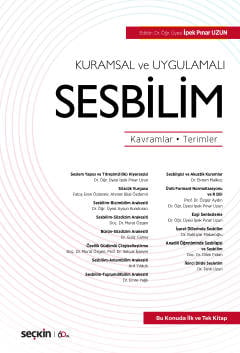
Assistant Professor İpek Pınar Bekar is a linguist specializing in phonetics and phonology, with a strong focus on both theoretical and applied aspects. Her research spans computational phonetics, speech synthesis, forensic phonology, second language pronunciation, and the phonological structure of Turkish and sign languages. She is actively contributing to academic literature in Türkiye through publications and editorial work. Assistant Professor in Linguistics Specialization in Phonetics and Phonology Editor and contributor to key Turkish academic texts Her research interests include phonological theory, computational modeling of speech, prosody, formant analysis, and the interfaces between phonology and other linguistic domains such as morphology, syntax, semantics, and sociolinguistics. She has also explored applications in mother tongue teaching, second language acquisition, and text-to-speech synthesis. Her work often integrates technical tools like the R programming language for acoustic analysis. The recent publications (2020) demonstrate a strong trend in interdisciplinary phonological research, combining theoretical linguistics with computational methods and practical applications in education and forensics. Her work addresses both Turkish-specific phenomena and universal phonological principles. While no formal scientific awards are mentioned in the text, her editorial role in a comprehensive volume indicates recognition within the academic community in Türkiye. İpek Pınar Bekar has contributed to research advising through her publications and mentorship in academic writing, though no formal students are listed. Her work suggests involvement in advancing phonological research and pedagogy in Turkish academia. She is associated with research in phonological computation, speech technology, and linguistic analysis, likely involving collaboration with other scholars across Turkish universities, though no specific lab or team is named.

