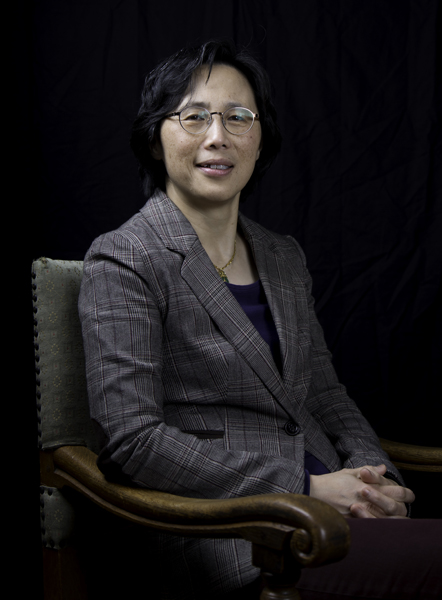
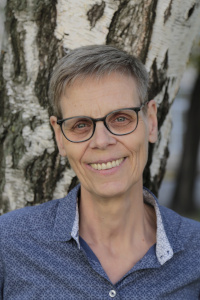
Lisa Cheng is a Chair Professor of Linguistics at the Department of Linguistics, Leiden University (Netherlands), holding this role since 2000. She previously served as Associate Professor (with tenure) and Assistant Professor at the University of California, Irvine (1991-2000). Her research focuses on the syntax-phonology interface, syntax-semantics interface, Chinese syntax-semantics, Bantu syntax, and comparative syntax. PhD, Massachusetts Institute of Technology (1991) MA/BA, Linguistics, University of Toronto (1986) She has led major projects including Ellipsis licensing beyond syntax (NWO-funded), Understanding Questions (NWO-funded), and coordinated the FP7 collaboration Advancing the European Multilingual Experience . She co-founded the Leiden Institute for Brain and Cognition (2005) and served on its board until 2013. Regional Chair, University of Nantes (2013) Member, The Royal Holland Society of Sciences and Humanities (2013-present) In her academic service, she chaired ERC panels for impact evaluation and consolidator grants, and sat on the NWO VIDI committee.
C.-T. James Huang is a Professor of Linguistics at Harvard University since 2001, where he has also served as Director of Graduate Studies (2002–present) and Acting Chair (2006). He previously held faculty positions at the University of California, Irvine (1989–2002), Cornell University (1985–1991), National Tsing Hua University (1983–1985), and the University of Hawai’i (1982–1983). His work focuses on formal linguistic theory, particularly syntax and its interface with semantics, with a strong emphasis on Chinese and East Asian languages. Ph.D. in Linguistics , Massachusetts Institute of Technology (MIT), 1982 MA in Linguistics , National Taiwan Normal University, 1974 BA in English , National Taiwan Normal University, 1971 His research spans generative syntax, the syntax-semantics interface, parametric theory, and syntactic typology. He has made significant contributions to understanding argument structure, syntactic movement, anaphora in Chinese, and the formal analysis of questions across languages. Recent work explores the analytic-synthetic macro-parameter in syntactic typology, linking it to micro-parameters in linguistic variation and change. He has been honored with prestigious awards, including election as Academician of Academia Sinica (2016), Fellow of the Linguistic Society of America (2015), and a Guggenheim Fellowship (1988–1989). He also served as President of the International Association of Chinese Linguistics (2000–2001) and founded the Journal of East Asian Linguistics .
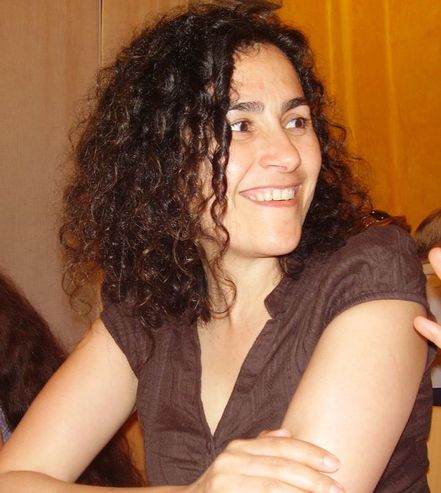
Mena Lafkioui is a Full Professor (Directeur d'études) in Berber linguistics at the Ecole des hautes études en sciences sociales (EHESS) in Paris, holding a concurrent position as Research Director at the Centre National de la Recherche Scientifique (CNRS). She has been affiliated with these institutions since 2018 and 2014 respectively, following previous academic positions at Università degli Studi di Milano-Bicocca, Università della Calabria, and Ghent University. Her educational background includes a Habilitation in 'Sciences du langage' from EHESS (2010), a Ph.D. in Linguistics from INALCO, Paris (1999), a Postgraduate degree in Linguistics from INALCO (1995), and a Master's in Oriental Languages and Cultures from Ghent University (1994). Lafkioui's research spans Berber linguistics, geolinguistics, sociolinguistics, Afroasiatic linguistics, Arabic dialectology, and negation typology. Her work integrates structural linguistic analysis with sociocultural contexts, particularly focusing on the Rif Berber language continuum, language contact phenomena, and the impact of digital communication on Amazigh identity construction. Analysis of her recent publications reveals a consistent focus on Berber language structures, particularly examining negation patterns, topicalization mechanisms, geolinguistic variation, and the impact of language contact with Arabic. Her methodological approaches blend traditional linguistic analysis with computational and algorithmic perspectives, reflecting an innovative approach to language documentation and analysis. Elected as Academician, Accademia Ambrosiana, Milan (2014) Elected as founding member of the 'Classe Africa' of the Accademia Ambrosiana, Milan (2014) Elected as founding member of the 'Section Berbero' of the Accademia Ambrosiana, Milan (2014) Lafkioui has supervised 10 PhD students and 55 Master's dissertations while securing competitive research grants across Europe. She serves on multiple editorial boards including the International Journal Dialectologia et Geolinguistica and Afrika Focus. Her institutional roles include membership on the Scientific Council of the Laboratoire d'excellence Empirical Foundations of Linguistics in Paris and participation in numerous academic committees overseeing PhD programs in African languages and cultures. She has organized 17 international scientific meetings and is an active member of 10 scientific societies, including the Société de Linguistique de Paris, demonstrating her significant contribution to the academic community in linguistics and African studies.
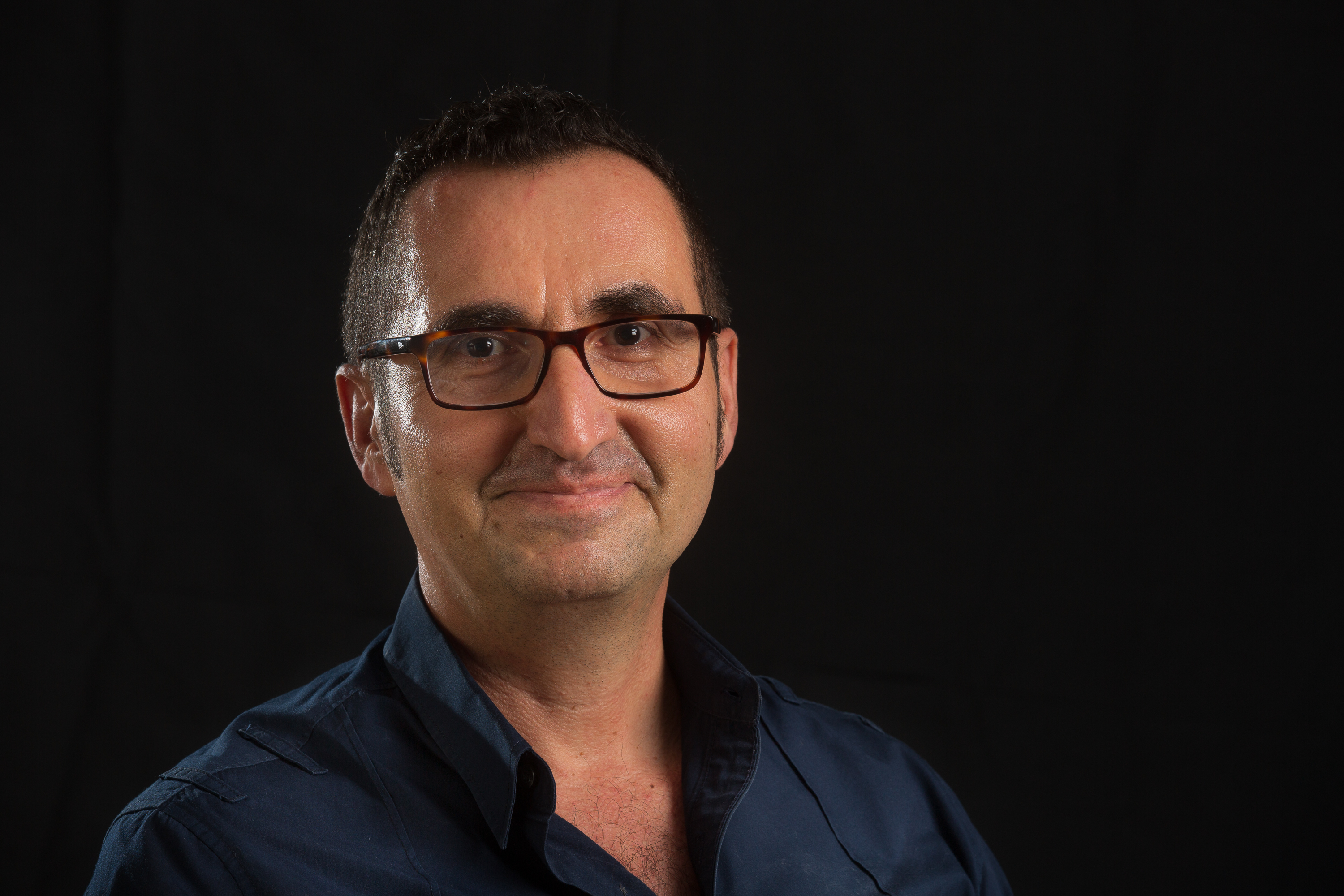
Josep Quer is an ICREA Research Professor at the Department of Translation and Language Sciences, Universitat Pompeu Fabra, leading the LSCLab. He holds a PhD from Utrecht University and has held roles such as Full Professor at the University of Amsterdam and Researcher at the University of Barcelona. His work focuses on theoretical linguistics, particularly sign languages, Romance languages, and Greek. Education: PhD in Linguistics, Utrecht University (1998) Master in Grammatical Theory, Universitat Autònoma de Barcelona (1993) Classics (Greek) Degree, University of Barcelona (1988) Research Interests: Sign language syntax/semantics Romance languages Greek linguistics Modality effects in language Grammar writing standards for sign languages Publications: Over 50 peer-reviewed articles in journals like Language , Lingua , and Sign Language & Linguistics . Recent work emphasizes methodological advancements in sign language research and cross-modal comparisons. Awards: Catalan Academy membership (2021), NIAS Fellowships (2021-2024), and APANSCE Prize (2006). Grants & Leadership: Coordinated EU H2020 project SIGN-HUB (2016–2020). Led development of Gramàtica bàsica de la llengua de signes catalana (2005) with GRIN research group. Served as journal co-editor and network chair for COST Action IS1006. Labs/Teams: Directs LSCLab and manages LSC corpus/lexicon projects under Institut d’Estudis Catalans.
Mithun Marianne is a Professor of Linguistics at the University of California, Santa Barbara (UCSB), USA, since 1986. Previously, she held roles including Visiting Professor at UC Berkeley (1982-1986) and Professor at SUNY Albany (1973-1985). She earned a Ph.D. from Yale University in 1974. Her research focuses on morphology, syntax, discourse, prosody, language contact/change, typology, and documentation of Indigenous and Austronesian languages. She has held visiting positions globally, including at the University of Nice, Stanford, and La Trobe University. She serves on editorial boards for journals like Amérindia and Journal of Linguistic Typology . Her honors include Fellow of the Linguistic Society of America (2008), the Medaille du Collège de France (2005), and Doctorates Honoris Causa from La Trobe University (2003) and the University of Oslo (2000). She was elected to the Norwegian Academy of Science and Letters in 1998. Recent activities include leading international research initiatives on cross-linguistic clause combining (2010-2012) and serving on scientific committees for language documentation conferences. Her work bridges linguistic theory with empirical analysis, emphasizing fieldwork and endangered language preservation.
Mark Steedman is a Professor of Cognitive Science at the School of Informatics , University of Edinburgh, and an Adjunct Professor in the Department of Computer and Information Science at the University of Pennsylvania. His research bridges Artificial Intelligence , Cognitive Science , and Computational Linguistics , with a focus on Combinatory Categorial Grammar (CCG) , Prosody and Intonation , and Temporal Semantics . He has led the Institute for Language, Cognition, and Computation and contributed to interdisciplinary research at the Human Communications Research Center and Centre for Speech Technology Research . Research Interests : Steedman's work explores the intersection of formal grammar, computational models, and cognitive processes. He investigates how CCG parsing can enhance semantic inference, how prosodic features improve speech processing, and the role of temporal semantics in language understanding. His projects often integrate language models with entailment graphs for question answering and dialogue systems. Scientific Awards : Fellow of the American Association of Artificial Intelligence (1993) Fellow of the Royal Society of Edinburgh (2002) Fellow of the British Academy (2002) Member of Academia Europaea (2006) Best Paper Awards at ACL 2023 and AACL/IJCNLP 2023 Influential Paper Award (IFAAMAS 2017) Recent Trends in Publications : His recent work emphasizes language models for semantic inference , entailment graphs in multilingual settings, and incremental parsing for brain-language interfaces. Papers address challenges in hallucination , cross-lingual transfer , and prosody-text alignment .
Mathilde Eveline Keizer is a Professor of English Linguistics: Variation and Cognition at the Department of English and American Studies, Faculty of Philological and Cultural Studies, University of Vienna. She serves as both Vice-Director of Studies for English and American Studies and Deputy Head of the Department of English and American Studies, demonstrating significant leadership within the institution. Professor Keizer's educational background includes: MA in English language and literature, Vrije Universiteit Amsterdam (1987) PhD in English Linguistics, Vrije Universiteit Amsterdam (1992) Her primary research focuses on the theoretical framework of Functional Discourse Grammar, with particular emphasis on the Noun Phrase in English and Dutch, possessive constructions, reference and predication, definiteness, English pronouns, apposition, information structure, linguistic categorization, and semi-fixed constructions. Professor Keizer leads the FunCog research group, which investigates the intersection of functional and cognitive approaches to language structure. Her work demonstrates how linguistic structures emerge from the interaction of cognitive processes and communicative needs, providing insights into the dynamic nature of language organization. Analysis of Professor Keizer's recent publications reveals a consistent focus on English syntax within the framework of Functional Discourse Grammar. Her work spans noun phrase structure, partitive constructions, prepositional phrases, and adverbial modification, demonstrating the versatility of FDG in addressing diverse syntactic phenomena. A notable trend is her increasing attention to cross-linguistic comparisons, particularly between English and Dutch, which enriches our understanding of language universals and specifics. Professor Keizer has made significant contributions to the field through her extensive publication record, including authored and edited books that have shaped contemporary understanding of functional-cognitive approaches to grammar. Her work has appeared in leading linguistics journals and handbooks, establishing her as a prominent voice in theoretical linguistics. As an educator, Professor Keizer teaches courses on Functional Discourse Grammar, Cognitive Grammar, Linguistic Categorization, Fuzzy grammar, Linguistic models and approaches, The English Noun Phrase, English adjectives, English idioms, and English syntax. She has supervised numerous graduate students through thesis seminars and advanced courses in linguistics, contributing significantly to the development of the next generation of linguists. Professor Keizer leads the FunCog research group, which brings together scholars interested in the intersection of functional and cognitive approaches to language. The group focuses on empirical investigations of linguistic structures through the lens of Functional Discourse Grammar, fostering interdisciplinary collaboration and innovative research methodologies that bridge theoretical linguistics with practical applications in language teaching and computational linguistics.