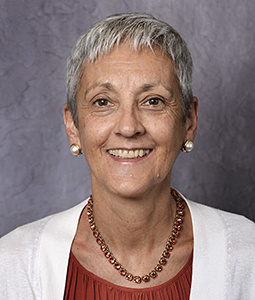
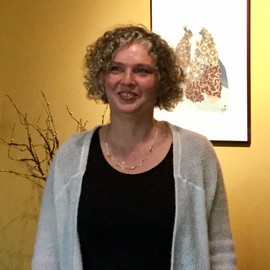
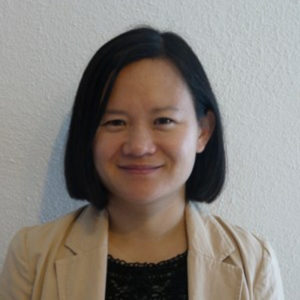
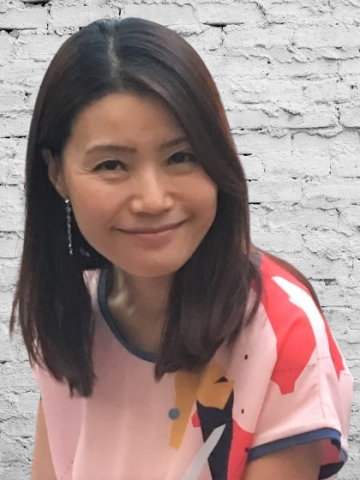
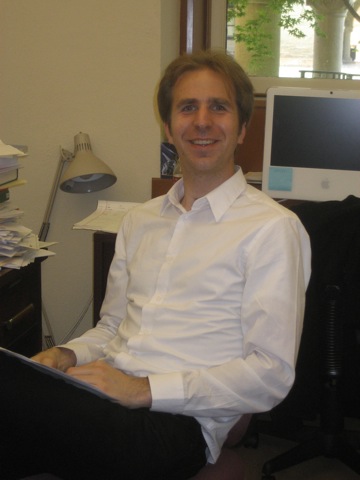
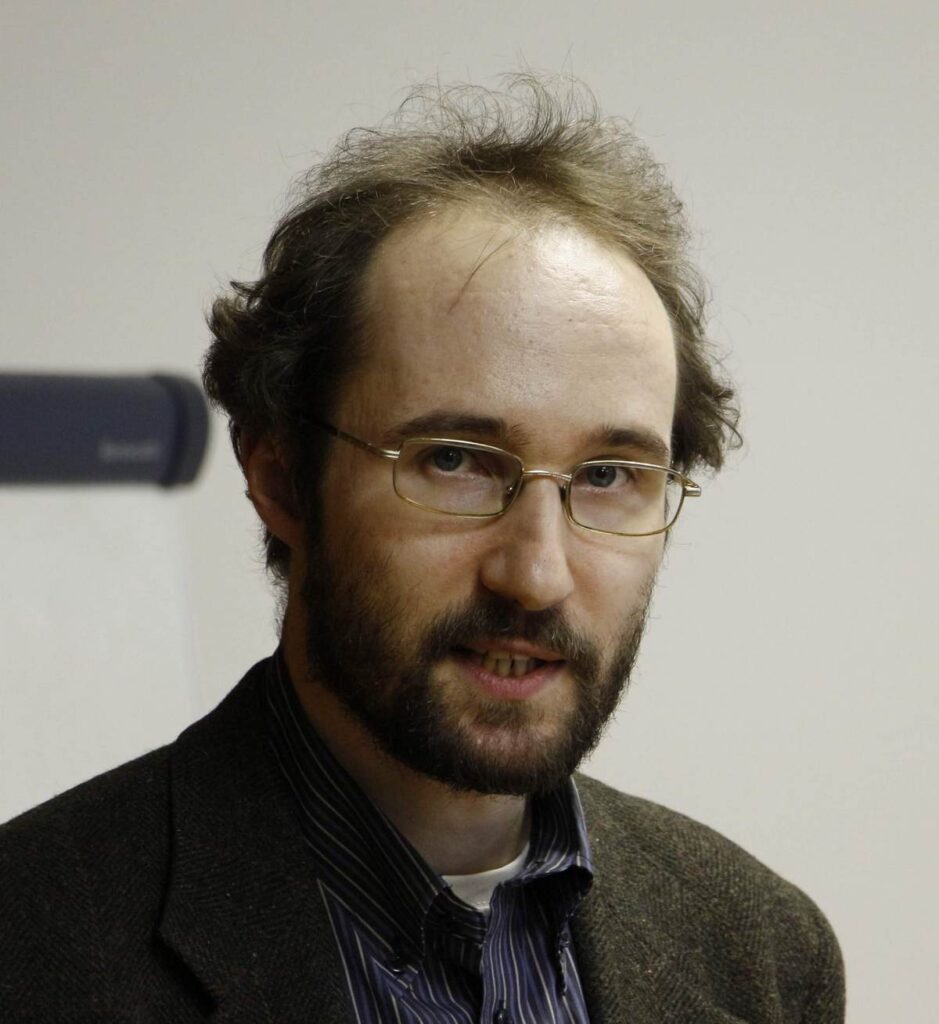
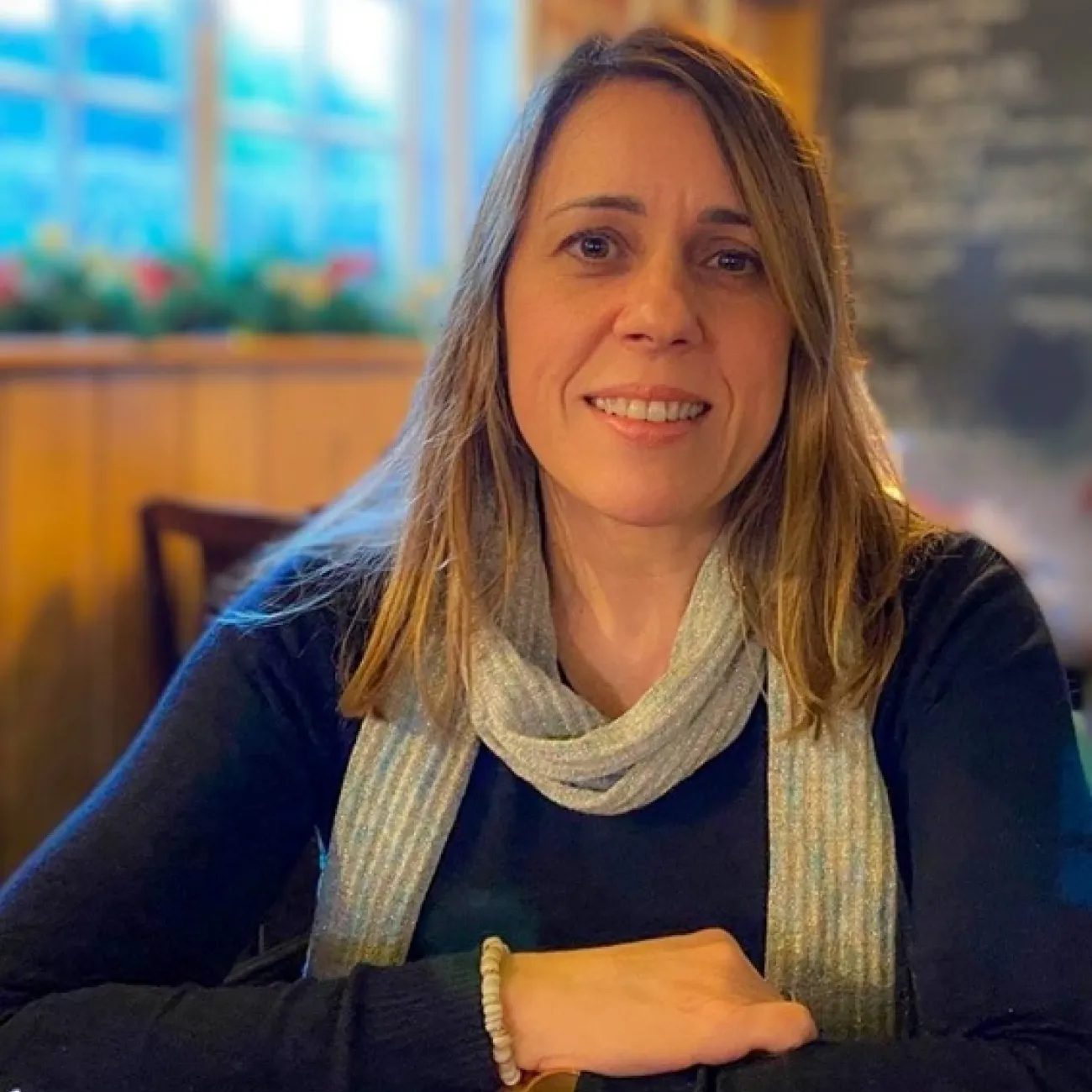
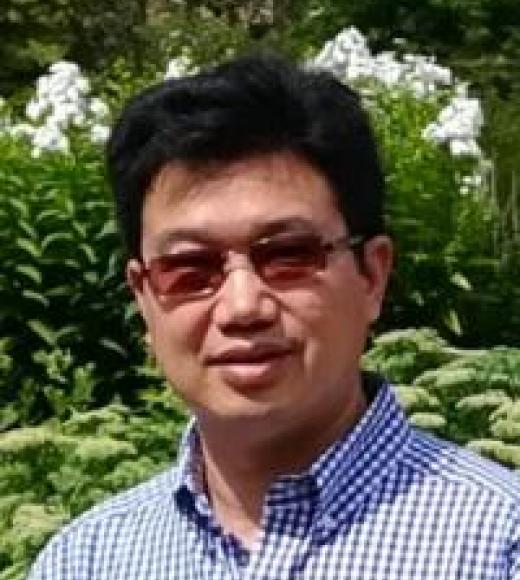
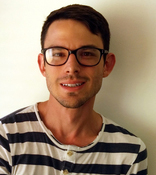
Dr. Caitlin Meyer is an Assistant Professor of Dutch Linguistics at the Faculty of Humanities, University of Amsterdam (UVA), specializing in language acquisition and theoretical linguistics. Her research focuses on syntactic development, numerical cognition, and pragmatic particle usage in Dutch, with significant contributions to understanding verb clusters and ordinal number acquisition. Education: PhD in Linguistics from UVA Research: Language acquisition, Dutch syntax, cognitive development, experimental linguistics Collaborations: Engaged with Leiden University Centre for Linguistics (LUCL) for interdisciplinary research Her recent publications analyze Dutch verb cluster acquisition (2015-2020), ordinal number learning strategies (2016-2021), and pragmatic particle development (2017). She employs experimental methods and cross-linguistic comparisons in her work, leveraging LUCL's Phonetics, EEG, and Eye-tracking labs. While no formal awards are listed in this dataset, her research has been published in key academic outlets. She contributes to teaching through formal programs at University of Amsterdam and participates in LUCL's educational initiatives.
Anne Bezuidenhout is a Professor in the Department of Philosophy & Linguistics at the University of South Carolina's McCausland College of Arts and Sciences. Holding a PhD from the University of Michigan (1990), she has been affiliated with the Linguistics Program since 1992 and the Institute of Mind and Brain since 2013. Education: PhD in Philosophy, University of Michigan (1990) Affiliations: Core Member, Linguistics Program; Affiliated Member, Institute of Mind and Brain Her research focuses on the semantics-pragmatics interface , particularly: Presuppositions and conversational implicatures Discourse processing in anaphoric pronoun resolution Foregrounding/backgrounding of non-restrictive relative clauses Conversational tailoring and perspective-taking Noun-noun compounds and enriched composition Recent publications examine presupposition theory, discourse prominence, and reference mechanisms. She teaches courses in formal logic, semantics-pragmatics, and philosophy of mind. Service roles include: Co-Editor-In-Chief, Journal of Pragmatics Executive Secretary, American Pragmatics Association (AMPRA) Editorial Board Member, Pragmatics and Cognition Advisory Editorial Board, Palgrave Studies in Pragmatics, Language and Cognition
Prof. Heike Wiese holds the chair of German in Multilingual Contexts at Humboldt University of Berlin within the Faculty of Language, Literature and Humanities, Department of German Studies and Linguistics. Previously, she was a professor at University of Potsdam and held visiting positions at Yale University and Brandeis University. She is a distinguished member of the Academia Europaea and of the German Council for Migration, as well as the speaker of the Centre 'Language in Urban Diversity'. Her research focuses on the dynamics of multilingual settings, with particular attention to grammatical developments, monolingual ideologies, linguistic discrimination, and empowerment. Her primary research interests include: Urban contact dialects (including 'Kiezdeutsch' in Germany) Linguistic practices of heritage speakers Turkish-German language contact phenomena Grammatical-pragmatic interfaces and linguistic architecture (V2 and V3 word order in Germanic) Mass and count nouns, numeral constructions, and focus particles Discourse markers and emoji as linguistic elements Linguistic discrimination and empowerment in society and education Prof. Wiese's recent scholarly work demonstrates a sophisticated integration of theoretical linguistics with sociolinguistic and educational perspectives. Her publications from 2021-2025 reveal a consistent focus on language variation in multilingual contexts, particularly examining how linguistic systems interact across language boundaries. She has made significant contributions to understanding urban contact dialects, especially Kiezdeutsch in Berlin, and German-speaking communities in postcolonial settings like Namibia and Australia. Her research challenges monolingual ideologies and advocates for linguistic diversity through both theoretical analysis and practical applications. Her scientific recognition includes: Membership in the prestigious Academia Europaea Leadership role as speaker of the Centre 'Language in Urban Diversity' Through extensive outreach activities, Prof. Wiese collaborates with multilingual communities, kindergartens, schools, educational policymakers, and museums. She has developed practical materials for teachers to address linguistic diversity in classrooms and challenge linguistic discrimination. Her research methodology emphasizes 'language situations' - a technique to elicit comparable, naturalistic data across registers, languages, and speakers, recognizing the complexity of multilingual repertoires. Prof. Wiese leads research in the Multilingualism, Interculturality and Language Lab (CU.mil), where her team investigates language variation in urban contexts and develops methodologies for studying linguistic diversity. Her work bridges theoretical syntax with sociolinguistics, psycholinguistics, and educational linguistics, with important implications for language policy, teacher education, and public understanding of linguistic diversity in increasingly multicultural societies.
Dr. Angeliek van Hout is a faculty member at the University of Groningen's Faculty of Arts, where she leads the Acquisition Lab within the Center for Language and Cognition Groningen (CLCG). Her academic profile centers on experimental research into first language acquisition in typically developing monolingual children, employing a crosslinguistic perspective to investigate fundamental aspects of language development. Her research expertise spans multiple interconnected domains of linguistic development: Temporal reference (tense and aspect, telicity, event culmination) Nominal reference (definiteness, quantification) Syntactic structures (questions, passives, pronouns) Pragmatic reasoning (scalar implicatures, theory of mind) Dr. van Hout's methodological approach integrates formal linguistic theory with empirical experimentation, examining how children acquire complex linguistic structures across different languages. Her recent work demonstrates particular focus on logical operators and their interpretation in child language, with extensive crosslinguistic comparisons examining how children process disjunction under negation in Dutch, French, Hungarian, and Italian. She investigates the cognitive mechanisms underlying these linguistic phenomena, bridging theoretical linguistics with cognitive science. Her publication record shows consistent productivity with 89 research outputs including 25 articles, 23 conference contributions, and 20 book chapters. Notable recent publications include work on prosodic disambiguation in Dutch, free choice interpretation in French children, and crosslinguistic patterns in quantifier acquisition. Dr. van Hout actively contributes to the academic community through: Supervision of PhD students (4 supervised works documented) Editorial work including the TABU Festschrift for Jack Hoeksema Organizing academic events such as "Novel Semantic Research in Theory, Processing and L1 Acquisition" Presenting research at international conferences including the Boston University Conference on Language Development Her research has practical applications in understanding typical language development trajectories, which she communicates to broader audiences through public engagement activities. She has presented on language development in twins at multiple public events and participated in the NEMO Science Live initiative from 2016-2018, demonstrating commitment to knowledge transfer beyond academic circles. As leader of the Acquisition Lab, Dr. van Hout directs research examining how children develop linguistic competence across various domains, with particular attention to the interface between syntax, semantics, and pragmatics in early language development.
Ana Teresa Pérez-Leroux is a Professor of Spanish and Linguistics and Chair of the Department of Spanish and Portuguese at the University of Toronto . She also serves as Director of the Cognitive Science Program. Her research focuses on child language acquisition, bilingualism, and Spanish syntax, with an emphasis on understanding how children learn complex grammatical structures. She holds a PhD in Hispanic Linguistics from the University of Massachusetts Amherst. Key affiliations include the Faculty of Arts and Science , where she has been a professor since 2009, and leadership roles such as Chair of Spanish and Portuguese (2019–present) and Director of Cognitive Science (2014–2019). Earlier roles include Visiting Professorships at the Federal University of Rio de Janeiro and Michigan State University. Research Interests : Her work investigates syntactic and semantic development in monolingual and bilingual children, particularly recursion in noun phrases, clitic usage, and tense/mood systems. Recent projects include SSHRC-funded studies on noun phrase complexity ($158,848, 2014–2018), revealing insights into recursive structures across languages like Japanese, German, French, Spanish, and English. Grants and Collaborations : Co-PI on SSHRC Insight Grant exploring recursive embedding in children. Collaborators include Susana Bejar, Diane Massam, and Yves Roberge. Supervises over 20 graduate students and has published extensively in Bilingualism: Language and Cognition , Linguistics , and Language . Education : PhD in Hispanic Linguistics (1993), MA in Spanish & Linguistics (1992), both from UMass Amherst. BA in Modern Languages (1983) from Universidad Autónoma de Santo Domingo.
Dr. Luke Adamson is a tenure-track Researcher in Research Area 3 'Syntax and Lexicon' at the Leibniz-Zentrum Allgemeine Sprachwissenschaft (ZAS), Berlin. Previously, he held a Postdoctoral Fellowship at Harvard University (2020–2022) and served as Lecturer at Rutgers University (2022–2023). He earned his PhD in Linguistics from the University of Pennsylvania (2019) and holds dual degrees from Oberlin College: a Bachelor of Arts in Psychology and a Bachelor of Music in Cello Performance (2010–2014). His research focuses on nominal features, grammatical gender, and syntactic modularity, with notable projects exploring gender locality hypotheses, coordination resolution in three-gendered languages, and suppletion phenomena. Collaborators include prominent linguists such as Elena Anagnostopoulou (University of Crete), Ruth Kramer (Georgetown University), and Stanislao Zompì (Universität Potsdam). Key contributions include work on gender assignment constraints in languages like Greek, Swedish, and Lithuanian, as well as syntactic interfaces in Jarawara and Italian. Recent presentations include invited talks at the University of Geneva (June 2025), Yale University (October 2024), and the Brussels Conference on Generative Linguistics (December 2024). He co-edits Linguistic Inquiry Squibs & Discussion and organizes the ZAS Brown Bag Lunches. His work has been supported by grants from the National Science Foundation and the European Research Council. Adamson’s academic networks span formal linguistics and typological studies, with ongoing projects addressing politeness pronouns in Romance languages, emotive predicates in clausal complements, and allosemy in Greek gender systems.
Prof. Dr. Mingya Liu is a W1-Professor for Empirical English Linguistics (EEL) at the Department of English and American Studies, Humboldt-Universität zu Berlin. Her research focuses on the intersection of lexicon, syntax, semantics, and pragmatics, with applications to language processing, acquisition, and sociolinguistic variation. Key projects include investigations into polarity sensitivity, modality, negation, and register effects in language use. Her work employs experimental, cross-linguistic, and socio- and psycholinguistic methods. Notable contributions include studies on modal concord (e.g., 'must certainly'), negative concord variation, and the social meanings of linguistic constructions in English, German, and Chinese. She is a core member of the CRC 1412 'Register: Language Users’ Knowledge of Situational-Functional Variation,' contributing to interdisciplinary research on language variation and cognitive modeling. Publications emphasize experimental findings on linguistic and social meaning correlations, register sensitivity in language use, and the role of interlocutor relations in formality perception. Collaborative efforts with institutions like HU Berlin and international scholars further highlight her commitment to advancing theoretical and experimental linguistics.
Minju Kim is a Professor in the Korean Department within the School of Modern Languages and Literatures. She holds significant academic and editorial roles, including President of the International Circle of Korean Linguistics (ICKL) and Editor-in-Chief of The Korean Language in America . Her expertise spans Pragmatics, Grammaticalization, Discourse Analysis, Language and Gender, and Language Education. She earned her B.A. and M.A. from Yonsei University and her Ph.D. from the University of California, Los Angeles (UCLA). Dr. Kim’s research focuses on Korean linguistic structures, including honorifics, stance markers, and historical grammaticalization processes. Notable contributions include studies on Korean connectives, modal particles, and gendered language use in media. She has received the Korea Foundation Field Research Grant (2025). Her publications reflect interdisciplinary engagement in linguistics and sociolinguistics, with recent work addressing topics like Korean semi-honorific styles and cross-linguistic comparisons. She actively contributes to academic discourse through editorial roles and international collaborations.
Scott Grimm is a Professor in the Department of Linguistics at the University of Rochester. He holds a PhD from Stanford University (2012) and an MS in Logic from the University of Amsterdam (2005). Prior to joining Rochester, he conducted postdoctoral research at the University Pompeu Fabra in Barcelona, working on natural language ontology and semantic representation of abstract objects. His research focuses on semantics, corpus-based approaches, linguistic fieldwork in African languages (especially Gur languages), lexicography, experimental semantics, and technology for fieldwork. He teaches courses such as Introduction to Semantic Analysis, Lexical Semantics, Data Science for Linguistics, and Computational Semantics. His work emphasizes interdisciplinary methods, combining formal semantics with computational tools and community-based language documentation. Recent research explores countability in morphologically complex languages and predictability in grammatical encoding. Grimm’s publications span theoretical semantics, language documentation, and technological applications in linguistics. Notable contributions include co-authoring the Dagaare-English Dictionary and advancing methodologies for endangered language preservation through digital platforms.
Dr. habil. Peter Arkadiev is a prominent linguist specializing in morphology, syntax, and typology, with a focus on Baltic, Slavic, and Northwest Caucasian languages. He holds a research position at the University of Potsdam, Institute of Slavistics, funded by the German Research Foundation (DFG) since December 2024. Previously, he held roles including Visiting Professor at the University of Mainz, Senior Fellow at the Freiburg Institute for Advanced Studies, and Marie Curie Senior Fellow. His academic credentials include a Habilitation in typological linguistics (2019) and a PhD from the Russian State University for the Humanities (2006). Research Interests: - Language Typology and Cross-Linguistic Comparison - Areal Linguistics and Language Contact - Case Systems and Argument Structure - Tense-Aspect-Actionality - Morphological Complexity and Polysynthesis - Baltic, Slavic, and Northwest Caucasian Languages Awards: Member of Academia Europaea (2023), Professor of the Russian Academy of Sciences (2022), Marie Curie Senior Fellowship (2023–2024), and multiple DFG-funded projects. His work bridges theoretical linguistics with empirical fieldwork, particularly in the North Caucasus. Publications span over 30 peer-reviewed articles and edited volumes, focusing on topics like prefixal perfectivization, applicative constructions, and morphological borrowing. Current research includes the DFG-funded project 'Typology and Diachrony of Ambifixation' (2024–2027).
Dr. Yi-ching Josephine Su is an Associate Professor at the Graduate Institute of Linguistics, National Tsing Hua University, Taiwan. Her research focuses on cognitive science, language acquisition (first and second), psycholinguistics, neurolinguistics, developmental language disorders, and sentence processing. She leads the Acquisition/Psycholinguistics Lab, employing experimental methods like eye-tracking and ERP to study language processing in normal adults, children, and clinical populations. Education: Ph.D. in Linguistics, University of Maryland (2001) M.A. in Cognitive Science, Johns Hopkins University M.A. in Linguistics, National Tsing Hua University B.A. in Foreign Languages and Literature, National Taiwan University Research Interests: Dr. Su explores syntactic/semantic aspects of language acquisition and processing, including anaphora resolution, scope ambiguities, and cross-linguistic comparisons. Her work emphasizes child-adult parallels in comprehension mechanisms and the interplay between syntax, semantics, and pragmatics. Grants & Projects: 2021–2023: Online processing of reflexives in L2 English/Mandarin 2018–2021: Cross-linguistic L2 acquisition of pronoun resolution Longitudinal studies on child language development and cochlear implant outcomes Lab Activities: The lab collaborates with interdisciplinary teams to investigate neural correlates of language processing. Training includes experimental design, statistical analysis, and theoretical linguistics, preparing students for advanced research in acquisition and psycholinguistics.
Professor Laura Dominguez holds a Professorship in Linguistics at the University of Southampton's Department of Modern Languages and Linguistics. She serves as Head of Department (2021-2025), REF Champion for Impact, and has held roles including Deputy Head of Department and Head of Research. Her research focuses on formal second language acquisition, bilingualism, native language attrition, and syntactic theory within a generative framework. Key projects include the ESRC-funded SPLLOC corpus initiative and an AHRC project on grammatical attrition. Her research investigates prosodic/syntactic constraints in Spanish word order, L2 acquisition of tense-aspect morphology, and L1 attrition mechanisms in bilinguals. She leads editorial boards for journals like Second Language Research and Spanish Heritage Journal , and holds roles in professional bodies including the ESRC Peer Review College and EuroSLA Executive Committee. Current research emphasizes syntax-theory integration with acquisition studies, leveraging experimental and corpus-based methods. She supervises multiple PhD students in Applied Linguistics and Modern Languages, and accepts new PhD applications. Her work bridges theoretical linguistics with empirical studies of multilingual development.
Chengzhi Chu is an Associate Professor of Chinese and Senior Program Advisor (Chinese) at the University of California, Davis. He is affiliated with the Graduate Group in Linguistics and holds a Ph.D. from the University of Hawaii. His research focuses on Chinese linguistics, cognitive semantics, second language acquisition, and the application of technology in language instruction. He has authored/co-authored multiple textbooks, including the Chinese Breeze graded reader series, and developed the ChineseTA software for language teaching materials. His work integrates theoretical linguistics with practical pedagogy, emphasizing cognitive approaches to language structure and learning. Dr. Chu's research explores topics such as motion event semantics, figure-ground relationships in Chinese, and the design of effective language-teaching resources. He has published extensively on prepositions, reflexives, and mood particles in Mandarin, as well as the historical interplay between Chinese script and language. Notably, he co-developed the Corpus of Chinese Interlanguage (CCI 1.0), a foundational resource for studying learner language. His teaching spans advanced Chinese language courses, classical Chinese, and research methodologies. He has contributed to edited volumes on Chinese pedagogy and instructional materials. While no formal awards are listed, his impactful contributions to applied linguistics and language education are evident through his scholarly output and educational tools. As an advisor to graduate students, Dr. Chu supports research in linguistics and language education. His work bridges computational linguistics with traditional language studies, exemplified by software like ChineseTA and his corpus-based research. He is actively involved in the North American Conference on Chinese Linguistics and other academic networks.
Gregory Scontras is Associate Professor and Undergraduate Director in the Department of Language Science at UC Irvine's School of Social Sciences. His research examines mental representations of language through formal semantics, experimental psychology, and computational cognitive science approaches. Research focuses on quantification, measurement semantics, context in ambiguity resolution, and heritage language acquisition. Recent work (2023-2025) investigates adjective ordering preferences across languages, multi-generational heritage language complexity, and computational models of social inference. Collaborations include researchers at Stanford, MIT, and Osnabrück. Current projects explore subjectivity in pragmatic inference, cross-linguistic scope ambiguity, and Rational Speech Act frameworks.
Eva Liina Asu-Garcia is an Associate Professor of Phonetics at the University of Tartu's Faculty of Arts and Humanities, Institute of Estonian and General Linguistics (0.80 position), and an Associate Professor of Swedish Language at the Institute of Foreign Languages and Cultures (0.20 position). She has been affiliated with the University of Tartu since 1995, holding various academic positions including Lecturer, Research Fellow, Senior Research Fellow, and now Associate Professor. She also served as Head of Department at the Institute of Foreign Languages and Cultures from 2021 to 2024. Dr. Asu-Garcia earned her Doctoral degree in Linguistics from the University of Cambridge in 2004, with her dissertation titled 'The Phonetics and Phonology of Estonian Intonation,' supervised by Prof. Francis Nolan. Prior to this, she completed an M. Phil in English and Applied Linguistics (1996-1997) and a B.A. in English Language and Literature (1989-1995) from Tartu University. Her research primarily focuses on phonetics, with special emphasis on Estonian intonation, prosody, and speech production. She investigates the acoustic and articulatory properties of Estonian quantity distinctions, intonation patterns in various discourse contexts, and cross-linguistic aspects of phonetics, particularly in relation to Swedish and Spanish language learners. Her work often combines experimental methods with theoretical linguistics to understand how prosody functions in communication. She has published extensively in international journals and conference proceedings, with recent work examining multimodal aspects of speech, cross-cultural perception of vocalizations, and the documentation of endangered language varieties. Dr. Asu-Garcia has received numerous awards and scholarships throughout her career, including the Kordelin Foundation Scholarship (2016, 2006), Valter Niilus award (2010), and several Cambridge Overseas Trust scholarships. She is an active member of multiple professional organizations including the International Speech Communication Association (ISCA), International Phonetics Association (IPA), and the British Association of Academic Phoneticians (BAAP). She currently supervises PhD student Katrin Leppik (researching Estonian vowel categories and quantity degrees in Spanish L1 speakers) and Master's student Vootele Valter (studying Ruhnu Swedish language clusivity). She has successfully supervised several other students to completion of their degrees. Dr. Asu-Garcia also leads research projects funded by the Ministry of Education and Research and the Nordic Council of Ministers, focusing on multimodal analysis of spoken Estonian and documentation of Ruhnu Swedish dialect.