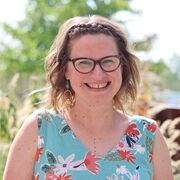
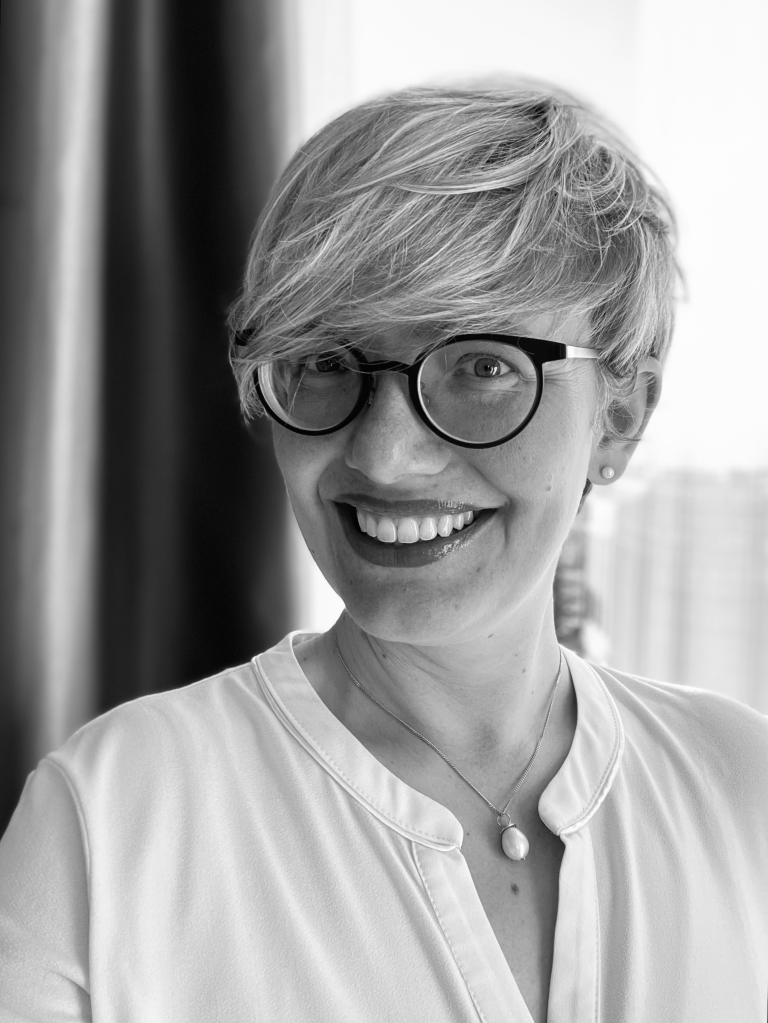
Gabrielle Hodge is a Senior Lecturer in Sign Language Linguistics at the University of Edinburgh's School of Philosophy, Psychology and Language Sciences. A deaf researcher, she specializes in sociolinguistics related to deaf communities, sign languages, and multimodal communication. Her work incorporates corpus linguistics, applied linguistics, and semiotics methodologies. Education: PhD in Linguistics (Macquarie University, 2014), BA (Hons) in Linguistics (La Trobe University, 2008). Teaching includes undergraduate and postgraduate courses in sign language linguistics and sociolinguistics. She chairs the University BSL Plan Implementation Group (2024-2030) and actively supervises PhD and MSc students in deaf community research. Research focuses on accessibility, sign language corpus methods, and inclusive language theory. Notable projects include the Accessibility & Inclusion Toolkit for deaf Australians and Signing to Know & Survive , exploring deaf communication resilience. She develops training for educators and interpreters, emphasizing direct access without relay systems. Key contributions include advancing corpus-driven sign language research, analyzing deaf professionals' trust in interpreters, and creating climate change resilience resources in Auslan. Her work challenges traditional linguistic frameworks to better incorporate deaf perspectives and embodied communication practices.
Professor Emma Moore is a leading sociolinguist at the School of English, University of Sheffield . Specializing in the social dimensions of language, her work integrates methodologies from anthropology and sociology to investigate how linguistic variation constructs identity and social affiliations. Research focus: Sociolinguistic style, dialect contact, youth language, identity negotiation, and community-based fieldwork Key projects: Adolescence and grammar (1999-), Isles of Scilly dialect (2008-), language and inequality (2014-), language perception software (2016-) Educational background : PhD in Sociolinguistics, University of Manchester Stanford University (USA) during PhD research Research trends across her 2021-2025 publications reveal interdisciplinary exploration of: Socio-syntactic variation Clinical linguistics (2025 MDS-UPDRS studies) Digital discourse post-pandemic Indexicality and cognitive representations Dialect contact in insular communities Educational policy implications Scientific recognition : British Academy Mid-Career Fellow (2019-2020) Elected Fellow, Royal Anthropological Institute (2014) AHRC/BA funded research projects (1999-2015) Research group leadership : Mentored 9 PhD students (2004-2024) and supervised 3 undergraduate SURE projects, including analyses of: Gender in rap performance Language style and workplace inequality Oral history digitization Professional contributions : Editorial Board: Language in Society (2015-), Gender and Language (2011-2017) External Examiner: Lancaster University MA in English Language (2013-2017) Collaborative software development for dialect perception testing
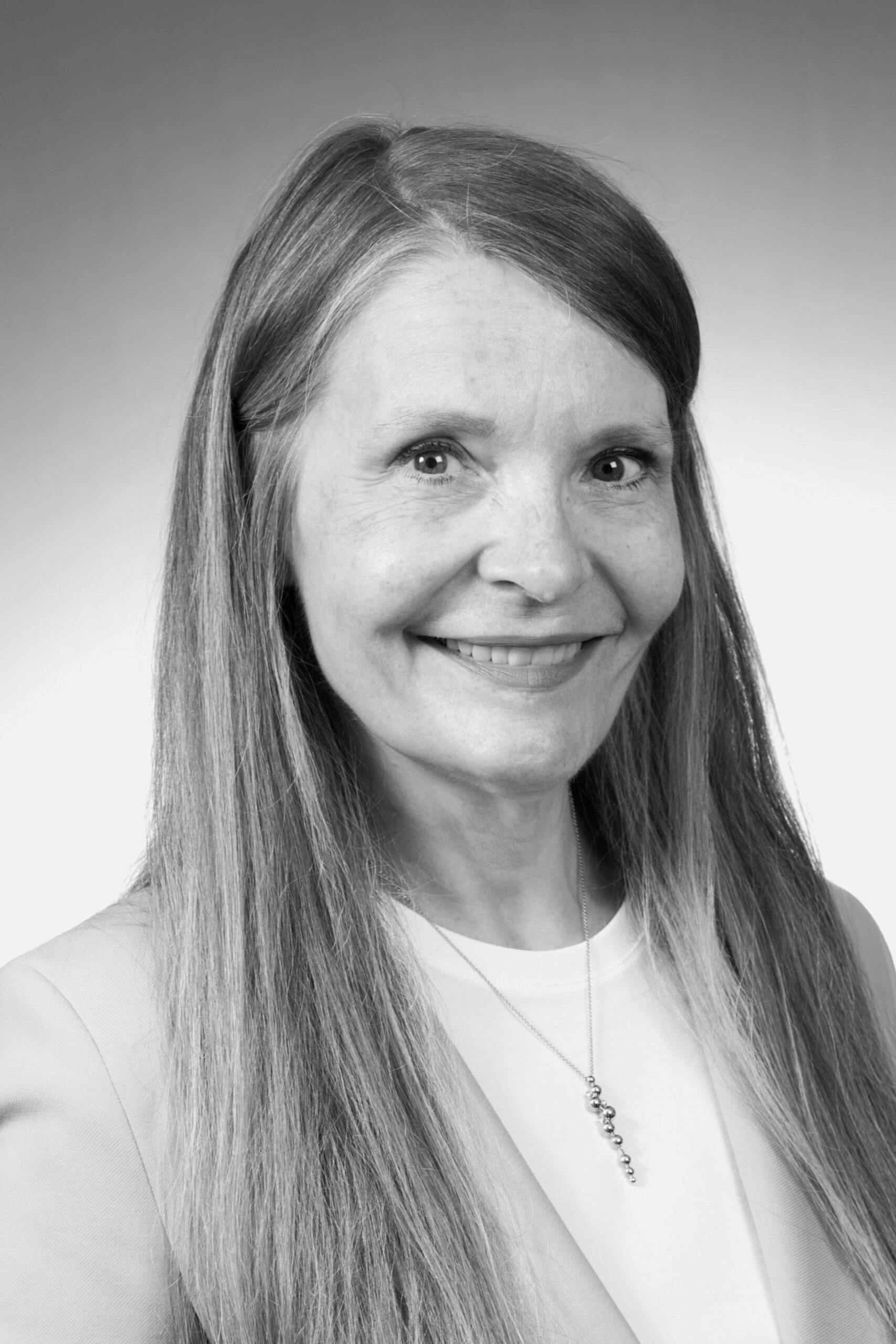
Anna Theakston is a Professor of Developmental Psychology at the University of Manchester where she holds the position of Head of Division for the Division of Psychology Communication and Human Neuroscience. She is also Co-director of the ESRC International Centre for Language and Communicative Development (LuCiD), a major research initiative focused on language development in children. Dr. Theakston completed her undergraduate degree in Psychology at the University of Nottingham and earned her PhD through research at the University of Manchester on early language development in children aged 2-3 years. She subsequently coordinated the Manchester-based Max Planck Child Study Centre before being appointed to her current professorship. Her research focuses on children's early language and communicative development during preschool and early school years, situated within a usage-based framework that emphasizes child-environment interactions and caregiver input. Her work spans multiple areas including early gestural communication, caregiver-child interactions, grammatical construction acquisition, grammatical error origins, inflectional morphology, and syntax-semantics-pragmatics interfaces in complex language development. She frequently conducts crosslinguistic comparisons and employs diverse methodologies from corpus analysis to behavioral experiments, often collaborating with computational modelers. Analysis of her recent publications reveals strong emphasis on children's comprehension and production of complex sentence structures, particularly adverbial and complement clauses, with investigations into how information structure, iconicity, and pragmatic factors influence language development. Her work increasingly examines applications in real-world contexts including schools, nurseries, and cultural institutions, with growing attention to supporting deaf children's communication development and multilingual education. Co-Director, ESRC International Centre for Language and Communicative Development (LuCiD) Active researcher with 111 research outputs including articles, datasets, and book chapters Recipient of research funding from ESRC and Max Planck Institute Professor Theakston supervises numerous PhD students investigating various aspects of language development, with recent projects examining tag questions, cultural institutions' role in language learning for minority populations, science interventions for deaf children, and Modern Foreign Language teaching in multilingual classrooms. Her research has practical impact through tools like the Teacher Toolkit for Teaching Primary MFL in Multilingual Key Stage 2 Classrooms and initiatives supporting deaf children's social communication skills. She maintains active collaborations with researchers across multiple disciplines and institutions, as evidenced by her extensive co-authorship network. Her work contributes to UN Sustainable Development Goals related to quality education and reduced inequalities.
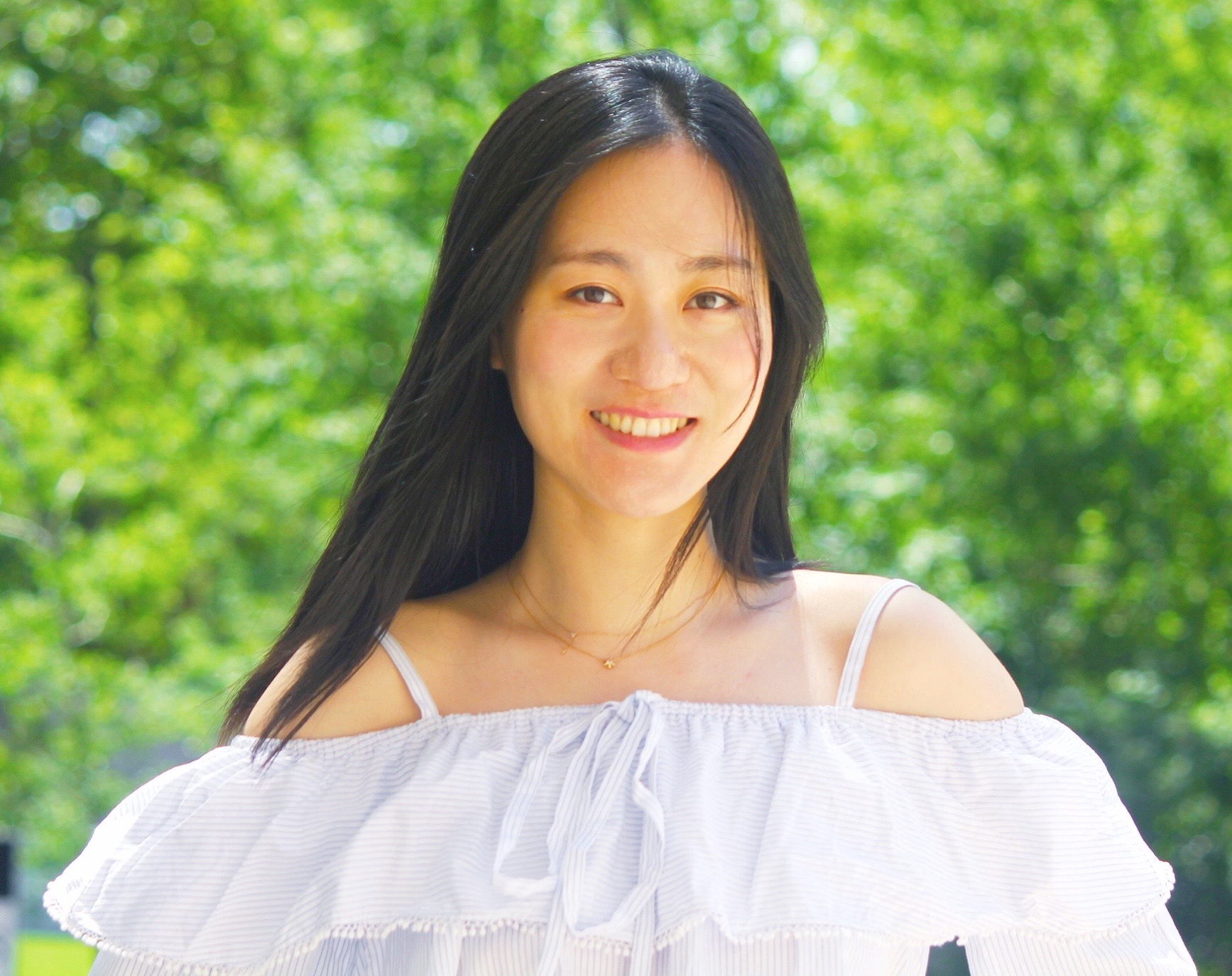
Dr. Danfeng Wu is a Research Fellow at Magdalen College, University of Oxford, conducting interdisciplinary research in syntax-semantics and syntax-prosody mappings. Her work focuses on ellipsis, focus in coordination, and the empirical interplay between syntactic structure and prosody, employing experimental phonetic methods. She investigates languages like English and Mandarin Chinese to explore the cognitive and computational aspects of linguistic structure. Her research themes include phonetics, prosody, semantics, and syntax, with a particular emphasis on how syntactic configurations interact with prosodic phrasing and stress patterns. She has contributed to studies on corrective constructions, clitic climbing in Wolof, and vowel lengthening in Zulu, demonstrating a broad methodological approach combining theoretical linguistics with experimental and computational methods. Dr. Wu is affiliated with the Phonetics Lab and Language & Brain Lab within the Faculty of Linguistics, Philology & Phonetics. She has organized interdisciplinary events such as the Oxford workshop on AI language models and developed linguistics courses for computer scientists and cognitive scientists at MIT. Her work bridges formal linguistics with cognitive science and computational linguistics, emphasizing realistic models of language acquisition and evolution.
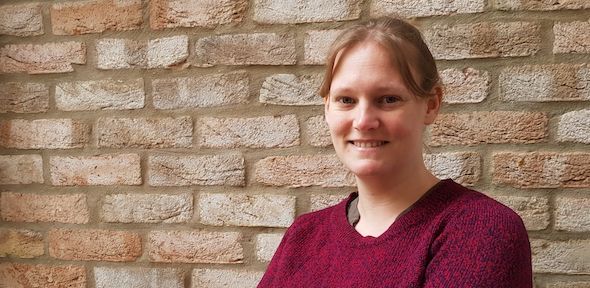
Dr. Margreet Vogelzang is a Lecturer in Psychology at Newcastle University and an affiliated researcher at Theoretical and Applied Linguistics within the Faculty of Modern and Medieval Languages and Linguistics at the University of Cambridge. Based at the English Faculty Building, 9 West Road, Cambridge, CB3 9DP, and affiliated with Trinity College at Cambridge, she maintains a dual institutional presence that reflects the interdisciplinary nature of her work. Her research program combines neuroscientific, psychological, linguistic, and statistical methodologies to investigate language and cognitive processing across the lifespan. She specializes in multilingual syntactic and semantic processing, employing both written and spoken language paradigms with offline (comprehension, judgments) and online (eye-tracking, EEG, fMRI) measures. Her work examines how hearing loss, socio-linguistic variables, and developmental conditions like autism spectrum disorder influence language processing mechanisms. Analysis of her recent publication record reveals three dominant research trajectories: (1) bilingualism effects on cognitive flexibility in autistic children, (2) neural and cognitive mechanisms of sentence processing in individuals with hearing loss, and (3) computational modeling of pronoun interpretation across diverse populations. These strands demonstrate her consistent focus on bridging theoretical linguistics with cognitive neuroscience to address practical questions about language processing variability. Dr. Vogelzang actively supervises several graduate students including Alexander Cairncross, Andromachi Tsoukala, and Chara Triantafyllidou, and serves as course contact for Li16: Psychology of language processing and learning at Cambridge. Her teaching portfolio includes psycholinguistics, neurolinguistics, cognitive science, and research methods, reflecting her methodological expertise across experimental and computational approaches.
Kajsa Djärv is a Lecturer in Linguistics at the University of Edinburgh, affiliated with the School of Philosophy, Psychology and Language Sciences and the department of Linguistics and English Language. She holds a PhD in Linguistics from the University of Pennsylvania (2019), and previously served as an Alexander von Humboldt Research Fellow at the University of Konstanz. Her research focuses on formal semantics and pragmatics, exploring interactions between syntax, semantics, and discourse. Key areas include attitude reports (e.g., belief/knowledge representations), clausal complementation strategies, factivity, and embedded main clause phenomena. She employs experimental methods to investigate grammatical constraints and cross-linguistic variation in meaning representation. Teaching responsibilities include undergraduate and graduate courses in semantic theory and guided research. She currently supervises PhD and MSc students in formal semantics and pragmatics. Notable awards include the Humboldt Research Fellowship (2020–2022). Collaborative projects involve scholars like Donka Farkas (UC Santa Cruz) and Deniz Özyıldız (University of Konstanz), addressing topics such as argument-structure alternations and meaning-driven syntactic restrictions. Djärv is an affiliate member of the MECORE research project on cross-linguistic clausal embedding patterns.
Li Nguyen is an Assistant Professor of Linguistics and Multilingual Studies at Nanyang Technological University (NTU), Singapore . Their work bridges linguistics with computational approaches, focusing on language variation, contact phenomena, and multilingual NLP. Education: PhD in Linguistics (University of Cambridge), Master’s in General and Applied Linguistics (Australian National University) Research interests include: Language variation and change in multilingual/diasporic communities Computational sociolinguistics and NLP for low-resource varieties Syntax-pragmatic interface in bicultural contexts Code-switching and heritage language documentation Recent publications highlight collaborations on Vietnamese-English and other code-switched language pairs, with a focus on NLP applications and corpus-based analysis. Their work has gained recognition through grants like the NTU Start-up Grant and Cambridge Language Sciences funding . Scientific awards: Cambridge International Scholarship, Philological Society Fieldwork Grant Li Nguyen actively collaborates on projects involving sociolinguistically informed NLP and community-driven language documentation. They have contributed to the development of the CanVEC corpus for Vietnamese-English speech research.
Dr Mary Baltazani is a Postdoctoral Researcher in Phonetics at the University of Oxford's Faculty of Linguistics, Philology & Phonetics, affiliated with the Phonetics Lab and Language & Brain Lab. Her research focuses on the interface between phonetics, phonology, and pragmatics, with special attention to intonation, Greek dialects, and sociophonetics. She leads and collaborates on projects examining language contact effects on intonation (e.g., Greek in Cyprus, Cretan Greek under Venetian influence) and the compositional nature of intonational meaning. Education: PhD in Linguistics from UCLA (2002), M.A. in Linguistics (UCLA), and academic positions at institutions including UCL, University College London, and the University of Ioannina. She has organized major conferences like BAAP 2014 and contributed to the creation of educational materials on Greek dialects through projects like VOCALECT. Research Interests : Intonation and pragmatics in Greek Historical and dialectal phonetics Language contact in the Eastern Mediterranean Prosodic typology and socioprosodic variation Current/Recent Projects: Greek in Contact (ESRC-funded): Examines Turkish and Italian influences on Greek intonation. Components of Intonation (British Academy): Investigates whether intonation's meaning is holistic or compositional. Grants include ESRC, British Academy, and NSRF European Regional Development Fund awards. Publications span encyclopedic entries, journal articles, and conference proceedings on topics like Cypriot Arabic prosody, Greek dialectal vowel systems, and historical phonetic change.
Maj-Britt Mosegaard Hansen is a Professor of Linguistics and Pragmatics at the University of Manchester since 2007. She holds a dr.phil. (higher doctorate) from the University of Copenhagen (2008) and has held leadership roles including Associate Dean for Research (2018–21) and Head of Linguistics and English Language (2014–17). A Fellow of the Royal Danish Academy (2013) and member of Academia Europaea (2020), her research focuses on pragmatics, semantics, and historical linguistics with specialization in Romance languages. She supervises PhD students across multiple institutions and serves on editorial boards for Journal of Pragmatics and Studies in Pragmatics series. Research Interests: Pragmatics and semantics, grammaticalization, verbal interaction, functional/cognitive linguistics, diachronic construction grammar, and the evolution of pragmatic markers. Current projects explore cyclicity in semantic/pragmatic change and discourse markers in Romance languages. Awards: Member of Academia Europaea (2020), Fellow of the Royal Danish Academy (2013). Teaching: Convenes Pragmatics: Meaning, Context, and Interaction (2024–25). Office hours: Mon 11am–12pm & Thu 12–1pm. Supervision: Leads supervision on topics within pragmatics, semantics, and historical linguistics, with current advisees in institutional interaction, L2 motivation, and Tibetan motion events. Past students include experts in Italo-Romance negation, French epistemic expressions, and online language communities.
Vera Hohaus is a Senior Lecturer in Linguistics at the University of Manchester, affiliated with the School of Arts, Languages, and Culture and the Department of Linguistics and English Language. She obtained her PhD from Eberhard Karls Universität Tübingen and has trained at the University of Massachusetts, Amherst and the University of British Columbia. Her research investigates how meaning emerges from the interaction of syntactic structure, lexical information, composition principles, and context. She specializes in crosslinguistic variation and its implications for language acquisition and processing. Current projects examine scalarity representation, comparison constructions, tense-modality architecture, and the grammar of alternatives. Recent publications focus on temporal ambiguity processing, crosslinguistic pragmatics, comparative semantics, and modality across languages. Her work demonstrates methodological diversity combining theoretical frameworks with experimental approaches. She leads the Psycholinguistics Laboratory and Fieldwork Hub, mentoring students in research methods and linguistic analysis. Her collaborations span multiple international institutions including the University of Oxford and University of British Columbia.
Professor Laura Dominguez holds a Professorship in Linguistics at the University of Southampton's Department of Modern Languages and Linguistics. She serves as Head of Department (2021-2025), REF Champion for Impact, and has held roles including Deputy Head of Department and Head of Research. Her research focuses on formal second language acquisition, bilingualism, native language attrition, and syntactic theory within a generative framework. Key projects include the ESRC-funded SPLLOC corpus initiative and an AHRC project on grammatical attrition. Her research investigates prosodic/syntactic constraints in Spanish word order, L2 acquisition of tense-aspect morphology, and L1 attrition mechanisms in bilinguals. She leads editorial boards for journals like Second Language Research and Spanish Heritage Journal , and holds roles in professional bodies including the ESRC Peer Review College and EuroSLA Executive Committee. Current research emphasizes syntax-theory integration with acquisition studies, leveraging experimental and corpus-based methods. She supervises multiple PhD students in Applied Linguistics and Modern Languages, and accepts new PhD applications. Her work bridges theoretical linguistics with empirical studies of multilingual development.
Lucia Busso is a Researcher at Aston University, affiliated with the Research Centre for the Humanities and the Aston Institute for Forensic Linguistics within the College of Business and Social Sciences. Her research focuses on usage-based models of language, corpus linguistics, cognitive linguistics, and experimental methods applied to forensic and sociolinguistic contexts. She holds a PhD in Linguistics from Università di Pisa (2015–2018), awarded in 2019. Her work spans topics such as valency coercion in Italian, construction grammar, forensic linguistic analysis, and corpus-driven studies of media representation. Key areas include analyzing power dynamics in online communities, legal-lay language differences, and metaphorical discourse in pandemic reporting. She contributes to interdisciplinary projects, including the development of specialized corpora like CorIELLS and the Aston Forensic Linguistic Databank (FOLD). Busso’s research highlights the intersection of cognitive and corpus-based approaches, with recent studies emphasizing forensic applications, gender-based violence representation, and sociolinguistic patterns in Italian and English. Her methodologies integrate computational tools, experimental psychology, and qualitative discourse analysis. Her articles reflect a commitment to advancing linguistic theory while addressing real-world issues like media framing, legal language, and anonymous communication dynamics. She actively engages in public outreach, such as the CorpusCast podcast episode on forensic linguistics.
Dr Christina Sevdali is a Senior Lecturer at the School of Communication and Media , Ulster University. Her academic career spans theoretical and applied linguistics with a focus on Greek syntax, case systems, and multilingualism. Education: BA in Greek Philology (University of Crete, 2000), MPhil in Theoretical Linguistics (University of Cambridge, 2002), PhD in Linguistics (University of Cambridge, 2007) Her research explores synchronic and diachronic syntax , particularly Greek linguistics , with emphasis on finiteness, control theory, case systems, and multilingualism. Recent work includes the Language Made Fun project for refugee children and the DiGreC treebank for case diachrony studies. 2025: Published in Glossa on auxiliary selection in bilingual acquisition 2024: Co-edited The Place of Case in Grammar with Oxford University Press Scientific awards include the Distinguished Research Award (2024) and Research Communication Award (2016) . She supervises PhD students in topics like Greek diachrony, bilingualism, and aphasia.
Dr. Simone De Cia is a Lecturer in Linguistics in the Department of Linguistics and English Language at The University of Manchester. Her research specializes in the syntax-pragmatics interface, focusing on information structure and morpho-syntactic variation across North Eastern Italian Dialects (NEIDs). Her work examines linguistic phenomena including contrast realization, residual V2 word order, expletive subjects, wh-in-situ structures, and object-past participle agreement patterns. Current research investigates the influence of information structure on Romance agreement systems and the morpho-syntactic properties of auxiliaries across NEIDs. Dr. De Cia also conducts sociolinguistic research on language vitality and endangerment, particularly focusing on Friulian and Bergamasco dialects. Her work on COVID-19's impact on language endangerment provides important insights into pandemic-era sociolinguistic challenges. She employs diverse methodologies including formal syntactic analysis, dialect comparison, and sociolinguistic fieldwork. Recent publications demonstrate her expertise in microparametric variation within northern Italian dialects and theoretical approaches to information structure. She maintains active research collaborations and has presented her work at international linguistics conferences including the Cambridge Italian Dialects Syntax and Morphology Meeting.
Martin Corley is a Professor of Speech, Language, and Cognition and Head of Psychology at the University of Edinburgh's School of Philosophy, Psychology and Language Sciences. He holds a full-time academic position and has been affiliated with the University of Edinburgh since 1995, after completing his PhD at the University of Exeter. His research focuses on speech production and comprehension, particularly the role of disfluencies (e.g., 'um,' 'er,' silent pauses) in communication, employing methods like eye-tracking, EEG, and ultrasound imaging. Corley teaches courses such as the MSc in Univariate Statistics and Methodology using R. He currently supervises PhD students Wei Li (Lead), Esperanza Badaya (Lead), and Nora Wolf (Secondary). His work has led to over 50 publications, including studies on scalar quantifier interpretation, deception detection, and the cognitive processing of non-literal language. He is actively involved in academic recruitment, recently advertising a teaching-focused Lecturer position in Psychology. Corley’s research interests span psycholinguistics, cognitive science, and neurolinguistics, with a focus on real-time language processing and social reasoning. He collaborates internationally and maintains a Google Scholar profile and personal website (martincorley.org). His Erdős number is 4, indicating academic collaboration proximity to Paul Erdős.