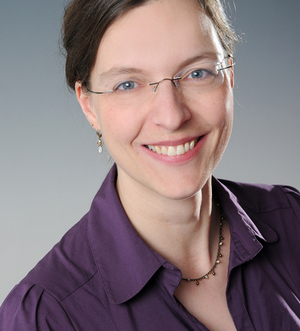
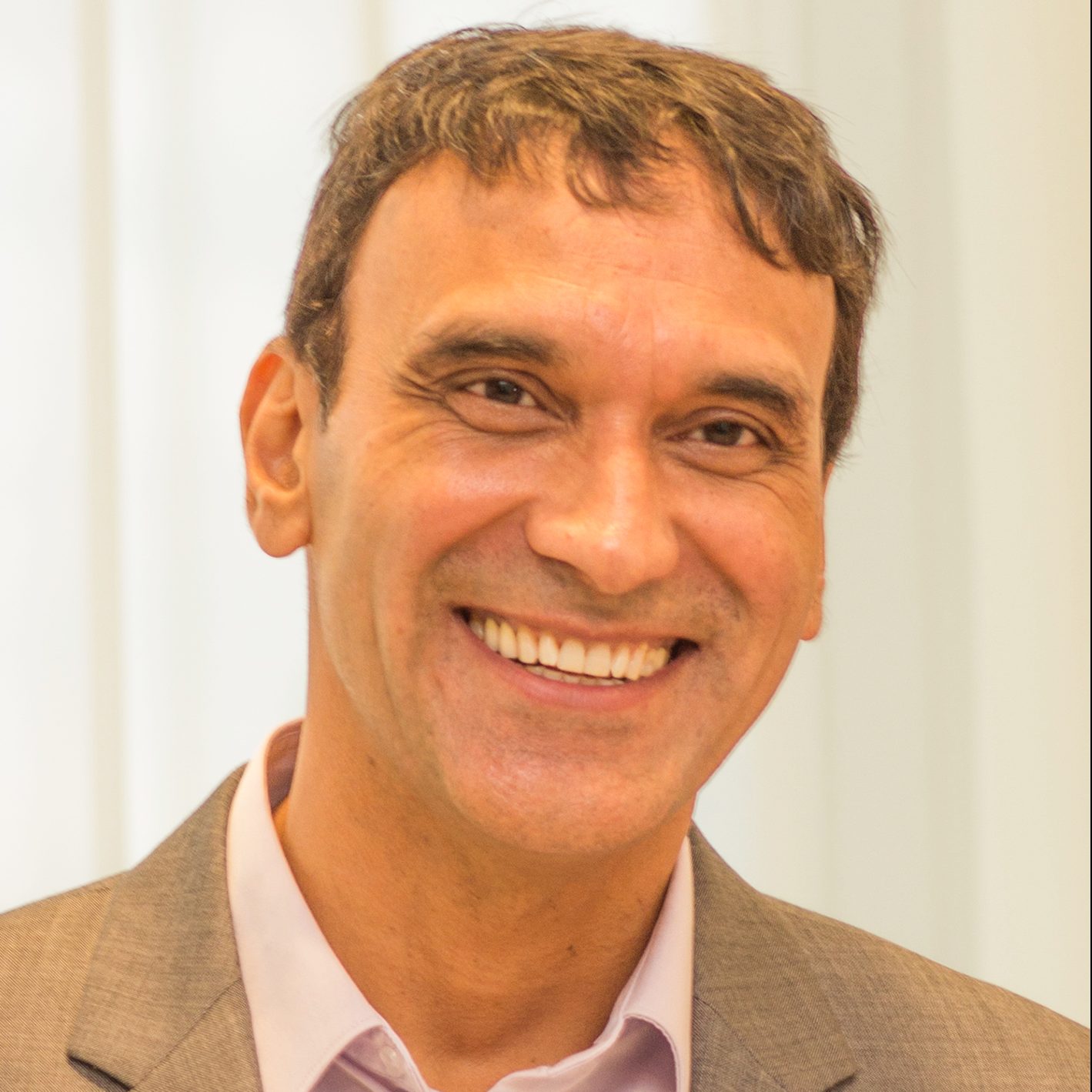
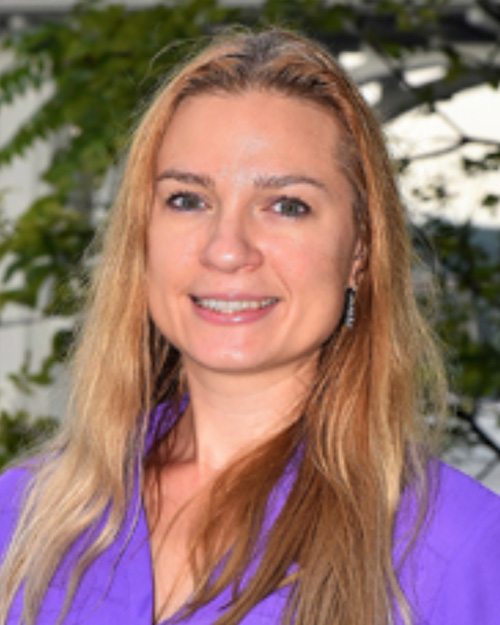
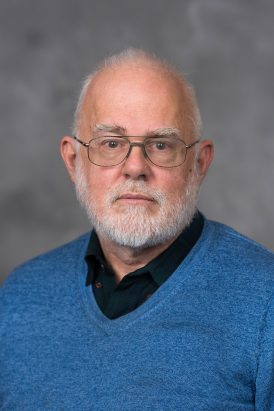
Emily Elfner is Associate Professor in the Department of Languages, Literatures and Linguistics at York University, specializing in phonological interfaces. Education includes: PhD, University of Massachusetts Amherst MA, University of Calgary BA, University of Calgary Research investigates prosodic structures in endangered languages, particularly Kwak'wala phonology and Irish syntax-prosody interactions. SSHRC-funded fieldwork documents Kwak'wala intonation patterns. Publications demonstrate consistent focus on prosodic systems across diverse languages including Breton, Irish, Inuktitut, and Tlingit. Recent works examine word-order constraints, morphological-prosodic mappings, and recursive phonological structures.
Matti Miestamo is a Professor of General Linguistics at the University of Helsinki, affiliated with the Department of General Linguistics within the Faculty of Arts. He previously held a professorship at Stockholm University (2011–2018) and has held research positions at institutions including the Helsinki Collegium for Advanced Studies (2006–2011) and the University of Antwerp (2005–2006). His expertise spans language typology, documentation, and theoretical linguistics with a focus on negation, interrogatives, and language complexity. He has supervised 4 completed, 2 submitted, and 8 ongoing PhD students at the University of Helsinki. Education: PhD in General Linguistics from the University of Helsinki (2003). Awards include membership in the Academia Europaea (2019), Finnish Academy of Sciences and Letters (2019), and Societas Scientiarum Fennica (2017). Notable honors include the Joseph Greenberg Award (2005) and Burgen Scholar Award (2004). Research Interests: Language typology and documentation Negation structures across languages Uralic languages, particularly Skolt Saami Grammatical complexity theories Methodological approaches to linguistic sampling Professional Roles: Editor of the Nordic Journal of Linguistics (2012–present) Director of the Finnish doctoral training network Langnet (2016–2019) Vice Dean for Academic Affairs, Faculty of Arts, University of Helsinki (2017) Teaching and Outreach: Extensive teaching experience in linguistics at multiple institutions, including summer schools in Tartu and Saari Manor. Active in academic assessment roles, including professorship and docent evaluations in universities across Europe.
Dr. Katharina Haude is a Chargée de Recherche HDR (Research Fellow) at the Laboratoire Structure et Dynamique des Langues (SeDyL - CNRS UMR8202) in Villejuif, France, and maintains an active affiliation with the Department of Linguistics at the University of Cologne, Germany. Her research focuses on the documentation and theoretical analysis of endangered languages, particularly the Movima language isolate spoken in Bolivia. Her academic background includes: Habilitation (HDR) from Université de Paris (2020) PhD in Linguistics from Radboud Universiteit Nijmegen (2006) Magister Artium (MA) in Linguistics from the University of Cologne (2001) Dr. Haude's research centers on syntax and information structure in under-documented languages, with Movima serving as her primary case study. Her work examines alignment systems, voice constructions, nominal tense, and clause structure, revealing how syntactic phenomena interact with discourse-pragmatic factors. She has made significant contributions to understanding inverse systems, ergativity patterns, and referential hierarchies across language families, particularly through her co-edited volumes on information structure and alignment. Her methodological approach combines rigorous fieldwork with cross-linguistic typological analysis, often focusing on how lesser-described languages challenge established theoretical frameworks. As a member of SeDyL laboratory, she contributes to collaborative projects documenting linguistic diversity, including the DoBeS archive of Movima multimedia documentation (2006-2012). Her editorial work includes special issues on information structure in lesser-described languages (2018) and referential hierarchies (2016), advancing methodological approaches for studying prosody-syntax interfaces in endangered languages. She has developed pedagogical materials for the Movima community, including grammars, dictionaries, and orthographic guides, demonstrating commitment to both theoretical linguistics and language preservation.
Ayaka Sugawara serves as Associate Professor at Waseda University's Faculty of Science and Engineering, School of Creative Science and Engineering, with concurrent affiliation at the Global Education Center and Waseda Research Institute for Science and Engineering (2024-2026). Her academic journey includes positions at Mie University (2015-2019) and multiple research appointments. BA (2008) and MA (2010) from The University of Tokyo PhD in Linguistics (2016) from Massachusetts Institute of Technology Dr. Sugawara's research spans formal semantics, pragmatics, and language acquisition with specific focus on quantifier scope interpretation , focus particles , Japanese dialectology , and second language processing . Her experimental work combines cross-linguistic comparison (Japanese/English/German/Persian), neuroimaging techniques (MEG/EEG), and computational approaches to vocabulary assessment. Current investigations examine early English education's impact on first language acquisition and non-literal language processing. Her publication trends reveal consistent interdisciplinary work bridging theoretical linguistics with educational applications, particularly in automated language assessment tools and experimental validation of semantic theories across developmental stages. Recent work demonstrates increasing collaboration with computational linguists and educational technologists. Dr. Sugawara actively contributes to the academic community through: Standing Committee membership in The Linguistics Society of Japan (2021-present) Professional affiliations with Linguistic Society of America and The Japanese Society for Language Studies Her research projects include multiple Japan Society for the Promotion of Science grants examining: Early English education effects on L1 acquisition (2021-2024) Question-under-Discussion mechanisms in ambiguous sentences (2019-2021) Cross-linguistic 'only' comprehension studies (2016-2018) Current internal projects investigate non-literal language processing and pragmatics in L1/L2 acquisition contexts.
Ezer Rasin is a Senior Lecturer in the Department of Linguistics at Tel Aviv University (TAU), where he also leads the TAU Phonological Computation Lab. He holds a PhD in Linguistics from MIT (2018), an MA and BSc in Linguistics and Mathematics from TAU (both prior to his PhD). Before joining TAU, he was a postdoctoral researcher in Leipzig University's IGRA program. His research focuses on theoretical and computational phonology, learnability, and formal linguistics. Key areas include phonological opacity, optimality theory, and the interaction between phonology and morphosyntax. His work bridges empirical phonology with computational modeling, addressing questions about language acquisition and formal grammatical architecture. Recent publications examine challenges to size-based parallel analyses in Hebrew vowel deletion, opacity phenomena in Gua and Akan, and computational approaches to phonological learning. He has contributed to journals like Linguistic Inquiry and Journal of Language Modelling , and co-edited proceedings for NELS and other conferences. Rasin teaches courses on phonological opacity, computational phonology, and the phonology-morphology interface at TAU. His research also involves developing audio databases for endangered languages like Judeo-Baghdadi Arabic, reflecting his commitment to computational methods in linguistic documentation.
Dr. Marieke Einfeldt is a postdoctoral researcher at the University of Konstanz's Department of Linguistics, focusing on the phonology-phonetics interface. Her work investigates topics such as trilingual first language acquisition (Standard German, Swiss German, and Italian), prosodic features of rhetorical questions, and bilingual language development. She is affiliated with Prof. Dr. Nicole Dehé's research group and previously contributed to Project 6 of the Questions at the Interfaces research unit, examining prosody in rhetorical questions. Her research spans phonological development in multilingual children, the interplay of discourse markers and prosody, and methodological advancements in psycholinguistic experiments using Active Learning systems. She holds a dissertation on trilingual consonant inventory acquisition, supervised by Prof. Dr. Tanja Kupisch, Dr. Mechtild Tronnier, and Prof. Dr. Bettina Braun. Key research interests include bilingualism, prosody, language acquisition, and sociolinguistics. Her studies address topics like tonal transfer effects in L2 learning, geminate production in heritage speakers, and cross-linguistic comparisons of speech styles. She is based in Office G223 at the University of Konstanz.
Dr. Claudia Wegener is a Researcher at the Department of Linguistics, University of Cologne, specializing in General Linguistics. Her work focuses on language documentation, speech-gesture interaction, and Papuan/Austronesian languages like Savosavo and Gela. She holds a PhD from Radboud University Nijmegen (2008) and has conducted extensive fieldwork in the Solomon Islands and Malaysia. Previous Positions: Research Assistant, University of Cologne (2017–present) Postdoctoral Researcher at MPI for Psycholinguistics, Radboud University (2002–2011) DoBeS Project Leader for Savosavo documentation Research Interests Her research spans: Socio-linguistic aspects of gesture systems Morphosyntactic typology of Papuan languages Lexical semantics and kinship terminology Documentation methodologies for endangered languages Publications Her work includes a landmark grammar of Savosavo (2012), co-edited volumes on language documentation (2011), and influential articles on gesture studies (2022) and motion event encoding (2022). Projects Leading the Savosavo-Gela Documentation Project (DoBeS-funded) Contributions to MPI's Endangered Languages Documentation Archive Collaborations with Australian National University and University of Manchester Her research bridges linguistic theory with applied documentation, emphasizing community-driven preservation strategies.
Prof. Dr. hab. Anna Bondaruk is a full Professor at the Department of Theoretical Linguistics , Institute of Linguistics , and Faculty of Humanities at John Paul II Catholic University of Lublin. She has served as Head of Department since 2019 and previously held that role from 2008-2019. Her research focuses on theoretical linguistics, specializing in Polish and Irish syntax, copular clauses, control theory, and case marking within the Minimalist Program. Linguistic Expertise : Syntactic Structures (Polish, Irish, Old English) Psych Verbs and Experiencer Constructions Passive Voice Typology Minimalist Program Applications Polish-Specific Theoretical Frameworks Recent Research Trends include studies on dative possessors, unaccusative verbs, and the syntax of experiential predicates. Her 2024 work explores possessive constructions involving 'lack'-type verbs, while 2023 publications analyze existential uses of Polish verbs and comparative syntax. Scientific Recognition : Inner Reward (Nagroda Rektora KUL) for top publication (2024) Erasmus+ Scholar (multiple awards 2001-2024) Medal za Długoletnią Służbę (2020) Nagroda Premiera Rady Ministrów RP (2006) Editorial Board Member for journals like Poznań Studies in Contemporary Linguistics
Sunil Bhatt is an Associate Professor of Teaching specializing in Hindi-Urdu language instruction within the Department of Asian Studies at the University of British Columbia's Faculty of Arts. With a background in Comparative Linguistics and experience teaching South Asian languages across multiple continents, he brings a unique perspective to language education. His research focuses on linguistics, particularly Hindi-Urdu language teaching, sociolinguistics, and language acquisition. He has published extensively on topics including honorifics in Hindi, bilingual situations in India, and the integration of Bollywood culture in language instruction. His work demonstrates a commitment to understanding the complex sociopolitical dimensions of language teaching in South Asian contexts. Bhatt's recent publications reveal a consistent focus on pedagogical approaches to Hindi-Urdu instruction, with emphasis on heritage learners, pandemic-era teaching adaptations, and the relationship between language and cultural identity. His research spans theoretical linguistics, applied language teaching, and sociolinguistic analysis of language communities. As an educator, he teaches foundational and advanced courses including Introductory Hindi-Urdu, Sufi and Bhakti Devotional Literatures, and Introduction to Hindi Film, demonstrating his integration of language instruction with cultural studies. His scholarly contributions extend beyond traditional publications to include textbooks, edited volumes, and digital learning resources that have significantly impacted Hindi-Urdu language pedagogy internationally.
Rodica Frimu is an Assistant Professor of French specializing in Second Language Acquisition at the University of Tennessee, Knoxville. She holds a Ph.D. from Indiana University, Bloomington, and serves as the Language Program Director for lower-division French courses. Ph.D., Indiana University Her research focuses on the interplay between grammatical organization and working memory limitations in real-time deployment of L2 grammatical knowledge. Key areas include error detection mechanisms, subject-verb agreement, and phonological phenomena like liaison and enchaînement in French. Publications analyze computational cycles in language processing and inferencing strategies in native and non-native speakers. Recent articles explore feature-based vocabulary selection in the French future tense, inference-driven error detection in subject-verb agreement, and instructional impacts on L2 phonology. These works span journals like Glossa and Lingua , emphasizing morphosyntactic and phonetic challenges in French acquisition.
Thomas Graf is an Associate Professor in the Department of Linguistics and an Affiliate Professor at the Institute for Advanced Computational Science (IACS) at Stony Brook University. He holds a Ph.D. from UCLA (2013) and an M.A. from the University of Vienna. His research focuses on the intersection of theoretical linguistics and computer science, exploring structural complexity in syntax, morphology, and phonology, and its implications for language processing and acquisition. Graf’s work emphasizes computational constraints on natural language, such as subregular complexity and parsing efficiency, and involves empirical studies across languages like English, Icelandic, and American Sign Language. Education: Ph.D., University of California, Los Angeles (2013) M.A., University of Vienna Research interests include computational syntax and phonology, parsing theory, and the formal characterization of linguistic universals. Key themes involve the computational power of linguistic frameworks (e.g., Minimalist grammars), the subregular hierarchy, and the typological implications of computational constraints. Graf’s recent work investigates how empirical phenomena like syntactic islands arise from complexity limits in natural language. His contributions to computational linguistics include Python tools for Minimalist grammar processing and collaborations in labs like the Computational Linguistics Lab (CompLab) at Stony Brook. He has also received a NSF CAREER grant for research on abstract universals in morphosyntax. Labs/Teams: Active member of the Computational Linguistics Lab (CompLab) at Stony Brook University. Leads the MathLing Reading Group and contributes to NLP research initiatives.
Willem Hollmann is a Professor of Linguistics and currently serves as Head of the School of Philosophy, Psychology and Language Sciences at the University of Edinburgh. He holds academic roles such as Associate Dean of Undergraduate Studies and has previously been Interim Executive Dean at Lancaster University. His expertise spans cognitive linguistics, cognitive sociolinguistics, and verbal deception detection, with a strong commitment to language education and policy. Willem Hollmann holds academic qualifications including an MA from the University of Amsterdam, another MA from the University of Manchester, and a PhD from the University of Manchester. Willem Hollmann’s research focuses on cognitive-typological linguistic theory, particularly construction grammar and usage-based models, cognitive sociolinguistics, dialect grammar, language change, and the history of English. His recent work extends into verbal deception detection and forensic linguistics. He emphasizes the intersection of language structure and social factors, contributing to both theoretical and applied linguistic studies. His recent publications explore syntactic constraints in English, cognitive sociolinguistic applications, and the use of epistemic modals in academic writing by Japanese EFL students. He also engages with generative vs. usage-based linguistic theories, phonological evidence in adjective analysis, and the evolution of comparative modals in English. His work bridges theoretical linguistics with applied areas like education and forensic analysis. Willem Hollmann has been recognized through various professional roles and contributions, though no specific scientific awards are listed in the provided information. Willem Hollmann has supervised numerous PhD students, including those who have secured academic positions globally. He is open to supervising research in cognitive-typological theory, sociolinguistics, dialect grammar, and deception detection. While specific grants are not detailed, his consultancy work with UK government departments and educational bodies underscores his engagement with applied linguistic initiatives. He is actively involved in language education policy, chairs the LAGB’s Education Committee, and contributes to the Committee for Linguistics in Education. His collaborations extend to institutions like the Department for Education and OCR, reflecting his commitment to educational linguistics.
Michelle Yuan is an Assistant Professor in the Department of Linguistics at the University of California, Los Angeles (UCLA). Previously, she held the same position at UC San Diego from 2019 to 2023. She earned her PhD in Linguistics from MIT, alongside a BA and MA in Linguistics from the University of Toronto. Her research focuses on theoretical syntax and the syntax-morphology interface, particularly examining case, agreement, and movement phenomena in ergative languages. She specializes in Inuktitut and Inuit-Yupik-Unangan languages, with recent work on San Juan Piñas Mixtec (Tò’ōn Ndá’ví). Her investigations emphasize morphosyntactic properties of pronominal clitics, tonal systems, and language documentation for reclamation efforts. Recent publications explore clitic coalescence in Mixtec, morphological conditions in Inuktitut noun incorporation, and tonal analysis in Mixtec. Her work often combines formal syntactic theory with fieldwork-driven data from underdocumented languages. Collaborations include projects with Gabriela Caballero, Claudia Juárez Chávez, and Indigenous language experts, focusing on linguistic resource development. Her research bridges formal syntax with applied documentation, addressing both theoretical and sociolinguistic dimensions of language preservation.
Jeffrey Heath is a Professor of Linguistics at the University of Michigan, with a dry-line appointment in Near Eastern Studies. His research focuses on language documentation, historical linguistics, morphology, and the study of African languages. He has conducted extensive fieldwork in Mali, Morocco, Australia, and other regions, particularly on Dogon, Songhay, and Berber languages. Heath holds a Ph.D. from the University of Chicago (1976) and a B.A. from Harvard University (1971). His work includes over 20 books and numerous articles on linguistic typology, language contact, and morphological evolution. He has received significant grants from the National Science Foundation, Guggenheim Foundation, and Fulbright Program. His research emphasizes functional morphosyntax and the role of prosody in linguistic systems. Education: Ph.D. (University of Chicago, 1976), M.A. (1973), A.B. (Harvard, 1971) Affiliations: Department of Linguistics, Near Eastern Studies (UMich) Key Projects: Dogon Language Documentation Project, Tamashek (Tuareg) studies, Songhay grammar series Heath’s research interests span morphology, tonosyntax, and the historical development of African languages. His fieldwork in Mali has produced detailed grammars of Dogon languages, while his work on Moroccan Arabic explores language contact and borrowing. He has also contributed to the documentation of Songhay and Gur languages in West Africa. Grants and awards highlight his commitment to endangered language preservation, including NEH and NSF funding for Dogon and Songhay projects. His contributions to linguistic typology and historical morphology have influenced debates on morpheme renewal and syntactic change.
Alec Marantz is a Silver Professor of Linguistics and Psychology at New York University's College of Arts & Science. He joined NYU in 2006 from MIT, where he served as Department Head and Kenan Sahin Distinguished Professor. As Chair of NYU's Linguistics Department (2007–2013), he co-founded the Distributed Morphology theory. His research bridges linguistics, psychology, and neuroscience, focusing on morphology, syntax, and neurolinguistics. His work uses MEG neuroimaging to study how language is processed in the brain, emphasizing cross-linguistic studies (e.g., Arabic, Hindi). He directs the Neuroscience of Language Lab (NeLLab), exploring neural correlates of linguistic structure and computations. Marantz's research highlights language universals and the brain's mechanisms for processing complex linguistic structures. His key contributions include pioneering the 'full decomposition' model of morphological complexity and advancing MEG methods for studying language. NeLLab's Abu Dhabi branch focuses on understudied languages like Arabic, enhancing cross-linguistic understanding. Marantz's work integrates theoretical linguistics with empirical neuroimaging, addressing how syntax and morphology are represented neurally. His research spans topics such as word structure, predictive processing, and the neural basis of language acquisition. Marantz has advised numerous researchers and contributed to interdisciplinary collaborations. His labs investigate language processing across modalities (speech production, listening, reading), emphasizing both cognitive and neural mechanisms. Recent studies explore how the brain predicts linguistic structure and handles ambiguity. While no formal awards are listed, his global influence and foundational work in neurolinguistics are widely recognized. Future directions include expanding cross-linguistic studies and refining MEG techniques to map language-specific neural signatures. His work continues to bridge generative linguistics with empirical neuroscience, offering insights into the biological foundations of language.