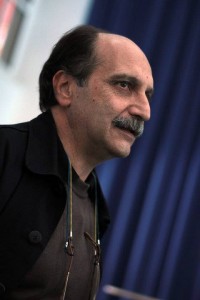
Elia Annibale is a Full Professor of Computational Linguistics at the University of Salerno, Italy, holding positions since 1987. He leads the Department of Political, Social and Communication Sciences and previously directed the Department of Communication Sciences. His academic journey includes a PhD in Computational Linguistics from Paris 7 University (1979) and earlier roles at the University of Paris and the University of Southern California. Research focuses on computational linguistics, machine translation, and semantic web technologies. Notable projects include the ESPRIT MULTILEX and GENELEX EU initiatives, developing multilingual linguistic resources. Awards include Academia Europaea membership (1989) and leadership in PRIN research units. Education: PhD in Computational Linguistics, University of Paris VII (1979) Laurea in Modern Literature, University of Naples (1972) Publications span theoretical linguistics, applied computational linguistics, and semantic analysis. Current projects include a semantic web search engine and lexical resource development for e-government.
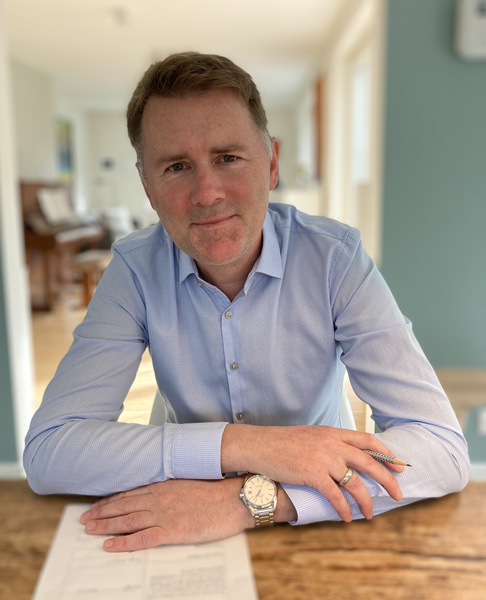
Martin Hilpert is a Professor of English Linguistics at the University of Neuchâtel, Switzerland, where he has been employed since 2012. He currently serves as Vice-Recteur Enseignement (Vice President for Education) at the university, having previously served as Head of the Institute of English Language and Literature from 2012-2020. His academic career includes positions as Junior Fellow at the Freiburg Institute for Advanced Studies (2008-2012) and postdoctoral work at the International Computer Science Institute in Berkeley. Hilpert's educational background includes: MA in English Linguistics from Universität Hamburg (1997-2003) PhD in Linguistics from Rice University (2003-2007) Habilitation at Albert-Ludwigs-Universität Freiburg (2012) His research focuses on corpus linguistics, grammaticalization, usage-based linguistics, construction grammar, and cognitive linguistics. Hilpert approaches language as a dynamic system shaped by usage patterns, examining how linguistic constructions evolve over time through corpus-based analysis. His work bridges theoretical linguistics with empirical methodology, particularly through the application of quantitative techniques to historical language data. He has made significant contributions to understanding how grammatical constructions change while maintaining functional coherence across centuries of language use. Hilpert's publication record demonstrates consistent productivity across multiple formats: 4 monographs including highly cited works on construction grammar and diachronic linguistics 30 peer-reviewed journal articles 41 book chapters 10 edited volumes and special journal issues His scholarly impact is evidenced by 3,941 Google Scholar citations, an h-index of 28, and an i10-index of 53. His 2019 textbook "Construction Grammar and its application to English" has received 643 citations, while his 2013 monograph "Constructional Change in English" has 435 citations. Hilpert has received significant recognition including: The 2018 Credit Suisse Award for Best Teaching at the University of Neuchâtel Two competitive Swiss National Science Foundation grants totaling over CHF 924,000 Leadership roles as President of the Societas Linguistica Europaea (2016) and Vice-President for Research of ISLE (2013-2020) His international scholarly engagement is extensive, having served on dissertation committees across eight countries, provided tenure review expertise for universities worldwide, and delivered conference keynotes on five continents. Hilpert has organized major international events including the 2019 ICAME Conference and the 2017 Doctoral Summer School of the Societas Linguistica Europaea. His research network spans collaborations with scholars from Germany, Sweden, Belgium, Poland, France, UK, and USA, reflecting his position at the center of European and global linguistics research communities.
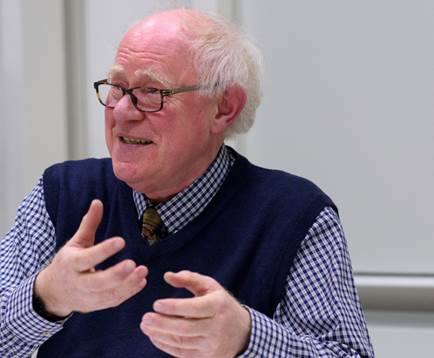
Prof. Frans Plank is a distinguished linguist holding dual appointments as Professor of Linguistics and English Language at the University of Konstanz (Germany) and Senior Research Fellow at Somerville College, University of Oxford (UK). His career spans over four decades, with professorships at institutions such as the University of Aarhus (Denmark) and Universität Hannover (Germany). He has served as Dean of the Faculty of Arts at Konstanz and Chair of its Linguistics Department and Sonderforschungsbereich 471. Plank earned academic degrees from Universität Regensburg, University of York, and University of Edinburgh, culminating in a Dr. phil. from Universität Hannover (1980) and a Habilitation in Linguistics (1981). His research focuses on linguistic typology, historical linguistics, Germanic languages, morphology, syntax, and the history of linguistic thought. His work bridges theoretical and empirical linguistics, with contributions to the study of valence orientation, categorial change, and phonological phrasing. He founded Linguistic Typology journal (1997) and the Association for Linguistic Typology (1994). Over 150 papers and 7 edited volumes reflect his prolific output, including seminal works on Maltese noun phrases and double case systems. Recognition includes his 2014 election as Senior Research Fellow at Oxford and editorial leadership roles at major journals like Transactions of the Philological Society . His research also extends to interdisciplinary studies, such as the parallels between linguistics and geology in 19th-century science.
Riitta Salmelin is a Professor at Aalto University (formerly Helsinki University of Technology), where she has been faculty since 2002. She serves as a leading research scientist at the Brain Research Unit within the Low Temperature Laboratory. Previously, she held the prestigious position of Academy Professor with the Academy of Finland from 2006-2011. Her work bridges physics, neuroscience, and cognitive science through advanced neuroimaging techniques. Dr. Salmelin earned her Doctor of Technology in Physics from Helsinki University of Technology in 1989, followed by a Docent position in Applied Physics in 1995. Her educational background in physics provided the foundation for her pioneering work in applying magnetoencephalography to cognitive neuroscience. Salmelin's research focuses on cortical rhythmic activity, neuroimaging of language perception and production, and the neural basis of normal language function and language disorders. She has made significant contributions to understanding interareal functional connectivity using multimodal imaging techniques, particularly magnetoencephalography (MEG) and functional magnetic resonance imaging (fMRI). Her work has illuminated how the brain processes speech, reading, and language at millisecond resolution, revealing critical timing differences between normal and impaired language processing. Her 101 peer-reviewed publications demonstrate a consistent trajectory from methodological innovations in MEG to sophisticated applications examining language processing across multiple domains. The most recent publications reveal increasing sophistication in analyzing functional connectivity, with particular emphasis on how rhythmic brain activity supports language comprehension and production. Her work shows how temporal dynamics of neural processing differ between normal language function and disorders like dyslexia. Member of Academia Europaea (2002) Member of Academia Rodinensis Pro Remediatione (2002) Member of Finnish Academy of Science and Letters (2009) Wiley Young Investigator Award, Organization for Human Brain Mapping (2000) Philips Nordic Prize for Research on Neurodevelopmental Disorders (2003) Professor Salmelin has supervised 11 completed MSc theses and 6 PhD dissertations, with numerous additional students in progress. Her grant portfolio includes major international funding from the James S. McDonnell Foundation, European Science Foundation, EU Framework Programmes, and Human Frontier Science Program, as well as substantial national support from the Academy of Finland and Sigrid Jusélius Foundation. She has served on numerous editorial boards including Human Brain Mapping (as Associate Editor) and Brain Topography, and has been active in organizing major international conferences in her field. Salmelin leads research at the Brain Research Unit, part of Aalto University's Low Temperature Laboratory. Her work integrates physics, engineering, and neuroscience to develop and apply advanced neuroimaging methodologies. She has established herself as a world leader in time-sensitive neuroimaging of language processes, creating methodological frameworks that have been widely adopted in cognitive neuroscience.
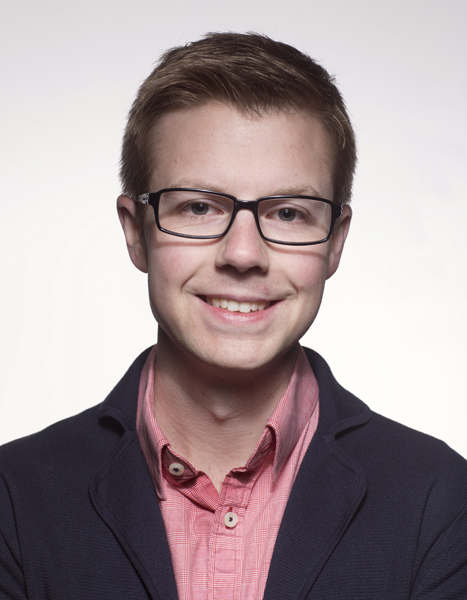
Terje Lohndal is a Professor of English Linguistics at the Norwegian University of Science and Technology (NTNU) and Adjunct Professor at UiT The Arctic University of Norway. He serves as Dean of the Faculty of Humanities at NTNU since April 2025 and previously held leadership roles, including Vice-Dean of Research (2021-2025) and Deputy Head of Research (2015-2021). His research spans grammatical structures across languages, focusing on heritage languages, multilingualism, and language change. Lohndal’s research explores abstract grammatical rules, language mixing in multilingual contexts, and the evolution of grammatical gender in Norwegian dialects. He is affiliated with the Center for Language, Brain & Learning (C-LaBL) at UiT and leads the GenVAC project on gender variation in Norwegian. His recent publications analyze syntactic variation, heritage language acquisition, and morphological shifts in Norwegian dialects, emphasizing cross-linguistic influence and theoretical linguistics. Lohndal’s work bridges empirical studies with formal grammatical theory. Awarded by the Research Council of Norway (2018), Fridtjof Nansen (2018), and the Nils Klim Prize (2014), he is a member of multiple academies, including Academia Europaea (2021) and the Norwegian Academy of Science and Letters (2015).
Mithun Marianne is a Professor of Linguistics at the University of California, Santa Barbara (UCSB), USA, since 1986. Previously, she held roles including Visiting Professor at UC Berkeley (1982-1986) and Professor at SUNY Albany (1973-1985). She earned a Ph.D. from Yale University in 1974. Her research focuses on morphology, syntax, discourse, prosody, language contact/change, typology, and documentation of Indigenous and Austronesian languages. She has held visiting positions globally, including at the University of Nice, Stanford, and La Trobe University. She serves on editorial boards for journals like Amérindia and Journal of Linguistic Typology . Her honors include Fellow of the Linguistic Society of America (2008), the Medaille du Collège de France (2005), and Doctorates Honoris Causa from La Trobe University (2003) and the University of Oslo (2000). She was elected to the Norwegian Academy of Science and Letters in 1998. Recent activities include leading international research initiatives on cross-linguistic clause combining (2010-2012) and serving on scientific committees for language documentation conferences. Her work bridges linguistic theory with empirical analysis, emphasizing fieldwork and endangered language preservation.
Mathilde Eveline Keizer is a Professor of English Linguistics: Variation and Cognition at the Department of English and American Studies, Faculty of Philological and Cultural Studies, University of Vienna. She serves as both Vice-Director of Studies for English and American Studies and Deputy Head of the Department of English and American Studies, demonstrating significant leadership within the institution. Professor Keizer's educational background includes: MA in English language and literature, Vrije Universiteit Amsterdam (1987) PhD in English Linguistics, Vrije Universiteit Amsterdam (1992) Her primary research focuses on the theoretical framework of Functional Discourse Grammar, with particular emphasis on the Noun Phrase in English and Dutch, possessive constructions, reference and predication, definiteness, English pronouns, apposition, information structure, linguistic categorization, and semi-fixed constructions. Professor Keizer leads the FunCog research group, which investigates the intersection of functional and cognitive approaches to language structure. Her work demonstrates how linguistic structures emerge from the interaction of cognitive processes and communicative needs, providing insights into the dynamic nature of language organization. Analysis of Professor Keizer's recent publications reveals a consistent focus on English syntax within the framework of Functional Discourse Grammar. Her work spans noun phrase structure, partitive constructions, prepositional phrases, and adverbial modification, demonstrating the versatility of FDG in addressing diverse syntactic phenomena. A notable trend is her increasing attention to cross-linguistic comparisons, particularly between English and Dutch, which enriches our understanding of language universals and specifics. Professor Keizer has made significant contributions to the field through her extensive publication record, including authored and edited books that have shaped contemporary understanding of functional-cognitive approaches to grammar. Her work has appeared in leading linguistics journals and handbooks, establishing her as a prominent voice in theoretical linguistics. As an educator, Professor Keizer teaches courses on Functional Discourse Grammar, Cognitive Grammar, Linguistic Categorization, Fuzzy grammar, Linguistic models and approaches, The English Noun Phrase, English adjectives, English idioms, and English syntax. She has supervised numerous graduate students through thesis seminars and advanced courses in linguistics, contributing significantly to the development of the next generation of linguists. Professor Keizer leads the FunCog research group, which brings together scholars interested in the intersection of functional and cognitive approaches to language. The group focuses on empirical investigations of linguistic structures through the lens of Functional Discourse Grammar, fostering interdisciplinary collaboration and innovative research methodologies that bridge theoretical linguistics with practical applications in language teaching and computational linguistics.
Daniela Elsner is a Professor of German Linguistics at Vorarlberg University of Education (PH Vorarlberg) in Austria, specializing in syntax, word formation, and grammar education. Her academic career includes research positions at Ruhr-Universität Bochum (2005-2014), a W1 professorship at Universität Leipzig (2014-2019), and acting professorships at Freie Universität Berlin (2016-2018) before joining PH Vorarlberg in March 2019. As a faculty member in the Department of German Linguistics within the Faculty of Education, she teaches courses including German Grammar of Contemporary Language, Language Didactics, and Specialized Didactic Seminars with Bachelor's theses. Professor Elsner's research primarily focuses on adverbial word formation in German, particularly the suffixes -weise/-erweise, examining their historical development, syntactic properties, and semantic functions. Her work bridges theoretical linguistics with practical applications in language education, investigating how epistemological beliefs affect grammar learning and the role of linguistic knowledge in educational contexts. She has pioneered research on quantifying N+weise formations and the reanalysis processes these constructions undergo in contemporary German usage. Her publication record shows a clear trajectory from early work on sentence structure and language acquisition toward more recent investigations of grammar instruction methods, epistemological beliefs in language learning, and practical applications for classroom teaching. This evolution reflects her commitment to connecting theoretical linguistics with practical educational challenges, particularly in primary and secondary school settings. Throughout her career, Elsner has presented her research at numerous international conferences across Europe and Asia, demonstrating the global relevance of her work on German linguistics and language education. Her lecture topics consistently address the intersection of theoretical analysis and practical application, with recent presentations focusing on integrating language analysis into teacher education and resolving ambiguities in word formation as pedagogical opportunities.