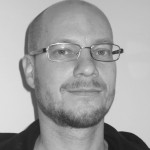
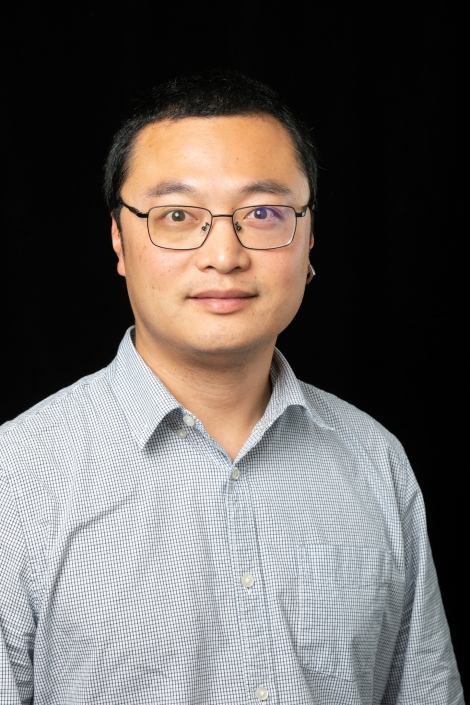
Yingqi Jing is a Visiting Researcher in linguistics and computational linguistics at the Department of Linguistics and Philology, Uppsala University. Dr. Jing's research focuses on: Linguistics Computational Linguistics Syntax Language Evolution Typology Dependency Grammar Recent research has examined word order patterns across languages, dependency length minimization principles, and linguistic typology, with publications in leading journals such as Language, Diachronica, and Journal of Uralic Linguistics. Their methodological approach combines corpus-based analysis with computational techniques to investigate fundamental questions about syntactic universals and language change across different language families including Indo-European and Uralic. Dr. Jing can be contacted at: yingqi.jing@lingfil.uu.se
Prof. Dr. Malte Zimmermann is a Full Professor of Semantics and Theory of Grammar at the Department of Linguistics, University of Potsdam. He is also a faculty and board member of the African Linguistics School (ALS), which biannually convenes in West African countries to advance formal linguistics knowledge among African scholars. His editorial roles include Associate Editor for Natural Language and Linguistic Theory and former Associate Editor for Linguistics and Philosophy . His educational background includes: Ph.D. in General Linguistics, Universiteit van Amsterdam (2002) M.A. in German Language and Linguistics/English/Anglistic/Philosophy, Universität zu Köln (1998) Abitur, Gymnasium Athenaeum, Stade/Niedersachsen (1989) Zimmermann's research centers on the interface between linguistic form and meaning, with specialization in formal semantics and grammar theory. His work spans quantification, tense, question semantics, discourse particles, and information structure, with particular emphasis on semantically under-researched West African languages (Chadic, Kwa, Grassfield Bantu). His research combines theoretical analysis with experimental methods, notably through projects like 'ExQ' examining embedded question interpretation across European and Non-European languages. He has led field research in Ghana, Cameroon, and Nigeria, challenging assumptions about language universals through empirical investigation of linguistic diversity. His publication trajectory reveals consistent focus on cross-linguistic semantic variation, particularly in focus interpretation, quantifier scope, and information structure phenomena. Recent work demonstrates growing integration of experimental methodologies with traditional formal approaches, with frequent comparisons between German, English, and diverse African languages. His investigations into serial verb constructions have been especially influential, uncovering hidden syntactic variability beneath surface similarities across languages like Akan and Igbo. As a supervisor, Zimmermann has guided numerous doctoral students to completion, with recent graduates including Giuliano Armenante (2024), Eva Shipova (2024), and Mareike Philipp (2023). His research has been supported by substantial funding including: SFB1287 Limits of Variability in Language, 'Limits of variability in interpretation' (2017-2021) SPP 1727 XPRAG.de, 'Exhaustiveness in embedded questions across languages' (2017-2020) SPP 1727 XPRAG.de, 'Exhaustivity in it-clefts' (2014-2017) DFG-Network 'Questions in Discourse' (2012-2016) SFB632 Information Structure projects (2007-2015) He leads the Potsdam semantics group (including Peter Sutton, Giuliano Armenante, Jeanne Lecavelier, Anna Struck, and Carla Bombi) which conducts fieldwork in West Africa. Currently, he co-directs the SFB-project on the 'Limits of Variability in Interpretation,' examining scope ambiguities, reconstruction, and bare NP interpretation across German, English, Akan, Igbo, and Medumba. His collaborative work with Edgar Onea (Graz) and Tatjana Scheffler exemplifies his commitment to bridging theoretical linguistics with empirical fieldwork and experimental validation.
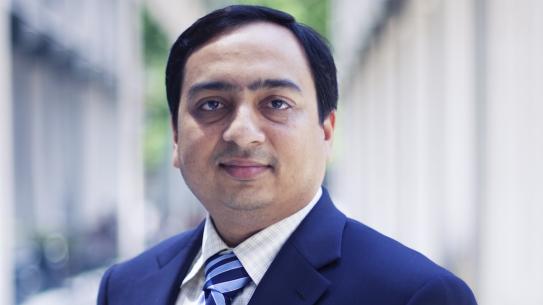
Dr. Nikhil Gupta is a Professor in the Department of Mechanical and Aerospace Engineering at the NYU Tandon School of Engineering , with affiliations to the Department of Civil and Urban Engineering and the Composite Materials and Mechanics Laboratory (CMML). He focuses on cybersecurity in additive manufacturing , dynamic materials characterization , and machine learning for composites . Education : Bachelor of Engineering, Metallurgical Engineering, Malaviya National Institute of Technology, Jaipur (1996) Master of Engineering, Metallurgical Engineering, Indian Institute of Science (1998) PhD, Mechanical Engineering, Louisiana State University (2003) His research explores additive manufacturing of complex composites , structural health monitoring , and cybersecurity threats in digital manufacturing . Notably, he co-developed embedded authentication codes to prevent 3D printing counterfeiting and pioneered machine learning techniques for defect detection in AM parts. His work is supported by the National Science Foundation and Texas A&M Engineering Experiment Station. The 15 most recent articles highlight trends in metamaterial design , bioprinting for tissue engineering , and cybersecurity frameworks for cyber-physical manufacturing , with a strong emphasis on experimental validation, computational modeling, and industrial applications. Scientific Honors : Fellow, ASM International (2022) Fellow, American Society for Composites (2022) Senior Member, National Academy of Inventors (2024) Brimacombe Medalist Award, TMS (2020) ASM Silver Medal (2013) As advisor to PhD student Youssef AbouelNour , Gupta investigates viscoelastic material modeling and in-situ monitoring for additive manufacturing. His lab, CMML, integrates fiber-optic sensors and AI-driven diagnostics to enhance manufacturing security and material performance.
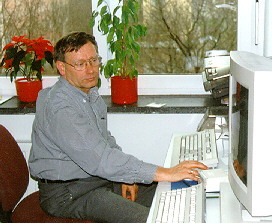
Jürgen Dassow is a Professor for Theoretical Computer Science at the Faculty of Computer Science, Otto-von-Guericke-University of Magdeburg, Germany. He has held this position since 1992 and previously served as Rector of the university from 1993 to 1996. His academic career spans over five decades, beginning with studies in mathematics at the University of Rostock in the 1960s. Professor Dassow's research focuses on formal languages, regulated rewriting, Lindenmayer systems, grammar systems, syntactical complexity, and biocomputing . His work has significantly contributed to theoretical computer science, particularly in the mathematical foundations of language theory and automata. He has maintained a prolific publication record with over 200 scientific papers and 4 monographs, including the influential 1989 work 'Regulated Rewriting in Formal Language Theory' co-authored with Gheorghe Păun. His recent research (2020-2023) continues to explore operational complexity, closure-involution operations, contextual grammars, and networks of evolutionary processors. These publications demonstrate his sustained engagement with cutting-edge theoretical problems in computer science. Professor Dassow has also been instrumental in organizing the international Descriptional Complexity of Formal Systems (DCFS) workshop series and has edited numerous proceedings volumes. Professor Dassow has been actively involved in the academic community through approximately 100 lectures at conferences and universities across 18 countries. His work bridges theoretical computer science with biological computing models, reflecting the interdisciplinary nature of modern theoretical research. His research group at the Otto-von-Guericke-University continues to advance knowledge in formal language theory, with recent publications addressing contemporary challenges in descriptional complexity and bio-inspired computational models. Professor Dassow's career exemplifies long-term dedication to advancing the theoretical foundations of computer science while maintaining relevance to emerging computational paradigms.
Sebastian Hoffmann is a distinguished academic affiliated with the University of Trier , where he served as Dean of the Faculty of Languages, Literatures and Media Studies from 2017 to 2023. He has held significant roles, including Visiting Professor at the University of Tampere (2014–2017) and Lecturer in English Linguistics at Lancaster University (2006–2009). His expertise lies in Corpus Linguistics , with a focus on World Englishes , Syntactic Change , and Corpus Methodology . He co-developed BNCweb , a widely used web interface for the British National Corpus. PhD from the University of Zurich His research explores usage-based approaches to language study, including syntactic evolution , phonological patterns (e.g., intrusive /r/), tag questions , and verb complementation . Recent work highlights the role of Internet-derived data in corpus linguistics and the fixedness of collocations . His publications span Corpus Methodology , Historical Linguistics , and Phraseology , with key works such as Corpora and Lexis (2018) and Grammaticalization and English Complex Prepositions (2005). He has contributed extensively to journals like the International Journal of Corpus Linguistics and Journal of English Linguistics . Hoffmann has been recognized for leadership in professional organizations, including Chair of ICAME (2017–2023) and Vice-President for the Profession of the International Society for the Linguistics of English (2018–2023). He teaches courses such as The History of the English Language and Transcribing and Analyzing Spoken Language .
Carmen Julia Coloma Tirapegui is a Full Professor at the University of Chile with dual appointments: Department of Speech-Language, Faculty of Medicine (33 hours/week) and Research Unit, Institute of Advanced Studies in Education (11 hours/week). She holds a Doctorate from the University of Granada (2012) and Bachelor's/Professional degrees from the University of Chile (1987). Her research specializes in Developmental Language Disorder (DLD) , psycholinguistics, and literacy, with expertise in eye-tracking methodologies. Key focus areas include: Language processing in monolingual Spanish-speaking children Reading comprehension interventions for language disorders Longitudinal studies of grammatical complexity Lexical-semantic development in preschoolers Phonological awareness interventions Recent publications (2022-2024) predominantly investigate real-time language comprehension using eye-tracking, examining syntactic complexity, morphological processing, and reading skills in children with DLD. Research consistently demonstrates interdisciplinary approaches bridging linguistics, psychology, and neuroscience. She leads multiple research grants including Fondecyt projects: "Decoding and reading comprehension in students with 4th basic TDL" (2024-2027) and "Intervention in phonological, lexical and grammatical awareness" (2017-2021). She co-directs the Center for Advanced Research in Education (2014-2024), a Basal Financing Program initiative. Advises graduate theses on language disorders and literacy, including studies on visual attention during reading and morphosyntactic development. Teaches undergraduate/postgraduate courses including Cognitive Foundations of Communication , Research Methods in Psycholinguistics , and Language Development Disorders .
Tinghao Feng serves as an Assistant Professor at Appalachian State University, specializing in time-oriented data analysis and visualization systems. His research develops comprehensive tools for exploring temporal patterns across environmental science, healthcare, and finance domains through innovative data mining algorithms and user-friendly software applications. His primary research interests focus on Time Series Analysis and Data Visualization, with significant contributions to Machine Learning applications. He investigates methods for visualizing complex temporal data, developing pattern recognition algorithms, and creating interactive analysis frameworks applicable to environmental monitoring, clinical informatics, and financial forecasting systems. Recent publications reveal a strong emphasis on visual analytics for temporal data, spanning environmental applications (honey bee monitoring, landslide prediction), healthcare informatics (patient messaging systems, pandemic modeling), and remote sensing. Key developments include the TimePool system for univariate time series querying and EVis for environmentally driven event analysis, demonstrating cross-disciplinary impact. Dr. Feng maintains active demonstration systems including TimePool for temporal query visualization and Polynomial Similarity Dependency Trees for linguistic structure analysis, reflecting his commitment to translating research into practical analytical tools for complex data exploration.
Professor Nick Chater serves as Professor of Behavioural Science within the Behavioural Sciences Group at Warwick Business School (WBS), University of Warwick. His academic profile spans cognitive science, behavioral economics, and decision-making psychology, with significant contributions to understanding the fundamental mechanisms of human thought and behavior. Chater's research interests encompass cognitive science, behavioral economics, and the psychology of decision-making. He has pioneered work challenging traditional views of deep, unconscious mental processes, most notably through his influential 2018 book "The Mind is Flat: The Remarkable Shallowness of the Improvising Brain." His research program investigates how people process information, make decisions under uncertainty, and develop language and social coordination mechanisms. Key themes include the role of noise in cognition, Bayesian approaches to modeling human thought, and the application of behavioral insights to public policy design. Chater's extensive publication record reveals a strong trend toward interdisciplinary integration of computational modeling with empirical research. His recent work demonstrates consistent engagement with cutting-edge developments across cognitive science, particularly in Bayesian cognitive modeling and behavioral public policy. The S-Frame agenda for behavioral public policy research represents a systematic approach to translating behavioral insights into policy design. His collaborative network spans psychology, economics, linguistics, and artificial intelligence, reflecting the interdisciplinary nature of modern cognitive science. As an educator, Chater teaches "Behavioural Sciences for the Manager" for Executive MBA programs and "Judgement and Decision Making" for various MSc programs at Warwick Business School. His teaching focuses on applying behavioral science principles to business contexts, helping students understand how cognitive biases and heuristics influence managerial decision-making. His work on coordination in dynamic interactions and moral cognition provides valuable insights for understanding organizational behavior and team dynamics.
Nesrin Atak serves as a Lecturer in the English Prep Unit at Bogazici University, Turkey, where she is concurrently pursuing doctoral studies in English Language Education. Her academic credentials include: Ph.D. in English Language Education (ongoing), Boğaziçi University, Turkey M.A. in Curriculum and Instruction, Bilkent University, Turkey (2019) B.A. in Foreign Language Education, Middle East Technical University, Turkey (2013) Her research centers on bilingual cognition, investigating neurolinguistic and psycholinguistic mechanisms in child bilinguals, with emphasis on syntactic/morphological processing, anaphora resolution, heritage language maintenance, and cognitive underpinnings of language acquisition/attrition. She integrates cognitive science frameworks with natural language processing methodologies to examine mental representation and processing systems. Recent publications analyze developmental trajectories of syntactic and lexical complexity in Turkish EFL learners' argumentative writing, revealing proficiency-dependent variation and genre-topic interaction effects. This work establishes empirical foundations for understanding how linguistic complexity evolves across developmental stages in second language writing. She actively disseminates findings through conference presentations at venues including the INGED ELT Conference and IATEFL RESIG Conference, focusing on writing complexity and formulaic language use in academic contexts.
Dr. Thomas Rankin is an Associate Professor in the Department of English and American Studies at Masaryk University's Faculty of Arts in Brno, Czech Republic. His academic work focuses on the intersection of linguistics and language teaching methodology, with particular expertise in second language acquisition and English syntax. He maintains an active research profile while teaching courses related to English language didactics and supervising Master's theses in language education. Dr. Rankin's primary research interests include second language acquisition, English syntax, and language teacher education. His work particularly examines how learners acquire complex syntactic structures in English as a second language, with a focus on negative inversion, negative polarity items, and word order variation. His research often investigates the interplay between input frequency, first language transfer, and the development of explicit and implicit knowledge in language learners, contributing valuable insights to both theoretical linguistics and practical language teaching. His recent publications reveal a clear research trajectory focused on understanding the acquisition of specific syntactic phenomena in L2 English, particularly negative constructions. His work bridges theoretical linguistics and practical language teaching, with increasing attention to teacher cognition and metalinguistic awareness in language educators. The consistency in his research topics demonstrates a sustained scholarly commitment to understanding how syntactic knowledge develops in second language learners and how this knowledge can inform language teacher education. Dr. Rankin actively supervises Master's students in the Teaching English Language and Literature for Secondary Schools program, guiding them through thesis projects focused on language teaching methodology. His grant activity includes participation in several university-funded research projects related to language teaching innovation, including "Implementing Innovative Teaching Methods in Language Teacher Training" where he serves as a researcher. His work contributes significantly to the development of language education practices at Masaryk University.