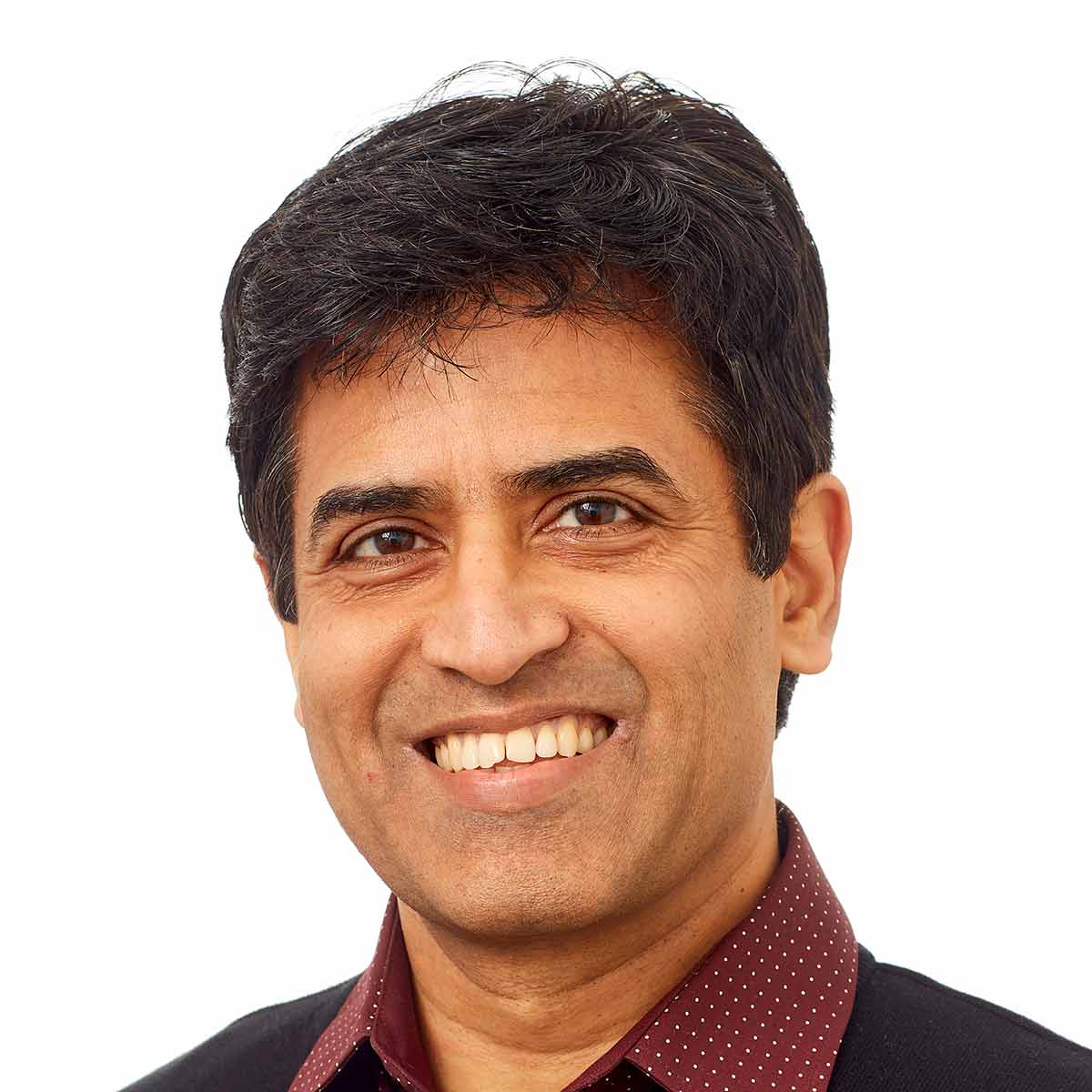
Sebastian Schemm is a Heisenberg Fellow at the Department of Applied Mathematics and Theoretical Physics (DAMTP), University of Cambridge, a position regarded as equivalent to a non-permanent Associate Professor. He leads research within the Atmosphere-Ocean Dynamics group and previously held an ERC Starting Grant-funded Assistant Professorship (without tenure track) at ETH Zurich. Education and Career Path PhD (2013) and MSc (2010), ETH Zurich, Switzerland Postdoctoral researcher, University of Bergen, Norway (2014–2017) Postdoctoral researcher, Laboratoire de Météorologie Dynamique, ENS Paris (2017–2018) Assistant Professor (ERC Starting Grant), ETH Zurich (2020–2024) Heisenberg Fellow, DAMTP, University of Cambridge (2025–present) Research Focus Schemm’s work centres on atmospheric and climate dynamics, spanning turbulence to planetary scales. Core themes include the physics of extratropical cyclone life cycles, jet-stream and storm-track dynamics, Rossby waves and teleconnection patterns, high-resolution atmospheric modelling, and the integration of machine-learning techniques for parameter estimation, data assimilation, and kilometre-scale global simulations. He also contributes to large-scale initiatives such as ECMWF’s WeatherGenerator. Scientific Awards and Editorial Service DFG Heisenberg Fellowship (2025) ERC Starting Grant (2020–2024) European Meteorological Society Young Researcher Medal (2019) Co-Editor, Weather and Climate Dynamics (EGU) Co-Editor, Quarterly Journal of the Royal Meteorological Society PhD Supervision & Funding He currently supervises PhD students at both Cambridge and ETH Zurich, with funding streams including the Cambridge CREATES Doctoral Training Partnership and Swiss/EU grants. Ongoing students explore reinforcement-learning parameterisations, jet-stream–storm-track relationships, mid-latitude eddy energetics, machine-learning ensemble forecasting, and Bayesian parameter estimation in LES. Active Projects EU Horizon project WeatherGenerator (led by ECMWF) PASC HiRAD-Gen : High-Resolution Atmospheric Downscaling Using Generative Models
Dr. Dominik Büeler is a Researcher at ETH Zurich's Institute for Atmospheric and Climate Science and staff member of the Center for Climate Systems Modeling (C2SM). His work bridges atmospheric dynamics with practical climate services, focusing on subseasonal prediction systems and their societal applications in Europe. Research Focus: Büeler's work centers on subseasonal-to-seasonal prediction, with emphasis on weather regime dynamics, extratropical cyclone behavior, and stratosphere-troposphere interactions. His research integrates large ensemble modeling, forecast verification, and climate impact assessment, particularly for European weather extremes. Recent projects examine heatwave mortality prediction, energy meteorology applications, and the role of moist processes in atmospheric blocking. Analysis of his publication record since 2021 reveals consistent advancement in subseasonal forecasting methodology, with growing emphasis on societal applications including public health (heat-related mortality) and energy sectors. His work increasingly connects fundamental atmospheric processes with operational forecasting systems, leveraging collaborations through the Subseasonal-to-Seasonal Prediction Project. Affiliations: Center for Climate Systems Modeling (C2SM) - Core Research Staff ETH Zurich Institute for Atmospheric and Climate Science MeteoSwiss Collaborator (Energy Meteorology) Büeler contributes to multidisciplinary teams developing climate services, with recent work supporting Swiss operational forecasting systems. His research group within C2SM focuses on improving subseasonal predictability through advanced diagnostics of model biases and atmospheric processes.
Mariam Zachariah serves as a Research Fellow at the Centre for Environmental Policy within the Faculty of Natural Sciences at Imperial College London. She is a core contributor to World Weather Attribution (WWA), an international scientific collaboration conducting rapid climate change attribution analyses for extreme weather events globally. Her work bridges climate science, vulnerability assessment, and policy-relevant research. Her educational foundation includes a PhD from the Indian Institute of Technology Bombay (IITB), where she investigated climate impacts on Indian agriculture. This research focused on drought and extreme temperature effects on crop yields in major agrarian regions, recognizing agriculture's critical role in India's climate-vulnerable economy. Zachariah's research centers on near-real-time attribution of extreme events to quantify human-induced climate change influences. Her expertise spans climate modeling, statistical analysis of extreme weather, and integrating vulnerability frameworks to assess compound impacts on communities. She examines how climate change interacts with socioeconomic factors to exacerbate disasters, particularly in agricultural systems and flood-prone regions worldwide. Analysis of her recent publications reveals a dominant focus on rapid attribution of droughts, floods, and heatwaves across diverse global contexts - from the Horn of Africa to Central Europe and South America. These studies consistently demonstrate climate change as a significant amplifier of event severity, while emphasizing how pre-existing vulnerabilities determine actual impacts. Her work increasingly addresses compound hazards and the intersection of climate change with infrastructure failures and land management. As a key member of the World Weather Attribution initiative, Zachariah collaborates with climate scientists, social scientists, and vulnerability experts in a unique operational framework that delivers scientific assessments within days of extreme events. This work directly informs policymakers, media, and affected communities about climate change's role in contemporary disasters.
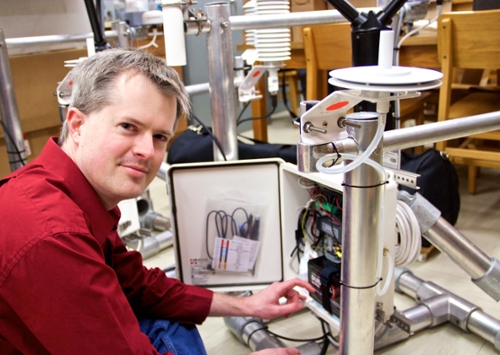
David J. Stensrud is a Professor of Meteorology and Atmospheric Science at Pennsylvania State University, where he has been a faculty member in the Department of Meteorology and Atmospheric Science within the College of Earth and Mineral Sciences. His research focuses on advancing our understanding of severe weather phenomena and improving numerical weather prediction capabilities. Dr. Stensrud received his academic training at Penn State, earning his M.S. in Meteorology in 1985 and his Ph.D. in Meteorology in 1992. His educational background has provided the foundation for his extensive research career focused on atmospheric dynamics and prediction. Dr. Stensrud's research spans several critical areas in atmospheric science, with particular emphasis on mesoscale meteorology , numerical weather prediction , and synoptic meteorology . He is internationally recognized for his work on ensemble forecasting , where he explores how groups of numerical weather prediction models can provide probabilistic forecasts of severe weather events. His research on convective-scale data assimilation aims to improve how observations from radar and satellites are incorporated into high-resolution weather models. Additional research interests include the physical processes behind severe weather phenomena like derechos and heavy rainfall events, the predictability of convective-scale phenomena, and the dynamics of the North American monsoon system. He has made significant contributions to understanding how urban environments influence thunderstorms and how convective systems interact with their larger-scale environment. Analysis of Dr. Stensrud's recent publications reveals a consistent focus on improving severe weather prediction through advanced data assimilation techniques. His work primarily centers on integrating radar and satellite observations into convection-allowing models to enhance forecasting capabilities for thunderstorms and other severe weather phenomena. A notable trend in his research is the increasing sophistication of ensemble approaches to address uncertainties in both initial conditions and model physics. His publications demonstrate a progression from fundamental studies of mesoscale phenomena to increasingly operational applications with potential for real-world forecasting improvements. Dr. Stensrud has served in several important professional capacities that highlight his standing in the meteorological community: Chair, Storm-scale Radar Data Assimilation Workshop, Norman, Oklahoma, October 2011 Member, NOAA/NWS Functional Weather Radar Requirements Integrated Working Team, 2012-2013 Guest Editor, Advances in Meteorology, Special Issue on "Storm-scale data assimilation and NWP", 2013 Commissioner, Scientific and Technological Activities Commission, American Meteorological Society, 2016-2017 Dr. Stensrud has authored more than 150 peer-reviewed publications and a textbook entitled "Parameterization Schemes: Keys to Understanding Numerical Weather Models." He has been actively involved in mentoring graduate students, though specific names of advisees are not provided in the available information. In collaboration with colleagues at Penn State, he helped create a 20-station environmental monitoring network across Pennsylvania with plans to expand to 50+ stations. His research has been supported by various grants that have enabled field campaigns such as the Mesoscale Predictability Experiment (MPEX) in 2013, where his team intercepted severe thunderstorms to collect critical observational data. Dr. Stensrud is involved with several research teams and facilities at Penn State, including work with the Joel N. Myers Weather Center and the Bob and Charlotte Landis Broadcast Room. His research group focuses on analyzing data from dual-polarization radar systems and developing improved techniques for assimilating these observations into convection-allowing models. He collaborates extensively with other researchers at Penn State and beyond, particularly in studies involving the interactions between urban environments and thunderstorms, and the upscale effects of deep convection on larger-scale weather patterns.
Dr. Hassan Saeed Khan is a Lecturer (Assistant Professor) at Central Queensland University and an Adjunct Lecturer at the University of New South Wales . He holds a Ph.D. in Built Environment from UNSW (2018-2022), a Master of Science in Architectural Engineering from Politecnico di Milano (2010-2012), and a Bachelor of Science in Building and Architectural Engineering from UET Lahore (2003-2008). His research focuses on zero-energy buildings , radiative cooling materials , and urban heat mitigation . Ph.D. in Built Environment, UNSW Australia (2018-2022) MSc in Architectural Engineering, Politecnico di Milano (2010-2012) BSc in Building and Architectural Engineering, UET Lahore (2003-2008) Dr. Khan specializes in urban climatology , energy-efficient building systems , and climate-responsive urban design . His work includes fluorescent radiative coolers for urban surfaces, seasonal performance modulation of cooling materials, and microclimate evaluation in coastal regions. His research spans thermal performance of buildings, extreme heat event analysis , and renewable energy integration . His recent publications highlight scalable radiative cooling solutions, synoptic weather interactions with urban heat, and green infrastructure benefits in subtropical environments. Key projects include ARC Discovery grants on fluorescent materials and consultancy with BlueScope and Dulux for material performance optimization. HDR Completion Scholarship (UNSW, 2022) Data61 CSIRO Ph.D. Top-up (2019-2022) ADA HDR Research Output Awards (2021, 2022) UniverLecco Gold Merit Scholarship (Politecnico di Milano, 2010-2012) Award of Distinction (KFUPM, 2016-2017) Dr. Khan has supervised research in 4011 Environmental Engineering , 3302 Building , and 3304 Urban Planning . His interdisciplinary approach bridges building science , materials engineering , and climate adaptation . He employs tools like ENVI-met for microclimate analysis and DesignBuilder for energy modeling.
Lukas Papritz is a Lecturer at the Department of Environmental Systems Science at ETH Zürich , Switzerland. He specializes in atmospheric dynamics, focusing on large-scale weather systems, Arctic climate processes, and air-sea interactions. Research Interests : Dynamics of extratropical cyclones and atmospheric blocking Arctic climate system, including air mass transformations Atmospheric and oceanic energy exchanges Physics of temperature extremes (cold/warm) Development of dynamical frameworks for weather system analysis His recent publications examine baroclinic wave energetics, heatwave thermodynamics, cold-air outbreak dynamics, and synoptic-scale moisture transport. These works integrate Lagrangian methods, climatological analysis, and regional climate modeling. Current Affiliation : Professorship for Atmospheric Dynamics (Professur für Atmosphärendynamik), ETH Zürich
Dr. Dana E. Veron is a Professor and Co-Director of the Gerard J. Mangone Climate Change Science and Policy Hub at the University of Delaware (UD). She holds roles as Associate Chair of the Department of Geography and Spatial Sciences and Faculty Director for the Environmental Science major and Climate Scholars program. Her research focuses on climate change impacts, polar meteorology, and offshore wind energy. She earned a Ph.D. in Oceanography from Scripps Institution of Oceanography (2000) and a B.A. in Physics from SUNY Geneseo (1995). Key research areas include Arctic energy balance, Antarctic boundary layer processes, cloud-radiation interactions, and coastal wind dynamics. She leads the Veron Lab, collaborating internationally on projects like CALVA in Antarctica. Dr. Veron also advances climate education through initiatives like MADE-CLEAR, addressing curriculum gaps and teacher training. Her work bridges academia and policy, contributing to UD's Delaware Environmental Institute and Center for Research in Wind (CReW). Notable contributions include studies on sea breeze impacts on wind energy forecasting and climate change literacy in higher education. Affiliations include the Provost Faculty Fellows program and roles on the Honors Program Board. She advises multiple graduate students and teaches courses on climate dynamics, oceanography, and wind energy.
Dr. Ambrogio Volonté is a Senior Research Fellow at the Department of Meteorology, University of Reading, and a member of the National Centre for Atmospheric Science (NCAS). His research focuses on cyclone dynamics, particularly Arctic, extratropical, and Mediterranean cyclones, sting jets, and monsoon systems. He leads and contributes to projects funded by NERC and international collaborations, such as the THINICE field campaign investigating Arctic cyclones and the MiLCMOP project studying monsoon progression. He holds a PhD from the University of Reading (2018) and has extensive experience in numerical weather prediction, Lagrangian analysis of air masses, and process-based weather phenomena. His work includes studying the impact of sea ice on Arctic cyclones, the role of midlatitude dry air in monsoon withdrawal, and evaluating AI models against traditional forecasting methods. Key projects include the global climatology of sting-jet cyclones and the dynamics of extreme windstorms like Storm Ciarán and Eunice. Volonté collaborates on interdisciplinary projects such as COSMIC (convection-scale modeling in China) and INCOMPASS (monsoon dynamics in India). His research has been published in journals like Quarterly Journal of the Royal Meteorological Society and Weather and Climate Dynamics . He currently serves as a researcher in several grants, focusing on Arctic cyclones, sting jets, and monsoon processes.
Vishnu S Nair serves as Assistant Professor (Grade I) in the School of Earth, Environmental and Sustainability Sciences at IISER Thiruvananthapuram since January 2024, following postdoctoral positions at IRD-France (2022-2023) and UC Berkeley (2019-2021). His research bridges tropical meteorology and climate science with practical applications for monsoon forecasting and climate adaptation. Education PhD in Meteorology & Oceanography, ESSO-INCOIS/Andhra University (2011-2017) Dr. Nair's research centers on monsoon low-pressure systems, investigating their historical variability, climate change impacts, and connections to extreme rainfall events. He develops advanced tracking algorithms and dynamical downscaling techniques to improve climate projections for vulnerable regions like South Asia and Pacific Islands. His work integrates observational analysis, climate modeling, and real-time forecasting systems to address critical questions about monsoon dynamics under global warming. His 14 publications (2014-2023) reveal consistent focus on monsoon system behavior, with recent work emphasizing future projections of low-pressure systems and observed increases in extreme rainfall rates. Key methodologies include high-resolution modeling, global dataset creation, and teleconnection analysis between monsoons and phenomena like ENSO and IOD. Scientific Recognition Gold Medal for Best PhD Thesis, Andhra University (2018) Junior Research Fellowship with Lectureship, CSIR-UGC (2011) CLIPSSA Postdoctoral Fellowship at IRD-France (2022-2023) Monsoon Mission Postdoctoral Fellowship at UC Berkeley (2019-2021) Dr. Nair actively recruits PhD candidates (requiring CSIR-JRF/GATE fellowships) and offers winter/summer internships in tropical meteorology. His research is supported by international projects including CLIPSSA for Pacific Island climate adaptation and India's Monsoon Mission for forecasting improvements. He contributes to global monsoon datasets used by meteorologists worldwide and serves as referee for leading journals like Geophysical Research Letters . He leads the Monsoon Dynamics Research Group at IISER-TVM, collaborating with institutions including Météo-France, UC Berkeley, and Indian climate research centers. Current initiatives focus on dynamical downscaling for island-scale climate projections and real-time tracking systems for monsoon low-pressure systems.
Fraser King is an incoming Assistant Professor in the Department of Atmospheric and Oceanic Sciences (AOS) at the University of Wisconsin–Madison, starting in Winter 2026. He holds a PhD in Machine Learning and Remote Sensing of Precipitation from the University of Waterloo (2022) and is currently a postdoctoral research associate at NASA Goddard Space Flight Center. His research integrates machine learning with atmospheric physics to advance precipitation and snowfall retrieval, cloud microphysics, and climate modeling. He has held research positions at the University of Michigan and NASA Jet Propulsion Laboratory. His research interests include: Climate and Climate Change Radiation and Remote Sensing Synoptic Meteorology Atmospheric and Cloud Physics Large Scale Dynamics Machine Learning and Model Interpretability Arctic Snowfall Prediction His recent publications reflect a strong trend in applying deep learning (e.g., U-Net, CNNs) and unsupervised methods (PCA, t-SNE, UMAP) to radar and satellite data for precipitation and snow microphysics. Key themes include radar gap inpainting, melting layer detection, and dimensionality reduction for physical interpretation. His work bridges geoscience and AI, aiming for interpretable models that enhance physical understanding. Scientific awards and professional service include: Finalist for the 2023 Governor General's Gold Medal, University of Waterloo Associate Editor, Journal of Atmospheric and Oceanic Technology (AMS) Member, AMS Committee on Artificial Intelligence Applications to Environmental Science Executive Council Member, AGU Precipitation Technical Committee Executive Member, Eastern Snow Conference Research Board Fraser King has mentored students through research projects and led educational initiatives such as a 12-week course on machine learning for land cover classification. He has secured research experience through internships at Aquanty Inc. and multiple NASA-affiliated institutions. He founded MapsByFraser, a company combining cartography and satellite data, and has collaborated with Google's Quantum AI team. His technical skills span Python, deep learning frameworks, and high-performance computing platforms. He leads several major research projects: Towards Interpretable Physical Models : Using sparse autoencoders and nonlinear dimensionality reduction to interpret geoscience models. Microphysical Dimensionality Reduction : Applying PCA, t-SNE, and UMAP to identify physical modes in precipitation data. BlindPaint : A U-Net for radar gap inpainting in spaceborne systems. DeepPrecip : A deep learning model for surface precipitation retrieval. iPhone LiDAR : Using consumer smartphones for snow depth measurement via drones. NRCan Machine Learning Land Cover Classifier : Training ML models on Sentinel-2 data. Climate Model Calibration : Using ML to correct biases in snow-related climate variables. CloudSat Snowfall Validation : Validating high-latitude snowfall estimates. Snow Modelling : A Rust-based physical/temperature-index snow model.
Kristen L. Rasmussen is an Associate Professor in the Department of Atmospheric Science at Colorado State University (CSU), affiliated with the Walter Scott, Jr. College of Engineering. She holds a Ph.D. (2014) and M.S. (2011) in Atmospheric Sciences from the University of Washington, and dual B.S. (Meteorology and Mathematics) and B.A. (Music) from the University of Miami (2007). Before joining CSU in 2016, she was an Advanced Study Program Postdoctoral Fellow at NCAR (2015–2016). Her research focuses on convective storms, cloud-climate interactions, mesoscale meteorology, and hydrometeorology. Key interests include analyzing extreme rainfall, tropical convective systems, and the impacts of climate change on storm dynamics. She leads the Rasmussen Group, which investigates topics like the NASA INCUS satellite mission, subtropical storms in South America, and climate modeling. Received awards such as the 2015 AMS Mesoscale Processes Conference Very Early Career Award and the 2011 NASA Earth System Science Graduate Fellowship. Active in field campaigns like RELAMPAGO in Argentina and PRECIP in Taiwan/Japan. Teaches courses on synoptic and mesoscale meteorology, hydrometeorology, and mountain meteorology. Her group includes researchers and students studying topics ranging from convective storm environments to stratospheric aerosol injection impacts. Ongoing projects include the INCUS mission and climate projections for extreme precipitation in the U.S. Midwest.
Dr. Daniel T. Dawson II is an Associate Professor of Atmospheric Science at Purdue University's Department of Earth, Atmospheric, and Planetary Sciences (EAPS). He leads the STorMLab (Storm and Tornado Modeling Laboratory), focusing on severe convective storm dynamics, tornado physics, and improving numerical prediction of severe weather. He holds a Ph.D. from the University of Oklahoma (2009) and B.S. from Purdue University (2002). His research integrates observational data from field campaigns like VORTEX2 and VORTEX-SE with advanced numerical modeling, particularly using EnKF radar data assimilation techniques. Education: Ph.D., University of Oklahoma, School of Meteorology (2009) M.S., University of Oklahoma, School of Meteorology (2004) B.S., Purdue University, Earth and Atmospheric Sciences (2002) His research interests include storm-scale microphysics, radar observations, and the role of surface drag in tornadogenesis. He collaborates with the Weather Radar Research Laboratory led by his spouse, Dr. Robin Tanamachi, and co-teaches the EAPS 59100 Severe Storms Field Work course, emphasizing hands-on storm chasing and forecasting. Dawson has extensive experience with the National Severe Storms Laboratory (NSSL), the Cooperative Institute for Mesoscale Meteorological Studies (CIMMS), and the National Center for Atmospheric Research (NCAR). His work addresses challenges in Warn-on-Forecast systems and has contributed to understanding the geographic controls of severe storm environments. He leads Purdue's mobile disdrometer operations in field campaigns like PERiLS and VORTEX-SE, emphasizing real-time data collection for improving storm prediction models. Labs/Teams: STorMLab (Purdue), Weather Radar Research Laboratory (collaboration), and the Purdue TriPIPS and XTRRA radar initiatives.
Katherine Klink is an Associate Professor in the Department of Geography, Environment & Society at the University of Minnesota. Her research focuses on urban climatology, wind energy systems, and climate variability. She holds a B.S. in Atmospheric Science from the University of Wisconsin-Milwaukee (1982), followed by an M.S. (1987) and Ph.D. in Climatology from the University of Delaware (1992). Her career has centered on understanding wind patterns, urban climate dynamics, and agricultural-climate interactions. Dr. Klink’s research emphasizes practical applications such as urban heat mitigation via green infrastructure and optimizing wind energy systems. She has explored extreme wind events, climate impacts on crop productivity (e.g., barley and oats), and the relationship between snow cover and urban heat islands in Minneapolis. Her work bridges climatology with societal needs, including renewable energy potential and climate adaptation strategies. Her publications span over three decades, addressing topics from synoptic-scale wind drivers to distributed wind energy systems in North Dakota. While no formal awards or grants are listed, her extensive academic output reflects sustained contributions to environmental and climatic studies. Courses and professional activities remain closed sections in her profile.
Prem Kumar is a Professor in the Department of Physics at Swansea University, holding a Personal Chair position. He is affiliated with the Particle Physics and Cosmology Theory (PPCT) group. His research focuses on the intersection of Quantum Field Theory and String Theory/Gravity, including specialized areas like gauge/gravity duality and supersymmetric Yang-Mills theories. Kumar earned his undergraduate degree in Electrical Engineering from the Indian Institute of Technology Madras and a PhD in Theoretical Physics from Carnegie Mellon University. He held postdoctoral positions at the University of Washington and Cambridge University before joining Swansea under a 5-year PPARC Advanced Fellowship. He has been a faculty member since 2005 and Professor since 2012. His research employs analytical and computational methods to explore quantum phenomena in high-energy physics, thermal field theories, and random matrix applications in theoretical frameworks. Recent publications analyze atmospheric physics and climate extremes, with recurring themes in synoptic-scale precursors to extreme weather and climate model downscaling. Scientific awards include the prestigious PPARC Advanced Fellowship and Personal Chair recognition. Kumar actively advises postgraduate students and contributes to theoretical physics research groups exploring quantum-gravitational interactions.
Steven Feldstein serves as a Research Professor in the Department of Meteorology and Atmospheric Science at Penn State University, where his office is located in 516 Walker Building, University Park. His research program centers on atmospheric and climate dynamics with specialized focus on earth rotation effects, low-frequency variability, and teleconnection mechanisms, contributing significantly to understanding global climate patterns through rigorous observational and modeling approaches. Feldstein's research spans critical areas including North Atlantic Oscillation (NAO) dynamics, Madden-Julian Oscillation (MJO) teleconnections, Rossby wave propagation, and Arctic amplification processes. He investigates how phenomena like sea ice decline, atmospheric blocking, and latent heating modulate climate variability across tropical, midlatitude, and polar regions. His work particularly examines physical mechanisms driving surface temperature anomalies, extreme precipitation events, and energy transport processes, with emphasis on both short-term weather impacts and long-term climate change implications. Analysis of his 15 most recent publications (2018-2022) reveals consistent thematic focus on Arctic-midlatitude interactions and oscillation patterns. Key trends include decomposition of NAO temperature anomalies, quantification of moist static energy transport in reanalyses, and examination of Arctic sea ice decline impacts on atmospheric circulation. His research increasingly addresses climate change ramifications through studies of longwave radiation trends and Arctic amplification mechanisms, employing advanced techniques in wave decomposition and radiation budget analysis. No scientific awards or honors are documented in the provided institutional profile. While the profile does not specify graduate student mentorship activities or research grants, Feldstein's extensive collaborative publication record (including multi-institutional teams with researchers like Justin Clark and Sukyoung Lee) indicates active engagement in funded research projects addressing high-priority climate science questions. His work appears consistently in top-tier journals including Geophysical Research Letters and Journal of Climate , demonstrating sustained research productivity.