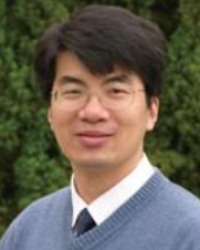
Dr. Ivan Kwong is a Visiting Professor at the Hong Kong Baptist Theological Seminary, where he teaches New Testament studies and biblical languages. He holds a B.Sc. from Saint Mary's University (Canada), an M.Div. from the Chinese Christian Theological Seminary (建道神學院), and a Ph.D. in New Testament Studies from the University of Southampton (索立大學). His research focuses on Gospel narratives, biblical translation, and ancient Greek and Hebrew linguistics. He has authored multiple articles on synoptic studies and serves as the former editor of the Journal of建道 . Current roles include Christian Education Director at the NYC Chinese Alliance Church, Director of the East Coast Theological Program, and Chaplain at New York Seminary. His work bridges academic research with pastoral ministry, emphasizing practical application of biblical scholarship.
Ali Deniz is a Professor in the Department of Meteorological Engineering at Istanbul Technical University. With an extensive research portfolio spanning over two decades, he has published 49 research outputs and led 16 research projects (2 active through 2025, 14 completed). His work focuses on atmospheric science, air quality monitoring, and meteorological applications to environmental problems in Turkey and Istanbul specifically. Professor Deniz's research expertise spans multiple critical areas of atmospheric science: Air quality assessment and monitoring (PM10, PM2.5) Urban air pollution and meteorological influences Airport environmental impact studies Sand and dust storm effects on air quality Atmospheric blocking phenomena Advanced analytical methods for air quality data His recent publications (2023-2025) demonstrate sophisticated methodological approaches including chaotic dynamics analysis, machine learning applications (SVM), and specialized filtering techniques like the Kolmogorov-Zurbenko filter. Research spans both theoretical atmospheric science and practical applications for urban environments, aviation settings, and public health contexts. Professor Deniz has secured significant research funding through projects examining urban heat island effects across Turkey, cloud base levels and air pollution relationships, health risk analysis of air pollution for middle-aged populations, and synoptic analysis of regional storm systems. His current active projects extend through November 2025. He has supervised 18 students or junior researchers throughout his career, contributing to atmospheric science expertise in Turkey. His research fingerprint shows strong connections to Turkey (100%), Istanbul (55%), Air Quality (34%), Airport studies (33%), PM10 research (28%), and Air Pollutant studies (26%).
Dr. Mike Duncan is a Full Professor in the English Department at the University of Houston-Downtown, specializing in Rhetoric, Technical Communication, and Composition. He has been teaching since 2009 and co-founded the peer-reviewed journal Technical Communication & Social Justice , serving as its Managing Editor. He previously served as UHD Faculty Senate President (2019–2020). Duncan holds a PhD in Composition Studies from the University of Memphis, an MA in English with Professional Writing emphasis, and a BA in Media Arts from the University of Arizona. His research focuses on ethical pedagogy, historical rhetoric, and the intersection of technical communication with social justice. He has published extensively on topics ranging from ancient rhetorical traditions to modern ethical dilemmas in technical writing, including groundbreaking work on Luke-Acts authorship and the rhetoric of Kamikaze manuals. His teaching spans undergraduate and graduate courses in professional writing, stylistics, research methods, and argumentation. Duncan’s intellectual contributions include a monograph on Rhetoric and the Synoptic Problem (2022) and over 20 peer-reviewed articles. His innovative pedagogical approaches are reflected in courses like Studies in English Grammar and Stylistics and Editing . He actively mentors students through thesis supervision and field experience programs.
Prof. Dr. Soham Al-Suadi is a full Professor of New Testament at the Faculty of Theology, University of Rostock , a position she has held since July 2017. She has held leadership roles including Dean of the Faculty of Theology (2021–2023), Pro-Dean, Study Dean, and head of the interdisciplinary Department 'Knowledge - Culture - Transformation'. She is currently a university senator. Her academic journey includes assistantships at Wuppertal and Bern, and interim professorships at Vienna and Rostock. Education: Master of Theology, University of Basel (2008) Dr. theol., University of Basel (2010) – Dissertation: Essen als Christusgläubige – die Heterotopie paulinischer Mahlgemeinschaften Habilitation, University of Bern (2015) – Inspiration und Auslegung – Synchron-literarische Motivinterpretation vom Geist inspirierter Rede im Lukasevangelium Her research interests span New Testament exegesis , particularly the Pauline letters and Gospels, ritual studies (meals, baptism), gender studies , and digital humanities . She leads the DFG-funded project GenderVarianten , which examines gender constructions in textual traditions using digital and interdisciplinary methods. She promotes data literacy and computational theology through her 'Greeks, Geeks and Gender' forum. Her publications reflect a strong interdisciplinary trend, combining theology, social sciences, and digital tools. She has edited volumes on early Christian meals, rituals, emotions, and digitalization. Her recent work explores ritual dynamics, digital exegesis, and the ethics of textual transmission. Scientific Contributions: Co-founder of the Rostock Network with Richard DeMaris and Richard Ascough, organizing annual conferences on ritual in early Christianity. Host of international visiting fellows such as Eric Stewart (Mare Balticum Fellow 2023) and Richard DeMaris . Advocate for open science and digital education in theology. She has advised on and contributed to numerous collaborative research projects and publications, particularly in the areas of ritual, emotion, and digital theology. She has no listed awards in the provided text. She is actively engaged in interdisciplinary research teams and leads initiatives at the intersection of theology and computer science.
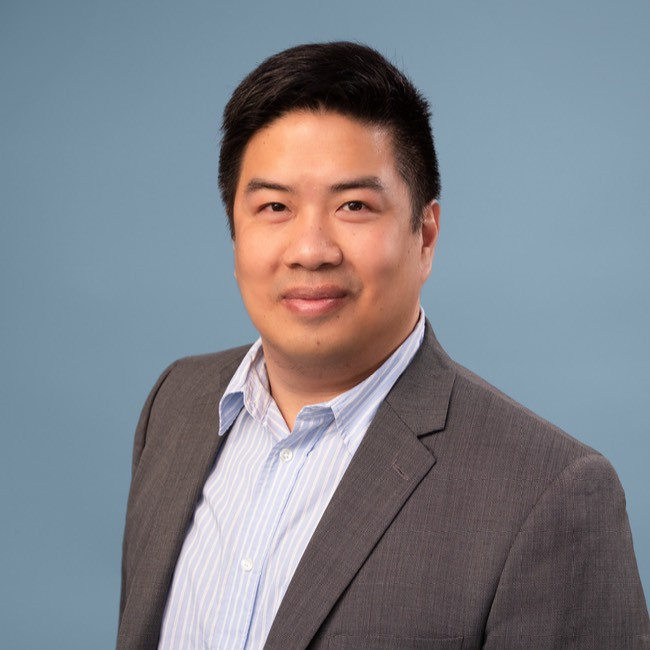
Jonathan Lo is an Associate Professor of New Testament at Ambrose University, specializing in biblical studies with a focus on intertextuality between the Old and New Testaments. He holds a PhD from the University of Edinburgh and is affiliated with the Society of Biblical Literature (SBL), Society of Asian Biblical Studies (SABS), and the Society for New Testament Studies (SNTS). His work integrates Asian contextual perspectives into exegetical analysis. PhD (University of Edinburgh) MTh (University of Edinburgh) MCS (Regent College) BSc (University of British Columbia) His research explores themes such as the use of Daniel in Mark’s Gospel, liberation exegesis in Hong Kong, and the Synoptic Problem through Isaiah’s influence on Jesus’ parables. Recent publications address urban ministry’s intersection with biblical interpretation and early Christian historiography in Acts. Teaching highlights include courses on Synoptic Gospels, the Life of Jesus, and New Testament linguistics.
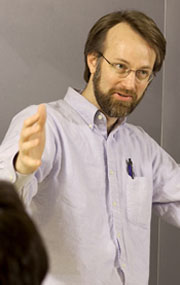
Steven Johnson is Professor of Religion at Lycoming College, where he has been a core faculty member in the Department of Religion within the College of Arts and Sciences. He teaches courses in New Testament studies, early Christian literature, and Koine Greek, and contributes to theological education through academic leadership and field research. Education: B.A., California State University, Fullerton (Psychology) M.Div., San Francisco Theological Seminary M.A., Miami University (Ohio) M.A. and Ph.D. in Religion (New Testament), Claremont Graduate University Steven Johnson's research focuses on the early Jesus Movement, particularly the Sayings Gospel Q and the Gospel of Thomas. He investigates the development of early Christian communities, the use of wisdom traditions, and the socio-historical context of Gospel sayings. His linguistic expertise in Koine Greek supports both teaching and textual analysis. He also integrates archaeology into his scholarship, with fieldwork at Bethsaida, Megiddo (Israel), and Idalion (Cyprus). His recent scholarly output includes studies on judgment motifs, wisdom and wealth in Jesus' teachings, and collaborative work on Greek grammar. These publications reflect a strong interdisciplinary approach combining textual, linguistic, and archaeological methods. Johnson chairs the Theological Pursuits and Callings committee, fostering dialogue among students interested in religious vocations. He has previously taught as an adjunct instructor in Southern California before joining Lycoming College full-time. There is no mention of external grants in the provided text. His academic service and fieldwork demonstrate an active engagement with both students and the broader scholarly community. He has not received any explicitly mentioned scientific awards.
Dr. Matthew Aernie is an Associate Professor in the School of Biblical and Theological Studies within the College of Adult and Graduate Studies at Colorado Christian University. He teaches in the Master of Arts in Biblical Studies program and has previously taught at Southeastern Bible College and Colorado Christian University earlier in his career. Education: Ph.D., New Testament – University of Wales, Lampeter Th.M., New Testament – Trinity Evangelical Divinity School M.Div. – Midwestern Baptist Theological Seminary B.A., Christian Education – Hannibal La-Grange College Dr. Aernie's research focuses on New Testament studies, particularly Greek grammar and exegesis, biblical theology, gospel studies, the Pauline epistles, Pauline theology, New Testament textual criticism, and hermeneutics. His work reflects a strong commitment to evangelical scholarship and deep textual analysis. The recent publications show a consistent focus on Pauline theology, especially the theme of the 'Day of the Lord,' and textual-critical issues in the Gospels, particularly Mark. His contributions to reference works like the Lexham Bible Dictionary demonstrate engagement with lexical and historical details of biblical figures and terms. Professional Memberships: Institute for Biblical Research Society of Biblical Literature Evangelical Theological Society Dr. Aernie is actively involved in mentoring students and integrating faith with academic rigor. Though no formal advising list or grants are mentioned, his long-standing teaching career and scholarly output indicate sustained academic leadership. He is committed to Christian education and discipleship, both personally and professionally. He is part of scholarly teams contributing to digital theological resources such as the Lexham Bible Dictionary and Lexham Theological Workbook , reflecting collaborative engagement in contemporary biblical scholarship.
Dean Sheppard is the Departmental Lecturer in Physical & Theoretical Chemistry at the University of Oxford, where he also serves as a Physical Chemistry tutor at St Peter’s College, Somerville College, and Lady Margaret Hall. His role focuses on standardizing the undergraduate Physical Chemistry experience across colleges, delivering synoptic revision lectures, and setting examinations. He is deeply involved in outreach programs like UNIQ, Opportunity Oxford, and MPLS Bridging, aiming to support students from diverse backgrounds. MChem, University of Oxford (Magdalen College, 2008-2012) DPhil in Physical & Theoretical Chemistry, University of Oxford (New College, 2012-2016) Sheppard’s research during his DPhil explored photochemical spin dynamics in proteins, potentially linked to magnetic sensing in animals. He developed cavity-enhanced optical techniques to detect magnetic field effects on reactivity. While his current role is teaching-focused, his earlier work bridges physical chemistry, biophysics, and advanced spectroscopy. His teaching emphasizes small-group tutorials and problem classes, covering the entire undergraduate Physical Chemistry curriculum. He also contributes to outreach initiatives, leveraging his background as a first-generation university student to advocate for accessibility in higher education.
Prof. Michael Reichardt is a Professor of Biblical Introductory Studies and Contemporary History at the Catholic Theological Faculty of the University of Bonn. He holds a Chair at the New Testament Seminar and has held academic positions since 1992, including Habilitation in 2006. His research focuses on the historical Jesus, biblical archaeology, and contextual analysis of New Testament miracle narratives. Education: PhD (1998, University of Passau) and Dipl.-Psych. (1995). Research interests include interdisciplinary approaches to New Testament studies, combining textual analysis with historical and cultural contexts. Publications include works on Markan theology, eschatological themes, and transmission processes in early Christian texts. Member of Katholisches Bibelwerk, Arbeitsgemeinschaft der Katholischen Neutestamentler, and Deutscher Verein zur Erforschung Palästinas.
Christian Münch serves as a faculty member in the Department of Catholic Theology and Religious Education at the Protestant University of Applied Sciences Ludwigsburg within the Faculty of Educational and Social Sciences. He functions as an academic advisor for students, maintaining regular office hours on Thursdays during term time both in-person at Reuteallee 46, Ludwigsburg and via Webex appointments. His research centers on New Testament exegesis with specialized focus on the Gospel of Matthew, parable interpretation, and miracle narratives. Münch has made significant contributions to Ruben Zimmermann's compendium projects as divisional editor for Matthean materials, while developing innovative approaches to biblical didactics and religious education. His work consistently bridges historical-critical analysis with practical pedagogical applications for contemporary faith communities. Analysis of Münch's recent publications reveals sustained engagement with Matthean studies while expanding into work ethics in Pauline literature and language-sensitive religious education. His scholarship demonstrates methodological diversity, integrating narrative criticism, memory theory, and hermeneutical approaches to interpret ancient texts for modern educational contexts. No scientific awards were documented in the available materials. Münch provides academic advising for credit transfers and disciplinary matters within theology programs. The source materials contain no references to research grants, external funding, or collaborative research projects.
Arthur J. Lembo, Jr. is Professor of Geography and Geoscience in the Henson School of Science and Technology at Salisbury University, where he has taught since 2007. He also serves as Technical Director of the Eastern Shore Regional GIS Cooperative, leading regional geospatial initiatives and enterprise GIS projects. Education B.S. Geography, State University of New York, College at Oneonta (1987) M.A. Geography, State University of New York at Buffalo (1989) Ph.D. Environmental Resource Engineering, State University of New York, College of Environmental Science and Forestry (1997) Research Interests Dr. Lembo’s research centers on the innovative application of advanced information technologies to geographic problem-solving. His work explores high-performance GIS through massively-parallel algorithms executed on consumer-grade gaming GPUs, enterprise-scale spatial database design, and the integration of smartphone sensors into real-time mapping workflows. Additional emphases include spatial decision support for post-disaster infrastructure assessment, crime analysis, and sustainable local food systems. Selected Research Sponsors National Science Foundation (multiple awards) W. K. Kellogg Foundation Maryland Governor’s Office of Crime Control and Prevention Maryland Department of Natural Resources USDA and NASA Scientific Awards 2018 State of Maryland Board of Regents Award for Teaching Excellence 2006 SUNY Chancellor’s Award for Excellence in Teaching 2005 NACTA Teacher of Merit 2003 CALS Faculty Innovation in Teaching Award, Cornell University 2002 & 2003 Master Teacher recognition, University of Mississippi & NASA Teaching & Outreach Dr. Lembo teaches core GIS programming and spatial-analysis courses (GEOG 204, 415, 419, 435, 619) and maintains an active extension program that provides GIS solutions for municipalities, first responders, and environmental NGOs such as The Nature Conservancy and the City of Havre de Grace. Lab & Teams He directs the Eastern Shore Regional GIS Cooperative, a university-based center that supports multi-agency geospatial data sharing and application development across Maryland’s Eastern Shore.
PD Dr. Michael Labahn is an apl. Professor (Associate Professor) of New Testament Studies at the Martin Luther University Halle-Wittenberg , Faculty of Theology, Institute for Biblical Studies, Seminar for New Testament. His office is located at Franckeplatz 1, House 25, 06099 Halle/Saale, Germany. He teaches courses on the Logienquelle (Q source) and Johannine Christology. Education : Born in Braunschweig in 1964, he studied Protestant theology in Oberursel, Tübingen, and Göttingen. He earned his doctorate in theology from Georg-August University Göttingen in 1998. Research Interests : His scholarship centers on the Gospel of John , miracle traditions , the Logia source (Q) , and the interaction between early Christianity and Roman rule . He employs historical-critical, narrative, and hermeneutical approaches to explore the theological and literary dimensions of New Testament texts. Recent Trends in Publications : His work increasingly integrates narrative ethics , socio-historical context , and intertextuality , particularly focusing on how Johannine and Synoptic traditions negotiate identity, authority, and mission within the Roman imperial world. Editorial and Collaborative Roles : Since 2004, he has been editor of the European Studies on Christian Origins subseries of LNTS (T&T Clark), and a member of the editorial board of the Journal for the Study of the New Testament Supplement Series . He has co-edited numerous volumes on Johannine studies, Pauline theology, and early Christian minorities. Ongoing Projects include a Habilitation thesis on the Logia source as narrative, a Septuagint translation of Deuteronomy, and a research report on miracle logics in the New Testament.
David Campbell Sim is a Professor of Biblical Studies in the School of Theology, Faculty of Theology and Philosophy. His research focuses on the Gospel of Matthew, early Christian-Jewish relations, and Pauline literature. He examines themes like anti-Pauline rhetoric in Matthew, Jewish-Christian conflict, and the socio-historical context of early Christian communities. His work bridges New Testament analysis with broader questions of canon formation and intertextuality. Recent studies include the reception of Paul in Matthew's community and the theological implications of Matthew's Gospel structure. Sim has also contributed to medical research on heart failure biomarkers, though this appears to be a secondary area of involvement. His publications span peer-reviewed articles, book chapters, and edited volumes analyzing Matthean theology, early Christian identity, and apocalyptic literature as crisis management tools. Key research areas: Matthean exegesis, Pauline reception, Jewish-Christian conflict, canon studies Major contributions include defining Matthew's anti-Pauline stance, analyzing ethnic identity dynamics, and exploring Matthew's historical context His work frequently engages with methodological debates in biblical criticism, such as source criticism (Markan priority), intertextuality, and the Synoptic Problem. Sim's interdisciplinary approach combines theological analysis with historical contextualization, addressing both ancient texts and their modern interpretation challenges.
Maria J. Molina is an Assistant Professor within the Department of Atmospheric and Oceanic Science at the University of Maryland and an Affiliate Faculty with the University of Maryland Institute for Advanced Computer Studies (UMIACS). She is also affiliated with the NSF National Center for Atmospheric Research (NCAR) and serves as an Adjunct Assistant Professor within the Department of Marine, Earth, and Atmospheric Sciences at North Carolina State University. Dr. Molina holds leadership positions including Vice-Chair of the AMS STAC Committee on Artificial Intelligence Applications to Environmental Science, member of the WCRP Scientific Steering Group for the Earth System Modelling and Observations (ESMO) Core Project, and member of the AMS Board on Representation, Accessibility, Inclusion, and Diversity (BRAID). Dr. Molina's research focuses on the application of machine learning tools (e.g., neural networks) and numerical modeling systems (e.g., CESM) to answer pressing questions in the domains of climate and extremes. Her PARETO (Predictability and Applied Research for the Earth-system with Training and Optimization) research group tackles problems including extending Earth system prediction, understanding genesis of extremes, and uncovering multi-scale patterns in the climate system. Her work emphasizes open-source software, accessible communication, and multi-disciplinary collaboration, particularly with computer science. Current research directions involve applying AI/ML methods to explore Earth system dynamics, parameterizing subgrid scale processes, and investigating causal patterns in the climate system. NSF Graduate Research Fellowship Program (GRFP) Award for students she advises (Jonathan Starfeldt, Dean Calhoun) Dr. Molina advises numerous graduate students including PhD candidates and MS students working on diverse topics from ENSO dynamics to urban heat extremes. Her group maintains active collaborations with NCAR, NASA, and other institutions. Current research projects include deep learning applications for convection prediction (deep-conus), machine learning for mesoscale convective systems detection (ML-extremes-mcs), climate signal processing (climatico), subseasonal bias correction (s2sml), and neural networks for physical sciences education (UMDAOSC650). Her research group maintains strong connections with the broader scientific community through GitHub repositories, active participation in WCRP-CMIP initiatives, and collaborations across multiple institutions. The PARETO group emphasizes open science practices and interdisciplinary approaches to tackle complex Earth system challenges.
Ulrich Schmid is a Researcher at the University of Münster's Faculty of Theology, affiliated with the Cluster of Excellence “Religion and Politics” (EXC 2060). He contributes to Project C3-21, focusing on the theory of textual variation using digital editions of the Greek New Testament. His work integrates manuscript studies, textual criticism, and ancient biblical traditions. He is also part of the NT.VMR (Virtual Manuscript Room) initiative since 2013, advancing digital scholarship in textual analysis. Research Areas: Textual criticism of the Greek New Testament and Septuagint, manuscript codicology, early Christian harmonies, and biblical textual history. Key Projects: Cluster of Excellence C3-21 (2019–2025), NT.VMR digital manuscript platform. Research Interests: Schmid explores scribal practices, ancient textual variations, and the interplay between textual and canonical history. His studies analyze diplomatic features in manuscripts like Codex Sinaiticus and Vaticanus, focusing on how scribes shaped biblical texts. He also examines Latin harmonies like the Diatessaron and their reception in medieval Europe. Publications Overview: His work spans textual analysis of Septuagint Psalms, sociological factors in scribal variation, and Latin biblical traditions. Recent focus includes digital tools for manuscript study and the theoretical frameworks underpinning textual variation. Grants & Collaborations: Funded by DFG (German Research Foundation), Schmid collaborates on interdisciplinary projects linking theology, digital humanities, and manuscript studies. His involvement in the NT.VMR project highlights his commitment to open-access digital scholarship. Labs/Teams: Member of the Cluster of Excellence's "Criticism of Religion and Apologetics" research field, contributing to the Virtual Manuscript Room initiative.