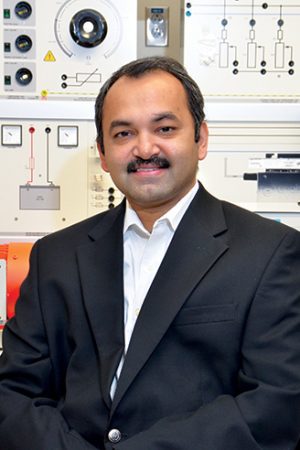
Dr. Madhav Manjrekar is an Associate Professor in the Department of Electrical and Computer Engineering at the University of North Carolina at Charlotte. He earned his Ph.D. from the University of Wisconsin–Madison in 1999. His research focuses on power electronics applications in utility systems, renewable energy interfaces, and cybersecurity of electricity infrastructure. Key areas include power quality improvement in microgrids, high-voltage direct current (HVDC) transmission, and advanced electrical machine design for electric vehicles and wind energy systems. His work emphasizes innovative solutions for energy storage integration, grid resiliency, and fault-tolerant power systems. Recent publications highlight advancements in DSTATCOM for microgrids, solid-state circuit breakers, and doubly salient electrical machines. He has contributed to projects like the US-Caribbean Super Grid and HVDC interconnectors for offshore renewable energy. Dr. Manjrekar’s research also addresses cybersecurity vulnerabilities in power infrastructure and explores next-gen semiconductor technologies like SiC MOSFETs. His interdisciplinary approach bridges power electronics, machine design, and grid stability, with applications in both academic and industry settings.
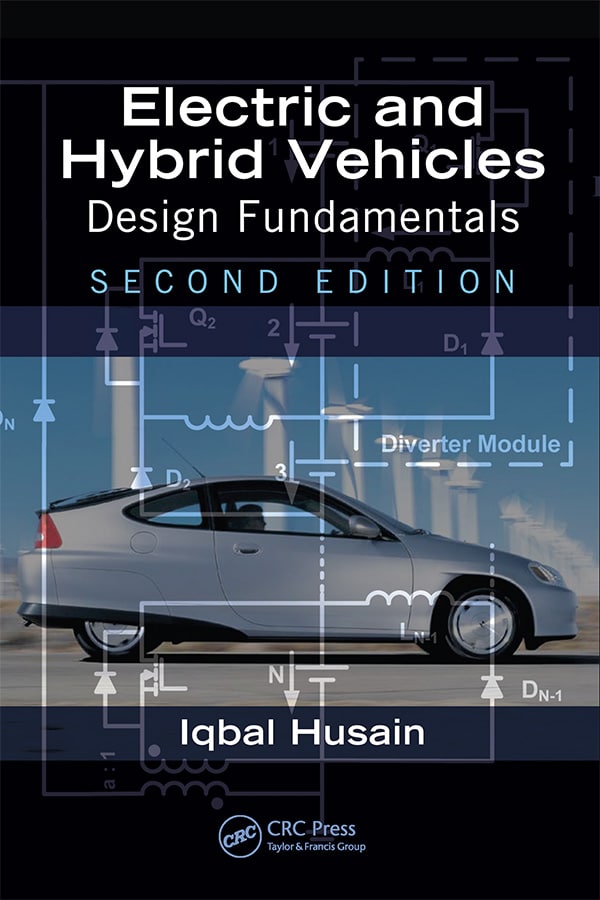
Dr. Iqbal Husain is the Director of the FREEDM Center and an ABB Distinguished Professor in the Department of Electrical and Computer Engineering at North Carolina State University. Previously, he served at the University of Akron for 17 years before joining NC State. He holds a Ph.D. (1993), M.S. (1989), and B.S. (1987) in Electrical Engineering from Texas A&M University and Bangladesh University of Engineering and Technology, respectively. His research focuses on power electronics, electric drives, and renewable energy systems, with applications in transportation, automotive, and aerospace. Notable contributions include advancements in electric machine design, inverter controls, and grid synchronization. He authored the textbook *Electric and Hybrid Vehicles: Design Fundamentals*, now in its third edition. Dr. Husain’s awards include the NSF CAREER Award (1997), SAE Vincent Bendix Award (2006), and IEEE Fellow (2009). His recent work includes developing AI-enabled tools for power grid cybersecurity and medium-voltage solid-state transformers for EV fast charging. He leads interdisciplinary projects at the FREEDM Systems Center, addressing challenges in clean energy and smart grid technologies.
Assoc. Prof. Dr. Yusuf Yaşa is an Associate Professor at Istanbul Technical University, Department of Electrical Engineering, specializing in Electrical Machines, Power Electronics, and Hybrid/Electric Vehicles. He holds a PhD from Yıldız Technical University and has served in academic and administrative roles at Bursa Technical University and Istanbul Technical University. PhD in Electrical Machines and Power Electronics, Yıldız Technical University (2006–2013) Current Vice Dean at Istanbul Technical University (2023–) Founding Partner of Yasa Motor Technologies (2018) and Nardan Power Conversion Systems Ltd. Co. (2023) His research focuses on noise mitigation in switched reluctance machines, battery cooling with graphene-enhanced phase change materials, and efficiency optimization in electric vehicle systems. He has led projects on DC fast-chargers and sensorless control of synchronous reluctance motors. His publications address energy conversion, battery management, and acoustic noise reduction. Recent research trends include advancements in electric vehicle modeling, state-of-charge estimation for Li-ion batteries, and thermal management solutions for battery systems. His work integrates simulation tools like ANSYS and machine learning for efficiency improvements. He has advised PhD and Master’s theses on topics such as battery charge rate estimation, graphene-doped PCM materials, and Kalman filter-based motor control. Collaborations span institutions like The University of Akron and companies in electric propulsion and robotics.
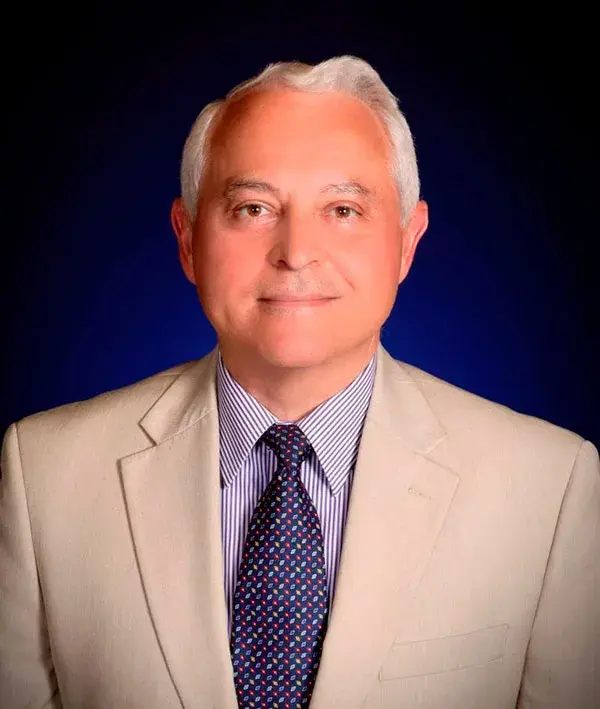
Dan M. Ionel, Professor and inaugural L. Stanley Pigman Chair in Power at the University of Kentucky (UK), directs the Power and Energy Institute Kentucky (PEIK). He is affiliated with the SPARK Laboratory in the Department of Electrical and Computer Engineering, focusing on renewable energy, electric machines, and smart grids. Alternative and Renewable Energy Technologies Electric Machines and Power Electronic Drives Electromagnetic Devices Electric Power Systems Energy Storage Smart Grids and Buildings His research integrates machine learning with electromagnetic design for applications like electric vehicles and aircraft propulsion. Recent work includes axial flux permanent magnet machines with Halbach arrays and cryogenic thermal management systems. Scientific awards include IEEE Fellowship. Research is sponsored by NSF, DOE, NASA, and industry partners like ANSYS, EPRI, and Regal Rexnord. Collaborations span national labs (NREL, ORNL), utilities (LG&E, TVA), and aerospace entities.
Sandro Rubino is a Fixed-term tenure-track Assistant Professor at the Department of Energy (DENERG) at Politecnico di Torino, where he is also a Member of the Interdepartmental Center PEIC - Power Electronics Innovation Center. His academic appointment falls under the scientific disciplinary sector IIND-08/A - Power Electronic Converters, Electrical Machines and Drives (Area 0009 - Industrial and Information Engineering). Dr. Rubino's research focuses on electric drives and electrical machines, with particular expertise in induction motor drives, synchronous motor drives, and advanced torque control techniques. His work spans from fundamental motor control theory to practical applications in electric vehicles and e-mobility systems. He has developed high-performance torque controllers for various types of electric motors including electrically excited synchronous motors, induction motors, and multi-three-phase motor configurations. His research addresses critical challenges in motor drive systems including fault tolerance, efficiency optimization, and performance derating under abnormal conditions. His publications reveal a strong focus on practical applications of motor control theory, particularly in the context of electric vehicles and sustainable transportation. The trend in his recent work shows increasing sophistication in control algorithms for multi-phase motor systems, with emphasis on fault tolerance and performance optimization under challenging operating conditions. His research bridges theoretical electrical machine modeling with practical implementation challenges in modern power electronic drive systems. Dr. Rubino has received multiple prestigious awards including the IAS-IDC ECCE Prize Paper Award in 2020, 2022, and 2024 from IEEE Transactions on Industry Applications, the IEEE Italy Section Power and Energy Society (PES) Chapter Best PhD Thesis Award in 2020, the IEEE Italy Section Industrial Electronics (IES) Chapter Best PhD Thesis Award in 2021, and the IAS-IDC Transactions Paper Award in 2024. He actively supervises PhD students including Nicola Macri', Alessandro Ionta, and Luisa Tolosano, focusing on advanced topics in multi-phase motor drives and torque control. Dr. Rubino leads or participates in several significant research projects including TEAMING - e-powerTrain prEdictive mAintenance using physics inforMed learnING (2023-2027), SUPERDRIVE - Superconductive Synchronous Machine Drives for High-Power Applications (2023-2025), and SEMDY - Sustainable and Efficient Motor Drive System for E-mobility Applications (2022-2025), where he serves as Scientific Responsible. Within the Power Electronics Innovation Center (PEIC), Dr. Rubino contributes to advancing the state-of-the-art in electric drive systems, with particular emphasis on applications supporting Sustainable Development Goals 7 (Affordable and Clean Energy), 9 (Industry, Innovation, and Infrastructure), and 11 (Sustainable Cities and Communities).
Professor Geraint Jewell is affiliated with the University of Sheffield , serving as Director of the Rolls-Royce University Technology Centre in Advanced Electrical Machines (since 2006) and Director of the EPSRC Future Electrical Machines Manufacturing Hub (since 2019). He is a graduate of the university (BEng 1988, PhD 1992) and has held academic roles since 1994. EPSRC Advanced Research Fellowship (2000-2005) Royal Society Industry Fellowship at Rolls-Royce (2006-2008) Former Faculty Director of Research and Innovation (2008-2011) Former Head of Department (2013-2019) His research focuses on power-dense electrical machines for aerospace applications , including permanent magnet machines , switched reluctance machines , and linear actuators . He has supervised ~20 PhD students and led collaborations with Rolls-Royce on high-temperature devices (up to 800°C) and aero-engine starter-generators. Recent publications analyze stator insulation thermal degradation , eddy current control in additively manufactured materials , and magnetic loss prediction in silicon steel. His work spans electromagnetic modeling , core loss calculation , and advanced manufacturing techniques for electrical machines. EPSRC Advanced Research Fellowship (2000-2005) Royal Society Industry Fellowship (2006-2008) He has advised PhD students across topics like consequent-pole PM machines , doubly salient SynRMs , and core loss characterization . His Electrical Machines and Drives Research Group explores modular motor design and magnetic material optimization for aerospace and electric vehicles.
Assoc. Prof. Dr. Murat Yılmaz is an Associate Professor at Istanbul Technical University's Faculty of Electrical and Electronics Engineering, Department of Electrical Engineering. His academic career spans over 15 years at Istanbul Technical University, including roles as Deputy Head of Department (2015-2020) and Vice Dean (2020-present). PhD in Electrical Engineering from Istanbul Technical University (1999-2006) Postdoctoral Researcher at University of Illinois at Urbana-Champaign (2007, 2011) His research focuses on: Power Electronics - advanced converter designs and semiconductor applications Electrical Machines - optimization of permanent magnet and reluctance motors Energy Storage Systems - battery efficiency and electrification infrastructure Electric Vehicles - cost-effective BRT systems and sensorless control methods Recent publications highlight his work on IPMSM optimization for light EVs (2025), battery chemistry performance analysis (2025), and PMaSynRM parameter estimation (2024). His research outputs demonstrate strong focus on sustainable energy solutions and motor control systems. Notable awards: 2022 IEEE PEMC Best Paper Award 2022 European Rover Challenge - 3rd Place & Best Robot Arm 2009 WORLD SOLAR CHALLENGE Best New Entrant Multiple TÜBİTAK Formula G awards (2006-2008) IEEE Senior Member (since 2020) Prof. Yılmaz leads multiple funded projects including: 2022-2023: Modeling & Design of Rover Systems for Space Exploration 2020-2021: Flexible SPA Web Applications Consultancy 2018-2021: Battery Charging Systems for Electric Vehicles
Lale Tükenmez Ergene is a Professor at Istanbul Technical University 's Department of Electrical Engineering, specializing in Electrical Machines and Energy Conversion . Her work bridges theoretical research and practical applications in motor design for electric vehicles and home appliances. Ph.D. in Electrical Engineering from Rensselaer Polytechnic Institute 20+ years of academic and administrative leadership Focus areas: Permanent Magnet Motors, Synchronous Reluctance Motors, and Sensorless Control Systems Her research explores: Optimization of traction motors for electric vehicles Advanced sensorless control algorithms for motor drives Reduction of voltage distortion in high-performance motors Integration of predictive diagnostics in motor systems Applications of neurofuzzy control systems in multicopters Recent publications highlight trends in PMaSynRM parameter estimation , flux weakening capabilities , and real-time motor diagnostics . Her work spans both traditional electrical engineering and cross-disciplinary innovations like VR-based language learning systems for EU workforce mobility. Scientific recognition includes: Best Poster Paper Award (2016) 2nd Prize in Graduation Design Competition (2015) Doctoral Thesis Excellence Award (2015) She leads projects such as: Pmasynrm's Innovative Real-Time Model Diagnostic System (2021-2024) Sensorless Magnet-Supported Motor Drive for Washing Machines (2019-2022) VR-based Business English Training for Engineers (2018-2022)
Juha Pyrhönen serves as Professor of Electrical Engineering at the School of Energy Systems, Lappeenranta-Lahti University of Technology (LUT University) in Lappeenranta, Finland. His research focuses on advanced electric machine design for high-performance applications, with particular expertise in traction motors, synchronous reluctance machines, and thermal management systems. Contact information includes email Juha.Pyrhonen@lut.fi and phone +358 40 571 1645. Professor Pyrhönen's research spans critical areas in electric machine development including high-speed motor design for aerospace and automotive applications, mitigation of parasitic effects like bearing currents, and innovative cooling techniques such as direct liquid cooling. His work addresses electromagnetic design challenges in drum-winding machines, variable reluctance resolvers for position sensing, and material selection for rotors operating under extreme conditions. Recent investigations examine agricultural tractor electrification and compact energy conversion systems for onboard machinery. Analysis of his 2025 publications reveals strong emphasis on improving power density through multidisciplinary approaches that integrate electromagnetic, thermal, and mechanical considerations. Key trends include advanced bearing current mitigation strategies, optimization of axially-laminated rotors, and precision measurement techniques under magnetic saturation. His research consistently targets sustainable solutions for electric propulsion across transportation sectors. No scientific awards were documented in the provided information. Details regarding student supervision, research grants, or collaborative projects were not specified in the available materials. The absence of such information suggests either non-disclosure in the source materials or potential focus on independent research activities. While specific laboratory facilities weren't mentioned, his research scope implies access to advanced testing infrastructure for high-speed machinery, electromagnetic characterization equipment, and thermal validation systems at LUT University's energy research facilities.
Lale Ergene is a Professor in the Department of Electrical Engineering at Istanbul Technical University (ITU), College of Engineering. Her research focuses on advanced electric machine design and control systems for industrial and automotive applications. She is actively involved in motor drive innovation, particularly in permanent magnet and reluctance motor technologies. Research Interests: Dr. Ergene specializes in electric machines, with emphasis on Permanent Magnet Synchronous Motors (PMSM), Interior Permanent Magnet (IPM) motors, and Permanent Magnet Assisted Synchronous Reluctance Motors (PMaSynRM). Her work spans sensorless control, field weakening techniques, finite element analysis, and motor optimization for electric vehicles and home appliances. She applies intelligent control methods such as neuro-fuzzy systems and real-time diagnostics. Recent Research Trends: Her recent publications (2023–2024) show a strong focus on improving motor efficiency and control robustness, especially in EV traction systems and white goods. Key themes include voltage distortion reduction, flux weakening enhancement, real-time parameter estimation using FFT, and lean sensorless control at zero/low speeds. Her work bridges theoretical modeling with industrial applications. Scientific Awards: Best Poster Paper AWARD (2016) Graduation Design and Project Competition 2nd Prize (2015) ITU 2014 Best Doctoral Thesis Award (2015) Advising and Grants: Dr. Ergene has supervised or is currently supervising 25 theses, indicating a strong mentoring role. She has led multiple funded projects, including TÜBİTAK and ITU BAP grants, focusing on FPGA-based neural network control, three-level inverter design, real-time model diagnostics, and sensorless control for washing machines and EVs. Her projects demonstrate sustained research funding and applied engineering impact. Labs and Research Teams: While specific lab names are not mentioned, her projects imply leadership in a motor control and electric machines research group at ITU, likely involving FPGA, real-time simulation, and embedded control systems. Her collaborations with researchers like A.F. Ergenc, M. Yilmaz, and A. Tap suggest an active, multidisciplinary team focused on next-generation motor drives.
Simone Ferrari is a Fixed-term Assistant Professor in the Department of Energy (DENERG) at Politecnico di Torino. He is a member of the Interdepartmental Center PEIC (Power Electronics Innovation Center) and affiliated with the College of Electrical and Energy Engineering and College of Mechanical, Aerospace and Automotive Engineering as an invited member. His research focuses on electric machines, finite element analysis, and open-source software development for electromagnetic systems. He has supervised multiple PhD students in electrical engineering and has contributed to commercial consulting projects such as the design of electric motors for lifting applications and supervision of high-power motor development. Teaching responsibilities include courses on Propulsion of Hybrid and Electric Vehicles, Applied Electromagnetism, and Electrical Machines across multiple academic years. His work emphasizes multiphysics simulation, data-driven modeling, and the development of efficient traction motors for electric vehicles. Key research outputs include advancements in flux-map-based modeling, fault-tolerant motor designs, and thermal/structural scaling techniques for synchronous machines. Dr. Ferrari holds a patent for a method to identify spatial harmonic flux and torque maps without torque transducers. His recent publications (2024-2025) address challenges in electric motor efficiency, fault performance, and NVH mitigation, reflecting his commitment to advancing sustainable power electronics and clean energy technologies aligned with SDGs 7 and 9.
Paolo Pescetto is a Fixed-term tenure-track Assistant Professor in the Department of Energy (DENERG) at Politecnico di Torino, where he is also a member of the Interdepartmental Center PEIC (Power Electronics Innovation Center). He serves on multiple academic boards including the College of Electrical and Energy Engineering, College of Computer, Film and Mechatronics Engineering, and College of Mechanical, Aerospace, and Automotive Engineering. His research focuses on power electronics, electrical machines, and motor drives with particular emphasis on electric vehicle applications. His work spans motor control strategies, thermal management of high-power density motors, sensorless control techniques, and integrated power systems for e-mobility. He has developed advanced methodologies for flux mapping, torque ripple compensation, and fault protection in permanent magnet and synchronous reluctance machines. Analysis of his recent publications reveals a strong trend toward solving practical challenges in electric vehicle powertrains, with significant contributions in multi-phase motor drives, thermal management, and fault-tolerant control systems. His work bridges theoretical advances with practical automotive applications, particularly in third-generation electric vehicle technologies. Dr. Pescetto holds multiple patents in motor control technologies, including methods for MTPA tracking without HF injection, spatial harmonic flux-map identification, and isolated on-board battery chargers for electric vehicles. His intellectual property demonstrates practical innovation in the field of motor drives and power electronics. He actively supervises PhD students Andrei Bojoi and Chen Chen in the Electrical, Electronics, and Communications Engineering program, focusing on electric motor drives and sustainable traction electrification. His research projects include commercial contracts on sensorless control of synchronous reluctance machines, firmware implementation for motor control, and advanced sensorless control methodologies for brushless motors. As a member of the PEEMD Research Group within DENERG, Dr. Pescetto contributes to cutting-edge research in power electronics and motor drives, with a strong industry collaboration focus that translates academic research into practical automotive solutions.
Alberto Colotti is a Professor at the Zurich University of Applied Sciences (ZHAW), School of Engineering, where he heads the Power Electronics and Drives team within the Institute of Mechatronic Systems. He serves as a lecturer for Power Electronics and Drive Systems and maintains an active research profile in power conversion technologies. His research spans power electronics, electric drives, and mechatronic systems with emphasis on wide-bandgap semiconductors (GaN/SiC), motor design for traction applications, and thermal management in power converters. Key specialties include synchronous reluctance machines, IPMSM development, and educational test bench design for instructional purposes in drive systems. Publications from 2014-2024 reveal consistent innovation in power converter topologies and machine design, with recent work focusing on instructional test benches (2024) and SiC thermal modeling (2019). His research bridges theoretical modeling with experimental validation, particularly in gallium nitride applications and traction drive systems for small vehicles. Colotti has led multiple research projects: Control platform for gallium nitride-based power converter (Project leader, completed) Sigrid – Smart Interlocking Grid (Project leader, completed) Adastec (Project leader, completed) Lisrel (Project leader, completed) Holistic mechatronic design for a sonic toothbrush (Deputy project leader, completed) Multipol Resolver with passive Rotor (Deputy project leader, completed) He directs the Power Electronics and Drives team at ZHAW's Institute of Mechatronic Systems, which specializes in advancing power electronics research through both simulation and experimental validation of next-generation drive systems.
Imen Bahri is a researcher at the Laboratory of Electrical and Electronic Engineering of Paris (GeePs) , specializing in control systems for electromagnetic and power electronic devices. Her work focuses on vibration reduction, efficiency optimization, and sensorless control strategies for electric machines like switched reluctance machines (SRMs) and permanent magnet synchronous machines (PMSMs). Research Interests include: Robust control methods (H-infinity, RST controllers) Intermittent control for automotive applications Sensorless performance enhancement DC microgrid voltage regulation Recent publications address vibration suppression via HW/SW partitioning, torque pulsation in electric vehicles, and FPGA-based fault-tolerant systems. She collaborates with institutions like Université de Lorraine and IEEE on modeling, simulation, and industrial electronics.
Paolo Guglielmi is a Full Professor at the Department of Energy (DENERG) of the Polytechnic University of Turin. His research focuses on electric machines, power electronics, sensorless control, and wireless power transfer, with an emphasis on sustainable energy systems and electric vehicle technologies. He is a member of the Interdepartmental Center PEIC (Power Electronics Innovation Center) and has held visiting researcher roles at institutions like École Nationale Supérieure d'Électronique (ENSEEIHT), France. Teaching: Courses in electrical engineering, electric vehicles, and machine design at undergraduate and graduate levels. Research Projects: Leads initiatives like NODES (Industry 4.0 for Sustainable Mobility) and COOL-X (Integrated Electric Drive Cooling), funded by PNRR Mission 4 and EU H2020 programs. Awards: Recipient of IEEE Industrial Power Conversion Systems Department Paper Prize (2010) and IDC Prize Paper (2011). Patents: Holder of patents including '3D Power Conversion' and 'Integrated Electric Drive with Cooling Device'. His work integrates power electronics with electromechanical systems to develop compact, reliable, and cost-effective solutions for electric drives and energy conversion, with applications in sustainable mobility and aerospace.