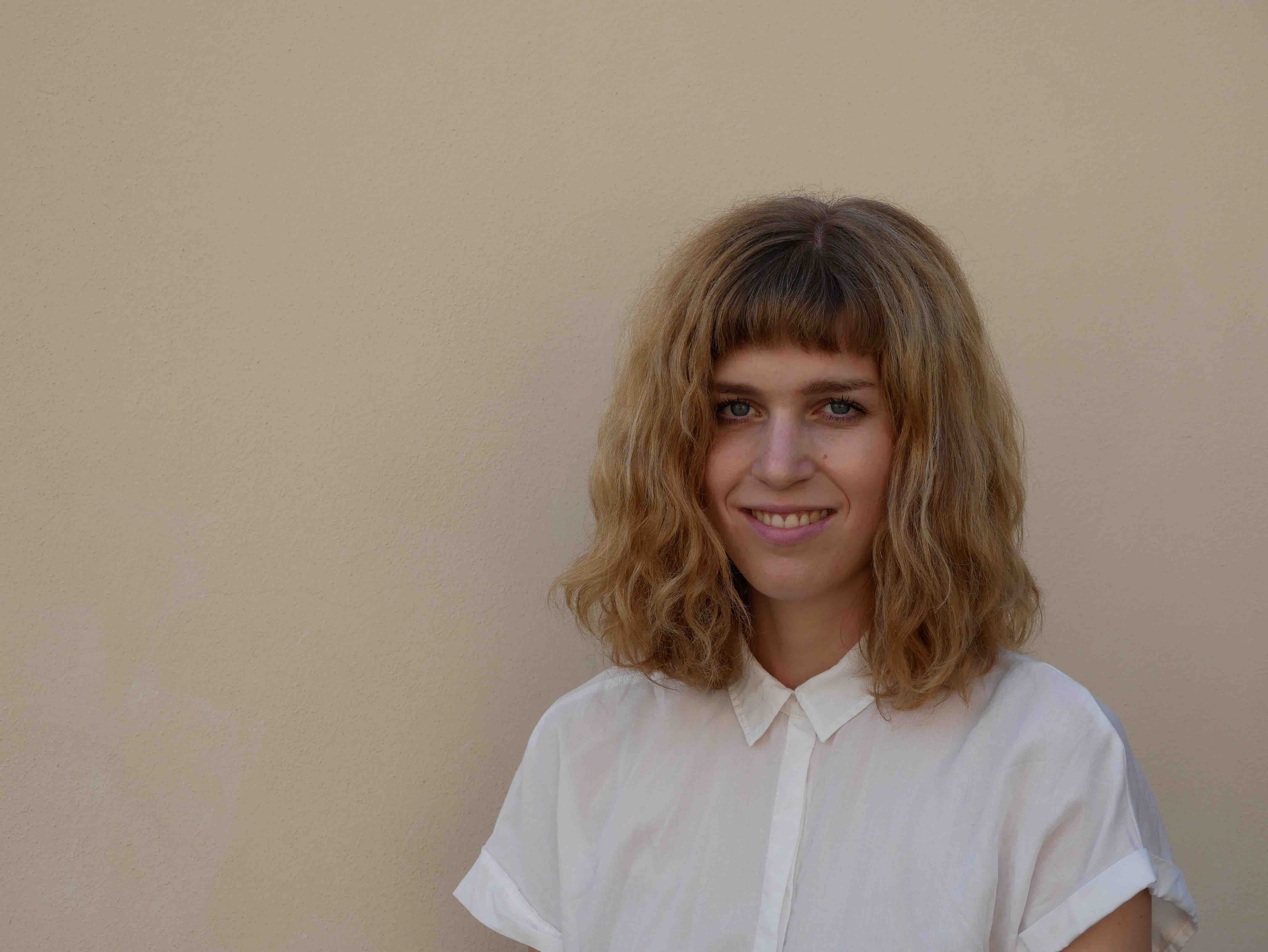
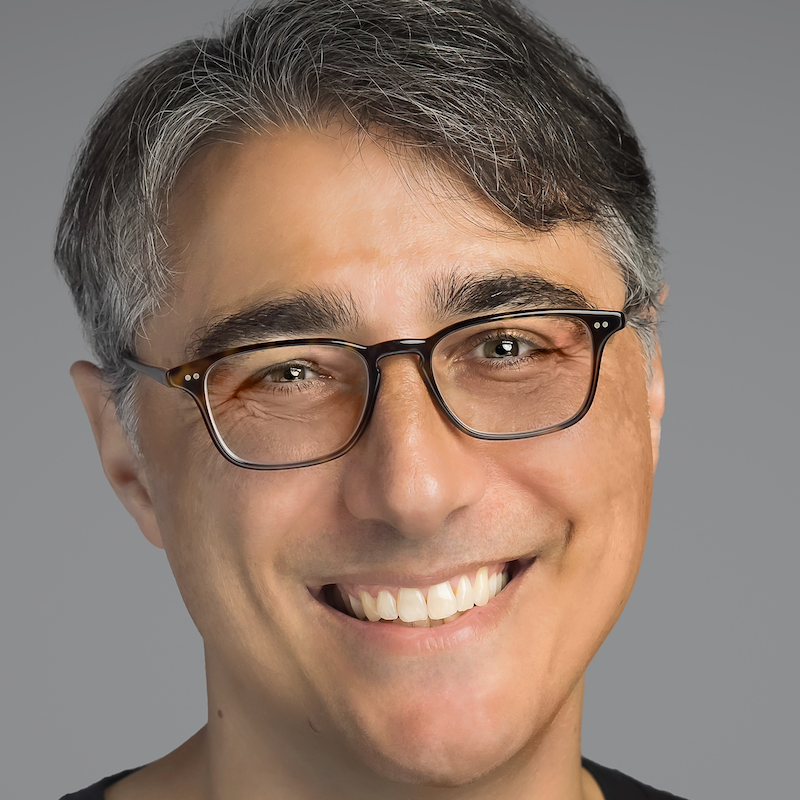
Dr. Sarah A.M. Loos is a Research Fellow at the Department of Applied Mathematics and Theoretical Physics (DAMTP) at the University of Cambridge and a Research Fellow at Corpus Christi College, Cambridge. She holds a PhD in Physics (summa cum laude) from TU Berlin (2020), with postdoctoral research at ICTP (Trieste) and Leipzig University. Her research focuses on stochastic thermodynamics, non-Markovian processes, and nonreciprocal systems. She has received major awards including the Royal Society of Chemistry Early Career Award (2024) and Marie Skłodowska Curie Fellowship (2023). Education: PhD in Physics (2020, TU Berlin), Master's in Physics (2015, TU Berlin), Bachelor's in Physics (2012, TU Berlin). Research interests include entropy production in nonreciprocal systems, active matter, and control theory. She has organized workshops on adaptive dynamical systems and contributed to KITP programs on active solids. Publications span topics like optimal control at microscale, PT symmetry in non-Hermitian systems, and nonreciprocal heat transfer. Her work bridges statistical physics and nonlinear dynamics, with applications in biological and nanoscale systems. Awards: 8 major prizes including DPG and RSC recognitions Grants: MSCA Fellowship (€200k), DFG Walter-Benjamin Fellowship Labs/Teams: Active Matter Group at DAMTP, collaborations with Édgar Roldán and Klaus Kroy
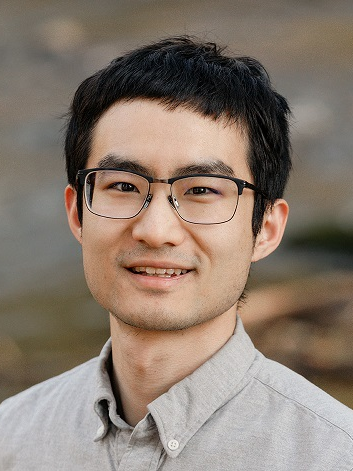
Tianzheng Wang is an Associate Professor and Director of the Dual-Degree and Partnerships Programs at the School of Computing Science, Simon Fraser University. His research focuses on database systems, transaction processing, parallel and distributed computing, and embedded systems. He holds a PhD in Computer Science from the University of Toronto (2017) and a BSc in Computing from Hong Kong Polytechnic University (2012). Research Interests: Database systems optimized for modern hardware, parallel programming, synchronization, and distributed architectures. His work emphasizes high-performance transaction processing and efficient indexing techniques, with applications in cloud and embedded systems. Awards: ACM SIGMOD Best Paper Award (2025), IEEE TCSC Early Career Award (2019), and multiple distinguished reviewing recognitions (SIGMOD/VLDB 2021-2024). His research has been integrated into systems like Amazon Redshift and DragonflyDB. Teaching: Leads courses such as CMPT 454 (Database Systems II), CMPT 300 (Operating Systems), and special topics in databases. Actively mentors graduate and undergraduate students in research projects. Labs & Collaborations: Heads the Data-Intensive Systems Lab, part of SFU's Data Science and Systems groups. Collaborates on tools like PiBench for persistent memory benchmarking and contributes to open-source projects like CoroBase and Tabular.
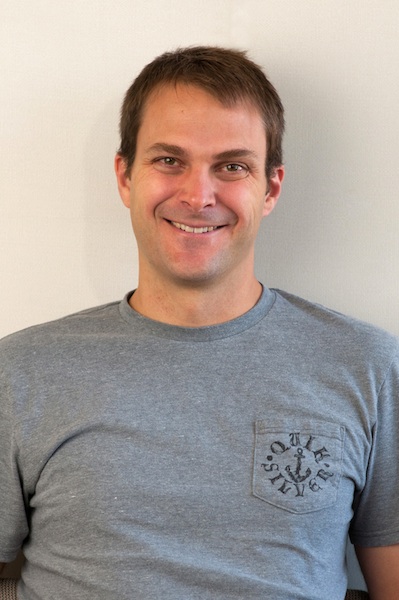
John Serences is a Professor in the Department of Psychology at the University of California, San Diego (UCSD). He leads the Perception and Cognition Lab, which participates in the Neuroscience Graduate Program. His research focuses on how behavioral goals and attention influence perception, memory, and decision-making, employing techniques like psychophysics, computational modeling, EEG, and fMRI. Key projects explore serial dependence, neural adaptation in visual cortex, and the interplay between sensory processing and mnemonic storage. Recent work highlights mechanisms reconciling repulsive neuronal adaptation with attractive behavioral biases. Affiliations: Department of Psychology, UCSD; Neuroscience Graduate Program. Research Themes: Visual perception, working memory, decision-making, neuroimaging. His lab investigates neural dynamics underlying cognitive processes, with particular emphasis on how attentional modulations and stimulus history shape neural representations. Notable contributions include studies on adaptive sensory coding and the role of top-down signals in perceptual stability.
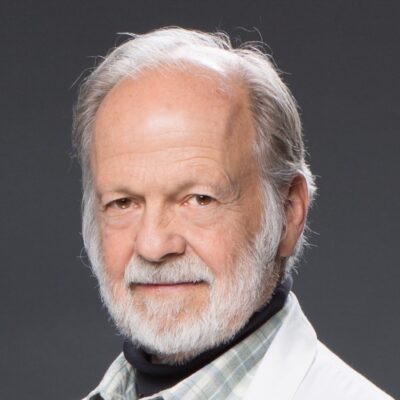
Jerome Engel, M.D., Ph.D. is a Professor at the Jane and Terry Semel Institute for Neuroscience and Human Behavior , University of California, Los Angeles (UCLA). He serves as Director of the Epilepsy Telemetry Unit within the Seizure Disorder Center and is a member of the Brain Research Institute and the Neuroscience GPB Home Area. His work spans neurology, psychiatry, and biomedical research. Research Focus: Epilepsy, epileptogenesis, high-frequency oscillations (HFOs), neuroimaging, surgical interventions, and biomarker development. Key Contributions: Pioneering studies on fast ripples as biomarkers, network-based surgical outcome prediction, and advanced HFO detection algorithms. Publications (15 most recent) address topics such as kainic acid models of epileptogenesis, thalamic sleep spindles in pediatric epilepsy, self-supervised HFO analysis, and graph theoretical measures for surgical planning. His work frequently employs medRxiv and Epilepsia as platforms for translational findings. Contact: engel@ucla.edu
Fernando De la Torre is a Courtesy Professor in the Department of Electrical and Computer Engineering at Carnegie Mellon University, with an affiliation to the Robotics Institute where he has been a research faculty member since 2005. He holds a Ph.D. in Electronic Engineering from Ramon Llull University (2002). His research focuses on machine learning and computer vision, with applications in human health, augmented/virtual reality, generative models, and data-centric methodologies. He directs the Human Sensing Laboratory, which explores technologies for human behavior analysis and health monitoring. Notable contributions include founding FacioMetrics LLC (acquired by Meta), advancing facial recognition and 3D human digitization, and developing frameworks for robust visual models. His work bridges theory and practice, with over 225 peer-reviewed publications and editorial roles, including Associate Editor for IEEE Transactions on Pattern Analysis and Machine Intelligence. Recent research trends emphasize generative AI applications in satellite imagery analysis, VR/AR rendering optimizations (e.g., Gaussian splatting), and clinical motion recognition for healthcare. His projects often intersect with industry, addressing challenges in wearable health monitoring and immersive technologies. His lab collaborations span academia and industry, focusing on scalable solutions for 3D human modeling, adversarial robustness, and multimodal data fusion. Key achievements include pioneering work on 3D face animation from speech and garment reconstruction from single images.
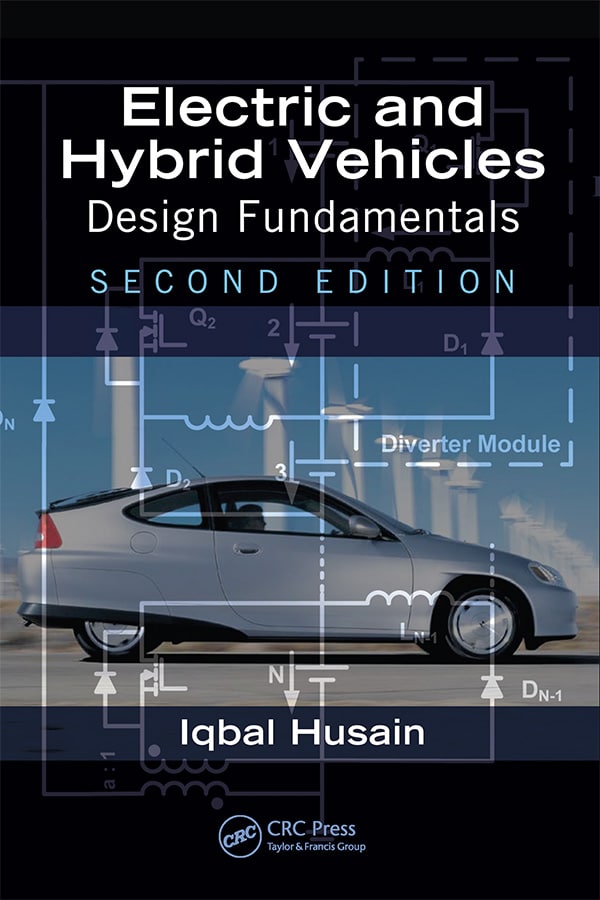
Dr. Iqbal Husain is the Director of the FREEDM Center and an ABB Distinguished Professor in the Department of Electrical and Computer Engineering at North Carolina State University. Previously, he served at the University of Akron for 17 years before joining NC State. He holds a Ph.D. (1993), M.S. (1989), and B.S. (1987) in Electrical Engineering from Texas A&M University and Bangladesh University of Engineering and Technology, respectively. His research focuses on power electronics, electric drives, and renewable energy systems, with applications in transportation, automotive, and aerospace. Notable contributions include advancements in electric machine design, inverter controls, and grid synchronization. He authored the textbook *Electric and Hybrid Vehicles: Design Fundamentals*, now in its third edition. Dr. Husain’s awards include the NSF CAREER Award (1997), SAE Vincent Bendix Award (2006), and IEEE Fellow (2009). His recent work includes developing AI-enabled tools for power grid cybersecurity and medium-voltage solid-state transformers for EV fast charging. He leads interdisciplinary projects at the FREEDM Systems Center, addressing challenges in clean energy and smart grid technologies.
Randy Freeman is a Professor of Electrical and Computer Engineering at Northwestern University's McCormick School of Engineering. He joined the university in 1996 after earning his Ph.D. from the University of California, Santa Barbara. His research focuses on nonlinear control theory, robust control, multi-agent systems, and distributed control systems. Freeman has been recognized with the NSF CAREER Award (1997) and has held editorial roles in prominent journals like the IEEE Transactions on Automatic Control. Education: Ph.D., Electrical Engineering, University of California, Santa Barbara (1996) M.S., Electrical Engineering, University of Illinois at Urbana-Champaign B.S., Electrical Engineering, Cornell University His research explores advanced control strategies for complex systems, including nonlinear feedback systems, distributed averaging, and multi-agent coordination. Key contributions include work on self-healing swarm control, distributed environmental monitoring, and privacy-preserving consensus algorithms. His publications span journals like IEEE Transactions on Robotics and IEEE Control Systems Letters . Scientific Awards: NSF CAREER Award (1997) Advising and Grants: Freeman has contributed to collaborative robotics projects and sensor network research, supported by grants from NSF and other agencies. His work bridges theoretical control systems with practical applications like robotics and environmental monitoring. Labs and Teams: Affiliated with the Master of Science in Robotics Program and collaborates on multi-agent systems and distributed control initiatives.
Natalie Enright Jerger is a Professor in the Department of Electrical and Computer Engineering at the University of Toronto's Faculty of Applied Science and Engineering. She holds the Canada Research Chair in Computer Architecture and serves as Director of the Division of Engineering Science (2023-2028). Previously, she was the Percy Edward Hart Professor (2016-2019). She received her B.S. in Computer Engineering from Purdue University (2002), and M.S./Ph.D. in Electrical Engineering from University of Wisconsin-Madison (2004/2008). Her research focuses on: Multi/many-core architectures and on-chip networks Cache coherence protocols and memory hierarchy optimization Approximate computing and sustainable systems Intermittent computing for energy-harvesting devices Hardware acceleration for machine learning Her publications demonstrate strong emphasis on networks-on-chip (NoC) innovations, including routing algorithms, deadlock handling, power-efficient designs, and topology optimizations. Recent work expands into approximate computing, mobile architectures, and ML-driven hardware design. Major Awards: Fellow of Engineering Institute of Canada (2023) McLean Senior Fellow (2019) IEEE Micro Top Picks (2016) ACM/IEEE Microarchitecture Hall of Fame (2015) Sloan Research Fellowship (2015) Canada Research Chair (current) Distinguished Scientist, ACM Fellow, IEEE She leads the NEJ research group and collaborates with industry partners including Intel, AMD, Qualcomm, and IBM. Her work is funded by NSERC, CFI, and industrial grants. She co-chaired ASPLOS 2023 and HPCA 2014, and actively promotes diversity through WICARCH and ACM initiatives.
Tariq Iqbal is an Assistant Professor at the University of Virginia , with joint appointments in the Department of Systems and Information Engineering and Department of Computer Science . He leads the Collaborative Robotics Lab (CRL) , specializing in human-robot teams and embodied AI . Previously, he was a Postdoctoral Associate at MIT's CSAIL , advised by Prof. Julie Shah , and earned his Ph.D. in Computer Science from University of California San Diego (UCSD) under Prof. Laurel Riek . Ph.D. in Computer Science, University of California San Diego (2017) M.S. in Computer Science, University of Texas at El Paso (2012) B.S. in Computer Science and Engineering, Bangladesh University of Engineering and Technology (2007) His research lies at the intersection of artificial intelligence and robotics , focusing on human-robot collaboration in dynamic environments. Key areas include motion prediction , multimodal fusion , trust modeling , and collaborative learning . His work integrates cognitive science and deep learning to enhance robotic fluency in naturalistic settings. Recent publications (2023–2025) highlight advancements in human-robot team dynamics , multimodal dataset creation , and motion prediction algorithms . Notable works include Energy-Based Transformers for scalable AI, PoseTron for motion prediction, and Accessible Navigation Mapping for assistive robotics. These contributions span trust modeling , cloud robotic infrastructure , and safety in close-proximity collaboration . National Science Foundation (NSF) CAREER Award Air Force Office of Scientific Research (AFOSR) Young Investigator Program (YIP) Award Commonwealth Center for Advanced Manufacturing (CCAM) Innovation Award As faculty, he has secured grants from NSF and AFOSR , mentored research students, and taught courses like Stochastic Modeling I (SYS 6005) and Robots and Humans (SYS 4582/6465, ECE 4502/6465, CS 6465) . His prior industry roles at IBM Watson Lab and Grameenphone Ltd. inform his applied research in telecom infrastructure and cognitive robotics . He leads the Collaborative Robotics Lab (CRL) at UVA, which develops multimodal datasets , real-time coordination algorithms , and adaptive pathfinding systems . Current projects explore human motion prediction , team synchrony , and embodied question-answering , reflecting his commitment to advancing human-robot fluency and contextual AI .
Anthony Man-Cho So is a Professor in the Department of Systems Engineering and Engineering Management at The Chinese University of Hong Kong (CUHK). He currently serves as Dean of the Graduate School and Deputy Master of Morningside College . With a BSE from Princeton University and a PhD in Computer Science from Stanford University, his career at CUHK began in 2007. Academic Leadership: Dean, Graduate School (2023–present); Deputy Master, Morningside College (2019–present) Education: BSE (Princeton), MSc/PhD (Stanford) His research focuses on optimization theory and its interdisciplinary applications in computational geometry, machine learning, signal processing, and statistics. Key projects include non-convex optimization for wireless networks, robust graph learning, and decentralized learning algorithms. His publications span high-impact journals like Mathematical Programming , SIAM Journal on Optimization , and conferences such as NeurIPS and ICML . Recent work emphasizes dynamic regret analysis , low-rank matrix recovery , and stochastic beamforming . He has authored over 50 refereed papers and a monograph on semidefinite programming. Awards include IEEE Fellow (2023), CUHK Research Excellence Award (2016–17), and multiple IEEE/INFORMS best paper and teaching accolades. He has served on editorial boards of journals like Mathematical Programming and SIAM Journal on Optimization , and as Lead Guest Editor for IEEE Signal Processing Magazine . Teaching roles include courses on optimization, discrete mathematics, and machine learning. Scientific Awards IEEE Fellow (2023) CUHK Outstanding Fellow (2019) Multiple IEEE/INFORMS Best Paper Awards (2010–2022) IEEE/UGC Teaching Awards (2008–2022) His methodology integrates theoretical rigor with practical applications, particularly in wireless communication systems, sensor networks, and financial engineering. Collaborations span institutions in Hong Kong, mainland China, and the U.S., reflecting a global academic influence.
Phillip B. Gibbons is a Professor in both the Computer Science Department and Electrical & Computer Engineering Department at Carnegie Mellon University. He received his Ph.D. in Computer Science from the University of California at Berkeley in 1989 and has held research positions at AT&T Bell Laboratories, Lucent Bell Laboratories, and Intel Research Pittsburgh before joining CMU's faculty. His research spans parallel computing, distributed systems, databases, computer architecture, and machine learning. Gibbons' work bridges theory and systems, with publications in top-tier conferences including SOSP, OSDI, SIGMOD, VLDB, NeurIPS, and many others across computer science and engineering disciplines. His research has been supported by significant funding from NSF, Intel, and other organizations. Gibbons has made substantial contributions to streaming algorithms, parallel computing frameworks, distributed systems security, and large-scale machine learning systems. His work on data stream algorithms with Alon, Matias, and Szegedy has been particularly influential in the field. He has served in numerous leadership roles including Editor-in-Chief of ACM Transactions on Parallel Computing (2012-2018) and on the editorial boards of Journal of the ACM and IEEE Transactions on Cloud Computing. He has also been active on program committees for major conferences in systems, databases, and theory. IEEE Fellow (2014) - For contributions to parallel computing and databases ACM Fellow (2006) - For contributions to parallel computing, databases, and sensor networks Selected for Oral Presentation at NeurIPS '13 (only 20 selected out of 1420 submissions) Co-winner of the best paper award for NSDI '06 Gibbons has advised numerous students and mentored researchers who have gone on to make significant contributions in academia and industry. His research has been supported by major grants including the $15M Intel Science and Technology Center for Cloud Computing (2011-2015) where he served as Co-PI/Co-Director. He currently leads research projects on write-efficient algorithms, big learning systems, and visual cloud systems. His laboratory work focuses on bridging theoretical computer science with practical systems implementation, particularly in the areas of parallel and distributed computing. Current research directions include adapting algorithms for emerging memory technologies and optimizing machine learning systems for large-scale deployment.
Dr. Majid Pahlevani is an Assistant Professor at the Department of Electrical and Computer Engineering, Queen's University, affiliated with the Smith School of Engineering. He holds a Ph.D. from Queen's University (2012) and has prior roles as an Assistant Professor at the University of Calgary (2016–2019) and Chief R&D Engineer/VP of Technology at SPARQ Systems, Inc. (2011–2016). His research focuses on power electronics, renewable energy systems, smart grids, and energy storage, with a lab environment emphasizing interdisciplinary collaboration. He has authored over 130 publications, holds 50 U.S. patents, and serves as an Associate Editor for the IEEE Journal of Emerging and Selected Topics in Power Electronics. Education: Ph.D. (2012) – Queen's University; B.Sc./M.Sc. (2002) – Isfahan University of Technology. Research Interests: Power Electronics Technology, Renewable Energy Systems, Micro-Grids, Smart-Grids, Electric Vehicles, Energy Storage Systems, Solar Technology, LED Technology. His lab, ePOWER Lab, engages in industrial projects across these domains, fostering teamwork and cross-disciplinary innovation. Scientific Awards: Includes the Early Research Excellence Award (Alberta), Research Achievement Award (University of Calgary), Teaching Achievement Award, and IEEE Canada's Research Excellence Award. Current Supervision: Postdoctoral Fellows Laleh Saleh Ghadimi, Sergey Dayneko, and Pavel Linkov (2022). He leads the ePOWER Lab, collaborating with industry partners like Freescale Semiconductor and SPARQ Systems. Affiliations: Member of the IEEE Power Electronics Society and the Queen's Centre for Energy and Power Electronics Research.
Wai Pang Ng is a Professor and Head of the Department of Mathematics, Physics and Electrical Engineering at Northumbria University. He holds a BEng (Hons) in Communications and Electronic Engineering from the University of Northumbria and a PhD in Electronic Engineering from the University of Wales, Swansea. His research focuses on radio-over-fiber systems, distributed fiber sensing, high-speed optical communications, and adaptive signal processing. Ng has held leadership roles in IEEE chapters and conferences, including chairing the IEEE UK&RI Communications Chapter (2011–2015) and serving as publicity chair for IEEE ICC 2015 and 2016. His research interests include innovative fiber optic sensor designs, acoustic wave devices for biomedical applications, and hybrid communication systems combining radio-over-fiber and free-space optics. Recent work emphasizes ultra-sensitive pressure/temperature sensors using microstructured fibers and acoustofluidic platforms for lab-on-a-chip applications. Ng has supervised seven PhD/MSc projects and actively contributes to standards development in optical communication systems. Ng’s publications span advanced sensor technologies, nonlinear compensation in optical systems, and turbulence-resistant free-space optical links. His work bridges academic research with practical applications in telecommunications, environmental monitoring, and healthcare diagnostics. Professional affiliations include IEEE technical committees (SPCE, TCGCC, ONTC) and guest editorships for IET Communications.
Dr Brandon M Grainger is an Eaton Faculty Fellow and Associate Professor of Electrical and Computer Engineering at the University of Pittsburgh’s Swanson School of Engineering, where he also directs the Electric Power Technologies Laboratory, serves as Associate Director of the Energy GRID Institute, and co-directs Pitt AMPED. A key architect of Pitt’s electric power program since 2008, he focuses on advanced power conversion, high-voltage electronics, wide-band-gap semiconductors, and aerospace power systems. Education PhD, Electrical Engineering (Power Conversion), University of Pittsburgh, 2014 MS, Electrical Engineering, University of Pittsburgh, 2011 BS, Mechanical Engineering & Minor in Electrical Engineering, University of Pittsburgh, 2007 Executive Education Certificate, Tepper School of Business, Carnegie Mellon University, 2019 Research Focus Dr Grainger’s work lies at the intersection of power electronics, high-voltage engineering, and sustainable energy systems. He specializes in medium- and high-voltage power electronics (HVDC, STATCOM), resonant converters, and ultra-high-power-density designs leveraging SiC and GaN semiconductors. His investigations extend to electric-vehicle traction drives, solid-state transformers, optimized magnetics for aerospace applications, and resilient microgrids. He and his students routinely collaborate with NASA JPL, Johns Hopkins APL, Honeywell Aerospace, and the Naval Research Laboratory, leveraging Pitt’s NSF SHREC center to push the boundaries of power conversion in space and defense systems. Selected Research Themes High-frequency, high-density DC/DC converters for satellite power systems Radiation-tolerant GaN converters and point-of-load power stages Medium-voltage testbed development (13.8 kV, 5 MVA) Rare-earth-free permanent-magnet machine topologies Model-predictive control of multi-phase drives and microgrids Honors & Awards 2024 IEEE Region 2 Outstanding Educator Award 2024 Pitt STRIVE Outstanding DEI Service Award 2019 ESWP Engineer of the Year 2019 ASEE 2nd Place Best Paper Award 2019 SRI Undergraduate Best Mentor Award Richard K. Mellon Endowed Graduate Fellowship National Academies of Science & Engineering Ambassador Senior Member, IEEE Grants & Industry Partnerships Dr Grainger’s research has been continuously funded by federal agencies and industry partners including NASA JPL, Johns Hopkins APL, Honeywell Aerospace, the Naval Research Laboratory, Eaton, and the National Science Foundation through the SHREC Center. These awards support graduate students and post-docs working on next-generation power systems for aerospace, naval, and terrestrial applications. Laboratories & Teams Director, Electric Power Technologies Laboratory (EPTL) Associate Director, Energy GRID Institute Co-Director, Pitt AMPED (Advanced Multimodal Power and Energy Development) Faculty Affiliate, NSF SHREC Center
Salim El Rouayheb is an Associate Professor in the Department of Electrical and Computer Engineering at Rutgers University. He leads the Coding and Securing Information (CSI) Lab, which focuses on information-theoretic security and privacy in distributed systems. His research spans multiple areas including secure machine learning, private information retrieval, and data synchronization. Dr. El Rouayheb received his Ph.D. in Electrical Engineering from Texas A&M University in 2009. Prior to joining Rutgers, he was an Assistant Professor at the Illinois Institute of Technology (2013-2017), a Research Scholar at Princeton University (2012-2013), and a Postdoctoral Researcher at UC Berkeley (2010-2011). His research interests focus on information-theoretic security in distributed systems, private information retrieval and search, secure machine learning algorithms, and data synchronization in distributed systems. He has made significant contributions to developing frameworks that provide information-theoretic privacy guarantees in various contexts including federated learning, genomic data analysis, and decentralized networks. His work often bridges theoretical foundations with practical applications, particularly in the areas of secure distributed computing and privacy-preserving algorithms. His recent publications demonstrate a strong trend toward applying information-theoretic principles to address privacy and security challenges in machine learning systems, particularly in federated and decentralized settings. Many of his papers explore random walk approaches for decentralized learning, secure matrix multiplication techniques, and privacy mechanisms that can be toggled "on and off" based on correlation patterns in data. His work spans both theoretical contributions in information theory and practical implementations for real-world systems. Dr. El Rouayheb has received several prestigious awards including the NSF CAREER Award (2016), Google Faculty Research Award (2018), and the Rutgers University Walter Tyson Junior Faculty Chair (2019). He has successfully secured multiple research grants including NSF SaTC, NSF CAREER, Google Faculty Research Awards, and Army Research Lab funding. His lab, the Coding and Securing Information (CSI) Lab, currently includes postdoc Xingran Chen, PhD student Zonghong Liu, and undergraduate researchers. The CSI Lab maintains an active research agenda with regular publications in top-tier venues and hosts the Shannon Channel, a series of online talks related to information theory. Dr. El Rouayheb is also involved in organizing workshops on coding theory and information security.