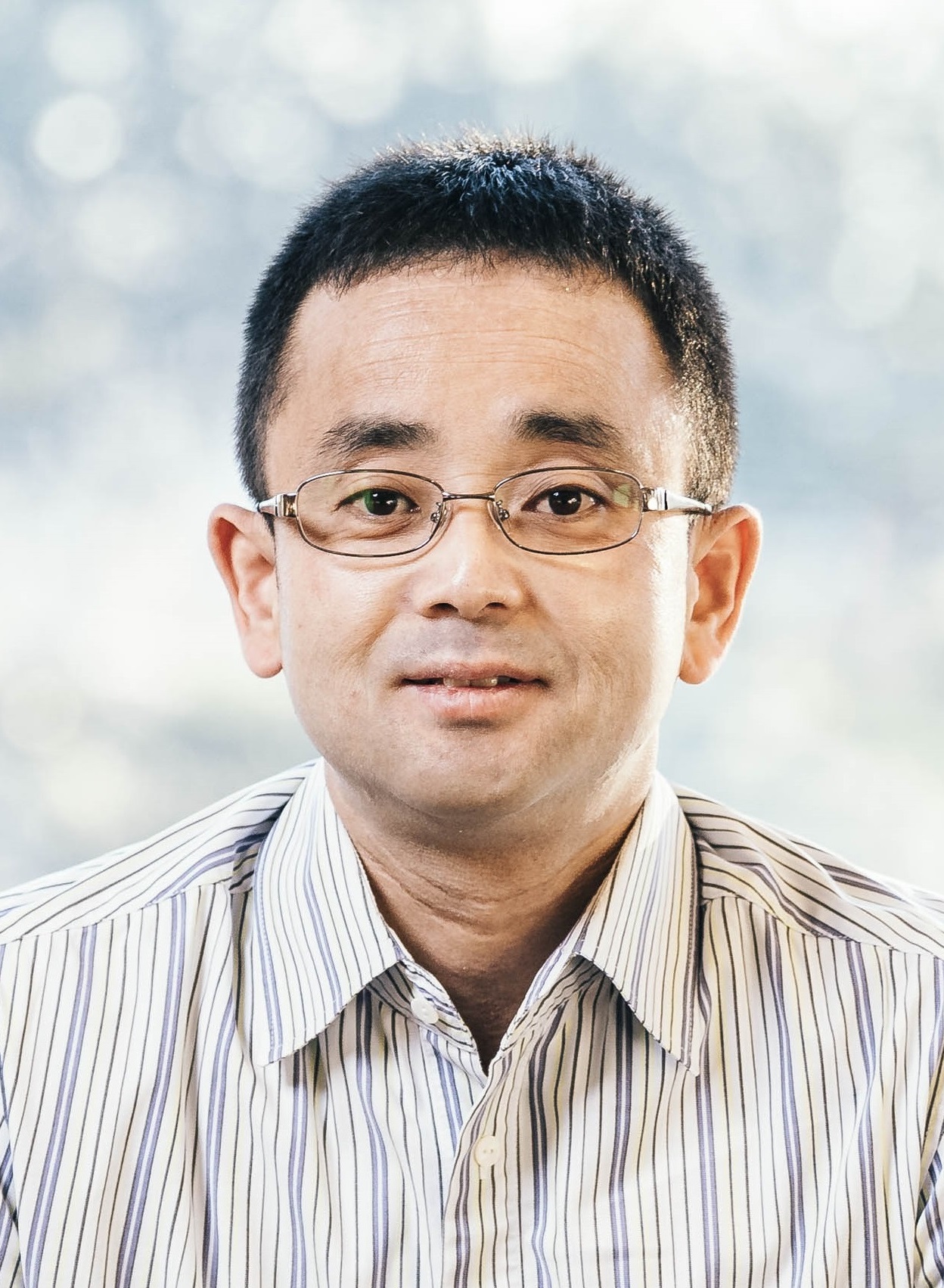
Vlahogianni Eleni is a Professor and Dean of the Department of Transportation Planning and Engineering at the National Technical University of Athens (NTUA). Her research focuses on integrating machine learning , quantum computing , and reinforcement learning with urban mobility and traffic engineering , addressing challenges in eco-routing , congestion pricing , and autonomous vehicle interactions . Her work emphasizes data-driven approaches to traffic forecasting, including quantum neural networks and theory-aware unsupervised learning . Recent publications explore mixed traffic environments , shared space modeling , and parking occupancy prediction , highlighting her commitment to advancing intelligent transportation systems . Professor Vlahogianni leads the Traffic Engineering Laboratory at NTUA and contributes to policy frameworks for connected and automated transport , wildfire resilience , and dynamic mobility solutions . She is actively involved in the LEVITATE project and advocates for explainable AI in transportation applications.
Alexey Pavlov is a Professor of Petroleum Cybernetics at the Department of Geosciences and Petroleum, Norwegian University of Science and Technology (NTNU). He holds an MSc in Applied Mathematics from St. Petersburg State University, a PhD in Mechanical Engineering from Eindhoven University of Technology, and has industrial R&D experience from Statoil and Ford Motor Co. Education: MSc (Applied Mathematics, St. Petersburg State University), PhD (Mechanical Engineering, Eindhoven University) His research focuses on control systems for petroleum engineering applications, including nonlinear control theory, iterative learning control, and data-driven optimization methods. Publications reveal a strong emphasis on real-time drilling optimization, well integrity monitoring, and synchronization in networked systems. Recent work trends include machine learning integration for oil well monitoring, moment matching in model reduction, and extremum seeking control for multi-agent systems. Collaborations span institutions like Ford Motor Co., Statoil, and Eindhoven University of Technology. Current affiliations include the Department of Geosciences and Petroleum at NTNU. No scientific awards or advisee information is explicitly mentioned in the provided texts.
Professor Vicky Melfi is a leading academic in the field of human-animal interactions at Hartpury University, affiliated with the Department of Animal and Agriculture. With over 30 years of professional and academic experience in zoo animal welfare and conservation, she is a passionate advocate for evidence-based practice and interdisciplinary collaboration. She holds a PhD in Zoology from Trinity College, Dublin, an MSc in Applied Animal Behaviour and Animal Welfare from the University of Edinburgh, and a BSc in Animal Science from the University of Nottingham. PhD, Zoology, Trinity College, Dublin (awarded 2002) MSc, Applied Animal Behaviour and Animal Welfare, University of Edinburgh (awarded 1997) BSc, Animal Science, University of Nottingham (awarded 1995) Her research centers on human-animal interactions, particularly in zoo and wildlife contexts, with a focus on improving animal welfare, enhancing conservation outcomes, and promoting positive stakeholder engagement. She explores topics such as the psychological and behavioral impacts of 'Meet & Greet' programs, the role of zoos in societal wellbeing (including 'Zoos on Prescription'), and the ethical dimensions of human-wildlife encounters. Recent publications (2023–2025) highlight her ongoing leadership in evaluating the effects of human-animal interactions in zoos, examining visitor behavior, donation motivations, and animal welfare implications. Her work spans interdisciplinary domains including anthrozoology, conservation psychology, tourism, and animal behavior. She frequently publishes in high-impact journals and edited volumes, contributing to both scientific understanding and practical zoo management. Professor Melfi has received no explicitly listed scientific awards in the provided text, but her influence is evident through her editorial role and professional leadership. She actively supervises PhD students across multiple institutions, including Hartpury University, UWE, University of Exeter, and University of Melbourne. Her former and current doctoral candidates have explored diverse topics such as vulture welfare, flyball dog injuries, equine rehabilitation, and cross-cultural conservation values. She also contributes to broader academic service as Managing Editor of the Journal of Zoo and Aquarium Research (JZAR) and serves as a Trustee for The Welsh Mountain Zoo, demonstrating deep engagement with both academic and conservation communities. While no formal lab or research team name is mentioned, her fingerprint analysis indicates a strong network in zoo animal welfare, animal-visitor interactions, primate behavior, and conservation education. Her collaborative research spans the UK, Australia, and beyond, reflecting a globally connected scholarly profile.
Taehyung Kim is an Associate Professor at the University of Michigan-Dearborn in the Department of Electrical and Computer Engineering , College of Engineering and Computer Science. His research focuses on power electronics , motor drives , and electric/hybrid power systems for vehicles and aircraft , with an emphasis on renewable energy integration and fault-tolerant control . Education Ph.D., Electrical & Computer Engineering, Texas A&M University M.S., Electrical Engineering, Korea University B.S., Electrical Engineering, Korea University His research interests include energy conversion systems, power electronics for electric vehicles, evaluation and diagnosis of AC motors, and position sensorless control of permanent magnet motors. He leads the KIM Laboratory , which explores unmanned aerial vehicles (UAVs) , battery systems , and powertrain reliability . The 15 most recent articles (2024-2021) highlight his work on hybrid UAVs , fault detection algorithms , cost-effective converters , and powertrain optimization . These publications span power electronics , renewable energy integration , and electric propulsion systems , with applications in transportation electrification and industrial power systems . Scientific Awards NSF Mid Career Advancement Award, 2023 IEEE-IAS Prize Paper Award (2nd Place), 2012 Best Paper Award, IEEE Transportation Electrification Conference, 2021 Listed in "World Top 2% Scientists" (Stanford University, 2020-2024) Listed in Marquis Who’s Who in America Technical Program Co-Chair, 2009 IEEE Vehicle Power and Propulsion Conference Prof. Kim has advised numerous PhD and Master’s students , including Feng Zhou , Sreekanthreddy Chalapala , and Sahithya Parvathareddy . He has secured significant grants from the NSF , Department of Energy , and industry partners like Ford, focusing on smart monitoring , fault identification , and energy management for electrified systems. His lab’s facilities include advanced power electronics labs and hybrid powertrain testing environments .
Beth Grill is a Senior Policy Researcher at RAND Corporation and a Professor of Policy Analysis at the RAND School of Public Policy. She specializes in national security policy, focusing on security cooperation, integrated deterrence, and global health engagement. Grill holds a Master's degree in Middle East studies and economics from Johns Hopkins SAIS and has served in roles such as a Presidential Management Fellow and policy analyst at the U.S. Department of Commerce. Her expertise spans capacity building, combat medicine, and geopolitical strategic competition, with notable work on U.S.-European relations and military budgets. Grill has authored over 80 RAND publications, addressing topics like partner support for air operations, lessons from Afghanistan, and defense spending priorities. Her research emphasizes actionable frameworks for enhancing allied capabilities and adapting to strategic competition dynamics. Grill’s recent studies analyze barriers to interoperability with highly capable allies, fund allocation for global health security, and leveraging security cooperation in Air Force decision-making. Her work consistently bridges policy analysis with real-world operational challenges, offering evidence-based strategies for U.S. defense and foreign policy.
Dr. George Fitzmaurice is a Research Fellow at Autodesk, leading the Human Computer Interaction and Visualization Research group. With over 120 publications and 95 patents, his work spans 25 years of innovation in interactive systems, focusing on technology-assisted learning , 3D visualization , and novel input techniques . His notable contributions include the Maya 1.0 UI and SketchBook Pro design, as well as pioneering Graspable UIs and Spatially-Aware Displays . Education : MIT (B.Sc. Math/CS), Brown (M.Sc. CS), Toronto (Ph.D. CS) His research explores immersive visualization and generative AI applications in design workflows, with recent work focusing on VR/AR tools like TimeTunnel for motion editing and WhatIF for AI-assisted narrative design. Current projects examine the intersection of large language models , 3D design systems , and collaborative environments . Key article themes include: Generative AI integration (3DALL-E, WorldSmith) Immersive motion analysis (AvatAR, VideoPoseVR) Creative workflow optimization (MoodCubes, Immersive Sampling) Privacy-aware VR systems (Vice VRsa) Scientific Recognition: 2019 - Inducted into ACM CHI Academy 2024 - Awarded ACM Fellow for computing contributions He has developed foundational interaction techniques like ViewCube™ and SteeringWheels™ , and his work continues to shape modern 3D UI paradigms and spatial computing approaches through projects like DreamSketch and Tesseract.
David P. Helmbold is a Professor in the Computer Science Department at the University of California, Santa Cruz. He received his PhD in Computer Science from Stanford University in 1987, where he specialized in parallel algorithms and debugging of parallel programs. He has been a faculty member at UC Santa Cruz for over 25 years. Research Focus Helmbold's research centers on theoretical machine learning and computational learning theory. His primary interests include: Boosting methods and ensemble learning Online learning algorithms and regret minimization Theoretical foundations of semi-supervised learning Applications in computer vision, game AI, and power optimization Analysis of irrelevant variables in learning systems Publication Trends Helmbold's recent work (2009-2012) focuses on advancing theoretical machine learning, particularly in semi-supervised learning, Monte Carlo methods for game AI, and feature relevance analysis. His publications demonstrate a consistent bridge between theoretical frameworks and practical applications, spanning computer vision, geospatial analysis, and algorithmic game theory. Professional Recognition Helmbold is a long-standing member of the computational learning theory community, having hosted the COLT conference and served on its steering committee. No specific awards are mentioned in the source material.
Emil Björnson is a Professor of Wireless Communications and Head of the Communication Systems Department at KTH Royal Institute of Technology since 2024. He received his Master of Science in Engineering Mathematics from Lund University (2007) and PhD in Telecommunications from KTH (2011). After postdoctoral work at SUPELEC, France (2012-2014), he held faculty positions at Linköping University (2014-2021) before returning to KTH in 2020. Research Focus: MIMO communications, reconfigurable intelligent surfaces, radio resource allocation, machine learning for communications, and energy efficiency Editorial Roles: Editor for multiple IEEE transactions and magazines His research has significantly advanced wireless communication technologies, particularly in Massive MIMO and cell-free systems. He has authored four textbooks, including Massive MIMO Networks (2017) and Introduction to Multiple Antenna Communications and Reconfigurable Surfaces (2024). Scientific awards include: IEEE Fellow Clarivate Highly Cited Researcher Wallenberg Academy Fellow Digital Futures Fellow Multiple IEEE and EURASIP awards (2014-2024)
Katsuyuki Haneda serves as Associate Professor in Aalto University's Department of Electronics and Nanoengineering within the School of Electrical Engineering. Holding a Doctor of Engineering from Tokyo Institute of Technology (2007), his research pioneers high-frequency radio systems including millimeter-wave and Sub-THz communications, with critical applications in medical devices, post-disaster scenarios, and Internet-of-Things networks. Education: Doctor of Engineering, Tokyo Institute of Technology, 2007 Research Focus: Dr. Haneda's work spans Physical layer wireless communications , Antennas and propagation , and RF instrumentation , with groundbreaking contributions to wireless medical applications (notably capsule endoscopy) and in-band full-duplex radio technologies . His group develops advanced channel models for 6G while addressing real-world challenges in post-disaster communications through experimental validation. Publication Trends: Recent 2025 works reveal concentrated advancements in Sub-THz/D-Band communications, featuring innovative antenna designs for 28 GHz systems, channel modeling techniques for 3GPP-like standards, and medical wireless solutions. Publications demonstrate strong experimental emphasis with field measurements across urban, indoor, and medical environments. Scientific Recognition: ISMICT 2019 Best Paper Award (medical wireless) Dual 2013 Best Paper Awards (IEEE VTC Spring & EuCAP) IEICE Best Survey Paper (2015) IEEE AP-S Young Engineer Award (2007) Tokyo Tech Honorary Student Award (2002) Leadership & Collaboration: As Associate Editor for IEEE Transactions on Antennas and Propagation (2012-2016) and Wireless Communications (2013-present), Dr. Haneda shapes field standards. He co-chairs the radio channel working group in COST Action IRACON (CA15104), driving European 5G+/6G research collaboration while supervising graduate researchers in experimental high-frequency communications. Research Infrastructure: The Katsuyuki Haneda Group maintains specialized laboratories for millimeter-wave/Sub-THz channel sounding, antenna characterization, and medical wireless prototyping, supporting hardware-in-the-loop validation for next-generation communication systems.
Antonio RIBBA is a Full Professor of Economic Policy at the Department of Economics 'Marco Biagi', University of Modena and Reggio Emilia. His research focuses on macroeconomic policy analysis, structural VAR modeling, and the effects of monetary/fiscal policies on inflation, unemployment, and business cycles. He teaches courses on public policy analysis, financial scenarios, and macroeconomic policies. Research interests include monetary policy transmission mechanisms, fiscal multipliers in Eurozone economies, oil price shocks, and the long-run relationship between inflation and unemployment. His work employs advanced econometric techniques like structural VARs to disentangle the impacts of supply and demand shocks. Recent publications analyze fiscal dominance in the US, oil price effects on Eurozone small economies, and unemployment responses to policy shocks in peripheral Euro-area countries. He collaborates with scholars like Cavallo and Dallari on topics such as Eurozone inflation dynamics and policy spillovers.
Prof. Dr. Tilman Esslinger is a Full Professor at the Department of Physics, ETH Zürich. He serves as Deputy Head of the Institute for Quantum Electronics and has held leadership roles including Head of the Department of Physics (2013-2015) and Vice Director of the National Centre of Competence in Research Quantum Science and Technology (2011-2022). His research focuses on quantum many-body physics, matter-light interactions, and quantum simulation using ultracold atoms in optical lattices. Institutions: ETH Zürich (Department of Physics, Institute for Quantum Electronics) Roles: Full Professor, Deputy Head of Institute, Former Head of Department Research Interests: Esslinger pioneers experimental studies of quantum phase transitions, topological materials, and quantum computing. His work on optical lattice-based quantum simulators has revealed novel phenomena like fermionic Mott insulators, quantum magnetism, and artificial graphene. Recent efforts include realizing dissipative quantum systems, topological pumps, and exploring thermoelectric effects in quantum gases. Scientific Awards: Fellow of the American Physical Society Honorary Doctorate from Heriot-Watt University Senior BEC Award (shared) Philip-Morris Research Prize ERC Advanced Grants (2) SNF Advanced Grant Contributions: Esslinger has published over 140 papers (13 in Nature, 10 in Science). His lab has trained numerous researchers who now hold professorships globally. He has held visiting positions at institutions like JILA, Harvard University, and the University of Innsbruck.
Prof. Dr. Gernot R. Müller-Putz is Head of the Institute of Neural Engineering and the Graz Brain-Computer Interface Lab at Graz University of Technology. He serves as Dean of the Faculty of Computer Science & Biomedical Engineering and holds editorial roles at Frontiers in Human Neuroscience IEEE Transactions in Biomedical Engineering Brain-Computer Interface Journal . With over 212 peer-reviewed publications and an h-index of 80, his research focuses on Brain-Computer Interfaces , Neuroprosthetics , and EEG-based Motor Control . His work investigates: Neural signal decoding for spinal cord injury rehabilitation Hybrid BCI systems with error processing Artificial sensory feedback mechanisms Machine learning applications in neural engineering VR-based neurofeedback environments Non-invasive multimodal biosignal recording Research trends show strong emphasis on EEG signal processing , BCI clinical applications , and neurotechnology integration . Scientific Awards : ERC Consolidator Grant (2015) Ludwig-Guttman Award (2017) CYBATHLON Best Paper (2019) State of Styria Research Award (2019) Förderstipendium (2013-2014) He advises 21 PhD students and has managed major projects like MoreGrasp (EU Horizon 2020) , Feel Your Reach (ERC) , and INTRECOM (EU EIC Pathfinder) . The Institute hosts the BCI Racing Team Mirage91 and offers international thesis opportunities.
Qiushi Fu is an Associate Professor in the Department of Mechanical and Aerospace Engineering at the University of Central Florida, focusing on neuromuscular control, human-robot interaction, and biomechanics. His work leverages assistive and rehabilitation technologies to improve motor function and performance. Ph.D. in Biomedical Engineering – Arizona State University M.S. in Mechanical Engineering – State University of New York at Buffalo B.S. in Automation – Tsinghua University Research interests include sensorimotor learning, bioinspired robotics, and rehabilitation prosthetics, integrating neuroscience, robotics, and machine learning. His recent publications emphasize adaptive control in dexterous manipulation, haptic communication, and wearable rehabilitation devices. Fu leads a multidisciplinary lab advancing human movement through technology, with applications in stroke recovery and prosthetic design. His work demonstrates trends in machine learning integration for neural decoding, bioinspired exoskeletons, and collaborative human-robot systems. Though no specific awards are listed, his research has been published in high-impact journals like Frontiers in Neurorobotics and Journal of Neuroscience .
Val Tannen is a Professor at the University of Pennsylvania, specializing in database systems, provenance analysis, and programming languages. His research focuses on data management, query languages, and systems like DBSP and ORCHESTRA. Collaborations include work with co-authors such as Zachary Ives, Susan Davidson, and Todd Green. Key research interests include provenance for databases, incremental view maintenance, and data integration. His work bridges theoretical foundations and practical applications in systems like DBSP for stream processing and ORCHESTRA for collaborative data sharing. Publications span provenance frameworks, query optimization, and distributed systems. While no awards are explicitly listed, his contributions to database theory and systems are widely recognized.
Riadul Islam serves as an Assistant Professor in the Department of Computer Science and Electrical Engineering at the University of Maryland, Baltimore County (UMBC), maintaining his primary office in room 316 of the Information Technology and Engineering (ITE) Building. His academic appointment focuses on hardware design and verification within the institution's engineering framework. His educational qualifications include: Ph.D. in Computer Engineering from UCSC (2017) M.A.Sc. in Electrical and Computer Engineering from Concordia University, Montreal (2011) B.Sc. in Electrical and Electronic Engineering from Bangladesh University of Engineering and Technology (2007) Professor Islam's research centers on VLSI CAD tools and low-power digital/mixed-signal IC design , with significant contributions to current-mode clock networks, vehicular security systems, and error-robust circuit architectures. His work increasingly integrates machine learning for design automation while exploring neuromorphic computing applications and secure hardware implementations. This multidisciplinary approach bridges traditional IC design with modern AI-driven optimization techniques. Analysis of his 2023-2025 publications reveals three dominant research thrusts: (1) Machine learning applications in early-stage Design Rule Checking (DRC) prediction and clock network optimization, (2) Graph-based intrusion detection systems for automotive networks (particularly CAN bus security), and (3) Event-based vision systems and neuromorphic computing architectures. These areas demonstrate consistent innovation in merging hardware design with AI/ML methodologies for enhanced system reliability and efficiency. He directs the UMBC VLSI and SoC Research Group , which develops energy-efficient clocking networks, secure vehicular communication protocols, and compute-in-memory architectures. The lab maintains active collaboration with industry partners on hardware security and neuromorphic computing initiatives while supporting graduate student research in cutting-edge IC design methodologies.