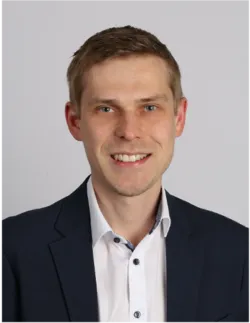
Halgurd Taher is a postdoctoral researcher at the Brain Simulation Section of Charité - Universitätsmedizin Berlin , working under the leadership of Petra Ritter. His research focuses on advanced computational modeling of brain dynamics and complex neural systems. Current affiliation: Charité - Universitätsmedizin Berlin Research group: Brain Simulation Section Research Interests: Taher specializes in nonlinear dynamics and multi-timescale modeling of brain systems. His work explores collective phenomena in complex networks , spiking neural networks , synaptic plasticity mechanisms , and meanfield theory applications in neuroscience. Publication Trends: Recent work spans computational neuroscience, mathematical biology, and network dynamics. Key themes include feedback control systems , working memory modeling , and epileptic seizure propagation analysis using patient-specific network models. Key Collaborations: Taher collaborates with leading computational neuroscientists including Petra Ritter and other members of the Brain Simulation Section. His research combines theoretical approaches with practical applications in brain modeling.
Dr. Abdullah Makkeh is a Senior Scientist at the University of Göttingen's Department of Data-driven Analysis of Biological Networks, headed by Michael Wibral, and a Guest Scientist at the Max Planck Institute for Dynamics and Self-Organization in Göttingen under Viola Priesemann's Complex Systems Theory group. Previously, he served as a Postdoc at the University of Tartu in both Theoretical Computer Science (Dirk Oliver Theis) and Computational Neuroscience (Raul Vicente) groups. Education: PhD in Informatics (2018, University of Tartu, Supervisor: Dirk Oliver Theis) MSc in Mathematics (2013, Lebanese University, Supervisor: Bassam Mourad) BSc in Mathematics (2011, Lebanese University) His research focuses on extending information theory to study computation in intelligent systems like the brain and artificial neural networks (ANNs). He has developed interpretable information-theoretic learning rules for ANNs (Makkeh et al., 2025) and analyzed reinforcement learning agents to reveal emergent computation mechanisms (Engel et al., 2022; Ehrlich et al., 2023). Current work applies these methods to enhance large language model (LLM) interpretability. His publications span information-theoretic frameworks, predictive coding, and neural oscillation analysis, with a 2024 Royal Netherlands Academy of Arts and Sciences (KNAW) recognition. He co-teaches courses in Bayesian Inference, Information Theory, and Discrete Mathematics, and organizes annual workshops on information theory in computational neuroscience. Scientific Awards: Royal Netherlands Academy of Arts and Sciences (KNAW) (2024) Dr. Makkeh contributes to open-source research tools via GitHub and collaborates with interdisciplinary teams across neuroscience, computer science, and mathematics. His work bridges theoretical foundations with applied machine learning through rigorous mathematical frameworks.
Dr. Anton de Ruiter serves as Professor and Associate Chair of Graduate Studies in the Department of Aerospace Engineering at Toronto Metropolitan University, where he holds a Canada Research Chair (Tier 2) in Spacecraft Dynamics and Control through December 31, 2025. His academic leadership spans both research direction and graduate program administration within the aerospace discipline. His educational foundation includes a PhD (2005) and MASc (2001) from the University of Toronto, and a BE (1999) from the University of Canterbury. These credentials underpin his expertise in advanced spacecraft systems. Dr. de Ruiter's research centers on Dynamics, Guidance, Navigation and Control for Space Systems , with specialized focus on Astrodynamics and Space Robotics . His work pioneers predictive modeling techniques for spacecraft autonomy in complex environments like asteroid fields, developing control systems that function as the 'brains' of spacecraft operations. He draws parallels between spacecraft navigation and student development, emphasizing self-directed learning as critical for mastery in both domains. Analysis of his publication record reveals a dominant trajectory in spacecraft attitude control with emphasis on adaptive strategies, distributed systems, and mathematically rigorous performance guarantees. His work consistently bridges theoretical foundations (e.g., SO(3) parameterization) with practical spacecraft applications, demonstrating strong interdisciplinary connections between control theory, orbital mechanics, and robotics. His scientific contributions have been recognized through prestigious honors: Canada Research Chair (Tier 2), 2016-2020 NSERC Visiting Fellowship in a Government Laboratory, 2006-2008 G.N. Patterson Award for best Ph.D. Dissertation (UTIAS), 2005 Etkin Medal for excellence in flight mechanics (UTIAS), 2005 As an educator, Dr. de Ruiter teaches AER 723 Introduction to Space Systems Design and AE 8148 Spacecraft Dynamics and Control, where he reinforces principles through rigorous preparation that anticipates student challenges. He actively supervises graduate students through the Ryerson Aerospace Control Systems laboratory, viewing his role as ensuring students 'stay on the road' while they 'put their foot on the gas.' His editorial leadership as Editor in Chief of IMechE Part G: Journal of Aerospace Engineering and membership on the IAF Astrodynamics Committee further extend his academic influence beyond the classroom. He directs the Ryerson Aerospace Control Systems research group, which focuses on experimental validation of spacecraft control algorithms and theoretical advancements in autonomous space operations, maintaining strong connections with government laboratories through his NSERC fellowship background.
Dr. Vesna Vuksanovic is a Senior Lecturer in Health Data Science at Swansea University's School of Medicine. She also holds an Honorary Senior Lecturer position at the University of Aberdeen. Her academic career spans institutions including the University of Aberdeen and the Technical University of Berlin, Germany, where she was based prior to joining Swansea University in 2021. Research Interests: Multimodal imaging and computational modeling of healthy aging and neurodegeneration Brain connectome analysis and morphometric similarity Neurodegenerative diseases, particularly Alzheimer's disease and frontotemporal dementia Dynamic functional network analysis for dementia classification Development of computational models for understanding brain changes in neurodegenerative disorders Dr. Vuksanovic's research focuses on mapping heterogeneous changes across brain regions in healthy aging and neurodegenerative disorders, and studying disease progression in dementia patients participating in clinical trials. Her work bridges computational neuroscience, clinical neurology, and data science to develop better diagnostic tools and understanding of neurodegenerative processes. She has made significant contributions to understanding the relationship between structural and functional brain networks in conditions like Alzheimer's disease and frontotemporal dementia. Recent Publication Trends: Her publications from 2014-2024 demonstrate a consistent focus on applying advanced network analysis techniques to neuroimaging data in dementia research. Key areas include genetic factors in Alzheimer's disease, dynamic functional networks for improved diagnosis, and the degeneration patterns of specific brain networks in frontotemporal dementia. Her most recent work (2023-2024) explores the genetic basis of anatomical asymmetry in Alzheimer's disease and uses dynamic functional network analysis to improve classification of dementia subtypes. Her research shows an evolution from fundamental network science approaches to increasingly clinically relevant applications. Awards and Recognition: Co-inventor on three international patents, including 'Network methods for neurodegenerative diseases' (US17/272885) Research Funding and Supervision: Dr. Vuksanovic serves as Principal Investigator for multiple research projects including 'Brain Aging Model: Identifying neuroimaging patterns relevant to neurodegeneration' (£67,939, 2023-2024) and 'Brain Flexibility: A possible non-invasive biomarker for dementia' (£111,918, 2020-2024). She is available for postgraduate supervision and has led PhD scholarship projects focused on using brain network modules to improve dementia diagnosis. Her research portfolio demonstrates strong funding success across multiple funding bodies and international collaborations. Teaching Activities: Dr. Vuksanovic teaches several modules in health data science including Capstone Project (PM-344), Computational Science and Health Care (PMIM102/PMIM102J), Health Data Modeling (PMIM202/PMIM202J), and Advanced Machine Learning in Health Care (PMIM402J). Her teaching focuses on equipping students with practical computational skills applicable to healthcare data analysis, integrating theoretical foundations with hands-on computational approaches using tools like SPSS and R.
Rafael Obaya Garcia is a Professor in the Department of Applied Mathematics at the University of Valladolid, specializing in Dynamical Systems theory. His research focuses on nonautonomous differential equations, bifurcation theory, and critical transitions with applications in mathematical ecology and engineering systems. He leads significant research projects and has built an extensive publication record that includes over 100 journal articles, 5 books, and 13 book chapters. His primary research interests center on nonautonomous dynamical systems, particularly focusing on d-concave systems , critical transitions , and bifurcation theory . His work bridges pure mathematical theory with practical applications in ecological modeling, population dynamics, and circuit theory. He has developed important theoretical frameworks for understanding rate-induced transitions and saddle-node bifurcations in nonautonomous contexts, contributing significantly to the mathematical understanding of resilience and regime shifts in complex systems. Analysis of his recent publications reveals a strong focus on critical transitions in nonautonomous systems, particularly examining d-concave differential equations. His work connects theoretical dynamical systems with practical ecological applications, showing how mathematical frameworks can predict and explain regime shifts in natural systems. He has established important connections between bifurcation theory, stability analysis, and ecological resilience, demonstrating how mathematical structures underpin critical transitions in real-world systems. Professor Obaya leads the research project "NON-AUTONOMOUS DYNAMICS METHODS WITH APPLICATION IN THE STUDY OF CRITICAL TRANSITIONS" (PID2021-125446NB-I00, 2022-2025), funded by the State Research Agency, ERDF Funds, European Union, and MICINN. He has supervised doctoral students including Jesus Dueñas Pamplona, whose thesis focused on "D-concave nonautonomous differential equations and applications to critical transitions." His research group includes Ana Maria Sanz, Maria del Carmen Núñez, Sylvia Novo, and Victor Muñoz Villarragut. He is actively involved in the research community through conference organization, including the "Dynamical Systems, Nonautonomous Differential Equations, and Critical Transitions Meeting" in Valladolid (2025), and has participated in international collaborations such as the "INTEGRATED ACTION WITH HUNGARY 2009-2011" on functional differential equations. His work demonstrates a strong commitment to advancing both theoretical mathematics and its applications to real-world complex systems.
Robin Vallacher is a Professor in the Department of Psychology at Florida Atlantic University's College of Science, where he directs the Dynamical Social Psychology Lab. He maintains significant international research affiliations as a Research Associate at the Center for Complex Systems, University of Warsaw, and a Research Affiliate with Columbia University's Advanced Consortium on Cooperation, Conflict, and Complexity. Education Ph.D. from Michigan State University Research Focus Dr. Vallacher pioneers dynamical systems approaches to social psychology, examining interpersonal and societal processes through action identification, self-concept, social judgment, and conflict frameworks. His work integrates complexity science to model phenomena ranging from mindfulness to international conflict, emphasizing nonlinear dynamics and emergent properties in psychological systems. Publication Trends His recent publications (2015-2024) reveal expanding applications of dynamical systems theory to religious behavior, self-evaluation, and societal change, featuring robust international collaborations. The research increasingly employs computational modeling while maintaining empirical grounding in social psychological phenomena. Laboratory and Collaborations He leads the Dynamical Social Psychology Lab at FAU, fostering interdisciplinary work with institutions across Poland, the Netherlands, and the United States. His extensive visiting scholar appointments reflect a globally integrated research network advancing complexity-based approaches to human behavior.
Vivek Gupta is an incoming Assistant Professor at the School of Computing and Augmented Intelligence , Arizona State University (ASU), starting Fall 2024. Previously, he served as a Postdoctoral Researcher at the University of Pennsylvania's Cognitive Computation Group , and as a Research Fellow at Microsoft Research India . His academic journey includes a Ph.D. in Computer Science from the Kahlert School of Computing, University of Utah (advisor: Prof. Vivek Srikumar), supported by the Bloomberg Data Science Fellowship, and an MTech/BTech Dual Degree from IIT Kanpur . Dr. Gupta's research focuses on Natural Language Processing for semi-structured data , particularly tables, flowcharts, and maps. His work addresses trustworthy AI systems , multilingual tabular inference , and knowledge integration in low-resource environments. Current projects explore temporal reasoning , multimodal table analysis , and neurosymbolic agents for complex data. Recent publications examine adaptive prompting for temporal table reasoning , flowchart attribution , and multimodal benchmarking . His MMTBENCH and TabXEval frameworks evaluate robustness and quality standards in table processing. Recruitments highlight his CORAL Lab seeking candidates for Trustworthy AI projects. Bloomberg Data Science Fellowship (2021-2023) Ericsson Innovation Award (2016) Best Paper, DeeLIO-2022 Outstanding Paper, NLP4ConvAI-2022 As a mentor, Dr. Gupta has guided 30+ students across institutions including ASU, University of Utah, IIT Kanpur, and UPenn. His professional service includes organizing NAACL Student Research Workshops , serving as iKDD Student Ninja , and coordinating the University of Utah Data Science Club . Contact: vgupt140@asu.edu , keviv9@gmail.com
Stephen Guastello is a Professor at Marquette University , specializing in Psychology . His research spans nonlinear dynamics, organizational behavior, cognitive workload, and human-computer interaction. Ph.D., Psychology (Illinois Institute of Technology, 1982) M.A., Psychology (Washington University, 1979) B.A., Psychology (Johns Hopkins University, 1977) Guastello's work focuses on nonlinear dynamical systems applied to organizational phenomena, including team synchronization, leadership emergence, accident analysis, and cognitive fatigue. He has developed computational tools like Synccalc and Orbital Decomposition for analyzing group dynamics and categorical data patterns. His research demonstrates how chaos theory, catastrophe models, and complexity science can explain phenomena ranging from emergency response team behavior to financial decision-making. Recent publications examine team performance variability, autonomic synchronization in crisis scenarios, and the interplay between elasticity and rigidity in organizational resilience. He serves as Editor-in-Chief of Nonlinear Dynamics, Psychology, and Life Sciences , the flagship journal of the Society for Chaos Theory in Psychology & Life Sciences, and holds editorial board positions at Theoretical Issues in Ergonomics Science .
Aykut Erdamar is an Associate Professor in the Department of Biomedical Engineering at Baskent University Faculty of Engineering. He holds a PhD in Biomedical Engineering from Hacettepe University (2007), an MSc in Physics Engineering from Ankara University (2001), and a BSc in Physics Engineering from Ankara University (1998). His research focuses on biomedical signal processing, sleep studies, and image analysis, with applications in obstructive sleep apnea classification, EEG analysis, and tissue scaffold imaging. PhD: Biomedical Engineering, Hacettepe University (2007) MSc: Physics Engineering, Ankara University (2001) BSc: Physics Engineering, Ankara University (1998) Erdamar’s research integrates machine learning and signal processing techniques to analyze biomedical data, particularly in sleep disorder diagnostics and cellular proliferation studies. His work includes developing automated detection algorithms for K-complexes, arousals, and sleep spindles using EEG and ECG signals. He has also contributed to biomedical sensor design, including piezoelectric quartz crystal systems for urea and homocysteine detection. His recent publications (2020–2023) emphasize deep learning applications in single-cell gel electrophoresis, sleep apnea classification, and tissue scaffold analysis. Earlier studies focus on wavelet transforms, HRV series, and decision tree algorithms for sleep disorder diagnostics. Erdamar collaborates with researchers in biomedical engineering and clinical sleep medicine. He teaches courses such as Biomedical Signal Processing, Sleep Signal Analysis, and Radiation Physics. Erdamar’s work spans biomedical device design, diagnostic radiology optimization, and heart disease analysis from ECG signals.
Henrik Lievonen is a Doctoral Researcher at Aalto University's Department of Computer Science. His work focuses on distributed algorithms and their connections to mathematics, computer science theory, and quantum computing. University: Aalto University Role: Researcher in distributed algorithms and quantum computing Research interests center on distributed systems, quantum advantage analysis, and algorithmic complexity in graph problems. Key areas include LOCAL model constraints, quantum derandomization, and theoretical limits of distributed quantum computing. Scientific Awards: Nokia Scholarship 2024 (Nokia Foundation)
Eva María Arias de Reyna Domínguez serves as a Full Professor in the Department of Signal Theory and Communications at the University of Seville. Her research is centered within the Signal Processing and Communications research group (TIC-155), where she has led numerous national and international projects focused on advanced signal processing techniques for wireless communications and localization systems. Her research interests span Signal Processing , Wireless Communications , and Ultra-Wideband Localization , with particular expertise in Expectation Propagation algorithms, UWB signal processing, and crowd-based learning for IoT applications. Her work bridges theoretical signal processing with practical implementations in digital communications and indoor positioning systems. Analysis of her 15 most recent publications reveals a consistent focus on Expectation Propagation techniques for digital communications (constituting 40% of recent work), UWB localization algorithms (30%), and channel equalization methods (20%). Her research demonstrates a progression from fundamental signal processing algorithms toward IoT-integrated spatial field estimation and machine learning applications. She has advised doctoral student Irene Santos Velazquez (2018 thesis on Expectation Propagation for digital communications) and participated in significant research projects including ATENEA (Artificial Intelligence for Art Fabric Analysis), Finite-Length Iterative Decoding, and multiple national grants under Spain's TEC and CSD programs. Her laboratory work centers on the Signal Processing and Communications research group, which has received continuous consolidation funding from 2005-2017.
Stanislav Mintchev is a Professor of Mathematics at the Albert Nerken School of Engineering, The Cooper Union. His work bridges applied dynamical systems theory with biological and physical systems, emphasizing numerical and analytical methods. Education Ph.D. in Mathematics, Courant Institute (NYU), 2008 B.Sc. in Physics and Mathematics, The George Washington University, 2002 Research Interests focus on: Organization phenomena in spatially extended dynamical systems Traveling wave solutions and their signal-processing applications Pulse-coupled phase oscillators in mathematical neuroscience Dynamical systems applications to data mining and machine learning Recent Publications highlight: Wave propagation in neural networks Stability analysis of oscillator chains Self-organization in excitable systems Interdisciplinary links between mathematics and neuroscience Scientific Recognition : Recipient of the 2021 Educational Innovation Grant Active presenter at SIAM and BAMM conferences Teaching Contributions : Core courses: Linear Algebra, Calculus, Differential Equations Upcoming upper-level courses: Advanced Calculus, Modern Algebra Mentorship in Putnam Examination preparation
Anne Marijke Schel is an Assistant Professor at the Faculty of Science , Utrecht University , specializing in Animal Behaviour and Cognition . Her research focuses on the evolutionary origins of human cognitive capacities, particularly language, through the comparative study of primate communication. University: Utrecht University School: Faculty of Science Department: Animal Behaviour and Cognition Academic Rank: Assistant Professor Email: a.m.schel@uu.nl , amschel@uu.nl Research Interests Dr. Schel investigates the intentionality and flexibility of primate vocal and gestural communication. Her work explores: Primate communication systems (e.g., alarm calls, food grunts) Evolution of language precursors in non-human primates Impact of socio-ecological and predation pressures on communication Compositional processing in wild chimpanzees Acoustic structure and social bonding in vocalizations Article Trends Her recent publications emphasize primate communication complexity, including: Vocal learning and referential specificity in chimpanzees Gestural intentionality in red-capped mangabeys Chorusing behavior and social bonds Geophagia and mineral acquisition in wild primates Teaching and Collaborations Dr. Schel teaches courses such as Cognition and Socio-ecology and Primate Social Behavior . She collaborates with researchers in the UK, Uganda, France, and Switzerland, working with both wild and captive primates.
Jacob R. Waldbauer is an Associate Professor at the Department of Geophysical Sciences, University of Chicago. His research focuses on the intersection of biogeochemistry, microbiology, and proteomics to understand cellular processes in global biogeochemical cycles. Biogeochemistry Microbiology Organic Geochemistry His group develops advanced analytical techniques, particularly proteomics, to investigate microbial nutrient acquisition, community metabolism, and protein diagenesis in diverse ecosystems such as marine environments, cyanobacterial mats, and Arctic soils. Key areas include: Microbial responses to environmental stressors Nitrogen and sulfur cycling mechanisms Impacts of viral infections on biogeochemical fluxes Protein fossilization for paleoenvironmental records Recent publications highlight his work on nanoplastics, carbon-use efficiency in bacteria, and isotopic tracking in microbial communities. The lab employs Orbitrap mass spectrometry and computational tools to analyze complex environmental samples. Former students and postdocs from his group include Angela Boysen, Amy Zimmerman, Gwen Gallagher, and others, reflecting his active mentorship in molecular biogeochemistry.
Andreas Koch is a Research Associate at the Professorship of Simulation for Additive Manufacturing at the Technical University of Munich (TUM), Germany. His research focuses on computational modeling of compressible multiphase flows, CutDG methods, and high-performance computing with software development. He holds a Master of Science (M.Sc.) in Mechanical Engineering from TUM (2024). Research Interests Koch's work bridges computational mechanics and machine learning, with emphasis on cut discontinuous Galerkin methods for simulating complex flows and high-performance computing systems. His publications demonstrate expertise in machine learning applications for aerospace systems, including anomaly detection in spacecraft telemetry and deep learning acceleration for spaceborne hardware. Scientific Awards ERC Starting Grant Publications (2024-2013) His research portfolio includes 15 recent publications spanning edge AI solutions for spacecraft , RF synchronization systems, and machine learning frameworks for aerospace applications. Earlier work explores robot perception and geoinformatics implementations.

.jpeg?mtime=1674665400)