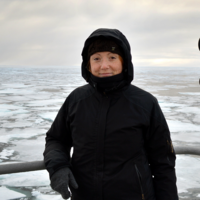
Marie-Luise Kapsch is a Research Scientist at the Max Planck Institute for Meteorology (MPI-M) in Hamburg, Germany, affiliated with the Department of Climate Variability and the Ocean Physics research group. Her work centers on paleoclimate modeling to investigate ice sheet-climate interactions during the last deglaciation and their implications for future climate projections, particularly regarding tipping points. Her academic training includes: PhD in Atmospheric Sciences from Stockholm University (2015), thesis: The atmospheric contribution to Arctic sea-ice variability Diploma (Master's equivalent) in Climate Research from Karlsruhe Institute of Technology (2011), thesis: Longterm variability of hail-related weather types in an ensemble of regional climate models Dr. Kapsch specializes in Paleoclimatology and Ice Sheet-Climate Interactions, analyzing drivers of abrupt climate changes like Heinrich events and Dansgaard-Oeschger cycles. She employs coupled climate-ice sheet models to study deglacial transitions, focusing on how meltwater release and ice sheet elevation loss influence ocean circulation and atmospheric patterns. Her research directly addresses uncertainties in future climate projections through paleoclimate constraints. Her publication record (2025-2018) reveals consistent expertise in deglacial climate modeling, with dominant themes in Heinrich event mechanisms, ice sheet reconstruction sensitivity, and meltwater impacts. The work is heavily integrated with the PalMod initiative and MPI-ESM model development, emphasizing multi-model assessments and transient simulations to decode climate system feedbacks during major transitions. Scientific awards: None documented in available sources. Her research is funded through the German paleomodeling initiative PalMod (BMBF), with contributions to the International Max Planck Research School for Earth System Modeling (IMPRS-ESM). She collaborates on large-scale projects including nextGEMS and WarmWorld, though no explicit student advisement is listed. Her work spans model development, data set creation, and participation in CMIP6 experiments. She operates within the Ocean Physics group of the Department of Climate Variability, contributing to MPI-M's climate modeling ecosystem. Her research leverages high-performance computing for Earth system simulations and connects with observational initiatives like EUREC4A and Barbados Cloud Observatory through model-data integration efforts.