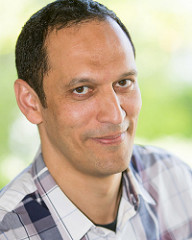
Slim Ibrahim is a Professor in the Department of Mathematics and Statistics at the University of Victoria. He holds a PhD from the University of Tunis. His research focuses on Applied Mathematics, particularly the Analysis of Partial Differential Equations, with emphases on Nonlinear PDEs from Quantum Mechanics, Fluid Dynamics, Geophysical flows, and Kinetic Models. Core research themes include existence of solutions, asymptotic behavior, and blow-up analysis. His work bridges mathematical rigor and real-world applications, addressing topics such as nonlinear Schrödinger equations, Navier-Stokes-Maxwell systems, and Vlasov-Poisson dynamics in curved spaces. Recent interests include time-periodic forcing in fluid dynamics and scattering theory for energy-critical equations. Publications span prestigious journals like Communications in Mathematical Physics and Archive for Rational Mechanics and Analysis , reflecting contributions to nonlinear PDE theory and mathematical physics. His research has implications for understanding complex systems in physics, engineering, and geophysics.
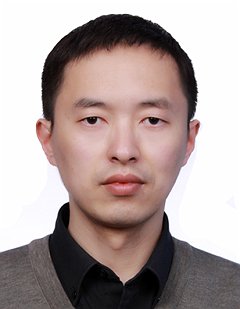
Dr. Marten van Dijk is a Full Professor in the Computer Security department at Vrije Universiteit Amsterdam (VU) since 2022 and a Group Leader for Computer Security at CWI since 2020. He also holds a Gratis Full Research Professor position at the University of Connecticut's ECE Department since 2020. Previously, he served as Associate and Full Professor at the University of Connecticut and held research roles at MIT CSAIL, RSA Laboratories, and Philips Research. PhD in Mathematics (1997, Eindhoven University of Technology) M.S. in Mathematics (Cum Laude, 1993) M.S. in Computer Science (Cum Laude, 1991) His research focuses on foundational computer security problems using cryptographic principles, including secure processor design, oblivious computation, and privacy-preserving machine learning. Notable contributions span Physical Unclonable Functions (PUFs), Aegis secure processor architecture, and oblivious RAM protocols. 15+ publications in 2023-2025 address topics like PUF cryptanalysis, differential privacy in federated learning, and Byzantine fault tolerance Key journals: IEEE Transactions on Computers, Journal of Cryptology, ACM CCS Conference Award highlights include: IEEE Fellow (2022) for secure processor design and encrypted computation IEEE Technical Achievement Award (2023) Intel Test of Time Award (2022) ACM CCS Best Paper (2013) A. Richard Newton Technical Impact Award (2015) His technical leadership spans hardware security (blu-ray error correction codes), cryptographic protocol design, and machine learning privacy frameworks. Current projects focus on secure processors with hardware-enforced isolation and differential privacy optimization.
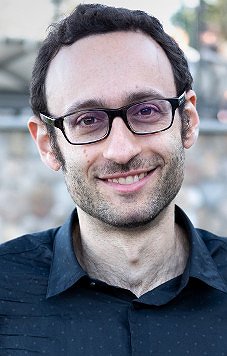
Leslie Valiant serves as the T. Jefferson Coolidge Professor of Computer Science and Applied Mathematics at Harvard University's School of Engineering and Applied Sciences, where he has been faculty since 1982. Previously, he held positions at Carnegie Mellon University, Leeds University, and the University of Edinburgh. His academic journey began with education at King's College Cambridge, Imperial College London, and Warwick University, where he earned his PhD in computer science in 1974. Valiant's research spans theoretical computer science with primary focus areas including computational complexity theory, machine learning foundations, parallel computation systems, computational neuroscience, and evolutionary computation. His work bridges artificial and natural computational phenomena, addressing fundamental limitations in both engineered systems and biological processes. Key contributions include the development of the PAC (Probably Approximately Correct) learning model, holographic algorithms, robust logics for reconciling reasoning and learning, and theoretical frameworks for understanding cortical computation and evolvability. His publication record demonstrates sustained impact across decades, with recent work focusing on cortical computation primitives, multi-core algorithm design, and evolutionary dynamics with drifting targets. These publications reveal a consistent trajectory toward understanding computational principles in both artificial systems and biological cognition. Nevanlinna Prize (1986) Knuth Award (1997) EATCS Award (2008) A.M. Turing Award (2010) Fellow of the Royal Society Member of the National Academy of Sciences Valiant's research program integrates theoretical rigor with profound questions about natural computation, maintaining active engagement with both computer systems design and fundamental neuroscience questions. His work continues to influence multiple disciplines through formal frameworks that address computational limitations in learning, evolution, and neural processing.
Maurice Herlihy serves as the An Wang Professor of Computer Science at Brown University, where he leads research in distributed systems and blockchain technology. His academic career spans decades with continuous contributions to concurrency theory and practical distributed system design. Education: PhD in Computer Science from Massachusetts Institute of Technology (1984) MS in Computer Science from Massachusetts Institute of Technology (1980) BA from Harvard University (1975) His research focuses on fundamental problems in distributed computing, particularly transactional memory systems and blockchain scalability. Recent work centers on overcoming concurrency limitations in blockchain execution through sharding techniques, optimized transaction scheduling, and cross-chain protocols. He investigates how hardware features like trusted monotonic counters can enhance Byzantine fault tolerance in asynchronous networks. Analysis of his 2020-2025 publications reveals a dominant focus on blockchain systems, with 85% of recent work addressing scalability, concurrency, and security challenges. Key trends include sharded permissioned ledgers for enterprise applications, concurrent execution models for Ethereum, and formal verification of cross-chain protocols. His work bridges theoretical distributed computing with practical cryptocurrency system design. He has secured significant research funding including NSF SHF grants for run-time support in concurrent programming. While specific advisees aren't listed in source materials, his teaching of advanced courses like CSCI 1760 (Multiprocessor Synchronization) indicates active graduate mentorship in distributed systems.
Rachid Guerraoui is a Moroccan-Swiss computer scientist and Full Professor in the School of Computer and Communication Sciences at EPFL. He is renowned for his significant contributions to distributed and concurrent computing, holding the prestigious Chair in Distributed Computing at the Collège de France (2018-19). As an ACM Fellow (2012) and recipient of the Dahl-Nygaard Senior Prize (2024), his work has shaped both theoretical foundations and practical implementations in distributed systems. Guerraoui earned simultaneous Master's degrees in Computer Engineering from École supérieure d'informatique électronique automatique (ESIEA) and in Computer Science from Pierre and Marie Curie University in 1989. He completed his PhD at Université d'Orsay in 1992 under the supervision of Christian Fluhr, with a dissertation titled "Programmation Répartie par Objets: Études et Propositions." Following postdoctoral research at EPFL, he joined the computer science faculty in 1999 after working at HP Labs and MIT. Guerraoui's research spans distributed computing, concurrent systems, transactional memory, and asynchronous algorithms. His work on establishing theoretical foundations of Transactional Memory, including the concept of opacity, has been highly influential. He has also made significant contributions to scalable information dissemination methods, asynchronous distributed computations, and the mathematical abstraction of indulgence. His research bridges theoretical rigor with practical implementations, as evidenced by systems like SwissTM and STMBench7. His publication record shows a clear evolution from theoretical foundations to practical implementations and broader applications. Early work focused on fundamental problems like consensus and renaming, while more recent publications address machine learning applications and public understanding of AI. The consistent thread throughout his career is a focus on making distributed systems more reliable, efficient, and accessible. Guerraoui has received numerous prestigious awards including: ACM Fellow (2012) ERC Advanced Grant Award (2013) Google Focused Award (2014) Middleware Best Paper Award (2014) Middleware 10-Years Best Paper Award Chair in Distributed Computing, Collège de France (2018-19) Dahl-Nygaard Senior Prize (2024) As an academic advisor, Guerraoui has mentored students including El Mahdi El Mahmdi, with whom he co-created the Wandida project - a collection of educational videos on computer science. His research has been supported by significant grants from the European Research Council and Google. Beyond research, Guerraoui actively participates in public discourse, particularly regarding computer science education and technology policy. Guerraoui leads the Distributed Computing Laboratory (DCL) at EPFL, which focuses on advancing the state of the art in distributed systems. The lab's work spans theoretical foundations, practical implementations, and educational outreach, reflecting Guerraoui's holistic approach to computer science research and education.
Xinyu Feng is a Professor at the Department of Computer Science and Technology , Nanjing University , and collaborates with Huawei . His work focuses on programming languages and formal methods , particularly concurrent system software verification , separation logic , and certified compilation . His research has produced influential contributions in verifying low-level system software with hardware interrupts, preemptive threads, and concurrent data structures. Notable publications include work on progress guarantees for concurrent objects modular verification of synchronization primitives parameterized memory models . In professional activities, he has served on program committees for major conferences like PLDI'21 , POPL'18 , and CAV'16 . He received a Distinguished Paper Award at PLDI'19 .
Adam Chlipala is a Professor at the Massachusetts Institute of Technology working at the intersection of programming languages, formal methods, and computer systems. His research focuses on building practical verified systems with end-to-end machine-checked proofs, particularly using the Coq proof assistant. His educational background includes a Computer Science undergraduate degree from Carnegie Mellon University (2003) and a PhD in Computer Science from the University of California, Berkeley (2007). Following a postdoctoral position at Harvard University through 2011, he joined MIT as faculty. Chlipala's research spans multiple domains with strong emphasis on dependent types , verified compilation , and hardware-software co-verification . His work consistently bridges theoretical foundations with practical implementation, as evidenced by his development of the Ur/Web programming language and his focus on creating clean-slate hardware-software stacks with formal guarantees. Key research thrusts include cryptographic constant-time verification, side-channel security, and verified tensor compilation. His recent publications (2020-2025) reveal a clear trajectory toward increasingly complex verified systems, with growing emphasis on hardware-software integration, cryptographic implementations, and performance-critical applications. The work consistently leverages Coq for machine-checked proofs while addressing real-world constraints like timing channels and hardware interfaces. Chlipala is the author of the influential textbook Certified Programming with Dependent Types , which serves as a primary educational resource for Coq at numerous institutions worldwide. His professional activities include significant service to the PL community through program committees for major conferences including PLDI, POPL, ICFP, and CPP. He leads research initiatives connecting hardware and software verification, most notably through the DeepSpec project which aims to build fully verified computing stacks. His current work focuses on practical applications of dependent types for business applications through Ur/Web and verified cryptographic implementations.
Professor Mieczysław Jessa is a distinguished faculty member at Poznań University of Technology, serving in the Faculty of Information Technology and Telecommunications within the Institute of Multimedia Telecommunications. With a scientific discipline focused 100% on Information and Communication Technology, he has established himself as a leading researcher in random number generation, signal synchronization systems, and spectrum sensing techniques. His research interests center around hardware-based random number generators for cryptographic applications, precise synchronization of oscillators using GNSS signals, and advanced spectrum sensing methodologies. Professor Jessa's work bridges theoretical foundations with practical implementations, particularly in telecommunications security and precision timing systems. His recent publications demonstrate continued innovation in applying machine learning to spectrum sensing and developing low-complexity random number generation solutions for FPGAs. Professor Jessa maintains an active publication record with multiple articles in 2024-2025, reflecting his ongoing research contributions. His work spans both theoretical aspects of stochastic processes and practical implementations in measurement systems and secure communications. As an academic supervisor, Professor Jessa has guided doctoral research in areas including FPGA-based random sequence generation and spectrum sensing techniques, with documented supervision of three doctoral students through 2019. His technical contributions include the development of synchronization systems like the DST-16 clock distributors and SP-4000 measurement systems, demonstrating the practical application of his research in real-world telecommunications infrastructure.