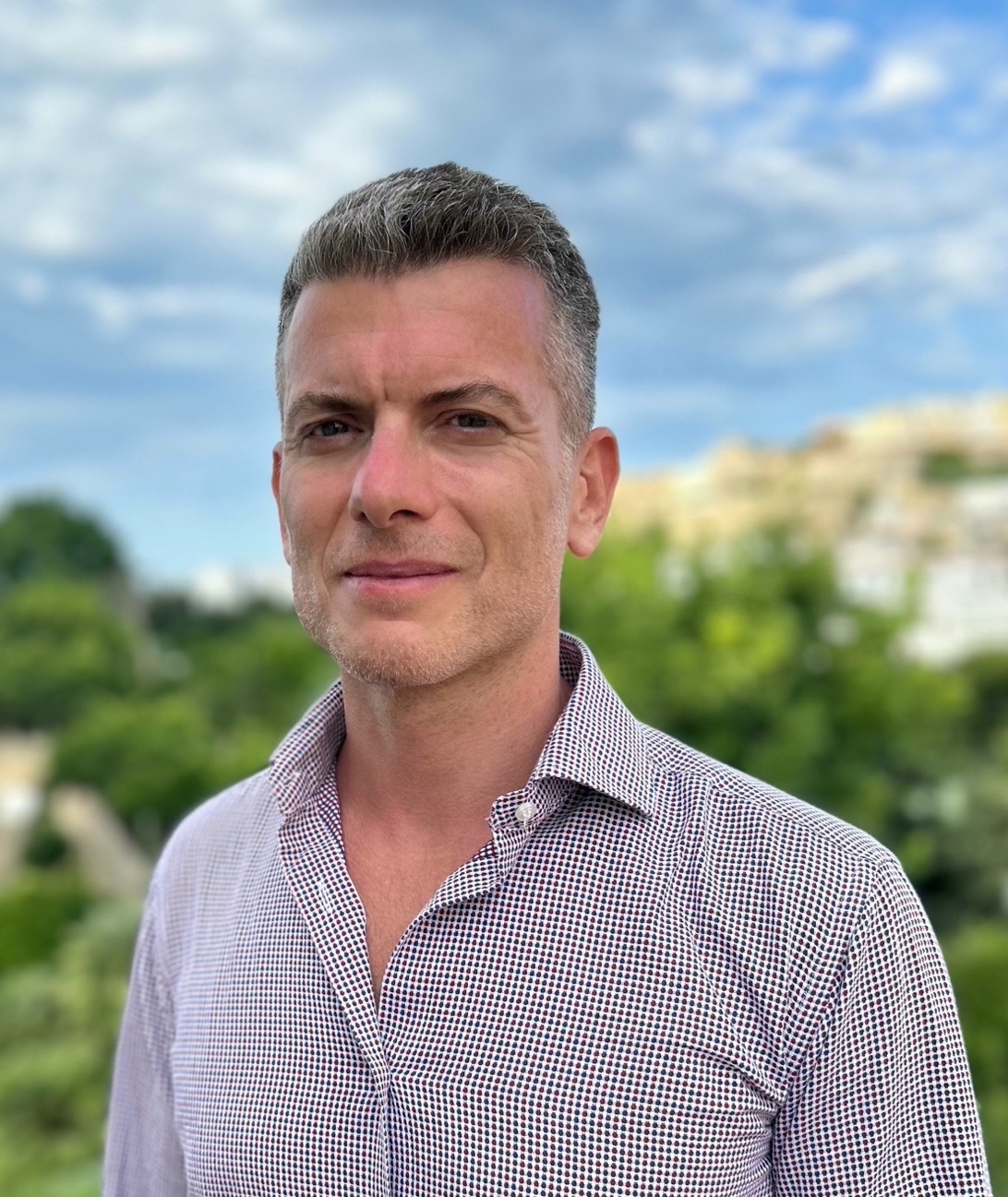
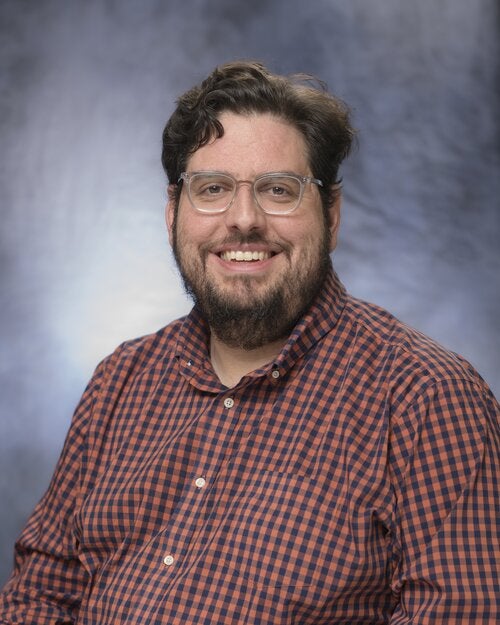
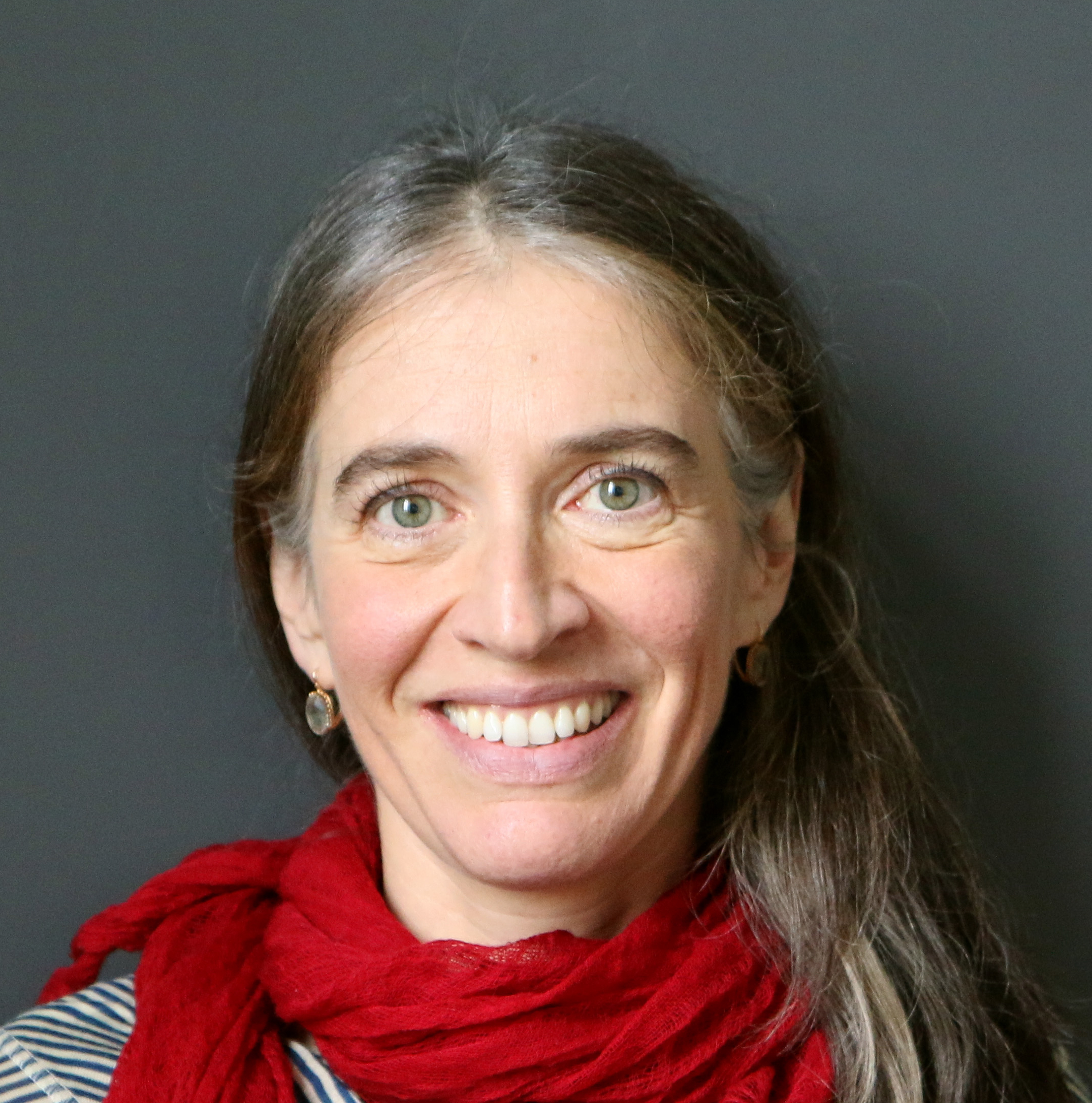
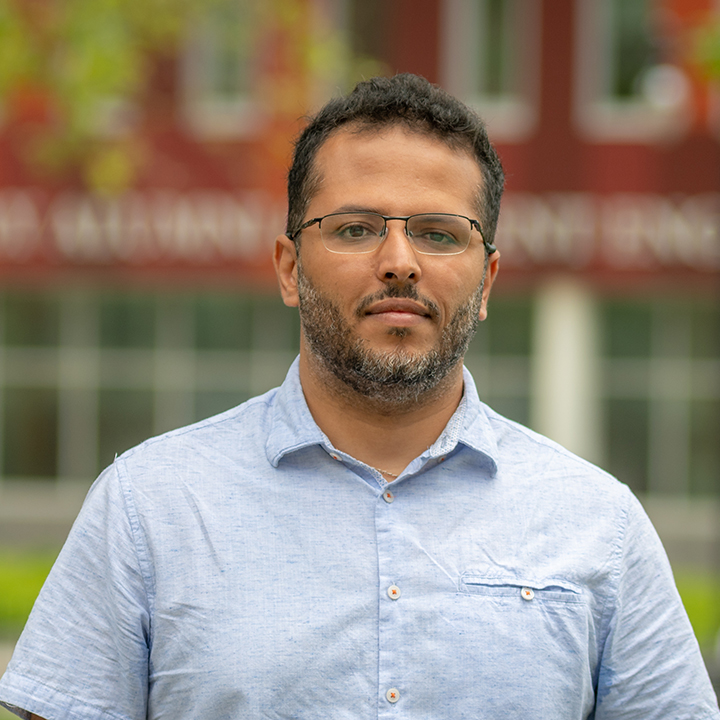
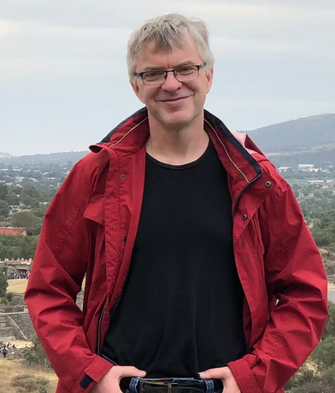
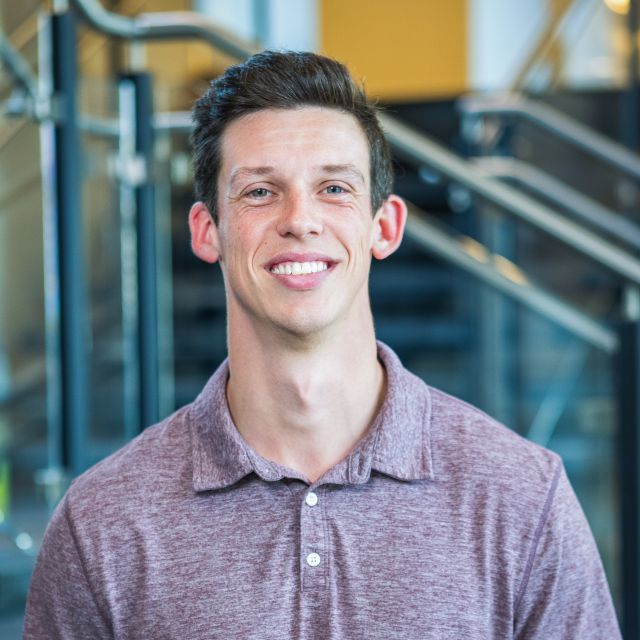
Renjie Feng is a Research Fellow in Mathematics and AI at the School of Mathematics and Statistics and the Sydney Mathematical Research Institute , University of Sydney. His work bridges probability theory, statistics, and applications in machine learning, deep learning, and artificial intelligence. His research interests focus on probability theory and its applications to machine learning , random matrix theory , and statistical physics . He investigates extreme value problems, spectral properties of random matrices, and topological features of random fields over Riemannian manifolds. Recent publications highlight trends in random matrix theory (GUE, GOE, GSE), extreme gap problems , determinantal point processes , and Wiener chaos . Collaborative works with F. Götze, D. Yao, and R. Adler emphasize U-statistics , multivariate linear statistics , and random topology inspired by Poisson point process studies.
Brent Pym is an Associate Professor in the Department of Mathematics and Statistics at McGill University. His research focuses on the intersection of differential, algebraic, and noncommutative geometry, with a particular emphasis on Poisson varieties and deformation quantization. He has held academic positions at the University of Edinburgh, University of Oxford, and was a Postdoctoral Fellow at McGill and the University of Toronto. Education: BScE in Engineering Physics, Queen's University (2007) MSc in Mathematics, University of Toronto (2008) PhD in Mathematics, University of Toronto (2013) Research Interests: Pym studies Poisson structures, their quantizations, and connections to mathematical physics. His work involves classical/derived algebraic geometry, D-modules, moduli spaces, the Stokes phenomenon, and multiple zeta values. Recent projects include holonomic Poisson manifolds, log symplectic structures, and software for symbolic calculations in deformation quantization. Awards: Lichnerowicz Prize (2018) Advising & Grants: Pym has openings for graduate students (admission 2026) and undergraduate projects (2026–27). He develops the Star Products software package for symbolic calculations in Poisson brackets and quantization. His work is supported by research collaborations and institutional grants. Labs & Teams: Pym collaborates with researchers in geometry and mathematical physics, contributing to projects in noncommutative algebra and geometric quantization. His software tools enhance symbolic computation in these fields.
David Bindel is an Associate Professor in the Department of Mathematics at Cornell University, affiliated with the College of Arts and Sciences, College of Engineering, and Cornell Ann S. Bowers College of Computing and Information Science. He earned his Ph.D. in Mathematics from the University of California, Berkeley in 2006. His research focuses on applied numerical linear algebra, eigenvalue problems, and their applications in plasma physics, network analysis, and nonlinear systems. He develops methods for analyzing complex systems, including magnetic confinement in stellarators, stability of MHD systems, and community detection in networks. His work bridges theoretical foundations with practical computational tools, such as formal verification of linear algebra algorithms and scalable Gaussian process models. Bindel’s research explores the interplay between structure and computation, leveraging eigenvalue analysis to address challenges in computer vision, opinion dynamics, and engineering design. He has contributed to advancements in numerical methods for large-scale systems, including iterative solvers, spectral approximation techniques, and stochastic optimization. His interdisciplinary approach spans applied mathematics, computer science, and physics, with applications in fusion energy, machine learning, and network science. Recent work highlights include high-order expansions for magnetic confinement, adaptive filtering for dynamical systems, and Bayesian optimization strategies. His publications emphasize rigorous analysis alongside computational scalability, addressing both theoretical and practical aspects of modern scientific computing. Despite no explicitly listed awards, his contributions reflect significant impact in his fields.
Dr. Jean-Christophe Nave is an Associate Professor in the Department of Mathematics and Statistics at McGill University, specializing in applied mathematics, numerical analysis, and computational methods. His research focuses on numerical methods for partial differential equations, fluid mechanics, interface problems, and computer graphics. He holds a PhD from UCSB (2004) and has held academic positions at MIT and McGill since 2005. Currently, he serves on committees such as the Steering Committee of the Institut des Sciences Mathematiques and the CRM Applied Mathematics Lab. His educational background includes a PhD under Professors Xu-Dong Liu and Sanjoy Banerjee. Key research areas include level set methods, fluid-structure interaction, and invariant numerical methods. Notable works include the Correction Function Method for interface problems and the Characteristic Mapping Method for advection problems. Nave’s publications span topics like Poisson equations with discontinuous coefficients, fluid dynamics simulations, and high-order numerical schemes. He has advised numerous graduate and undergraduate students, contributing to their research in applied mathematics and computational science. His work bridges theoretical rigor and practical applications in engineering and physics. He teaches advanced courses such as Numerical Analysis I/II and Computational Methods in Applied Mathematics. His research group collaborates on projects involving fluid dynamics, elasticity, and geometric algorithms, with a focus on developing robust numerical tools for complex systems.
Alfonso Giuseppe Tortorella is a Tenure Track Assistant Professor in the Department of Mathematics at the University of Salerno since October 31, 2022. Previously, he held research positions at CMUC (Center of Mathematics of the University of Coimbra), CMUP (Center of Mathematics of the University of Porto), and KU Leuven. He received his PhD in Mathematics from the University of Florence in 2017 under the supervision of Luca Vitagliano and Paolo de Bartolomeis. His educational background includes an MSc in Mathematics from the University of Salerno (2013) with honors, where he completed his thesis titled "Geometric methods of Hamiltonian mechanics" under Luca Vitagliano's guidance. Tortorella's research focuses on Poisson geometry in the broadest sense, with particular emphasis on deformation theory of coisotropic submanifolds in Jacobi manifolds, multiplicative structures on Lie groupoids, and VB-groupoids. His work explores the intersection of differential geometry, mathematical physics, and algebraic structures, developing sophisticated theoretical frameworks to understand geometric structures and their deformations. He has made significant contributions to understanding symplectic foliations, contact dual pairs, and the algebraic structures underlying Jacobi geometry. His most recent publications (2023-2025) demonstrate a consistent focus on deformation problems in Poisson and related geometries, with particular attention to coisotropic submanifolds in contact geometry, symplectic foliations, and the application of L∞ algebras to geometric deformation problems. His work shows increasing sophistication in handling higher structures and their applications to geometric problems. Abilitazione Scientifica Nazionale for Professore Associato in Geometria e Algebra (01/A2 - II Fascia) (May 24, 2021 - May 24, 2030) Qualification aux fonctions de Maître de conférences, section 25 - Mathématiques (December 31, 2018 - December 31, 2022) PhD internship at IM PAN awarded by WCMCS (December 2014) PhD scholarship from INdAM (October 2013) Scholarship from SMI (June 2013) Tortorella has advised multiple PhD, MSc, and BSc students, including Vanessa Oliveira (PhD, University of Porto), Antonio Maglio (PhD, University of Salerno), and Rodrigo de Oliveira Baptista (MSc, University of Porto). He has served on examination committees and as a reviewer for numerous prestigious mathematics journals. His collaborative work extends across international boundaries, with research stays at institutions in Italy, Portugal, Belgium, Poland, France, Germany, and Brazil. He is an active organizer of conferences and workshops, particularly in the field of Poisson geometry, serving on the organizing committees for events like Poisson 2024 and the INdAM Intensive Period on Poisson Geometry & Mathematical Physics.
Maxim Kontsevich is a permanent professor at the Institut des Hautes Études Scientifiques (IHÉS), holding the AXA Chair for Mathematics since 1995 and a visiting chair at Rutgers University (one month annually since 1997). Born in 1964 in Khimki, USSR, he earned his PhD from Bonn University in 1992. His career includes visiting positions at Harvard, the Institute for Advanced Study, and Berkeley, where he was a professor from 1993 to 1995. His research spans mathematical physics, algebraic geometry, and non-commutative geometry. Notable contributions include deformation quantization, mirror symmetry, and motivic integration. His work bridges algebraic structures with geometric and physical concepts, influencing areas like topological field theories, string theory, and integrable systems. Awardees of Fields Medal (1998), Crafoord Prize (2008), and Breakthrough Prize (2014), he also holds editorial roles at Compositio Mathematica and Publications Mathématiques IHÉS. His over 50 publications explore advanced topics such as quantum cohomology, Hodge theory, and categorical structures in geometry.
Luca Vitagliano is a Full Professor of Geometry at the Department of Mathematics, University of Salerno. His research focuses on Differential Geometry and Mathematical Physics, with specializations in Poisson Geometry, Lie Algebroids/Groupoids, Differentiable Stacks, and Geometric Methods for PDEs. He has advised four PhD students, including Antonio Maglio (2025) and Pier Paolo La Pastina (2020). He teaches courses such as Geometry II, Homology and Cohomology, and Higher Geometry. His recent articles explore shifted contact structures, Nijenhuis integrations, and deformation cohomology. Education: Not explicitly stated in text Research Groups: Geometry Group at University of Salerno Affiliations: INdAM Intensive Period on Poisson Geometry, Poisson 2024 Conference His work bridges pure mathematics (homological methods, stack theory) with applications in mathematical physics, emphasizing geometric structures like Jacobi manifolds and coisotropic submanifolds. He actively participates in international conferences and publishes with collaborators globally.
Anna Fino is a Full Professor at the Department of Mathematics, University of Turin. Her research focuses on differential and complex geometry, particularly geometric structures on manifolds such as nilmanifolds, solvmanifolds, G₂-structures, and Hermitian manifolds. She has contributed to studies on special metrics (balanced, SKT, Calabi-Yau), holonomy groups, cohomology theories, and geometric flows like the Laplacian flow for G₂-structures. Her work often intersects with algebraic topology and geometric analysis, addressing topics such as tamed symplectic structures, Ricci solitons, and invariant geometric properties on homogeneous spaces. Recent activities include organizing conferences on differential geometry and participating in international collaborations. Key research themes include: Geometric structures on nilpotent and solvable Lie groups Special holonomy and calibrated geometries Hermitian and almost complex manifolds Cohomological aspects of complex and symplectic manifolds Her publications frequently explore interplays between differential geometry and algebraic structures, with applications to geometric flows and classification problems.
James Pascaleff is an Associate Professor in the Department of Mathematics at the University of Illinois at Urbana-Champaign (UIUC), where he has held tenured faculty positions since 2014. He specializes in symplectic geometry, Floer theory, and homological mirror symmetry. His work bridges geometric and algebraic approaches, with notable contributions to Fukaya categories and their applications in mirror symmetry. Education: Ph.D. in Mathematics, MIT (2011), advised by Denis Auroux A.B. in Mathematics, University of Chicago (2006, honors) Research Interests: Focus on symplectic topology, including Fukaya categories, Lagrangian submanifolds, wall-crossing phenomena, and their connections to algebraic geometry and mirror symmetry. Recent work explores higher categorical structures and applications of monoidal Fukaya categories. Awards & Grants: Simons Foundation Collaboration Grant (2019–2024) NSF Award (2014–2017) on symplectic cohomology and equivariant Lagrangians Paul R. Cohen Memorial Prize (2006), MIT Presidential Fellowship Teaching & Mentorship: Teaches undergraduate and graduate courses in algebraic topology, abstract algebra, and differential geometry. Advises Ph.D. students in symplectic geometry and related fields. Serves as Chair of the Undergraduate Affairs Committee and faculty liaison for student success initiatives.
Florian Naef is an Assistant Professor in the School of Mathematics at Trinity College Dublin. His research spans topological and algebraic structures with applications to mathematical physics, including string topology, Poisson geometry, and homotopy theory. Publications emphasize formality theorems, torsion invariants, and quantization methods. Recurring themes include loop spaces, deformation quantization, and connections between differential geometry and algebraic topology.
Ana Cannas da Silva is a Lecturer in the Department of Mathematics at ETH Zurich (Switzerland). She specializes in Symplectic Geometry , Geometric Topology , and Geometric Analysis . Her academic work includes research on symplectic toric manifolds, folded symplectic structures, and geometric quantization, with notable publications in journals like Pure and Applied Mathematics Quarterly and Mathematical Research Letters . Research Interests Symplectic Geometry Geometric Topology Geometric Analysis Hamiltonian Group Actions Toric Manifolds Recent Academic Activities Co-organized Symplectic Geometry Seminar (2021-2023) Supervised student theses on topics like contact toric manifolds, Hamiltonian actions, and symplectic linear algebra Authored research on Dedekind sums via Atiyah-Bott-Lefschetz theory (2023) and symplectic origami (2011) Teaching Lecturer for Mathematics I (2024), covering differential calculus and linear algebra Lecturer for Mathematics II (2024), focusing on multivariable calculus and partial differential equations Co-taught seminars on symplectic/contact geometry with Bahar Acu Academic Contributions Advised 20+ MSc/BSc theses at ETH Zurich since 2012 Co-organized conferences like D-Days (2013) and LP-60 (2023) Authored outreach book: Step by Step Symmetry (2016)
Ali Maalaoui is a Professor of Mathematics at Clark University, specializing in geometric analysis and calculus of variations, with a focus on conformal and CR geometries. He holds a Ph.D. from Rutgers University (2013) and a prior Ph.D. from the University of Tunis (2010). Before Clark, he was an Associate Professor at the American University of Ras Al Khaimah in the UAE and a postdoctoral fellow at the University of Basel, Switzerland. His research explores critical geometric partial differential equations (PDEs) involving energy concentration and bubbling phenomena, particularly in contexts like Dirac-Einstein equations, fractional Yamabe problems, and CR manifolds. Key contributions include studies on Q’-curvature flows, singular solutions in geometric PDEs, and functional inequalities in non-Euclidean settings. Maalaoui’s work combines analytical techniques from functional analysis, geometric measure theory, and Morse-Floer homology. Recent trends in his publications focus on fractional operators, spin geometry, and applications of conformal invariance principles. His articles span high-impact journals such as Mathematische Nachrichten , Journal of Differential Equations , and Calculus of Variations and Partial Differential Equations . No scientific awards or grants are explicitly listed in the provided information. He has advised no listed students but has contributed to collaborative projects with institutions worldwide. His research often involves international co-authors, reflecting a global network in geometric analysis.
Eckhard Meinrenken is a Professor in the Department of Mathematics at the University of Toronto , specializing in Symplectic Geometry , Mathematical Physics , Lie Theory , and Differential Geometry . His research spans geometric structures in infinite-dimensional settings, including Hamiltonian loop group spaces, Dirac geometry, and applications of equivariant cohomology. Fellow of the Royal Society of Canada (FRSC) Author of influential monographs such as Clifford Algebras and Lie Theory (Springer, 2013) and Manifolds, Vector Fields and Differential Forms (Springer, 2023) Research Trends: Recent work focuses on moduli spaces, singular weightings, Manin pairs, and Verlinde formulas, bridging symplectic geometry with algebraic and topological invariants. His publications emphasize geometric quantization, Poisson structures, and infinite-dimensional Lie theory. Scientific Awards: Fellow of the Royal Society of Canada (FRSC) Collaborations: Frequent collaborations with researchers like Anton Alekseev, Yiannis Loizides, and David Li-Bland on problems in symplectic topology, loop groups, and Dirac geometry.
Konstantin Wernli is an Assistant Professor in the Department of Mathematics and Computer Science at the University of Southern Denmark, affiliated with the Quantum Mathematics research group. His research focuses on quantum field theory, geometric quantization, and mathematical physics, with a particular emphasis on topological field theories and perturbative methods. He has contributed to foundational work in Chern-Simons theories, BV-BFV formalisms, and geometric analysis. His research interests include quantum field theories, algebraic geometry, and the intersection of topology with physics. Notably, he explores combinatorial approaches to quantum field theory, geometric quantization frameworks, and the application of advanced mathematical tools to solve problems in theoretical physics. Recent work includes studies on partition functions, constrained dynamical systems, and the globalization of sigma models. His articles often bridge abstract mathematics with physical applications, such as analyzing heat kernels, theta invariants, and entanglement polytopes. Wernli is a project participant in the Sapere Aude grant 'FROM PERTURBATIVE TO NON-PERTURBATIVE QUANTUM FIELD THEORY BY CUTTING AND GLUING' (2024–2028), which aims to advance non-perturbative QFT techniques. He has advised on research projects involving heat kernel analysis and geometric quantization, though no formal student advisees are listed.
Nick Russoniello is a Teaching Professor in the Department of Mathematics at Lehigh University. He holds a Ph.D. from Lehigh University (2022) and a B.S. from the University of Scranton (2017). Prior to his current role, he served as a Visiting Assistant Professor at the College of William & Mary (2022–2024). His research focuses on algebraic combinatorics and Lie theory, particularly exploring combinatorial tools to study algebraic and geometric structures of Lie algebras. He has collaborated on projects involving Kohnert polynomials and Lie poset algebras with contact structures. Education: Ph.D. in Mathematics, Lehigh University, 2022 B.S. in Mathematics, University of Scranton, 2017 Research Interests: Professor Russoniello investigates Lie algebras through combinatorial methods, with emphasis on: - Algebraic combinatorics and its applications to representation theory - Structure and classification of Lie poset algebras with contact structures - Combinatorial constructions related to Kohnert polynomials and posets - Spectral properties and indices of seaweed algebras and nilpotent Lie algebras Publications Trends: His work bridges algebraic structures and combinatorial frameworks, with recent emphasis on seaweed algebras, contact Lie poset algebras, and Kohnert polynomial posets. Collaborations include undergraduate researchers and focus on extending combinatorial techniques to solve algebraic problems. Scientific Awards: Elizabeth V. Stout Dissertation Award (2022) Teaching & Advising: At Lehigh, he teaches Probability/Statistics and preparatory calculus courses. Previously at William & Mary, he instructed courses in calculus, linear algebra, and analysis. Though no formal advisees are listed, he has collaborated with undergraduates on research projects. Labs/Teams: Affiliated with Lehigh’s Mathematics Department, contributing to the Journal of Differential Geometry and organizing seminars. Collaborates actively with researchers like V. Coll, N. Mayers, and others on algebraic and combinatorial projects.


.jpg)