Chandan Reddy is a Professor in the Department of Computer Science at Virginia Tech. He holds a Ph.D. from Cornell University and an M.S. from Michigan State University. His research focuses on Machine Learning, Natural Language Processing, and their applications in Healthcare, Software, Transportation, and E-commerce. His work has been funded by NSF, NIH, DOE, DOT, and industries, resulting in over 200 peer-reviewed publications. Notable awards include the Best Application Paper at SIGKDD 2010 and the Franz Edelman Award finalist in 2011. Education: Ph.D., Computer Science, Cornell University M.S., Computer Science, Michigan State University Research Interests: Machine Learning and NLP applied to healthcare analytics, big data systems, and complex data challenges. His work emphasizes scalable algorithms, fairness in AI, and generative models. Recent projects include scientific equation discovery via LLMs and bias mitigation in language models. Publications Trends: Recent work explores LLM-driven reasoning, hyperbolic neural networks, and healthcare informatics. Key areas include data privacy (e.g., synthetic medical data), interpretable models (e.g., time-series clustering), and graph-based methods for product search. Awards: Best Application Paper Award at ACM SIGKDD 2010 Best Poster Award at IEEE VAST 2014 Best Student Paper Award at IEEE ICDM 2016 INFORMS Franz Edelman Award Competition Finalist 2011 Advising & Grants: Advises graduate students on machine learning research, with grants supporting interdisciplinary projects in healthcare, transportation, and AI ethics. Leads the GraphZoo toolkit for hyperbolic GNNs and collaborates on large-scale medical data initiatives. Labs/Teams: Directs research in Virginia Tech’s Data Analytics Lab, focusing on big data platforms, healthcare analytics, and explainable AI systems. Active in developing open-source tools like GraphZoo for graph neural networks.
Dr. Daniel Janini is a Humboldt Research Fellow at Freie Universität Berlin's Department of Neurocognitive and Experimental Psychology. He holds a PhD in Psychology from Harvard University (with Dr. Talia Konkle) and a BS/BA in Biology/Cognitive Science from Case Western Reserve University. His research focuses on the neural dynamics of visual cognition, exploring how the brain processes visual information through domain-general vs. specialized mechanisms. Education: PhD in Psychology, Harvard University (Advisor: Dr. Talia Konkle) BS Biology & BA Cognitive Science, Case Western Reserve University (Advisor: Dr. Ela Plow) Research Interests: He investigates visual perception algorithms using behavioral experiments, fMRI, and computational models. Key areas include category selectivity emergence in the visual system, fMRI study design optimization for reliability, and domain-general learning algorithms. His work challenges traditional views of neurofunctional specialization by demonstrating how general-purpose models can explain human visual tasks like letter categorization and numerical estimation. Grants & Awards: Alexander von Humboldt Fellowship (2024–2025) ERC Consolidator Grant (TRANSFORM project, 2025–present) Supervision & Collaboration: Currently recruiting a Master’s student/research assistant for fMRI methodological research. Seeks candidates with Python/Matlab skills in neuroimaging. Labs & Teams: Member of the Neurocognitive and Experimental Psychology lab, leading projects on visual system modeling and large-scale fMRI dataset design optimization.
Thomas Gilsdorf is a Professor of Mathematics at Central Michigan University's Department of Mathematics. His research spans two primary areas: topological vector spaces and cultural mathematics (ethnomathematics). He holds a Ph.D. in Mathematics from Washington State University (1988), an M.S. in Mathematics with Computer Science from Mankato State University (1984), and a B.A. in Mathematics from the University of Minnesota (1981). In functional analysis, Gilsdorf focuses on locally convex spaces, contributing to topics like quasi-locally Baire spaces and fixed-point theorems. His ethnomathematics work explores Indigenous knowledge systems, including textile patterns among the Mazahuas, Hñähñu, and Atayal peoples, as well as Inca quipu systems and Otomi numerical traditions. He emphasizes gender dynamics and cultural preservation in mathematical practices. Notable honors include a Fulbright Scholarship (2006–2007) at ITAM in Mexico and the Division of Mathematics and Actuarial Sciences Teaching Award (2014). His textbook Introduction to Cultural Mathematics (2012) is a foundational resource in the field. Gilsdorf has presented globally, including plenary addresses at international ethnomathematics conferences, and collaborates with institutions like the Universidad de Santiago, Chile.
Niels Lubbes is a Lecturer at the Research Institute for Symbolic Computation (RISC) at Johannes Kepler University in Linz, Austria. His research focuses on algebraic geometry, computational methods, and their applications in geometric modeling and kinematics. He contributes to interdisciplinary fields such as geometric design, graph theory, and symbolic computation. His work includes studies on rational surfaces, kinematic geometry, and the enumeration of graph realizations. Recent publications highlight advancements in calibrating geometric figures, projective isomorphism analysis, and computational approaches to Laman graph problems. Lubbes collaborates with institutions like RISC and has published in journals such as Computer Aided Geometric Design and Journal of Algebra . He maintains an active research profile with a focus on algorithmic solutions to geometric problems and their theoretical foundations. His contributions often bridge pure mathematics and applied computational techniques.
Veronika Pillwein is an Associate Professor at the Research Institute for Symbolic Computation (RISC) within Johannes Kepler University in Linz, Austria. Her research focuses on symbolic computation, high-order finite elements, special functions, and algorithmic combinatorics. She contributes to advancing computational methods for sequence analysis, recurrence relations, and polynomial systems, with applications in numerical analysis and engineering. Pillwein has authored/co-authored numerous publications in top-tier journals and conference proceedings, including work on C²-finite sequences, hp-FEM element matrices, and positivity proofs for rational functions. She serves as an editor for academic volumes and actively participates in computational mathematics research. Her work integrates symbolic computation techniques with numerical methods, addressing challenges in high-order finite element analysis and algorithm design. Recent research emphasizes generalizing holonomic sequences, optimizing sparse shape functions for finite elements, and developing automated tools for proving mathematical properties. Pillwein collaborates internationally, contributing to interdisciplinary projects in computational mathematics and computer algebra systems. Affiliations: RISC Faculty, Johannes Kepler University (JKU) Key Research Areas: Symbolic computation, finite element methods, combinatorial algorithms, polynomial analysis Technical Contributions: Development of C²-finite sequence theory, hp-FEM element matrix evaluation, algorithmic proofs for positivity
Nikolaj Popov is a Research Professor at the Research Institute for Symbolic Computation (RISC) of Johannes Kepler University, Linz, Austria. His work focuses on program verification, formal methods, and automated reasoning, particularly within the Theorema system. He specializes in verifying functional and recursive programs, combining symbolic computation with logical techniques to ensure correctness and termination. Education: PhD in Computer Science, RISC, Johannes Kepler University (2008) Research Interests: Popov’s research bridges theoretical computer science and practical applications, emphasizing automated theorem proving, program analysis, and formal verification. He develops methods for verifying complex program structures like mutual recursion and nested recursion, leveraging computer algebra systems. His work also explores the integration of formal methods into software engineering workflows. Key Contributions: Popov has co-authored foundational papers on verification condition generation, termination proofs, and automated debugging frameworks. His collaborations with Tudor Jebelean and others have advanced Theorema’s capabilities in handling functional programs and bridging logical and algebraic methodologies. Labs/Teams: Core member of RISC, contributing to its mission in symbolic computation and mathematical theory exploration.
Josef Schicho is a Full Professor at the Research Institute for Symbolic Computation (RISC), Johannes Kepler University in Linz, Austria. His research focuses on algebraic geometry, computational mathematics, and their applications in kinematics, robotics, and geometric modeling. He leads projects exploring flexible polyhedra, mechanism design, and symbolic computation techniques for solving geometric problems. Key research interests include the study of rigid and flexible frameworks, algebraic methods in robotics, and the application of geometric algorithms to problems in computer vision and sensor networks. His work bridges theoretical mathematics with practical engineering solutions, particularly in mechanism synthesis and geometric modeling. Recent contributions include advancements in the theory of flexible polyhedra, classification of linkages with high mobility, and computational tools for analyzing robot kinematics. His publications often address problems at the intersection of algebraic geometry and engineering, such as reconstructing geometric configurations from partial data or optimizing motion planning for robotic systems. Dr. Schicho's affiliations include the RISC Faculty at JKU, where he actively contributes to the development of symbolic computation software and collaborates with international researchers in computational algebraic geometry. His office is located at Schloss Hagenberg, Room 2.6-1.
Carsten Schneider is a Professor and Director of the Computer Algebra and Applications group at the Research Institute for Symbolic Computation (RISC) , part of the Johannes Kepler University Linz , Austria. His work focuses on symbolic summation algorithms, difference rings, and their applications in combinatorics, particle physics, and quantum field theory. Research Interests: His expertise includes Computer Algebra , Special Functions , Perturbative Quantum Field Theory , and Combinatorics . He develops algorithms for simplifying multi-sums and solving recurrences, with applications to Feynman integrals and operator matrix elements in particle physics. Grants & Projects: He leads Austrian Science Fund (FWF) grants such as Symbolic Summation for Computer Science (2024–2028) and Computer Algebra for Multi Loop Feynman Integrals (2021–2025). Past grants include FWF SFB F50 research projects in enumerative combinatorics. Software: He developed the Sigma summation package, used for symbolic computation in multi-loop calculations. His tools are widely applied in particle physics and combinatorics. Teaching & Mentoring: Teaches courses like Algorithmic Combinatorics and Computer Algebra at JKU. Organizes workshops and co-chairs conferences like SYNASC and RADCOR . Active in supervising international training networks such as the SAGEX Marie Curie project. Editorial Roles: Editorial board member of journals like Journal of Symbolic Computation and Annals of Combinatorics . Co-edited volumes on symbolic computation in physics and combinatorics.
Prof. Peter Paule is a retired Full Professor at the Research Institute for Symbolic Computation (RISC) of Johannes Kepler University (JKU) Linz, Austria, succeeding Bruno Buchberger. He served as RISC Director from 2009 to 2023 and as director of the FWF Special Research Program SFB F013 (2003–2008). Since May 2024, he is a Guest Professor at Tianjin University’s Center for Applied Mathematics. Paule holds a Ph.D. from the University of Vienna (1983) and a Habilitation in Mathematics from JKU (1996). His research focuses on symbolic computation, combinatorics, special functions, and algorithmic mathematics. He has contributed to creative telescoping, partition analysis, and Ramanujan-Sato series, with over 100 publications in top journals and books. He served as editor for journals like the Ramanujan Journal , Annals of Combinatorics , and the Journal of Symbolic Computation . His academic leadership includes directing the Doctoral Program in Computational Mathematics (2008–2017). His research group has produced numerous students and postdocs, advancing algorithmic methods in combinatorics and number theory.
Maryam Mehri Dehnavi is an Associate Professor of Computer Science at the University of Toronto and a Principal Research Scientist at NVIDIA. She holds the Canada Research Chair in Parallel and Distributed Computing. Her research group, ParaMathics, focuses on scalable numerical methods, high-performance libraries, and compilers for cloud and parallel computing platforms. Her research interests span cloud computing, machine learning, numerical analysis, and compiler optimization. She has been recognized with awards including the Ontario Early Researcher Award (2021) and an NSF CRII grant. She has advised numerous students, many of whom have achieved notable academic and industry roles. Teaching: Applied Parallel Computing, Parallel Computing, Cloud Computing Leadership Roles: General Chair of PPOPP 2023, Keynote Speaker at SIAM PP 2024 Labs/Teams: ParaMathics Research Group Her work bridges theoretical advances in numerical methods with practical applications in high-performance computing, emphasizing efficiency and scalability across diverse architectures.
Eva Navarro López is a Full Professor in Computing within the School of Interactive Games and Media at the Golisano College of Computing and Information Sciences at Rochester Institute of Technology (RIT). She previously served as Director of the School of Information (iSchool) at RIT and directs the Artificial intelligence and DAta science Research Lab (AiDAs). Navarro is a scientist of international standing with extensive contributions across multiple fields including hybrid dynamical systems, cyber-physical systems, and computational neuroscience. She has held significant positions including member of the Science and Methodology Committee at the International Panel on the Information Environment (IPIE) and affiliate at the Minderoo Centre for Technology and Democracy at University of Cambridge. Eva earned her Ph.D. from the Polytechnics University of Catalonia (Spain) and completed her MSc, BEng, and BSc at the University of Alicante (Spain). Her educational journey reflects her multidisciplinary approach, bridging computer science, mathematics, and engineering disciplines that would later define her research career. Her academic path has taken her through prestigious institutions across four countries: USA, UK, Mexico, and Spain, where she shadowed the footsteps of Alan Turing in Manchester and Santiago Ramón y Cajal in Madrid. Navarro's research interests defy easy compartmentalization, spanning hybrid dynamical systems, cyber-physical systems, network science, mathematical modelling, symbolic AI, control engineering, computational neuroscience, and collective intelligence. Her unique contribution lies in building bridges between traditionally separate fields , transferring ideas from one domain to another to create novel approaches. She approaches research as a 'scientist artist,' viewing both science and art as attempts to understand the world better. Her work on neuroplasticity and brain-inspired computing has led to innovative AI architectures that incorporate knowledge of astrocytes and other brain cells beyond just neurons. Analysis of Navarro's recent publications reveals a strong trend toward interdisciplinary applications of computational methods. Her work spans from fundamental theoretical contributions in hybrid systems and formal verification to practical applications in medical imaging, epidemic modeling, and gender equity in technology. A notable pattern is her consistent focus on nature-inspired models of computation across diverse domains, whether modeling brain function, urban structures, or information ecosystems. Her research increasingly addresses societal implications of technology, particularly regarding gender equity and ethical AI development. 100 Brilliant Women in AI Ethics - 2025 Distinguished Alumni Ambassador 2024 at University of Alicante Women Leader of the Business Ecosystem 2024 Recognized in Spain's Guide to Women Leaders of the Business Ecosystem Navarro has supervised an extensive research team across multiple institutions, mentoring numerous PhD students, postdocs, and research assistants from diverse backgrounds. Her mentoring philosophy emphasizes building communities and education as pathways to change the world. She co-founded ACM-Women Europe and the womENcourage conference series, creating spaces for women in computing. Her research has been supported by significant projects including the UK-funded 'Dynamically Driven Verification of Systems With Energy Considerations,' where she served as principal investigator for the first UK project dedicated to formal verification of nonlinear hybrid systems. As director of AiDAs (Artificial intelligence and DAta science Research Lab), Navarro leads a multidisciplinary team exploring nature-inspired models of computation, learning, and evolution for complex systems. The lab's work integrates insights from neuroscience, mathematics, and computer science to develop new paradigms in AI. Navarro also contributes to TechnoLatinas, a self-organized community focused on supporting technologists and scientists from Latin America, and serves on the Advisory Council for Gender Music Tech, demonstrating her commitment to creating inclusive technology ecosystems.
Dr. Tanya Beaulieu is an Associate Professor of Management Information Systems at the University of Maine's Maine Business School. She holds a Ph.D. from Washington State University in Management Information Systems and previously owned a software development firm. Her research focuses on communication in online communities, crowdfunding, and technology use by entrepreneurs. She has held editorial roles, including Managing Editor of the Journal of the Association for Information Systems (JAIS) and Associate Editor of Communication of the Association for Information Systems (CAIS). Education : Ph.D., Washington State University (2015). Research Interests : Dr. Beaulieu's work explores digital transformation challenges in rural businesses, post-data breach customer emotions, and the impact of instructional strategies on learning outcomes. Her studies bridge technology adoption, cybersecurity, and pedagogical innovation. Grants & Awards : Carol B. Gilmore Memorial Service Award (2024) Extraordinary Service Award (2023) Research Grant (2019) Online Course Development Grant (2019) Advising & Grants : Dr. Beaulieu has advised numerous students through her research collaborations. Her grants include funding for course development and research initiatives at the Maine Business School. Labs/Teams : She contributes to interdisciplinary teams exploring cryptocurrency communication, rural digital transformation, and cybersecurity's societal impact.
Polina Vytnova is a Lecturer in Mathematics at the University of Surrey, affiliated with the School of Mathematics and Physics. Her research focuses on dynamical systems, ergodic theory, and fractal geometry, with particular emphasis on Lyapunov exponents, Hausdorff dimension, and hyperbolic geometry. She has collaborated extensively with experts like Mark Pollicott on topics ranging from Bernoulli convolutions to spectral properties of dynamical systems. Her work combines rigorous mathematical analysis with computational methods, addressing questions in both pure and applied contexts. Notable contributions include studies on Lyapunov spectrum inflections, dimension estimates for fractal sets, and applications to number theory. Vytnova’s research also intersects with geometric group theory, probability theory, and zeta function analysis. Her publications span high-impact journals such as Communications in Mathematical Physics and Advances in Mathematics. While no specific awards are listed, her collaborative projects and methodological innovations highlight her active role in advancing theoretical dynamics and geometry.
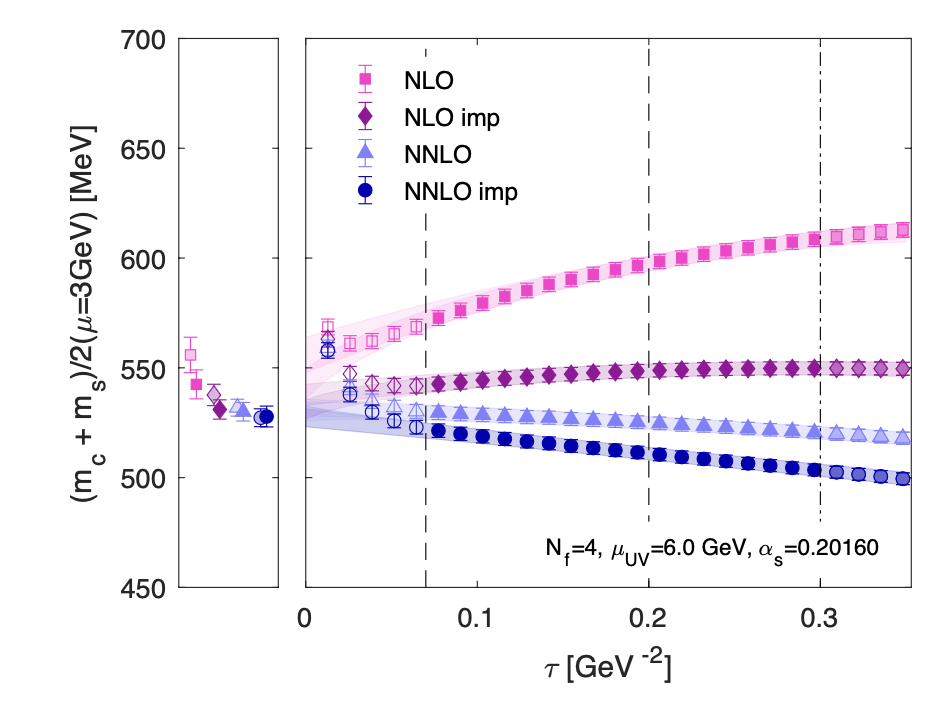
Prof. Dr. rer. nat. Robert Harlander is a faculty member at RWTH Aachen University, affiliated with the Institute for Theoretical Particle Physics and Cosmology under the Faculty of Mathematics, Computer Science and Natural Sciences . His research focuses on precision calculations for Higgs physics, effective field theories, and philosophical perspectives on particle physics. Current projects involve gradient-flow formalism applications in quark mass determination and meson mixing. He leads collaborations in the DFG Research Unit on The Epistemology of the LHC , Transregio P3H , and DFG Research Training Group for LHC phenomenology. His recent publications emphasize gradient flow techniques, quark mass calculations, and effective field theories at the LHC. He advocates for public engagement through outreach lectures and open-source software tools like FeynGame and ftint . Key subfields include Higgs boson phenomenology , renormalization , and symmetry analysis in extended models. Harlander's group includes PhD candidates and postdocs working on collider physics, precision theory, and interdisciplinary projects like the LHC and Philosophy collaboration. He serves on the DFG Review Board and contributes to international scientific committees.
Kristian Kersting is a Professor at the University of Bonn, Germany, and affiliated with Fraunhofer IAIS. His research focuses on Statistical Relational Learning, Machine Learning, and their applications in Robotics and Computational Biology. He earned his PhD from Albert-Ludwigs-University of Freiburg under Luc De Raedt and was a postdoc at MIT's CSAIL. Award highlights include the ECCAI 2006 Dissertation Award and ECML-06 Best Paper Award. He has supervised numerous students, including those working on relational sequence alignments and robotics navigation policies. He co-organized key workshops like MLG-2007 and served on program committees for ECML/PKDD, ICML, and AAAI. His contributions span probabilistic logic learning, including Bayesian Logic Programs and Logical Hidden Markov Models. Recent work includes neuro-symbolic systems, causal reasoning, and benchmarks in emotion detection and AI safety.