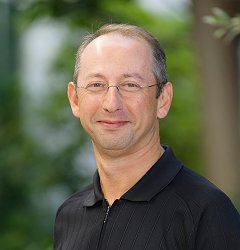
Neil Julien Ross is an Associate Professor in the Department of Mathematics at Dalhousie University. His research primarily focuses on quantum computing and quantum programming languages, with extensive contributions to quantum circuit design, optimization, and formal verification methods. He maintains an active research profile with numerous publications in top-tier quantum computing conferences and journals. His research interests span: Quantum circuit synthesis and optimization techniques Formal methods for quantum programming languages (e.g., Proto-Quipper) Algebraic structures in quantum computation Quantum gate universality and resource theory Category theory applications in quantum information Ross's recent publications demonstrate a consistent focus on advancing quantum circuit design methodologies, particularly through symbolic synthesis techniques and formal verification approaches. His work frequently bridges theoretical computer science, algebraic structures, and practical quantum implementation challenges.
Işıl Dillig is an Associate Professor of Computer Science at the University of Texas at Austin, where she leads the UToPiA research group. Her academic career spans over a decade of significant contributions to programming languages research, particularly in program analysis, verification, and synthesis. Dr. Dillig received all her academic degrees (BS, MS, and PhD) from Stanford University before joining the faculty at UT Austin. Her educational background established the foundation for her innovative research approach that bridges theoretical computer science with practical applications. Her research focuses on developing techniques to make software systems more reliable, secure, and easier to build through advanced program analysis, verification, and synthesis methods. She has pioneered approaches that combine symbolic reasoning with machine learning to tackle complex software engineering challenges across multiple domains including security, databases, and programming language theory. Her work demonstrates exceptional depth in creating practical tools that address real-world software development problems while maintaining strong theoretical foundations. Analysis of Dr. Dillig's publication record reveals a consistent trajectory of innovation in program synthesis, with recent work expanding into neurosymbolic approaches that bridge neural networks with formal methods. Her research shows strong connections between theoretical foundations and practical applications, particularly in security-critical systems, database technologies, and blockchain applications. The evolution of her work demonstrates increasing sophistication in handling complex program structures while maintaining practical usability. Dr. Dillig has received prestigious recognition for her research contributions: Sloan Fellowship NSF CAREER award As a dedicated educator and research leader, Dr. Dillig has served in significant roles including Program Chair for PLDI 2022 and Steering Committee member for PLDI. She has mentored numerous students through her UToPiA research group, guiding research in program synthesis, verification, and analysis. Her work has been supported by substantial research grants that have enabled innovative projects at the intersection of programming languages and security. Dr. Dillig leads the UToPiA (UT Austin Programming, Languages, and Analysis) research group, which focuses on developing novel techniques for program analysis, verification, and synthesis. The group maintains strong collaborations with industry partners and academic institutions worldwide, translating theoretical advances into practical tools that address real software engineering challenges.
Shachar Itzhaky is an Associate Professor in the Department of Computer Science at Technion - Israel Institute of Technology, Haifa. His research spans multiple areas of programming languages, formal methods, and software engineering, with a focus on making program development and verification more accessible and efficient. He has served on program committees for numerous prestigious conferences including PLDI, POPL, SPLASH, and ICFP. Dr. Itzhaky's research interests center around program synthesis, automated reasoning, and formal verification. His work in program synthesis explores techniques for automatically generating programs from high-level specifications, with applications in end-user programming and software development. In automated reasoning, he has made significant contributions to e-graph based reasoning, invariant inference, and property-directed verification. His research in formal methods focuses on practical applications for program verification, particularly for data structures and security properties. An analysis of his recent publications reveals a strong focus on leveraging advanced formal techniques for practical program understanding and generation. His work consistently bridges theoretical foundations with practical applications, particularly in program synthesis, verification, and end-user programming tools. The trend shows increasing integration of machine learning techniques with traditional formal methods, as well as expanding applications to security and privacy domains. ACM SIGPLAN John C. Reynolds Doctoral Dissertation Award Dr. Itzhaky has been actively involved in the programming languages research community, serving on numerous program committees and contributing to the advancement of formal methods and program synthesis. His work has practical implications for software development tools, security analysis, and end-user programming environments. While specific grant information isn't detailed in the provided text, his extensive publication record in top-tier venues suggests successful funding for his research endeavors. His work on projects like Object Spreadsheets and Lifty demonstrates a commitment to creating practical tools that address real-world programming challenges. Dr. Itzhaky's research is conducted within the vibrant programming languages and formal methods group at Technion's Computer Science department. His work intersects with multiple research threads including program synthesis, verification, and security, suggesting collaboration across these areas within the department. His tools like EPR-based Verification, PDR∀, and VeriCon represent significant technical contributions that likely form the basis of ongoing research projects with students and collaborators.
Qirun Zhang is the Catherine M. and James E. Allchin Early Career Associate Professor in the School of Computer Science at Georgia Institute of Technology. His research focuses on program analysis, compiler optimization, and formal language theory, with numerous publications in top-tier programming language and software engineering conferences including PLDI, POPL, OOPSLA, and FSE. He teaches courses on compilers, program analysis, and software testing. Dr. Zhang's research interests center on improving software reliability and security through advanced program analysis techniques. He approaches problems from perspectives including computational complexity, analytic combinatorics, graph theory, and formal languages. His work often bridges theoretical foundations with practical applications in compiler design and program verification. His recent publications show a strong focus on context-free language reachability, Dyck-language based analyses, and SMT solving techniques. His research demonstrates consistent innovation in making program analysis more precise while maintaining scalability, with applications ranging from debug information validation to software debloating and type inference. PLDI Distinguished Paper Award (2020) SIGSOFT Distinguished Paper Award (2023) OOPSLA Distinguished Artifact Award (2022) Dr. Zhang actively mentors PhD and MS students, with current advisees including Camille Bossut and Benjamin Mikek. His service to the academic community includes Artifact Evaluation Co-Chair roles for PLDI 2025 and 2026, and program committee membership for numerous top conferences including PLDI, POPL, and OOPSLA. He leads research projects including SLOT, Context-Free Language Reachability with Transitive Redundancy Elimination, and Debug Information Validation.
Nate Foster is a Professor of Computer Science at Cornell University's Bowers Computing and Information Science college. He also serves as a Visiting Professor at EPFL's Data Center Systems Laboratory during the 2023-24 academic year and as a Visiting Researcher at Jane Street. His research focuses on developing languages and tools that make it easy for programmers to build secure and reliable systems, with particular emphasis on software-defined networking. Dr. Foster's educational background includes: PhD in Computer Science from the University of Pennsylvania MPhil in History and Philosophy of Science from Cambridge University BA in Computer Science from Williams College Nate Foster's research spans multiple areas within programming languages and systems. His current work focuses on the design and implementation of languages for programming software-defined networks. He has also made significant contributions to bidirectional languages (also known as "lenses"), database query languages, data provenance, type systems, mechanized proof, and formal semantics. His interdisciplinary approach combines theoretical foundations with practical systems building, seeking to bridge the gap between formal methods and real-world network programming. An analysis of Foster's recent publications reveals a strong focus on network programming languages, particularly NetKAT and P4. His work consistently applies formal methods to networking problems, with increasing emphasis on verification, equivalence checking, and symbolic execution techniques. The research trajectory shows progression from foundational language design to practical verification tools, demonstrating how theoretical programming language concepts can solve real-world networking challenges. Dr. Foster has received numerous prestigious awards for his contributions: Sloan Research Fellowship NSF CAREER Award ACM SIGPLAN Robin Milner Young Researcher Award (2023) Most Influential POPL Paper Award Tien '72 Teaching Award Google Research Award Yahoo! Academic Career Enhancement Award Cornell Engineering Research Excellence Award Morris and Dorothy Rubinoff Award ACM SIGCOMM Rising Star Award As an active member of the programming languages community, Foster has advised numerous graduate students and secured significant research funding through his NSF CAREER award and Google Research Award. He has served in leadership roles for major conferences including PLDI, POPL, and ICFP, demonstrating his commitment to mentoring the next generation of researchers through programs like PLMW@PLDI. His collaborative approach is evident in his extensive co-authorship network across academia and industry. Foster leads research in the area of programming languages for networking, with particular focus on the NetKAT framework for network verification. His work bridges the gap between formal methods and practical networking systems, creating tools that have influenced both academic research and industry practice in software-defined networking. His collaborations with institutions like EPFL and industry partners like Jane Street demonstrate the real-world impact of his research agenda.
Mayur Naik is the Misra Family Professor in the Department of Computer and Information Science at the University of Pennsylvania's School of Engineering and Applied Science. He holds office in Room 642B, Amy Gutmann Hall and maintains an active research program focused on the intersection of programming languages and artificial intelligence. Before joining UPenn, he was faculty at Georgia Institute of Technology and a researcher at Intel Labs, Berkeley. Naik received his PhD in Computer Science from Stanford University in 2008 under Alex Aiken, a Masters from Purdue University in 2003 under Jens Palsberg, and a Bachelors from BITS Pilani in 1999. He grew up in Goa, India. His primary research interests center around neurosymbolic programming, which combines symbolic reasoning with machine learning to create more accurate, interpretable, and domain-aware AI systems. His group develops language design, learning algorithms, and compiler optimizations in this space, with their most mature effort being the Scallop neurosymbolic programming language and compiler toolchain. He also conducts research in trustworthy AI for healthcare applications and AI-enabled programming tools that improve programmer productivity. Analysis of his recent publications shows a strong trend toward neurosymbolic programming frameworks (Scallop, TorchQL), LLM-assisted program analysis (IRIS), and applications of these techniques to security, healthcare, and computer vision. His work consistently bridges theoretical foundations with practical implementations, often releasing open-source systems. Misra Family Professor (endowed chair, effective July 2024) Multiple distinguished paper awards (PLDI 2019, FSE 2015, PLDI 2014) Test-of-Time Paper Awards (FSE 2013, FSE 2012, EuroSys 2011) His student Elizabeth Dinella won the 2025 ACM SIGSOFT Outstanding Dissertation award Naik has advised numerous PhD students who have gone on to faculty positions at top institutions including Peking University, University of Toronto, Ashoka University, Bryn Mawr College, and Johns Hopkins University. His research is supported by grants from NSF, Google, Amazon, and other industry partners. His lab maintains active collaborations with clinicians and bioinformatics researchers to apply neurosymbolic programming to healthcare problems. His research group, which includes current PhD students and postdocs, develops practical open-source systems and applies them to diverse domains including computer vision, cybersecurity, medicine, and bioinformatics. The group maintains strong industry connections with Google, Microsoft, Amazon, and other tech companies.
Nadia Polikarpova is an Associate Professor in the Computer Science and Engineering Department at the University of California, San Diego. She leads the Programming Systems group and serves as a member of IFIP Working Group 2.8 on Functional Programming since 2022. Her academic journey includes a PhD from ETH Zurich (Switzerland) under Bertrand Meyer's supervision in 2014, followed by postdoctoral work at MIT CSAIL with Armando Solar-Lezama. Her research interests center around program synthesis, program verification, and type systems, with a focus on building practical tools that enhance software security and reliability. Polikarpova's work bridges theoretical foundations with real-world applications, particularly in the emerging area of AI-assisted programming. Her recent publications demonstrate a strong trajectory in program synthesis techniques, with increasing integration of machine learning approaches. The research spans from foundational type-driven synthesis methods to practical applications for validating AI-generated code and synthesizing heap-manipulating programs. Her work frequently appears in top-tier programming languages venues including PLDI, POPL, ICFP, and OOPSLA. 2020 Sloan Fellow 2020 Intel Rising Stars Award 2020 NSF CAREER Award Distinguished paper awards at PLDI'21, ICFP'20, and POPL'19 Best paper award at FM'15 Polikarpova actively mentors PhD students and has advised numerous graduates who now work at Microsoft Research, University of Michigan, and various tech companies. She teaches core programming languages courses including CSE 130 and specialized graduate courses on program synthesis (CSE 291). Her service to the community includes program committee roles for major conferences and co-chairing the Haskell conference in 2022.
Koushik Sen is a Professor in the Department of Electrical Engineering and Computer Sciences at the University of California, Berkeley. His academic career spans major contributions to software engineering and programming languages research through active participation in premier conferences including PLDI, ICSE, and ISSTA. His research focuses on Software Engineering , Programming Languages , and Formal Methods , with particular emphasis on developing software tools that enhance programmer productivity and software quality. Key research thrusts include automated test generation , symbolic execution , fuzzing techniques , and program synthesis . His work bridges theoretical foundations with practical tool development for real-world software verification challenges. Analysis of his publication record reveals consistent contributions to automated testing methodologies, with recent work integrating machine learning (particularly large language models) into traditional program analysis techniques. His research shows strong continuity in improving software reliability through innovative input generation and vulnerability detection approaches. As an active academic leader, he has served as General Chair for MAPL (2020), Program Chair for ISSTA (2017), and committee member for numerous top-tier conferences including PLDI, ICSE, and SPLASH across multiple years. His academic advising manifests through collaborative publications with students on topics like test corpus expansion (Bonsai Fuzzing), visualization synthesis (VizSmith), and smart contract auditing (ItyFuzz), though specific student names aren't listed in the source material. His research has been supported through conference participations and likely associated grants given his extensive publication record.
Denis Kuperberg is a CNRS researcher at LIP (Laboratoire de l'Informatique du Parallélisme), ENS Lyon, where he is part of the Plume research team. His work bridges theoretical computer science with interdisciplinary applications, particularly in systems biology. His primary research interests include automata theory, synthesis, verification, games, logics, decidability procedures, complexity, and proof theory. Kuperberg's work often explores the connections between formal methods and practical applications, as evidenced by his recent interdisciplinary publications on thermodynamic consistency of autocatalytic cycles. His research demonstrates a strong focus on both theoretical foundations and practical implementations, with several software tools developed for research purposes. Kuperberg's publication record shows a clear evolution from purely theoretical work in automata and logic toward more interdisciplinary research. His recent papers (2022-2025) demonstrate increasing engagement with biological applications while maintaining strong theoretical foundations. Key themes across his publications include history-determinism in automata, cyclic proof systems, positive fragments of logic, and applications to verification problems. Best Paper Award at ICALP 2025 (with Thomas Colcombet and Amina Doumane) Kuperberg actively supervises multiple students at various levels, including PhD candidates (Iris Magniez–Papillon, Émile Hazard, Laureline Pinault), postdoctorates (Thomas Kosc, Marc Bagnol), and numerous interns. His teaching portfolio includes advanced courses on Graphs, Machines and Logics at ENS Lyon Master 2 program, Theory of Regular Languages at EPITA Lyon, and specialized topics like Mathematical Aspects of Automata Theory. He leads the development of research software including EmergeNS (for simulating chemical reaction networks and tracking autocatalytic dynamics), Stamina and Acme (for solving decision problems from automata theory), and Electrum (a specification language analyzer). These tools demonstrate his commitment to bridging theoretical computer science with practical implementations.
Tevfik Bultan is a Professor and Chair of the Department of Computer Science at the University of California, Santa Barbara. His research focuses on software verification, program analysis, software engineering, and computer security. He directs the Verification Laboratory (VLab) and has authored over 100 refereed publications. Education Ph.D. in Computer Science, University of Maryland, College Park (1998) M.S. in Computer Engineering, Bilkent University (1992) B.S. in Electrical Engineering, Middle East Technical University (1989) Research Focus Bultan's work spans automated verification techniques, security vulnerability detection, quantitative program analysis, and symbolic execution. His lab develops tools for analyzing software systems with applications in cloud security, network protocols, and embedded systems. Awards and Honors ACM Distinguished Scientist (2016) NSF CAREER Award (2000) UCSB Outstanding Graduate Mentor Award (2016) ACM SIGSOFT Distinguished Paper Awards (2005, 2014) NATO Science Fellowship (1993) Professional Activities He has chaired program committees for top conferences including ICSE, FSE, and ASE. Currently serves as associate editor for ACM TOSEM and on steering committees for ISSTA, ASE, and ICSE. Regularly advises PhD students and postdoctoral researchers in verification and security. Laboratory Leads the Verification Laboratory (VLab) focusing on automated reasoning techniques for software systems. Current projects include symbolic analysis for vulnerability detection, quantitative information flow, and security policy verification.
Antonio Filieri is a Senior Applied Scientist at Amazon Web Services (AWS) and holds a Visiting Associate Professor position at the Department of Computing, Imperial College London. Previously, he was a tenured Associate Professor at Imperial College London (2022-2024) and Assistant Professor (2016-2022), and served as Assistant Professor at the University of Stuttgart between 2013 and 2015. His academic career spans over a decade with significant contributions to software engineering research. Dr. Filieri's research focuses on formal mathematical methods for software design, verification, self-adaptation, and security. His primary research areas include static analysis, privacy, and automated test generation for security; exact and approximate methods for probabilistic program analysis; control theory for adaptive software; quantitative verification and model checking; and runtime-efficient and incremental verification. His work bridges theoretical foundations with practical applications in industry settings, particularly in cloud computing and security domains. His recent publications demonstrate a strong focus on probabilistic methods for software analysis, security testing, and performance modeling. The research trends show increasing integration of formal methods with machine learning techniques, particularly in test oracle generation and neural network analysis. There's also a clear emphasis on scalability and practical applicability of verification techniques to real-world systems like serverless computing and microservices architectures. Dr. Filieri has received numerous prestigious awards for his contributions: Best Student Paper Award (2025) for 'Robust Probabilistic Model Checking with Continuous Reward Domains' ACM Distinguished Paper Award (2023) for 'Sibyl: Improving Software Engineering Tools with SMT Selection' Best Paper Award (2022) for 'Enhancing Performance Modeling of Serverless Functions via Static Analysis' Best Artifact Award (2017) for 'Self-adaptive video encoder: comparison of multiple adaptation strategies made simple' Most Influential Paper Award (awarded at SEAMS 2025) for 'Software Engineering Meets Control Theory' ACM SigSoft Distinguished Paper Award (2011) for 'Run-time Efficient Probabilistic Model Checking' Dr. Filieri has advised several PhD students including Donato Clun (2024), Runan Wang (2024), and Xiaotong Ji (expected 2025). His advising focuses on probabilistic program analysis, automated testing, and security verification. His research has been supported by significant grants from both academic and industry sources, enabling collaborations across multiple institutions and contributing to advancements in software engineering practices. While specific lab information isn't prominently featured in the provided materials, Dr. Filieri's work suggests strong connections with research groups focused on formal methods, software verification, and adaptive systems at both Imperial College London and AWS. His research often involves interdisciplinary collaboration between theoretical computer science and practical software engineering challenges.
Niki Kilbertus is a Professor in the Department of Informatics at the Technical University of Munich and a group leader at Helmholtz AI (Helmholtz Munich). They are also affiliated with MCML, the Konrad Zuse School relAI, and the Munich Unit of ELLIS. Since 2024, they have been a member of the Junge Akademie and received the Leopoldina Prize for Young Scientists. In 2025, they were awarded an ERC Starting Grant and achieved tenure at TUM. Professor Kilbertus's research focuses on causal machine learning, mechanistic ML, dynamical systems, and AI for science. Their work spans theoretical foundations of causal inference and practical applications across scientific domains. They have made significant contributions to causal effect estimation, causal discovery in stochastic processes, learning differential equations, and fair machine learning. Their research often bridges computer science with physics, biology, and climate science, demonstrating the interdisciplinary nature of their work. Professor Kilbertus has published extensively in top machine learning venues including NeurIPS, ICML, and ICLR, with numerous publications in 2024-2025. Their recent work shows a strong trend toward causal discovery in continuous-time systems, intervention modeling, and physics-informed machine learning applications. Scientific Awards: Leopoldina Prize for Young Scientists (2024) ERC Starting Grant (2025) Professor Kilbertus actively supervises multiple PhD students and collaborates with researchers across institutions including Max Planck Institutes and Helmholtz centers. They serve as an Action Editor for TMLR and regularly review for major ML conferences. The research group is well-funded through the ERC grant and institutional support from TUM and Helmholtz AI, enabling active recruitment of new PhD students and postdocs. Based at Technical University of Munich and Helmholtz AI, Professor Kilbertus's team works at the intersection of theoretical machine learning and scientific applications, with particular strengths in causal reasoning for complex dynamical systems.
Dr. Juan José Moreno Balcázar is a Professor in the Mathematics Department at the University of Almería (UAL), Spain. He leads the research group 'Teoría aproximación y polinomios ortogonales' (Approximation Theory and Orthogonal Polynomials) and has served as Principal Investigator for numerous research projects funded by Spanish national and regional agencies from 2002 through 2025. His primary research interests include Orthogonal Polynomials (particularly Sobolev orthogonal polynomials), Approximation Theory, Special Functions, and Asymptotic Analysis. His work spans theoretical developments in q-hypergeometric polynomials, difference equations for orthogonal polynomials, and applications in mathematical physics. He has also contributed to interdisciplinary areas including mathematics education, epidemiological modeling, and gender studies in science. Professor Moreno Balcázar maintains an active publication record with 68 articles, 14 books or book chapters, and 4 theses. His recent work shows continued productivity with publications in 2024, 2023, and 2022 in journals including PHYSICA SCRIPTA, Journal of Approximation Theory, and Results in Mathematics. His research demonstrates strong theoretical foundations with applications across mathematics and related fields. He has supervised multiple doctoral students and maintains collaborations with researchers across Spain and internationally, particularly in Ecuador and Brazil. His work spans both pure mathematical theory and practical applications in education and public health.
Sophie Barbe is a Professor at Institut National des Sciences Appliquées de Toulouse (INSA Toulouse) specializing in computational protein design and artificial intelligence applications in biochemistry. She serves as a thesis director for PhD students at INSA Toulouse and Université Toulouse 3, and is affiliated with the ANITI research institute focused on artificial intelligence. Professor Barbe's research focuses on the intersection of computer science and biochemistry, with emphasis on: Developing AI-powered methods for computational protein design Engineering enzymes for biocatalysis applications Creating neuro-symbolic approaches that combine deep learning with logical reasoning for biomolecular design Designing miniprotein binders and symmetrical multi-component proteins Her recent work shows a strong trend toward integrating advanced AI techniques with traditional computational biology approaches, resulting in practical tools for protein engineering. She has published extensively in top venues including Nature, PLOS ONE, and major AI conferences. Professor Barbe has supervised numerous PhD students to completion, including Jelena Vucinic, Marianne Defresne, and Younes Bouchiba. Her lab maintains active collaborations with both academic and industrial partners in biotechnology. As an active researcher with publications extending into 2025, Professor Barbe continues to push the boundaries of computational protein design, particularly through the integration of novel AI methodologies with structural biology principles.
Rachid Alami is a Senior Scientist at CNRS and holds the Academic Chair of Cognitive and Interactive Robotics at the Artificial and Natural Intelligence Toulouse Institute (ANITI) since 2019. He has been with CNRS since 1984, founding and leading the Robotics and InteractionS (RIS) team at LAAS for 10 years and serving as head of the LAAS Robotics Department for 8 years. His extensive career includes coordinating LAAS's Ambient Intelligence initiative and co-chairing the Interactive Robotics SIG at the French Research Group in Robotics for 6 years. Professor Alami's research focuses on cognitive robotics with emphasis on human-aware motion planning , combined task and motion planning , and multi-robot coordination . His work integrates symbolic reasoning with geometric constraints to create robots capable of operating safely and effectively in human-centered environments. His team has made significant contributions to social navigation algorithms, theory of mind for robots, and human-robot joint action frameworks. Analysis of his recent publications shows a strong trend toward integrating cognitive models with practical robotics applications, particularly in developing robots that can anticipate human actions and adapt their behavior accordingly. His work increasingly incorporates machine learning approaches to predict action feasibility while maintaining the formal guarantees of traditional planning systems. Senior Scientist at CNRS since 1984 Academic Chair at ANITI since 2019 Founder of Robotics and InteractionS (RIS) team Former head of LAAS Robotics Department Member of numerous thesis committees including INSA Lyon (2023) Professor Alami actively supervises PhD students and leads multiple research projects focusing on human-aware robotics. His lab collaborates extensively with international partners through European research initiatives, providing students with opportunities for international exchanges and collaborative research. The lab maintains strong connections with industry partners to ensure research relevance to real-world applications. His research group, the Robotics and InteractionS team at LAAS-CNRS, develops advanced algorithms for human-robot interaction, with particular expertise in navigation systems that respect social norms, task planners that anticipate human actions, and multi-robot coordination frameworks for collaborative tasks in shared environments.