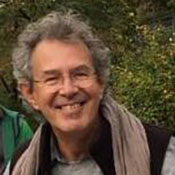
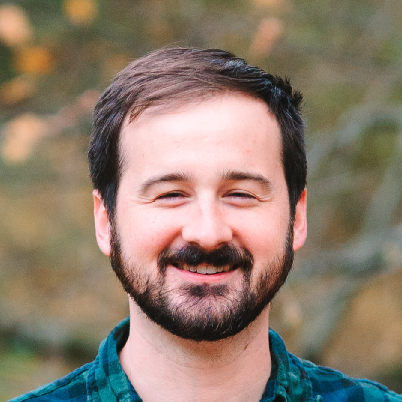
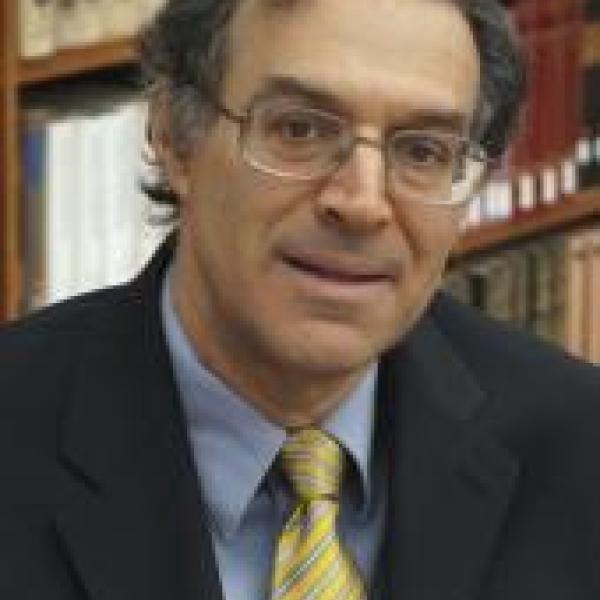
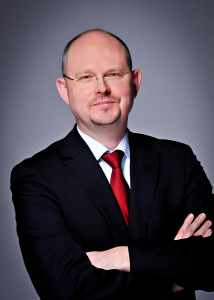
Nicholas Evans is Distinguished Professor of Linguistics and Director of the ARC Centre of Excellence for the Dynamics of Language (CoEDL) at the Australian National University’s School of Culture, History & Language. His work bridges fieldwork-based language documentation with theoretical questions in typology, cultural evolution, and social cognition. Focus on endangered Australian and Papuan languages Director of ARC Laureate Project on 'The Wellsprings of Linguistic Diversity' Co-leader of SCOPIC (Social Cognition Parallax Corpus) study Collaborator in global linguistic diversity initiatives His research explores how micro-level community multilingualism shapes macro-level linguistic diversity, with fieldwork spanning seven years in remote Indigenous communities. Recent projects include PARABANK (paradigm syncretism analysis) and Southern New Guinea language studies, particularly Nen and Yam family languages. Scientific recognition includes the Ken Hale Award (Linguistic Society of America), Anneliese Maier Forschungspreis, and fellowships in the Australian Academy of Humanities, Australian Social Sciences Academy, and the British Academy.
Carl Vondrick is a Professor in the Department of Computer Science at Columbia University. His research focuses on creating robust and versatile perception systems that leverage video and interaction with the natural world, with applications in 3D reconstruction, visual question answering, and robot manipulation. Former research scientist at Google Visiting researcher at Cruise Education: PhD (2017) from MIT, advised by Antonio Torralba BS (2011) from UC Irvine, advised by Deva Ramanan His research explores multimodal approaches for cross-task and cross-modal transfer, scene dynamics, audiovisual perception, interpretable models, and spatial awareness systems. The lab emphasizes zero-shot generalization and neuro-symbolic methods while addressing safety and robustness in AI systems. Key publication trends include: 2025: Video generation for robotics 2024: Differentiable rendering and cross-modal reasoning 2023: Robust perception and 3D modeling Scientific Awards: 2024 PAMI Young Researcher Award 2021 NSF CAREER Award Teaching Roles: Teaching Computer Vision II (2021-2025), Computer Vision I (2018-2019), and Representation Learning (2020-2022). Advising: Advises 8 current PhD students and has mentored 5 graduated students now at institutions like MBZUAI and UMD. The lab recruits 1-2 PhD students annually through Columbia’s PhD program. Grants and Collaborations: Funded by NSF, DARPA, Toyota Research Institute, Amazon Research, and Google.
Eric Van Young is a distinguished Professor of History at the University of California, San Diego (UCSD), specializing in colonial and 19th-century Latin American history, particularly Mexico. He has held significant roles, including Chair of the Department of History (2000-2004) and Interim Dean of the Division of Arts and Humanities (2007-2008). His research focuses on rural history, peasant movements, cultural history, and biographical studies of key figures like Lucas Alaman. He earned his B.A. from the University of Chicago (1967), M.A. and Ph.D. from UC Berkeley (1968, 1978). Education: B.A. (University of Chicago), M.A. & Ph.D. (UC Berkeley) Roles: Professor of History, Department Chair, Interim Dean His research explores Mexico’s colonial and early national periods, emphasizing rural economic structures, popular rebellions, and the intersections of culture and politics. Current projects include a biography of Lucas Alaman and a synthetic history of Mexico (1750-1850). He has authored numerous books, including Writing Mexican History (2012) and The Other Rebellion (2001), alongside over 100 articles. His work bridges economic and cultural historiography, offering critical insights into regional dynamics and the construction of national identity. Van Young’s scholarly contributions include editorial roles for journals and book series, as well as extensive peer review for academic publishers. His interdisciplinary approach addresses themes like messianic movements, state formation, and the legacy of colonial institutions in modern Mexico.
Yingyan (Celine) Lin is an Associate Professor in the School of Computer Science at Georgia Institute of Technology, leading the Efficient and Intelligent Computing (EIC) Lab. Her work focuses on cross-layer innovations in machine learning systems, from algorithms to chip design, aiming to advance green AI and ubiquitous machine learning. She holds a Ph.D. in Electrical and Computer Engineering from the University of Illinois at Urbana-Champaign (2017). Research interests include efficient machine learning, neural rendering (e.g., NeRF), hardware-software co-design for AI acceleration, and graph neural networks. Her lab has pioneered projects like RTML and 3DML, funded by NSF, NIH, DARPA, and industry partners (Qualcomm, Intel, Meta). Awards: NSF CAREER Award (2021), ACM SIGDA Outstanding Young Faculty (2022), Meta Faculty Research Award (2022) Grants: Multi-university projects funded by NSF, NIH, DARPA, SRC, ONR, and industry Recognition: First-place wins at DAC 2022 and TinyML Design Contest 2022, IEEE Micro Top Pick 2023 Her research bridges algorithmic innovation with hardware implementation, emphasizing energy efficiency and real-time performance for applications in AR/VR, computer vision, and neuro-symbolic AI systems.
Adrian Weller is a prominent researcher and academic at the University of Cambridge, serving as a Director of Research in Machine Learning within the Department of Engineering. He holds multiple significant leadership roles including Programme Director for Trust and Society at the Leverhulme Centre for the Future of Intelligence (CFI), and previously served as Programme Director for AI at The Alan Turing Institute, the UK national institute for data science and AI. His work bridges theoretical machine learning research with practical applications and societal implications of artificial intelligence. Weller's research interests span a broad spectrum of AI and machine learning topics with a particular focus on ensuring beneficial societal outcomes. His work encompasses explainability, fairness, robustness, scalability, privacy, safety, and ethics in AI systems. He has made significant contributions to trustworthy machine learning, including developing frameworks for AI governance, certification, and human-AI collaboration. His research group actively investigates neuro-symbolic approaches, privacy-preserving techniques, and methods for improving the reliability and interpretability of AI systems. His recent publications demonstrate a strong trend toward addressing the practical challenges of deploying AI systems in real-world contexts, particularly focusing on certification frameworks, governance mechanisms, and human-centered approaches. His work spans theoretical advances in machine learning architectures while maintaining a strong connection to societal impact, with publications appearing in top venues across AI, machine learning, and interdisciplinary applications. Scientific Awards: MBE for services to digital innovation (2022 Queen's Birthday Honours) Turing AI Fellowship for Trustworthy Machine Learning Weller actively supervises a large group of PhD students and postdocs, with current students including Juyeon Heo, Yanzhi Chen, Katie Collins, Isaac Reid, Yichao Liang, Herbie Bradley, and Shoaib Siddiqui. His former students have gone on to positions at leading institutions including Google DeepMind, ETH Zurich, NYU, and MPI-IS Tübingen. He has served on numerous advisory boards including the Centre for Data Ethics and Innovation, UNESCO's expert group on AI ethics, and the World Economic Forum's Global Future Council on AI. His research has been supported through his Turing AI Fellowship and various collaborative projects focused on safe and ethical AI development. Weller leads a vibrant research group focused on trustworthy machine learning, which actively organizes workshops and conferences including ICML 2024 (where he served as Program Chair), multiple workshops on responsible AI, and events through the ELLIS network. His group collaborates extensively across disciplines, working with researchers in computer science, social sciences, law, and policy to address the multifaceted challenges of developing beneficial AI systems.
Prof. Niki Kilbertus is an Assistant Professor at the Technical University of Munich (TUM) in the Department of Informatics, and Group Leader at Helmholtz AI. His research focuses on causal machine learning, ethical AI systems, and applications in healthcare, climate science, and dynamical systems. He earned his PhD from the University of Cambridge (2020) and has held positions at DeepMind, Google, and Amazon during his studies. His research interests include causal discovery, fairness in AI, counterfactual reasoning, and integrating physics-based constraints into neural networks. Key contributions include foundational work on fair machine learning (e.g., avoiding discrimination through causal models) and developing methods for causal inference in complex systems like healthcare and climate modeling. Recent work emphasizes generative models for causal interventions, robust treatment effect estimation, and physically consistent neural differential equations. He leads a large interdisciplinary group with over 20 students and postdocs working on projects funded by Helmholtz Association, ERC, and industry collaborations. Notable awards include the Leopoldina Prize for Young Scientists (2024) and membership in the Junge Akademie. His lab maintains active partnerships with ELLIS, MCML, and the Zuse Institute Berlin.
Chris Donahue is an Assistant Professor in the Computer Science Department at Carnegie Mellon University . He also serves as a part-time Research Scientist at Google DeepMind on the Magenta team. His work focuses on leveraging generative AI to enhance human creativity, particularly in music. Education: PhD in Computer Science (UC San Diego), Postdoctoral Scholar (Stanford University) His research spans controllable generative modeling of music and audio , with a focus on real-time interactive systems. Projects like Piano Genie , Beat Sage , and Copilot Arena demonstrate his commitment to real-world deployment. His Generative Creativity Lab (G-CLef) explores AI applications beyond music, including programming and natural language. Recent publications highlight advancements in multimodal music evaluation , real-time adaptation , and AI-driven sound morphing . He co-developed Magenta RealTime , an open-weight real-time music generation model, and MusicFX DJ Mode . Scientific Awards: Best Paper Award (top 1) at NAACL Student Research Workshop 2025 Best Paper Award (top 1% of submissions) at CHI 2025 Best Paper Runner-up at ISMIR 2021 He co-advises PhD students like Wayne Chi (NDSEG Fellow) and mentors Irmak Bukey . His lab receives support from the AIxArts incubator fund at CMU .
Olga Sorkine-Hornung is a Professor of Computer Science at ETH Zurich and head of the Institute of Visual Computing. She leads the Interactive Geometry Lab, focusing on theoretical and practical advancements in digital content creation, geometry processing, and shape modeling. Current position: ETH Zurich, Department of Computer Science Previous roles: Courant Institute (NYU), Technical University of Berlin Education: BSc and PhD from Tel Aviv University, postdoc at TU Berlin Her research spans shape representation, digital fabrication, computer animation, and fundamental geometry processing. Key contributions include Laplacian surface editing, as-rigid-as-possible deformation, and generalized winding numbers. She works on applications in VR, AR, and autonomous systems. Awards include Test of Time Awards (2024), ACM Fellow (2020), ERC Consolidator Grant (2020), and EUROGRAPHICS Young Researcher Award (2008). She has supervised numerous students and co-developed software libraries like libigl and Instant Meshes . Co-chair roles for SIGGRAPH, Eurographics, and Pacific Graphics Editorial board member for ACM Transactions on Graphics and other journals Keynote speaker at VMV, CVPR, and SIAM conferences Her work bridges mathematical rigor with practical implementation, advancing computer graphics and geometry processing through intuitive algorithms that maintain surface detail while enabling efficient computation.
Harsha Ram is an Associate Professor in the Department of Comparative Literature at the University of California, Berkeley. His research focuses on Russian and European Enlightenment, modernist literature, and the cultural histories of the Caucasus region. He holds dual B.A. Honors degrees in Italian and Russian from the University of Sydney and University of New South Wales, and a Ph.D. in Comparative Literature from Yale University. His work bridges literary theory, post-colonial studies, and geopoetics, with a particular emphasis on Georgia's literary modernism and its intersections with Russian imperial culture. Key themes include spatial theory, peripheral modernisms, and the transnational dimensions of cultural production. Recent work examines the role of ritual feasts in Georgian national identity and the geopoetics of Eurasian avant-garde movements. Ram has published extensively on figures like Velimir Khlebnikov and Boris Pasternak, exploring their engagement with imperial legacies and revolutionary aesthetics. His book The Imperial Sublime: A Russian Poetics of Empire (2003) remains a seminal study of Russian imperial poetics. Current projects include studies on Georgian literary encounters with Russian culture and the symbolic dimensions of Caucasus representations. His scholarship frequently appears in leading journals such as Modernism/Modernity , Slavic Review , and Ab Imperio . He has held visiting positions at institutions globally and actively participates in interdisciplinary dialogues between literary studies, history, and cultural geography.
Chris Atkeson is a Professor at the Robotics Institute of Carnegie Mellon University. His research focuses on achieving human-level competence in machines through humanoid robotics and human-aware environments. He explores machine learning techniques such as reinforcement learning, nonparametric methods, and memory-based learning to develop robots capable of complex tasks like manipulation, locomotion, and perception. His work emphasizes bridging the gap between simulation and real-world applications (sim2real transfer), with contributions to tactile sensing (e.g., FingerVision), dynamic walking control, and human-robot collaboration. Notable projects include participation in the DARPA Robotics Challenge with Team WPI-CMU, where his team developed reliable humanoid behavior for disaster response scenarios. Atkeson’s research spans robotics, computer vision, and control systems, with a focus on enabling robots to perceive, learn, and act in unstructured environments. His recent work includes advancements in 3D scene capture, soft robotics, and energy-based planning for compositional tasks.
Kenneth Pomeranz is the University Professor of Modern Chinese History at the University of Chicago in the Department of East Asian Languages and Civilizations (EALC). Previously taught at the University of California, Irvine , his research spans late Imperial and twentieth-century China , comparative world history , and global economic systems . Research Focus: Reciprocal influences between state, society, and economy; origins of the world economy through mutual regional influences; comparative studies of labor, family organization, and economic history. Current Projects: A history of Chinese political economy from the seventeenth century to the present; a book titled Why Is China So Big? exploring China's political unity despite its vast size. Scientific Awards and Fellowships: John K. Fairbank Prize (twice) World History Association Book Prize (shared) Guggenheim Fellowship American Academy of Arts and Sciences Fellow Publications: Key works include The Great Divergence , The Making of a Hinterland , and The World that Trade Created . His articles address topics such as labor-intensive industrialization, global environmental history, and Qing state-building.
Jenna Wise DiVincenzo is an Assistant Professor at the Elmore Family School of Electrical and Computer Engineering at Purdue University. She specializes in research areas such as software verification, formal methods, and programming languages, with a focus on gradual verification techniques that combine static and dynamic analysis. Her work emphasizes usability and scalability in verification tools, and she has contributed to projects like Gradual C0 and gradual null-pointer analysis. Dr. DiVincenzo earned her PhD in Software Engineering from Carnegie Mellon University (2023) and a BS in Mathematics and Computer Science from Youngstown State University (2017). She has interned at IBM Research, MIT Lincoln Laboratory, and the Software Engineering Research and Empirical Studies Lab at YSU. Her awards include the Google PhD Fellowship, NSF GRFP Fellowship, and 2022 Rising Star in EECS. Her research projects span theoretical advancements in gradual verification, empirical studies on usability, and practical tool development. She advises PhD students (e.g., Craig Liu, Conrad Zimmerman) and collaborates on initiatives like gradual verification for Rust and educational tools to teach verification concepts. Her work also explores leveraging large language models for specification generation and enhancing verification tool soundness through formal proofs.
Hans Beck serves as Professor of Greek History at the University of Münster (Westfälische Wilhelms-Universität) since 2018, with an additional appointment as Adjunct Professor in the Faculty of Arts at McGill University. His academic career includes previous positions as Professor of Ancient History and Director of Classical Studies at McGill University (2005-2018), Heisenberg Fellow at Goethe-Universität Frankfurt (2004-2005), and Research Assistant at the University of Cologne (1997-2004). Beck earned his academic training through doctoral studies at the Universities of Erlangen, Canterbury, and Cambridge (1989-1996), followed by a fellowship at the Center for Hellenic Studies in Washington, DC (2001-2002). His educational background reflects a strong international foundation in classical studies. His research spans multiple interconnected fields within ancient history, with particular emphasis on the history and culture of ancient Greece, historical geography of Greece, environmental studies of the ancient Greek world, political culture of the Roman Republic, and ancient historiography. Beck's work consistently explores themes of localism, federalism, and political structures across ancient societies, with notable contributions to understanding Greek city-states, regional identities, and comparative political systems. His approach often bridges geographical, historical, and cultural perspectives to examine how ancient communities organized themselves politically and maintained regional identities within larger frameworks. Analyzing his recent publications reveals a sustained focus on local political structures within broader contexts, particularly examining how Greek city-states maintained autonomy while participating in federal leagues. His work increasingly incorporates comparative approaches, connecting Greek political structures with those of Rome and even ancient China, reflecting his editorial work on cross-cultural studies. Beck demonstrates particular expertise in analyzing how physical landscapes shaped political organization and how religious practices reinforced regional identities. Fellow of the Royal Society of Canada (2018) Anneliese Maier Research Award from Alexander von Humboldt Foundation (2014) Heisenberg Fellowship from Deutsche Forschungsgemeinschaft (2004) Doctoral scholarship from German Academic Exchange Service (1995) Doctoral scholarship from Hanns Seidel Foundation (1994) Beck has supervised numerous doctoral students including Jordan Christopher (2022), Chandra Giroux (2021), Wentian Fu (2020), Rebecca Robinson (2017), Alex McAuley (2015), and François Gauthier (2015), covering diverse topics from ancient Qin and Macedon to cult practices in ancient empires. His academic leadership extends to directing research projects B3-49 'Belonging in/to Lakonia' and B3-40 'Localism and Religion in Ancient Greece' within the Excellence Cluster focusing on 'Religious Diversity and Legal-Political Unity.' As head of the project 'Belonging in/to Lakonia' and 'Localism and Religion in Ancient Greece,' Beck leads interdisciplinary research teams examining archaeological and historical evidence from the Sanctuary of Apollo at Amyklai and its surroundings. His work integrates textual analysis with material culture studies, creating comprehensive approaches to understanding ancient regional identities and religious practices. Beck's leadership in these projects demonstrates his commitment to bridging traditional disciplinary boundaries in classical studies.
Xiangyu Zhang is the Samuel D. Conte Professor of Computer Science at Purdue University. He specializes in AI security, software analysis, and cyber forensics, with a focus on detecting vulnerabilities in traditional software and AI systems. His research includes dynamic slicing, program profiling, and securing AI models against backdoors. He has led projects funded by DARPA, IARPA, NSF, and industry, securing over $13 million in grants. He has mentored 30+ PhD students and postdocs, many of whom hold academic positions or industry roles. His work has been recognized with awards like the ACM SIGPLAN Distinguished Dissertation Award and NSF Career Award. Education: PhD, Computer Science, University of Arizona (2006) MS & BS, Computer Science, University of Science and Technology of China (2000 & 1998) Research Interests: AI Security: backdoor detection, adversarial attacks, model integrity Program Analysis: dynamic slicing, static/dynamic debugging Cyber Forensics: log analysis, attack investigation Software Reliability: fault localization, vulnerability detection Key Projects: DARPA V-SPELLS: domain-specific program analysis IARPA TrojAI: AI backdoor detection competitions NSF-funded research on model debugging and co-reasoning of software/NL artifacts Awards & Recognition: Top performer in IARPA TrojAI competitions (13/18 rounds) ACM SIGPLAN Distinguished Dissertation Award (2006) NSF Career Award (2009) Ranked 8th globally in systems research productivity (2024) Career Contributions: Secured over $13M in research funding Guided 25 PhDs and 8 postdocs Published 89+ top-tier papers (2014–2024)
Giovanni De Micheli is a Full Professor at École Polytechnique Fédérale de Lausanne (EPFL), holding appointments in both the School of Computer and Communication Sciences (IC) and the School of Engineering (STI). He is affiliated with the Integrated Systems Laboratory (LSI) and serves as Scientific Director of EcoCloud. His primary office is located in INF 341 building at EPFL's Lausanne campus where he conducts research and teaching activities. Professor De Micheli's research spans multiple domains in electronic design automation and integrated circuit design. His primary interests include: Integrated Circuit Design and Hardware Synthesis Logic Optimization and Boolean Methods Nanoelectronics and 2D Electronics Quantum Computing and Emerging Technologies Low-Power Electronics and Energy-Efficient Systems Electronic Design Automation for Novel Computing Paradigms His recent publications demonstrate a strong focus on advancing logic synthesis techniques for both conventional and emerging technologies. Professor De Micheli's work bridges theoretical foundations with practical applications, particularly in adapting traditional EDA methods to novel computing paradigms like quantum computing and superconducting electronics. His research group has made significant contributions to the development of efficient algorithms for circuit optimization across multiple technology domains, with particular emphasis on area, power, and delay optimization while maintaining functional correctness. Professor De Micheli has supervised numerous doctoral students throughout his career at EPFL, mentoring over 40 PhD candidates whose research spans various aspects of electronic design automation, circuit design, and emerging technologies. His students have gone on to make significant contributions in both academia and industry. As Scientific Director of EcoCloud, Professor De Micheli leads research initiatives focused on energy-efficient computing systems and sustainable cloud infrastructure. His laboratory, the Integrated Systems Laboratory, serves as a hub for interdisciplinary research connecting computer science, electrical engineering, and materials science, with particular focus on next-generation computing technologies.