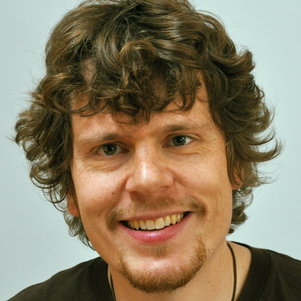
Florian Muijres is an Associate Professor and Chairholder at the Experimental Zoology Group, Wageningen University & Research, where he leads the Animal Flight Lab. His research focuses on the biomechanics, aerodynamics, and flight control of natural flyers such as insects, birds, and bats, with applications in bio-inspired robotics and ecological solutions like mosquito traps and flapping-wing drones. He holds a PhD from Lund University (Sweden) and conducted postdoctoral research at the Dickinson Lab, University of Washington (USA). Research Interests: Merging experimental and computational methods, his work explores primary research on flight mechanics (e.g., mosquito evasion, butterfly gliding) and applied studies (e.g., drone design, pollinator behavior in greenhouses). His lab uses advanced videography and robotic models to study flight dynamics under real-world conditions. Labs & Teams: The Animal Flight Lab collaborates with biologists, physicists, and engineers to investigate flight adaptations in mosquitoes, bumblebees, and pied flycatchers. Projects include developing high-efficiency traps and analyzing flight performance in complex environments.
Nicolas Cambier is a Visiting Professor at Vrije Universiteit Amsterdam, affiliated with the Faculty of Science's Artificial Intelligence department and the Network Institute. His research focuses on swarm robotics, collective behavior, and evolutionary systems. He explores topics like emergent communication, modular robotics, and prosociality in robotic swarms. Key areas include task-driven language evolution, adaptive decision-making, and environmental interaction in constrained environments. His work bridges theoretical models with practical implementations, emphasizing self-organization and cultural evolution in synthetic systems. Recent contributions address challenges in heterogeneous swarms, skill acquisition in modular robots, and decision-making without prior knowledge. He collaborates widely, with publications in IEEE Robotics and Automation Letters, Nature Communications, and top conferences like GECCO and Distributed Autonomous Robotic Systems. Research interests span robotics, artificial intelligence, and evolutionary computation, with applications to both theoretical frameworks and real-world robotic systems. His studies often involve agent-based simulations and embodied evolution approaches to understand complex collective phenomena.
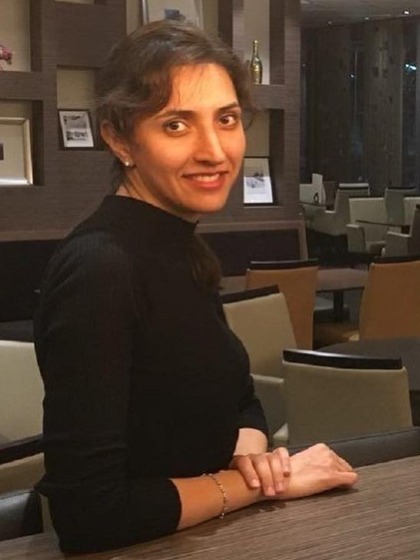
Dr. Yara Khaluf is an Assistant Professor in the Information Technology Group at Wageningen University & Research, Department of Social Sciences. She holds a PhD (2014, Paderborn University, cum laude) on robot swarm task allocation, followed by postdoctoral research at Paderborn University (2014–2015) and Ghent University’s IDLab (2015–2021). Her work focuses on computational social science, hybrid human-agent societies, and distributed artificial cognition, leveraging agent-based modeling and systems dynamics for behavior prediction/modulation. She leads European-funded projects like ChronoPilot (EU Horizon2020 FET) and DELICIOS (FWO, 2019–2022). Her research explores interactions between artificial agents and humans, developing cognitive capacities for seamless interaction via social feedback networks. Notable contributions include collective foraging algorithms, time perception modeling, and agent-based simulations for public health interventions. Awards include competitive IGS and DFG fellowships. She collaborates with leading experts in swarm intelligence (Dorigo, Stuetzle), collective decision-making (Hamann, Marshall), and experimental psychology (Johansson, Vatakis). Current projects investigate modulating human time perception and delegation of conflict-of-interest decisions to AI agents. Teaching includes courses on model thinking, agent-based modeling of complex systems, and data science applications in food/consumer science. Her work bridges computational methods with societal challenges, emphasizing scalable solutions for hybrid systems.
Jordan Boyle is an Assistant Professor in the Department of Sustainable Design Engineering at the Faculty of Industrial Design Engineering, Delft University of Technology (TU Delft). He is affiliated with the Materializing Futures Section, where he conducts research in robotics, bio-inspired systems, swarm intelligence, and human-robot interaction. Academic Background: PhD in Computer Science, University of Leeds – focused on neuro-mechanical control of locomotion in C. elegans . MSc and BSc (Hons) in Electrical Engineering, University of Cape Town. Prior academic experience at the University of Leeds as Research Fellow, Lecturer, and Associate Professor over 12 years. Research Interests: Dr. Boyle’s research centers on robotics with a strong emphasis on bio-inspired design. His work spans swarm intelligence , multi-robot systems , human-robot interaction , and robotic fabrication . He also specializes in designing experimental apparatus for pre-clinical and engineering applications. His interdisciplinary approach integrates mechanical design, control systems, and AI for real-world deployment in construction, medicine, and infrastructure. Publication Trends: His recent publications (2022–2024) demonstrate a clear trajectory toward bio-inspired autonomous systems applied in construction and medical imaging. Key themes include swarm robotics for construction, MRI trajectory correction with robotic components, and locomotion mechanisms inspired by biological systems. These works reflect strong interdisciplinary collaboration, particularly with biomedical and mechanical engineering teams. Teaching: Product Engineering (2024, 2025) Advanced Product Engineering (2024, 2025) Scientific Affiliations and Activities: Visiting Researcher, School of Mechanical Engineering, University of Leeds (2022–2026) Advising and Grants: While no formal students or specific grants are listed in the provided text, Dr. Boyle has supervised research projects and collaborated across disciplines, particularly in medical and civil engineering applications. His role in designing experimental apparatus indicates active involvement in grant-funded interdisciplinary research. Labs and Research Groups: He is part of the Materializing Futures Section within Sustainable Design Engineering, which likely operates in conjunction with TU Delft’s broader design and robotics labs, though specific lab names are not mentioned.
Kerstin Bunte is a Professor of Machine Learning for interdisciplinary data analysis at the University of Groningen, affiliated with the Faculty of Science and Engineering and the Bernoulli Institute's Intelligent Systems Group. She holds an Honorary Fellowship at the University of Birmingham and leads the Intelligent Systems Group. Her research focuses on interpretable machine learning, interdisciplinary applications (e.g., astrophysics and biomedical data), and visualization techniques. Research Interests: - Machine Learning - Artificial Intelligence - Explainable AI (XAI) - Interpretable Models - Dimensionality Reduction - Data Visualization - Astrophysical Data Analysis - Medical Imaging Awards & Grants: - DSSC XS funding (2023) - NWO VIDI grant (2020) - Rosalind Franklin Fellowship (2016–present) Advising & Students: Supervised PhD students include Elisa Oostwal, Janis Norden, Matteo Marcantoni, and Petra Awad. Research spans topics like tumor segmentation in medical imaging, astrophysical structure detection, and autonomous navigation systems. Labs & Collaborations: Leads the Intelligent Systems Group, collaborating with institutions like the University of Birmingham and the University of Warwick. Work involves interdisciplinary projects combining machine learning with astronomy, biomedical sciences, and robotics.
Jan Bergmans is a Full Professor in the Department of Electrical Engineering at Eindhoven University of Technology (TU/e). He leads the Signal Processing Systems group and holds professorships at multiple research centers including the Eindhoven MedTech Innovation Center (e/MTIC), Center for Care & Cure Technology Eindhoven, NeuroPlatform, EAISI Health, and EAISI Foundational. With approximately 35 years of experience in signal processing theory and applications, Bergmans focuses on developing computationally efficient signal analysis techniques for healthcare, wireless communication, surveillance, and intelligent lighting applications. Bergmans' educational background includes: MSc in Electrical Engineering from Eindhoven University of Technology (1981) PhD in Electrical Engineering from Eindhoven University of Technology (1987) His research interests center around signal processing and data analytics theories, algorithms, architectures, and systems. Bergmans develops mathematical models that incorporate domain-specific knowledge, such as propagation models for radio communication channels or pathophysiological models for clinical decision support systems. His work emphasizes creating powerful yet computationally efficient signal analysis techniques, with significant applications in healthcare technology and medical diagnostics. The integration of engineering principles with clinical needs is a hallmark of his research approach, enabling practical solutions that address real-world medical challenges. Analysis of Bergmans' recent publications reveals a strong focus on medical signal processing, particularly in ECG and fetal monitoring applications. His work combines advanced signal processing techniques like adaptive Kalman filtering with practical healthcare applications. There's also significant research in visible light communications and sensor network technologies, showing the breadth of his expertise across different application domains of signal processing. The consistent theme across his work is developing computationally efficient algorithms that incorporate domain-specific knowledge to solve practical engineering problems. Scientific recognition includes: Senior Member of the IEEE Author of numerous papers and 2 books Holder of approximately 40 US patents Bergmans has established smooth collaborations with strategic industrial and clinical partners, including Philips Research and multiple hospitals in the Eindhoven region. He co-manages BrainBridge, the strategic collaboration between TU/e, Philips Research, and Zhejiang University (China). His research group has secured numerous projects, including recent third-tier projects like MEDEIA, PISANO SPS, and RAISE projects focusing on medical engineering innovations and robust AI for radar signal processing. As a key figure in the Signal Processing Systems group and one of the founders of the Eindhoven MedTech Innovation Center (e/MTIC), Bergmans plays a central role in bridging academic research with industrial and clinical applications. His leadership extends to managing multiple research teams working on healthcare technology, wireless communications, and sensor systems, fostering an environment where theoretical signal processing advances translate into practical medical and technological solutions.
Bahar Haghighat is a Tenure Track Assistant Professor in Robotics and Automation at the Faculty of Science and Engineering, University of Groningen. She leads the Distributed Autonomous Intelligent Systems (DAISY) Lab as Principal Investigator and contributes to academic governance as a Member of the Faculty Council. Her professional affiliations include the Royal Netherlands Institute of Engineers (KIVI), the Institute of Electrical and Electronics Engineers (IEEE), and editorial roles with Nature Portfolio Journal Robotics and Springer Nature Journal Autonomous Robots. Her educational background includes: PhD in Robotics, Control, and Intelligent Systems from the Swiss Federal Institute of Technology in Lausanne (EPFL), Switzerland (2018) Master's degree in Electrical Engineering/Digital Electronics from Sharif University of Technology (SUT), Tehran, Iran Bachelor's degree in Electrical Engineering/Physics (double major) from Sharif University of Technology (SUT), Tehran, Iran Dr. Haghighat's research focuses on building novel miniaturized robotic swarms and algorithmic frameworks for sensing, surveying, and inspection applications. Her work spans mechatronics, electronics, embedded systems, embedded artificial intelligence and machine learning, and distributed systems. She envisions developing surface, aquatic, and aerial miniaturized robot swarms and small-scale intelligent devices for basic research and commercial applications including inspection of complex structures, environmental monitoring, space exploration, and search-and-rescue operations. Her recent publications demonstrate a strong focus on swarm robotics, particularly using particle swarm optimization techniques for multi-robot coordination, surface inspection tasks, and spacecraft hull inspection. Her research shows an interdisciplinary approach combining mechatronic design with advanced algorithms for self-assembly and collective decision-making in resource-constrained robotic systems. Her notable scientific achievements include: EPFL's PhD research award of Gilbert Hausmann for the best PhD thesis in mechanical engineering, electricity, and physics (2019) EPFL distinction of excellence for a PhD thesis in Robotics, Control, and Intelligent Systems (2018) Swiss National Science Foundation Postdoc Mobility Fellowship (2019) Swiss National Science Foundation Early Postdoc Mobility Fellowship (2017) Third place in EPFL's "My Thesis in 180 Seconds" competition (2017) EECS Rising Star recognition (2021 at MIT and 2019 at UIUC) Dr. Haghighat has served as Program Co-Chair for The International Symposium on Distributed Autonomous Robotic Systems (DARS) and has held visiting scholar positions at MIT and Harvard University. Her research has received media attention for applications in Mars rover technology and drone swarms for defect detection. She leads the DAISY Lab, which focuses on distributed autonomous intelligent systems for various inspection and monitoring applications.
Eliseo Ferrante is an Assistant Professor at the Faculty of Science, Department of Artificial Intelligence, Vrije Universiteit Amsterdam. He is also affiliated with the Network Institute. His research focuses on swarm robotics, collective decision-making, and autonomous systems, contributing to UN Sustainable Development Goals. He teaches courses such as 'Learning Machines' and 'Collective Intelligence.' His research explores topics including robot swarms in challenging environments, evolutionary algorithms for adaptive robotics, and morphological evolution in robots. Key contributions include methods for robust swarming in GNSS-denied areas and optimized control strategies for evolvable morphologies. Dr. Ferrante has supervised 2 PhD theses and contributed to datasets on collective motion models and modular robotics. His work emphasizes practical applications of AI in robotics, with a focus on resilience and adaptability in complex systems.
Murat Kirtay is an Assistant Professor at Tilburg University in the Department of Cognitive Science and Artificial Intelligence within the Tilburg School of Humanities and Digital Sciences. He leads the Cognitive Developmental Robotics (CoDeRs) group and co-directs the AI for Robotics Laboratory (AIR-LAB). Dr. Kirtay's research focuses on Humanoid Robotics, Cognitive Systems, and Machine Learning with particular interest in human-robot interaction, imitation learning, and cognitive modeling. His work explores how robots can learn from human behavior through observation and interaction, with applications in social robotics and collaborative systems. His research integrates insights from neuroscience, psychology, and artificial intelligence to develop more natural and effective robot behaviors. His recent publication output demonstrates consistent research activity with multiple papers accepted at top robotics conferences including IEEE Humanoids, IEEE ICDL, and IEEE Ro-MAN. His work spans theoretical contributions to cognitive modeling as well as practical applications in robot behavior and interaction design. Best paper award nomination at IEEE ICDL 2023 Dr. Kirtay is actively involved in research projects including STEADFAST: Swarm Technology Enabling Advanced Drone-Facilitated Active Support Tactics for Military and First Responder Operations, where he serves as a Co-Principal Investigator. He leads research groups focused on cognitive developmental robotics and AI for robotics applications. His laboratory work involves humanoid robots including the iCub platform for conducting experiments in human-robot interaction and collaborative manipulation.
X. (Zhou) Zhou is a Postdoc affiliated with the Faculty of Economics and Business at the University of Groningen, specifically within the HRM & OB — Management department. His research focuses on interdisciplinary areas including Agent-based modeling and simulation, Game theory, and Decision science. His expertise spans Computer Science (Theory & Methods, Interdisciplinary Applications) and Micro-economics (Industrial Organization). Dr. Zhou’s work addresses complex systems through methodologies like distributed control, adaptive algorithms, and fault-tolerant mechanisms. His recent publications emphasize spacecraft attitude stabilization, multi-agent coordination, and nonlinear control systems. Despite his postdoctoral role, he has contributed significantly to both theoretical frameworks and applied solutions in robotics and aerospace engineering. While no formal grants or awards are listed, his prolific output reflects sustained engagement with cutting-edge challenges in systems control and computational economics. His research often bridges theoretical models with practical implementations, such as in multi-robot systems and space mission design.
Eric Postma is a Full Professor of Artificial Intelligence at the Tilburg School of Humanities and Digital Sciences , specifically within the Department of Cognitive Science and Artificial Intelligence . He also holds a position at the Jheronimus Academy of Data Science in 's-Hertogenbosch, a collaboration between Tilburg University and Eindhoven University of Technology. Research Focus: Pattern recognition in humans and machines, with applications spanning art authentication, exoplanet detection, and medical AI (particularly glioma patient outcomes). Projects: Principal investigator in healthcare AI initiatives like predictive modeling for post-surgical cognitive function and co-investigator in multi-institutional projects like STEADFAST (swarm robotics for first responders) and MEGaNorm (brain dynamics modeling). Leadership: Member of SIGAI, IPN, Lorenz Center Computational Science Board, and advisory bodies like Kennisnet and CLAIRE. Research Trends: His recent publications emphasize interdisciplinary applications of AI, including dataset creation for pediatric body measurement analysis, vision transformers for art authentication, and fMRI data augmentation techniques. Key themes include ethical AI deployment, human bias vs. machine objectivity, and sustainability-focused AI through initiatives like the ILUSTRE project in Curaçao. Collaborations: Works with institutions across neuroscience (Rutten, Gehring), data science (Güven, Šafář), and engineering (Cuijpers). His research bridges theoretical AI with practical implementations in healthcare, cultural heritage, and environmental sustainability.
Fredrik Jansson is a Researcher at Delft University of Technology, affiliated with the Faculty of Civil Engineering and Geosciences and the Geoscience and Remote Sensing department. He works on weather and climate simulations within the Ruisdael Observatory project, focusing on improving the Dutch Atmospheric Large-Eddy Simulation (DALES) model's performance and usability for high-resolution atmospheric studies. PhD in Physics from Åbo Akademi University (Finland) Develops DALES model for cloud and convection resolution Collaborates with the Netherlands eScience Center for computational optimization Research interests: pattern formation, cloud dynamics, cold pools, superparameterization His recent work examines how cold pools and trade cumulus self-aggregation influence Earth's radiation budget and climate systems. He explores symmetry in mesoscale circulations and the impact of environmental drivers on atmospheric boundary layer dynamics . Key projects include: Regional superparameterization of OpenIFS using DALES Cloud organization in radiative-convective equilibrium High-performance computing optimizations for climate models Fredrik also contributes to computational tools like Kilombo (Kilobot simulator) and VECMAtk for uncertainty quantification. His interdisciplinary work bridges atmospheric science, robotics, and DIY electronics.
S.U. Pfeiffer is a researcher in the Faculty of Aerospace Engineering at Delft University of Technology, specializing in localization algorithms, control systems, and wireless communication for robotics and drones. Their work focuses on improving ultra-wideband localization and synchronized movement in micro air vehicles. Key research areas include: Localization algorithms for drones and robots Ultra-wideband technology Swarm robotics Control systems and estimation techniques Their recent publications highlight advancements in real-time estimation, wireless ranging, and computationally efficient solutions for small aerial vehicles. Collaborations with colleagues like C. de Wagter and G. de Croon demonstrate interdisciplinary teamwork in aerospace and robotics research.
Dr. Debarun Sengupta is a Postdoctoral Research Fellow at the Faculty of Science and Engineering, University of Groningen. His research focuses on biomimetic MEMS/NEMS devices, nanotechnology, and wearable sensors. He holds a PhD in Micro/Nano-engineering (2022) and an MEngSc in Electrical Engineering (2017). His work emphasizes innovative materials and fabrication techniques for biomedical and smart sensor applications. He has held multiple research roles, including at UNSW Sydney and NTU Singapore, and has been funded by grants such as the Greendeal PhD program and U4 Travel Grants. Notable awards include Best Student Paper at IEEE FLEPS 2021 and Best Poster at ENTEG Day 2022. His research spans electrospun nanofibers, piezoelectric sensors, and energy harvesting systems, with a focus on applications in healthcare monitoring and soft robotics. He has authored over 25 publications, including reviews on next-generation wearable sensors and articles on nanomaterial-based devices. Collaborations include projects funded by the Dutch Research Council (NWO), focusing on swarm robotics and multi-agent systems. Affiliations: Bio-inspired MEMS and Biomedical Devices group, Engineering and Technology Institute Groningen (ENTEG) Education: PhD (University of Groningen), MEngSc (UNSW Sydney) Grants: NWO-funded SMART-AGENTS project, Greendeal PhD funding His lab develops nature-inspired sensors for monitoring human motion, physiological parameters, and environmental interactions. Recent work includes degradable piezocapacitive sensors and graphene-based flexible electronics.
Elena Torta is an Assistant Professor in the Robotics section of the Mechanical Engineering department at Eindhoven University of Technology (TU/e). Her research focuses on control and world modeling for collaborative robots, particularly in human-robot and robot-robot collaboration. She holds a PhD cum laude from TU/e and has extensive industry experience as a software architect at ASML, where she advanced to leadership roles in algorithm deployment. Her expertise spans multidisciplinary robotics challenges, including human-robot interaction studies and computational models for robotics control. Education: BSc in Computer Science and Automation Engineering (Università Politecnica delle Marche, Italy) MSc in Automation Engineering (Università Politecnica delle Marche, Italy; thesis research at Technical University of Denmark) PhD cum laude in Automation Engineering (TU/e) Research Interests: Her work integrates robotics, control systems, and artificial intelligence to enhance collaborative robotics. Key areas include semantic-aware motion planning, digital twin technology, multi-agent coordination, and safety-critical robotic systems. Recent advancements involve leveraging building digital twins for robot navigation and semantic learning from human demonstrations. Projects: She leads projects such as EAISI High Tech Systems, AMBER, and KSERA, addressing challenges in healthcare robotics and manufacturing. Her research contributes to UN SDG 9 (Industry, Innovation & Infrastructure) and SDG 3 (Good Health & Well-being). Awards: PhD cum laude (2014) Advising & Grants: Supervised 36 students and secured funding through projects like EAISI startup package. Active in developing educational tools for robotics, including Challenge-Based Education frameworks. Labs & Teams: Engaged in TU/e's Robotics Lab and collaborations with EAISI, focusing on advancing robotics through interdisciplinary approaches.