Prof. Dr. Ahmet Tutar is a faculty member in the Department of Chemistry at Sakarya University . His academic activities include teaching courses such as Organic Chemistry I/II , Organic Synthesis Design , and Stereochemistry , alongside supervising numerous master's theses in organic synthesis and humic substance applications. Research Interests: Focus on bromination reactions , BODIPY dye synthesis , humic/fulvic acid characterization , computational chemistry , and pharmaceutical applications of organic compounds. Key Article Trends: Recent publications emphasize photobromination methods , metal-organic frameworks , and biological activity of brominated derivatives , with keywords spanning organic synthesis , biochemistry , and environmental chemistry . Thesis Supervision: Guided 35+ master's theses (2007-2013) on topics like synthesis of brominated indan derivatives , humic acid extraction , and photobromination of terpenes .
Justin D. Holmes is Professor of Nanochemistry in the School of Chemistry at University College Cork (UCC) and serves as a Principal Investigator at the Environmental Research Institute. He holds the position of Deputy Director at the Advanced Materials and Bioengineering Research (AMBER) centre, a Science Foundation Ireland-funded initiative that bridges academic research with industry applications. With more than 400 peer-reviewed publications in materials science, Professor Holmes has established himself as a leading figure in nanochemistry research and development. Professor Holmes' research program centers on developing chemical methods to synthesize and assemble nanostructured materials for environmental and energy applications. His work spans three primary domains: atmospheric sensors for detecting radicals and gases (RADICAL project), energy conversion through nanofluidic platforms for waste heat conversion (TRANSLATE project) and solar-to-chemical energy conversion (FreeHydroCells project), and sustainability through chemical recycling of waste plastics (AMBER project). His interdisciplinary approach integrates chemistry, materials science, and environmental engineering to address critical sustainability challenges through nanoscale innovation. Analysis of Professor Holmes' recent publications reveals a strong emphasis on sustainable materials development and energy applications. His research demonstrates consistent focus on germanium-based nanomaterials for electronics and energy storage, innovative polymer recycling techniques, and sustainable nanomaterial synthesis. The progression of his work shows increasing integration of circular economy principles, with significant contributions to plastic waste management and green chemistry approaches. Professor Holmes has received significant recognition for his contributions to science: Member of the Royal Irish Academy Fellow of the Royal Society of Chemistry His research is supported through substantial funding mechanisms, including his leadership role in the AMBER centre. Professor Holmes has successfully translated research into commercial applications through co-founding Glantreo Ltd., a UCC spin-out company. His work demonstrates a strong commitment to both fundamental scientific advancement and practical applications that address environmental challenges. Professor Holmes leads an active research group within the School of Chemistry at UCC, collaborating extensively through the Environmental Research Institute and the AMBER centre. His team maintains strong interdisciplinary connections across chemistry, materials science, and engineering disciplines, with sophisticated capabilities in nanomaterials synthesis, characterization, and application development. The research environment fosters innovation in environmental sensing, energy conversion technologies, and sustainable materials development.
Ben Green is the Waynflete Professor of Pure Mathematics at the University of Oxford and a Fellow of Magdalen College. His work spans additive combinatorics, analytic number theory, harmonic analysis, ergodic theory, discrete geometry, and group theory, with a focus on interdisciplinary approaches. Research Interests: Additive combinatorics and its applications to primes Analytic number theory (prime distribution, L-functions) Harmonic analysis (Fourier methods, spectral theory) Ergodic theory and its combinatorial applications Discrete geometry (ordinary lines, convex structures) Group theory (approximate groups, expansion) Article Trends: His recent work emphasizes multiplicative functions, Ramsey-type problems in number theory, expansion in finite groups, and extremal set theory. Themes include prime gaps, arithmetic progressions, and interactions between analysis and algebra. Scientific Awards: Clay Research Award (2004) Ostrowski Prize (2005) Whitehead Prize (2005) Leverhulme Prize (2007) European Mathematical Society Prize (2008) Royal Society Fellow (2010) Sylvester Medal (2014) Senior Whitehead Prize (2019) Advising: Ben has supervised numerous D.Phil students across additive combinatorics, analytic number theory, and related fields. Past students hold postdoctoral and academic positions globally.
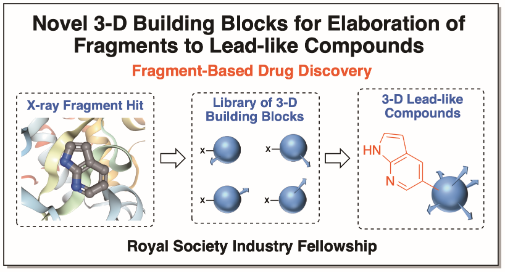
Peter O'Brien is Professor of Chemistry at the University of York, leading research in organic synthesis and medicinal chemistry. His group develops novel methods for stereospecific Negishi/Suzuki-Miyaura cross-coupling reactions and 3D fragment-based drug discovery. Collaborations with AstraZeneca, Diamond X-Chem, and Redbrick Molecular focus on COVID-19 therapeutics and building-block libraries. O'Brien employs high-throughput robotics for reaction optimization and mechanistic studies. His work bridges fundamental organolithium chemistry with applications in synthesizing bioactive heterocycles (piperidines, pyrrolidines). The York 3D Fragment Library, featuring shape-diverse compounds, identified hits against SARS-CoV-2 proteins. Awards include the RSC Stereochemistry Award (2013) and YUSU Teacher of the Year (2019). Selected honors: EPSRC/IAA grants for 3D building blocks commercialization Industrial Fellowships with AstraZeneca (2019-2022) Vice-Chancellor's Teaching Award (2015)
Scott E. Denmark is the Reynold C. Fuson Professor of Chemistry at the University of Illinois, Department of Chemistry, within the College of Liberal Arts & Sciences. He earned his S.B. from MIT (1975) and D.Sc. Tech. from ETH-Zürich (1980) under Albert Eschenmoser. His research focuses on synthetic organic chemistry, organoelement systems (Si, P, Sn, S, Li), palladium catalysis, and chemoinformatics. He has pioneered methods in asymmetric catalysis, total synthesis of natural products, and tandem cycloaddition reactions. Denmark chairs editorial boards for top journals and leads the Denmark Group, mentoring over 100 students. Awards include the Paracelsus Prize (2020), Noyori Prize (2019), and membership in the National Academy of Sciences (2018). Education: S.B., Massachusetts Institute of Technology, 1975 D.Sc. Tech., ETH-Zürich, 1980 (Advisor: Albert Eschenmoser) Research Interests: Design of new organic reactions and catalysts Structure-reactivity relationships in organoelement systems Total synthesis of alkaloids, polyenes, and glycosides Machine learning for catalyst optimization Asymmetric phase transfer catalysis Green chemistry using water-based systems Recent Research Trends: Recent work emphasizes indium-catalyzed allylations of carbohydrates (Nature, 2025) and chemoinformatics-driven catalyst design. Collaborations with MIT and industry (e.g., Pfizer, Amgen) highlight applied impact. Awards: Paracelsus Prize (2020) Ryoji Noyori Prize (2019) Member, National Academy of Sciences (2018) Member, American Academy of Arts and Sciences (2017) Advising & Grants: Mentored 40+ PhD students and 60+ postdocs. Active in funding initiatives for chemoinformatics and sustainable catalysis. Recent grants include Pines Fellowship (2025) for student Matthew Albritton. Labs/Teams: Leads the Denmark Group at UIUC, known for interdisciplinary projects merging organic synthesis with computational methods. Collaborates globally, including with ETH-Zürich and Hiroshima University.
Professor Paul Midgley is a leading academic in Materials Science at the University of Cambridge's Department of Materials Science and Metallurgy, serving as Professor since 2007 and Head of Department from 2018–2020. He is a Fellow of Peterhouse College and holds multiple prestigious awards, including the Royal Society Fellowship and the Ernst Ruska Prize. Education: PhD in Physics (University of Bristol, 1991), MSc (Distinction) in Semiconductor Materials (1988), BSc (Hons) Physics (1987). Administration: Director of the Wolfson Electron Microscopy Suite, and active on various University committees including Research, Teaching, and REF. His research focuses on advanced electron microscopy techniques such as convergent beam diffraction, electron tomography, and nanostructure analysis, with applications in nanoscale materials science and 3D reconstruction using compressed sensing. He has pioneered methods like precession electron diffraction and multi-dimensional electron microscopy, contributing to fields like plasmonic nanoparticles and catalytic materials. Key Research Themes: Electron crystallography, nanomaterial characterization, energy materials, and defect analysis in perovskites. Midgley has delivered over 20 invited/plenary lectures globally, including at EUROMAT, the Welch Symposium, and the John Cowley Memorial Lecture. His grant income exceeds £16M as Principal Investigator. Labs/Teams: Leads the Wolfson Electron Microscopy Suite and collaborates internationally on microscopy advancements and materials innovation.
Yvonne Davila-Cortes is an Assistant Professor of Orchestra and Director of String Music Education at VanderCook College of Music. She holds a B.M. in Music Business and Violin Performance from DePaul University, an M.M. in Violin Performance from the University of Wisconsin-Madison, and a Doctorate in Music and Human Learning from the University of Texas at Austin. Her research focuses on children’s musical development, parent education, and Suzuki pedagogy. She has served as Orchestra Director in Round Rock ISD, Director of Austin Youth Concertante Orchestra, and faculty member of the UT Austin String Project. Professional Experience: Rockford Symphony Orchestra Member Madison Symphony Orchestra Substitute Adjunct Instructor at Ripon College Suzuki Violin Studio Founder in Madison & Spring Green Research & Presentations: Presented at Suzuki of the Americas, American String Teachers, and TMEA conferences Focus on practical applications of music education theory
Dr. Bob Beitle Jr. is a Professor of Chemical Engineering and Senior Associate Vice Chancellor for Research and Innovation at the University of Arkansas. He joined the department in 1993, earned tenure in 1998, and was promoted to Full Professor in 2006. His research spans biochemical engineering , bioseparation , fermentation , and adaptive technology for the disabled , with significant work on protein purification, catalytic nanoparticles, and sustainable bioprocesses. Education: BS, MS, PhD in Chemical Engineering from the University of Pittsburgh (1987, 1991, 1993) Dr. Beitle's research combines experimental and computational approaches, focusing on peptide-directed nanoparticle synthesis and biocatalysis . His recent publications highlight advancements in MOF-based separations , CO2 capture materials , and viral detection platforms . He has secured grants like the CAREER Award and led projects in industrial partnerships and student development . Scientific contributions include multiple patents in bioseparation and software interfaces. Awards span decades: teaching honors (1988–2007) and mentorship recognition . He serves on the Cell and Molecular Biology Program Advisory Committee and the Executive Committee for the Biochemical Technology Division of ACS . Lab initiatives involve genomic data-driven affinity tail design and membrane-assisted fermentation systems .
Mark D. Gross is a Professor of Computer Science and Director of the ATLAS Institute at the University of Colorado Boulder. His research focuses on modular robotics, tangible interaction design, digital fabrication, and computational design. He co-founded Modular Robotics and Blank Slate Systems, leveraging his expertise in educational technology and maker culture. Education: PhD in Design Theory & Methods from MIT. Academic history includes roles at Carnegie Mellon University and University of Washington Seattle. His work spans architecture, robotics, and human-computer interaction. Research Interests: Modular robotics and computationally enhanced construction kits Tangible interaction and e-textiles Shape-changing interfaces and swarm robotics Sketch-based interaction and digital fabrication Publications highlight advancements in collaborative AR systems, shape-changing interfaces (e.g., LiftTiles, ShapeBots), and accessible technologies like FluxMarker. His work bridges computational tools and creative design processes. Advising: Guided students such as Ryo Suzuki (PhD '20). Entrepreneurial ventures include companies spun off from research. Labs/Teams: Leads projects at the ATLAS Institute, emphasizing interdisciplinary collaboration in robotics, design, and human-centered computing.
Prof. Dr. Norbert Sewald, Chair of Organic and Bioorganic Chemistry at Bielefeld University, is a leading figure in Bioorganic Chemistry , Chemical Biology , and Enzymatic Halogenation . As head of the Organic and Bioorganic Chemistry Group at the Center for Biotechnology (CeBiTec), he drives research on natural products and drug conjugates. Full Professor, Bielefeld University (since 1999) Founding Coordinator, International Graduate School of Chemistry and Biochemistry (2001-2003) Chairman, Institute of Biochemistry and Bioengineering at CeBiTec (2006-2008) Dean, Department of Chemistry (2008-2011) Chairman, Max-Bergmann-Kreis e.V. (since 2010) Coordinator, Marie Skłodowska-Curie Training Networks (MAGICBULLET, 2015-2018; Magicbullet::reloaded, 2020-2023) His research focuses on halogenases for mild peptide bromination, cryptophycin-based tumor targeting , and bioactive natural products from African flora. Collaborative projects span antiplasmodial agents , antibacterial compounds , and neurodegenerative disease inhibitors . Recent work highlights include: Enzymatic halogenation cascades Click-to-release drug conjugates Fluorescent probes for amyloid detection Key affiliations: Faculty of Chemistry Center for Biotechnology (CeBiTec) European Peptide Society (Scientific Affairs Officer, 2016-) Leibniz Institute of Plant Biochemistry (Scientific Advisory Board, 2010-2017)
Connor Delaney is an Assistant Professor in the Department of Chemistry and Biochemistry at the University of Texas at Dallas, part of the School of Natural Sciences and Mathematics. He joined the faculty in August 2023 after completing a Ruth L. Kirschstein NRSA Postdoctoral Fellowship at the University of California, Berkeley. Education: PhD in Chemistry, University of Illinois at Urbana-Champaign (2020) BS in Chemistry, Northeastern University (2014) His research focuses on organometallic chemistry and synthetic methodology , particularly in developing new methods for Csp3 bond formation and the synthesis of saturated heterocycles —key structural motifs in pharmaceuticals and agrochemicals. The Delaney Lab emphasizes mechanistic understanding, training students in the synthesis of sensitive organometallic compounds and strategies for elucidating reaction pathways. His recent publications in journals like Science and J. Am. Chem. Soc. reveal a strong focus on cross-coupling reactions , especially the Suzuki-Miyaura reaction , with deep mechanistic investigations into boronate pathways and alternative catalytic cycles. His work bridges fundamental organometallic principles with practical synthetic applications. Scientific Awards: Ruth L. Kirschstein NRSA Postdoctoral Fellowship (NIH F32), National Institutes of Health (2021) Denmark Group Kobayashi Student Mentorship Award (2019) J. C. Martin Memorial Student Travel Award, University of Illinois at Urbana-Champaign (2019) Dr. Delaney advises a growing research group, including PhD students and a postdoctoral scholar, preparing them for careers in both industry and academia. His lab has secured independent funding to support its research program. The Delaney Lab, launched in August 2023, is actively investigating oxidative addition reactions, C–H activation, and base-free cross-coupling methodologies. Research Lab: Delaney Lab at UT Dallas Focus: Organometallic Reactivity, Synthetic Methods, Reaction Mechanism
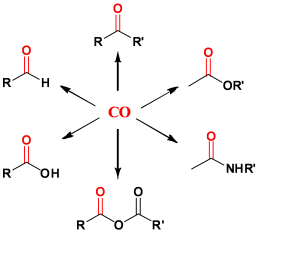
Mathieu Sauthier is a Professor at the University of Lille, affiliated with the National School of Chemistry of Lille and the Unit of Catalysis and Solid State Chemistry (UCCS). His research focuses on homogeneous catalysis for organic synthesis, emphasizing atom efficiency, greener chemistry, and polyol valorization. He specializes in carbon monoxide and 1,3-butadiene chemistry, including carbonylative Suzuki couplings, hydroformylation, alkoxycarbonylation, and domino reactions under one-pot conditions. His work targets catalyst improvements for activity (TOF), selectivity, and lifetime (TON) while minimizing synthetic steps. 2011–Present: Professor, University of Lille 2002–2011: Assistant Professor, University of Lille 2001–2002: Postdoctoral Researcher, University of Amsterdam 1998–2001: Ph.D. in Homogeneous Catalysis, University of Rennes 1997–1998: Master’s in Porphyrin Synthesis, University of Burgundy His research portfolio includes innovative approaches to domino carbonylative reactions for constructing complex molecules, selective 1,3-butadiene etherification, and nickel-catalyzed hydroalkoxylation for agro-based polyol valorization. He has contributed to nonconventional reaction media in catalysis, such as biphasic aqueous systems and ionic liquids, and has co-authored book chapters on carbohydrate chemistry and C-1 building blocks in organic synthesis. The trends in his publications highlight sustainable methodologies using nickel and palladium catalysts for bioresource conversion (e.g., lignin, sorbitol, glycerol), with a strong emphasis on atom economy and clean reaction conditions. His work spans catalyst design, mechanistic studies, and industrial applications. Professor Sauthier is based at the National School of Chemistry of Lille, Scientific City, Building C7, France. He is part of the UCCS unit, a collaborative research environment associated with CNRS (UMR 8181) and partners like Universiteit van Amsterdam. His laboratory, CASECO (Catalysis and Eco-Compatible Synthesis), drives innovations in greener chemistry.
Dr. Jung-Mo Ahn is an Associate Professor of Chemistry and Biochemistry at The University of Texas at Dallas (UTD), affiliated with the School of Natural Sciences and Mathematics. His research focuses on designing small organic molecules to modulate protein-protein interactions and peptide/protein chemistry, particularly targeting cancer therapies. He leads the Ahn Lab, which employs chemical synthesis, combinatorial chemistry, and biophysical methods to develop novel therapeutics. Education: BS in Chemistry, Seoul National University (1992) MS in Chemistry, Seoul National University (1994) PhD in Chemistry, University of Arizona (2000) Postdoctoral Associate, The Scripps Research Institute (2004) Research interests include peptide/protein secondary structure mimicry, inhibition of cancer-related protein interactions, and drug design. His lab has developed oligo-benzamide tools for biological modulation and explored LIPA inhibition in ovarian cancer. Recent work targets androgen receptors in prostate cancer and ER coregulators in breast cancer. Awards include the Thieme Chemistry Journal Award (2011) and Junior Faculty Award from the American Diabetes Association (2007). He has secured grants such as a $886,000 CPRIT award for tris-benzamide research. His work emphasizes overcoming drug resistance via novel molecular targeting strategies. Labs/Teams: Ahn Lab (specializing in medicinal chemistry and bioorganic synthesis).
Robert Guralnick is a Professor of Mathematics at the University of Southern California’s Dornsife College of Letters, Arts and Sciences. His research focuses on finite and algebraic groups, representation theory, and arithmetic algebraic geometry. He has made significant contributions to understanding group structures, character theory, and subgroup dynamics in both finite and algebraic contexts. His work spans advanced topics such as Sylow subgroup analysis, commutator properties, and probabilistic group generation. Recent studies include investigations into invariable generation in simple groups and generic stabilizers in algebraic group actions. Guralnick’s research often bridges abstract group theory with geometric and topological methods, addressing foundational questions in algebraic structures. His publications highlight interdisciplinary approaches to group theory, including applications to cohomology, combinatorics, and representation theory. Despite no explicit mention of awards, his extensive publication record reflects sustained academic impact in pure mathematics. Guralnick’s advising and grant activities are not detailed here, though his prolific research output suggests active mentorship and funding support. No specific lab affiliations or teams are noted in the provided texts.
Kazunori Koide is a Professor in the Department of Chemistry at the University of Pittsburgh, affiliated with the Dietrich School of Arts and Sciences. His research focuses on organic synthesis of natural products, development of novel synthetic methodologies, and creation of fluorescent probes for biomedical applications. He leads the Koide Group, which explores anticancer compounds like FR901464 and stresgenin B, as well as sensors for metals such as palladium, copper, and platinum. Research interests include total synthesis of bioactive natural products, mechanistic studies of organic reactions, and design of fluorogenic probes for real-time imaging of biomolecules. Notable projects involve Birch reduction optimization, palladium detection technologies, and RNA splicing modulation therapies. His work has led to awards including the University of Pittsburgh Chancellor's Distinguished Research Award (2009) and the Merck Technology Collaboration Award (2014). Key contributions span medicinal chemistry, analytical methods, and drug discovery, with over 100 publications in top journals like J. Am. Chem. Soc. and Nature Catalysis . Lab activities emphasize interdisciplinary approaches, combining organic synthesis with cell biology and materials science. Collaborations with pharmaceutical companies and academic institutions drive translational research in cancer therapy and environmental monitoring.