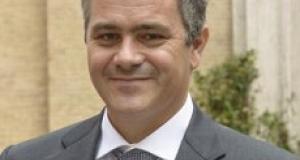
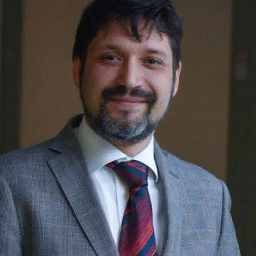
Vittorio Solina is a Researcher at the Department of Mechanical, Energy and Management Engineering (DIMEG) of the University of Calabria, specializing in industrial systems simulation and digital twin technologies. His work spans Industry 4.0/5.0 applications, supply chain optimization, and human-robot collaboration. Affiliation: University of Calabria Academic Role: Researcher (Legge 240/10) Research Focus: Digital twins, simulation modeling, sustainable manufacturing His research emphasizes advanced simulation tools for decision support, including applications in Industry 4.0 , Smart Manufacturing , and Agri-Food Supply Chains . Recent work explores adaptive simulation optimization for Industry 5.0 and 5G-enabled robotics. Key publication trends include: (1) Digital twin integration for supply chain resilience (2024-2025), (2) Simulation automation methodologies (2025), and (3) Human-robot collaboration frameworks (2024).
Francesco Pilati is an Associate Professor at the Department of Industrial Engineering, University of Trento, where he serves as local coordinator for the scientific field ING-IND/17 (Industrial Plants and Logistic Systems). He chairs the research group on Industrial Plants, Production Systems, and Logistics, and teaches courses in Industrial Plants and Design of Digital Production and Assembly Systems. As coordinator of the Master's program in Management and Industrial Systems Engineering and University Coordinator for the EIT double degree in Zero-Defect Manufacture, Pilati bridges academic leadership with advanced manufacturing research. He has also served as Invited Lecturer at universities in Vienna and Göttingen. His research focuses on integrating environmental sustainability with technical-economic criteria through multi-objective optimization and impact assessment. Key areas include: Distribution networks and warehousing systems Manufacturing and assembly line design Hybrid energy production systems Digitization of manual production processes using depth cameras Recent publications highlight applications of Industry 4.0 technologies to pandemic safety, logistics optimization, and smart manufacturing. Pilati has received significant recognition including the Philip Morris Italia Empowering Research Award (2016) and Autostrade per l'Italia academic recognition. His editorial contributions include guest editing special issues on Digital Twins and Smart Factories in Q1 journals.
Marco Brogna is an Associate Professor of Economic Geography at the Department of Methods and Models for Economy, Territory, and Finance at Sapienza University of Rome. He has been serving in this capacity since March 2007, following his position as a Confirmed Researcher of Economic Geography from 2001 to 2007. His academic work is deeply rooted in the Faculty of Economics, where he has held significant administrative roles including Delegate of the Dean for Teaching and President of the Coordination Committee for Degree Programs. Professor Brogna's research interests span Tourism Development , Sustainable Tourism , Local Economic Development , Economic Geography , Territorial Planning , and Accessible Tourism . His work consistently focuses on the intersection between tourism, regional development, and sustainable practices. He has particular expertise in analyzing tourism dynamics in the Lazio region and Rome, examining how tourism impacts local economies and how territories can be developed to maximize tourism potential while maintaining sustainability. His recent publications reveal a clear trend toward analyzing post-pandemic tourism recovery, sustainable development models, and the evolving relationship between tourism and local communities. His research demonstrates a progression from traditional tourism studies toward more complex analyses of tourism's role in territorial development, with increasing focus on digital influences, accessibility, and sustainable practices. His work spans both theoretical frameworks and practical applications, often using case studies from Rome and the Lazio region to illustrate broader principles of tourism development. Professor Brogna has been actively involved in thesis supervision for undergraduate and graduate students, encouraging students to apply one semester before their expected completion date. He has led numerous research projects funded by the Lazio Region, including innovative research on tourist industry management, tourism training, and sustainable tourism development. His most significant projects include being responsible for the 2021 research on 'Innovative Management of the Tourist Industry' and the 2020 National Report on Open-Air Tourism. Professor Brogna has also been instrumental in organizing academic events, including the 'Giovedì del Turismo' conference series at Sapienza University since 2015, as well as numerous other conferences on tourism development, sustainable tourism, and territorial planning. His work extends beyond academia into practical applications through his involvement with Rome's strategic tourism planning and various governmental advisory roles.
Matteo Bolner is a Post-Doctoral Research Fellow at the University of Bologna's Department of Agricultural and Food Sciences, specializing in livestock genomics and metabolomics. He holds a PhD in Agricultural and Food Sciences (defended March 2025) and an International Master in Bioinformatics from the University of Bologna. His research integrates genomic and metabolomic data to improve livestock sustainability, particularly in pig production systems. Key focuses include identifying metabolic pathways influencing production traits, analyzing pig viromes for disease outbreaks, and leveraging big data for One Health applications. His educational background includes a Biological Sciences degree (2018) and a bioinformatics master's (2021). He interned at CINECA's SCAI department, focusing on HPC software containerization. Current affiliations include membership in the Animal and Food Genomics group, where he explores genomic solutions for breed conservation and sustainable production. Research trends in his articles emphasize multi-omics integration to understand pig metabolism, stress responses, and breed-specific adaptations. He also applies genomics to authenticate food products and enhance conservation strategies for endangered livestock breeds like the Mora Romagnola pig. His work bridges animal science, computational biology, and agricultural sustainability. Notable contributions include developing genomic tools for honey bee population analysis and creating a catalog of mitochondrial insertions in pig genomes. Future directions involve advancing metabolomics-based precision livestock farming and applying big data analytics to livestock One Health challenges.
Sandra Paterlini is a Full Professor in the Department of Economics and Management at the University of Trento, Italy. She holds academic roles including Co-Chair of the ERCIM Working Group on Optimization Heuristics and Vice-Chair of the IEEE Task Force on Portfolio Optimization. Her career includes visiting positions at institutions such as the University of Minnesota and Ludwig-Maximilians-Universität München. She earned a PhD in Computational Methods for Financial and Economic Decisions from the University of Bergamo, an MSc in Financial Mathematics from the University of Warwick, and a Laurea in Economics from the University of Modena and Reggio E. Her research focuses on quantitative finance, risk management, portfolio optimization, and network analysis, with applications to ESG, systemic risk, and financial stability. Key research contributions include methodologies for sparse graphical modeling, systemic risk analysis, and ESG scoring frameworks. She has received multiple awards for research excellence and serves on editorial boards of journals like Computational Statistics & Data Analysis and Frontiers in Applied Mathematics and Statistics . Her work bridges academia and policy, with contributions to the European Central Bank’s Financial Stability Directorate and involvement in global conferences on computational finance and econometrics.
Paolo Landoni is a Full Professor at the Department of Management and Production Engineering (DIGEP) within the College of Management and Production Engineering at Politecnico di Torino. His research focuses on entrepreneurship, business model innovation, business incubators/accelerators, sustainability, and social impact startups. He serves as Scientific Director/Responsible for numerous EU-funded and commercial research projects including SEED2SCALE, ESSENTIAL, and Open Sustainable Innovation. Key research areas: Entrepreneurship, Business Model Innovation, Incubators, Sustainability Supervises PhD students in topics spanning sustainable procurement, social startups, and innovation ecosystems Recipient of EU Horizon 2020 and MSCA funding Active in teaching courses on Entrepreneurship since 2019/20 His recent publications analyze sustainable public procurement, financial sustainability in microfinance, blockchain for social good, and incubator effectiveness. He collaborates with institutions like the LINKS Foundation and consults for corporate innovation projects.
Matteo Brunelli is Associate Professor of “Mathematical Methods of Economics and Actuarial and Financial Sciences” at the University of Trento , Department of Industrial Engineering, and Adjunct Professor (docent) at Lappeenranta University of Technology , Finland. He is nationally habilitated as Full Professor in Italy and has held long-term visiting positions at Berkeley, Turku, Auckland, JAIST and Binghamton. Education: Ph.D. (Doctor of Science) in Information Technologies, Åbo Akademi University, Finland, 2011 – graded Eximia cum laude approbatur M.Sc. in Economics, University of Trento, 2007 – grade 110/110 cum laude B.Sc. in Economics, University of Trento, 2005 Research focus: Brunelli’s work sits at the intersection of multi-criteria decision analysis , operations research and computational optimisation . He develops axiomatic foundations and algorithms for pairwise comparison matrices , consistency indices , the best-worst method and fuzzy preference relations , and applies them to energy planning, sustainable inventory, maintenance scheduling, 3-D printer selection, and blockchain governance. His 2023-2025 articles reveal intensified interest in uncertainty modelling (Dempster-Shafer theory), bi-objective optimisation of inventory and maintenance, and group decision protocols that integrate probabilistic or active-learning components, demonstrating both methodological depth and practical relevance. Scientific awards & grants: Academy of Finland Postdoctoral Researcher grant (€254 670, 2014-2017) Claudio Dematté Research Grant (€19 000, 2008) Teacher of the Year Award, Aalto University (2013 – both Spring & Autumn semesters) Bernard Roy Award 2021 for outstanding contribution to Multiple Criteria Decision Aiding (under-40 category) Supervision & funding: While specific doctoral students are not listed, Brunelli currently supervises graduate theses at Trento and has continuously held competitive national grants. His Academy of Finland project “Consistency of valued preference relations for decision analytics methods” financed three years of full-time research and international collaboration. Editorial & community roles: He serves on the editorial boards of International Journal of General Systems and Mathematical and Computational Applications , and acts as area editor for Journal of Multi-Criteria Decision Analysis , positioning him among the key gatekeepers of the MCDA community.
Guido Perboli is a Full Professor in the Department of Management and Production Engineering (DIGEP) at the Polytechnic University of Turin, where he also serves as Logistics Coordinator and Project Coordinator for activities supporting relationships with government bodies. He is a member of the Interdepartmental Center CARS@PoliTO (Center for Automotive Research and Sustainable Mobility) and serves as Director of the ICT for City Logistics and Enterprises (ICElab@Polito) research center, which he founded in 2016. His research interests span a broad range of topics including Operations Research, Logistics, Last-mile Delivery, Sustainable Logistics, Combinatorial Optimization, Stochastic Programming, Business Development, and Lean Business methodologies. His work particularly focuses on City Logistics, Green Logistics, and the application of emerging technologies like Blockchain and AI in supply chain management. He has developed GUEST, a Lean Business methodology for innovation processes from early idea definition to implementation. Professor Perboli's recent publications demonstrate a strong focus on urban logistics, last-mile delivery optimization, blockchain applications in supply chains, and the integration of AI techniques in transportation systems. His work shows an increasing trend toward interdisciplinary research that combines optimization methods with emerging technologies to address sustainable urban mobility challenges. Professional Recognition: CASE Best Paper award from IEEE Conference on Automation Science and Engineering (2011) Effective member of INFORMS (2019-present) Effective member of EURO (1995-present) Effective member of AIRO (1995-present) Associate Editor for Journal of Applied Research and Technology (2020-present) Associate Editor for Sustainability (2018-present) Professor Perboli actively advises PhD students and has supervised numerous research projects, including EU-funded initiatives like SINFONICA, HESTER, and 5G-LOGINNOV. He serves as Scientific Director for multiple commercial research projects focused on blockchain, IoT, and AI applications in logistics. Beyond academia, he is Chief Scientific Officer of Arisk S.p.A., a fintech company specializing in business crisis prediction using AI and machine learning. His research group, ICElab@Polito, focuses on two main areas supporting urban growth: logistics and enterprises. The center collaborates with numerous companies including Amazon, DHL, and FCA, addressing real-world challenges in urban logistics and supply chain management through innovative research approaches.
Iacopo Senatori is an Associate Professor at the Department of Economics "Marco Biagi" of the University of Modena and Reggio Emilia, specializing in Labor Law and its intersection with digitalization and organizational models. He teaches courses such as Advanced Labor Law and Human Resources Law and Organizational Models , focusing on topics like worker participation, anti-discrimination policies, and the legal implications of digital transformation in workplaces. His research spans employment law, collective bargaining, and sustainability in labor systems. University: University of Modena and Reggio Emilia Department: Department of Economics "Marco Biagi" Academic Rank: Associate Professor Email: iacopo.senatori@unimore.it Senatori’s research interests include Labor Law , Digital Transformation of Work , and EU Labor Policy . He has explored the legal frameworks for remote work, platform employment, and the impact of AI legislation on worker rights, with a particular emphasis on collective bargaining and participation. His recent publications analyze the European Green Deal ’s impact on labor quality, the AI Act in digital labor regulation, and strategies for sustainable post-pandemic transitions in labor markets. He has also contributed to debates on occupational welfare and flexicurity models through social dialogue. Senatori employs a blended teaching methodology , combining lectures with interactive case studies and digital platforms. His courses emphasize practical application, critical analysis, and the systematic connection of legal norms with real-world labor challenges. Office hours are held weekly, primarily online, for student consultations.
Leonardo Becchetti is a Full Professor at the University of Rome Tor Vergata's Department of Economics and Finance, teaching Microeconomics and Topics in Applied Economics for the 2025-2026 academic year. Based in room P2 S55, he maintains an active research profile with email contact becchetti@economia.uniroma2.it. His research centers on Corporate Finance, Corporate Social Responsibility, and Happiness Economics, extending to Sustainable Development and Ecological Transition. He investigates how economic structures influence well-being through relational goods, generativity, and sustainability frameworks, employing game-theoretic and empirical methodologies to analyze climate action, AI impacts, and cooperative behavior. Analysis of his 2024-2025 publications reveals intensifying focus on ecological transition mechanisms, including renewable energy communities, circular economy governance, and sustainable investment models. His work increasingly integrates climate economics with behavioral insights, examining conditional cooperation in environmental actions and AI's disruption of labor markets. No scientific awards or student advising information is publicly documented. He participates in departmental research initiatives including DEF Seminars and ROBO Seminars, contributing to the university's research centers on economic and social impact.
Matteo Giovanardi serves as a Visiting Professor at the Interuniversity Department of Regional and Urban Studies and Planning (DIST) at Politecnico di Torino. He has been actively engaged as a course collaborator for architecture and urban planning programs since the 2019/20 academic year, teaching modules in Architectural Technology, Advanced Environmental Technological Design, and Environmental Technological Design across both Bachelor's and Master's degree courses. His research focuses on the intersection of sustainable architecture, digital technologies, and urban planning, with particular emphasis on: Urban climate and microclimate modeling tools for Sustainable Development Goals Internet of Things applications for building process innovation Circular economy approaches in façade and building envelope design Environmental sensing systems for healthy urban districts Urban agriculture solutions for self-sufficient cities Giovanardi's publication record demonstrates an evolving research trajectory toward integrating digital technologies with sustainable building practices. His recent work shows increasing emphasis on IoT for building traceability, circular construction methodologies, and sophisticated environmental modeling techniques that bridge architecture, environmental engineering, and urban policy. His 2023 doctoral thesis on IoT applications for building envelope design represents a significant contribution to this field. He maintains active collaborations with researchers including Riccardo Pollo (who served as his doctoral advisor), Matteo Trane, Thaleia Konstantinou, and Tillmann Klein, producing interdisciplinary work that addresses contemporary urban challenges related to climate change adaptation, resource efficiency, and healthy city development.
Luigi Marattin is an Associate Professor in the Department of Economics at the University of Bologna. He holds a BA from the University of Ferrara (2001), a Master's from the University of Warwick (2002), and a Ph.D. in Economics from the University of Siena (2007). He was a Fulbright Scholar in New York (2005) and served as Economic Advisor to the Italian Prime Minister from 2014 to 2018. Currently on leave since March 2018. His research focuses on fiscal policy, public finance, and macroeconomics, with emphasis on sovereign debt, fiscal consolidations, and monetary union dynamics. Notable areas include the impact of fiscal rules in banking unions, pandemic fiscal responses, and municipal fiscal distress. His work bridges theoretical models (e.g., duopoly adjustments, delegation theory) with applied analyses of European integration and Italian economic policy. Marattin’s publications span over two decades, with recent contributions exploring post-pandemic fiscal strategies and sovereign bail-outs. He engages in policy debates through media interviews and political commentary, advocating for evidence-based economic frameworks. No scientific awards are explicitly listed, though his advisory roles highlight practical policy influence. His academic advising includes contributions to national economic policymaking, though formal student-mentor relationships are not detailed here. Grants and funding specifics are not documented in the provided materials.
Anna Corinna Cagliano is a Full Professor at the Department of Management and Production Engineering (DIGEP) , Polytechnic University of Turin . She is a member of the CARS@PoliTO Interdepartmental Center for Automotive Research and Sustainable Mobility, and serves as Deputy Coordinator of the Doctoral College in Management and Production Engineering . Research Interests: Industrial and manufacturing engineering, logistics, supply chain management, project risk analysis, healthcare logistics, and ICT applications in logistics. Scientific Affiliation: AIDI Italian Association of Industrial Plant Teachers since 2016. Research Trends: Her publications focus on the intersection of Industry 4.0 , lean manufacturing , and sustainability in logistics. Key areas include automated storage systems , digital twins in intra-logistics , and COVID-19 impacts on supply chains . She emphasizes ICT tools and risk management across industrial and healthcare contexts. Teaching Roles: She lectures on Industry 4.0 for Production Systems and Plants and Manufacturing Systems at the Master’s and Bachelor’s levels in Automotive and Management Engineering. She also supervises PhD students in Management and Production Engineering . PhD Students: Simone Preziosa (2024–ongoing) Abror Hoshimov (2019–2023) Mahsa Mahdavisharif (2019–2023)
Barbara Bigliardi is an Associate Professor at the Department of Engineering and Architecture, University of Parma, with national scientific qualification for full professor in Economic-Management Engineering (SSD ING-IND/35). She serves as President of the Management Engineering Program at University of Parma and Director of Bachelor's/Master's programs at University of San Marino, co-leading double-degree initiatives between the two institutions. Over 100 publications (57 SCOPUS-indexed) with H-index=20 Editorial roles: Cambridge Scholars Publishing (2019), MDPI Sustainability, Sci, European Journal of Innovation Management Key research areas: Open Innovation, Technology Transfer, Food Industry Innovation, Industry 4.0, Supply Chain Sustainability Recent Publications (2024-2025) demonstrate leadership in: Industry 4.0 integration with circular economy AI applications in public administration and healthcare Digitalization of food supply chains Green startup resource orchestration Simulation-based optimization in remanufacturing Sustainable additive manufacturing Scientific Recognition : 2005 Emerald Highly Commended Award 2013 Most Cited Paper in Trends in Food Science & Technology 2019 Highly Cited Paper in Review of Policy Research Research Leadership includes: National Observatory on Start-ups (President since 2021) National Observatory on Reputation (Vice President since 2019) INAIL-funded mobile risk assessment systems (2018-2020) INAF space technology transfer projects (2018-present) Academic Contributions : Supervised over 300 theses Deputy Coordinator of Industrial Engineering Doctoral Program Director of Management Engineering Programs (Parma & San Marino) Founder of academic spin-offs: Sistemi per il marketing di contenuto S.r.l. (2016-present), Univenture SrL (2006-2010)
Lorenzo Bruno Prataviera is a Tenure Track Researcher (Ricercatore) in the Department of Management at the University of Verona since October 2024. Previously, he served as Senior Lecturer in Logistics and Supply Chain Management at Cranfield School of Management (until September 2024), where he also acted as Deputy Director of the Master's program in Logistics and Supply Chain Management. He holds a PhD in Management Engineering from Politecnico di Milano (2020) and was a Visiting PhD Scholar at Lund University’s Department of Logistics in Sweden. His research focuses on global supply chain design, sustainability, resilience, and the interplay between logistics and legal/tax frameworks. He has published in top-tier journals like Journal of Business Logistics (ABS 3), Supply Chain Management: An International Journal (ABS 3), and Business Strategy and the Environment (ABS 3). He leads the SHIELD project (2024–present), exploring digital advancements for sustainable and human-centric logistics. His work emphasizes circular economy principles, resilience strategies, and supply chain finance. He has also earned the Fellow of the Higher Education Academy (FHEA) qualification in 2023, reflecting his commitment to educational excellence. Teaching: He teaches modules on supply chain design, logistics strategy, and qualitative research methods at the University of Verona’s Master’s programs in Supply Chain Management and Marketing/Corporate Communication. Third Mission: Engaged in public engagement and professional training programs, including initiatives related to supply chain sustainability and resilience. Research Groups: Part of the Logistics and Supply Chain Management group, which investigates innovative strategies for sustainability, circular economy, and resilience through interdisciplinary approaches. His research bridges academic theory and industry practice, addressing challenges such as tax optimization in global networks, post-pandemic resilience, and green logistics adoption. He collaborates with international institutions and maintains a strong focus on real-world applications of supply chain solutions.