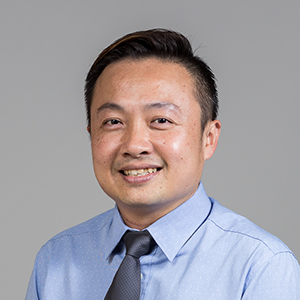
Kwan-Wu Chin is a Professor in the School of Electrical, Computer and Telecommunications Engineering at the University of Wollongong, where he also serves as Head of Postgraduate Studies (HPS) and co-directs the Wireless Technologies Lab (WTL). His research focuses on resource allocation problems in Internet of Things (IoT) systems, maritime networks, edge computing platforms, and integrated sensing-communication systems. Chin leads an active research group currently supervising five PhD students working on UAV networks, edge computing, maritime systems, and metaverse resource allocation. He has graduated over 20 PhD students who now hold positions in academia and industry. Chin serves as editor for Elsevier Computer Communications and IEEE Internet of Things Journal. His work develops optimization techniques using graph theory, stochastic processes, and machine learning for next-generation wireless systems.
Mary Stuart is a Lecturer in Zero Carbon at the University of Derby, affiliated with the College of Science and Engineering. Her research focuses on advancing low-cost hyperspectral imaging technologies for environmental applications, particularly in glaciology, peatland ecology, and extreme environment monitoring. She specializes in leveraging smartphone-based platforms and affordable instrumentation to democratize environmental data collection. Key research areas include developing field-deployable systems for ice sheet analysis, peat health assessment, and environmental monitoring in remote locations. Her work emphasizes practical solutions for climate change research through innovative sensor design and calibration techniques. Mary has contributed to over 8 peer-reviewed articles, with notable outputs in journals like Science of The Total Environment and Remote Sensing . Her research outputs have garnered 91 total views and 39 downloads, highlighting the growing interest in accessible environmental sensing technologies. Her current projects explore spectral calibration methods for mobile sensors and the application of low-cost systems in extreme environments. Mary’s work bridges the gap between cutting-edge technology and real-world environmental challenges, prioritizing cost-effective solutions for global sustainability efforts.
Prof. Michael HALLING is a Full Professor in Sustainable Finance at the University of Luxembourg's Faculty of Law, Economics and Finance, Department of Finance. His work focuses on sustainable finance, corporate finance dynamics, climate risk assessment, and financial regulation. He holds the prestigious Chair in Sustainable Finance and has published extensively on topics like MiFID II compliance, mutual fund fee structures, and post-pandemic market recovery. Contact: michael.halling@uni.lu Research Interests : Prof. HALLING’s research bridges theoretical finance with practical applications, emphasizing sustainable investment practices, corporate debt management, and regulatory frameworks. Key themes include: Climate risk modeling using public news sentiment analysis Impact of behavioral preferences on corporate investment decisions Automated compliance systems for financial institutions Market dynamics during crises (e.g., pandemic effects on capital access) Recent Publications Trends : Recent works analyze MiFID II regulatory impacts (2024), stochastic modeling of corporate investment (2023), and firm-specific climate risk quantification. His 2020 studies explored pandemic-driven shifts in corporate financing strategies. Awards : No awards explicitly mentioned in the provided texts. Grants & Advising : No student advisees or grant details provided in available data. Labs/Teams : No specific research group affiliations listed.
Yolanda Vidal Segui is an Associate Professor in the Department of Mathematics at the Universitat Politècnica de Catalunya (UPC), affiliated with the Escola d'Enginyeria de Barcelona Est (EEBE). Her research focuses on wind energy systems, predictive maintenance, and structural health monitoring of wind turbines. She leads projects in the CoDAlab and WinTurCoM research groups, specializing in data-driven models, condition monitoring, and failure prognosis. Her work integrates machine learning, mathematical modeling, and sensor technology to enhance turbine reliability and energy efficiency. Dr. Vidal holds a PhD in Applied Mathematics and has authored over 350 publications. Her contributions include advancements in SCADA data analysis, vibration-based diagnostics, and AI-driven condition monitoring systems. She has received several accolades, including the WindEurope Technology Workshop recognition and the IFIT Distinction in Mechanism and Machine Science. Her research bridges academia and industry, addressing challenges in offshore wind turbine integrity and maintenance strategies. Active in professional service, she serves on conference committees and editorial boards (e.g., Mechanical Systems and Signal Processing, Wind Energy). Her work emphasizes sustainable energy solutions and has been applied in real-world scenarios like the Alpha Ventus wind farm. She also contributes to educational initiatives, developing innovative teaching materials for engineering students.
Huazhen Fang is an Associate Professor in the Department of Mechanical Engineering at the University of Kansas School of Engineering, where he joined in 2014. He leads the Information & Smart Systems Laboratory (ISSL) and holds a courtesy appointment in the Department of Electrical Engineering & Computer Science. His research focuses on enabling intelligence for complex systems through information-driven approaches. Dr. Fang received his Ph.D. in Mechanical Engineering from the University of California, San Diego in 2014, following an M.Sc. from the University of Saskatchewan and a B.Sc. in Computer Science & Technology from Northwestern Polytechnic University in China. He was a Visiting Faculty Fellow at Mitsubishi Electric Research Laboratories in 2022. His research interests span Systems and Control, Advanced Battery Management, Energy Storage Systems, and Robotics, with particular focus on system modeling, estimation, control design, machine learning and numerical optimization. Dr. Fang's work has significant applications in energy management, cooperative robotics, and environmental observing systems. His research has been supported by the National Science Foundation, Department of Energy, Army Research Laboratory, and Mitsubishi Electric Research Laboratories. His extensive publication record shows a clear trend toward increasingly sophisticated integration of physics-based modeling with machine learning approaches, particularly in battery management systems and autonomous vehicle control. Recent work demonstrates a growing emphasis on Bayesian inference methods, distributed control architectures, and safety-critical applications of intelligent control systems. Faculty Early Career Award from National Science Foundation (2019) University Scholarly Achievement Award (2024) Miller Professional Development Award (2022) Miller Faculty Scholar Award (2018, 2019, 2023) Wesley G. Cramer Outstanding Mechanical Engineering Faculty Award (2016) Big XII Faculty Fellowship (2015) IEEE Transactions on Transportation Electrification Prize Paper Award (2024) Dr. Fang has successfully mentored numerous graduate students through the Information & Smart Systems Laboratory, with many receiving awards for their research. His research has attracted significant funding from prestigious organizations including the National Science Foundation, Department of Energy, Army Research Laboratory, and Mitsubishi Electric Research Laboratories. He currently serves as an Associate Editor for multiple prestigious journals including Information Sciences, IEEE Transactions on Industrial Electronics, and IEEE Control Systems Letters. The Information & Smart Systems Laboratory (ISSL) under Dr. Fang's leadership has established itself as a center for cutting-edge research in information-driven smart systems. The lab focuses on pushing the frontiers of information extraction, analysis and exploitation for dynamic systems to deal with system complexity and enable system intelligence. The lab actively collaborates with industry partners and local communities, emphasizing research that serves societal needs.
Johanna Pirker serves as an Associate Professor at the Institute of Human-Centred Computing, Graz University of Technology, where she holds teaching authorization in Applied Computer Science. Her work bridges academic research with practical applications in interactive technologies, maintaining active consultation hours for students every Monday morning. Her research centers on human-centered computing with emphases on virtual/augmented reality systems, serious game design, and AI-driven interactive experiences. She investigates player behavior, user experience optimization, and therapeutic/educational applications of immersive technologies across diverse contexts including rehabilitation, engineering education, and social platforms. Recent 2025 publications reveal strong trends in AI integration for gaming ecosystems (toxicity detection, dialogue systems), VR-based educational tools across disciplines, and cross-cultural analyses of gaming communities. Her work consistently combines experimental user studies with novel system development to address real-world challenges. While specific grant details and student advising records aren't documented in source materials, her extensive publication output across venues like FDG and iLRN indicates active leadership in interdisciplinary collaborations focused on advancing immersive technologies for societal benefit.
Catherine Mulligan is a Distinguished Research Professor in the Department of Building, Civil, and Environmental Engineering at Concordia University, where she also serves as Director of the Concordia Institute for Water, Energy and Sustainable Systems. She was previously the Concordia Research Chair in Geoenvironmental Sustainability (Tier I) until 2021, having held this prestigious research chair since 2002 (initially as Tier II). Dr. Mulligan earned her B.Eng. and M.Eng. degrees in chemical engineering from McGill University, followed by a Ph.D. specializing in geoenvironmental engineering, also from McGill University. After 16 years working at McGill University and in industry (including positions at the Biotechnology Research Institute of the National Research Council and SNC Research Corp.), she joined Concordia University in 1999 as an Assistant Professor, was promoted to Associate Professor in 2002, and to full Professor in 2008. Her research spans multiple critical areas of environmental engineering with a focus on contamination remediation. She specializes in surfactant-enhanced washing and flushing of contaminated soils and sediments, treatment of metal-contaminated media, bioremediation techniques, and various wastewater treatment methods. Her work includes biosurfactant applications, in-situ sediment remediation, anaerobic treatment processes, membrane technologies for water treatment, and energy generation through pressure-reduced osmosis. She has developed sustainability indicators and focuses on practical applications of environmental engineering solutions. Analysis of her recent publications (2023-2025) reveals a continued leadership in environmental engineering with particular emphasis on nanotechnology applications for oil spill cleanup in sensitive coastal regions, advanced membrane technologies for water treatment and energy generation, microbially induced calcite precipitation for mining waste remediation, sustainable resource recovery approaches from waste batteries, and innovative techniques for eutrophic lake restoration. Her research demonstrates a consistent focus on practical, sustainable solutions to environmental contamination problems across diverse settings. Dr. Mulligan's scientific contributions have been recognized with numerous prestigious awards including Fellowship in the Royal Society of Canada, Canadian Academy of Engineering, Engineering Institute of Canada, and the Canadian Society for Civil Engineering. She has received the RSC Miroslaw Romanowski Medal, the Geoenvironmental Award, the A.G. Stermac Award of the CGS, and the John B. Sterling Medal of the EIC. Her Concordia-specific honors include the Provost Circle of Distinction, Concordia Sustainability Champion, and the Petro Canada Young Innovator Award (awarded twice). With over 40 years of research experience across government, industrial, and academic environments, Dr. Mulligan has supervised to completion more than 75 graduate students in Civil Engineering (MASc and PhD programs). Her research has attracted significant funding, including a $1,643,700 NSERC CREATE grant for the Institute in Water, Energy and Sustainability, which represents the first Concordia project to receive funding through this program. She has authored more than 140 refereed papers, holds three patents, and has made substantial editorial contributions as Section Editor for the Journal of Environmental Engineering, Chief Editor for Waste (MDPI), and serves on multiple other editorial boards. As Director of the Concordia Institute for Water, Energy and Sustainable Systems, Dr. Mulligan leads an interdisciplinary team focused on training students in sustainable development practices and advancing research into innovative solutions for water, energy, and resource conservation challenges. The institute represents a significant hub for environmental research and education at Concordia University.
Wenjing (Angela) Zhang is a Professor and Head of Section for Water Technology and Processes at the Technical University of Denmark (DTU), Department of Environmental and Resource Engineering. She leads research on membrane technologies, nanofiber materials, and sustainable water treatment processes. Her research focuses on: Advanced membrane design for wastewater treatment and resource recovery Electrospinning and nanofiber applications in energy/environmental tech Photocatalytic plastic upcycling and microplastic degradation Green hydrogen production through innovative membrane systems Professor Zhang's publications demonstrate strong emphasis on material innovation for environmental solutions, particularly in membrane technology (nanofiber composites), electrocatalysis, and sustainable plastic waste management. Recent works show increasing focus on industrial wastewater applications and plastic upcycling. She has received scientific recognition including: Honorary Professorship in China (2018) As primary supervisor for multiple PhD projects, she mentors students in: Nanostructured membranes for hydrogen production Decentralized wastewater treatment systems Biocatalytic membranes for microplastic degradation Plastic upcycling photocatalysts She leads major funded projects including 'Sustainable Industrial Laundry Wastewater Treatment' and 'Nanostructured membrane design for Green Hydrogen Production'. She directs research within the Water Technology & Processes section, collaborating with DTU Microbes Initiative and international partners on sustainable water solutions.
Professor Roy Pea is the David Jacks Professor of Education & Learning Sciences at Stanford University, with a courtesy appointment in Computer Science. He served as Director of the H-STAR Institute (2007-2021) and founded Stanford’s PhD program in Learning Sciences and Technology Design. His research focuses on technology-enhanced learning, social foundations of human learning, and interdisciplinary applications of digital tools. Stanford University, School of Education Graduate School of Education Department Courtesy appointment in Computer Science His work spans complex domains like concussion education, climate change learning, and AI-driven mental health interventions. He co-authored the 2010 National Education Technology Plan and co-edited key texts including Video Research in the Learning Sciences and AI in Education . His NSF-funded LIFE Center (2004-2014) advanced learning science theories. Recent publications address: (1) linguistic framing of concussions and reporting behavior, (2) AI chatbots for mental health, (3) "engineering fiction" to reduce climate change abstractness, and (4) immersive AR/LLM learning experiences. His research integrates data science, psychology, and educational technology. Fellow, American Academy of Arts and Sciences (2019) Inaugural Fellow, International Society of the Learning Sciences (2018) Honorary Doctorate, The Open University (2018) Best Bridging Paper, EDM 2014 LAK13 Best Paper Award (2013) Roy mentors doctoral and master’s students in learning sciences, advising on topics related to technology, cognition, and equity. He contributes to digital education policy through roles on advisory boards for organizations like NSF, NIH, and the Joan Ganz Cooney Center. His patents include methods for digital video analysis and collaborative learning systems.
Véronique Michaud is an Associate Professor at the École Polytechnique Fédérale de Lausanne (EPFL), affiliated with the Laboratory for Processing of Advanced Composites (LPAC) within the School of Engineering (STI). Her research focuses on polymer composite processing, adaptive composites (e.g., shape memory alloys, self-healing mechanisms), and material science. She also contributes to teaching in Materials Science and Engineering, including courses like 'Materials: From Chemistry to Properties' and 'Composite Materials Processing.' Her academic roles include Associate Professorships in SMX, EDMX, and EDAM teaching units, and she serves as a PhD program committee member for the Doctoral Program in Advanced Manufacturing. She has advised numerous PhD students, including Michele Bonacina, Pierre-Alexandre Boschert, and Jean-Baptiste Desbrest, among others. Research highlights include sustainable composite material development, defect mitigation in composites, and advanced manufacturing techniques. Her work often addresses challenges in aerospace and renewable energy applications, emphasizing sustainability and material innovation.
Bryan Kian Hsiang Low serves as Associate Professor in the Department of Computer Science at the National University of Singapore's School of Computing, while simultaneously holding leadership positions as Director of AI Research at AI Singapore and Deputy Director of the NUS AI Institute. His academic journey includes a B.Sc. (2001) and M.Sc. (2002) in Computer Science from NUS, followed by a Ph.D. in Electrical & Computer Engineering from Carnegie Mellon University (2009). His research spans probabilistic machine learning, multi-agent systems, and trustworthy AI, with particular focus on Bayesian optimization , federated learning , and data-efficient methodologies . The Low Lab develops frameworks for collaborative AI, automated machine learning, and AI applications in scientific domains through the Group of Learning and Optimization Working in AI (GLOW.AI), which maintains a multi-disciplinary approach bridging computer science, mathematics, and engineering disciplines. Analysis of his recent publications reveals a consistent emphasis on data valuation , privacy-preserving collaborative learning , and robust optimization techniques , with increasing integration of large language models into his research framework. His work demonstrates strong theoretical foundations coupled with practical applications in computational sustainability and robotics. Andrew P. Sage Best Transactions Paper Award (2006) NUS Overseas Graduate Scholarship (2004-2009) Faculty Teaching Excellence Award (2017-2018) IEEE RAS Distinguished Lecturer (2019) World Economic Forum Global Future Councils Fellow (2016-2018) Dr. Low actively mentors PhD students including Rachael Sim, Quoc Phong Nguyen, and Zhongxiang Dai, while leading major initiatives like the AI Phenome Platform for plant breeding optimization. His research group GLOW.AI operates at the intersection of theory and practice, with strong industry engagement through AI Singapore. Current projects focus on scalable AI systems for scientific discovery and developing frameworks for equitable collaborative machine learning with robust privacy guarantees.
Christoph Müller is a Full Professor of Energy Science and Engineering at ETH Zürich's Department of Mechanical and Process Engineering. He leads the Laboratory of Energy Science and Engineering, focusing on sustainable energy generation, heterogeneous catalysis, and granular systems. His research integrates experimental methods like Magnetic Resonance Imaging (MRI) and Discrete Element Modelling (DEM) with mathematical modeling to address industrial energy challenges. Education: Dipl.-Ing. from Technical University of Munich (2004), PhD in Chemical Engineering from the University of Cambridge (2008). Notable awards include the Danckwerts-Pergamon Prize (2009) and DAAD Scholarship (2005). He teaches courses such as Thermodynamics I and Thermo- and Fluid Dynamics. Research interests span CO₂ capture via chemical looping, catalytic hydrogenation, and granular flow dynamics. Recent work explores catalyst design for propane dehydrogenation, MXene-based ammonia synthesis, and MgO-based CO₂ sorbents. His lab employs advanced techniques like operando X-ray absorption spectroscopy to study catalyst behavior under reaction conditions. Key achievements include developing stable PtGa propane dehydrogenation catalysts and advancing understanding of Na₂CO₃-promoted CO₂ sorbents. His work on fluidized bed hydrodynamics via MRI contributes to reactor design optimization. Müller's interdisciplinary approach bridges fundamental science and industrial application, addressing global energy sustainability challenges.
R. Michael Alvarez , Flintridge Foundation Professor of Political and Computational Social Science at Caltech, is a leading scholar in election technology, political methodology, and machine learning applications in social science. Affiliated with the Caltech/MIT Voting Technology Project , the Social and Decision Neuroscience Program , and the Resnick Sustainability Institute , his work bridges technology and democracy. Education: B.A. from Carleton College, Ph.D. from Duke University Academic Career: Caltech faculty since 1992 His research spans: Election Integrity : Monitoring election security, fraud detection, and ballot systems Computational Social Science : Applying machine learning to voter behavior and policy analysis Climate Policy : Examining public attitudes and behavioral interventions for sustainability Online Behavior : Analyzing toxicity in gaming and social media dynamics Key article trends show focus on election forensics (2025 Nature Climate Change study), game toxicity analysis (2025 CHI Play paper), and LLM applications in social science. His students include Jacob Morrier, Mitchell Linegar, and teams of postdocs and undergraduates in Caltech's SURF program. Scientific recognition includes: Google Cloud Research Innovators Class of 2022 Co-editor of multiple academic series including Cambridge Elements in Quantitative Methods
Pardis Pishdad is an Associate Professor and Graduate Program Director in the School of Building Construction at Georgia Institute of Technology’s College of Design. She directs the Smart Built Environment Eco-System (Smart Bees) Laboratory, focusing on integrating cyber-physical systems, digital twins, and innovative project delivery methods (e.g., IPD, Flash Tracking) for sustainable built environments. Her research bridges technology adoption, trust-building in construction contracts, and supply chain optimization. Education: PhD, Environmental Design and Planning (Virginia Tech) Master’s Degrees: Civil Engineering (Virginia Tech), Design Studies in Project Management (Harvard), Architecture (University of Tehran) Bachelor’s in Architectural Engineering (Azad University of Shiraz) Research Interests: Her work emphasizes sustainable construction practices using IoT, BIM, and blockchain. Key areas include lifecycle cost analysis, lean construction, and smart building technologies. She explores trust dynamics and collaboration in construction projects through game theory and process optimization. Recognition: 2018 ENR Top 20 Under 40 Professionals 2016 CII National Outstanding Researcher Award 2020-2022 Georgia Tech Provost Teaching Learning Fellow Advisory Roles: Academic Advisor for CII’s Supply Chain Management Community, Vice Chair of BuildingSMART’s BIM Forum 5D Taskforce. Formerly advised the Construction Management Association of America’s Board (2016–2018). Industry Collaboration: Partnerships with Turner Construction, GDOT, and VDOT. Research on Flash Tracking and blockchain has been integrated into industry practices. Labs & Teams: The Smart Bees Lab pioneers cyber-physical systems for smart buildings, exploring AI-driven solutions and sustainable construction frameworks.
Prof. Iris F.A. Vis is a Professor of Industrial Engineering at the University of Groningen's Faculty of Economics and Business. She specializes in logistics and operations management, focusing on optimizing processes through quantitative and qualitative methods. Her work intersects logistics with sectors like healthcare, education, and energy. She leads major projects such as SMiLES (sustainable mobility-logistics integration) and designs logistics solutions for personalized learning systems in schools. She has advised over a dozen PhD students and collaborates with industry partners globally. Awards include Fellowship in the Netherlands Academy of Engineering. Education: M.Sc. Mathematics (Leiden University), PhD in Operations Management (Erasmus University Rotterdam) Roles: Captain of Science for Topsector Logistics, Member of multiple national advisory boards Research interests span sustainable transportation networks, port optimization, healthcare logistics, and educational logistics. Key projects include LNG supply chain design, offshore wind farm maintenance planning, and synchromodal transport networks. Over 45 peer-reviewed publications and 18 media engagements highlight her impactful contributions. Teaching includes courses on supply chain network design, technology-enabled innovation, and operations management at all academic levels. She advises on industrial partnerships and digital transformation initiatives in the Northern Netherlands region.