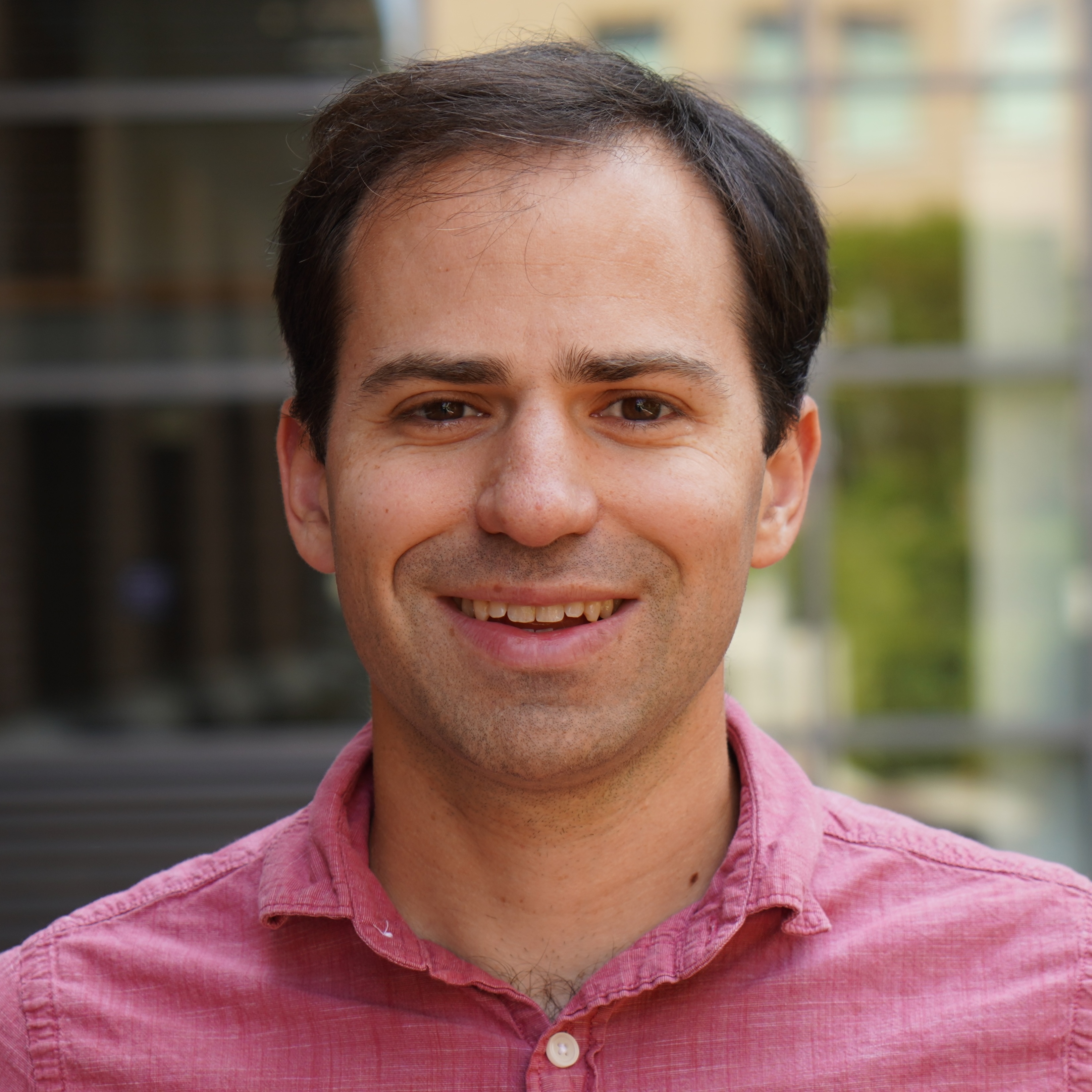
Vittorio Solina is a Researcher at the Department of Mechanical, Energy and Management Engineering (DIMEG) of the University of Calabria, specializing in industrial systems simulation and digital twin technologies. His work spans Industry 4.0/5.0 applications, supply chain optimization, and human-robot collaboration. Affiliation: University of Calabria Academic Role: Researcher (Legge 240/10) Research Focus: Digital twins, simulation modeling, sustainable manufacturing His research emphasizes advanced simulation tools for decision support, including applications in Industry 4.0 , Smart Manufacturing , and Agri-Food Supply Chains . Recent work explores adaptive simulation optimization for Industry 5.0 and 5G-enabled robotics. Key publication trends include: (1) Digital twin integration for supply chain resilience (2024-2025), (2) Simulation automation methodologies (2025), and (3) Human-robot collaboration frameworks (2024).
Matthew Louis Mauriello is an Assistant Professor in the Department of Computer and Information Sciences at the University of Delaware , where he directs the Sensify Lab . He holds a PhD in Computer Science from the University of Maryland (2018) and completed postdoctoral work at Stanford University (School of Medicine, 2020; School of Public Policy & Environmental Engineering Department, 2019). Research interests span Human-Computer Interaction (HCI), Ubiquitous Computing, and User-Centered Design with applications in: Sustainability Human-Building Interaction Wearable Technology Personal Informatics Educational Game Design Mental Health Interventions Recent publications highlight trends in stress monitoring (skin-like biosensors, workplace wellbeing), energy auditing (thermography systems), and educational technology (block-based programming tools for teachers). His work appears in ACM CHI, ACM Human-Computer Interaction, and Building and Environment. Scientific awards include: Best Paper Honorable Mention, CHI 2016 Best Paper Honorable Mention, CHI 2015 Best of WebSci'18 Teaching at University of Delaware encompasses courses like Educational Game Design Operating Systems Advanced Web Technologies Computing for Social Good with a focus on project-based learning and systems thinking.
Stefano Ermon is an Associate Professor in the Department of Computer Science at Stanford University, affiliated with the Artificial Intelligence Laboratory and a Senior Fellow at the Woods Institute for the Environment. His research focuses on advancing machine learning and generative AI techniques to address societal and environmental challenges, including computational sustainability, geospatial analysis, and climate science. He holds a Ph.D. from Cornell University (2015). Education: Ph.D. in Computer Science, Cornell University (2015). Research Interests: Ermon’s work bridges foundational machine learning (e.g., diffusion models, generative AI, and optimization) with applications in sustainability, geospatial analysis (via satellite imagery), and earth observation systems. Notable contributions include predicting poverty using satellite data and developing scalable methods for molecule generation. Articles Trends: His recent work emphasizes diffusion models for generative tasks (e.g., text-to-image, molecule design), geospatial AI (e.g., environmental monitoring), and ethical AI (e.g., bias mitigation in LLMs). He also explores applications in robotics and scientific computing. Awards: He has received prestigious awards, including the ICML 2024 Best Paper Award, Sloan Research Fellowship, Microsoft Research Faculty Fellowship, and the IJCAI Computers and Thought Award. Advising and Grants: Ermon teaches courses like Probabilistic Graphical Models (CS228) and has secured grants from NSF, ONR, AFOSR, and private foundations. His lab develops tools for climate science and sustainable development. Labs/Teams: Leads the Stanford AI Lab group focused on computational sustainability and generative AI, collaborating with institutions like the Woods Institute for environmental applications.
Amanda Phillips is an Associate Professor at Georgetown University, affiliated with the Departments of English, Film and Media Studies, Women’s and Gender Studies, and American Studies. Their research focuses on feminist and queer theory in digital media, with a particular emphasis on critical game studies and digital humanities. Selected publications include Gamer Trouble: Feminist Confrontations in Digital Culture and co-editing the Queer/Trans/Digital book series. Their scholarship appears in journals such as ROMchip , Feminist Media Histories , and Games and Culture . Research Interests: Digital media and gender politics Queer theory in gaming contexts Decolonial and anti-racist digital humanities Critical analysis of game mechanics Digital labor and precarity Affective histories of gaming Scientific Awards: Mellon/ACLS Dissertation Completion Fellow Academic Leadership: Former chair of the American Studies Association Digital Humanities Caucus Co-founder of the #transformDH Collective Editorial work on special issues of Game Studies and Antares: Letras e Humanidades Previous Institutions: IMMERSe Postdoctoral Fellow at University of California, Davis Ph.D. recipient from University of California, Santa Barbara with emphasis in Feminist Studies
Eric Eaton is a Research Associate Professor of Computer and Information Science at the University of Pennsylvania , and a core member of the GRASP (General Robotics, Automation, Sensing, and Perception) Laboratory . His expertise centers on lifelong machine learning , transfer learning , and interactive AI , with impactful applications to robotics, precision medicine, and computational sustainability. Education & Affiliations Ph.D. in Computer Science, University of Maryland, Baltimore County (UMBC) – dissertation on selective knowledge transfer advised by Marie desJardins Former Visiting Assistant Professor, Bryn Mawr College Former part-time faculty, Swarthmore College and UMBC Two years as Senior Research Scientist at Lockheed Martin Advanced Technology Laboratories Research Interests Eaton’s research advances versatile AI systems that can learn multiple tasks over long lifetimes, transfer knowledge across domains, and interact effectively with humans and other agents. Core themes include: Lifelong & continual learning – continual acquisition and refinement of knowledge across tasks Knowledge transfer – selective, cross-domain, and zero-shot transfer techniques Interactive AI – human-in-the-loop learning and interpretable models Applications – autonomous service robotics, precision medicine, sustainability, and search & rescue Selected Scientific Awards IJCAI-16 Distinguished Student Paper Award for zero-shot transfer research IJCAI-15 Best Paper Nomination for autonomous cross-domain transfer ICML 2020 Workshop Best Paper Award for lifelong policy gradient learning Grants & Funding Current and past research is supported by the Office of Naval Research (ONR), the National Science Foundation (NSF), and Lockheed Martin, enabling large-scale projects in lifelong robotics and medical AI. Students & Postdocs Eaton has advised a diverse cohort of scholars including current PhD students David Isele, Seungwon Lee, Jorge Mendez, and Mohammad Rostami, as well as postdocs Boyu Wang and numerous alumni now in faculty positions or leading industry research teams. Labs & Teams He leads the Autonomous Service Robot Fleet within GRASP, creating low-cost robots that learn lifelong skills in university and office settings. His group also collaborates with clinicians for AI-driven precision medicine, and partners with defense and sustainability initiatives.
Daniel Epstein is an Associate Professor in the Department of Informatics at the University of California, Irvine (UCI), where he leads the Personal Informatics Everyday (PIE) Lab. He holds a courtesy appointment in the Department of Computer Science and is affiliated with the Connected Learning Lab, Institute for Future Health, and Accessibility Research Collective. Epstein earned his Ph.D. in Computer Science & Engineering from the University of Washington and a B.S. in Computer Science from the University of Virginia. His research focuses on how personal tracking technology can better serve diverse users' needs, emphasizing ethical design, health equity, and long-term user engagement. Notable areas include pregnancy tracking, wearable technology for children and ADHD management, and AI-driven health chatbots. Epstein has received grants from NSF, Snap Inc., and UCI programs, totaling over $650k in funding. Epstein's work bridges HCI and health informatics, with over 60 peer-reviewed publications. He advises six Ph.D. students and has mentored numerous undergraduates. Awards include the ACM Senior Member distinction (2025), CHI Best Paper (2023), and NSF CAREER Award (2023). Professional service includes program committees for CHI, CSCW, and UbiComp, plus leadership roles in workshops like the Workgroup on Interactive Systems in Healthcare (WISH). Beyond academia, Epstein enjoys hiking, collecting turtle figures, and advocating for accessible technology.
Dr. Hassan Qudrat-Ullah is a Professor at the School of Administrative Studies, York University, and Coordinator of the Certificate in Logistics Management. He holds a PhD in Decision Sciences from NUS Business School and completed a post-doctoral fellowship at Carnegie Mellon University. His research focuses on dynamic decision making, system dynamics modeling, energy planning, and interactive learning environments. He teaches courses on quantitative methods, logistics, and decision analysis, informed by global industry experience across 20+ countries. Research interests include sustainability, climate change, systems thinking, and educational applications of decision sciences. He serves as Editor-in-Chief of the International Journal of Complexity in Applied Science and Technology and is a member of IEEE, DSI, and the International System Dynamics Society. His work has been published in Energy , Decision Support Systems , and others. Key projects include studies on 'structured-debriefing in dynamic decision making' and renewable energy policies in Africa. His recent articles (2023–2025) address AI integration in energy governance, system dynamics for supply chain resilience, and education for sustainability. Hassan advocates for systems thinking in K-12 education and enjoys traveling (visited 129 countries) and bird-watching.
Steven Jackson is a Professor of Information Science and Science and Technology Studies at Cornell University's Bowers College of Computing and Information Science, with additional graduate field appointments in Communication and Public Affairs. Since July 2023, he has served as Vice-Provost for Academic Innovation at Cornell, and previously held leadership positions as Chair of Information Science and Dean of William Keeton House. His work bridges academic research with significant institutional leadership in higher education innovation. Dr. Jackson's research focuses on critical intersections of technology, society, and the environment, with three primary strands: technology ethics, law and policy; maintenance, repair and sustainability; and technology, inequality and global development. His work draws from American pragmatism, political economy, and science and technology studies, integrating methods from sociology, anthropology, philosophy, and media studies. He is particularly interested in how computing practices meet social and material worlds, with implications for infrastructure, collaboration, sustainability, and cultural practice. His recent publications reveal a strong emphasis on repair as both theoretical concept and practical methodology, exploring 'ordinary hope' as a framework for technological engagement and examining unmaking as a necessary counterpart to design. The research spans diverse geographical contexts from the global North to South, addressing caste dynamics in computing, digital authoritarianism, and infrastructure challenges in developing contexts. Dr. Jackson has received significant recognition including an NSF CAREER award and more than twenty paper awards at leading computing and information science venues. His research has been supported by major organizations including the U.S. National Science Foundation, Social Science Research Council, Ford Foundation, Sloan Foundation, World Bank, Intel Research, Atkinson Center for Sustainability, and the Canadian Social Science and Humanities Research Council. As an advisor, Dr. Jackson has mentored numerous graduate students who have gone on to prominent positions at institutions worldwide. He currently advises Jen Liu, Amy Cheatle, Daniel Mwesigwa, Johan Michalove, and Ritik Batra, while his former students include Palashi Vaghela (Assistant Professor at Simon Fraser University), Samir Passi (Responsible AI Researcher at Microsoft), Maggie Jack (Assistant Professor at NYU), and Ranjit Singh (Senior Researcher at Data and Society). Dr. Jackson convenes the Computing On Earth Lab, an experimental collaboration bringing together social scientists, humanists, artists, and engineers to rethink the material and planetary foundations of computing. The lab reflects his commitment to interdisciplinary approaches that address computing's environmental impacts and sustainability challenges.
Sarah Billington is the UPS Foundation Professor of Civil and Environmental Engineering at Stanford University and a Senior Fellow at the Woods Institute for the Environment. Her research program focuses on sustainable building design, human wellbeing, and ethical supply chain practices. Education: PhD, University of Texas at Austin, Structural Engineering (1997) MSE, University of Texas at Austin, Structural Engineering (1994) BSE, Princeton University, Civil Engineering & Operations Research (1990) Her lab employs interdisciplinary methods to study how built environments impact human physical, psychological, and social wellbeing. Current projects include developing tools to quantify nature exposure in buildings, exploring affordable housing's role in wellbeing, and using AI to assess forced labor risks in material supply chains. While no longer active in this area, her group previously pioneered research on sustainable construction materials like bio-based composites and ductile cement-based composites. Her recent publications address topics such as nature integration in architecture, workplace design optimization, and health impacts of building materials. The Billington Lab at Stanford fosters collaborative team science, welcoming partnerships to advance occupant-centric engineering solutions.
Brian Y. Lim is an Associate Professor in the Department of Computer Science at the National University of Singapore (NUS), leading the NUS Ubicomp Lab. His research integrates Explainable AI (XAI) , Human-Computer Interaction (HCI) , and Ubiquitous Computing to address societal challenges in healthcare , wellness , and urban sustainability . He holds a Ph.D. and M.S. in Human-Computer Interaction from Carnegie Mellon University and a B.S. in Engineering Physics from Cornell University. Education: B.S., Engineering Physics, Cornell University M.S., Human-Computer Interaction, Carnegie Mellon University Ph.D., Human-Computer Interaction, Carnegie Mellon University His research focuses on designing human-centric AI systems that prioritize transparency and user trust. Key areas include explainable AI algorithms , context-aware computing , data visualization , and trustworthy machine learning . Projects like RexNet and Directed Diversity demonstrate his work in creating relatable AI explanations and enhancing crowd creativity through algorithmic prompting. Recent publications (2022–2025) highlight advancements in faithful visual explanations , user-centric XAI frameworks , and healthcare analytics . Notable awards include the CHI'22 Best Paper Award , IMWUT Distinguished Paper Award , and MOE Outstanding Mentor Award . He has advised numerous PhD and Masters students and leads the NUS Ubicomp Lab, which explores applications like TasteHealthy (food recommendation app) and Food Loves Fellowship (narrative data visualization).
Dr. Haneen Farah is an Associate Professor in the Department of Transport & Planning at Delft University of Technology and co-director of the Traffic and Transportation Safety Lab. She also serves as head of the Traffic Systems Engineering section. Her research focuses on road infrastructure design, road user behavior, and traffic safety, integrating transportation engineering, human factors, and econometrics. Prior to TU Delft, she was a postdoc at KTH Royal Institute of Technology and earned her M.Sc. and Ph.D. in Transportation Engineering from the Technion-Israel Institute of Technology. Her work includes national/international projects like SAMEN (mixed automated/human traffic implications), AfroSAFE (road safety in Africa), and XCARCITY (sustainable city mobility). She teaches undergraduate and graduate courses on road design and traffic safety, including online programs for low/middle-income countries. Farah supervises multiple PhD and Master students in her research areas, contributing to over 50 peer-reviewed publications. Key research themes include infrastructure design for automated vehicles, driver behavior modeling, cyclist safety, and policy implementation of the Safe System approach. Her interdisciplinary approach bridges engineering and psychology to enhance traffic safety and efficiency through advanced analytics and simulation models.
Prof. Olga Sorkine Hornung is a Full Professor of Computer Science at ETH Zürich, leading the Interactive Geometry Lab. She holds a BSc and PhD from Tel Aviv University (2000 and 2006) and conducted postdoctoral research at Technical University Berlin. Her research focuses on computer graphics, geometric modeling, and geometry processing, with applications in shape editing, digital fabrication, and animation. She has received numerous accolades, including the ACM Fellowship (2020), ERC Consolidator Grant (2020), and the Golden Owl Teaching Award (2021). Her work bridges theoretical foundations and practical algorithms, addressing challenges in parameterization, surface compression, and interactive design tools. Her research interests span: Computer Graphics & Visualization Geometric Modeling & Processing 3D Content Creation & Digital Fabrication Garment Design & Simulation Human Motion Analysis & Animation Awards and grants include: 2024: Best Paper Honorable Mention (EUROGRAPHICS) 2023: Member of Swiss Academy of Engineering Sciences (SATW) 2020: ERC Consolidator Grant 2017: Rössler Prize (ETH Zurich) Her lab focuses on developing novel methods for interactive geometry processing, with recent advancements in garment modeling (e.g., AIpparel, Rags2Riches) and motion retargeting systems like WalkTheDog. She actively collaborates on interdisciplinary projects, including biomedical applications and sustainable fashion technology.
Fei Fang is an Associate Professor in the Software and Societal Systems Department at Carnegie Mellon University (CMU) , where she explores the intersection of artificial intelligence and multi-agent systems . Her work integrates machine learning with game theory to address challenges in security , sustainability , and mobility , aligning with the AI for Social Good mission. Ph.D. in Computer Science, University of Southern California (2016) B.Eng. in Electronic Engineering, Tsinghua University (2011) Recent research focuses on reinforcement learning , large language models (LLMs) , and human-AI collaboration . Her team’s work has been recognized with 15+ awards across prestigious venues like IAAI, AAAI, and IJCAI. Notable accolades include the 2023 Allen Newell Award , 2022 Sloan Fellowship , and NSF CAREER Award (2021) . She actively contributes to educational initiatives , including teaching "Demystifying AI for Everyone" at CMU, and has sought part-time teaching assistants for course development. Her research spans 15+ domains , including AI ethics , cyber defense , traffic optimization , and public health .
Dr. Oana Cocarascu is a Senior Lecturer in Artificial Intelligence at the Department of Informatics, Faculty of Natural, Mathematical & Engineering Sciences, King's College London. She holds a PhD and MEng in Computing (Artificial Intelligence) from Imperial College London and conducts applied research focusing on how artificial intelligence can be deployed to support real-world applications, with machine learning and natural language processing as core components of her work. Her research interests span argument mining, explainable AI, machine learning, natural language processing, and symbolic reasoning. She is particularly focused on developing AI systems that can provide transparent, accountable, and ethical decision-making processes. Her work addresses critical challenges in bias mitigation, fairness metrics, fact verification systems, and argumentation-based explanations for complex AI decisions. Analysis of her recent publications (2023-2025) reveals a strong focus on fairness in AI systems, with particular attention to individual fairness metrics and nuanced evaluation frameworks. She has made significant contributions to fact verification systems, especially in multimodal contexts involving charts and tabular data. Her work increasingly integrates argumentation theory with natural language processing to create explainable AI systems that can justify their decisions through structured reasoning. Dr. Cocarascu leads an EPSRC-funded project titled 'A framework for evaluating and explaining the robustness of NLP models' (2024-2027) and is actively involved in the Natural Language Processing Group at KCL. Her research fingerprint shows strong activity in argumentation (100%), decision-making (74%), artificial intelligence (50%), explainable AI (39%), and bias mitigation (35%). She has contributed to numerous high-impact publications in top venues including ACL, EMNLP, AAAI, and the Journal of Artificial Intelligence Research, with a particular focus on making AI systems more transparent, accountable, and aligned with human values. Her work intersects with UN Sustainable Development Goals, particularly those related to reducing inequality and building resilient infrastructure.
Gretchen A. Macht is an Associate Professor in the Department of Mechanical, Industrial and Systems Engineering at the University of Rhode Island, College of Engineering. She specializes in Human Systems Engineering, with research emphasizing team performance, sustainability, electric vehicles, solar energy systems, and voting systems. Her work bridges engineering, ergonomics, and public policy. Her research interests focus on understanding and optimizing human-centered systems. She investigates team communication and performance through fuzzy cognitive maps and entropy modeling, develops sustainable design practices for products and energy systems, and analyzes user behavior in electric vehicles and solar installations. A significant portion of her research is dedicated to election systems, where she uses simulation to improve accessibility, safety, and efficiency of in-person voting, particularly during public health crises. Her recent publications span topics such as EV charging behavior, solar installation safety, voting simulation, and team dynamics. These works reflect interdisciplinary trends combining systems engineering, data analytics, ergonomics, and sustainability science. She frequently employs simulation, naturalistic data analysis, and human factors methodologies. Dr. Macht has secured substantial grant funding from organizations including the U.S. Election Assistance Commission, National Science Foundation, MIT, and Democracy Fund. She serves as Principal Investigator (PI) or Co-PI on projects related to election systems (e.g., SMILE, URI VOTES), ergonomic redesign of protective gear, and community solar development. She leads the SIS Lab and the URI VOTES initiative, fostering collaborative research on simulation and system design. Her lab supports graduate students in conducting impactful research at the intersection of engineering and societal challenges. Notable grants include: PI, MIT: “Voting in Person - White Paper” (2023) PI, US EAC: “SMILE 2.0” (2022) PI, Democracy Fund: “URI VOTES Pocket Guide Tool” (2022) Co-PI, NSF: “Election Science: Convergence Accelerator Workshop Proposal” (2021) PI, US EAC: “SMILE: Simulation Models for an Immersive Learning Environment” (2021) She has advised several graduate students, including Mehrsa Khaleghikarahrodi, Nicholas D. Bernardo Jr., and Tim Jonas, whose research aligns closely with her focus areas in EVs, elections, and team performance.